oleh admin | Mar 13, 2025 | archaeology, biology, culture, culture & history, health, society
-
EXPLORE FURTHER: Researchers unveil visage of ‘entirely new’ human predecessor
Researchers have uncovered the earliest known human face in Western Europe, which could alter our understanding of human evolution.
The ancient human referred to as ‘Pink’ resided in
Spain
The Iberian Peninsula was inhabited between 1.1 and 1.4 million years ago.
This indicates that Pink significantly precedes the appearance of modern humans, Homo sapiens, who arrived on the continent approximately 45,000 years ago.
The fossilized remains differ significantly from other early hominin specimens discovered in the region, suggesting that Pink might represent an entirely new species of human.
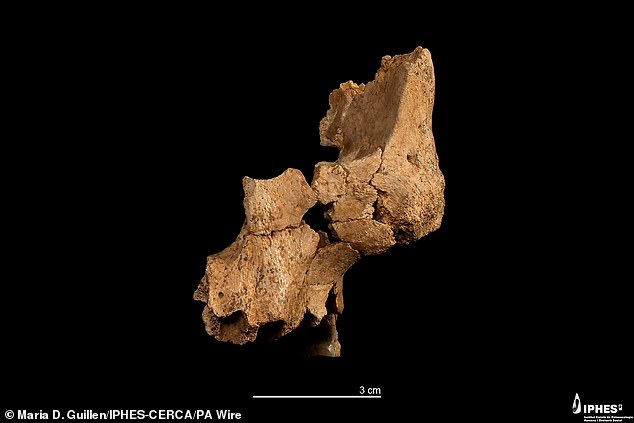
The pieces of this ancient human-like face were found in 2022 within a cave named Sima del Elefante.
where many of Europe’s oldest human remains have been discovered.
Nevertheless, Pink seems to have a distinct architecture compared to Homo antecessor, another human species that inhabited the region as far back as 860,000 years ago.
Rather than resembling earlier humans, he looks more like Homo erectus, an even older human species that appeared in Africa about two million years ago and was the first to walk upright similar to contemporary humans.
Researchers think that Pink’s species might have been some of the earliest humans to reach Europe, only to be eradicated later due to a rapid change in climate.
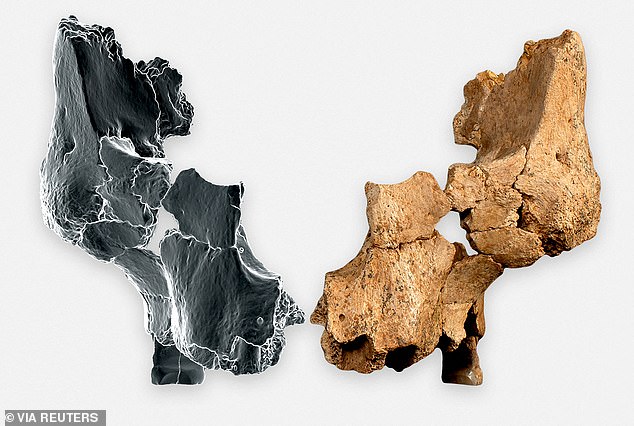
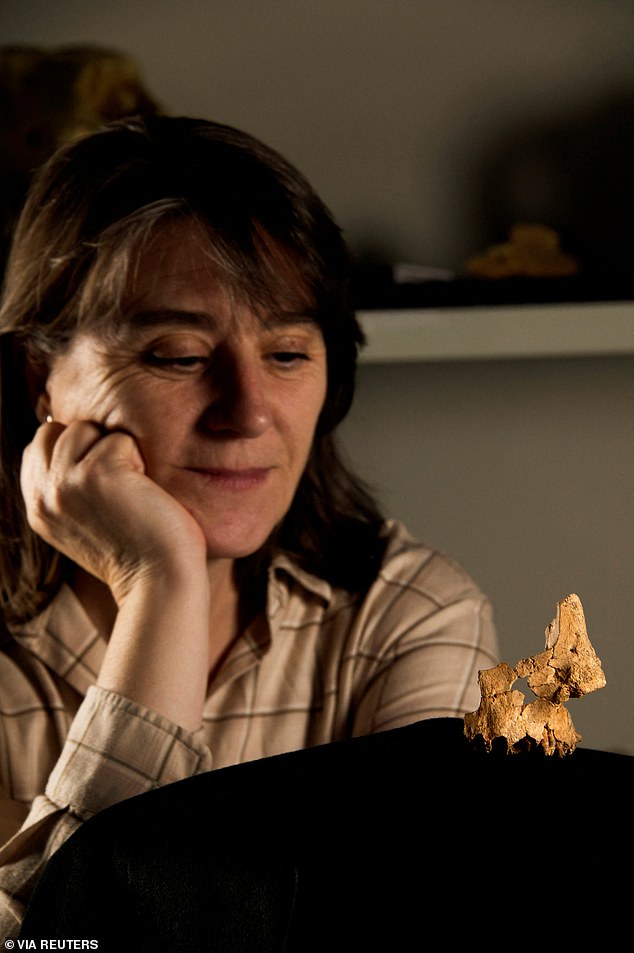
Consisting of various fragmented pieces along with portions of two teeth, the skeletal findings at Sima del Elefante are thought to represent the earliest known instance of human facial bones discovered in Western Europe.
The scientists referred to the person as ‘Pink’, inspired by Pink Floyd’s album Dark Side of the Moon, known in Spanish as ‘La cara oculta de la luna,’ with ‘cara oculta’ translating to ‘hidden face.’
Upon discovering Pink’s remains, scientists originally believed that they might be attributed to another of the ancient human species uncovered in the region.
Inside the cave, scientists had earlier discovered remnants of Homo antecessor that date back 860,000 years.
By examining the numerous other animal fossils discovered in the same stratum of the cave along with evidence of periodic changes in Earth’s magnetic field imprinted in the soil, scientists determined that Pink’s remains date back to between 1.1 and 1.4 million years ago.
Moreover, upon meticulously piecing together the fragments of Pink’s remains, it was evident that his facial structure did not match any known ancient human species from the region.
Dr María Martinón, who leads the National Centre for Research on Human Evolution, explains: “While Homo antecessor has a more contemporary appearance with a pronounced nose bridge similar to Homo sapiens, Pink exhibits traits closer to those of Homo erectus—specifically a flatter and less developed nasal region.”
Homo erectus was the initial human species to adopt an upright stance and walk similar to contemporary humans, and they were also the first to employ stone implements for slicing purposes.

Once it emerged in Africa approximately two million years ago, this species spread to Asia and eventually reached Eastern Europe.
At a location in present-day Georgia, paleontologists have unearthed five craniums attributed to Homo erectus.
tracing back 1.8 million years
.
Nevertheless, the fossil record from Western Europe remains notably sparse until about 800,000 years ago.
Scientists have discovered just one tooth alongside some stone tools from approximately 1.4 million years ago in Spain, along with
a jawbone from Sima del Elefante dating back to approximately 1.1 million years ago.
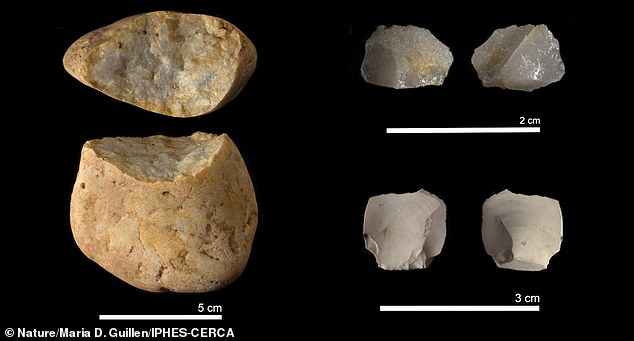
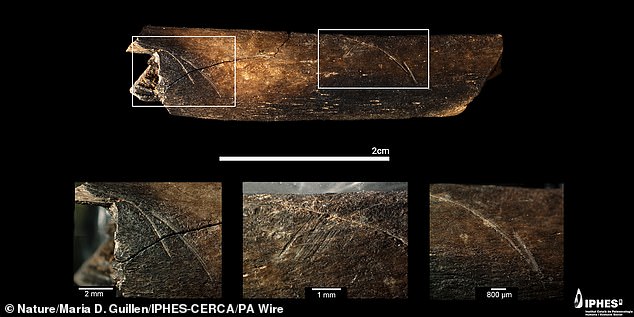
Close to where Pink’s remains were found, scientists also uncovered stone implements crafted from quartz and flint, along with animal bones that showed distinct signs of cutting.
This suggests that Pink and their kinfolk had established a basic tool-making industry and were skilled at butchering animals for food, similar to what Homo erectus could do.
The study’s co-author, Dr Xosé Pedro Rodríguez from the University of Rovira i Virgili (URV), comments: “These findings indicate a successful approach for obtaining food and underscore the capability of these early humans to utilize the natural assets present in their surroundings.”
If Pink indeed belongs to the Homo erectus species, this discovery would indicate that this ancient human ancestor was much more widespread and existed earlier than what researchers previously believed.
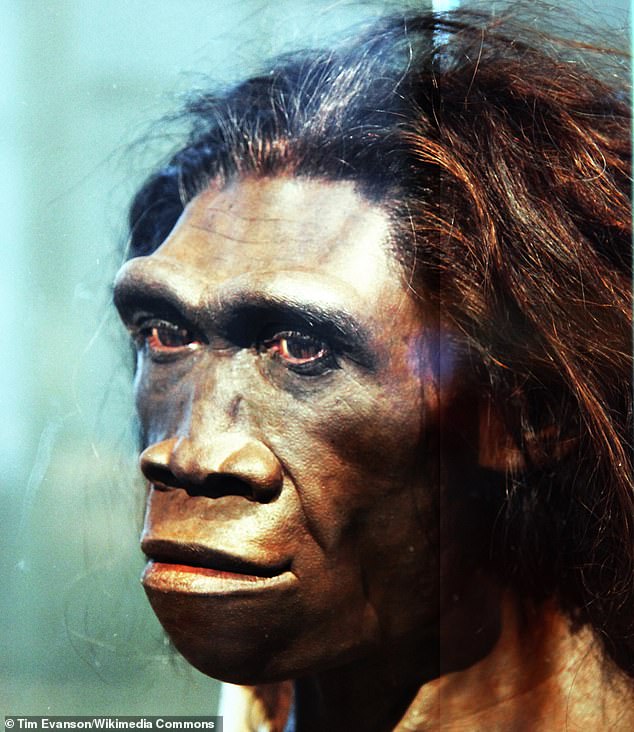
Who were Homo antecessor?
Homo antecessor is among the first types of humans found in Europe, with evidence tracing back as early as one million years ago.
Thought to have had a weight of approximately 14 stone, Homo antecessor was believed to be between 5.5 and 6 feet tall.
Their brain volumes ranged from approximately 1,000 to 1,150 cubic centimeters, which is smaller compared to the typical 1,350 cubic centimeter brains of present-day humans.
It is thought that this species was predominantly right-handed, setting it apart from other apes, and might have employed a symbolic form of communication. These conclusions were drawn from archaeological findings discovered in Burgos, Spain in 1994.
Nevertheless, the researchers remain unconvinced that Pink merely belongs to this particular species of human ancestors.
Even though their skulls are alike, Pink’s face has a more slender structure compared to specimens of Homo erectus discovered throughout Asia and Africa.
However, based solely on bits of bones and two worn teeth, the scientists cannot yet confirm that Pink represents a completely new species.
Rather than doing so, they chose to label Pink as ‘Homo affinis erectus,’ employing the Latin word ‘affinis’ which signifies that this species shares an affiliation with recognized kinds.
Dr Martinón states: “There isn’t enough evidence yet for a conclusive categorisation, so we chose the term Homo affinis erectus.”
She notes that this step was taken to ‘recognize Pink’s connections with Homo erectus while still allowing for the chance that the remains could be from a different species.’
The research team contends that Pink’s species was among the initial group of humans to migrate into Western Europe.
However, that initial migration seems to have been abruptly halted as the climate of the Iberian Peninsula underwent a sudden change.
When Pink resided in Spain, the Sierra de Atapuerca area was characterized by a blend of forested zones, marshy meadows, and intermittent bodies of water — creating a bountiful habitat for early human inhabitants.
However,
earlier research indicates that there might have been a abrupt climate change approximately 1.1 million years ago.
any of which could have exterminated humanity.
This might be why there’s a significant gap in the fossil records between Pink and the subsequent Homo antecessor specimens.
Dr Eudald Carbonell, a paleontologist from URV and co-director of the project, states: “The evidence pointing towards distinct hominin populations in Western Europe throughout the Early Pleistocene indicates that this area played a crucial role in the evolutionary journey of the genus Homo.”
Read more

oleh admin | Jan 6, 2025 | biology, healthcare and medicine, life sciences, news, science
I will now condense my extensive discussions with Dr. Daniel Block and Dr. Andres Morato, share details about my own recoveries, and offer my individual perspectives on the enigma of stem cells.
NO REJECTION OF THE STEM CELLS FROM THE EMBRYO
Since 1931, reports of cancer-resistant black sheep have surfaced after Dr. Paul Niehans uncovered and began implementing Living Cell Therapy (LCT). This was followed by his aide, Dr. Siegfried Block, then later by his offspring, Dr. Petra Block, along with her brother, Dr. Daniel Block. Additionally, they boast an impressive 86% rate of successful treatments.
More than 2,500 of these black sheep wander freely across the Block family’s sprawling 25-square-kilometer jungle-like property in Landsberg, Germany. The facility particularly chooses first-time mother black sheep for slaughtering due to their excellent health and ideal conditions which ensure they can produce top-notch offspring. For each group of patients, seventy ewes are selected at the start. A week before the procedure begins, twenty of them are isolated, and within two to three days leading up to it, two or three of the finest are culled.
In under 40 minutes after slaughtering, the embryo’s components are swiftly processed into an emulsion within their EU-approved facility and then carefully dispensed using calibrated syringes for patient injections. This therapy is referred to as “live cells” rather than powdered or frozen ones. Although recovery can sometimes be immediate, typically it takes between four to ten weeks following the injection before visible improvements appear.
THEREFORE, 10 WEEKS LATER, ON OCTOBER 23, I ASKED DR. DENNIS SERRANO FOR ASSISTANCE.
To assess my LCT, after some preliminary examinations, he informed me with great delight that the cancerous cells in my prostate appeared “dormant,” and my PSA level stood at an impressively low 0.33. Consequently, he decided to discontinue my hormone therapy and reduced my use of Duodart to just two times per week.
In response, I shared with him that my lower back discomfort hadn’t returned since July; both my tennis game and golf stroke had improved significantly; and now I could maintain a fast walking pace as well as dance continuously—waltzing, tangoing, and swinging—for half an hour without issue. Nevertheless, I noted minimal relief from symptoms related to my carpal tunnel syndrome and varicose veins.
Doctor Serrano plans to perform more comprehensive examinations by the end of this month to reach a clearer verdict about my condition with the prostate. Nonetheless, he confirmed that both my physical health, mental state, and sexual capabilities are well above average. I remain optimistic and am continuing to pray, leaving everything up to God’s plan for me.
In the meantime, I plan to maintain an intermittent fasting routine to stay under 70 kilograms, work out at the gym, and play tennis every Monday and Friday. Golf will be part of my schedule on Wednesdays and Saturdays; meanwhile, I’ll take swift walks around the Manila Polo club track on Tuesdays and Thursdays. On Sundays, I’ll utilize my treadmill for some indoor exercising.
I will continue to (1) keep my mind active (as using it prevents atrophy), (2) fully participate in every meeting as a board or committee member for companies, charities, and groups where I serve, (3) resolve conflicts between major business leaders and politicians, (4) spend quality time with loved ones through social activities, travel, meals, and laughter, and (5) write my articles wholeheartedly.
I HAVE FELT A PASSION FOR SCIENCE AND TECHNOLOGY
Since my high school years, I aspired to become a chemical engineer. The journey that led me to law is an entirely different tale. In my 2003 publication titled “The Bio-age Dawns on the Judiciary,” I articulated this sentiment: “… even as we strive to adapt to the transformative changes brought about by the information age, humanity finds itself confronted anew by a groundbreaking event —the successful sequencing of the entire human genome completed on April 14, 2003. This monumental scientific feat carries profound implications for every individual across the globe, affecting not just common folks but also those within judicial circles.”
The word ‘genome’ encompasses all the genetic material present within a person. Due to the successful conclusion of the genome-sequencing initiative, researchers possess a comprehensive catalog of the essential components of the human genes. This achievement can be likened to having meticulously listed every part needed to construct an aircraft, thus paving the way for either building a brand-new functional craft or—in cases where this machinery may already exist—scientifically rejuvenating a deteriorated version. With the project’s culmination, scientists gain the ability to explore, manipulate, adjust, or transform these genetic frameworks with aims to extend lifespans and accelerate evolutionary progress.
Starting from this achievement, Dr. Jennifer Doudna and her group developed the CRISPR-Cas9 genome-editing technology to remove faulty sections of an individual’s genetic code and introduce healthy segments instead. This innovation aims to eliminate biological disorders and imperfections, effectively redesigning life itself. As recognition for this groundbreaking work, Dr. Doudna received the Nobel Prize. In my view, this accomplishment might hold the key to understanding stem cells—specifically their inherent capacity to encourage regeneration, rejuvenation, and repair of damaged tissues and organs in patients.
For me as well, what remains even more enigmatic than stem cells is the process where the sperm fuses with the egg and forms a zygote which then has the remarkable capability to split repeatedly and swiftly develop various bodily structures autonomously. Such an extraordinary phenomenon—the genesis and progression of life—is beyond our understanding and solely within the domain of divine creation. Ultimately, I must acknowledge that everything originates from and concludes at the feet of the Lord. Henceforth, my constant refrain shall remain “Glory to God!” echoing Saint Augustine who once proclaimed, “Until my heart found peace in Christ Jesus.”
—————-
Comments to chiefjusticepanganiban@hotmail.com
oleh admin | Agu 1, 2024 | bacteria, biology, ecology, life sciences, science
Recent studies indicate that complex life on our planet started about 1.5 billion years sooner than earlier estimates suggested. Here we examine some leading hypotheses regarding the emergence of life.
For hundreds of years, humans have pondered over the beginnings of life on our planet, as well as the nature of existence itself—questioning primarily our origins and our future direction.
This query encompasses fundamental fields such as chemistry, biology, and physics, along with philosophy, psychology, and aspects of belief. Initially, early scholars were involved in various realms of inquiry. However, these foundational sciences are typically seen as more exact and straightforward to quantify compared to the others, which is why researchers often concentrate their efforts on them nowadays.
During the 19th century, French chemist Louis Pasteur showed that life invariably arises from pre-existing life. Whether they be plants, animals, or microorganisms, each reproduces within its own species.
And what about the initial living organism? If it emerged from non-living matter, when and how did this occur?
Life could potentially be far more ancient than our current understanding suggests.
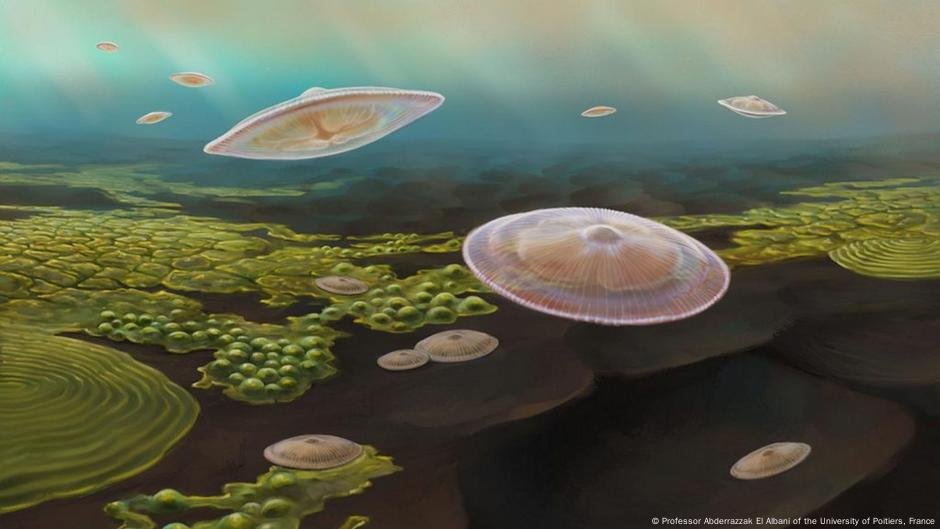
A research conducted at Cardiff University in Wales, UK, indicates that complex life on our planet may have started approximately 1.5 billion years before what was initially believed. The team asserts they discovered indications within rocks from Gabon suggesting that environmental conditions were conducive to life around 2.1 billion years ago.
Published in the journal
Precambrian Research
The research indicates that approximately over 2 billion years ago, the impact of two continental plates colliding generated a nutrient-abundant setting conducive to the development of complex life forms.
This would have generated phosphorus and marine oxygen essential for the shift from unicellular organisms to more advanced forms of life.
However, their existence was brief — it seems these complex lifeforms were restricted to an inland sea and could not expand globally.
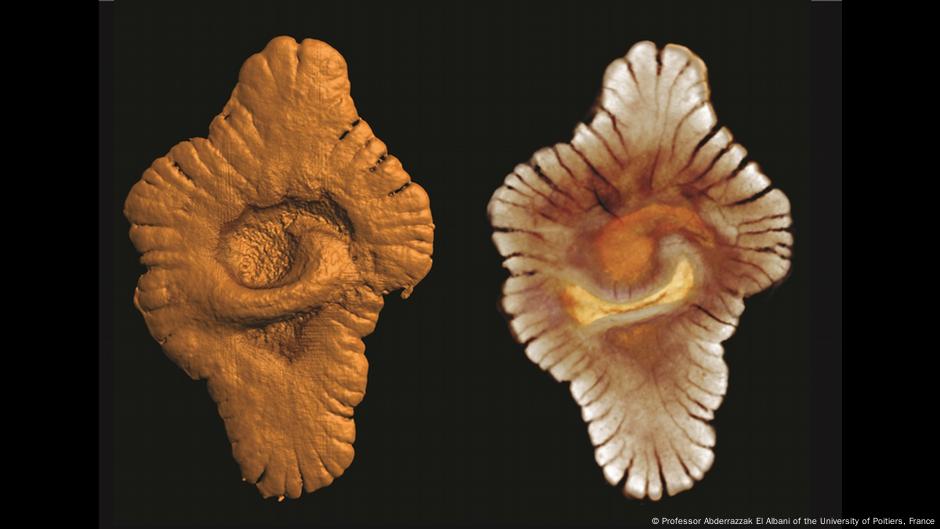
This study questions the long-held scientific agreement that complex animals first emerged 635 million years ago, proposing instead that there was an earlier unsuccessful effort towards developing intricate life forms on our planet.
What alternative theories are there regarding the emergence of life on Earth?
Certain researchers have voiced skepticism regarding the recent discoveries and have demanded additional studies.
However, this research has reignited discussions regarding how complex life originated on our planet.
Throughout the last hundred years, scientists have created several dozen.
In this section, we examine several of the most common ones.
1. The Theory of Primeval Broth
The most prevalent hypothesis is the “primordial soup” theory, suggesting that life emerged from organic molecules in an early ocean.
British biologist
Charles Darwin
(1809-1882) was the pioneer who proposed that life might have originated in “a warm little pond.”
It wasn’t until the 1950s that his hypothesis underwent experimental validation. Harold Urey, an esteemed American chemist and Nobel laureate, along with Stanley Miller, a specialist in chemical evolution, constructed a rudimentary atmospheric environment within a lab setting. Inside this sealed apparatus, they combined water, methane, ammonia, and hydrogen gases and then sparked these mixtures using electrical discharges meant to mimic lightning’s role as an energy source.
Following several days, amino acids, which are the fundamental components of life, had developed.
2. The concept of cosmic life
A fascinating idea suggests that life on Earth initially originated beyond our planet, coming from outer space. This concept proposes that living organisms or essential building blocks required for life were transported here and took root on Earth.
This train of thought does not pinpoint precisely where life began or in what shape it came to our planet. However, the predominant notion is that life might have been delivered via a meteorite bearing microorganisms that struck Earth.
The initial advocates for this hypothesis included British astrophysicists Fred Hoyle and Chandra Wickramasinghe. During the 1970s, their research indicated that comets held sufficient organic material to potentially initiate life on planets like Earth.
3. The hypothesis of hydrothermal vents
The hydrothermal vent hypothesis proposes that life on Earth might have originated at the bottom of the oceans near these hydrothermal vents. Such vents are fissures in the seafloor from which emanate heated water saturated with minerals.
Michael Russell, a British geologist associated with the NASA Astrobiology Institute, suggested that alkaline hydrothermal vents emitting hydrogen, hydrogen sulfide, and methane might have offered suitable circumstances for the creation of basic organic compounds.
Even though the surroundings of hydrothermal vents are deemed harsh—with temperatures soaring up to 400°C (752°F)—there exist microorganisms that thrive in these settings through chemosynthesis.
Chemosynthesis is a biological process where microorganisms produce their sustenance. Instead of relying on light, they utilize energy derived from chemical reactions. This capability enables them to thrive in dim environments like the deep seabed.
4. The RNA world
The RNA world hypothesis suggests that prior to the emergence of DNA and proteins, early life forms on Earth relied on an adaptable molecule known as RNA (ribonucleic acid).
DNA (deoxyribonucleic acid) enables organisms to grow, endure, and replicate. These DNA sequences transform into messages or guidelines that facilitate the creation of proteins—these intricate molecules play a crucial role in nearly all functions within our bodies—and sustain life.
On the contrary, RNA fulfills these two crucial roles for living organisms: It holds genetic data and serves as a catalyst for vital chemical processes.
During the 1980s, chemists Thomas Cech and Sidney Altman uncovered ribozymes—RNA molecules possessing catalytic capabilities—and received a Nobel Prize for their discovery.
Scientists have suggested that early RNA molecules could self-replicate and facilitate basic chemical reactions before modern life forms emerged. Over time, these were supplanted by proteins, which serve as superior catalysts.
Various hypotheses exist regarding the beginnings of life. However, these are the ones that have garnered the most focus within the scientific community.
Everyone—including the most recent findings from Cardiff University—emphasizes the intricacy of this question that still captivates and puzzles us in modern times.
Edited by: Zulfikar Abbany
Primary source:
A recent study from Cardiff University suggests that complex life on Earth emerged approximately 1.5 billion years sooner than was originally believed. This finding was announced on July 29, 2024.
https://www.cardiff.ac.uk/news/view/2830233-complex-life-on-earth-began-around-1.5-billion-years-earlier-than-previously-thought,-new-study-claims
Author: Fernando Mateos Frühbeck
oleh admin | Jun 23, 2024 | biology, culture, ecology, plants, science
-
READ MORE
Plants possess INTELLECT and the capability to address challenges.
Scientists have noticed plants engaging with their surroundings in manners suggesting consciousness, according to some researchers’ claims.
Paco Calvo, who is a faculty member at the University of Murcia,
Spain
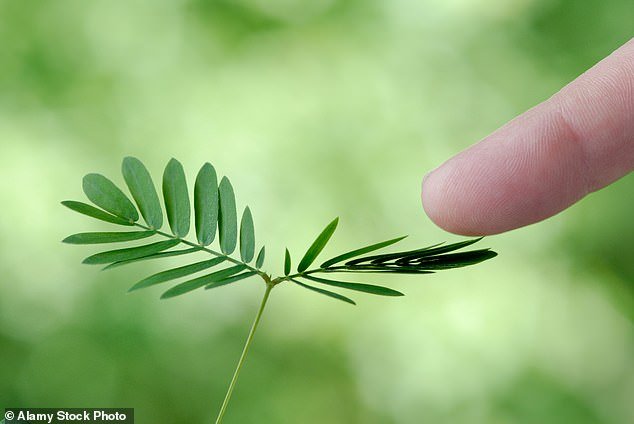
, has been investigating plant intelligence and problem-solving for many years, discovering that the mimosa seems to ‘acquire knowledge through experience’ as it ceases to curl up.
‘Psychology considers that as the fundamental type of learning,’ Calvo explained to LIFEHACK.
This sequence of folding followed by no further folding supports the notion that the plant acquired knowledge through experience rather than inheriting it genetically.
The professor additionally mentioned that various plants convey information among themselves using chemical signals, tackle challenges, and seem to possess some form of memory.
A number of researchers characterize intelligence as possessing a central nervous system through which electrical impulses travel, conveying messages to other nerve cells for processing information.
![]()
Plants instead possess a vascular system, an intricate web of cells designed for transporting water, minerals, and nutrients to facilitate their growth.
“We view plants as resources—for fuel, oxygen, textiles, and food—but we fail to appreciate them simply for what they are,” stated Calvo.
‘By comprehending an alternative form of intelligence that doesn’t necessitate brains, maybe we can grasp what brings us together within the tapestry of life.’
We have to locate the main key.

Certain plants seem to ‘recall’ past droughts and use water more sparingly compared to those that haven’t experienced such conditions before. The professor also mentioned that strawberries can learn to link light cues with areas containing nutrients.
He went on to say that plants also synchronize their release of pollen with times when pollinators like bees are active.
Scientists have likewise suggested that plants might possess the ability to count, reach conclusions, identify their kin, and perhaps retain memories of occurrences.
The issue lies in how humans define intelligence based on our own characteristics—focusing solely on creatures with brains—which causes us to overlook potential forms of intelligence and awareness beyond what we recognize.
‘In our opinion, you must be considered an animal to be deemed intelligent. This perspective is quite narrow-minded,’ stated Calvo.
A new research carried out at Cornell University
discovered that goldenrod plants release a chemical when consumed by beetles, which makes the insects believe the plant is injured and unsuitable for feeding; subsequently, neighboring goldenrods also exhibit this behavior.
Andre Kessler, a chemical ecologist and professor at Cornell University, stated: “This aligns with our understanding of intelligence.”

‘Based on the environmental cues it gathers, the plant alters its typical actions.’
Calvo is part of an increasing group of researchers advocating for a fresh perspective on how plants tackle issues and exchange information. They suggest that these processes bear striking similarities to human thought patterns, albeit lacking a centralized organ like a brain.
‘Plant cells generate pulses of electrical voltage similar to action potentials in nerve cells. When you stimulate the sensory hairs of a Venus flytrap twice and it closes, that is due to these action potentials,’ he explained.
‘Lacking a brain or nervous system doesn’t imply that you can’t engage in electrochemical signaling!’
Calvo has likewise proposed that plants ‘think’ through their vascular system—a network of cells responsible for transporting water, minerals, and nutrients to support growth.
However, it’s utilized for transmitting information, he pointed out.

‘The absence of a brain or nervous system doesn’t imply the inability to engage in some type of electrochemical signaling,’ the professor went on to say.
Electrical impulses move through the circulatory system—this means your plant doesn’t just react locally to being touched; instead, it can also respond at the opposite end of the organism.
‘Although plants lack a brain, they utilize electrochemical signaling at their distinct pace to survive.’
Calvo mentioned that the neurotransmitters found in human brains, like glutamate or GABA, are also present in plants and are occasionally utilized similarly.
“So when you have a plant with a caterpillar feeding on its leaf, the plant can utilize the neurotransmitter glutamate to initiate a calcium wave that propagates through its stem and leaves, producing a protective chemical defense to fend off the caterpillar,” he clarified.
Calvo stated that plants must adopt a distinct survival approach compared to humans due to being anchored in the ground; hence, their tactic is to “spread and dominate.”
‘So if you try to grab or attack an animal, it can fight back,’ he explained.
When it comes to plants, they are unable to perform those actions — therefore, their approach is to maintain a completely decentralized system.
If you cut off a limb, they can sprout another branch. However, if you were to amputate my arm, I wouldn’t be able to regrow it.
Studying plant intelligence might play a key role in enhancing our self-understanding and combating climate change.
‘We view plants as resources—for fuel, oxygen, textiles, and food—but we fail to appreciate them simply for what they are,’ stated Calvo.
‘By comprehending an alternate form of intelligence that doesn’t necessitate brains, maybe we can grasp what brings us together within the tapestry of life. Our task is to uncover the master key.’
Read more


