oleh admin | Apr 1, 2025 | biotech & biomedical, drugs, healthcare and medicine, medicine and healthcare, news
Rwandan biotechnology firm Akagera Medicines recently reported encouraging outcomes following the conclusion of initial phases of preclinical testing for an antibiotic aimed at treating pulmonary tuberculosis (TB). On Tuesday, April 1st, the company disclosed that they have finished the preliminary stages of their preclinical tests on AKG-100—a newly developed antibiotic within the oxazolidinone category—specifically engineered to combat pulmonary TB.
In related news, Rwanda signed agreements earlier regarding hosting initiatives linked to African pharmaceutical foundations. Additionally, last month saw Akagera Medicines securing $1.5 million to enhance accessibility measures.
Based out of facilities in both Boston and San Francisco alongside owning a wholly-controlled affiliate based in Kigali where operations include production activities along with upcoming clinical studies, the enterprise concentrates on discovering and advancing innovative lipid nanoparticles used not only in antibiotics but also mRNA vaccinations intended to tackle various illnesses such as tuberculosis, bird influenza, respiratory syncytial virus (RSV), among others.
Dr. Daryl Drummond, who serves as the Chief Scientific Officer at Akagera Medicines, highlighted the significance of achieving key benchmarks during these developmental milestones towards introducing advanced long-term injectables tailored explicitly toward aiding individuals suffering from pulmonary TB conditions. According to him, “AKG-100 exhibits strong potential through favorable pre-clinical findings.”
Experts working under the umbrella of Akagera Medicines characterized AKG-100 using terms like ‘extremely stable’ when describing its modified version incorporating polyethylene glycol chains attached to phospholipid bilayers forming nanoscale structures known scientifically as pegylated liposomes.
These specially crafted carriers offer numerous advantages including improved therapeutic effectiveness due primarily to heightened chemical resilience coupled with enhanced aqueous compatibility thus minimizing adverse side effects typically associated with conventional therapies. Furthermore, owing to protective characteristics inherent in liposomal constructs, active substances remain shielded against enzymatic breakdown processes occurring naturally inside human bodies leading ultimately to extended periods wherein effective dosing levels can persist without necessitating frequent administration schedules.
Moreover, investigators involved confirmed that employing this particular approach facilitated more efficient cellular absorption rates accompanied by prolonged intracellular persistence thereby ensuring elevated localized concentration gradients directly impacting afflicted areas effectively. Overall, leveraging advancements made possible via modern nanoengineering techniques presents exciting prospects opening up possibilities hitherto unexplored avenues offering hope particularly amongst those battling severe forms resistant strains prevalent across different parts globally today.
Provided by Syndigate Media Inc. (
Syndigate.info
).
oleh admin | Apr 1, 2025 | agriculture, biotech & biomedical, biotechnology, technology, technology trends
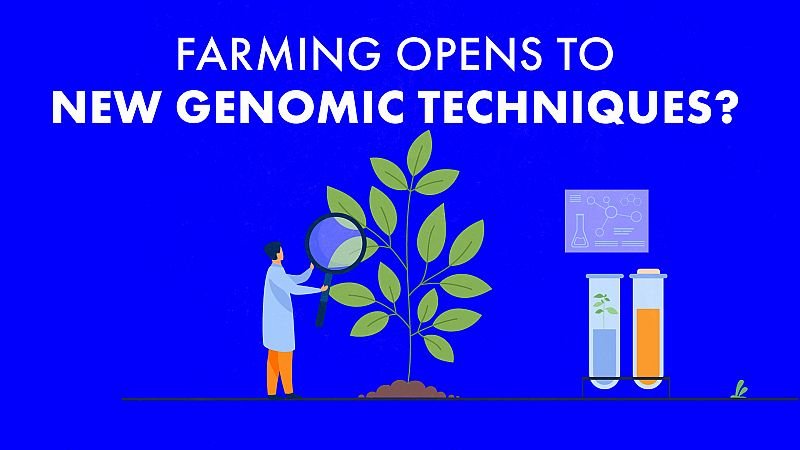
During the latter part of the 20th century, genetic material from various organisms was inserted into seeds, resulting in what we now call Genetically Modified Organisms, or GMOs. This technological approach aims at cultivating plants that are more robust and capable of higher yields.
Roughly twenty years ago, the European Union established stringent regulations governing authorization, labeling, and risk evaluation. However, recently it has suggested loosening these controls regarding New Genomic Techniques, which alter the genetic makeup of plants themselves.
“The European Commission has opted to establish two classifications: one for items derived from these advanced methods and another for those produced using traditional approaches, which will adhere to current regulations. Nevertheless, certain individuals believe that these novel forms of genetically modified organisms may pose similar hazards as their predecessors, potentially leading to unforeseen consequences for the ecosystem,” says Robert Hodgson, reporting on this topic for Euronews.
The dispute is expected to heat up once more since the governments from the 27 member countries have come to an accord regarding the proposition this month. Now, these ministers must achieve a unified stance alongside the European Parliament, despite differing viewpoints on contentious topics like patents and labeling.
During a brief visit to multiple cities, Euronews gathered some European viewpoints. “I am not entirely opposed to it. Conducting comprehensive studies to assess whether it has any adverse effects would be crucial,” remarked a person from Berlin.
“Over the past few decades, significant progress has been made in this technology, yet we still lack complete mastery over it,” stated another individual from Warsaw (Poland).
“It is essential for them to be labeled so that consumers can make an informed decision. Personally, I would not purchase them,” stated a pedestrian in Lyon (France).
Experts in biotechnology contend that these plant varieties will exhibit greater resilience against drought, pests, and necessitate reduced use of fertilizers. They are also addressing health concerns like allergies by developing low-gluten grain options, for instance.
Critics highlight the dangers: interference with pollinators, potential pollution of organic crops, limited seed availability for small-scale farmers, and unknown impacts on human well-being.
Could patents result in the exclusion of small farmers?
The European Council was split regarding the approval of patents, with discussions centered around potential limitations these might impose on farmers’ options and the possibility of forming monopolies. It required nearly a year before they reached an agreement to permit patents, provided that certain specified reporting conditions were fulfilled.
One of the shadow rapporteurs overseeing the legislation stated that the European Parliament’s stance is to entirely prohibit patents.
“If several major global agricultural chemical companies monopolize seed production, farmers will face higher costs, lose their ability to make choices, and worst of all, genuine innovation in crop varieties will come to an end,” stated Christophe Clergeau, a French centre-left MEP.
Only a few member states have demonstrated significant interest in GM crops, with Spain being an outlier. Many nations have gone so far as to ban these technologies outright, allowing governments to exercise their choice to opt out. However, this might not remain possible for every category of such products.
Approximately ten years back, this matter turned into a significant political concern, particularly with considerable public resistance across Europe. The governments called for an exemption and received one,” clarifies Hodgson, further stating: “Since the plants in this new classification will essentially mirror typical naturally occurring plants, authorities won’t have the choice to prohibit their growth anymore.
Politician Clergeau emphasizes that they are just starting with this innovative technology, asserting that the EU needs to proceed cautiously since “intervening in nature can lead to chains of alterations which might threaten biodiversity.”
A whole new realm of opportunities is quickly emerging in the field of food production, as scientists are now investigating the application of generative artificial intelligence to this sector. As expected, this development has sparked some debate!
Watch the video here!
Journalist: Isabel Marques da Silva
Content creation: Pilar Montero López
Video production: Zacharia Vigneron
Graphism: Loredana Dumitru
Editorial coordination: Ana Lázaro Bosch and Jeremy Fleming-Jones
oleh admin | Mar 24, 2025 | biotech & biomedical, genetic testing, genetics and heredity, healthcare and medicine, scientific research
The pioneering American genetic-testing firm 23andMe has declared bankruptcy and is seeking a potential purchaser following a data breach two years ago that exposed information from millions of user profiles.
23andMe, a company offering a mail-in saliva test to identify ancestry or specific health-linked genetic characteristics for under $200, announced on Sunday that they have “submitted a voluntary request for restructuring” to a state bankruptcy court in Missouri.
In its peak a few years back, the frenzy over DNA testing witnessed countless consumers eagerly purchasing kits to uncover their ancestral and health-related details, with 23andMe tests even turning into sought-after presents during holidays.
The firm based in Silicon Valley, which made its debut on the stock market in 2021, boasts 15 million clients and has experienced a drop in revenues over recent months due to waning interest in testing and a security incident involving sensitive information leakage.
23andMe announced that they turned down a buyout proposal from their founder and CEO, Anne Wojcicki, who has stepped down from her role but will continue serving as a member of the company’s board of directors, as stated in the release.
On X, Wojcicki shared that “Although I am disappointed with the outcome and my offer was declined, I support the company and still plan to remain a potential bidder.”
She stated that her decision to step down from her role as CEO was part of a strategy aimed at positioning herself “to lead the charge for acquiring the firm independently.”
Wojcicki, who established 23andMe 19 years ago along with others, recognized the difficulties faced by the firm yet expressed her steadfast confidence in its prospects.
In November, faced with challenges, 23andMe announced the termination of approximately 40% of its workforce, which amounts to around 200 employees. Additionally, the company halted its research initiatives.
In an official document submitted to regulators, 23andMe stated that they have committed to paying around $37.5 million as part of the settlement for allegations connected with the 2023 data breach.
In the 2023 hacking incident, approximately 6.9 million user accounts were compromised, with about 5.5 million of those containing data related to genetic matching.
With previous passwords of customers, the hackers were able to access data encompassing their names, gender, birth year, locations, pictures, health details, and outcomes from genetic ancestry tests.
Following the bankruptcy declaration, Geoffrey Fowler—a tech columnist at the Washington Post—cautioned: “If you’re among the 15 million individuals who have submitted your genetic information to 23andMe, now might be the right moment to remove your data.”
He pointed out the danger “that your information might be sold or moved to another corporation, which could intend to utilize it for different objectives.”
The firm’s stock value dropped by almost 50 percent to reach 92 cents during Monday’s trading session on Wall Street.
The post
Genetic Testing Company 23andMe Files for Bankruptcy
appeared first on
LIFEHACKEnglish – Morocco News
.

oleh admin | Nov 20, 2024 | aging, biotech & biomedical, health, healthy living, life sciences
For centuries, humans have searched for methods to prolong life, with the pursuit of long life spans tracing back millennia. As molecular biologist João Pedro de Magalhães aptly states, “Aging is part of nature. However, technology and science aim at surpassing these inherent boundaries.” In contemporary times, researchers across the globe are investigating revolutionary techniques to increase human lifespans—ranging from genetic treatments that enable cells to withstand and potentially undo aging processes to advancements previously confined to the realms of sci-fi like cryonics and digital data preservation.
The worldwide market for longevity and anti-aging treatments is growing quickly, projected to hit $44.2 billion by 2030, up significantly from $25.1 billion in 2020, as per Allied Market Research data. Venki Ramakrishnan, who won the Nobel Prize and formerly led the Royal Society, points out that over 300,000 scholarly papers on aging were released in just ten years, with upwards of 700 new ventures pouring billions into longevity studies. This international drive underscores our dedication to extending life spans healthily across the globe.
Like numerous nations, the Philippines is witnessing a demographic change with an increasing elderly populace. Data provided by the Philippine Statistics Authority indicates that by 2045, approximately 15.9 percent of the nation’s inhabitants could fall into the age bracket of 60 years old or above. This aging phenomenon coupled with a rising awareness regarding the impact of societal elements on longevity and overall health has sparked curiosity in various treatment options—from straightforward and minimally invasive procedures to sophisticated approaches such as regenerative medicine and cell-based therapies. These alternatives have gained significant traction among people seeking improved quality of life during their golden years.
In his guidebook titled “How to Slow, Stop and Reverse Aging — and Not Die from Something Stupid,” Dr. Peter H. Diamandis shares further insights into living longer. Among these he underscores strength training exercises, cutting-edge diagnostic tools for early intervention, and nutritional supplements aimed at enhancing cell vitality, as well as adopting what he calls a ‘lifespan mentality.’ Additionally, Dr. Diamandis stresses that good-quality sleep plays an essential role in regeneration, mental sharpness, and immune system support.
Breakthroughs
During a recent conference on Regenerative Medicine in Asia, Dr. Quincy Raya, who serves as the medical director at the Raya Clinic and was also one of the founding vice presidents of the Asian Society of Regenerative Medicine, explored various uses for this field including treatments related to orthopedics, general surgery, neurology, ophthalmology, plastic surgery, cosmetic procedures, aesthetic enhancements, gynecological care, male health issues, dentistry, and cell transplants. She highlighted during her talk how regenerative medicine represents an evolving multidisciplinary strategy aimed not just at managing diseases but helping bodies heal, regenerate, and return themselves to optimal conditions. Additionally, she mentioned that it involves generating live, functioning bodily tissues capable of replacing those impaired or lost because of aging, illnesses, injuries, or congenital flaws. This discipline utilizes methods like cellular therapy, techniques focused on constructing new tissues, and hybrid biological devices meant to mimic organs.
In light of advancements in biotechnology and artificial intelligence for enhancing health and lifespan, Dr. Raya plans to host a conference focused on longevity and biohacking by August of next year. The event aims to gather specialists in longevity science, particularly those affiliated with prestigious institutions such as Harvard, Stanford, and Cornell Universities.
Stem cell therapies hold particular promise. According to Dr. Chadwick Prodromos, who leads theProdromos Stem Cell Institute, stem cell injections have the potential to decrease memory loss, mental cloudiness, and tiredness, along with revitalizing both the heart and brain. Additionally, these procedures are under investigation for various neurological disorders such as spinal cord damage, stroke impacts, and cerebral palsy.
Furthermore, an extensive Harvard study conducted over 85 years discovered that maintaining positive relationships is crucial for living a long and healthy life. This significant research highlights the critical role of social health and robust bonds, which play key roles in fostering happiness as well as enhancing both physical and psychological wellness.
The growth of technology is similarly supporting healthier aging, with smart home gadgets enabling elderly individuals to remain independent and tools facilitating ongoing social interactions. Such developments play a key role in detecting diseases at an earlier stage and managing them effectively, permitting folks to keep track of their well-being and obtain preventative treatment.
The Harvard Stem Cell Institute indicates that aging is a multifaceted process tied to our diminishing capacity to regrow tissues. Although stem cells aren’t a “youth elixir,” they provide valuable information about what triggers aging-associated illnesses and could pave the way for innovative approaches aimed at enabling individuals to lead longer, more active lives. These cells might aid in uncovering the fundamental reasons behind aging and play a role in therapies designed to improve living conditions as one progresses through years.
Practical steps
With ongoing advancements in research and sophisticated technologies continually expanding the limits of what was once feasible, achieving extended longevity with better health seems increasingly within reach. Nonetheless, we must remember that certain straightforward measures can significantly boost one’s lifespan through personal management practices such as maintaining proper nutrition, engaging in physical activity, fostering strong relationships, and ensuring adequate rest. Such fundamental yet potent routines lay down the groundwork for an elongated existence.
Alvin Lopez serves as a top healthcare administrator in a Fortune 500 firm. He pursued his advanced medical studies at Harvard Medical School and is deeply committed to improving health equity and tackling the social factors that influence well-being.