oleh admin | Apr 3, 2025 | aviation, birds, ecology, environmental friendliness, sustainability
Uganda Airlines officials have led an initiative to clean up the lakeshore area near Lake Victoria in Kigungu, within the Entebbe Municipality, aiming to decrease incidents of birds colliding with aircraft.
As part of the carrier’s comprehensive flight path sustainability program, this effort seeks to reduce bird strikes at Entebbe International Airport by enhancing waste management practices and promoting environmental preservation.
The cleanup initiative, carried out in partnership with Kigungu residents and local community leaders, centered around gathering and disposing of waste responsibly, notably plastics and remnants from fish processing, which have significantly fueled avian presence in the region for years.
Historically, the buildup of waste along Lake Victoria’s shoreline has lured birds searching for nourishment, causing them to wander into airplane flight routes, which presents significant aviation safety hazards.
At the event, Shakilah Rahim Lamar, who leads Corporate Affairs and Public Relations at Uganda Airlines, highlighted the importance of this initiative.
“Seagulls are attracted to the refuse left along the shorelines, often resulting from fish processing operations. As Entebbe serves as a protected area for birds, it draws numerous avian visitors from nearby Mabamba Bay, thereby raising concerns about potential collisions with planes during ascent and descent phases. Such occurrences can result in significant delays and even cancelations due to damaged aircraft. This project seeks to encourage the local population in practicing eco-friendly disposal methods such as reusing, refurbishing, and recycling materials,” explained Shakilah.
She mentioned that the Flight Path Sustainability Project, initiated in November 2022, targets a 40% decrease in bird presence near the airport and encourages locally driven waste management strategies.
As stated by the Uganda Airlines representative, this initiative also fosters economic growth by converting waste into useful assets, thereby offering local inhabitants a chance to make a livelihood via recycling programs.
Uganda Airlines is committed to sustainability and environmental responsibility. The airline feels that engaging local communities and stakeholders in programs like the Kigungu cleanup can significantly boost aviation safety while simultaneously enhancing sanitation and public health in nearby regions.
Authorities stated that this cleanup initiative will occur on the final Saturday of each month.
Provided by Syndigate Media Inc. (
Syndigate.info
).
oleh admin | Apr 1, 2025 | business, environmental friendliness, landfills, waste collection, waste management
To address Monrovia’s pressing waste problem, officials have initiated a groundbreaking pilot program designed to convert garbage into a useful asset and encourage eco-friendly urban development.
The program dubbed the Solid Waste Management Transformative Pilot Project commenced operations at the Jorkpen Town Market composting facility. This joint venture involves the Environmental Protection Agency (EPA), the Monrovia City Corporation (MCC), and various community members, supported financially by the Canadian government via Novasphere. Organizations such as the Liberia Marketing Association (LMA) along with Community-Based Enterprises (CBEs) and neighborhood groups are contributing significantly to executing this endeavor.
In Monrovia, approximately 800 tons of solid waste are produced daily, with less than half being adequately collected. As a result, uncollected garbage blocks drainage systems, contaminates water bodies, and poses risks to public health. Vermon Sangah Lloyd, who leads the project, states that this effort marks a significant departure from previous approaches.
“Managing waste isn’t all this initiative covers; it’s also about reshaping our perspective and approach towards it,” stated Lloyd. “Our aim is to build a world where waste ceases to be an obstacle and becomes a cornerstone of both ecological and financial advancement.”
A preliminary investigation carried out in four key markets in Monrovia—namely Old Road, Fiamah, Rally Town, and West Point—found that these areas generate approximately 89.3 kilograms of organic refuse per day on average. This waste predominantly comprises items like leaves, fruit, and veggies, highlighting the feasibility of using composting as an effective, environmentally conscious approach.
The pilot initiative aims to pinpoint steady streams of organic refuse from city marketplaces, set up communal composting facilities, and educate national and local “waste leaders” to drive transformation aligned with Liberia’s commitments to tackling climate issues. Currently, four Community-Based Enterprises have received certification to gather and move waste to the Jorkpen Town Market compost location, turning it into reusable compost.
To facilitate efficient collaboration and supervision, a Solid Waste Coordination Committee has been established, led by the EPA with the MCC as co-chair. Participants have gained valuable insights through an educational trip to Tanzania, where they were trained in practical methods of composting and sustainable waste handling practices. Mapping activities within communities have assisted in identifying crucial collection sites to enhance operational efficiency and amplify overall effectiveness.
During the unveiling, Lloyd emphasized that the initiative extends beyond mere construction—it aims to catalyze a cultural and ecological transformation. He stated, “This composting hub signifies much more than an installation; it heralds the start of a revolution.” According to him, by decreasing methane output, revitalizing markets, and generating eco-friendly employment opportunities, they aim to establish a model for the nation to follow.
President Ma Elizabeth Sambola of LMA supported this view, encouraging significant local involvement in the project. She stated, “This endeavor restores control to the citizens.” Adding, “As market women, we should spearhead this effort—while involving young people as well. It’s an occasion for us to create a more sanitary and healthy environment in Monrovia.”
Provided by SyndiGate Media Inc.
Syndigate.info
).

oleh admin | Mar 24, 2025 | environmental friendliness, technology, washing, washing machines, world
OSAKA — Ahead of the commencement of the World Expo in Osaka, reporters were granted an early look at the futuristic “human washing machine,” scheduled for display, when Governor Hirofumi Yoshimura demonstrated its usage during a press event on March 23rd.
At the Osaka Healthcare Pavilion, visitors can experience a single-person, oval-shaped pod filled with water up to their chest. Inside, they are cleansed using bubbles and receive additional washing through overhead showers. Once clean, warm air dries them off. The system enhances the bathing experience by playing soothing music and displaying visual content tailored to the bather’s physiological state, such as heart rate, which is monitored via built-in sensors.
Yoshimura, clad in a wetsuit, put the device through testing and commented, “It feels great.” Once done, he appeared revitalized and dabbed at his somewhat damp face and hair using a towel.
Following Sanyo Electric Co.’s impressive display of the initial “human washing machine” at the 1970 Expo in Osaka Prefecture, Water Purifier Manufacturer Science, located in Osaka City’s Yodogawa Ward, revamped the initiative. The aim extended beyond automatic body cleansing to providing spiritual comfort as well.
(Japanese original by Sayuri Toda from the Osaka City News Department)

oleh admin | Jan 6, 2025 | biodiversity, ecology, environmental friendliness, environmentalism, sustainability
Approximately 600 volunteers, comprising local residents, hotel employees, and visitors, convened at the shores of Bali, Asia’s top-rated paradise island, to address the significant accumulation of plastic debris stranded due to recent monsoonal downpours.
On Kedonganan Beach in south Bali, plastic cups, straws, utensils, and used coffee packets littered the shoreline, mingled with vegetation and wooden debris.
Defying the downpour, volunteers gathered rubbish manually, amassing hundreds of big bags.
The environmental NGO Sungai Watch characterized the occurrence as the most severe case of plastic pollution in Bali’s history.
As stated by founder Gary Bencheghib, they gathered 25 tonnes of waste within just six days, setting a new record for their initiative. The majority of this plastic waste comes from Java, which is the nation’s most densely populated island.
Indonesia ranks as one of the biggest sources of plastic and marine contamination globally, where yearly monsoons carry plastic debris from urban areas and waterways out to sea.
A significant portion of this waste covers vast distances, extending up to several hundred kilometers, before ending up on Bali’s renowned shores, especially between November and March.
Bali was recognized as
the
most beautiful island in
Asia
as chosen by readers of the American magazine Condé Nast Traveler in their Readers’ Choice Awards.
Between January and December last year, it received 6.3 million international tourists, marking a 19.5% increase compared to the previous year and exceeding pre-pandemic numbers, as reported by the Bali Provincial Tourism Office.

oleh admin | Jul 1, 2024 | environmental friendliness, environmental health, environmental pollution, environmental science, plastic recycling
Microplastics have dispersed so extensively that tracing them has become challenging.
These minuscule fragments come from the breakdown of bigger plastic pieces and have been associated with heart attacks, reproductive problems, and cancer. New studies indicate that they could potentially decrease sperm counts as well.
A 2019 research from Canada indicates that humans ingest as many as 52,000 microscopic plastic pieces annually.
Last month, interest in
microplastics
spiked, with search activity hitting an all-time high Google Trends score of 100, as reported by the German environmental group CleanHub.
A
study
Findings from the University of New Mexico have generated worldwide attention, prompting numerous individuals to seek knowledge on the entry pathways of microplastics into the human body and strategies to minimize or eliminate their presence.
Although these particles are widespread throughout the
environment
There are many sources of these issues, and several ways to prevent them—starting right in your kitchen.
The top 5 items to steer clear of for minimizing your microplastic intake along with alternatives to consider instead.
5. Microplastics from plastic cutting boards might end up in your food.
Cutting boards alone might lead to exposure of up to 79.4 million polypropylene particles for humans.
microplastics
– a kind of plastic resin – as reported annually by a study from the American Chemical Society (ACS).
This indicates that utilizing a
plastic
Using a chopping board might enhance the movement of microplastics into your food.
Tempered glass cutting boards offer a budget-friendly option that is simple to clean and usually devoid of microplastics.
Several brands additionally provide chopping boards free of plastics, crafted from sturdy paper fibers.
4. Heating microwavable food containers may cause them to emit microplastics.
Plastic items marked as ‘
microwave
When heated, ‘safe’ containers can release substantial quantities of microplastics into food.
A research conducted by scientists from the University of Nebraska–Lincoln in 2023 discovered as many as 4 million microplastic particles per square centimeter within specific microwave-safe plastic-contained infant food products.
When examined under a microscope, these particles were observed to eliminate as much as 75 percent of cultivated kidney cells, sparking worries regarding their possible effects on humans.
health
.
Another best practice is to steer clear of items packaged with phthalates, styrene, and bisphenols, as these are various harmful substances.
chemicals
a document from The American Academy of Pediatrics associates it with different types of plastics.
3. Ways to Prevent Microplastics from Contaminating Ice Cubes
As with microplastics, they can be encontrados en
bottled water
Additionally, plastic ice cube trays might lead to contamination issues.
Although there is limited study on this topic, freezing plastics may result in
microplastics
To seep into water, much like what happens with heated plastics, as stated by an associate professor who was consulted by HealthCentral.
In recent times, a more eco-friendly choice has gained popularity: stainless steel ice cube trays. Not only do these elevate the look of beverages, but they also chill faster, leading to quicker freezing times.
Likewise, silicone ice cube trays are marketed as an eco-friendly option that numerous people find safer and more convenient for making ice cubes.
2. Why paper cups fail to be an environmentally friendly option
While paper
cups
Are intended to be more eco-friendly, these cups unexpectedly add to plastic pollution. They usually need a sealing layer made up of about 10 percent high-density polyethylene (HDPE) to stop liquids from leaking.
Recycling
Paper cups pose a challenge because the separation of the HDPE lining from the paper material makes the recycling process more complicated.
However, this is not everything. A 2021 study featured in the Journal of Hazardous Materials pointed out that using paper cups for hot beverages might result in the leaching of multiple substances, such as fluoride, chloride, sulfate, and nitrate ions.
Choosing a
reusable
A stainless steel flask offers environmental advantages as well as decreases exposure to microplastics.
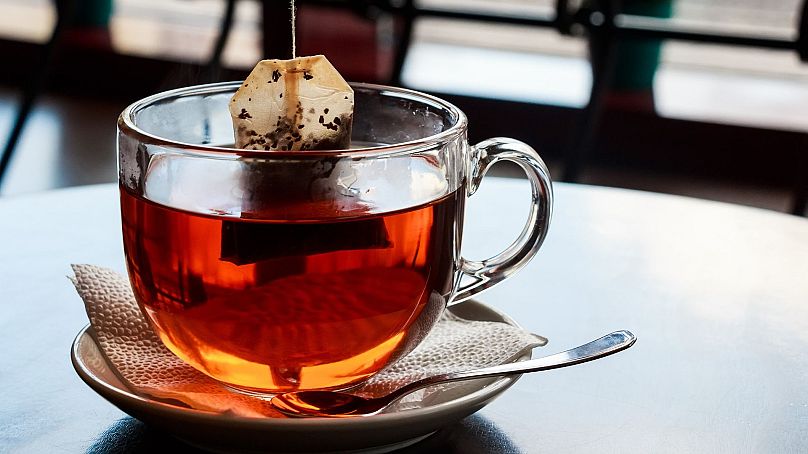
1. The tea bags you use might add microplastics to your daily cup of tea.
Surprisingly, many
tea bags
are made with unsustainable polypropylene plastic, and even paper tea bags can contain traces of plastic in the sealant.
This frequently indicates that they do not break down naturally and add to
microplastic
contamination.
In 2023, researchers at the Dow University of Health Sciences highlighted an issue regarding hot water used for brewing tea, which can cause millions of microplastics to leach from the teabags. This study indicated that each cup of tea might contain as many as 3.1 billion nanoplastics originating from the teabag itself.
Tea bags might include various hazardous materials such as fluoride compounds, arsenic, radium salts, aluminum, copper, lead, mercury, cadmium, barium, and nitrates.
Luckily, loose tea leaves are becoming popular again, and there are many eco-friendly options available for brewing.
tea
, like employing an iron kettle or a metallic sieve.
The Plastic Pollution Coalition suggests utilizing cotton tea bags or filtering tea with organic linen.
By making these minor tweaks, you can reduce the likelihood of microplastic contamination in your kitchen, as discussed more thoroughly in CleanHub’s report.
article
.