
oleh admin | Agu 20, 2025 | environmental pollution, environmentalism, politics, waste collection, waste management
Posted on, Aug. 19 — August 19, 2025 at 6:35 AM
The Chief Minister of Punjab, Maryam Nawaz Sharif, stated that Japan’s cutting-edge technology and techniques will be employed for managing wastewater and garbage in Punjab.
During her official trip to Japan, the chief minister toured the nation’s biggest sewage treatment plants located in Asahi, Yokohama City, Kanagawa, Washimaku, and Yodogawa, according to a press release published here on Monday.
She received an extensive overview of garbage collection, sewage treatment, and waste management systems in Japan. Authorities mentioned that Yokohama, Japan’s second-biggest city, processes 1.5 million liters of wastewater each day at its Solid Waste and Wastewater Treatment Plant.
The site also manages multiple facilities that produce electricity from garbage, which is subsequently utilized to supply heat to nearby households.
The CM was also informed that Yokohama’s waste disposal system sorts reusable items using state-of-the-art automation, positioning the city as an international example of ecological responsibility even with its manufacturing-based economy.
Praising Japan’s excellent benchmarks, Chief Minister Maryam Nawaz Sharif stated, “The environmental and city planning approach of Yokohama will be introduced in Punjab. Through the use of Japanese technology, our objective is to upgrade wastewater and garbage management, produce renewable power, and provide a lasting future for our citizens.”
In addition, Punjab Chief Minister Maryam Nawaz Sharif mentioned that Yokohama and Punjab have reached an agreement on “city-to-city” collaboration across various fields such as environmental conservation and contemporary urban planning.
While visiting Yokohama, Japan’s major center for commerce, economy, and culture, the CM along with her team was provided an extensive overview of city planning at Yokohama City Hall, according to a statement released today.
She engaged in talks about improving the standard of road and structure development in Punjab to align with Japanese benchmarks and examined opportunities for collaboration between Ravi Urban Development Authority (RUDA) and Yokohama.
The CM, who is presently visiting Japan on an official five-day trip, also examined possibilities for cooperation in operating a high-speed rail service connecting Lahore and Islamabad, as well as enhancing Punjab’s railway system. She received additional information about Japan’s newest gondola and aerial cable car initiatives.
PM Maryam Nawaz Sharif highlighted that Punjab stands to gain significantly from Japan’s knowledge in eco-friendly city development, waste management, and advanced transportation systems.

oleh admin | Mar 28, 2025 | controversies, environmental pollution, environmentalism, soccer, sports
-
FANS HIT OUT AT ‘MOST TERRIBLE NATIONAL ANTHEM PERFORMANCE’ ON OPENING DAY
The
Los Angeles
The Dodgers intended for the spotlight of Opening Day to shine exclusively on their recent World Series win. Nonetheless, demonstrations from supporters targeting team owner Mark Walter marred the event.
Scores of Los Angeles fans gathered outside Dodgers Stadium as part of an organization known as Dodger Fans Against
Fossil Fuels
, objecting to the team’s sponsorship agreement with Phillips 66.
Considered a major oil firm, Phillips 66 possesses the 76 gas stations, known for their promotional presence at Dodger Stadium.
“And what we’re seeing here is just greenwashing,” group co-founder Zan Dubin told the audience.
Los Angeles Times.
It tries to link the positive emotions and memories and loyalty we hold for our cherished champion team with major oil companies, thus normalizing them and making their presence seem insignificant. Obviously, we understand that oils, gases, and fossil fuels play a role in this issue.
climate change
, and we have reached a critical juncture.'”
The scientists are informing us that we’ve entered a phase where certain impacts of climate change will be unstoppable for hundreds of years. Our campaign began last summer in 2024 with an open letter addressed to Mark Walter. This initiative has since garnered signatures from more than 27,000 individuals.
Dubin mentioned that the organization also has backing from California.
Senate
Majority Leader Lena Gonzalez penned a letter to Walter requesting the removal of the sponsorship. Neither the fan group nor Gonzalez has received any response as reported.



My cofounder of the campaign, Lisa Kaas Boyle, isn’t present with us today as she resides in Pacific Palisades. Previously, she lived in Pacific Palisades but had to leave due to losing her house during the LA wildfires. We should remember that experts have confirmed these fires became more severe because of climate change.
We’re here addressing climate change and encouraging the Dodgers to take the correct path. Next year, the World Cup will be held in Los Angeles, where the organizers are backed by Saudi Aramco oil. Additionally, we know that the Olympics are set to arrive in LA soon. My query is: When the Olympics reach LA, will Dodger Stadium stand as an emblem of environmental responsibility, or serve merely as advertising space for major petroleum companies?
More to come.
Read more
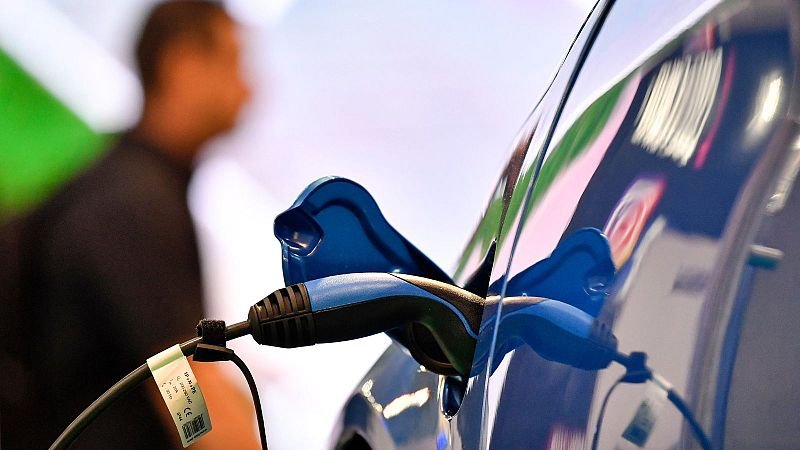
oleh admin | Mar 20, 2025 | carbon emissions, environmental pollution, environmentalism, europe, transportation
According to fresh analysis from the advocacy organization Transport & Environment (T&E), an increase in the adoption of electric vehicles will result in Europe saving around 20 million tonnes of CO2 this year.
This is comparable to the pollution from eight coal-fired power stations and signifies one encouraging development in an industry famously challenging to make cleaner.
Transportation is the sole sector that continues to emit more greenhouse gases compared to its levels in 1990, trailing behind industries, power production, and construction sectors since it accounts for approximately
a third
Regarding EU pollution, T&E’s most recent report on the state of European transportation has been released.
report
shows that emissions have begun to decline.
“The EU’s environmental policies are finally having an impact. With the shift towards electric vehicles, we’re witnessing a significant reduction in transportation-related emissions,” states William Todds, who leads T&E as their executive director.
In 2024, Europe’s transportation sector emitted 1.05 billion tonnes of CO2, which is a reduction from the 1.1 billion tonnes recorded in 2019—a decrease of 5%. This significant decline can be attributed mainly to the increased adoption of electric vehicles, which has surged dramatically in recent years, thereby displacing gasoline and diesel-powered options.
Now is certainly not the time to retract environmental initiatives,” asserts Todts. “To ensure the continent’s well-being and safety, we should intensify our efforts at this moment.
Effective environmental measures have led to a surge in electric vehicles.
Automobiles are the largest contributors to transportation-related pollution, emitting a combined total of 450 megatonnes of CO₂ equivalent emissions annually, accounting for 13 percent of all greenhouse gas emissions within the European Union.
Battery electric vehicles
(BEVs) are already three times more environmentally friendly compared to petrol vehicles, and this advantage will increase as the electricity used to power them becomes even greener, according to T&E.
The advocacy group forecasts that there will be 8.8 million battery electric vehicles on European roads this year, indicating that one out of every five newly purchased cars in the EU will emit no exhaust fumes.
The report attributes much of this advancement primarily to the European Union’s CO₂ regulations for vehicles. These guidelines offered clarity for automotive manufacturers leading up to the 2025 objective. As companies have committed resources to shift their manufacturing processes toward electric vehicles, and as battery costs continue to decline, we can expect an increased availability of more budget-friendly and widespread models by 2025.
Is the EU equipped with sufficient charging stations for all its electric vehicles?
Many people still view insufficient charging stations as a barrier to purchasing an electric vehicle. However, T&E analysis indicates that the infrastructure has kept up with the increase in battery electric vehicles.
Under the EU Alternative Fuels Infrastructure Regulation (AFIR), each country has annual targets based on a ratio of total charging power output and the number of electric cars on the road. The bloc’s 2025 target was exceeded back in 2022, and there are now more than 1,100
charge points
.
Across major roadways, 11 nations have achieved the EU objective of installing charging stations every 60 kilometers. Additionally, the AFIR is accelerating the deployment of electric vehicle charging facilities within urban areas, where Oslo, Amsterdam, Copenhagen, Brussels, and Ljubljana stand out as frontrunners in this initiative.
Vehicle manufacturing emissions ‘the next frontier’ according to T&E
Electric vehicles aren’t the ultimate solution for Europe’s widespread issue.
transport problem
, however.
Firstly, their manufacturing process remains quite pollutant. Given that approximately 10 million new cars are sold annually, the production of electric vehicles (not including batteries) contributes roughly 50 megatons of CO2 emissions each year.
According to T&E, batteries, aluminum, and steel are the key areas for reducing emissions, with a push for increased utilization of eco-friendly and recycled steel.
Aircraft emissions are sabotaging attempts to make transportation more eco-friendly.
Even with advancements on European Union roads, the researchers caution that rising air pollution is offsetting attempts to reduce transportation emissions.
Europe’s
airlines
It emitted 143 million tons of CO₂ last year, an increase of almost 10 percent from 2023.
The emissions from Europe’s maritime activities stay notably high at 195 million tonnes of CO2 equivalent, according to the report, since these sectors greatly depend on fossil fuels.
However, since shipping has been incorporated into the EU’s carbon trading system (
ETS
Combined, both sectors will reportedly generate €5 billion in revenue in 2024, as estimated by T&E.
This indicates that these funds can help cover the cost difference between green e-fuels and conventional fossil fuels—a crucial advancement from both perspectives of climate action and energy security.
“Todts mentions that Europe is gradually freeing itself from its reliance on oil, yet we continue to spend hundreds of billions on imports from foreign nations,” he states.
Imports of fossil fuels continue to be the primary energy supply for transportation, with 96 percent of Europe’s crude oil and 90 percent of its natural gas being sourced internationally as of 2023. These often come from authoritarian governments and at significant cost.

oleh admin | Jul 1, 2024 | environmental friendliness, environmental health, environmental pollution, environmental science, plastic recycling
Microplastics have dispersed so extensively that tracing them has become challenging.
These minuscule fragments come from the breakdown of bigger plastic pieces and have been associated with heart attacks, reproductive problems, and cancer. New studies indicate that they could potentially decrease sperm counts as well.
A 2019 research from Canada indicates that humans ingest as many as 52,000 microscopic plastic pieces annually.
Last month, interest in
microplastics
spiked, with search activity hitting an all-time high Google Trends score of 100, as reported by the German environmental group CleanHub.
A
study
Findings from the University of New Mexico have generated worldwide attention, prompting numerous individuals to seek knowledge on the entry pathways of microplastics into the human body and strategies to minimize or eliminate their presence.
Although these particles are widespread throughout the
environment
There are many sources of these issues, and several ways to prevent them—starting right in your kitchen.
The top 5 items to steer clear of for minimizing your microplastic intake along with alternatives to consider instead.
5. Microplastics from plastic cutting boards might end up in your food.
Cutting boards alone might lead to exposure of up to 79.4 million polypropylene particles for humans.
microplastics
– a kind of plastic resin – as reported annually by a study from the American Chemical Society (ACS).
This indicates that utilizing a
plastic
Using a chopping board might enhance the movement of microplastics into your food.
Tempered glass cutting boards offer a budget-friendly option that is simple to clean and usually devoid of microplastics.
Several brands additionally provide chopping boards free of plastics, crafted from sturdy paper fibers.
4. Heating microwavable food containers may cause them to emit microplastics.
Plastic items marked as ‘
microwave
When heated, ‘safe’ containers can release substantial quantities of microplastics into food.
A research conducted by scientists from the University of Nebraska–Lincoln in 2023 discovered as many as 4 million microplastic particles per square centimeter within specific microwave-safe plastic-contained infant food products.
When examined under a microscope, these particles were observed to eliminate as much as 75 percent of cultivated kidney cells, sparking worries regarding their possible effects on humans.
health
.
Another best practice is to steer clear of items packaged with phthalates, styrene, and bisphenols, as these are various harmful substances.
chemicals
a document from The American Academy of Pediatrics associates it with different types of plastics.
3. Ways to Prevent Microplastics from Contaminating Ice Cubes
As with microplastics, they can be encontrados en
bottled water
Additionally, plastic ice cube trays might lead to contamination issues.
Although there is limited study on this topic, freezing plastics may result in
microplastics
To seep into water, much like what happens with heated plastics, as stated by an associate professor who was consulted by HealthCentral.
In recent times, a more eco-friendly choice has gained popularity: stainless steel ice cube trays. Not only do these elevate the look of beverages, but they also chill faster, leading to quicker freezing times.
Likewise, silicone ice cube trays are marketed as an eco-friendly option that numerous people find safer and more convenient for making ice cubes.
2. Why paper cups fail to be an environmentally friendly option
While paper
cups
Are intended to be more eco-friendly, these cups unexpectedly add to plastic pollution. They usually need a sealing layer made up of about 10 percent high-density polyethylene (HDPE) to stop liquids from leaking.
Recycling
Paper cups pose a challenge because the separation of the HDPE lining from the paper material makes the recycling process more complicated.
However, this is not everything. A 2021 study featured in the Journal of Hazardous Materials pointed out that using paper cups for hot beverages might result in the leaching of multiple substances, such as fluoride, chloride, sulfate, and nitrate ions.
Choosing a
reusable
A stainless steel flask offers environmental advantages as well as decreases exposure to microplastics.
1. The tea bags you use might add microplastics to your daily cup of tea.
Surprisingly, many
tea bags
are made with unsustainable polypropylene plastic, and even paper tea bags can contain traces of plastic in the sealant.
This frequently indicates that they do not break down naturally and add to
microplastic
contamination.
In 2023, researchers at the Dow University of Health Sciences highlighted an issue regarding hot water used for brewing tea, which can cause millions of microplastics to leach from the teabags. This study indicated that each cup of tea might contain as many as 3.1 billion nanoplastics originating from the teabag itself.
Tea bags might include various hazardous materials such as fluoride compounds, arsenic, radium salts, aluminum, copper, lead, mercury, cadmium, barium, and nitrates.
Luckily, loose tea leaves are becoming popular again, and there are many eco-friendly options available for brewing.
tea
, like employing an iron kettle or a metallic sieve.
The Plastic Pollution Coalition suggests utilizing cotton tea bags or filtering tea with organic linen.
By making these minor tweaks, you can reduce the likelihood of microplastic contamination in your kitchen, as discussed more thoroughly in CleanHub’s report.
article
.