oleh admin | Agu 24, 2025 | aviation, cars, flying, technology, technology trends
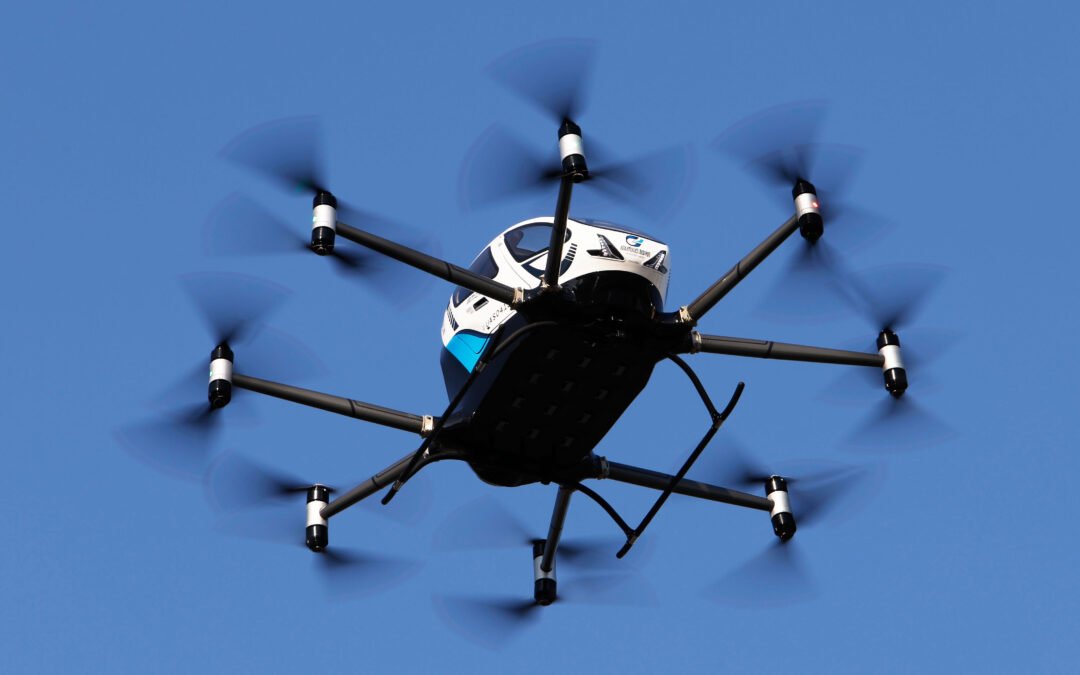
August 19, Nepal – Excitement is growing across social media platforms and emerging websites in Nepal, where anticipation builds around the upcoming NADA Auto Show 2025 in Kathmandu. The event is set to feature a flying vehicle, officially referred to as an eVTOL (Electric Vertical Take-Off and Landing) aircraft. This groundbreaking innovation, part of the broader concept called Advanced Air Mobility (AAM), represents a major leap toward next-generation transport solutions. Such advancements appear crucial for Nepal due to its challenging terrain.
Exhibition and execution are quite different things. The opportunities it unlocks are exciting, while the path to operation is challenging. Meanwhile, a nuanced understanding of this novel technology, its developmental impacts and potential implementation challenges may turn expectations into reality.
Global landscape
AAM signifies a remarkable shift in aviation technology, with the potential to revolutionise the aviation sector. It can operate at lower altitude and shorter range, requires minimal infrastructure and maintenance, making it well-positioned to deliver cleaner, safer, quieter, flexible and cost-effective transport solutions compared to conventional means.
More than 267 cities and areas spanning 63 nations are either implementing or testing AAM programs. Commercial deployments are anticipated in countries including the United States, China, South Korea, France, Japan, and Saudi Arabia by 2026.
A wide variety of eVTOL aircraft types have already been developed. Alongside the setting up of vital infrastructures, such as vertiports, is also gaining pace. As of February 2025, 1,504 vertiports are planned globally, a sharp rise from 1,004 in September 2024, with China accounting for over 50 percent of all projects.
Leading aviation authorities of the world released a joint AAM roadmap in June 2025 to guide certification, coordination, regulation and social acceptance of air taxis and drone operations. South Korean company OPPAV’s manned-unmanned eVTOL ran a successful flight test in 2023 and Chinese Ehang’s EH216-S received certification for passenger use. This underscores the global momentum towards pilotless air mobility. Market forecasts also highlight substantial growth potential for AAM. The global AAM market was valued at USD 11.5 billion in 2024 and is expected to reach USD 73.5 billion by 2034.
Through regulated sandbox settings for trial flights and collaborations between private entities and government bodies involving leading eVTOL companies, world governments are backing advancements in Advanced Air Mobility. The bold NEOM urban development initiative in Saudi Arabia and Dubai’s preparedness through approved vertical takeoff and landing sites highlight the promise of this emerging technology.
Transformative potential
Connectivity in Nepal is severely hampered by its rugged and disaster-prone terrain. Dispersed rural settlements and unreliable transport infrastructures exacerbate the situation. Roads are often hard to build and maintain due to harsh topography and frequent disasters. Air travel remains crucial while affected by limited infrastructures, topography and weather constraints.
AAM offers a game-changing solution to the country’s transportation problems. It is an agile and environmentally friendly option that can bypass damaged or non-existent roads and operate in previously unreachable areas. It can improve healthcare, reducing fatalities via rapid deployment of medical supplies and personnel, including emergency medical evacuations.
The novel technology accelerates economic activities and growth, offering market access to local producers and farmers producing goods that often struggle to reach the market. It also supports tourism by establishing connectivity with previously isolated tourist attractions.
AAM can aid in disaster readiness and swift action through the rapid delivery of necessary supplies during emergencies. Aerial monitoring, real-time mapping, and fire-fighting abilities also improve efficient disaster management, reducing possible damages.
AAM vehicles produce zero emissions and operate more quietly, providing ecological benefits. In contrast to many nations that continue using harmful energy sources for power production, Nepal can utilize its rich hydropower resources to charge eVTOLs.
Apart from the transport revolution, AAM offers a platform for innovation and skills development. The youth population of Nepal makes it well-positioned to develop human capital in terms of AAM pilots, technicians and drone engineers.
Therefore, AAM presents groundbreaking possibilities for Nepal to surmount geographic challenges, enhance economic stability, and promote various Sustainable Development Goals.
Challenges to AAM adoption
Despite the promising prospects, the successful adoption of AAM in Nepal seems challenging. The absence of a legal and institutional framework, robust airspace management provisions and safety protocols, including pilot licensing for operating eVTOLs and autonomous aircraft, could hinder timely adoption.
Nepal might encounter difficulties when using eVTOLs at elevated altitudes to address its remote area accessibility requirements, since the majority of commercially available eVTOLs are built for use in city environments at lower elevations. In addition, factors like climate conditions and weather variations can influence both battery performance and lifting capability. Moreover, the restricted range and carrying capacity of present-day models could limit their effectiveness for extended or more demanding journeys across Nepal’s tough terrain.
The absence of essentials such as vertiports, reliable 5G connectivity, dedicated charging stations and robust electric grids, especially in rural and remote areas, could further delay the implementation and operation.
A lack of specialized knowledge and skilled personnel in AAM technologies poses a challenge for effective implementation. Developing local proficiency in cutting-edge aerospace technology, upkeep, and compliance matters will demand significant funding for learning and development programs.
In addition, as a relatively new technology, the initial expenses involved in acquiring airplanes, such as building facilities and educating staff, are anticipated to be substantial. This may influence financial choices and the ability of a nation with limited resources, like Nepal, to commit.
Limited public understanding of this new technology could lead to skepticism and hesitation in using air transportation services, whereas increasing knowledge will demand further financial resources.
What can Nepal do?
Given Nepal’s technical, financial and human resource constraints in the field of modern aviation, an incremental approach with extensive international collaboration is required to harness the full potential of AAM.
To ensure secure and effective implementation, it is essential to establish a specialized team within the Ministry of Culture, Tourism and Civil Aviation (MoCTCA), working alongside major sectoral departments to achieve coordinated efforts across different areas. A National AAM Strategy can outline an explicit schedule and arrange required resources. Utilizing existing reference documents such as the Asia-Pacific AAM Framework may aid in shaping regulations and oversight.
Global cooperation and involvement from the private sector are essential for unlocking the capabilities of AAM. Engaging regionally and globally with those who have adopted or pioneered AAM can drive progress. Collaborating with the private sector through tax benefits and legal frameworks may support technological innovation aligned with Nepal’s needs.
The government should focus on the implementation of pilot projects in collaboration between CAAN, Nepal Army, academic institutions and the private sector with regulatory sandboxes to ease testing in early stages. For initial deployment, we could prioritise medical logistics, disaster response.
To ensure preparedness of infrastructure, it is essential to design and fund vertiport facilities along with specialized charging points in key areas. Moreover, prompt funding of education initiatives for the required labor force is crucial for smooth implementation.
The anticipated display of eVTOL represents Nepal’s fascination with advanced transportation solutions, yet underscores the difference between ambition and preparedness.
oleh admin | Agu 19, 2025 | air travel, air travel safety, flying, luggage, Travel
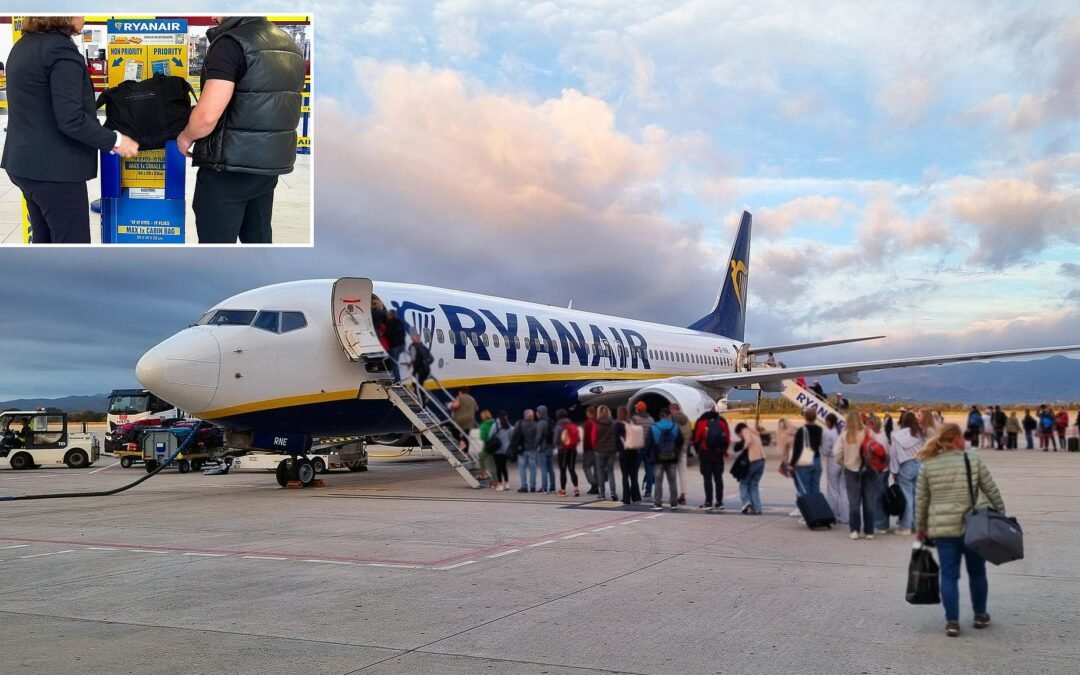
Travelers heading out this summer would do well to take notice of an obscure Ryanair baggage policy that might cause issues for them.
Airline staff measuring suitcase sizes using baggage gauges just prior to departure — this scene is one that many passengers fear.
Ryanair lets travelers carry an “individual item” at no cost, provided it meets specific dimensions.
Earlier, the measurements were 40x25x20cm but
Recently, their dimensions have been raised to 40x30x20 cm, in accordance with an update in EU regulations.
.
Nevertheless, travelers may face a charge of up to £70 if their luggage exceeds size limits.
However, they might be surprised by a regulation that few people are aware of regarding the low-cost carrier.
Ryanair enforces a no-cash policy at check-in counters, potentially leading to problems for certain passengers.
This implies that even if a traveler is willing to cover the cost, without having a card, they might still be unable to bring their luggage aboard.
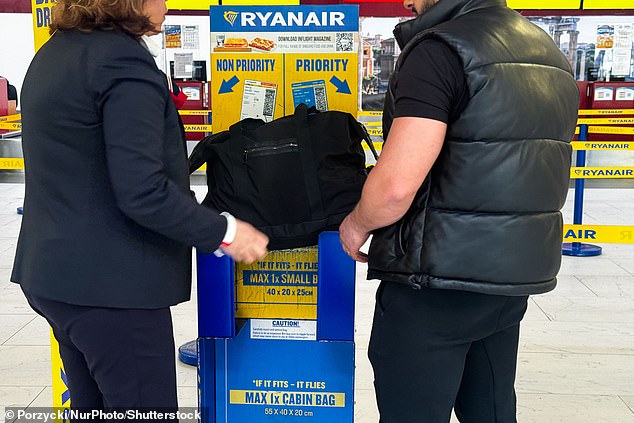
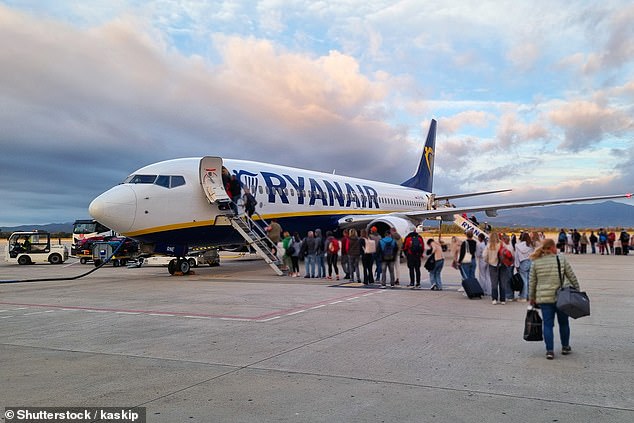
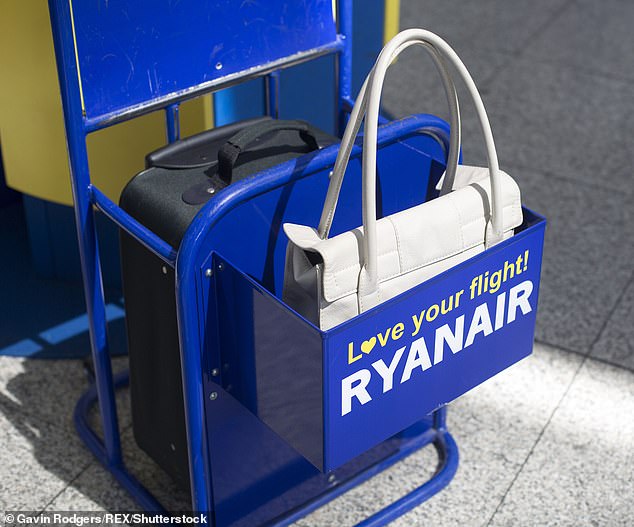
A representative from Ryanair stated to The Daily Mail: “Our baggage policy is straightforward; if it fits inside our bag checker (which has more space than the specified limits), it can be carried onboard at no extra cost.”
If the item does not fit within our baggage size limits, you will incur a gate bag charge. Since our boarding gates operate without cash, gate bag charges can’t be settled with physical currency.
These charges are incurred by fewer than 0.1 percent of travelers who fail to adhere to our established baggage policies.
Of the 99.9 percent of our travelers who follow our regulations, we express gratitude and encourage them to continue flying without concern.
It arrives as it was reported
How Ryanair rewards employees for catching travelers attempting to bring large carry-on items aboard planes
— and they may earn as much as €80 per month simply by implementing the stringent regulations.
A disclosed pay stub reveals how a previous worker received a “gate bag bonus” for identifying luggage that exceeded the airline’s well-known strict dimensions.
A former employee stated that they received approximately €1.50 (£1.30) for each large bag they documented, as reported by The Sunday Times, though they mentioned that the monthly incentive had a limit.
Ryanair, which generated an impressive €13 billion in sales during the previous year, announced on Saturday that employees receive financial incentives for identifying luggage that violates regulations — resulting in travelers being billed as much as €75 per large bag discovered at the boarding area.
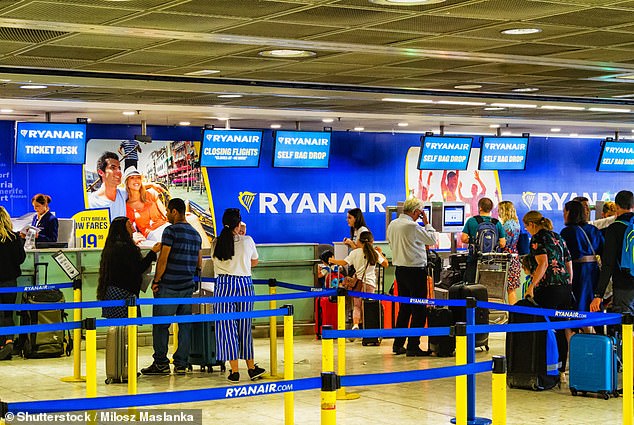
However, even though they confirmed the plan, the airline declined to specify the exact amount employees receive through this “gate bag incentive.”
In the meantime, Chelsea Dickenson, also recognized as @holidayexpert, has
Only shared with MailOnline Travel, she reveals her best advice for fitting a week’s vacation wardrobe into a 40x20x25cm suitcase.
.
An alternative strategy is to keep part of your baggage with you.
Previously, Chelsea mentions that she removed the padding from her travel pillow and placed some of her clothing inside it, and she has also worn a fishing vest, filling its pockets.
Read more
oleh admin | Agu 17, 2025 | aviation, civil aviation, flights, flying, news
August 10, Pakistan — Iran Air has started non-stop flights linking Quetta with the Iranian cities of Zahedan and Mashhad, representing the initial consistent commercial aviation connection between these traditionally important locations. The carrier’s first flight safely arrived at Quetta International Airport on Friday, capturing interest from authorities and passengers. This newly established route aims to provide more ease for travelers and enhance the enduring cultural and economic ties between Pakistan and Iran.
During the airport event, Pakistan’s Envoy to Iran, Mohammad Mudassir Tipu, commended the initiation, referring to it as a “long-held wish” from citizens of both nations. He conveyed his belief that these non-stop flights will enhance commerce, tourism, and cultural interactions between the two countries. As per the envoy, the route holds “significant promise” for strengthening connections and promoting interpersonal relationships that extend past commercial and travel purposes.
The newly launched service will start with weekly operations connecting Quetta and Zahedan, offering a vital transportation choice for people from Balochistan and surrounding areas. Authorities anticipate that this frequency could grow over time as more passengers utilize the route. Additionally, the journey provides a practical link for pilgrims traveling to Mashhad, which is among Iran’s key holy sites. It is projected to generate substantial economic advantages via higher expenditures related to tourism and movement.
At the event, representatives emphasized that the launch occurs during a period when regional aviation connections are growing more significant. Due to the proximity of their locations and common cultural background between Pakistan and Iran, enhancing transportation networks has consistently been considered essential. Officials from both nations expressed their readiness to examine new routes in the near future to enhance mutual collaboration.
Nevertheless, the progress follows closely behind an announcement made by Pakistan’s Interior Minister Mohsin Naqvi, who declared that devotees will not be permitted to journey to Iran or Iraq via land for this year’s Arbaeen pilgrimage because of safety issues. He mentioned that the choice was reached following thorough talks with the Ministry of Foreign Affairs, the Balochistan administration, and intelligence organizations. Although overland movement continues to be limited, the introduction of this aerial route presents a secure and effective option for numerous passengers.
This achievement marks an important step for Iran Air’s direct route from Quetta to Zahedan to Mashhad, which will be crucial in connecting populations along the border. Weekly flights are anticipated to support both spiritual and recreational travel, as well as foster commercial relationships, thereby promoting collaboration between the two adjacent nations.

oleh admin | Apr 3, 2025 | aviation, flying, supersonic, supersonic aviation, technology
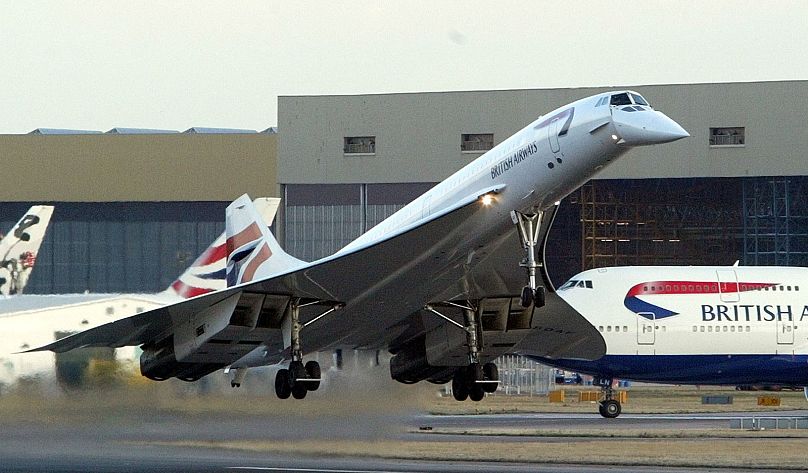
China is entering the competition to lead a new era of supersonic air travel by planning to develop an airplane that could compete with the Concorde, as reported by local media outlets.
According to reports from the South China Morning Post, COMAC (Commercial Aircraft Corporation of China) recently disclosed plans for the C949 – a supersonic aircraft capable of reaching speeds up to 1.6 Mach, which would allow it to travel faster and farther compared to the Concorde – as mentioned in an academic publication.
The document stated that the initiative aimed for a 50 percent increase in range compared to the Concorde and was engineered to ensure the aircraft operates as silently as a hair dryer’s noise level.
This will be achieved using a curved plate body designed to reduce shockwaves, thereby delaying intense sonic booms that might otherwise originate from the aircraft, as the SCMP report further explained.
Lowering the noise levels is an approach for the aircraft to attempt overcoming regulatory obstacles that prohibit supersonic travel, as reported by the South China Morning Post.
Euronews Next is attempting to independently confirm these assertions by contacting the academic journal that released the research along with COMAC; however, they have yet to receive any responses by the time of publishing.
Other supersonic aircraft currently under development
The Concorde, a supersonic aircraft developed jointly by France and the United Kingdom, conducted its initial test flight in 1969. Over its 26-year operational period, this iconic plane completed nearly 50,000 trips with British Airways as its operator.
The aircraft, capable of reaching a top cruise speed of Mach 2.04 (approximately 2,180 km/h), offered a journey time between London and New York under 3.5 hours compared to the standard 8-hour trip for a non-supersonic flight.
Since the retirement of Concorde in 2003, there haven’t been any civilian supersonic planes in operation. However, several new supersonic ventures are currently underway, such as the X-59 project, which is a collaboration between NASA and Lockheed Martin, based in the United States.
Disclosed last year, the airplane operates at an altitude of 55,000 feet (more than 16,700 meters) and generates noise comparable to that of a car door shutting, as stated by its creators.
The X-59 is engineered to reach velocities of Mach 1.4 (approximately 1,730 km/h), which is less swift compared to both the Concorde and the anticipated Chinese C949.
In March, NASA reported that the X-59 successfully completed an engine speed hold, also known as a cruise control test, which marks the final phase before its maiden flight scheduled for later this year.
Paul Dees, NASA’s deputy propulsion lead for the X-59 at the agency’s Armstrong Flight Research Center, stated, “We had to confirm that the speed control function was effective both inside the engine and as an integral part of the whole aircraft system.”
The test verified that all elements – including the software, mechanical connections, and control laws – function together as planned.
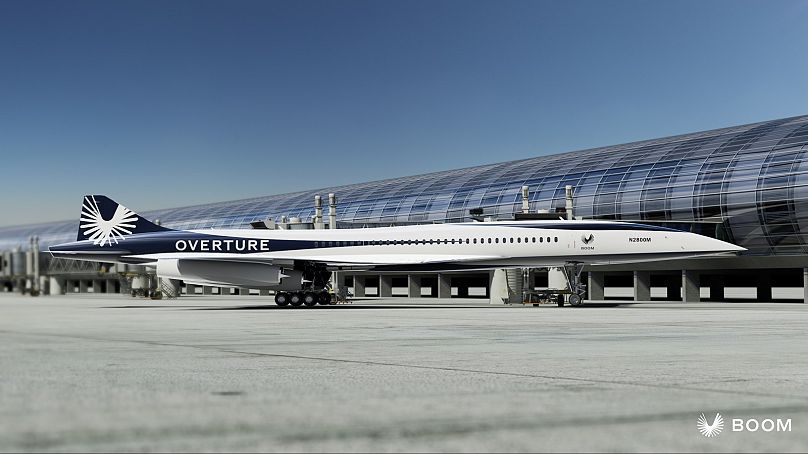
A private firm called Boom Supersonic aims to introduce its supersonic aircraft, known as the Overture, prior to the conclusion of this decade.
During the initial test flight of the XB-1 in January, the aircraft reached speeds of up to 1,207 kilometers per hour and climbed to an altitude exceeding 35,000 feet (10,600 meters). The company stated that the plane successfully landed without producing a sonic boom.
Commercial interest in the Overture has already emerged, with Boom having secured deals previously.
United Airlines
,
American Airlines, and Japan Airlines aim to receive the aircraft once it satisfies the necessary safety requirements.
The European Commission has supported multiple initiatives aimed at investigating noise reduction techniques as well as the ecological consequences of supersonic travel, including the 2022 RUMBLE initiative, the 2020 SENECA initiative, along with the continuing MORE AND LESS endeavor.
oleh admin | Apr 3, 2025 | air travel, airline industry, civil aviation, flying, news
The Nigeria Civil Aviation Authority (NCAA) has voiced concerns about numerous grievances related to airlines that issue tickets but only fly passengers halfway to their intended destination before returning them to Nigeria.
As stated by Michael Achimugu, the Director of Consumer Protection and Public Affairs, “These measures, including denying entry or boarding for certain Nigerian citizens at transit stops because of visa limitations or travel bans, are leading to considerable discomfort among travelers and damaging the image of Nigeria’s aviation sector.”
The NCAA views these practices as entirely unacceptable. Airlines have the duty to notify travelers about any possible obstacles to their admission at their final destination prior to their journey commencement. Travelers ought not to find themselves in a situation where they face denial of entry or are sent back to Nigeria upon reaching intermediate or transit points.
In accordance with Section 19.21.1.1 of the Nigerian Civil Aviation Regulations from 2023, every airline along with its representatives must make sure that travelers are notified about any possible entry concerns or travel limitations before they leave.
The statement indicated that the airlines are required to implement suitable procedures for screening and should furnish travelers with precise, current details about their travel documentation and visa prerequisites prior to selling tickets and allowing them to board.
Updated: Reasons Behind Rejecting Recall Petition Against Senator Natasha—INEC Official Departs Abuja for Dakar to Attend Senegal’s 65th Independence Anniversary; Rivers Sole Administrator Cancels All Pending Procurement and Tenders
Given this situation, the NCAA notifies all international carriers flying within Nigeria that they can no longer expect to overlook such incidents.
Starting now, airlines caught engaging in these activities will face regulatory actions, which may include—but are not limited to—fines, suspensions of their flying privileges, or other suitable measures.
The NCAA stated that they expect all airlines to cooperate in upholding the standards and professionalism within the aviation sector, along with safeguarding the welfare of Nigerian travelers.
EXPLORE FURTHER ARTICLES FROM: NIGERIAN TRIBUNE
Stay updated with the latest news from Tribune Online in real time! Connect with us on WhatsApp for instant access to breaking news, special reports, and exclusive interviews. Subscribe to our WhatsApp channel today.
Provided by Syndigate Media Inc. (
Syndigate.info
).

oleh admin | Apr 3, 2025 | air travel, aviation, business, flights, flying
-
Kenya Airways plans to host the 37th annual meeting of the International Air Transport Association (IATA) in Nairobi in May, aiming to attract numerous aviation experts.
-
The conference lasting for three days will begin on Tuesday, May 13 and wrap up on Thursday, May 15.
-
The occasion, scheduled to feature prominent figures from the aviation industry, will take place in Africa for the very first time.
Bonface Kanyamwaya, who works as a journalist for SANGGRALOKA.co.ke, boasts over ten years of expertise in covering sectors such as business, finance, economics, markets, and aviation. His analysis offers valuable perspectives on both Kenyan and international developments.
On Tuesday, May 13, Kenya Airways (KQ), the nation’s flag carrier, will welcome the International Air Transport Association (IATA) Ground Handling Conference to Nairobi. This event marks the first time the conference is being held on African soil.

The IATA Ground Handling Conference in Nairobi
The three-day gathering in Nairobi will conclude on Thursday, May 15.
The conference highlights Africa’s increasing significance in international air travel and Kenya Airways’ crucial part in advancing aviation innovation and growth throughout the continent.
“As the leading airline in African skies, Kenya Airways takes pride in initiating this significant milestone. Bringing IGHC to Kenya supports our aim to promote innovation, build collaborations, and demonstrate Africa’s preparedness to influence the future of international air travel. This further underscores our dedication to progressing the sector—not only within the country but across the entire continent—with the objective of fostering growth and enhancing connections,” stated Kenya Airways CEO Allan Kilavuka in a press release viewed by
SANGGRALOKA.co.ke
On April 3rd, prior to the event.
The crucial aspect of ground handling plays an essential role in ensuring the safety, efficiency, and robustness of the global aviation sector. This year’s IGHC will emphasize the term ‘elevate.’ Our aim is to explore methods for enhancing performance within the ground handling domain,” stated IATA Director General Willie Walsh in a distinct press statement reviewed by our publication.
Kilavuka stated that the conference organized by Kenya Airways, which reported a net profit of KSh 5.4 billion for the fiscal year ending in 2024, would concentrate on updating operational processes, advancing employee skills, and strengthening partnerships to boost overall efficiency within the aviation industry.
Who will be speaking at the IATA Ground Handling Conference in Nairobi?
Kilavuka stated that key speakers at the event will consist of President William Ruto, IATA Director General Walsh, the leadership from Kenya Airways, along with several other high-ranking officials.
The conference will offer speakers a platform to explore subjects including advancements in ground support equipment (GSE), the uptake of hydrogen-powered GSE, and standardized safety training initiatives.
They will also discuss breakthroughs in real-time baggage tracking, electronic bag tags, and modern messaging standards.
The discussion will also cover tactics for fostering public-private collaborations, advances in regulation, and enhancing coordination between airports and service providers.

In a distinct press release issued on Wednesday, April 2, from Geneva, Walsh stated, ‘The conference further bolsters IATA’s Focus Africa initiative, underscoring our dedication to fostering sustainable aviation development throughout the region.’
KQ’s previous conference
Last month, KQ organized the inaugural Advanced Air Mobility (AAM) conference in Nairobi, aiming to engage with hundreds of aviation industry players across Africa.
The conference began on Tuesday, March 18 and concluded on Wednesday, March 19, lasting for two days.
The symposium gathered policymakers, original equipment manufacturers, and other aviation specialists to discuss the possibilities of AAM within the African market.