Surprise Move: World’s Happiest Country Unveils Breathtaking International Airport with Yoga Rooms and Forests

Surprise Move: World’s Happiest Country Unveils Breathtaking International Airport with Yoga Rooms and Forests

The nation acclaimed as the planet’s most joyful community, which typically sees very few visitors, is poised to unveil a massive global airport.

Bhutan, a landlocked nation situated between
India
and
China
will unveil a new airport featuring relaxation areas equipped with yoga studios and sound bathing spaces.

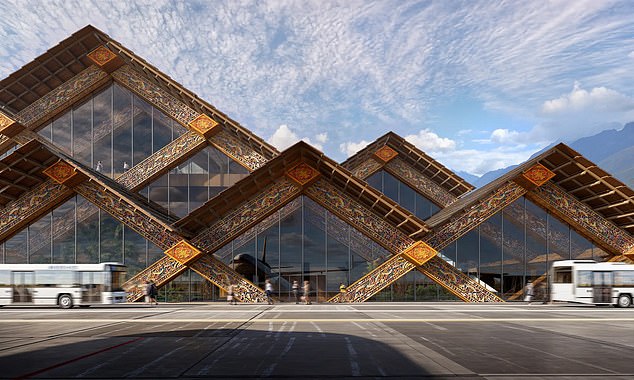
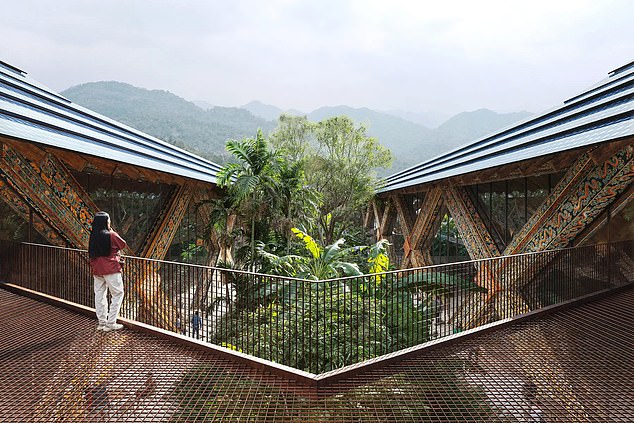
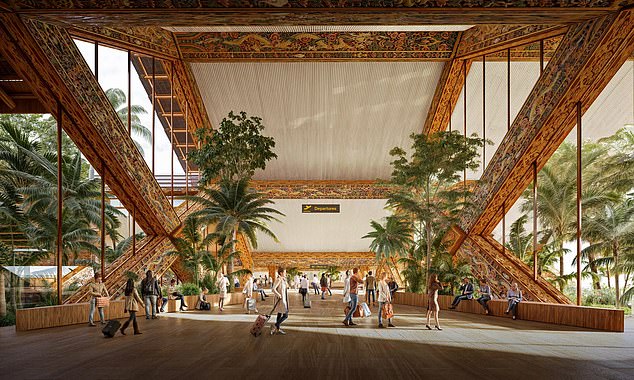
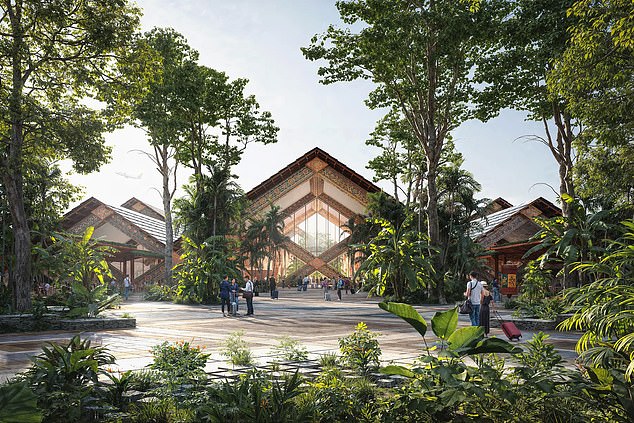
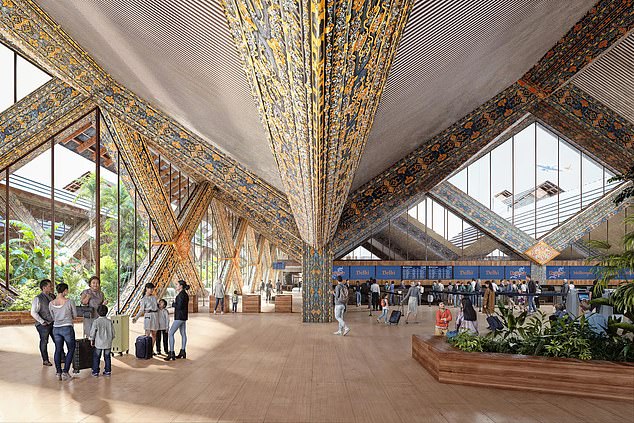
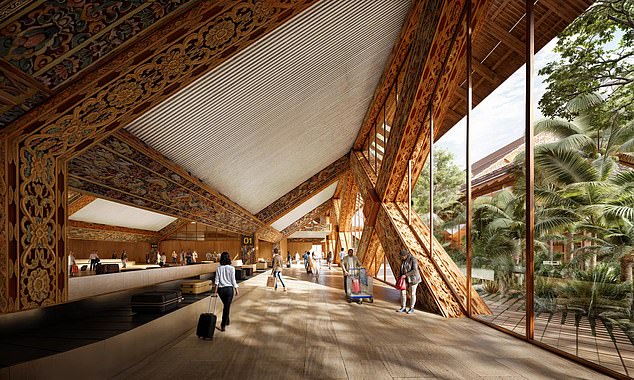
The Gelephu International Airport will feature expansive gardens along with an outdoor forest known as the Forest Spine. This area will divide the domestic from the international terminals.

It will include designated areas for yoga sessions, open-air relaxation zones, as well as spots for meditation and enjoying sound baths.

The airport design features a sequence of wooden diamond-shaped structures, mimicking a mountainous terrain.

Although this will mark the nation’s second international airport, there are presently no non-stop flights connecting the UK to Bhutan—thus, this development could facilitate an increase in British visitors.

The airport will be capable of handling up to 123 flights each day, with an annual passenger limit of 1.3 million.

A lofty aspiration for a nation attracting approximately 316,000 visitors annually.



The majority of long-haul flights arrive at Paro International Airport located near the city of Thimphu, which serves as the nation’s capital.

However, due to its proximity to a mountain range, only a limited number of flights can touch down each day, with most being short-distance journeys.

Located in southern Bhutan close to the Indian border, Gelephu is easier to reach.

The architectural company known as Bjarke Ingels Group was responsible for designing the airport. They stated that it has been crafted to embody Bhutan’s concept of ‘gross national happiness,’ using the inhabitants’ wellbeing as an indicator of living standards.

The Founder and Creative Director, Bjarke Ingels, stated: “When visiting a location, your initial and final impression often comes from the airport.”

‘To capture the essence of both the nation’s natural beauty and cultural heritage for the Gelephu International Airport, we aimed to integrate the concept of the Mindfulness City.’

The woodlands enveloping the elevated regions are permitted to extend from the entrance square across the airstrip up to the runway.

Bhutan is
regarded as the ‘planet’s most joyful nation’ due to its Gross National Happiness Index.

This index evaluates collective happiness among the populace by considering factors such as mental wellness, physical health, educational attainment, quality of governance, environmental sustainability, time management, cultural richness, economic prosperity, and social cohesion.

The expense for the airport remains unofficial, yet it might reach up to £178 million, with plans to launch operations by 2029.

Even though its location is quite intricate, numerous members of the royal family have traveled to Bhutan. This includes King Charles who made his visit in 1998, followed by the Duke and Duchess of Cornwall in 2016.

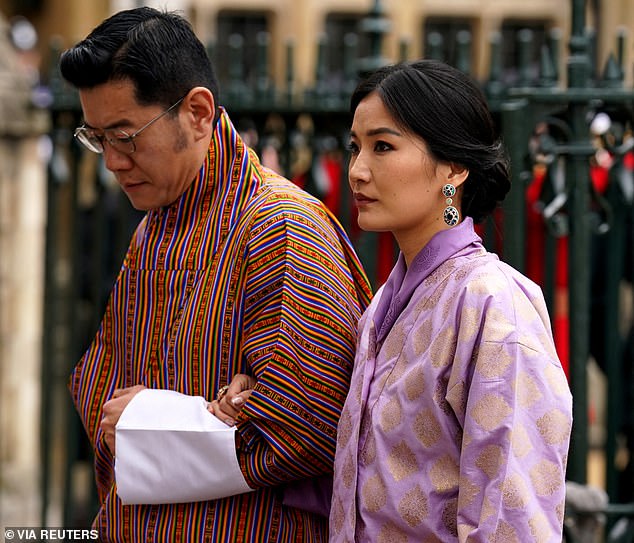
Bhutan also boasts a royal family with King Jigme Khesar Namgyel Wangchuck as the monarch and Queen Jetsun Pema, often compared to Kate Middleton.

Frequently celebrated as ‘the most beautiful royal pair globally,’ Queen Jetsun Pema and King Jigme Khesar are parents to three youngsters: Prince Jigme Namgyel Wangchuck, Prince Jigme Ugyen Wangchuck, and Princess Sonam Yangden Wangchuck.

Read more
Which Countries Are the World’s Happiest Today? Five EU Nations Make the Top 10

Which Countries Are the World’s Happiest Today? Five EU Nations Make the Top 10

Finland has been crowned the globe’s happiest nation for eight years running, as stated in the World Happiness Report 2025.

Specialists point out that easy access to natural areas and an effective social support network contribute to this.

This is followed by Denmark, Iceland, and Sweden.

These nations consistently achieve top scores in indicators such as social support, trust, and general well-being.

The World Happiness Report polled over 100,000 individuals across 140 nations and regions.

“Contentment in Finland isn’t defined by unceasing happiness but rather by a feeling of safety, trust, and equilibrium in everyday living. This satisfaction stems from the assurance that help is available whenever required, be it via robust social welfare systems, superior educational opportunities, or proximity to natural environments,” stated Miika Mäkitalo, CEO of
HappyOrNot
, a Finnish firm that assists companies gauge customer contentment.

Mäkitalo added: “In our community, we uphold principles of equity and environmental stewardship, fostering a setting where individuals receive support and can flourish. By implementing policies like extensive paternity leave and accessible early childhood care, we guarantee that households enjoy economic stability along with ample opportunities to bond with offspring, underscoring a broader dedication to health and harmony between professional duties and personal life.”


Eating together and having someone to count on

Communities where individuals often have meal-sharing experiences tend to exhibit greater levels of happiness and stronger social support systems.

The sole EU nation appearing in the upper echelon is Poland, where individuals partake in over 10 communal meals each week on average.

In contrast, Estonia sits at the bottom of the list, with residents reporting just 2.7 shared meals per week.

Individuals residing solo tend to be unhappier.

In Europe, households comprising four to five individuals show the greatest degrees of happiness.

Nevertheless, loneliness amongst younger individuals is increasing, with 19% stating they have nobody to depend on — this marks a 39% rise from what was seen in 2006.

A lot of young people often undervalue their friends’ ability to understand and share feelings, causing them to shy away from forming connections and losing chances for significant bonds.

Deeds of compassion saw an upsurge during the COVID-19 pandemic and continue to be 10% higher than before the outbreak.

It seems that donating and volunteering are more prevalent in Central and Eastern Europe, whereas sharing tangible assets is more frequent in Western Europe.

The current year’s report encourages us to focus on factors beyond conventional measures such as health and wealth. Surprisingly, activities like sharing meals and having trust in others emerge as more significant indicators of happiness than anticipated,” stated Jan-Emmanuel De Neve, who directs Oxford’s Wellbeing Research Centre and co-edits the World Happiness Report. “Amidst today’s climate of social distancing and political division, it becomes essential to discover methods to gather individuals at one table once again—this action is vital for both personal and communal well-being.