oleh admin | Mar 24, 2025 | emergencies, health, healthcare and medicine, innovation, technology
Kanpur (Uttar Pradesh), India, March 24 (ANI): Experts from the Indian Institute of Technology Kanpur have
Department of Material Sciences and Engineering
(MSE) made significant progress in emergency medicine with the creation of a hemostatic sponge composed of seagrass and cellulose.
Intended to halt blood loss within just sixty seconds of use, this breakthrough could revolutionize
emergency care
In crucial scenarios like traffic collisions and injurious incidents.
The sponge is made from red seagrass, which is plentiful along India’s shorelines, and has been subjected to extensive testing, verifying its quick coagulation properties.
Boasting three patents to its credit, including one from DRDO and two others independently.
IIT Kanpur
As the primary creator, the sponge’s effectiveness and availability make it a crucial resource for emergency personnel.
Professor Vivek Verma from
Department of Material Sciences and Engineering
,
IIT Kanpur
explained, “This hemostatic sponge is the outcome of merging India’s natural wealth with advanced materials science. Utilizing agar and cellulose extracted from seaweed, we have created a degradable and affordable product capable of saving lives while promoting eco-friendly medical procedures. This marks considerable progress toward enhancing
emergency care
, particularly in regions where reaching healthcare services is challenging.”
Drawing inspiration from the water-wicking capabilities of conventional sponges, this breakthrough speeds up coagulation by extracting dampness from the wound area, cutting down clotting time from eight minutes to just one minute. Its lightweight design and compact storage make it perfect for inclusion in emergency aid supplies during incidents such as vehicular collisions, combat scenarios, or instances where prompt medical care might be scarce.
This innovation highlights
IIT Kanpur
is dedicated to developing cost-effective, locally produced healthcare solutions tailored to meet India’s specific needs. Human testing is set to commence shortly, with expectations of launching this innovative product into the market in the near future.
This groundbreaking product has the capability to greatly influence emergency medical care, enhancing survival rates during critical moments and making life-saving interventions more readily available across the country. (ANI)
Provided by Syndigate Media Inc. (
Syndigate.info
).
oleh admin | Mar 24, 2025 | africa, health, healthcare and medicine, medical conditions and diseases, public health
Abu Dhabi
[
UAE
], March 24 (ANI/WAM): Experts from WOAH Collaborating Centre for Camel Diseases, affiliated with the
Abu Dhabi
The Agriculture and Food Safety Authority (ADAFSA) in the
UAE
, has identified one of the potential causes behind the enigmatic condition.
camel
mortality in Ethiopia.
This phenomenon has resulted in significant economic losses and severe social consequences over the past two decades.
The announcement was made during the 26th Conference of the WOAH Regional Commission for Africa, held in Ethiopia from 4-7 February 2025. The event was attended by the Deputy Director-General of WOAH, leading scientific experts, and representatives from various countries and global organisations.
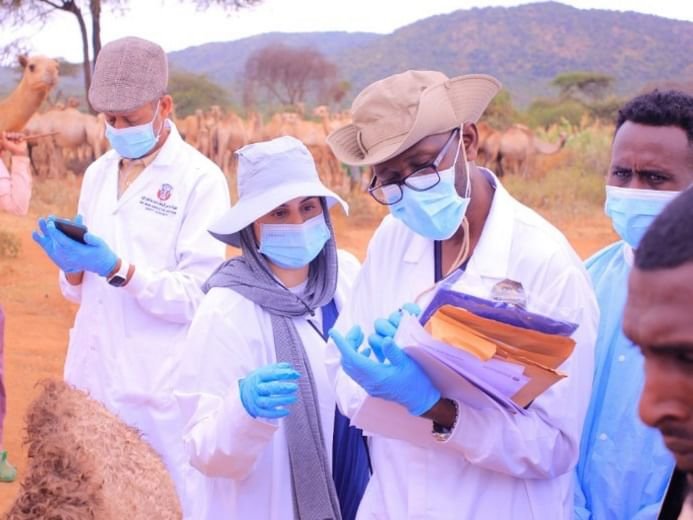
During the conference, ADAFSA team of experts from the WOAH Collaborating Centre of Camel Diseases presented the findings of their field investigations and laboratory analyses, which were conducted in response to a formal request from Ethiopia’s Ministry of Agriculture seeking scientific support in identifying the cause of this enigmatic disease outbreak.
In July 2024, a specialised technical team from WOAH Collaborating Centre for Camel Diseases in collaboration with the Animal Health Institute (AHI) in Ethiopia, conducted a field visit to Ethiopia, where clinical samples were collected from infected
camel
s in Borana zone, southwest of Ethiopia.
The initial lab tests verified the existence of the Wesselsbron virus (WSLV), which is a member of the Flaviviridae family and falls under the genus Flavivirus in the affected individual.
camel
For the first time, this discovery has attracted significant international notice and received considerable acclaim from officials in the impacted nations such as Kenya and Somalia, along with major organizations focused on global animal health.
This achievement reaffirms the
UAE
‘and ADAFSA’s prominent position in backing international initiatives aimed at safeguarding animal health, especially in the
camel
sector, and to boost regional and global biosecurity. It also reinforces
Abu Dhabi
‘s position as a centre of excellence in veterinary research, contributing to biosecurity and food security.
Given these preliminary results, the Collaborating Centre for Camel Diseases, alongside the Ethiopian Ministry of Agriculture, has suggested that future research should focus on the epidemiology of the “Wesselsbron virus” in
camel
s. They also recommend broadening the scope of investigations to include East African countries to corroborate the initial findings identified in Ethiopia.
They also concurred on enhancing analytical methods for carrying out serosurveys in the impacted regions, along with executing field tests to examine the virus’s effects.
camel
In addition to potentially developing an effective vaccine to curb the transmission of WSLV, efforts are currently being made to collaborate with health agencies in Ethiopia. This collaboration involves analyzing human specimens to detect the virus, with the aim of broadening our comprehension of its zoonotic and epidemiological implications through a One Health perspective.
To strengthen global scientific collaboration and enhance knowledge sharing, specialists from ADAFSA visited the Ethiopian Animal Health Institute. There, they set up and initiated confirmatory diagnostic procedures to detect the Wesselsbron virus in the institute’s labs. This effort allowed them to identify the virus in previously stored clinical specimens, thereby corroborating ADAFSA’s findings with further evidence.
Additionally, ADAFSA and Ethiopia’s Ministry of Agriculture are set to sign a Memorandum of Understanding (MoU) aimed at strengthening research capabilities and disease surveillance in animal diseases. The agreement will include collaboration in knowledge exchange and information sharing, joint training programs for veterinary professionals, and collaborative research projects to deepen scientific understanding of
camel
diseases in the region.
This collaboration is anticipated to strengthen biosecurity protocols and boost livestock wellness, providing advantages for pastoral groups reliant on animal husbandry.
camel
s for their livelihoods.
This collaboration reflects the
UAE
Dedication to backing global initiatives for animal health and promoting the One Health concept, which connects human, animal, and environmental well-being to foster sustainable development and enhance biosafety.
Asma Abdi Mohamed, Director of Biosecurity Affairs Division at ADAFSA and Head of the experts Research Team, expressed her pride in this milestone achievement, stating, “Identifying Wesselsbron virus as a possible causative agent of mysterious
camel
The deaths in Ethiopia signify an unparalleled scientific accomplishment. This milestone highlights the proficiency of our Collaborating Centre for Camel Diseases and underscores its capability to deliver scientific solutions that safeguard livestock while improving regional and international biosafety.”
She stated, “Our discovery was facilitated by the diligent work of our research group along with our robust partnership with Ethiopian entities and WOAH. We continue to be devoted to advancing this study to create efficient preventive measures and treatments that protect animal herds.”
ADAFSA continues to be committed to progressing scientific research and enhancing animal disease diagnostics, strengthening its position as a vital participant in international initiatives aimed at curbing pandemics and livestock illnesses.
At ADAFSA, our commitment includes broadening regional and international collaboration via experience sharing, jointly developing training programs, engaging in field research, and implementing a “One Health” strategy to safeguard livestock health and promote sustainable growth. (ANI/WAM)
Provided by SyndiGate Media Inc.
Syndigate.info
).
oleh admin | Mar 24, 2025 | health, healthcare and medicine, illness, infectious diseases, news
…Commits an additional one billion naira
ABUJA
— The First Lady of Nigeria and Senator Oluremi Tinubu has raised an alert about the country’s tuberculosis (TB) emergency, stating that someone succumbs to TB every seven minutes, even though the illness can be both prevented and treated.
At the World TB Day 2025 Community Outreach event held in Sauka village on Monday in Abuja, Tinubu referred to the circumstances as a national crisis demanding immediate and firm measures to preserve life.
“In the brief period we’ve been here, numerous additional lives could be lost unless we take immediate and firm action,” she cautioned, referencing startling data provided by the World Health Organization (WHO).
Even though there have been global improvements in treating tuberculosis, Nigeria continues to be among the eight nations with the highest incidence of the disease globally. Tinubu expressed concern that numerous Nigerians still endure silently because of stigma, insufficient knowledge, and procrastination in getting medical help.
“It is intolerable that numerous men and women keep losing their lives to a condition that can be prevented and treated,” she said.
As part of the Renewed Hope Agenda, President Bola Ahmed Tinubu aims to increase tuberculosis testing and treatment facilities throughout Nigeria, ensuring that free and readily available care is provided to those who require it.
She praised Coordinating Minister of Health and Social Welfare, Prof. Muhammad Ali Pate, for his dedication to eliminating tuberculosis via enhanced diagnostic methods, treatment plans, and preventive measures.
The First Lady additionally highlighted that the government cannot conquer the battle against TB single-handedly, urging traditional chiefs, religious figures, young organizations, businesses, and global allies to aid in raising public consciousness and promoting prompt diagnosis.
Tinubu pledged ₦1 billion via her Renewed Hope Initiative aimed at bolstering tuberculosis control initiatives and enhancing medical infrastructure in underprivileged areas.
Moreover, she verified that the Minister of State for Health has sanctioned the creation of a primary healthcare facility within the community, thereby enhancing accessibility to TB diagnostics and treatments.
Promoting personal accountability for health among residents, Tinubu highlighted the significance of timely diagnosis and care.
“If your cough lasts for over two weeks, don’t dismiss it; get medical assistance right away,” she emphasized.
She made a commitment to push for more funds, gather necessary resources, and combat stigmas so that women, children, and underrepresented communities can receive equitable TB treatment.
As Nigeria aims for its 2030 target of eliminating TB, Tinubu’s stance stays firm: “Each life is significant. We have to take action immediately to halt this stealthy threat.”
The Minister of State for Health and Social Welfare, Dr. Iziaq Salako, indicated that the federal government has stepped up its initiatives to eradicate tuberculosis (TB) by 2030. This includes upgrading more than 10,000 primary healthcare centers (PHCs) and training 120,000 healthcare personnel.
Salako reiterated President Bola Ahmed Tinubu’s dedication to making sure Nigeria plays a significant role in the worldwide effort against tuberculosis. He highlighted that the administration is broadening TB screening, diagnostic capabilities, and treatment options within both public and private medical centers as part of the universal health coverage initiative. Furthermore, the government aims to boost community involvement and offer improved social support for individuals affected by TB and their households to lessen the impact of the illness.
Salako expressed his appreciation for the dedicated healthcare professionals who continue to serve diligently amidst Nigeria’s economic difficulties, encouraging citizens to acknowledge their significant contribution in fighting tuberculosis. He further lauded Senator Oluremi Tinubu, the First Lady, for her substantial financial backing and efforts in raising awareness, noting how these have been instrumental in motivating people across the nation to get diagnosed promptly and follow through with treatments. “Tuberculosis is neither an inevitable fate nor terminal—it can be prevented and cured,” he emphasized, offering reassurance to those impacted by the illness that the federal government stands steadfastly behind them, ensuring they receive all required medical care and assistance.
Previously, Hon. Amobi Godwin Ogah, the Chairperson of the House Committee on HIV/AIDS, Tuberculosis, and Malaria, advocated for enhanced local financial support to fight tuberculosis (TB) in Nigeria, highlighting that international funds are dwindling. Through Hon. Dominic Okafo, he stressed the importance of securing additional resources as vital for addressing TB effectively within the nation. He disclosed that the House of Representatives has encouraged the private sector to establish a dedicated TB fund akin to those created for HIV and malaria, aiming at long-term sustainability. Additionally, he praised President Bola Ahmed Tinubu for committing an extraordinary ₦700 billion towards improving Nigeria’s healthcare infrastructure, indicating that this step signifies the country’s capacity to address public health issues independently from substantial external assistance.
Ogah likewise denounced the stigmatization and discrimination faced by individuals with tuberculosis, stating that the House Committee would shortly enact legislation to ban such practices. He emphasized the importance of expandingTB screening programs, enhancing training for health care providers, and launching more effective public awareness campaigns to underscore that TB is both preventable and treatable. “To eradicate TB by 2030, we have to make commitments, allocate resources, and take action,” he asserted, calling upon all parties involved—including businesses and non-governmental organizations—to step up their contributions towards combating TB.
Dr. Austin Arinze Obiefuna, the Board Vice Chair of the Global Stop TB Partnership in Geneva, highlighted that Nigeria is taking the lead globally in combating tuberculosis (TB). This leadership stems from robust commitments, targeted financial investments, and successful implementation of TB intervention programs. He applauded Nigeria’s significant strides in enhancing its healthcare personnel and addressing TB issues, noting that these endeavors place the nation at the forefront within Africa and garner international acclaim.
“Whenever I find myself among the halls of WHO, the United Nations, or the African Union,” stated Dr. Arinze, “I feel pride in witnessing Nigeria’s achievements.” The doctor further lauded Senator Oluremi Tinubu, the First Lady, for her steadfast backing and promotion of anti-TB initiatives, encouraging continued governmental and stakeholder involvement to keep up the current positive trajectory. “In Nigeria, actions speak louder than words; they engage local communities effectively and produce tangible outcomes—a key strategy in battling TB,” he concluded.
In his goodwill address, Dr. Walter Kazadi Mulombo, WHO Representative to Nigeria, voiced worries about significant reductions in international health financing, cautioning that the advancements achieved in combating tuberculosis (TB) might be undone unless prompt financial commitments are secured.
He observed that global tuberculosis initiatives have rescued approximately 79 million lives since the year 2000, yet current funding gaps present a significant danger to maintaining this progress. He warned that interruptions in the fight against TB—such as advancements in sophisticated diagnostic tools, treatments, and vaccine development—are endangered because of economic limitations.
In spite of these difficulties, Dr. Mulombo praised Nigeria’s initiative in addressing tuberculosis, pointing out the contribution of TB testing equipment and ₦1 billion from Senator Oluremi Tinubu via her Renewed Hope Initiative. Additionally, he acknowledged the federal government’s extra funding of ₦700 billion aimed at battling HIV, TB, malaria, and vaccination programs. Furthermore, he welcomed the introduction of a $50 million plan by the private sector designed to hasten TB eradication. “Nigeria isn’t standing idle; Nigeria is acting,” he asserted, encouraging stakeholders such as donors, businesses, academic institutions, media outlets, and community groups to unite their efforts against TB. He restated his organization’s pledge to assist Nigeria in achieving its objective of eliminating TB by 2030 and emphasized the necessity of collaborative endeavors to maintain the advancements made thus far.
In a similar vein, HRH Usman Nga Kupi, the Sapeyi of Garki, advocated for the creation of a health center in Sauka, an overcrowded area within the Federal Capital Territory (FCT). This new facility should be designed specifically to diagnose and treat tuberculosis (TB). Emphasizing the importance of practical steps alongside educational efforts, he highlighted that investing in healthcare facilities is vital for effectively preventing, diagnosing, and treating TB. “As one of the significant yet underserved areas in the FCT lacking a proper medical facility, establishing a specialized TB center in Sauka could significantly aid in controlling this illness and enhancing general healthcare services,” he remarked. Additionally, he praised Senator Oluremi Tinubu and various donors for their dedication to combating TB, encouraging governmental bodies to turn these pledges into enduring improvements in public health care systems.
Mrs. Daju Kachollom, the Permanent Secretary at the Federal Ministry of Health and Social Welfare, was represented by Mr. Akpan who stressed the importance of early detection. He encouraged community members to utilize the provided screening services. “Should you or someone close to you have persistent symptoms like a prolonged cough, unexplained weight loss, fevers, or excessive sweating during nights, kindly seek out these screenings,” he stated.
Kachollom praised Senator Oluremi Tinubu, the First Lady, for her consistent efforts in combating tuberculosis (TB). Additionally, she recognized international organizations including the World Health Organization (WHO), The Global Fund, and the Stop TB Partnership for bolstering Nigeria’s approach towards addressing TB challenges. She also urged traditional authorities, local leaderships, and residents to progress from mere acknowledgment to proactive involvement in battling this disease. “Indeed, ending TB is within our reach,” she asserted confidently.
During her welcoming speech, Dr. Queen Ogbuji-Ladipo, the acting board chair of Stop TB Partnership Nigeria, stated that Nigeria continues to have the highest burden of tuberculosis (TB) in both Africa and ranks as the sixth-highest globally, with 499,000 new cases reported in 2023 and an individual succumbing to the disease every seven minutes. Emphasizing the critical necessity for greater financial commitment towards preventing, diagnosing, and treating TB—especially within isolated regions lacking adequate medical facilities—she praised Senator Oluremi Tinubu, the first lady, for rallying backing and donating equipment necessary for TB diagnostics which enhanced screening capabilities, particularly during their recent community engagement activity held in Sauka, Abuja. Additionally, she underscored the introduction of a $50 million private-sector project aimed at tackling this issue, encouraging all parties involved to persistently advocate and fundraise toward eradicating TB from Nigeria completely. “Collectively, we possess the power to defeat TB,” she affirmed confidently.
Provided by Syndigate Media Inc. (
Syndigate.info
).

oleh admin | Mar 24, 2025 | breast cancer, breast cancer awareness, health, healthcare and medicine, medicine and healthcare
![]()
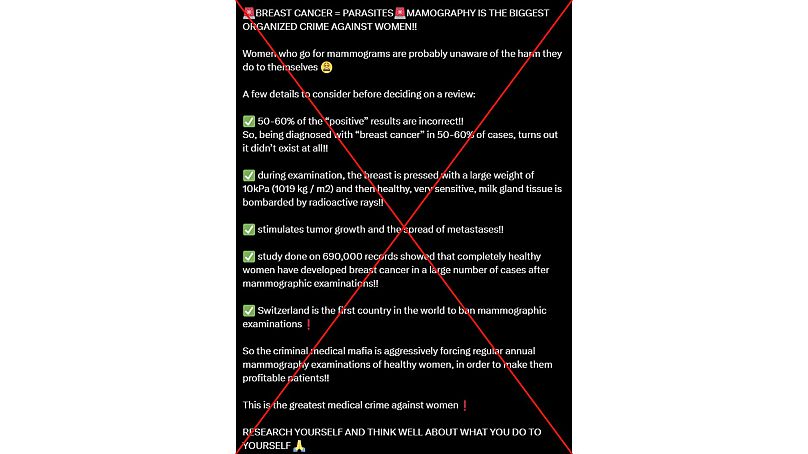
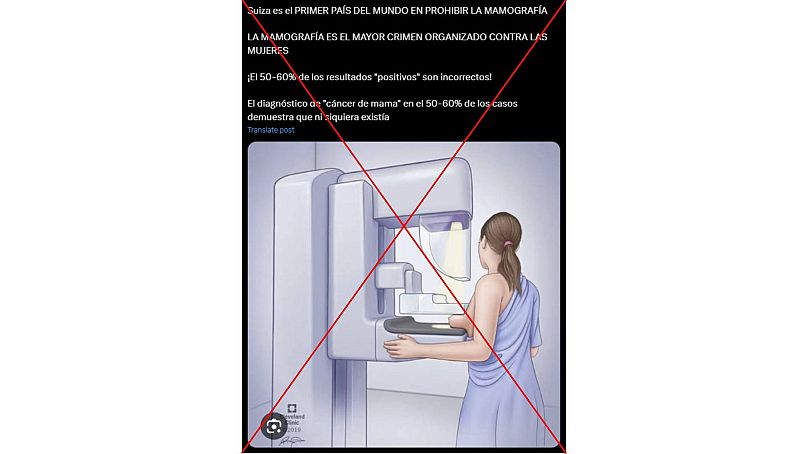
Misunderstandings are proliferating on the internet due to strange rumors regarding an alleged prohibition of mammography exams in Switzerland.
For several months, social media users have maintained that the nation has banned the procedure out of worries about its safety. One common assertion is that mammograms lead to breast cancer because patients are exposed to radiation during the examination.
Furthermore, numerous social media posts claim that 50% to 60% of mammography results yield false positives, causing undue stress and unwarranted medical intervention.
All of these statements are untrue.
EuroVerify contacted the Swiss Federal Office of Public Health, which verified that there isn’t a ban on mammography exams in Switzerland.
“A representative from the office stated via email, ‘The screening programs are organized by the cantons,’ adding that mammogram recommendations start at age 50,” the communication read.
Various fact-checkers from different news organizations have also refuted these claims when they surfaced on social media in earlier months.
What do you make of the assertions that mammograms can be harmful?
A major misrepresentation circulating on social media is the claim that the radiation involved in mammograms substantially raises the risk of cancer among women.
According to the experts EuroVerify consulted, this assertion does not hold true.
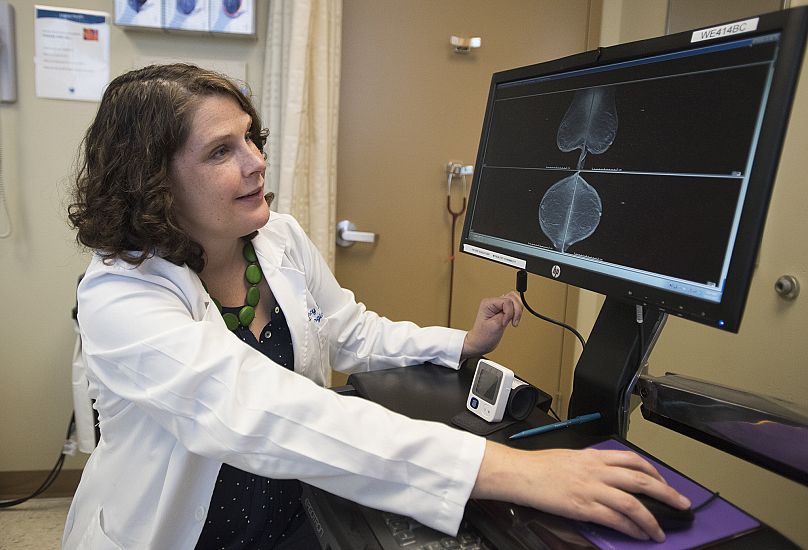
Dr. Evandro de Azambuja, who leads the Medical Support Team at the Jules Bordet Institute in Anderlecht, clarified that mammograms actually expose patients to very little radiation.
“If they adhere to the stringent guidelines suggested by [… ] agencies, the dosage will be minimal,” he stated. “Therefore, there’s no danger of developing cancer due to the radiation from the mammogram.”
Although certain research indicates that excessively frequent testing might marginally raise the risk of cancer, regular screenings typically do not present an issue.
To provide some context, Julia Schwarz, an expert in early detection at the Swiss Cancer League in Bern, pointed out that there are cases where “a flight attendant might be exposed to more radiation over the course of a single year than what you would receive from a mammogram.”
Are the screening tests known for producing a lot of false positive results?
A frequently shared assertion on the internet suggests that as much as 60% of mammography outcomes result in false alarms, prompting additional examinations and medical interventions unnecessarily. However, this figure is deceptive.
As stated by Dr. Partha Basu, who leads the Early Detection, Prevention and Infections Branch at the World Health Organization’s International Agency for Research on Cancer in Lyon, encountering false positives during screenings is common, but receiving one does not equate to a definitive diagnosis.
“He explained that we must recognize the distinction between a screening test and a diagnostic test. A diagnostic test, such as obtaining a biopsy, requires an extremely high degree of precision,” he stated.
“A screening test is merely intended to pinpoint individuals with a heightened likelihood of having a disease from those with a lower probability,” he explained. “This is precisely why it’s crucial for women who receive a positive result on their mammogram to undergo further investigation at the earliest opportunity.”
According to Schwarz, women should be informed about the possible risk of receiving a false positive result prior to having a mammogram.
She mentioned, ‘They should be aware that there’s a possibility.’ It may not be a high probability, but it could occur […]. One positive aspect of early detection is that the likelihood of recovery is quite significant.’
Why are mammograms important?
Certainly, it’s the early detection provided by mammograms that makes them so effective, as stated by the experts interviewed by EuroVerify.
Despite the incorrect assertions, mammograms remain among the most effective methods for detecting breast cancer at an early stage, as stated by Basu, who also pointed out that all medical procedures, though minor, come with a slight inherent risk.
Taking a paracetamol tablet still carries some risks,” he stated. “Thus, we always assess the risk against the benefits. The advantages of mammograms are significant: they decrease breast cancer deaths by 40%.
Azambuja reiterated this view, pointing out that mammography decreases the overall mortality rate since “early detection of cancer significantly improves the patient’s outlook.”
They similarly suggested performing self-examinations as an effective method for detecting breast cancer at an early stage, despite it being less dependable than a professional breast cancer screening.
“Combining mammography with breast self-examinations ensures that women receive an early diagnosis for breast cancer,” according to Basu.

oleh admin | Mar 24, 2025 | children, health, news, politics, women
The child of an older British couple who have been detained
Afghanistan
For unspecified reasons, she expressed concern that her parents might pass away in prison due to their declining health.
Peter, aged 79, and Barbie Reynolds, who is 75 years old, were taken into custody upon returning to their residence in Bamiyan province on February 1 for reasons that have not yet been disclosed.
Although they were not formally accused of any offenses, it is thought that the
Taliban
showed interest in the pair as they conducted a class instructing women about parenting techniques since the extremist organization imposes strict limitations on female education.
Nearly two months since their arrest, Sarah Entwistle, the family’s oldest daughter, stated that her father’s health was deteriorating and her mother was collapsing because of malnutrition.
As Peter became estranged from his spouse and was transferred to a high-security facility controlled by the Taliban, he began experiencing a chest infection, a dual-eye ailment, and serious gastrointestinal problems, according to Entwistle’s statement to the Times. The report also noted that without prompt medical intervention, his condition could be fatal.
She stated: “He’s having shakes in his head and left arm.”
Sarah informed the press that her family felt extremely exasperated because her parents were still being detained by the Taliban despite repeated assurances from them that Peter and Barbie would soon be freed due to some confusion.
“The guards mentioned that another judge will now take over this case, and we still hold out hope that they will get a just hearing in the upcoming week,” Entwistle stated.


This occurred just days after the pair was reportedly taken to court unexpectedly along with their interpreter, who has since been detained as a ‘suspect.’
In a concerning update relayed to the Mail, Sarah Entwistle, the Reynolds’ daughter from Daventry, Northamptonshire, mentioned that Mrs. Reynolds had phoned her using a public telephone to share the ‘upsetting’ information about their impending appearance in court on Thursday.
Mrs. Entwistle stated, “No charges have been brought against them, and they have not been notified.”
The cause of the court appearance is still not evident.
Alarmed, the interpreter assisting the couple—who has been looking after Mr. Reynolds during his medical issues—is now being held as a “suspect” without having been informed of the accusations against them, she mentioned.
‘He will no longer be allowed to translate for them, and is also due to be produced in court, together with them, tomorrow.
‘Mother is clearly very worried that without a capable interpreter, their case might not be portrayed accurately or justly and they won’t be able to fully understand or participate in the legal process, which would severely violate their rights.’


Mrs. Entwistle mentioned that the Reynolds chose not to abandon Afghanistan when the Taliban suddenly took control in August 2021, asserting they couldn’t depart while Afghans faced their moment of crisis.
Mr. and Mrs. Reynolds got married in Kabul back in 1970, having met each other while studying at Bath University.
They possess both British and Afghan citizenship and have resided in the nation for 18 years.
They operate five educational institutions in Kabul, including a program for training mothers and children that is said to have been endorsed by the Taliban.
Read more