oleh admin | Apr 3, 2025 | asia, international relations, politics, politics and government, politics and law
The Chairman of the Senate of Pakistan, Syed Yusuf Raza Gilani, has been appointed as the inaugural chairperson of the Inter-Parliamentary Speakers’ Conference (ISC). This international organization, based in Seoul, aims to encourage parliamentary discussions, support sustainable growth, and enhance collaboration in tackling significant issues like climate change, renewable energy, and water scarcity.
Chairman Gilani made this decision during his recent trip to Kuala Lumpur, Malaysia, for an exclusive briefing about the upcoming Inter-Parliamentary Speakers’ Conference (ISC) scheduled in Seoul, South Korea.
The official ceremony for this event will occur during the upcoming World Summit 2025, hosted by the Universal Peace Federation (UPF) in Seoul, South Korea. This gathering will involve participation from 500 delegates and 45 parliamentary speakers representing 150 nations.
The award bestowed upon Chairman Gilani acknowledged his forward-thinking leadership with an engraving that praised his steadfast dedication to fostering connections among legislative institutions and promoting a collective international mission for peace, progress, and democratic principles. His trip to Kuala Lumpur and his designation as the inaugural chairperson of the ISC mark crucial moments in Pakistan’s escalating impact on the worldwide parliamentary landscape, notably through bolstering ties between parliaments, improving cross-border collaboration, and pursuing mutual economic and diplomatic goals.
Through the use of parliamentary diplomacy, the Pakistani Senate led by Chairman Gilani aims to implement groundbreaking measures designed to mend rifts and promote worldwide harmony and economic advancement.
Under Chairman Gilani, the ISC will act as an elite forum where Pakistan and other participating nations can share insights, create strong policy frameworks, and establish collaborations that go beyond conventional diplomatic limits.
At the recent ISC briefing held in Kuala Lumpur, Chairman Gilani gave an uplifting speech that encapsulated both his political philosophy and Pakistan’s approach to diplomacy. He highlighted that the ISC goes beyond being just another gathering—it stands as a forward-thinking endeavor grounded in concepts like interconnectedness, collective wealth creation, and globally recognized ideals. Gilani stressed again that genuine advancement happens only through cooperative efforts among lawmakers tackling worldwide issues including environmental shifts, income disparity, rapid tech changes, and shifting geo-political dynamics. Furthermore, he mentioned that consistent with the goals set forth by the ISC program, particular emphasis would be placed on fostering alliances and cooperation across three crucial domains: combating climate change, advancing renewable energy solutions, and addressing water scarcity concerns.
Drawing from his deep involvement in international affairs, particularly during his time as Pakistan’s Prime Minister, the Chairman emphasized that promoting dialogue, inclusion, and grassroots connections has consistently formed the bedrock of his political journey. He pointed out that platforms like the Commonwealth Parliamentary Association (CPA), the Asia Pacific Assembly (APA), and the Inter-Parliamentary Union (IPU) have significantly facilitated increased worldwide collaboration.
As the inaugural chairman of the ISC, he urged parliamentarians to turn common aspirations into concrete achievements. “It is essential that our joint endeavors result in implementable strategies ensuring regional security, harmony, and enduring progress,” he emphasized.
The Chairman highlighted the crucial part played by the ISC in tackling both internal problems and developing pioneering parliamentary answers for matters concerning the Korean Peninsula and wider regions. His speech during the conference garnered positive feedback, underscoring Pakistan’s dedication to maintaining regional tranquility, ensuring economic steadiness, and promoting international legal collaboration.
Chairman Gilani was accompanied by a distinguished group of senior parliamentarians and international representatives, highlighting the worldwide importance of this initiative.
As an additional related event, the Chairman of the Senate also engaged in talks with Tan Sri Dato’ (Dr) Johari bin Abdul, who serves as the Speaker of the Malaysian House of Representatives and currently holds the position of ASEAN President.
At the meeting with Tan Sri Dato’ (Dr) Johari bin Abdul, who serves as the Senate chairman, he commended and recognized the warm fraternal ties and strong bilateral connections between the parliaments of both nations. The discussions underscored the enduring bond between Pakistan and Malaysia and emphasized boosting parliamentary diplomacy via increased legislative interactions.
Following the meeting, there was a formal dinner hosted by the Malaysian Speaker to honor Gilani and other prominent attendees of the ISC briefing session.
In the meantime, Pakistani Ambassador to Malaysia Syed Ahsan Raza organized a dinner to honor Chairman Gilani. During this event, important topics related to the friendly relations and collaborative partnership between Pakistan and Malaysia were discussed.
Senator Chairman Syed Yousaf Raza Gilani greeted H.E. Tan Sri Dato’ (Dr) Johari bin Abdul, who serves as the Speaker of the Malaysian House of Representatives and currently holds the position of ASEAN president, when he visited Kuala Lumpur for a briefing on the upcoming Inter-Parliamentary Speakers’ Conference in Seoul.
Provided by Syndigate Media Inc. (
Syndigate.info
).
oleh admin | Apr 3, 2025 | asia, international relations, politics, politics and government, thailand
Bangkok
[
Thailand
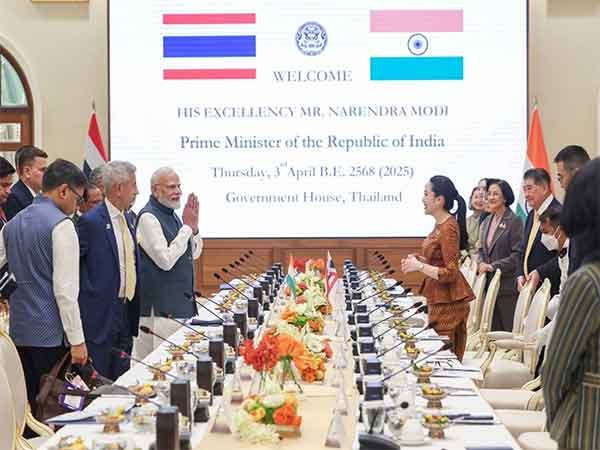
On April 3 (ANI), Prime Minister Narendra Modi reiterated India’s dedication to
ASEAN
cooperation in unity within the Indo-Pacific region whilst reinforcing relationships
Thailand
, stating that
Thailand
occupies a “unique position” within India’s strategic outlook for the area, significantly contributing to India’s ‘Look East’ initiative as well as the wider Indo-Pacific strategy.
He further stressed that India supports “progressivism, not expansionism.”
“India fully supports
ASEAN
unity and
ASEAN
In the Indo-Pacific region, we both advocate for a free, open, inclusive, and rules-based order. We adhere to a policy focused on development rather than expansion.”
PM Modi
said.
Underlining
Thailand
‘a special spot,” the PM stated, ”
Thailand
holds a significant position within India’s ‘Act East’ policy and our Indo-Pacific strategy. Today, we have chosen to elevate our relationship into Strategic Partnerships. Additionally, we talked about setting up a ‘Strategic Dialogue’ among security organizations.
“We conveyed our thanks to the Government of
Thailand
“For the assistance they provided in repatriating Indian victims of cybercrime back to India,” he added.
PM Modi
Additionally, Thai Prime Minister Paetongtarn Shinawatra engaged in bilateral discussions aimed at enhancing collaboration across multiple fields such as tourism, culture, and commerce.
We have highlighted collaboration in areas such as tourism, culture, and education among the North-Eastern states of India.
Thailand
We discussed boosting reciprocal trade, investments, and business exchanges. Additionally, agreements were established to collaborate on MSMEs, textiles, and crafts.
PM Modi
said.
The Prime Minister additionally expressed gratitude
Thailand
For honoring his visit with a special postage stamp. “I am thankful to the government of
Thailand
For releasing a special commemorative postage stamp inspired by the 18th-century Ramayana mural paintings to mark my visit, Prime Minister Shinawatra has just handed me the Tripitaka. On behalf of Buddhist India, I received it respectfully with both hands,” he said.
Meanwhile, during his speech,
PM Modi
also emphasized the strong cultural and spiritual connections between India and
Thailand
“The ancient bonds between India and
Thailand
are interconnected through our rich cultural and spiritual heritage. The dissemination of Buddhism has united our peoples. Scholars have exchanged knowledge between Ayutthaya and Nalanda. The tale of the Ramayana is firmly rooted in Thai folklore, with traces of Sanskrit and Pali evident in the language and customs even now,” he observed.
PM Modi
showed gratitude to hisThai colleague for the hospitable reception inthe nation.” “Engaged ina fruitful conversationwithPrime MinisterPaetongtarnShinawatra during my visit.”
Bangkok
Some time back, thank you to the Thai people and government for their gracious reception. Additionally, I conveyed my support following the recent earthquake in Thailand. India’s ‘Look East Policy’ continues to be a cornerstone of our regional strategy.
Thailand
“‘s ‘Act West Policy’ complement each other effectively, opening up numerous opportunities for bilateral collaboration across various sectors,” he stated in a post on X.
He additionally highlighted major domains for security and defense collaboration. “Our talks centered around methods to further strengthen the strategic partnership between India and”
Thailand
The topics covered strategic matters like defense, security, maritime safety, and hydrography. Additionally, we reinforced our pledge to collaborate in tackling threats such as terrorism, money laundering, and more.
PM Modi
stated.
Within the same X post thread,
PM Modi
highlighted the significance of enhancing commercial relationships with
Thailand
.
“India and
Thailand
Are eager to bolster their economic and trade relationships. During my conversation with Prime Minister Paetongtarn Shinawatra, we discussed the strong cooperation between our nations in areas such as agriculture, small and medium-sized businesses, maritime affairs, financial technology, and aerospace. We also emphasized the importance of cultural connections in our talks,” he stated.
Thailand
PM also presented PM Narendra Modi with sacred texts: the World Tripitaka, in Pali. This particular version of the Tripitaka was released by the Thai government in 2016 to mark the reign of King Rama IX and Queen Sirikit.
Following this,
PM Modi
, through a tweet on X, conveyed his appreciation and stated, “This was an exceptionally kind act! I’m deeply thankful to Prime Minister Paetongtarn Shinawatra for presenting me with a copy of the Tipitaka in Pali. The language itself is truly elegant, encapsulating the core principles of Lord Buddha’s teachings. You will recall that our administration granted classical language status to Pali recently. This move has been celebrated globally and has spurred further interest in studying and researching this tongue.”
Earlier today, according to an official announcement from the Prime Minister’s Office,
PM Modi
saw an “enhancing” rendition of Thailand’s version of the epic poem Ramayana, known as Ramakien,
Bangkok
.
In an earlier post on X, he mentioned, “This cultural connection is unparalleled! I had the chance to see a mesmerizing rendition of Thailand’s version of the Ramayana called Ramakien. This event was genuinely enlightening as it vividly highlighted the common cultural and civilizational bonds linking India and”
Thailand
The Ramayana genuinely keeps bringing together hearts and customs throughout numerous regions of Asia.”
PM Modi
is in
Bangkok
At the invitation of Prime Minister Paetongtarn Shinawatra for an official visit and participation in the sixth BIMSTEC Summit. Upon finishing his commitments in
Thailand
,, he plans to travel to Sri Lanka between April 4 and April 6. As stated by the PMO,
PM Modi
His forthcoming trip to Sri Lanka comes after President Disanayake’s visit to India last December. (ANI)
Provided by Syndigate Media Inc. (
Syndigate.info
).
oleh admin | Apr 3, 2025 | asia, diplomacy and diplomats, indian national news, international relations, politics
Dhaka, April 3 — Indian Prime Minister Narendra Modi stated that he plans to meet with the leaders of the BIMSTEC nations to explore avenues for enhancing cooperation, always considering the welfare of their citizens.
“I am looking forward to meeting the leaders of the BIMSTEC nations and engaging constructively to enhance our cooperation, keeping the well-being of our citizens at heart,” Modi stated in his departing message before embarking on his trip to Thailand and Sri Lanka on Thursday.
Bangladesh views this year’s BIMSTEC Summit, which is set to take place in Bangkok, Thailand, on April 4, as highly significant for the nation since Bangladesh will take over the leadership of the organization for the coming two years.
Dhaka believes the summit will offer them a chance to showcase a “fair and equitable” Bangladesh within South and Southeast Asia, according to officials who spoke this week.
Professor Muhammad Yunus, the Chief Advisor, will arrive in Bangkok on Thursday afternoon for the summit, according to an announcement made by his Deputy Press Secretary, Abul Kalam Azad Majumder, to UNB.
Dhaka officials mentioned that Dr. Yunus is expected to meet with Prime Minister Modi during the margins of the BIMSTEC Summit, though they provided no additional details.
Dr. Yunus departs for Bangkok to participate in the 6th BIMSTEC Summit.
Michael Kugelman, an analyst specializing in South Asian affairs, stated based on reports from Bangladeshi media that Modi is scheduled to meet with Yunus during the BIMSTEC event taking place in Thailand this week.
“If accurate, this would mark the largest India-Bangladesh diplomatic advancement since Hasina’s departure from office,” Kugeman stated in a tweet posted via his verified X account.
Following an invite from Thai Prime Minister Paetongtarn Shinawatra, Indian Prime Minister Modi embarked on an official trip to Thailand with the dual purpose of attending the 6th BIMSTEC Summit in Bangkok.
In the last ten years, according to Modi, BIMSTEC has become an important platform for fostering regional growth, connecting areas, and boosting economic advancement in the Bay of Bengal area.
“Given its geographic position, India’s Northeastern area is centrally located within the BIMSTEC region,” stated the Indian Prime Minister.
While on an official visit, India’s Prime Minister will meet with Thailand’s Prime Minister Shinawatra and other leaders in the country. They share a mutual aim to strengthen the long-standing historical connections between their nations, rooted deeply in similar cultural values, philosophies, and spiritual beliefs.
Modi will make a two-day trip to Sri Lanka starting from April 4th until April 6th, coming directly from Thailand.
Following the remarkably successful trip made by President Disanayaka to India in December, this event took place.
“We will have the opportunity to review progress made on the joint vision of “Fostering Partnerships for a Shared Future” and provide further guidance to realise our shared objectives,” Modi said.
ASEAN lawmakers aim to exclude Myanmar from BIMSTEC due to human rights worries.
He expressed his continued confidence that these visits will expand upon the groundwork laid in the past and help fortify their strong bonds for the betterment of both nations and the broader area.
oleh admin | Apr 3, 2025 | asia, economics, international relations, politics, sustainability
Bangkok, April 3 — Professor Muhammad Yunus, the Chief Advisor, will participate in the 6th BIMSTEC Summit on Friday as Bangladesh takes over the leadership role of the organization for the coming two years.
The Bay of Bengal Initiative for Multi-Sectoral Technical and Economic Cooperation (BIMSTEC) includes seven nations from the Bay of Bengal area — Bangladesh, Bhutan, India, Myanmar, Nepal, Sri Lanka, and Thailand.
Officials stated that the leadership of BIMSTEC, recognized as a vital platform for advancing regional growth, infrastructure links, and economic advancement in the Bay of Bengal area, shifts based on the alphabetical sequence of the English names of its member countries.
During the Summit, the transition of leadership occurs as the country currently heading BIMSTEC, which acts as the host for the Summit, passes on the chairmanship to the following member state in alphabetical order.
The theme for the 6th summit, which is taking place three years following the fifth summit (held virtually in Colombo on March 30, 2022), is “Prosperous, Resilient, and Open BIMSTEC.”
At the start of the 6th BIMSTEC Summit, attendees will gather for a group photograph. This will be succeeded by welcoming remarks from the BIMSTEC Chairperson and Thai Prime Minister. A moment of silence will then be held to honor those affected by the recent earthquakes.
Following the endorsement of the agenda, the heads of BIMSTEC states will deliver their addresses.
Following the transfer of BIMSTEC leadership, the incoming chairperson will address the gathering, with concluding comments provided by the Thai prime minister, as informed by an official to UNB.
According to the BIMSTEC Secretariat, the summit seeks to promote cooperation amongst member nations to tackle common security and development issues. It will inject fresh momentum into ongoing initiatives aimed at achieving a thriving, robust, and open BIMSTEC region.
The Foreign Secretary, Md Jashim Uddin, stated that the summit will enhance and intensify the ties between Bangladesh and other BIMSTEC nations. He also emphasized its crucial role in promoting regional stability and progress.
“There’s no doubt that this sixth BIMSTEC Summit marks a significant move forward for the new Bangladesh within the regional landscape via BIMSTEC,” he stated, expressing his hope for the summit’s success.
Summit Agenda
The summit, according to the BIMSTEC headquarters, features an extensive agenda – including the endorsement of the declaration from the 6th BIMSTEC Summit, capturing the vision of the leaders along with their resolutions and instructions; also encompassing the approval of the Bangkok Vision 2030.
This initial vision document will be endorsed by the Leaders. It offers a detailed and actionable guide for enhancing collaboration among the BIMSTEC member states moving forward.
The signing of the agreement for Maritime Transport Collaboration seeks to boost marine transportation within the Bay of Bengal. This initiative intends to improve the movement of goods and individuals among member states, facilitating increased commerce and travel between them.
In the meantime, the endorsement of memorandums of understanding (MOUs) between BIMSTEC and the Indian Ocean Rim Association (IORA), along with those between BIMSTEC and the United Nations Office on Drugs and Crime (UNODC), forms part of the plan. These agreements aim to usher in a fresh chapter of collaborative development efforts involving BIMSTEC and these entities.
The approval of the Rules of Procedure for the BIMSTEC Mechanisms, along with the Charter, will establish the basic structure for regional collaboration within BIMSTEC. Additionally, the endorsement of the Report from the Eminent Persons Group regarding the future path of BIMSTEC is also part of the discussion points.
In 2024, the team convened six times. Following consultations with pertinent stakeholders, they completed their report through thorough discussions and finalized it in September 2024.
The report includes several recommendations, and the member states have begun taking actions intended to implement the findings of the report.
Amidst the swiftly changing and unpredictable global political and economic landscape, the 6th BIMSTEC Summit aims to strengthen even more the crucial function of BIMSTEC—the sole regional body in the Bay of Bengal—in promoting collaboration among nations. This initiative seeks to empower member states to address common security concerns and foster sustainable growth effectively.
Since BIMSTEC was established in June 1997, five summits have taken place in Bangkok (2004), New Delhi (2008), Nay Pyi Taw (2014), Kathmandu (2018), and Colombo (2022).
It focuses on regional collaboration across seven key areas: Agriculture & Food Security; Connectivity; Environmental Protection & Climate Change; Cultural Exchanges & Interactions; Scientific Research, Technological Advancement & Innovation; Security Matters; and Commerce, Investments & Economic Growth.
The collaboration encompasses eight sectors: Blue Economy, Mountain Economy, Energy, Disaster Management, Fisheries & Livestock, Poverty Alleviation, Health, and Human Resource Development.
oleh admin | Apr 3, 2025 | international relations, news, politics, politics and government, politics and law
The Ministry of Foreign Affairs Commissioner Cui Jianchun has made ‘serious representations’ to US Consul General Gregory May regarding sanctions imposed on six officials.
The official from Beijing responsible for foreign affairs in Hong Kong has met with the senior US representative in the city to express formal protests regarding the recent sanctions imposed by Washington on six Chinese and local officials.
Cui Jianchun, the commissioner of the Ministry of Foreign Affairs in Hong Kong, informed US Consul General Gregory May on Wednesday that Beijing will firmly respond to Washington’s hegemonic actions.
The gathering occurred one day following Washington’s announcement of new sanctions. This time, the targets included Justice Secretary Paul Lam Ting-kwok and ex-police chief Raymond Siu Chak-yee. The United States cited “transnational repression” of dissidents as per Hong Kong’s national security legislation, justifying these measures against them.
Are you looking for insights into the most significant issues and developments globally? Find your answers here.
SCMP Knowledge
Our latest platform features handpicked content including explainers, FAQs, analyses, and infographics, all provided by our prestigious team.
Washington additionally presented its most recent Hong Kong Policy Act Report to the US Congress, stating that both mainland and local Hong Kong officials have persistently exploited national security as an overly broad and ambiguous justification to erode the rule of law and encroach upon safeguarded rights and liberties within the region.
Beijing’s representative office in Hong Kong stated on Thursday that Cui had met with Carrie Lam the previous day to convey “serious representations” regarding the U.S.’s “unjustified sanctions” and its most recent report about the region.
The office stated that [Cui] strongly condemned and firmly opposed the U.S.’s blatant interference in Hong Kong and China’s internal matters, and forcefully cautioned the American side against underestimating China’s unwavering resolve to protect its national sovereignty, security, and developmental interests.
China will adopt decisive and strong retaliatory measures against the US actions that are seen as hegemonic and coercive.
Previously, Beijing stated that it would firmly respond to the U.S. regarding the newest set of sanctions, but did not provide specifics on potential retaliatory actions.
The Post has contacted the US consulate in Hong Kong seeking their input.
In addition to Lam and Siu, those who faced sanctions include Sonny Au Chi-kwong, the Secretary General of the Committee for Safeguarding National Security in Hong Kong; Dong Jingwei, Director of the Beijing Office for Safeguarding National Security in the city; as well as Assistant Police Commissioners Dick Wong Chung-chun and Margaret Chiu Wing-lan, both serving within the police’s National Security Department.
Individuals who have been sanctioned are forbidden from entering the United States. Additionally, all their property within the U.S. will be seized. They are also restricted from engaging in any transactions involving American citizens or entities located in the country.
In 2020, the United States imposed sanctions on 11 local and mainland officials due to the Beijing-enforced national security legislation. This included John Lee Ka-chiu, who was serving as the security secretary at that time before becoming the Chief Executive.
In reaction, China enforced sanctions on 11 prominent US senators and officials, such as current Secretary of State Marco Rubio.
More Articles from SCMP
The Joy Luck Club” actress Kieu Chinh, at 87, shares her challenging journey to fame and explores new acting opportunities.
South Korea’s ‘Kim Soo-hyun’ Petition Calls for Higher Age Limit in Statutory Rape Law
Chinese journalism grad trades well-paid position for contentment as cafeteria staff
Japan’s bento chain’s ‘no rice’ April Fool’s prank backfires
The article initially appeared on the South China Morning Post (www.scmp.com), which serves as the premier source of news covering China and Asia.
Copyright © 2025. South China Morning Post Publishers Ltd. All rights reserved.
oleh admin | Apr 2, 2025 | asia, economy of china, international relations, news, politics
From the ‘two sessions’ to the Boao Forum, Beijing is advancing technological self-reliance, eco-innovation, and assistance for less developed countries.
China’s annual
“two sessions”
Last month’s parliamentary sessions highlighted key national focuses such as promoting indigenous technological advancements, speeding up the shift towards renewable energy sources, and tackling the issue of debt.
Boao Forum for Asia
expanded on these themes.
Beijing’s leaders are emphasizing China’s position as a stabilizing element in Asia and an advocate for multinational cooperation amidst escalating U.S. tariffs, increasing environmental pressures, and fractured worldwide trade patterns. They aim to navigate these geopolitical and economic challenges through a mix of diplomatic agility and strategic legislation.
China’s Two Sessions reiterated its commitment to promoting Chinese-style modernization, an approach viewed as being underpinned by three key elements:
strong technological foundation
, a
highly skilled workforce
with extensive worldwide reach.
Innovations in
artificial intelligence
(AI) — a sector that reportedly generated $402.6 million in revenue last year, with projections indicating potential growth to $3.98 billion by 2030 — highlights China’s adaptability through advancements in quantum computing and renewable energy. Addressing substantial debts within the real estate industry along with supporting urban economies remains crucial.
reforms
To guarantee sustainable development, addressing these concerns is among China’s highest priorities.
In the meantime, U.S. protectionist actions such as tariffs have accelerated China’s shift toward regions like Southeast Asia, Africa, and Latin America. These tariff policies pose risks to worldwide trade stability but have simultaneously encouraged Beijing to strengthen international partnerships.
For instance, China’s merchandise trade with member countries of the
Regional Comprehensive Economic Partnership
During the initial eleven months of last year, trade under the RCEP amounted to $1.65 trillion, marking a 4.4 percent rise compared to the previous year. Technologies focused on sustainability, such as those found in electric vehicles (EVs), advanced nuclear reactors, and wind energy systems, serve as key drivers for boosting national economies domestically while also advancing global environmental initiatives.
During the Boao Forum, China highlighted collaboration rather than individualistic approaches. The RCEP, encompassing the biggest trade zone globally, has opened substantial opportunities for lesser economies: Vietnam’s manufacturing industry benefits from zero-tariff access to Chinese parts, whereas Cambodia’s rice and textile exports have seen growth due to this agreement.
Alongside this, the
Belt and Road Initiative
stays crucial for worldwide integration,
reaching
US$70.7 billion worth of contracts and US$51 billion in investments were recorded last year.
Since its inception in 2013, the program has gathered a total of $1.175 trillion, supporting initiatives like the
China-Laos railway
– having carried 48.6 million passengers and 54 million tons of cargo since 2021 – as well as Indonesia’s
“Whoosh” high-speed railway
, reducing the travel time between Jakarta and Bandung from more than three hours to just 46 minutes, thereby rejuvenating tourism and fostering small business development.
The Belt and Road Initiative serves as a counterweight to historical imbalances through its fair collaborations. For example, last year’s China-ASEAN Expo featured participation from 740 companies belonging to the Association of Southeast Asian Nations.
Challenges persist, however.
Panama’s exit
Following geopolitical pressures from the Belt and Road Initiative, it underscores the impact of Western interference. Nonetheless, South-South collaboration remains robust. African leaders are progressively viewing China as a genuine partner in upgrading infrastructure, highlighting the attractiveness of this initiative.
China’s push towards technological independence is transforming international industries. The collaboration between Huawei Technologies and Thailand has created Southeast Asia’s first major tech hub.
first fully 5G-integrated factory
, leveraging real-time analytics to transform manufacturing efficiency.
At the same time, the Asian Infrastructure Investment Bank (AIIB) has directed 60 percent of its total approved funding toward sustainable initiatives, backing projects like Bangladesh’s $200 million renewable energy grid.
China
is ahead in 37 out of 44
key and rapidly evolving technology sectors, reinforcing its role as a leader in scientific advancement. Developments in
helium-3 extraction
and
fusion energy
in line with its 2060 carbon neutrality commitment, while the AIIB aims for a climate finance target of
US$50 billion
By 2030, this emphasizes their dedication to environmental responsibility.
In addition,
reforestation initiatives
and
EV subsidies
emphasize this commitment, positioning China as a leader in climate action even as the United States pulls back from the Paris Agreement.
again
.
The financial resilience was bolstered even more last year as
cross-border yuan usage
rose by 21.1 percent, decreasing reliance on the US dollar. This change corresponds to
shift focus from the US dollar
By other members of the BRICS bloc, which account for 45 percent of the world’s population. The U.S. trade gap with China has decreased from $375 billion in 2018 to $295 billion last year—but the recent tariffs imposed by President Trump threaten over $7 trillion worth of yearly trade passing through the South China Sea.
US
sanctions on semiconductors
And green technologies have had unintended negative consequences, bolstering China’s self-sufficiency while increasing expenses for Western economies, evident in Germany’s industrial downturn and the European Union’s faltering “de-risking” initiative.
China is also taking a prominent position globally, striving to resolve conflicts around the world.
Ukraine
to
Myanmar
while advocating for United Nations reforms to provide greater influence to countries from the Southern Hemisphere.
At the same time, it promotes a more inclusive worldwide financial system, encouraging the
World Trade Organization
and
International Monetary Fund
To advocate for a multipolar system, balancing Western reform efforts to more accurately represent the needs of rising economies. This involves opting for collaboration rather than fragmentation.
China’s progress in technologies such as
renewable energy
,
5G
AI isn’t solely for its own sake; these technologies are essential tools for the world. The long-term collaborations facilitated by initiatives like the Belt and Road, which provides funding over multiple decades, along with the RCEP, which decreases trade barriers such as tariffs, support this perspective. Additionally, the AIIB backs projects aimed at harmonizing economic expansion with environmental conservation.
Despite obstacles such as U.S. tariffs and climate-related issues, China persists in advancing technological self-reliance, promoting green innovations, and supporting less developed countries. The Boao Forum aptly encapsulates these challenges and possibilities: our decisions will shape humankind’s destiny.
More Articles from SCMP
elderly Hong Kong woman missing for 5 days discovered in Tai Po bushes
China calls for Myanmar to safeguard responders following military shooting at relief team
China and Russia aim for ‘increasingly extensive’ relations and ‘tight cooperation.’
Again, the United States has enforced meaningless sanctions on Hong Kong.
The article initially appeared on the South ChinaMorning Post (www.scmp.com), which is the premier source for news coverage of China andAsia.
Copyright © 2025. South China Morning Post Publishers Ltd. All rights reserved.
Page 2 of 10«12345...10...»Last »


