
oleh admin | Apr 11, 2025 | disasters, meteorology, news, severe weather, storms
Multiple storms sweeping through the United States resulted in significant flooding and led to 16 fatalities, with one of those being a young child aged nine. The National Weather Service issued warnings about additional storms anticipated on Sunday.
Severe storms have battered the central-Eastern part of the United States, resulting in at least 16 fatalities, according to local authorities. This includes several children among the victims.
The National Weather Service (NWS) issued a warning stating that
further “severe” flash flooding
as anticipated in the upcoming days.
A number of fierce storms stretching from the states of Arkansas to Ohio damaged buildings, flooded roadways and produced dozens of tornadoes over the past week.
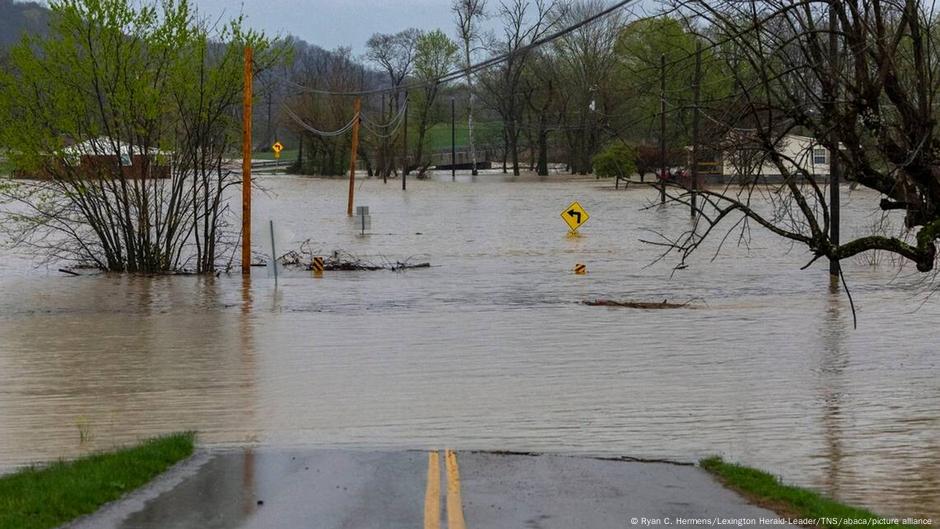
Tennessee suffered the most from severe weather conditions, with officials reporting on Saturday that 10 fatalities occurred throughout the western region of the state.
Two people were killed due to floods in Kentucky, according to state Governor Andy Beshear, including a nine-year-old child who was “swept away by floodwaters,” as he walked to a bus stop.
Images revealed extensive destruction caused by the storm throughout multiple states, featuring houses ripped apart, fallen trees, disrupted electrical wires, and flipped vehicles.
The NWS reported that severe and extensive flash flooding will continue through Sunday in portions of the central-eastern area, cautioning that “both lives and properties face significant peril.”
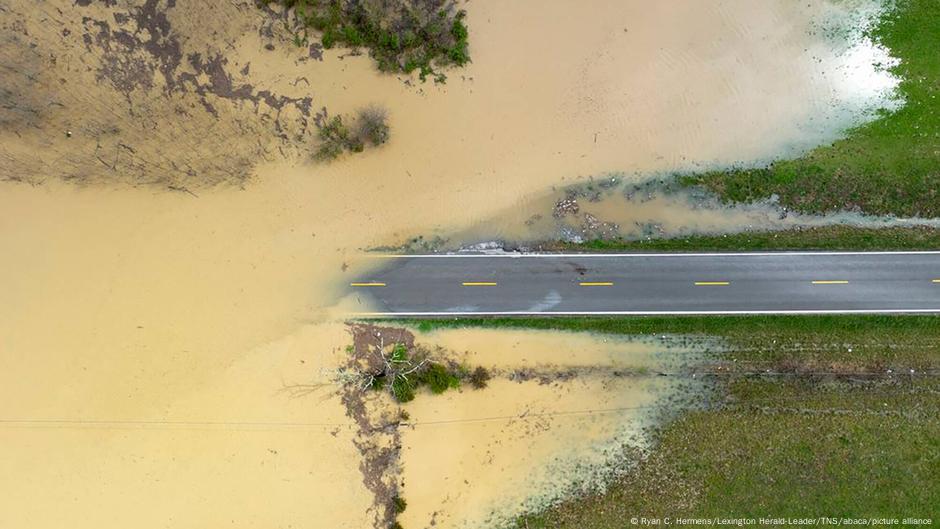
Two additional fatalities related to the storms were reported in Missouri and one in Indiana, as stated by local media outlets and officials.
A 5-year-old child was discovered deceased inside a residence in Little Rock, Arkansas, reportedly due to the continuing severe weather conditions, according to a statement from the state’s emergency management agency.
G flooding has hit unprecedented levels in numerous communities,” Governor Beshear of Kentucky posted on social media on Saturday, advising residents in the state to “stay off the roads and never attempt to drive through floodwater.
As of early Sunday, more than 100,000 individuals remained without electricity in Arkansas and Tennessee, reported the monitoring site PowerOutage US.
The National Weather Service cautioned that moderate to intense tornadoes might develop over areas of the Tennessee Valley and Lower Mississippi Valley on Sunday, alongside “severe thunderstorms.”
Edited by Jenipher Camino Gonzalez
Author: Kalika Mehta (with Reuters, AP)
oleh admin | Mar 28, 2025 | climate, meteorology, news, rainfall, weather forecasts
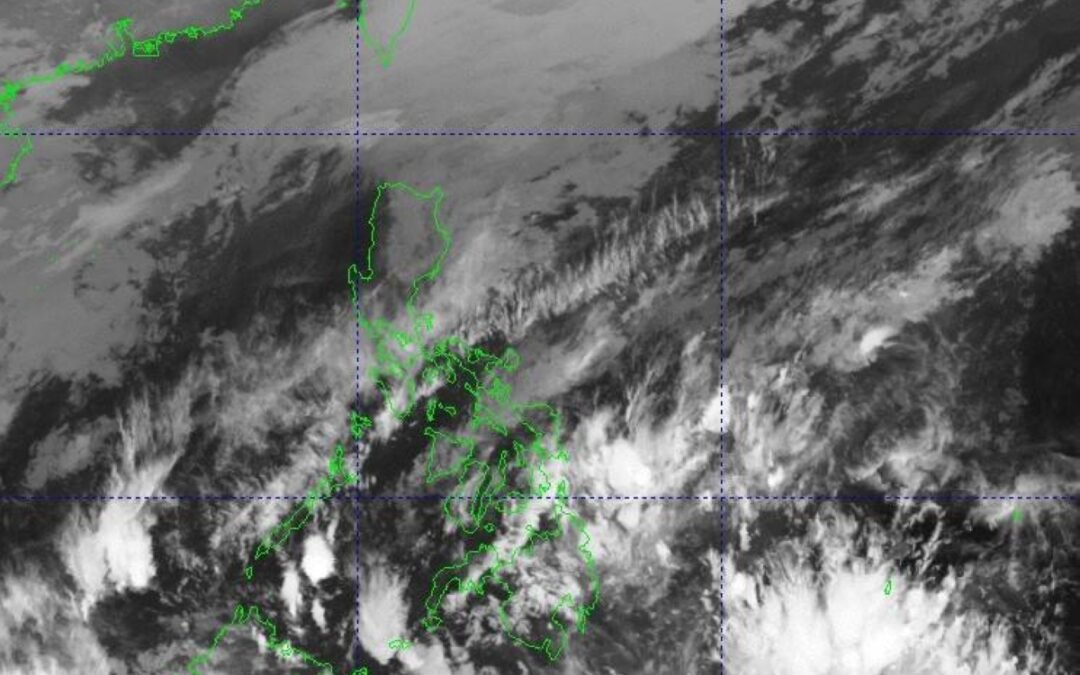
The state weather bureau reported on Tuesday that Metro Manila and the entire nation will encounter the easterly winds, which originate from the eastern regions and traverse the Pacific Ocean, bringing along warm and moist conditions, within the next 24 hours.
Chenel Dominguez, a weather forecaster from the Philippine Atmospheric Geophysical and Astronomical Services Administration (PAGASA), stated that they have yet to detect any tropical storms within the country’s jurisdiction. She also mentioned that there is no anticipation for disturbances likely to develop into typhoons over the next few days.
At the same time, she mentioned that the northeast monsoon, commonly referred to as ‘amihan,’ is gradually losing strength. It now impacts primarily the Ilocos Region, Cordillera Administrative Region, and Cagayan Valley, with sporadic light showers expected in these areas.
The winds from the east have been dominant in numerous regions across the nation such as the Bicol Region, Western Visayas, Northern Samar, Eastern Samar, Samar, Romblon, and Palawan, as reported by the national meteorological office.
The other weather system — known as the Intertropical Convergence Zone (ITCZ), which is essentially an invisible band where northerly and southerly winds converge — will bring intermittent rain showers and thunderstorms to both the Davao Region and the Zamboanga Peninsula.
This would also impact SOCCSKSARGEN (which includes South Cotabato, Cotabato, Sultan Kudarat, Sarangani, and General Santos) as well as BARMM (the Bangsamoro Autonomous Region in Muslim Mindanao), with widespread cloud cover expected according to Pagasa’s 5:00 a.m. bulletin.
oleh admin | Mar 24, 2025 | climate, meteorology, rain, vietnam, weather forecasts
This year, Vietnam can expect more moderate weather conditions, featuring hotter periods that will arrive later than typical along with above-average precipitation, as stated by the meteorological service.
The National Center for Hydro-Meteorological Forecasting has stated that from April through June, the ENSO climate event—known as the El Niño–Southern Oscillation, characterized by abnormally high sea surface temperatures in the central and eastern parts of the Pacific Ocean—is anticipated to remain neutral with a likelihood of 70-80%, affecting weather conditions across Vietnam.
Cold air waves will gradually weaken. Heatwaves in the northern and central regions will arrive later and be less intense than in previous years.
The temperatures in these regions are anticipated to rise starting from May.
|
|
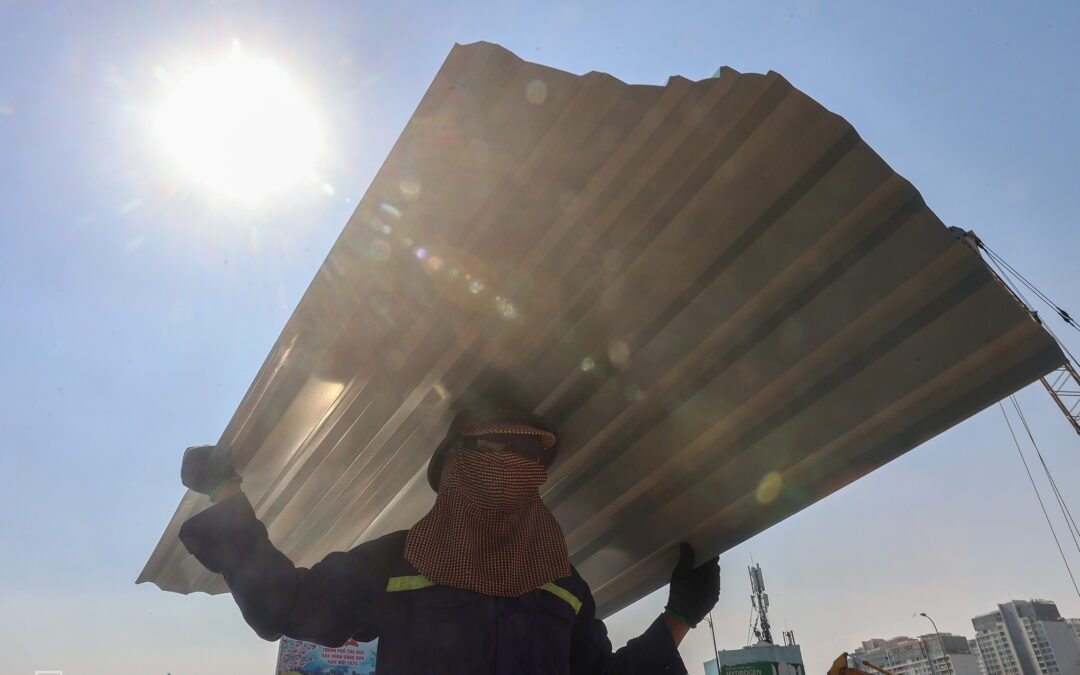
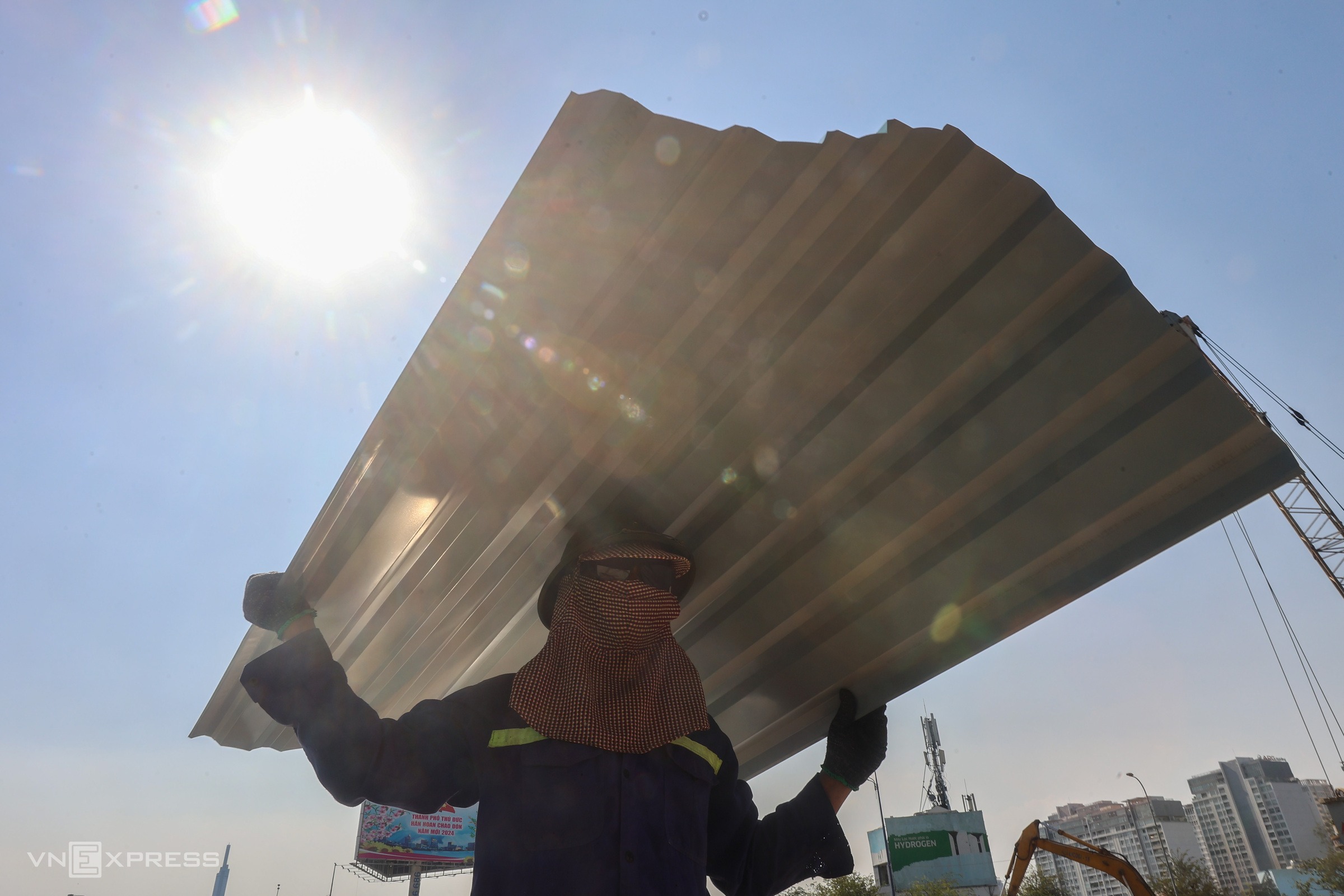
A construction worker braving the intense heat in Ho Chi Minh City on April 9, 2024, as the temperature climbed above 40 degrees Celsius. Photo by VnExpress/Quynh Tran
|
In the Central Highlands and southern regions, heatwaves are forecast to begin later than usual in April bringing fewer days of extreme heat.
Generally, temperature levels throughout the nation will remain near their historical norms, with the exception of the northwestern region, where they could increase by 0.5-1 degrees Celsius higher than usual during May.
Even with the more favorable forecast, northern and central Vietnam will likely face extended periods of elevated heat during July and August, with conditions slowly improving as we move into September.
The wet season starting in April will result in substantial rainfall across the northern areas, north-central zones, Central Highlands, and southern parts of the region, with especially intense showers predicted for May and June.
It is anticipated that in the northern region, precipitation will be typical in April with amounts ranging from 70-120 mm in the flatlands and over 150 mm in the mountains.
In May, we can expect a rise in precipitation of around 5-10%.
In June, rainfall is expected to reach 250 mm, with certain elevated regions potentially getting up to 500 mm.
In the central area, precipitation in April should remain near average but might rise by 5-15% in May, totaling around 200 millimeters.
In the Central Highlands and southern areas, precipitation levels are expected to range from 5-15% higher than average during April and May.
From July through September, six storms are predicted to form over the East Sea, with three of them possibly reaching Vietnam’s shores.

|
|
Ha Long was left devastated following Typhoon Yagi in September 2024. Image courtesy of VnExpress/Giang Huy
|
In July and August, the northern region is expected to experience between 250-500 millimeters of rain. Precipitation levels for September should fall within the 150-250 millimeter range, consistent with typical amounts.
In the Central Highlands and southern regions, precipitation levels will range from 250 to 400 millimeters.
Vietnam endured
19 heatwaves last year
with temperatures surpassing long-term averages by 0.5-1.5 degrees Celsius.
On April 28, Dong Ha city in Vietnam’s central Quang Tri Province experienced a high of 44 degrees Celsius, marking the highest temperature observed in the month of April nationwide since 1976.
Last year, there were also 10 typhoons and one tropical depression recorded over the East Sea, out of which five made landfall.
Typhoon Yagi
was the most devastating, hitting Quang Nginh Province and Hai Phong City in the northern region with gusts of up to 166 km/h.
As Vietnam enters yet another uncertain year, officials caution that although severe heat might subside, the dangers posed by intense rainfall, storms, and floods continue to be significantly elevated.
oleh admin | Mar 24, 2025 | meteorology, news, precipitation, rain, rainfall
The Kenya Meteorological Department reports that rainfall is expected to persist across much of the nation for the remainder of this week.
The weather forecast issued on Monday for the period from March 25 to 31 predicts scattered instances of intense rain in certain regions.
Kenya Met said i
Isolated intense rainfalls are expected in various regions including the Highlands both East and West of the Rift Valley, the Lake Victoria Basin, the Rift Valley itself, the southeastern lowlands, and northeastern Kenya.
.
The weather report indicates that the daily high temperatures during the reviewed period will reach up to 30 degrees.
°C at the Coastal Region, as well as northeastern and northwestern parts of Kenya.
In the Central Highlands and the Central Rift Valley, nighttime temperatures are expected to fall to around 10°C.
On March 18, Kenya Meteorology Department announced that the long rains for the months of March through April to May had commenced in certain areas of the nation, with the remaining regions expected to begin shortly.
According to Met, the beginning of the rainy season will feature a period of continuous rain amounting to at least 20 mm over three successive days, without any stretch of completely dry weather lasting for seven days or more during the next twenty-one days.
For regions in the northern section of the nation, there should be a total accumulation of precipitation reaching at least 10 millimeters across three successive days.
The meteorologist announced that the prolonged rainfall season will commence from March 10 to March 16 in the western highlands outside the Rift Valley, the Lake Victoria region, the Rift Valley itself, Nairobi, and certain areas within these highlands.
Ands east of the Rift Valley, as well as some areas in the southeastern lowlands and portions of Isiolo County.
He mentioned that the rainfall was higher during March 3 to March 9, particularly in the Southeastern lowlands and certain areas of Northeastern Kenya.
“The beginning of rainfall for the areas east of the Rift Valley Highlands and the southeastern lowlands is anticipated to start this week,” he stated.
He additionally mentioned that the beginning for the Northeastern area is anticipated to fall between March 25 and March 31.
This will probably be succeeded by periods of drought.
The northwestern areas of Kenya along with the coastal zones are anticipated to experience intermittent rain showers for the rest of March 2025.
This, however, might not satisfy the criteria for onset.
The height of the season along the coast is anticipated to happen in May.
The beginning is expected to happen in April across both areas.
Provided by SyndiGate Media Inc.
Syndigate.info
).
oleh admin | Mar 24, 2025 | asia, climate, flowers, meteorology, news
The cherry blossoms emerged on Monday in downtown Tokyo, coinciding with their usual appearance for this time of year according to the meteorological bureau.
At Yasukuni Shrine, the “Somei Yoshino” cherry blossom tree, used as a benchmark for flowering by the Japan Meteorological Agency in Tokyo, began blooming five days sooner this year compared to last, following unusually chilly temperatures. This variety typically reaches full bloom within roughly a week from now.
The private meteorological firm Weathernews Inc. forecasts that cherry blossoms will start blooming across western and eastern parts of Japan this month. The blooms are predicted to occur in the nation’s northeastern region between early and mid-April, with Hokkaido seeing them appear towards the end of April.
A meteorological authority representative verified that by approximately 2 p.m., at least six blossoms were visible at Yasukuni Shrine, satisfying the requirements to declare the start of the cherry blossom season. This declaration elicited cheers from those present at the site.


