oleh admin | Mar 24, 2025 | crimes, government, money, money laundering, news
________________
TUNIS –
The interior ministry stated on Monday that Tunisia has initiated an inquiry into suspected money laundering and tax evasion related to ride-hailing apps.
The authorities further mentioned that they were halting the operation of these applications.
The finance department of the National Guard has identified potential cases of money laundering and tax evasion involving operators of private taxi-ride hailing applications, according to a ministry statement.
The statement didn’t specify which applications were being referred to, however, an insider acquainted with the situation informed AFP that the primary firm of interest was Bolt, based in Estonia.
The ridesharing application, which serves more than 500 cities across 45 countries, is extensively utilized in Tunisia due to insufficient public transport facilities.
The Tunisian authorities mentioned that they have confiscated approximately 12 million dinars ($3.8 million) from accounts associated with various ride-hailing applications.
It was mentioned that the firms were struck off the commercial registry and their offices closed down due to alleged operation without valid licenses and utilization of fake approvals.
They were likewise charged with illicitly transferring money overseas through the use of bank accounts.
In light of the declining public transport system, Tunisians have become more dependent on ride-hailing services.
Despite being the capital, housing more than two million inhabitants, Tunis has faced significant challenges due to prolonged inadequate investment and disregard for public transportation systems.
President Kais Saied has consistently criticized corruption in the public transit industry.
Provided by Syndigate Media Inc. (
Syndigate.info
).

oleh admin | Mar 24, 2025 | banking, business, economics, investing business news, money
-
Ecobank Kenya has injected KSh3.5 billion ($27 million) into its capital reserves to meet the requirements of the updated banking regulations and fortify its financial position.
-
This investment aims to support the bank’s expansion within Kenya and across East Africa. Following this infusion of funds, their overall capital base in Kenya will increase to KSh8.5 billion ($65 million).
-
The Central Bank of Kenya has set a deadline for all commercial banks in the country to increase their core capital to KSh10 billion by 2029.
Bonface Kanyamwaya, who works as a journalist for LIFEHACK.co.ke, possesses over a decade of experience in areas such as finance, economics, business, stock markets, and aviation. He offers valuable perspectives on both Kenyan and international developments.
Ecobank Kenya has invested KSh3.5 billion ($27 million) to reinforce its capital position in line with the regulatory requirements set by the Central Bank of Kenya (CBK).

This investment aims to support the bank’s expansion of business operations in Kenya and East Africa—increasing its overall capital base to KSh8.5 billion ($65 million) in total.
All commercial banks in Kenya have been directed by Central Bank of Kenya to increase their core capital to KSh10 billion by 2029, with an initial target of KSh3 billion by end of 2025.
This action comes after changes were made to financial sector regulations at the end of last year when President William Ruto enacted the Business Laws (Amendment) Bill into law.
“Kenya holds significant importance as a strategic marketplace for the Ecobank Group and serves as a vital economic center fostering development throughout East Africa. This capital infusion bolsters Ecobank Kenya’s capacity to capitalize on emerging business prospects and generate lasting value for all stakeholders—aligning perfectly with our objectives of expansion, innovation, and profitability,” stated the bank’s CEO, Jeremy Awori, in an official press release.
This funding will allow the bank to aid business growth, ease cross-border commerce, and boost access to financial services.
Awori mentioned that this extra funding would support crucial economic factors such as local companies, small and medium-sized enterprises, financial technology firms, and female-led ventures.
Extra funds boost business expansion
This additional capital injection will strengthen the bank’s ability to broaden its footprint within key areas such as agriculture, manufacturing, information and communication technology (ICT), and innovation, along with payments and remittances, plus tourism and hospitality.
Moreover, the financial institution plans to utilize the extra funds to support budding sectors such as renewable energy, transportation and logistics, medical services, and retail commerce. The emphasis will be on fostering sustainable growth within Kenya and the broader East African region.
“This significant reinforcement bolsters our capacity to act as the preferred financial partner for international organizations, local companies, small and medium-sized enterprises (SMEs), fintech firms, and women-led businesses. It also solidifies our position as a leader in regional trade and payment solutions throughout Central, Eastern, and Southern Africa,” noted Josephine Anan-Ankomah, Managing Director of Ecobank Kenya and Regional Executive for Central, Eastern, and Southern Africa.

The modifications requiring commercial banks to bolster their capital requirements impacted the Banking Act, the Central Bank of Kenya Act, and the Microfinance Act. These amendments were designed to reinforce the stability of the banking industry.
Banks keep their capital levels relatively low.
Starting from 2012, commercial banks have been required to maintain a minimum core capital of KSh1 billion. Efforts to increase this requirement to KSh5 billion in 2015 did not succeed.
The most recent banking oversight report indicates that 11 institutions have failed to reach the KSh3 billion minimum core capital requirement mandated for the close of this fiscal year.
Earlier,
LIFEHACK.co.ke
It has been reported that if the Central Bank of Kenya (CBK) proceeds with the suggested rise in core capital from KSh 1 billion to KSh 10 billion over a span of three years, approximately 24 banks could be forced to close, affecting around 7,000 employees.

oleh admin | Mar 24, 2025 | banking, business, investing, investing business news, money
-
The highest-grossing firms and banks in Kenya showcased significant increases in profits along with considerable dividend distributions for the fiscal year 2024, with the banking sector at the forefront.
-
Large financial institutions such as the Co-operative Bank, KCB Group, and Standard Chartered Bank saw notable increases in their annual profit figures.
-
Daniel Kathali, an economist who spoke with LIFEHACK.co.ke, stated that the profit margins can partially be credited to yields from government bonds along with elevated interest rates on loans and several additional elements.
Elijah Ntongai, who works as a journalist for LIFEHACK.co.ke, possesses over four years of experience in researching and reporting on finance, businesses, and technology. He offers valuable perspectives on both local Kenyan developments and international patterns.
Investors in Kenya are rejoicing as the start of the 2024 fiscal year brings a wave of strong profit declarations and substantial dividend distributions from several top firms across the nation.

All publicly traded companies, including major banks and leading firms in industries such as energy, agriculture, and corporations, have published their fiscal year-end results for the period concluding in December 2024, as mandated.
What factors led to higher profitability?
Significantly, numerous firms listed on the Nairobi Securities Exchange reported unprecedented profits and dividends, crediting their enhanced profitability to different strategic approaches.
Commenting on the increase in profitability during a time when numerous Kenyan enterprises and overall business expansion faced challenges nationwide, Daniel Kathari observed that many companies must prioritize their stakeholders and undertake ventures that generate greater returns.
In recent times, we’ve observed a rise in internal lending by the government. Consequently, numerous enterprises, especially within the finance industry, have seized the chance to significantly invest in low-risk Treasury bonds and notes, yielding substantial returns. Additionally, these banking institutions have made considerable investments beyond Kenya’s borders; their overseas branches are generating significant revenue as well.
Don’t overlook the fact that loan interest rates were extremely high, enabling banks to levy up to 20%, thereby potentially boosting their profit margins. The stabilization of the Kenyan shilling likely played a role as well in contributing to the substantial profits recorded in 2024,” remarked Kathali.
Companies and dividends announced
In 2024, the banking sector has proven to be exceptionally successful, with leading banks announcing significant increases in profits and substantial dividend payouts for 2025.
Company
|
YoY profit growth (%)
|
Profit after tax (KSh)
|
Dividend paid out per share (KSh)
|
Payment date
|
1.
|
Cooperative Bank of Kenya PLC
|
9.8%
|
25.5 billion
|
Final dividend of KSh 1.50
|
June 10, 2025
|
2.
|
ABSA Bank Kenya Plc
|
28%
|
20.9 billion
|
Final dividend of KSh 1.75
|
May 22, 2025
|
3.
|
Standard Chartered Bank in Kenya Limited
|
45%
|
20 billion
|
Final dividend of KSh 37
|
May 28, 2025
|
4.
|
KCB Group Plc
|
64.9
|
61.8 billion
|
Final dividend of KSh 1.50
|
May 23, 2025
|
5.
|
Stanbic Holdings Plc
|
12.8%
|
13.71 billion
|
Final dividend of KSh 18.90
|
May 16, 2025
|
6.
|
East African Portlands Plc
|
Final dividend of KSh 1.00
|
March 21, 2025
|
7.
|
Safaricom Plc
|
Intermediate dividend of KSh 0.55
|
March 21, 2025
|
8.
|
Kenya Power & Light Company PLC
|
Intermediate dividend of KSh 0.20
|
April 11, 2025
|
9.
|
EABL
|
Intermediate dividend of KSh 2.50
|
April 30, 2025
|
10.
|
KenGen
|
Final dividend of KSh 0.65
|
February 13, 2025
|
As many leading Kenyan firms have already released their fiscal year 2024 earnings reports along with dividend distributions, market participants are now looking forward to similar updates from additional sector leaders.
A number of these firms like Safaricom Plc, Equity Group Holdings Plc, and British American Tobacco Kenya (BAT Kenya) are anticipated to disclose their financial outcomes for the fiscal year ending December 2024 along with the subsequent final dividend distributions.
oleh admin | Mar 24, 2025 | gold, jewelry industry, money, precious metals, wealth
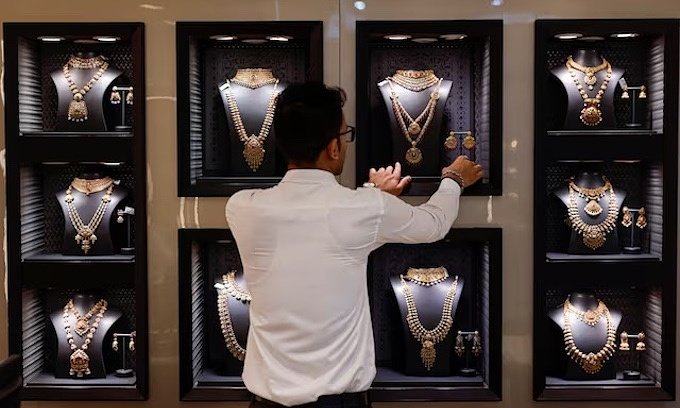
With gold prices surging to consecutive record levels, jewelers throughout Asia and the Middle East are facing dimmed luster in their showcases as buyers rush to exchange their used jewelry and coins for cash.
Should the selling pressure persist, it might eventually result in reduced imports into key market areas, which could possibly curb the upward momentum of gold prices, according to statements from retailers and industry specialists.
On March 14, spot gold reached over $3,000 per ounce for the first time, and it kept rising the previous week, resulting in Year-To-Date increases exceeding 15%. This surge was fueled by a potent mix of geopolitical and economic instability.
The impressive surge observed recently followed nearly a 30% increase in 2024, which has boosted the trade for frequently overlooked scrap gold purchasers in Zaveri Bazaar, India’s biggest bullion marketplace.
Unmesh Patel, a textile merchant, mentioned that he achieved a profit exceeding 25% from offloading four 10-gram gold coins within just under seven months following the reduction in import tariffs on precious metals by the Indian administration.
He mentioned, ‘I’ve opted to sell now rather than wait for prices to rise further.’
In India, domestic gold prices have surged over 32% since the reduction of import duties in July, reaching an all-time peak of 89,796 rupees for 10 grams.
“Should prices remain at this level throughout the year, India’s total demand might decrease by over 30% in 2025,” stated Prithviraj Kothari, who serves as the president of the India Bullion and Jewellers Association (IBJA).
” purchasers are struggling to match the pace of rising prices, and their financial limits remain stagnant as well,” he noted.
Wedding season slump
Although India’s wedding season is in full swing, jewellers are seeing less than half their typical customer traffic, according to dealers.
Even individuals like bride-to-be Vaishnavi M., who are buying items, prefer to trade in their old jewelry for new pieces to reduce expenses.
“The costs are extremely high and would significantly disrupt my wedding budget…I am considering exchanging some of my mother’s vintage jewelry instead,” stated Vaishnavi M., who resides in the southern state of Kerala.
Last year, India’s scrap gold supply amounted to 114.3 tons, with the World Gold Council predicting this number to rise by 2025.
India satisfies most of its gold needs through imports, whereas China, being the largest consumer, covers approximately two-thirds of its demand by importing.
According to a bullion dealer based in Dubai, jewellery centers in the Middle East are also experiencing a decline in demand.
The dealer mentioned that many Indian tourists typically shop in Dubai to evade import duties, yet even they are becoming cautious.
Approximately 60% of the gold demand in the UAE is attributed to jewelry purchases. When prices rise, consumers tend to opt for items with less weight, according to Andrew Naylor, who leads the Middle East and Public Policy sectors at the World Gold Council.
He stated that, nevertheless, our findings indicate the worth of jewelry purchased last year went up, even though the quantities were reduced.
In China, the weak retail purchases observed in 2024 persist. According to Peter Fung, the head of trading at Wing Fung Precious Metals, individuals looking merely to possess tangible gold will opt for coins and bars due to additional charges imposed by jewelers for their workmanship.
Other significant Asian markets have similarly experienced a downturn in the demand for gold jewelry, resulting in an excess of sellers over buyers.
Customers are moving toward more affordable jewelry or choosing to liquidate their current pieces.
gold
Or utilize it as loan collateral instead of making new purchases.
Brian Lan, who leads GoldSilver Central in Singapore, mentioned that nearly half a dozen stores have recently been established near Chinatown, offering products made of gold-plated silver.
“Sometimes, our clients return after going home, searching for jewelry they no longer wear or pieces that are damaged, with the intention of selling them off,” Lan mentioned additionally.
These trends underscore the fine equilibrium between gold’s position as a conventional cultural commodity and its significance as a financial asset.
In the future, experts suggest that the prospects for jewelry demand continue to appear bleak; however, interest in investing in precious metals is expected to stay robust.
oleh admin | Mar 24, 2025 | economics, gold, money, news, precious metals
Gold prices remained largely unchanged on Monday morning following their sharp decline from all-time peak levels at the end of last week.
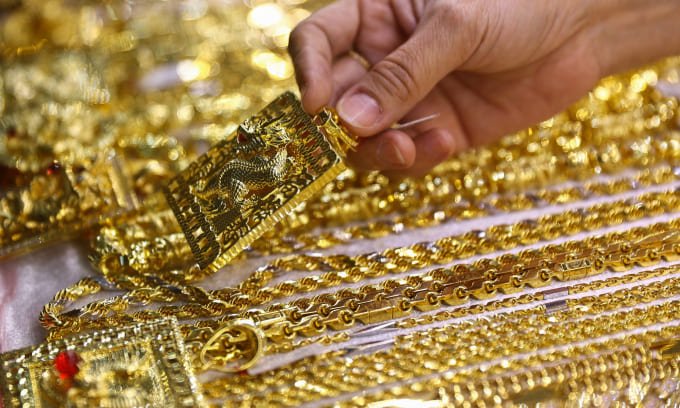
The gold bar pricing set by Saigon Jewelry Company stood at VND97.4 million (US$3,798.76) per tael. Previously, it had hit an all-time peak of VND100.4 million the preceding Thursday.
The cost of gold rings increased by 0.1%, reaching VND97.1 million per tael. Last Thursday, it reached an all-time high of VND100.7 million. One tael is equivalent to 37.5 grams or approximately 1.2 ounces.
Worldwide, gold saw minimal movement on Monday with traders awaiting new stimuli following a previous surge that lifted prices to all-time peaks. This rise was driven by geopolitical tensions and expectations for reductions in U.S. interest rates.
Reuters
reported.
Spot gold remained steady at $3,025.38 per ounce. Meanwhile, U.S. gold futures climbed by 0.3%, reaching $3,029.70. The precious metal had hit an all-time peak of $3,057.21 on Thursday.
”
Gold is still well-positioned
For additional gains, markets might continue to be wary of potential adverse growth impacts from tariffs. However, this downside risk could be somewhat mitigated if aRussia-Ukraine cease-fire agreement moves nearer to implementation,” noted Tim Waterer, chief market analyst at KCM Trade.
“President Trump has created some flexibility regarding the reciprocal tariffs, possibly making them less harsh than anticipated, which has somewhat eased market concerns but…it has also reduced the upward trajectory of gold prices,” according to Waterer.
Zero-yield bullion is considered a safeguard against geopolitical and economic instabilities, along with inflation.

oleh admin | Mar 24, 2025 | economics, korean, middle class, money, personal savings
Middle-class families in South Korea are finding it difficult to set aside savings, as their remaining funds after covering expenses have fallen beneath 700,000 won ($480). Specialists caution that this increasing economic pressure might undermine consumer expenditure within the country.
Based on data from Statistics Korea, families within the 40-60% income range experienced an average disposable income surplus of 658,000 won ($450) during the final quarter of last year, which represents a decrease of 88,000 won compared to the same period the previous year. Disposable income here denotes funds remaining post-tax payments, financial interests, and daily expenditures. Consequently, this indicates that such middle-income homes accumulated just under 700,000 won across one fiscal quarter specifically meant for saving purposes.
This figure represents the lowest point over the past five years, specifically during the fourth quarter of 2019, where it was recorded as 653,000 won. Additionally, this is the first instance within the last five years that the surplus has dropped beneath the threshold of 700,000 won.
According to their average monthly earnings, families were categorized into five distinct income groups. During the final three months of last year, the mean monthly incomes for these categories stood at approximately 1.21 million won for those in the lowest earning tier, 2.91 million won for the next category up, 4.40 million won for the mid-level class segment, 6.34 million won for the penultimate grouping, and reached as high as 11.20 million won per month for individuals within the topmost revenue stratum.
Four years back, families belonging to the middle class enjoyed a surplus greater than 900,000 won; however, this figure has notably declined post-pandemic. Interestingly, despite this decrease, the mean excess income across all household categories has shown an upward trend during the last two sequential quarters, pointing towards economic recuperation.
There are two primary factors behind the decline in middle-class savings: escalating property prices and heightened expenditures on private schooling. Despite a rise of 4.4% in the earnings of middle-class households during the last year, their expenses climbed by 6.1%, outpacing the increase in their incomes.
In the final quarter, non-consumption expenditures for middle-income families amounted to 777,000 won, showing an increase of 12.8% compared to the same period last year, which represents the highest growth rate recorded since tracking started in 2019.
This growth was fueled by increased taxes associated with property acquisitions and escalating interest expenses. A provisional tax, categorized as a consumption-related levy, skyrocketed almost four times relative to the prior year, consequently diminishing personal savings even more. Additionally, interest expenditures climbed by 1.2% to hit 108,000 won, marking the initial instance where this figure exceeded the threshold of 100,000 won.
The expenditure on education saw an uptick of 13.2%, amounting to 145,000 won, significantly surpassing the general household average growth rate of just 0.4%. This surge highlights the escalating stress experienced by middle-class families, particularly as they grapple with the challenges posed by lacking property ownership and contend with climbing expenses related to supplementary schooling.
With middle-class budgets becoming tighter, worries are increasing that this might weaken both internal spending and the broader economy. A substantial decrease in the money left over after household expenses for middle-income families could result in lower consumer confidence, potentially complicating efforts towards steady economic expansion.
A specialist noted, “With a homeownership rate exceeding 50%, the middle class aims to keep education costs similar to those of higher-income families. A reduction in their available income might pose a significant obstacle to consumer spending within the country.”
Halaman 6 dari 9« Awal«...45678...»Akhir »


