oleh admin | Agu 21, 2025 | local news, missing persons, news, poland, Travel
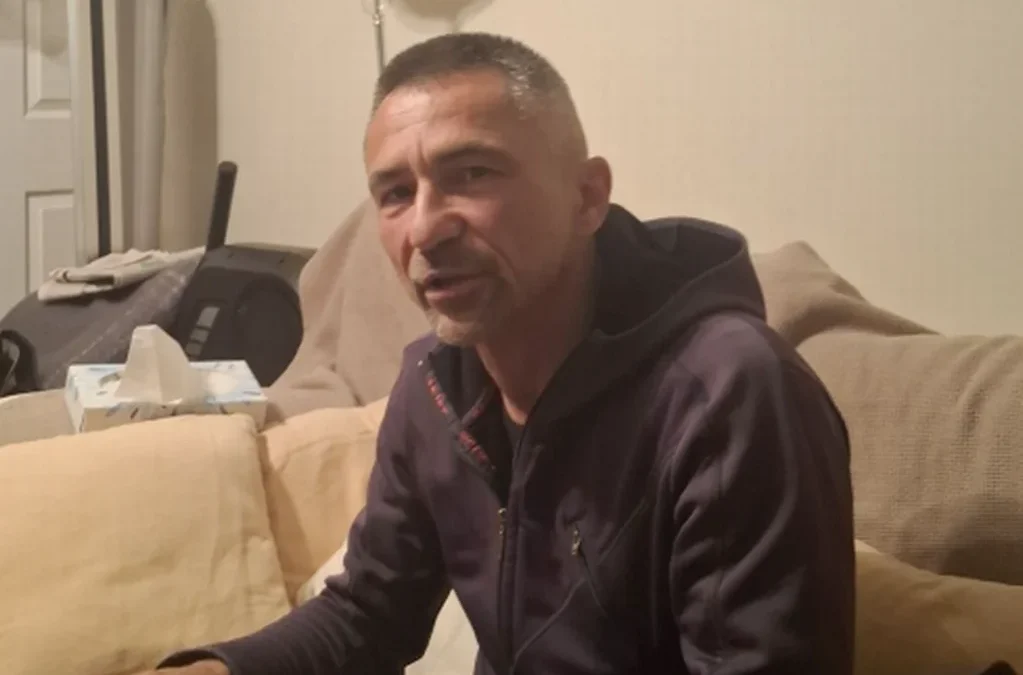
A 54-year-old man from Poland who lives in Edinburgh, Scotland, went missing on July 30 while walking close to Chefchaouen in northern Morocco, according to his relatives.
Adam Jordanowski journeyed from Edinburgh to Málaga, Spain, on July 25th, subsequently entering Morocco through Tangier Med prior to traveling to the mountain town, which serves as a well-known location for hikers, according to a Scottish national tabloid newspaper.
Daily Record
reported on Friday.
Jordanowski was supposed to go back to Scotland on July 31, making a layover in Barcelona. While UK border officials stated he registered for his flight to Edinburgh, his relatives worry he did not depart from Morocco.
His relatives have initiated a campaign via online platforms seeking information about his location, asking individuals to reach out to Police Scotland (101, case number 2663 from 03/08/2025) or the Polish Embassy in Rabat (+212 661 414 119).

oleh admin | Mar 30, 2025 | art, artwork, culture, exhibitions, poland
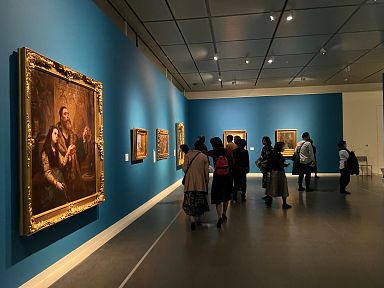
Over 150 pieces such as paintings, drawings, and prints from the 19th and 20th centuries are currently being exhibited in Japan. This collection has been referred to as a ‘treasure trove’ featuring some of the most renowned instances of Polish Modernism.
The exhibition holds significant importance for Polish-Japanese cultural ties. For the first time in the Land of the Cherry Blossoms, it offers an opportunity to display artworks that form the core of our national heritage,” stated Polish Minister of Culture and National Heritage Hanna Wróblewska at the formal unveiling ceremony.
Dr. Andrzej Szczerski, the director of the National Museum in Krakow, where many examples of artisanal crafts are displayed regularly, commented that this event marked “the biggest exhibition of Young Poland’s art ever held in Japan.”
“The numerous audience and media representatives who attended the opening emphasised the artistic importance of the works on display and the significance of the exhibition, showing how the art of Young Poland was able to express both national content and speak the universal language of art,” he said.
The exhibition takes up the whole floor at MOMAK (The National Museum of Modern Art, Kyoto), and it is organized around various themes that touch upon inspirations derived from nature, history, Japanese culture, and Polish national style.
Polish modernist masterpieces in the center of Japan
“The narrative presented here revolves around Polish history; its opening chapter is depicted through the creations of Jan Matejko and Artur Grottger. However, most importantly, this period is illuminated by the contributions of Young Poland’s artists. During the transition from the 19th to the 20th century, these artists were instrumental in forging a sense of national identity and ensuring that Poland remained prominent and influential within European artistic circles, even when it was absent as a nation-state on world maps,” states the exhibition catalog.
Included among the displays are creations by esteemed Polish artists like Olga Boznańska, Jacek Malczewski, Józef Mehoffer, Władysław Podkowiński, Józef Pankiewicz, and Stanisław Wyspiański.
Among the artworks visitors can enjoy are Włodzimierz Tetmajer’s “The Artist’s Family,” Leon Wyczółkowski’s “Stańczyk,” and Józef Pankiewicz’s “Czeszysta.” Also featured are several works by Jacek Malczewski such as his ‘Portrait of Feliks Jasieński,’ ‘Girl with Chrysanthemums’ and ‘Florists’ created by Olga Boznańska. Additionally, you’ll find pieces like Alphonse Karpinski’s “Jane with a Japanese Doll” along with various paintings from Wojciech Weiss including “Musicians on the Bridge”, “Poppies,” and “Fears”. Lastly, there is “The Bearded Woman” painted by Władysław Ślewiński.
At the MOMAK exhibition, you can also see two previously unexhibited works by Boznanska: “Tulips” and “Mrs. L’s Portrait.” These pieces were acquired during the artist’s lifetime by Magosaburo Oohara, a renowned Japanese businessman, art collector, and benefactor. Today, they form part of the holdings at the Ohara Museum of Art in Kurosaki, Japan, which houses the entirety of Mr. Oohara’s collection.
The ‘Young Poland’ movement – characterized by revolt, liberty, and self-expression
As art historian and founder of the ‘Outside the Frame’ platform, Maja Michalak points out that Young Poland represents a distinctive and highly varied era in painting. Similar to movements like Young Germany or Young Scandinavia, various regions across Europe adopted analogous names for their artistic trends, aiming to highlight the novelty and pioneering spirit inherent in these styles at the time.
“During this period, the hallmark was the expression of defiance, the urge for liberty, and the aspiration to view art from a new perspective. This also enabled them to showcase what mattered most to each individual artist,” explains Michalak.
“The artists focused more on expressing their personal uniqueness by incorporating the multiple overlapping styles from that era: Art Nouveau, Impressionism, Symbolism, as well as Expressionism. Each artist displayed these influences in somewhat distinct manners,” she explains.
The allure of ‘Japonism’ — a passion that bridged two civilizations.
One distinctive feature of the exhibition in Kyoto is the chance to explore how Japanese aesthetic principles impacted Polish artists over a hundred years ago.
Michalak points out that we must discuss the prevalent Japonisme during this period, an intense attraction to East Asian artistic styles, which captivated many artists. They incorporated various aspects like fans and kimonos—items being brought over and depicted in their works—as well as themes such as dragonflies and peacocks, symbols closely linked to Asian traditions. Additionally, they adopted compositional techniques involving diagonals and increased asymmetry, concepts borrowed from Japanese woodblock prints.
Urszula Kozakowska-Zaucha, the curator of the Kyoto exhibit, highlights the significant contribution made by a prominent Polish art critic and collector toward introducing Japanese art to Poland: “These exceptional artworks are displayed alongside Japanese woodblock prints, illustrating the connection between Polish art and Japan. A key figure featured prominently in this exhibition is Feliks ‘Manggha’ Jasieński, an influential art collector whose personal collection merits its own segment. His enthusiasm for gathering such pieces and his close ties with the Young Poland artists from Kraków helped popularize Japonisme within their circle.”
Jasieński gathered exemplary pieces of Japanese art for his collection, making these works accessible to artists who could borrow them when needed. Ultimately, in 1920, he contributed his complete art collection to the National Museum in Krakow.
He also enlisted artworks from artists influenced by Japan, whom he adored, notes Michalak. The pairing of Young Poland and Japan in this exhibit is intentional. This arrangement could facilitate interaction between the Japanese audience and these pieces since they would recognize cultural components familiar to them.
‘Girl with chrysanthemums’ – the symbol of the exhibition and Boznanska’s renaissance
The promotional materials for the exhibition showcased Olga Boznańska’s painting ‘Girl with Chrysanthemums,’ which stands out as one of the era’s most renowned pieces from the Young Poland movement. This selection appears intentional—Boznańska enjoys renewed acclaim after her passing, and her nuanced, introspective portraits resonate well with modern audiences. Notably, within the animated promotion for the exhibit, the once somber young girl depicted in the artwork now beams joyfully.
Olga Boznańska stands among those female artists who dedicated their entire lives to artistic creation,” says Michalak. “She sought equal chances for creativity just like men do and wished to receive similar treatment from society.” The art critic further notes, “Her career was her top priority, showcasing her strong resolve in this pursuit.
Boznańska lived primarily in Paris, where she gained significant recognition for her emotionally charged portraits that were rich with psychological insight.
“The style of painting is highly distinctive and symbolic of Boznańska’s work. Her skillful technique captures an intimate closeness to the subjects depicted, infused with deep emotional resonance. This approach can be likened to how the Baroque painter Diego Velázquez wielded his brush; indeed, Boznańska drew inspiration from him as well as contemporaries like Édouard Manet, James McNeill Whistler, or Berthe Morisot. Such psychologically nuanced portraiture is quintessential to Olga Boznańska’s legacy,” explains Michalak.
“Generally speaking, I believe that the period known as Young Poland represents one of the finest eras in our country’s artistic history, particularly within Polish painting,” states Michalak. “This era boasts an impressive array of artists whose work is captivating both for its historical significance and the messages they sought to communicate, as well as for its aesthetic value and visual appeal. Be it works by Boznańska, Pankiewicz, Mehoffer, or Ślewiński—these masterpieces exemplify exceptional artistry. In my view, such talent ought to serve as our nation’s cultural ambassador and become synonymous with high-quality Polish paintings internationally.”
The exhibition titled “Young Poland: Polish Art 1890-1918” will remain open in Kyoto up until June 29th.
oleh admin | Mar 27, 2025 | immigrants, immigration, migrants, news, poland
Poland
has temporarily prohibited immigrants from seeking asylum as part of an effort to ‘regain control’ over its boundaries.
Donald Tusk, the Polish prime minister, declared that the right to seek asylum would be temporarily halted for 60 days due to a surge in arrivals.
Belarus
border.
Exceptions will be granted for unaccompanied children, expectant mothers, senior citizens, individuals who are not feeling well, and those facing a genuine threat of significant injury.
The two-month restriction will be implemented immediately, Tusk stated last night.
Polish authorities have asserted that the Russian government has
coerced its neighbor Belarus into channeling migrants toward their shared frontier
to undermine the EU stability.
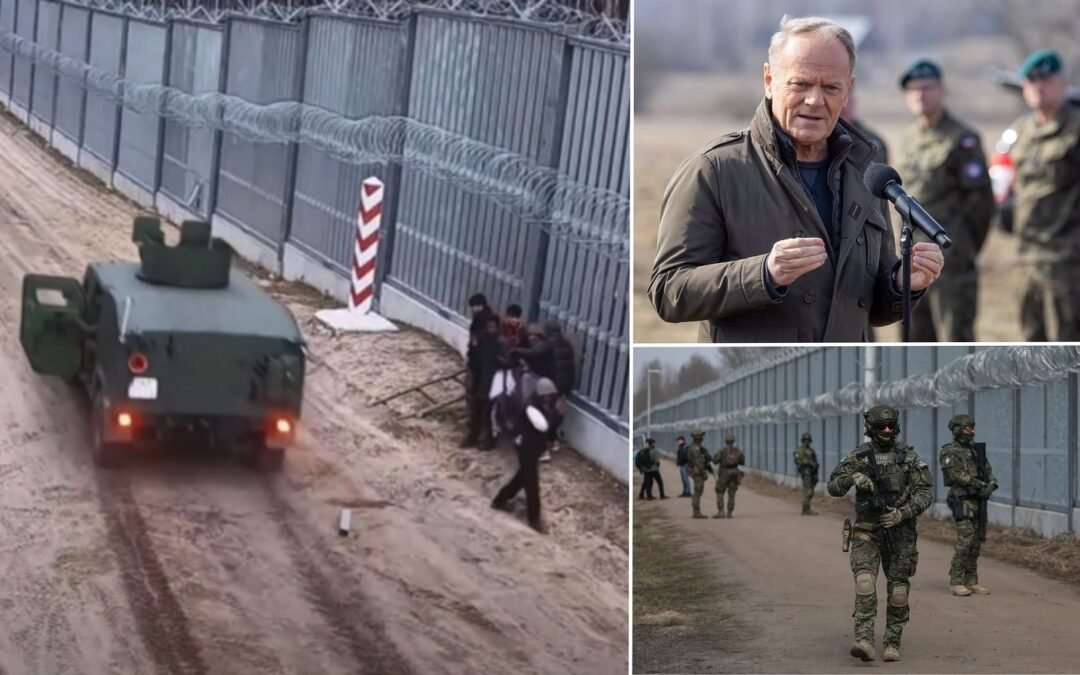
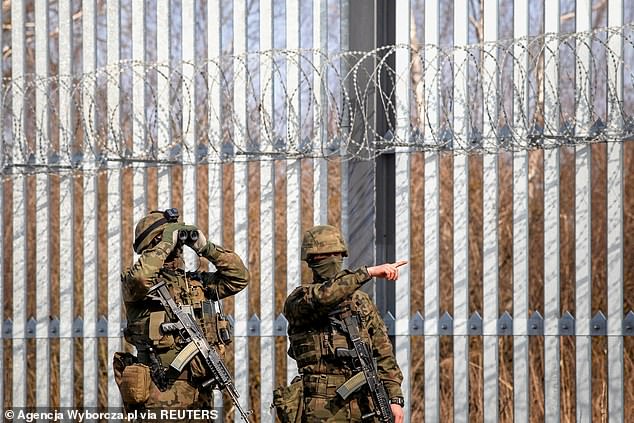
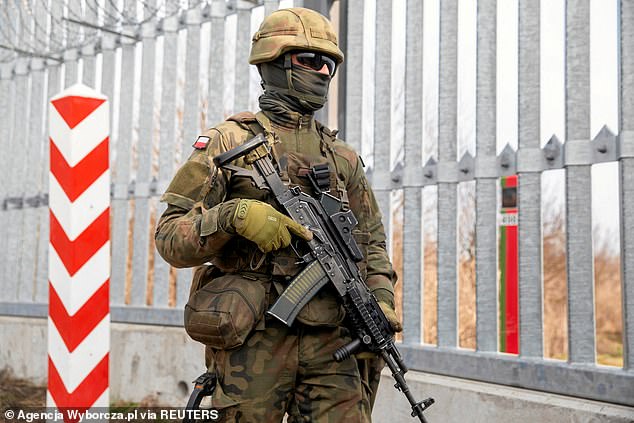
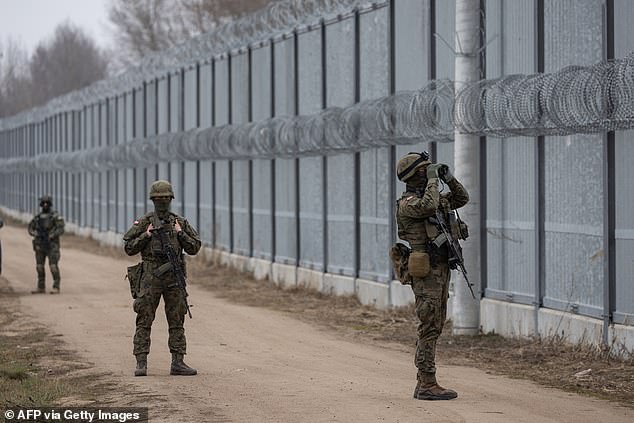
Warsaw has put up a five-meter tall barbed wire fence along a significant portion of the border after a steady flow of immigrants tried to cross over.
Video surfaced over the weekend showing 280 migrants.
trying to enter Poland from Belarus
.
The team successfully cut an opening in the fence using a cutting torch and then proceeded to go through one at a time.
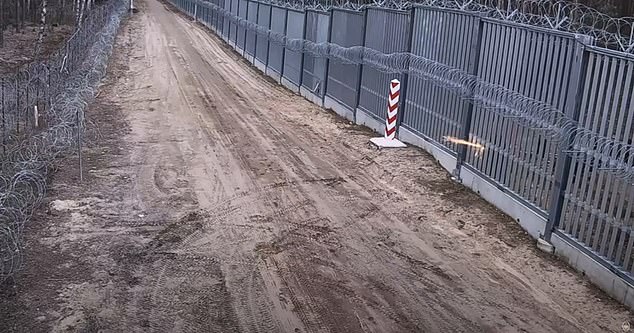
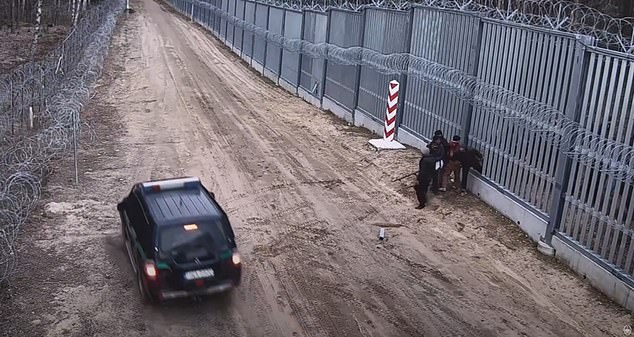
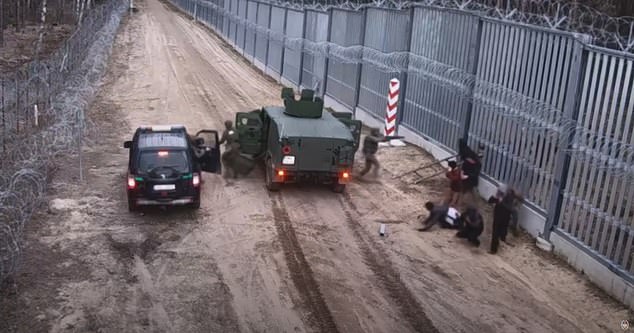
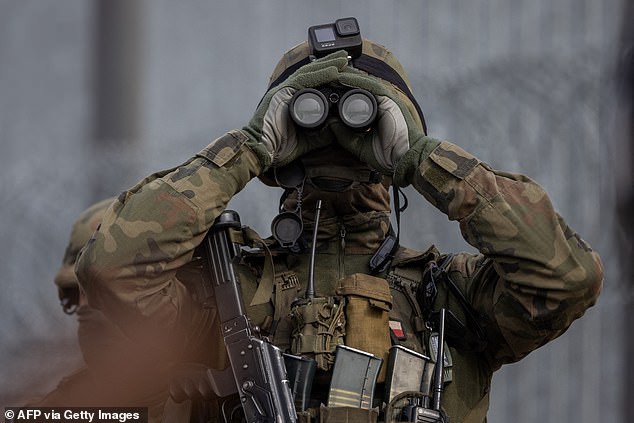
Nevertheless, they are swiftly caught by soldiers arriving in armored vehicles, who stop them from proceeding and then focus on repairing the fence.
The Polish President, Andrzej Duda, allegedly showed reluctance towards approving the suspension due to concerns that it might impact refugees coming from Belarus.
Nevertheless, authorities have ensured that individuals who genuinely face risks will retain the ability to seek asylum.
Duda stated yesterday: “Today, I made the decision for what is called the asylum act to be implemented. I signed it as I feel it is essential to enhance the safety of our borders.”
‘The crucial aspect is to protect the Polish frontier and the Polish entities responsible for safeguarding it.’
Since taking office at the end of 2023, Tusk has aimed to strengthen control over Poland’s boundaries.
He stated that the contentious bill will be a step towards reclaiming ‘Poland’s border control’.
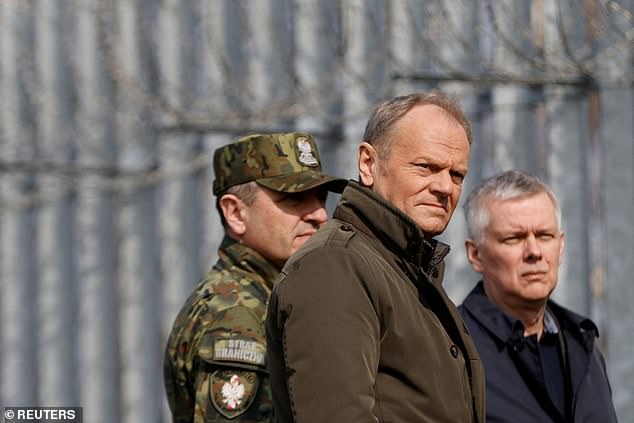
When announcing the proposals, he stated: “Should anyone wish to visit Poland, they are expected to adhere to Polish standards, embrace Polish traditions, and strive for integration.”
‘The native culture can feel endangered when there are an excessive number of individuals from different backgrounds.’
Since 2021, Poland, Lithuania, Latvia, and Finland have
witnessed a significant increase in individuals unlawfully entering their country from Belarus and Russia.
The nations have blamed both Vladimir Putin and Belarusian President Aleksandr Lukashenko for
arming migration as a tactic to undermine the European Union stability
.
More than 15,000 individuals sought asylum in Poland during 2024, marking a 72 percent increase from the previous year and representing the highest yearly total since 2016.
Following Ukrainians, the highest number of applications last year came from Belarusians, totaling 3,663 asylum seekers, followed by 823 Russians.
Next comes Ethiopia with 515, Eritrea with 505, and Somalia with 486.
The passage across this area has been perilous for numerous migrants, as nearly 100 documented fatalities are believed to be below the actual number.
Poland’s actions have faced considerable scrutiny, with Human Rights Watch stating that they contradict Poland’s international and EU commitments. They also warn that these measures might ‘completely close off the Poland-Belarus border,’ where Polish officials allegedly carry out illegal and abusive expulsions.
They have similarly called for the EU to initiate legal proceedings against Poland after the implementation of the law.
But Tusk dismissed this in October, saying: ‘Nobody is talking about violating human rights, the right to asylum, we are talking about not granting applications to people who illegally cross the border in groups organised by Lukashenko.’
In February, the Polish authorities announced their decision not to participate in the European Union’s Pact on Migration and Asylum, an initiative designed to handle the influx of refugees into member states.
As per the accord, states had the option to relocate a specific quota of migrants, make a monetary contribution, or offer operational assistance to facilitate resettlement.
Nevertheless, both Poland and Hungary have objected to this measure, intended to hold legal force over every single EU nation.
Tusk stated, “Poland will not enforce the Migration Pact if it means accepting more immigrant quotas within the country.”
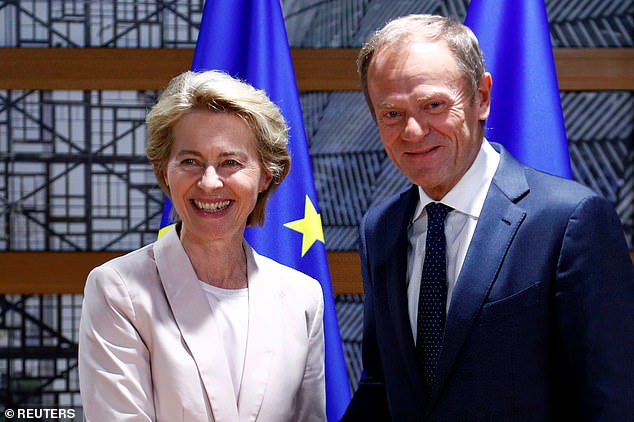
We are prepared to work together with all parties to safeguard Europe against unlawful immigration. Nevertheless, Poland will not assume any further responsibilities. We have already shouldered more than anybody would have anticipated only a short time ago.
The European Commission President, Ursula von der Leyen, acknowledged that Poland has taken in more than its fair share of Ukrainian refugees following the Russian invasion of 2022.
Other countries within the EU are similarly
implementing measures to restrict the privileges of those seeking asylum.
Finland has barred all migrants from entering through its Russian border since 2023, whereas newly appointed German Chancellor Friedrich Merz
pledged to halt all unauthorized migration across Germany’s terrestrial boundaries upon taking office
.
Read more