oleh admin | Mar 20, 2025 | brain health, gender, mental health, psychology, psychology of everyday life
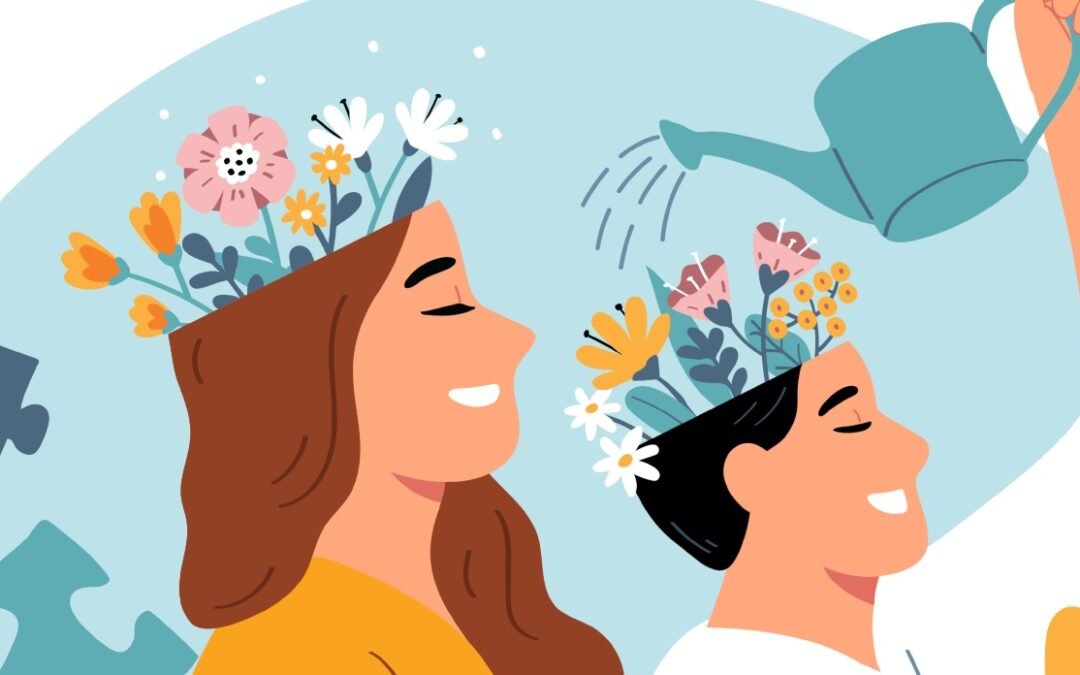
The topic regarding the distinctions between what are known as masculine and feminine brains has consistently ignited interest and spurred discussions. Do our neural pathways genuinely vary, or are these discrepancies merely outcomes of societal and cultural influences?
The Stanford Medicine article
examines this issue by delving into research outcomes that underscore the inherent distinctions in the functioning of male and female brains.
A shift in viewpoint regarding neuroscience
Up until the latter part of the 20th century, scientific thought tended towards attributing disparities in male and female behaviors mainly to environmental factors and societal influences. Both biologists and psychologists posited that social norms shaped human cognition and emotions. Nevertheless, starting from the ’90s, multiple investigations have shown that physiological elements significantly impact brain activity as well. Neuroscientist Nirao Shah initiated an extensive exploration along these lines back in 1998. During this period, incorporating females into animal testing protocols was seen as problematic owing to their fluctuating hormone levels; researchers felt such variability could obscure findings with excessive inconsistencies. Gradually though, empirical proof started mounting—differences in brains across genders cannot solely be chalked up to cultural conditioning but are embedded within genetic makeup and neurological pathways.
Well-established behavioral differences
Differences in behavior between boys and girls can become apparent even during their early years. A study involving rhesus monkeys uncovered an intriguing trend: male monkeys tended to prefer playing with wheeled objects, whereas female monkeys were drawn towards soft toys. Consequently, these tendencies seem to stem from biology rather than societal influences. Among people, women usually outperform in areas such as verbal abilities, intricate manual dexterity, and recollecting particular incidents. Conversely, men generally exhibit stronger capabilities when dealing with visual-spatial challenges—like reading maps—and certain types of short-term memory work. Such distinctions aren’t merely due to differing levels of practice or routine; they’re grounded within the physical makeup of our brains. Research indicates that women have heightened sensitivity to emotional signals in conversations, whilst men typically fare better at assignments necessitating broad perspectives and understanding space.
Brains wired differently
On a biological level, these distinctions extend much further than just behavioral patterns; they manifest in the very architecture and operations of the brain.
-
The hippocampus, which plays a crucial role in learning and memory processes, tends to be bigger in females. This might account for their proficiency in verbal memory tasks and remembering specifics.
-
The amygdala, which plays a role in handling emotions, tends to be bigger in males. Nonetheless, how it functions varies based on gender: for females, the activation of the amygdala correlates with remembering emotionally charged experiences in the brain’s left side, whereas for males, this correlation occurs in the right side.
-
In what some describe as a “female brain,” the two hemispheres have enhanced connections, facilitating quicker exchanges between logical reasoning and emotional processing. For males, however, these connections tend to be stronger inside individual hemispheres, which enhances their ability for concentrated analysis.
This disparity in connectivity might account for why women frequently excel at juggling multiple tasks and handling social interactions, whereas men tend to perform better in concentrated and analytic activities.
The part played by hormones in these variations
The primary cause behind the distinctions observed in what we call male and female brains can be attributed to the intricate influence of sexual hormones.
-
Primarily, women generate estrogen and progesterone, hormones that affect neural plasticity (the capability of the brain to restructure itself).
-
On the contrary, men are governed primarily by testosterone, a hormone that molds brain development starting from fetal stages and affects tendencies toward competitiveness and territorial actions.
Sex chromosomes also hold significant importance. Females possess two X chromosomes, providing them with a particular genetic advantage against specific neurological disorders. Males, having just one X chromosome along with a smaller Y chromosome, tend to be more susceptible to certain mental health conditions like schizophrenia or autism.
Specialization of the brain according to genetic factors
Nirao Shah’s research on mice has pinpointed particular genes linked with gender-specific behaviors. Through gene deletion experiments, he noted significant alterations in their actions—like reduced nurturing tendencies or shifts in mating conduct. This indicates that the brain consists of distinct components, each governing certain functions or responses, which are regulated by genetic and hormonal cues. Recognizing these architectural and operational distinctions between what we traditionally call male and female brains can refine approaches within areas like mental well-being support, educational methods, and professional psychology. Tailoring treatment plans according to these physiological variations might lead to more precise and efficient medical interventions.
These distinctions thus represent complementary strengths rather than shortcomings. Instead of causing separation, this variety in thinking is a treasure that enables us to view the world through various lenses.

oleh admin | Mar 13, 2025 | diet and nutrition, eating habits, food and drink, nutrition, psychology of everyday life
I see myself as a friendly, sensible, empathetic, and well-balanced individual… except
when I am hungry
At that moment, my patience disappears, my tolerance weakens, and every inconvenience feels like a direct attack on me. When my stomach growls with hunger, shortly after, I transform into my most basic form.
The only reason I exist is to place a piece of pizza into my mouth.
Anything that obstructs that becomes an obstacle.
cause for anger
And I’m not alone in this. This has also occurred for you. To my mom, to your significant other, to that colleague who unexpectedly turns grouchy during the day’s hustle.
It’s funny
How hunger causes anger in people
That’s indeed true. However, there are explanations just as astonishing yet inevitable for this phenomenon. So, let us explore what is truly happening within our bodies.
How can hunger influence our emotions?
so drastically?
Decrease in blood glucose
The brain relies nearly completely on glucose as its energy source. Think of it as the ‘fuel’ required for proper functioning. If we go without
for a considerable duration without food
, our glucose levels drop and the brain suffers. This hypoglycemia causes the brain to not function at 100%. You have probably felt more clumsy, tired, confused and, of course, more irritable when you have not eaten for a long time.
Stress hormone is triggered
When blood sugar levels drop, the brain triggers signals that prompt various organs into action.
secrete and discharge hormones that help increase glucose levels in the bloodstream
Within the body, several of these hormones include
epinephrine
and
cortisol
, also launched during these periods
stress
, which prepares the body to handle challenging circumstances, heightening tension and making us more likely to respond with aggression. This physiological process clarifies why we experience greater stress and discomfort when we’re hungry.
The brain prioritizes foraging
From an evolutionary perspective,
Hunger triggers a survival mode within the brain.
This state compels us to concentrate on acquiring sustenance, pushing other pursuits into the backdrop. Such concentration may result in
decreased patience and increased annoyance
In reaction to stimuli unrelated to food, this response serves as an adaptive mechanism to guarantee the intake needed for survival.
Unfavorable view of the surroundings
Hunger not only impacts our bodily processes but also alters how we perceive our surroundings. As stated
a study
In a study published in the journal PLOS ONE in 2022, researchers discovered that individuals tend to be more prone to certain behaviors when they feel hunger.
interpret external cues negatively
, leading to heightened irritability and anger. Furthermore, it was discovered that reduced blood sugar levels correlate with intensified sensations of frustration and agitation.
reduced capacity for managing feelings
These results indicate that hunger might alter how we assess circumstances and individuals, exacerbating emotional responses.
Has this ever occurred to you?
Next time you sense hunger transforming you into an unfriendlier persona, keep in mind that this is happening.
biological and psychological underpinnings
Behind that response. Grasping these processes can assist us in handling our feelings more effectively and preventing unwarranted disputes.
You might also like:
Stop Snacking Now! Find Easy Tips to Stay In Control Between Meals!

The concealed truth behind neurodegenerative disorders unveiled: could your utensil hold the answer?

6 Low Glycemic Index Foods: Discover Their Health Benefits and Where to Locate Them!
read more on en.SANGGRALOKA

oleh admin | Jan 5, 2025 | anxiety, food and drink, mental health, psychology of everyday life, public health
Adding a dash of semi-skimmed milk to your tea daily might lower the risk of
depression
and anxiety, research suggests.
A significant British research project discovered that individuals who consistently consume low-fat milk have approximately a thirty percent lower chance of being diagnosed with anxiety and a sixteen percent decreased likelihood of experiencing depression, as opposed to those who do not drink milk whatsoever.
The safeguarding benefits of semi-skimmed milk surpass those provided by either full-fat milk or skimmed milk.
However, it’s unfortunate for vegans — the research indicates that individuals consuming non-dairy alternatives like soy or oat milk are at an increased risk of experiencing anxiety or depression.
The researchers, affiliated with the Southern Medical University in
China
The findings indicated that there is something specific regarding the fat composition in semi-skimmed milk which positively impacts the brain and enhances levels of ‘feel-good’ hormones such as serotonin and dopamine.
A significant British research project discovered that individuals who frequently consume low-fat milk have approximately a thirty percent lower risk of being diagnosed with anxiety and a sixteen percent decreased likelihood of experiencing depression, as opposed to those who do not drink milk at all.
The shielding benefits of semi-skimmed milk surpass those provided by either full-fat milk or skimmed milk.
However, it’s not good news for vegans — the research indicates that individuals consuming non-dairy alternatives like soy or oat milk are at an increased risk of experiencing anxiety or depression.


In the journal Frontiers in Nutrition, the researchers stated: “The fatty acid composition of semi-skimmed milk could offer better brain protection than full-cream and skimmed milk, which may help lower the chances of developing depression and anxiety.”
They mentioned that the results offered ‘fresh opportunities for nutritional interventions’.
The study examined information from 357,568 individuals aged 36 to 73, tracked for over 13 years. Within this period, 13,065 participants received a diagnosis of depression, and 13,339 were identified as having anxiety.
Individuals who regularly consumed semi-skimmed milk, which is the most popular type in the United Kingdom, showed an 18 percent reduced likelihood of being diagnosed with depression when compared to non-milk drinkers. Additionally, these individuals had a 30 percent decreased chance of experiencing anxiety.
On the contrary, consuming full-cream or whole milk appeared to be associated with a reduced likelihood of experiencing anxiety symptoms, though it did not have an impact on depression.
People who reported consuming non-dairy milk showed a higher likelihood of being diagnosed with anxiety or depression when compared to individuals who drank dairy milk in any form as well as those who did not consume any milk.
The authors stated: ‘In order to firmly confirm these correlations, additional studies must be conducted to verify’
These findings and investigate how varying levels of milk consumption influence mental well-being.
Read more

oleh admin | Des 27, 2024 | medical conditions and diseases, mental health, psychology, psychology of everyday life, trauma
-
READ MORE: The man’s frightening dreams were a
indicator of a fatal neurological disorder
A study indicates that individuals residing with particular mental health issues might be susceptible to experiencing nightmares.
Researchers in
Texas
examined 116 college students regarding their propensity for experiencing nightmares.
Next, the group looked into how often people experience nightmares relates to their levels of neuroticism, tendency towards having more dreams, flexible mental borders, and heightened senses.
The
study found
individuals who often experience nightmares tended to have greater emotional instability.
sensitive to stress
as well as finding it difficult to manage their emotions.
These characteristics might lead people dealing with such issues to absorb stress internally and see their experiences appear as intense and disturbing visuals in their dreams.
Moreover, individuals with fragile psychological barriers—who struggle to distinguish between their feelings and actual events—might find it difficult to screen out disturbing visuals and sentiments during their slumber.
These characteristics have been associated with mental health conditions such as anxiety.
depression
, and post-traumatic stress disorder (PTSD), this might clarify why individuals suffering from these issues
report frequent nightmares
.
Nevertheless, individuals who exhibited higher tendencies towards experiencing anxiety and guilt—those characterized as neurotic—did not show an increased likelihood of having nightmares compared to those without such traits.

William Kelly, the lead researcher and an associate professor at the University of the Incarnate Word in Texas, stated
PsyPost
‘It is not unusual to experience nightmares. It appears that certain tendencies can affect them.’
In our research, people who frequently experienced nightmares appeared more prone to having less distinct boundaries among different mental states. Additionally, they tended to be more susceptible to negative emotions and encounter these feelings in multiple ways.
‘It’s as if there is a tendency for an unpleasant mental event to spread across the mind in certain people, like a storm stirring disturbing imagery and emotions in dreams.’
The research team indicated that individuals who often have nightmares could go through a phenomenon known as ‘concretization.’ In this process, intangible mental occurrences transform into physical representations, like disturbing visuals during sleep.
These people might then have a higher tendency to absorb stress and convert it into troubling dreams.
Individuals who possess fragile mental defenses might find themselves encountering unsettling visuals during their sleep and could struggle to block these images out, resulting in bad dreams.
Moreover, the group discovered that individuals possessing sensory processing sensitivity — characterized by a heightened response to both internal and external stimuli — were not more prone to experiencing nightmares.
Kelly mentioned, “It was unexpected that sensory processing sensitivity didn’t correlate with nightmares like it had in earlier research, considering how closely it aligns with having fragile psychological borders.”
‘At present, we do not comprehend this discovery.’
The research had multiple constraints, primarily due to having a participant pool mainly consisting of college students. Consequently, the conclusions may not be applicable to individuals who are older or do not experience stress related to schooling.
The group expressed their desire to broaden the study by examining how nightmares affect various groups of people.
Kelly stated: “A significant portion of people, whether they have mental health issues or not, experience nightmares from time to time. Despite this, the reasons behind them still puzzle us.”
We’ve been trying to figure out which main psychological traits appear to affect whether someone experiences nightmares.
Read more


