
oleh admin | Apr 2, 2025 | money, personal finance, saving money, Travel, travel planning and tips
Several significant money-saving benefits for travelers are being offered by banks, but you might be overlooking these while spending freely!
Various financial institutions nationwide now provide benefits such as discounted travel insurance bundled within package deals along with hotel cash-back offers just for choosing their banking services.
Here are the British bank accounts providing the top travel perks available today…
CASHBACK ACCOUNTS
NATWEST
Using the NatWest Travel Rewards credit card, account holders have the opportunity to earn one percent cashback on all expenditures including flights, train trips, car rentals, ferry rides, bus fares, hotel stays, bookings through travel agencies, cruise vacations, and campsite accommodations.
Customers have the opportunity to earn rewards of up to 15 percent, which can subsequently be converted into cash or electronic codes redeemable at chosen retailers such as Booking.com, National Express, and Enterprise.
With this rewards card, there isn’t a cap on the amount of cash back you can accumulate.
Without any yearly charge and no fees for transactions made overseas, this card might offer a simple method to earn benefits on your everyday purchases.

AMERICAN EXPRESS
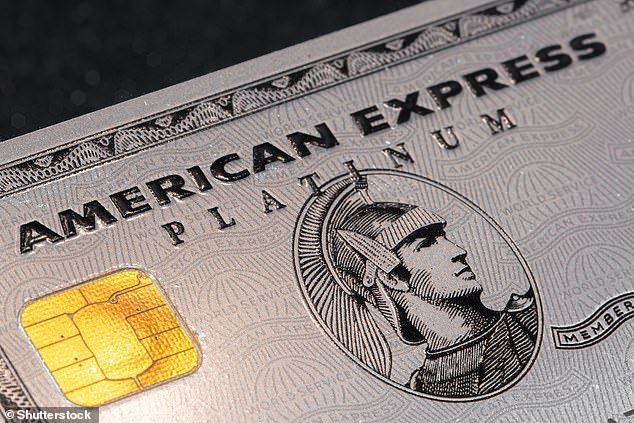
American Express offers a variety of banking options for customers looking to accumulate miles and rewards as they make purchases.
The Preferred Rewards Gold is an ideal choice for beginners with Amex since it waives the annual fee during the first year. For each pound you spend, you earn one reward point, plus you can receive up to 12,500 bonus points annually depending on how much you spend.
Upon joining, you’ll receive a welcome bonus that has been boosted from 20,000 Membership Reward points to 30,000 points once you’ve spent £3,000 within three months. Don’t miss out—act quickly to grab these additional points!
Additional benefits consist of four complimentary airport lounge passes along with £120 worth of Deliveroo credit.
Nevertheless, the price for this account increases to £195 starting from the second year.
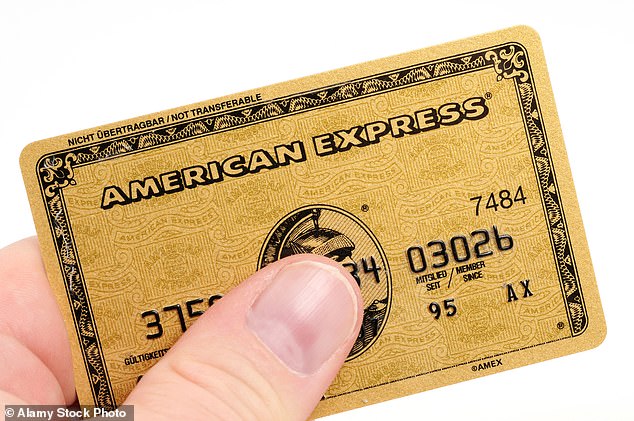
In the meantime, the American Express Platinum Card has an imposing yearly charge of £650; however, this cost might be justified due to the extensive array of benefits and rewards it provides.
With this account, you’ll receive 80,000 Membership Reward points once you’ve spent £10,000 within six months. This promotion is valid until May 27, 2025.
Using this account, you will receive two Priority Pass cards, granting entry into over 1,400 airport lounges, along with top-tier status across four prominent hotel reward programs.
All-inclusive comprehensive travel insurance is provided as well, along with an annual restaurant credit of £400 and a biannual Harvey Nichols credit of £50.
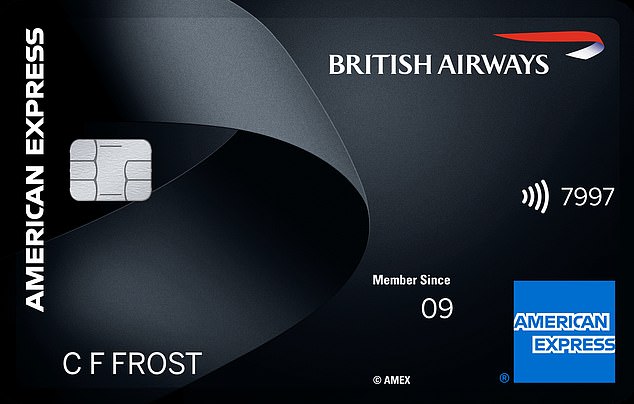
The most widely used Amex card is the British Airways American Express card because it has no annual fee, and you earn one Avios for each £1 spent – along with additional benefits.
companion voucher, allowing you to reserve two seats with British Airways, Iberia, or Aer Lingus for the cost of one, upon spending £15,000 within a calendar year on your card.
A lone traveler can get a 50 percent discount on their ticket as well.
British Airways
It also provides an American Express Premium Plus card through which you can receive 30,000 Avios aviation points once you have spent £6,000 within 90 days.
For each pound spent with British Airways and BA Holidays, you have the opportunity to accumulate three Avios points.
With an annual charge of £300, the British Airways American Express Premium Plus card provides 30,000 Avios points once you accumulate £6,000 in spending over 90 days, along with earning 1.5 Avios points for each £1 spent generally, and triple Avios points for every £1 spent specifically with BA.
In the meantime, devoted patrons of Marriott Hotels might want to consider getting a Marriott Bonvoy American Express card.

By paying an annual fee of £95, you will have the opportunity to receive two Marriott Bonvoy points for each pound spent or accumulate up to six points per pound when staying at any Marriott properties.
Upon signing up, you will receive 20,000 hotel points after spending £3,000 within the first 90 days.
BARCLAYS
The Barclaycard Avios Mastercard offers an excellent method for accumulating Avios as you make purchases – plus, it’s free to use.
Sticking £1,000 into your account within the initial 90 days earns you 5,000 Avios, and thereafter you’ll receive one Avio point for each pound spent.
If you charge £20,000 on your card within a year, you will receive an Avios upgrade voucher that lets you enhance two British Airways flights.
In contrast, for an yearly charge of £240, you can obtain the Barclaycard Avios Mastercard Plus. This card provides 25,000 Avios points once you’ve made purchases totaling £3,000 within 90 days, followed by earning 1.5 points for every £1 spent afterwards.
You just need to spend £10,000 on your credit card within a year to receive the Avios upgrade voucher.

VIRGIN
For travelers choosing Virgin Atlantic over British Airways, the
Virgin Atlantic
The Reward Mastercard is an excellent choice since it comes with no annual fee and provides 3,000 Virgin Points following your initial purchase.
Starting from now, for every pound spent, customers will receive 0.75 Virgin Points or 1.5 points per pound when shopping with Virgin.
If you accumulate £20,000 within a year, you will receive a bonus voucher equivalent to up to 150,000 Virgin Points. These points can then be applied toward purchasing a companion ticket for either a paid or rewards-based flight.
Individuals who agree to pay an annual fee of £160 for the Virgin Atlantic Reward+ Mastercard will receive 18,000 points following their initial purchase.
Following that, they will receive three points for every £1 spent with Virgin Atlantic and must only accumulate £10,000 in spending within a year to qualify for the aforementioned rewards voucher.
PACKAGED ACCOUNTS
VIRGIN MONEY CLUB M

Bundled packages provide clients with both a banking account and insurance coverage, such as travel insurance, for an additional cost.
The Virgin Money Club M boasts one of the most affordable rates at only £150 annually, providing coverage for the entire family.
At this price point, it provides global family travel insurance for customers up to 74 years old, covering couples along with their four children aged 18 or younger, plus UK and European breakdown assistance exclusively for the account holder.
This option enables numerous global journeys and comes with coverage for winter activities, weddings, and golf.
The household will be protected with coverage of up to £2,000 per individual for their electronic devices such as smartphones, tablets, and laptops against various mishaps including theft overseas or potential water damage during a seaside vacation.
The benefits are approximately valued at £500 when purchased individually, and there’s no required initial investment. Thus, Virgin Money Club M offers substantial savings.
CO-OP BANK EVERYDAY EXTRA
The Co-Op Bank Everyday Extra is an excellent choice for senior couples since it offers travel insurance valid up to the age of 79 at a yearly cost of £180.
This option enables numerous global travels for up to 45 days each trip and comes with coverage for winter activities totaling 21 days annually along with golfing protection.
The service provides mobile phone covers exclusively for account holders, yet it does include worldwide travel insurance for individuals up to age 22, provided they share the same residence as the account holder or are enrolled in full-time education and remain unmarried.
The insurance coverage can be up to £400 annually with no required minimum payment.
NATIONWIDE FLEXPLUS
Families might be attracted to the Nationwide Flexplus because it provides global travel insurance coverage not only for the account holder and their spouse but also for dependents up to age 23. Additionally, it includes phone insurance for both the spouse and children at an annual cost of £216.
The insured phones’ beneficiaries must be under 19 years old; however, those up to 22 can qualify if they are enrolled full-time in an educational institution and remain unmarried.
The limit for claims per year is four, and typical mobile phone insurance costs around £80 annually. Making full use of this offer could provide excellent value.
The UK and European breakdown coverage is provided free of charge for the account holder(s) who can use this service when traveling in any vehicle along with up to seven additional individuals.

The agreement is worth around £500, which means you’ll be making significant savings.
HALIFAX ULTIMATE REWARD
The Halifax UltimateReward account charges £228 annually, but it offers more benefits.
global travel coverage for trips up to 31 days long, with options for winter sports and golf included for both you and your spouse aged up to 71, as well as kids under 19.
The bank account additionally includes car insurance and U للغاصند
صند
K breakdown cover.
LLOYDS
The Club Lloyds Silver account stands out as the most affordable choice among packaged bank accounts, costing just £135 annually. It might be ideal for you if you’re comfortable with having fewer benefits included.
Additionally, there is a minimum monthly deposit requirement of £2,000; however, you will receive a complimentary £175 bonus when switching from another bank.
This is the sole bank on the list that provides both fee-free spending and ATM withdrawals overseas.
Travel insurance designed for families is valid for the UK and Europe until the age of 65, covering activities like skiing as well as events such as weddings and business trips. This policy includes coverage for you, your spouse, and offspring who are younger than 18 years old.
Although the breakdown coverage primarily includes roadside assistance within the UK, the account holder also receives mobile coverage.
HSBC PREMIER
If you fall into the category of high earners, you may want to look at HSBC Premier.
There’s no monthly charge; instead, having a £100,000 deposit credited to your account each month provides unlimited global family travel insurance at no extra cost.
This policy will cover both you and your partner until the age of 70, with options for winter sports and business coverage included, valid for trips up to a maximum of 31 days each.
Children aged 18 or up to 23 if they are still in full-time education are included when traveling with the account holder or residing with relatives.
Read more

oleh admin | Nov 16, 2024 | money, money management, personal finance, personal finance saving spending, saving money
Saving money frequently feels overwhelming for numerous individuals, with various factors contributing to this challenge depending on personal situations. Nonetheless, the process of saving depends less on our current state and more on our readiness to value our fiscal health.
The adage says, “Where there’s a will, there’s a way.” With the proper attitude and straightforward techniques, everyone can find saving both simpler and more pleasurable. Below are several useful suggestions I follow to streamline my savings routine and transform it into an enriching custom.
Why does so much of us consider saving cash quite challenging? Given the varied contexts each one of us faces, it’s tricky to pinpoint an exact reason. However, I reckon that savings reveal more about our determination rather than our conditions. The saying “Where there’s a will, there’s a way” captures this sentiment well. Below are some straightforward strategies I apply to simplify and ease my saving process.
1. Cultivate gratitude. What amount of wealth suffices? Would one million suffice? Perhaps even a hundred million? Maybe a staggering billion? Here’s the catch: none of these sums would ever truly satisfy unless we learn how to embrace thankfulness. Without gratitude, excuses to avoid saving will continually arise. Gratitude absent means constant spending to ensure we appear superior compared to others. If ungrateful, envy over neighbors’ possessions perpetually leaves us feeling inadequate. Practicing appreciation enables contentment irrespective of circumstances—no desire left to impress. Dedicate time daily to reflect upon merely two or three items you’re thankful for; they could range from enjoying quality conversations with family members to savoring your morning brew. Center focus on current blessings alongside ambitions for future desires.
2. Return to basics (the piggy bank method). No matter where I am—at work or at home—I always have a small savings box on my desk as a reminder to save money. This simple practice was one of the first lessons we learned growing up. Each day without fail, I ensure that I contribute something to this box, irrespective of how much it might be. Some days, all I can manage is putting in ₱1, whereas other times, I may add ₱100. What matters most to me isn’t so much the quantity but rather making sure I consistently set aside an amount every single day. Over time, once regular saving becomes second nature, you’ll naturally find yourself wanting to save even larger amounts.
3. Simplify savings. Opt for an online method over visiting the bank if it feels simpler for transferring funds. Should you find saving cumbersome, avoid complicating things further with unnecessary steps. Identify a way to effortlessly put money aside yet face obstacles when attempting withdrawals.
4. Save alongside a friend (or join a support group). Often tasks feel easier when shared rather than tackled individually. Locate someone trustworthy whom you can rely on to offer encouragement when they notice signs of relapsing into past behaviors related to overspending or lack of savings. Grant them the liberty to speak candidly with you about these matters and reinforce your motivations for saving as well as their role in supporting you. Similarly, contribute towards achieving each other’s objectives. Thus forming a mutual supportive relationship where both parties benefit equally.
5. Set your sights on a larger objective (something beyond mere wealth). This target isn’t merely about accumulating 1 million or even reaching up to 100 million. Instead, aim for owning a home valued at around 1 million, or perhaps achieving financial freedom so you can enjoy the kind of life you desire without worrying financially—a level of comfort often requiring an accumulation close to 100 million. The pursuit shouldn’t end once you’ve reached a certain monetary threshold; instead, it should extend towards goals imbued with deeper significance. Saving tends to be challenging since people usually lack clarity regarding their ultimate savings targets. However, when these objectives transcend simple numerical values, saving transforms into a much more fulfilling endeavor.
Setting aside funds doesn’t necessarily feel like climbing a steep hill. With a thankful attitude, revisiting fundamental strategies such as using a piggy bank, and establishing helpful routines for yourself, you can turn savings into a simpler and more fulfilling task.
Setting significant objectives that extend further than merely amassing riches can offer the drive required to maintain your saving practices. Keep in mind, even small contributions accumulate over time, and the self-control you build presently will lead to a safer economic tomorrow. Begin applying these suggestions right away, and observe how your savings expand, drawing you nearer to achieving your monetary aspirations.
Jeremy Jessley Tan is a certified financial planner with RFP Philippines. For additional information on financial planning, join the 109th Registered Financial Planner Program scheduled for January 2025, and send an inquiry to info@rfp.ph.

oleh admin | Mei 29, 2024 | personal finance, personal finance saving spending, saving money, shopping, smart shopping
NEW YORK — The guidelines of a no-spend challenge are voluntarily established and straightforward: Create a roster of non-essential goods and services from which you will refrain from making purchases over a specific duration and adhere strictly to this commitment. It proves simpler stated than executed.
A lot of individuals undertake these kinds of challenges at the start of the year and pledge to maintain them throughout the entire year. However, anyone aiming to address their credit card debts, tidy up their living spaces, or cut down on shopping can choose any moment as an opportune time. Certain challengers initiate their journey with what they call a “no-spend” month.
“I applaud those who recognize they’re purchasing excessive items since North America tends to be highly focused on consumption, leading to significant wastage,” stated Carrie Rattle, the founder and CEO of Behavioral Cents, a firm offering financial coaching services.
Considering what items you could live without? Here are some suggestions from professionals and individuals who have taken part in this challenge.
Identify your weakness
Regardless of whether it involves applying makeup, getting takeaway food, or purchasing superfluous knick-knacks from the $1 aisle at Target, understanding your weaknesses can assist you in crafting a practical strategy to keep yourself on course.
Prior to beginning her no-buy year, Mia Westrap, who is pursuing a Ph.D. in Southampton, England, examined her expenses from the past several months. She realized that excessive spending on food and drinks was her biggest downfall.
She mentioned that she realized she was spending over $1,000 annually just on sodas and Pepsi Max.
Make your own rules
A enjoyable aspect of participating in a no-buy challenge is that it doesn’t have fixed guidelines. Each person decides their own inclusions and exclusions.
Amea Wadsworth, a 22-year-old from San Diego, once enjoyed dedicating long periods of time exploring clothing items and odd trinkets at stores like Target and Goodwill. However, upon returning home post-graduation, she discovered just how much stuff she had gathered over the years.
“When I go through my belongings during these tidying sessions, I often come across items I purchased at great expense but never actually wore,” Wadsworth explained.
READ:
Kuya Money: Where Finances Merge with Wellness
For her challenge, she decided against purchasing new clothes and focused more on enjoying moments with her close family and friends. Similarly, Wadsworth began this challenge one month at a time.
Jotting down the guidelines that suit your requirements can assist you in staying focused. Nonetheless, it’s perfectly okay to adjust some of these guidelines as you progress through your journey.
Take a pause
Money matters are deeply intertwined with our feelings, and those feelings can occasionally lead you to want to buy things you really don’t require. Whenever Wadsworth experiences the urge to acquire something spotted on social media or in-store, she jots it down rather than making an instant purchase.
By the end of the month, she goes over the list and determines whether there’s anything left that merits purchasing.
READ:
Capabilities we ought to impart to our kids at school
“I look back and I see how many things I wrote and I’m like ’I’m glad that I didn’t buy that because I really didn’t need it,’” Wadsworth said.
Should you find yourself making impulsive purchases, it could be beneficial to list out the items you’re considering buying and then spend some time reflecting on their usefulness.
Unsubscribe and unfollow
Social media often acts as a catalyst for impulsive buying due to spontaneous discount offers and celebrities endorsing fresh products, notes Courtney Alev, who works as a consumer financial advocate at Credit Karma.
If you believe that screen time is exacerbating your tendency to overspend, Alev suggests stepping back from following accounts that trigger the desire to use a credit card.
Be gentle with yourself
When Westrap started her no-buy year, she felt like the cosmos was working against her. One month, her vehicle gave out, and the following month, she got hit with a hefty penalty for an overlooked expired parking ticket. Unforeseen costs and lapses in willpower can happen to anyone, and it’s perfectly fine if you occasionally deviate from your no-buy year plan. What truly counts is the effort put into sticking to it.
If you didn’t succeed, you might just require some additional assistance. That doesn’t make you a failure; it only means your current approach hasn’t worked,” Rattle stated. “This distinction is crucial as I wouldn’t want anyone feeling discouraged.
Creating a new habit and handling your money might be challenging. Be kind to yourself throughout this journey.

oleh admin | Mei 23, 2024 | certificates of deposit, money, money management, saving money, savings accounts
Vault’s Viewpoint
-
Certificates of deposit (CDs)
come with set interest rates, and most are protected by federal insurance for losses up to certain limits.
-
One drawback of CDs relative to other savings accounts is that you must “commit” your funds for a specific duration.
-
Therefore, certificates of deposit are ideal for money that you do not plan to withdraw in the near future.
How Much Cash Should You Deposit in a Certificate of Deposit? Key Aspects To Reflect On
The sum of money you ought to put into a certificate of deposit varies based on your individual situation. Take these aspects into account to figure out the perfect amount.
Minimum Deposit Requirements
Certain banks and credit unions set minimum deposit conditions for their certificate of deposits (CDs). These stipulations can affect which individuals qualify to open an account.
start a certificate of deposit account
For instance, certain banks mandate a minimum deposit of $1,000, $2,500, or sometimes even higher amounts to initiate a Certificate of Deposit (CD).
If your savings fall short of this amount yet you desire a fixed interest rate, consider searching for financial institutions offering lower minimal deposit thresholds or none at all. Some banks provide certificates of deposits (CDs) without needing any minimum balance or initial funding.
BMO Alto
and
Capital One
.
How Much Savings Do You Have?
Despite meeting the minimal opening deposit for a certificate of deposit (CD), think about your overall savings. Financial advisors typically suggest keeping enough funds to cover three to six months of expenses.
emergency savings
hidden funds, amounting to $15,000 to $30,000 for an individual whose monthly living costs total $5,000.
You might consider allocating some of your savings to a certificate of deposit (CD) that offers a fixed interest rate, rather than putting everything in one place. The remainder could then go elsewhere.
high-yield savings account
(HYSA) which accrues a substantial amount of interest and does not impose any charges when you withdraw your funds. The drawback with this option is
savings accounts
(unlike CDs) is because their interest rates fluctuate according to market conditions.
Access Granted: Credit Available
Aside from the readily accessible funds in your savings account, think about the credit available to you via credit cards or revolving credit lines. You can utilize these credit resources for unexpected costs, particularly those you plan to settle quickly.
Suppose you face an unexpected car repair costing $1,000, and your liquidity is low. Nonetheless, you might manage to cover the expense by paying it off gradually over your coming two salaries.
In that scenario, you might consider charging the cost to an account.
credit card
and settle it with each paycheck received—while maintaining your funds in a savings account or certificate of deposit. Certain credit cards also provide an additional option for this.
0% APR
For a limited period, this allows customers to use their purchases as an interest-free, short-term loan.
When Will You Require the Funds?
An additional aspect influencing your contribution to a Certificate of Deposit (CD) is the timing for when you’ll require these particular savings. This consideration can affect both the amount you wish to set aside and the duration of the CD term you choose.
If you’ve got $5,000 set aside with plans not to touch it for at least one year, think about opting for a certificate of deposit that extends up to twelve months. When this CD hits its maturity date, you can choose either to withdraw your funds or extend the investment for an additional period.
If you’ve got some funds that you’re aware you’ll need to withdraw soon (within several weeks or months), opening a certificate of deposit might not be ideal. Consider instead placing your money in a savings account where you can retrieve it without penalties whenever needed.
FDIC Insurance
The Federal Deposit Insurance Corporation (FDIC) states that FDIC insurance covers up to $250,000 for each depositor under every ownership category at each FDIC-insured bank. Likewise, a comparable form of protection known as NCUA insurance extends to deposits at financial institutions like credit unions.
credit unions
This indicates that should a bank fail and cease operations, your federally protected monies will still be refunded to you.
It does not imply that you mustn’t possess over $250,000 in certificates of deposit (CDs). Rather, it suggests that if your savings exceed this $250,000 limit and you intend to invest in CDs, you ought to distribute these investments across various FDIC-insured banks.
Additionally, keep in mind that large quantities of CDs are described as
jumbo CDs
Jumbo CDs function similarly to regular certificates of deposit; however, they require higher initial deposits (usually $100,000 or above).
How Much Cash Can Be Deposited in a Certificate of Deposit?
While there aren’t strict guidelines on the size of your Certificate Deposit (CD), it’s important to consider federal insurance limitations and refrain from placing over $250,000 into a single CD at an individual bank or credit union. Additionally, familiarize yourself with various financial institution’s minimal investment criteria to find a CD that provides optimal returns based on your savings amount.
If you’ve set aside some funds specifically for a certificate of deposit (CD) but aren’t sure about the duration you wish to tie up your money, you could opt to start one anytime.
CD ladder
to boost liquidity while getting the highest possible interest during the process.
Using CD laddering, you divide your funds among various certificates of deposit (CDs) with differing maturity periods. As an illustration, consider allocating $15,000 across three CDs worth $5,000 each but maturing at distinct intervals: 6 months, one year, and 18 months respectively. This approach ensures that a portion of your money becomes available every half-year; either allowing withdrawal for usage or rolling over into new CDs.
How Many Compact Discs Are Permitted?
You aren’t bound by strict guidelines when it comes to the number of certificates of deposit (CDs) you can own. You may establish multiple CD accounts at various banks and credit unions, choosing from a wide range of term lengths according to what’s available.
Make sure you do not end up with more CDs than you can easily manage or monitor. Remember, numerous certificate of deposits will roll over automatically unless withdrawn during the specified grace period. These grace periods tend to be quite brief—typically around ten days—which does not provide much leeway. Should your collection of CDs become overwhelming and you lose sight of each one’s maturity date and associated grace period, you might face difficulties, potentially having to incur penalties for early withdrawal.
early withdrawal penalty
to access your funds.
Advice for Starting a Certificate of Deposit Account
The quantity you ought to set aside in a certificate of deposit is a matter of individual choice, yet it’s an important one that requires careful thought. Keep these suggestions in mind to maximize your savings efforts.
-
Compare interest rates and conditions for CDs
Banks and credit unions provide various interest rates and conditions for their financial offerings such as savings accounts and certificates of deposit. Ensure you compare options to find the best certificate of deposit (CD) for your needs.
best possible CD rates
And conditions you can fulfill along with a minimal initial deposit you can readily achieve.
-
Look for CD specials
As you browse for certificates of deposit (CDs), you’ll see that various banks provide attractive interest rates on certain term lengths but average rates on others. Remember these special offers when searching for the most favorable option.
-
Consider no-penalty CDs
. Alternatively, search for CDs that do not impose a penalty when you need to withdraw funds before the term ends, or ”
no-penalty CDs
These CDs allow you to withdraw your savings without penalties if needed, though they generally come with lower interest rates.
-
Use Ladder CDs for greater versatility
If you possess money that you wish to set aside yet are uncertain about when you might require access to it, think about establishing several certificates of deposit (CDs) each with varying durations. Doing so enables you to enhance the accessibility of your funds as well as boost potential earnings.
Frequently Asked Questions
How Much Should You Invest in a Certificate of Deposit?
The suitable sum to invest in a Certificate of Deposit hinges on your savings capacity and when you anticipate needing the funds. Keep in mind that CDs demand locking away your money for a predetermined period, with penalties usually applied for accessing these funds prematurely.
What Are the Advantages of Compact Discs?
Certificates of deposit have set interest rates, and generally do not impose charges aside from penalties for withdrawing funds prematurely.
What Is the Requirement for Getting a CD?
Certain banks and credit unions allow you to initiate a Certificate of Deposit with any sum, but some require a minimum deposit such as $500, $1,000, $2,500, or even higher amounts. Therefore, the initial investment needed for a CD varies based on which bank you choose.
The post
How Much Cash Should You Put in a Certificate of Deposit?
first appeared on
SANGGRALOKAVault
.


