
oleh admin | Agu 22, 2025 | celebrations, culture, events and festivals, festivals, social issues
August 19, Nepal – In 2018, Rishikesh Pandey released a compelling study in Quest titled “Religion, Rainfall and Rice: A Social and Ecological Analysis of Festivals in the Kathmandu Valley, Nepal.” Among his key discoveries was that the Newar community in Kathmandu faces challenges maintaining their age-old traditions because of factors such as “transformations in the agricultural ecosystem.” How can they perform prayers and offerings in their rice paddies anymore, with these areas now replaced by sprawling urban structures? I think it’s time for us to reconsider how we celebrate major national events like Dashain. My view is that although our festivals should remain intact, their observances and customs require updating—due to both financial and societal considerations.
Excitement under the clouds
The monsoon is still in full swing. Many people continue to live in the mortal fear of terrible landslides and flash floods. And yet, the festive season has begun in earnest.
Most of our festivities fall in autumn. They are much more enjoyable once the monsoon rains have stopped, seasonal flowers blossom and the paddy fields turn golden with the ripening crop. This year’s Dashain, which is about a month and half away, is going to be wet and muddy.
Notwithstanding, everyone is looking forward to the start of the great festivals. Many people living and working abroad are already planning to return to their country for Dashain. Town residents are planning to visit their ancestral homes, which are rapidly emptying. No doubt, festivals are a great source of personal happiness and social connection. Yet they are also a source of angst for many.
Too costly
Our celebrations are impressive in various aspects, yet they often become excessively costly. Many expenditures arise due to the frequent occurrence of numerous festivals. Next week marks Teej, and certain women may try their best to purchase new saris, ideally accompanied by pricey golden jewelry.
Dashain presents an even greater concern, featuring numerous days filled with lavish meals, travel, new clothing, and jewelry. Likewise, many individuals offer goats and chickens as sacrifices to well-known gods. How can those who earn a modest salary through honest labor afford these costs?
The festival of Tihar follows Dashain almost immediately, which tends to be quite expensive too. A similar situation exists in Tarai, with Chhath right after Dashain. The Newars too have many festivals of their own, each involving lots of expenses.
Drain on foreign income
I think these successive festivals around the harvest season were crucial to bring agrarian communities together in the past. Almost every house grew its own crop and livestock hence, the expenses weren’t such an issue. They probably didn’t think about buying expensive jewellery and foreign clothes at the time.
Continuing the practice of long feasts and social events, along with displaying wealth through gold, silver, clothing, or even costly vehicles and residences, appears difficult. This is particularly true in modern capitalist societies, where farming communities are quickly diminishing, leaving large areas of farmland unused and many rural populations declining.
These traditional types of festive celebrations in an era of market economy have been a huge drain on the remittance economy. Our economy is surviving because hundreds of thousands of our young men and women toil in Malaysia, Arab countries, Korea, Japan and send money home. Much of that money remitted from abroad goes into family expenses, mainly in celebrating increasingly expensive festivals.
What this has done is prevent the productive use of the remittance. It would be much better for the concerned families, to the local and national economy, if much of the remittance was invested in small businesses, in innovative projects. That would also provide employment opportunities and, in the longer term, increase the rate of pay within our own country-requiring less citizens to go for unskilled labour overseas.
Promoting social inequality
Our religious festivals seem out of place or outdated in the performance of at least some of their rituals and customs. As a result, the festivals have not only hurt the national economy, but also social harmony. Isn’t it time to rethink the rituals that openly promote social inequality?
I ponder why we continue to observe Janai Purnima, for example. It definitely does not warrant being a public holiday. This is because it is a highly polarizing celebration. The so-called higher or purer castes replace their sacred thread—janai—on this day. Meanwhile, the rest of us, including Dalits, indigenous communities, and women, are denied the opportunity to partake in the same thread or ceremony.
The concept of sacred thread has been used since the Puranic period to distinguish the higher castes from the lower ones. So, it deserves to be either wiped off our annual calendar for good-or reformed massively.
Numerous other celebrations, such as the Grand Dashain, clearly reinforce and support the traditional concept of ceremonial cleanliness and impurity. The spiritual idea of ritual purity and contamination (thoroughly examined by Luis Dumont in his renowned work “Homohierarchicus”) serves as the fundamental belief system underlying social stratification and prejudice. We have permitted places of worship to engage in this practice without restraint.
During the nine-day period of pre-Tika pujas, Damai drummers perform their musical rituals at nearly every temple dedicated to goddesses and old fortresses. However, they are not allowed inside the temple to offer prayers like other worshippers, and instead receive tika placed on a leaf. Even more distressing, they face additional humiliation by being given the leftover parts of sacrificial animals such as goats and bulls.
The same thing happens in state-sponsored and historic temples such as Gorakh Kali and Nuwakot Bhagawati and Palanchowk Bhagawati. Why are we allowing such practices to continue even in a secular republic? We’ve dumped Hindu monarchy for good-it’s also time to dump old and divisive rituals and customs.
To conclude, rain or shine-let’s celebrate our festivals. One doesn’t even need to be a Hindu to enjoy them, to have fun, to reconnect with our social circles. However, let’s also start a serious debate about reforming the ancient methods of celebrating our festivals-keeping in mind economic and social concerns. So that festivals bring more fun and less angst amongst the masses.

oleh admin | Mar 28, 2025 | female empowerment, social issues, women, women's rights, women's sports
We are the ones demonstrating to the world what women can achieve. We are the ones showing that power isn’t determined by one’s gender.
A powerful declaration made by Achrissa Maw from the University of the Philippines (UP) women’s basketball team during the Third Sunflower Run-Walk-Parade event held on March 22, 2025, at the UP Diliman campus academic oval.
“Recognition of Women, Hope for Youth” is the theme of the event during Women’s Month, which also honored UP women athletes.
READ:
The ‘aswangs’ in Duterte’s drug war
‘Kisapmata’: Story of Domestic Abuse, Incest, and the Fight for Liberation
#HerStory: Women Transforming Society
The member institutions of the University Athletic Association of the Philippines (UAAP) go head-to-head in 20 different sporting events. These competitions include both Men’s and Women’s categories across most sports; however, exceptions apply to certain games. Baseball involves only male athletes, whereas softball is exclusively played by female participants.
From 1938 onwards, the University of the Philippines’ female squads emerged as champions across various sports: they won 21 titles in swimming, 12 in judo, 9 in badminton, 8 in volleyball, 7 in basketball, 6 in table tennis, 5 in fencing, 3 each in softball and chess, 2 in taekwondo gyeorugi, along with one title each in football and taekwondo poomsae.
Softball competition takes place exclusively in the women’s division, which began in 1953. The University of the Philippines claimed the title four times: during Season 58 (1995–96), Season 59 (1996–97), Season 64 (2001–02), and Season 70 (2007–08).
In women’s basketball, the University of the Philippines (UP) clinched the championship title seven times: during Season 39 ([1976–77]), Season 40 (1977–78), Season 41 (1978–79), Season 43 (1980–81), Season 44 (1981–82), Season 45 (1982–83), and Season 46 (1983–84). For men’s basketball, UP secured their championship victories in 1939, 1986, 2022, and 2024.
In women’s swimming, UP claimed the championship 21 times: during Season 2 (1939–40), Season 3 (1940–41), Season 10 (1947–48), Season 27 (1964–65), Season 28 (1965–66), Season 29 (1966–67), Season 51 (1988–89), Season 54 (1991–92), Season 56 (1993–94), Season 57 (1994–95), Season 58 (1995–96), Season 60 (1997–98), Season 61 (1998–99), Season 62 (1999–00), Season 72 (2009–10), Season 73 (2010–11), Season 74 (2011–12), Season 75 (2012–13), Season 76 (2013–14), Season 79 (2016–17), and Season 86 (2023–24).
In women’s volleyball, UP claimed the championship title eight times: during Season 1 (1938–39), Season 10 (1947–48), Season 12 (1949–50), Season 14 (1951–52), Season 25 (1962–63), Season 40 (1977–78), Season 42 (1979–80), and Season 45 (1982–83).
During the inaugural season of 1938-39, female teams made their debut in volleyball, whereas male squads took to the court for the first time eight seasons later in 1946-47. The University of the Philippines emerged as victors in that initial campaign.
In basketball, female teams made their debut during Season 13 (1950-51), with University of the Philippines securing their initial victory in Season 39 (1976–77).
The UP women athletes achieved a series of wins in badminton over six seasons from 1995 to 2000, in swimming across five seasons from 2009 to 2013, in fencing during five seasons spanning 2000 to 2004, in basketball throughout four seasons between 1980 and 1983, in judo through two separate periods each covering four seasons: first from 1999 to 2002 and then from 2006 to 2009, and also in table tennis consistently over four seasons ranging from 1997 to 2000.
In Season 87, hosted by UP, the ladies’ squad has secured first place in badminton, second place in swimming, and third place in track and field so far.
The United Nations officially acknowledged International Women’s Day in 1977, which is observed annually on March 8. This day celebrates the accomplishments of women across all boundaries, including nationalities, ethnic backgrounds, languages, cultures, economics, and politics.
In March, it was proclaimed as Women’s Month following President Cory Aquino signing Proclamation Number 288 on March 17, 1988. This proclamation highlighted the significant contributions of Filipino women in various fields such as society, culture, economy, and politics over our nation’s history.
We aren’t merely typical athletes; we serve as role models and leaders,” Maw stated. “We motivate the next cohort of young women to pursue their aspirations, stand firm without backing down, and recognize their true value.
The parade participants consist of female University of the Philippines athletes from sports such as basketball, chess, fencing, judo, softball, swimming, table tennis, and track and field. Additionally, groups like the Filipiniana dancers, street dance ensemble, and varsity pep drummers will also join in.
Sunflower serves as an emblem of female empowerment during the suffrage movement.
Women in Kansas adorned themselves with sunflower pins when advocating for their voting rights back in 1867. Despite the failure of the Kansas referendum, the color yellow stayed symbolic within the suffragette movement throughout the 20th century.
Sunflowers have also turned into the emblem of the final milestones in college life.
Sunflowers represent dedication and commitment as residents cleared all academic hurdles with sleepless and turbulent days and nights.
Just like how a single sunflower within the schoolyard requires ample sunlight to thrive, each student should view every encounter at the university as essential for their personal development.
The event was spearheaded by several female-led organizations from the University of the Philippines (UP), including UP Delta Lambda Sigma Sorority, UP Portia Sorority, UP Women in Law, Women Lawyers Circle, along with UP Concert Chorus and their corresponding alumni associations such as IBP Quezon City, UP Law Class of 1985, Kontra GaPi, Maritime Law Association of the Philippines, and Celebrity Club.
We aren’t merely engaged in a game; we’re transforming the rules of engagement. We’re altering how stories get told and making an impact on society at large,” declared Maw. “We won’t remain unheard, pushed aside, or dismissed. Instead, we’ll keep expanding limits, shattering stereotypes, and etching ourselves into historical memory.
(Pey ups serves as the moniker for the University of the Philippines. Atty. Dennis R. Gorecho leads the Seafarers’ Division at the Sapalo Velez Bundang Bulilan Law Offices. For feedback, send an email.)
info@sapalovelez.com
, or call 0917-502-5808 or 0908-866-5786.)
oleh admin | Mar 24, 2025 | education, educational systems, gender, schools, social issues
Given my roles as an educator for high school students, a scholar in educational psychology, a mentor with certification in mental health counseling, a leader of a school club, a resident of Morocco, and a parent, I feel compelled to address the concerning trend of many male students showing little interest in their studies.
Furthermore, I urge those in leadership positions to address this aggravating problem. The primary concern for most male students—which I emphasize does not imply all—is focusing intently on their studies and establishing goals aligned with the school curriculum.
The time has come for us to examine this trend, as it continues to permeate every facet of our lives, including professional roles. This shift is evident in societal attitudes, with women increasingly at the forefront. It’s undeniable that female students are surpassing their male counterparts both academically across multiple disciplines and socially through varied engagements. Young females demonstrate greater engagement in educational settings and additional activities outside class (although it should be noted that not all girls have ideal learning conditions).
According to various data points, girls outperformed boys in subjects like literature and advanced courses over the last three years. Certain reports suggest that the disparity between genders in proficiency levels for both Arabic and French has widened recently; specifically, 68% of girls view reading as an interest versus just 54% of boys. Moreover, at the tertiary level, women dominate: from 2017 to 2022, 60% of enrolled college students were female, whereas men constituted merely 28%. Additionally, current information indicates that a greater proportion of females successfully cleared competitive examinations compared to their male counterparts.
To make something clear, the dedication and effort put forth by young women is a matter of great pride for all Moroccans. We—as a nation, encompassing both genders—need to continue supporting our female students and encouraging their progress. However, I also aim to bring awareness to the challenges faced by male students with regard to our Ministry and policymakers. The elevated position of females within society should not be seen as responsible for boys dropping out of school-related activities or pursuing interests beyond academics.
It’s evident that women are putting in tremendous effort to achieve prestigious positions across various domains. Their success can be attributed both to their unwavering resolve and to broader social transformations. In Morocco, policies tend to favor empowering girls over boys. Women have indeed gained considerable support through incentive schemes in sectors like education, economics, community development, and political participation. The “Plan for Gender Equity 2017-2030” encompasses measures designed to assist girls throughout their academic journey and foster equal opportunity between genders. Additionally, the government has initiated the “National Initiative for Educating Girls in Rural Zones,” which seeks to enhance schooling prospects for young ladies in remote regions by constructing nearby facilities and providing financial aid. Informal projects like “DigiGirlz” also strive to bolster female engagement in STEM disciplines. Nonetheless, overlooking the needs of boy students represents a substantial misstep.
The success of these previously mentioned initiatives is commendable and commands our admiration. We, as educators, deeply appreciate the work aimed at assisting numerous young women with their academic pursuits. Nevertheless, we should pose some queries: Shouldn’t boys also be entitled to motivational programs? Is there sufficient awareness among them about their futures? In essence, aren’t they youngsters who require guidance to navigate through life’s myriad temptations?
Many boys dedicate significant time to playing football, watching matches, socializing, and similar activities. Additionally, they tend to invest more hours into gaming at their homes. Parents find this behavior tolerable due to prevailing cultural norms that grant greater liberty to boy children relative to girl children, who frequently assist with household chores and focus heavily on academic pursuits.
Conversely, certain male students today think that schools are obsolete and fail to keep up with technological progress and market demands worldwide. They perceive that schooling doesn’t ensure a better future, considering how many individuals holding BAs or MAs remain jobless. Furthermore, numerous instances of self-made successes can be found across various social platforms, showcasing figures who either avoided formal education entirely or left school prematurely.
Furthermore, boys tend to be more swayed by superficial influencers who employ youthful vernacular that offers fleeting comfort. Additionally, many believe they can achieve quick financial gains at a young age without having to endure prolonged periods in educational institutions. Such factors, along with others, lead to diminished engagement and enthusiasm among male students toward their academic pursuits.
On the contrary, girls are more engaged with schooling as they aspire to achieve financial and social independence. They have grown weary of being seen as a drain on men. This empowerment has made them more conscious of both their present circumstances and future prospects.
Who should be held accountable? No single entity bears responsibility for male students’ negligence; however, we collectively bear culpability if we do not strive to implement strategies aimed at motivating them. It is essential to demonstrate that both personal and societal progress towards success hinges upon the strength of our educational systems. As Nelson Mandela once stated, “Education is the most potent tool with which we can transform the world.” Other instances of triumph around the globe remain mere anomalies.
The post
Opinion: Why Are Male Students Lagging Behind?
appeared first on
LIFEHACKEnglish – Morocco News
.
oleh admin | Mar 24, 2025 | business, healthcare and medicine, human rights, politics and government, social issues
By Senyo ADJABENG\xa0
In business literature, Human Resources (HR) is often portrayed as a strategic partner, a critical player in shaping organizational culture, driving employee engagement, and aligning workforce capabilities with business objectives.
The argument sounds convincing: Human Resources isn’t merely focused on payroll and compliance anymore; it’s become fundamental for an organization’s success. However, underneath this shiny exterior hides a less optimistic truth.
Despite the lofty theories and aspirational narratives, HR is frequently sidelined in executive decision-making, relegated to administrative tasks, and viewed as a cost center rather than a strategic asset.\xa0 This article delves into the sarcasm embedded in HR theory, exploring the gap between what is preached in Hr School as against what is practiced in organizations.
The Strategic HR Myth
For many years, the notion of Strategic Human Resource Management (SHRM) has been a prominent topic within human resources literature. Pioneers like my esteemed mentor Dave Ulrich have advocated for the perspective that HR ought to serve as a strategic ally, playing an essential role in shaping and implementing corporate strategies (Ulrich, 1997).
The theory posits that HR professionals should sit at the executive table, influencing decisions on mergers, acquisitions, market expansions, and other critical business moves.\xa0 However, the reality often falls short of this ideal.
In practice, HR’s role in strategic decision-making is frequently limited.\xa0 A study by Kaufman (2015) found that while HR leaders are often involved in discussions about workforce planning and talent management, their influence wanes when it comes to broader business strategies.
The study revealed that only 34% of HR leaders were regularly included in high-level strategic meetings, and even fewer had a significant impact on the outcomes of those discussions.\xa0 This disconnect between theory and practice underscores the sarcasm in HR’s supposed strategic role.
A major factor behind HR’s restricted impact stems from its persistent connection to administrative duties. Even as efforts are made toward greater strategic alignment, these departments frequently find themselves preoccupied with routine activities such as handling payroll, administering benefits, ensuring compliance, and overseeing employee interactions.
These duties, though crucial, fail to significantly boost HR’s standing within the company. According to a Deloitte study from 2017, 60% of HR professionals dedicate most of their time to clerical work, which leaves minimal space for strategic activities.
The administrative strain is intensified due to the growing intricacy of labor laws and regulations, compelling HR departments to allocate substantial resources towards adherence. Consequently, HR tends to be seen more as a bureaucratic unit instead of a strategic ally, thereby solidifying its marginalization from high-level decision-making processes.
Once more, perception significantly influences where HR stands within organizations. Even with the attempts made by HR leaders to recast their department as strategic, numerous executives continue to see HR through a limited perspective. According to research conducted by Wright and Nishii in 2013, CEOs along with other high-ranking executives frequently
view HR as a supportive role instead of a central business component. This viewpoint stems from the traditional function of HR as a personnel department, concentrating on recruitment, termination, and maintaining staff documents. The issue with this perception is exacerbated by the insufficient understanding of finance among HR practitioners.
According to a report from the Harvard Business Review in 2018, merely 25% of HR leaders expressed confidence in understanding and interpreting financial documents or participating effectively in fiscal conversations. This deficiency in financial expertise hampers HR’s standing as a key strategic ally, complicating efforts for these leaders to secure positions among high-level executives.
The Power Dynamics
The distribution of authority inside businesses significantly contributes to the sidelining experienced by human resources departments. Often in numerous corporations, financial and operational divisions hold sway in upper management, where these sections’ heads have substantial impact on key choices. Conversely, HR tends to be perceived as an auxiliary unit, possessing minimal leverage to contest prevailing practices.
Pfeffer’s 2010 research underscored the disparity of power between human resources and other departments, observing that HR executives frequently find themselves sidelined from crucial decisions due to their insufficient political clout to sway results.
This power dynamic is exacerbated by the perception of HR as merely a cost center, where its funding and resources come under close examination and reduction when finances are tight.
One of the core tenets of HR theory is that HR should act as an advocate for employees, ensuring that their needs and concerns are addressed by the organization.\xa0 However, this role often puts HR in a difficult position, caught between the interests of employees and the demands of management.
A study by Guest and Conway (2011) found that HR professionals often struggle to balance their dual roles as employee advocates and organizational gatekeepers.\xa0 This tension can lead to a loss of trust among employees, who may see HR as being more aligned with management than with the workforce.
Meanwhile, executives might see HR as concentrating excessively on employees’ issues rather than prioritizing business goals. This paradoxical predicament exacerbates the challenges faced by HR in shaping high-level decisions.
How HR Can Actually Secure a Spot at the C-Suite Table
The desire for HR to gain recognition as a strategic ally and earn a place at the top management table isn’t recent. Yet, realizing this ambition necessitates more than mere talk or abstract models; it calls for a concrete, systematic, and comprehensive strategy to transform HR into an essential catalyst for business achievement.
Even with these difficulties, HR has actions available to boost its strategic importance and earn a spot at the executive level. A major emphasis should be placed on improving financial understanding amongst HR practitioners.
By improving their grasp of financial statements, budgeting, and cost management, HR leaders can communicate in the language of business and play a more effective role in strategic conversations.
Another important step is to leverage data and analytics to demonstrate HR’s impact on business outcomes.\xa0 By using metrics such as employee engagement scores, turnover rates, and productivity data, HR can make a compelling case for its role in driving organizational performance.
According to a study conducted by Bersin in 2016, organizations with robust HR analytics capabilities were two and a half times more probable to have their HR leaders engaged in making strategic decisions.
Human Resources needs to focus on strengthening ties with departments like finance and operations. Through closer collaboration with these teams, HR can develop a clearer insight into company objectives and ensure that its programs support overall strategic aims.
Such interdisciplinary teamwork can aid in dismantling departmental barriers and establish HR as an essential part of upper management. HR should transition from merely responding to issues to proactively foreseeing and tackling organizational requirements.
Achieving this involves synchronizing HR tactics with the company’s overarching purpose, aspirations, and key strategic directions. It is essential for HR executives to engage proactively in conversations about corporate strategy so they can grasp the organization’s objectives, hurdles, and potential areas for growth.
This enables HR to tailor its initiatives to support these objectives.\xa0 HR must identify areas where it can create the most value for the organization.
HR Must Think Like a CEO
To gain credibility in the C-suite, HR leaders should think beyond their function and consider the broader business implications of their decisions. This includes understanding market trends, customer needs, and competitive pressures.\xa0 HR must demonstrate the return on investment (ROI) of its initiatives.
This involves transitioning from perceiving HR as merely a cost center to recognizing it as a contributor of value. It is essential for HR to showcase success stories that underscore its impact on business results. Additionally, HR needs to embrace calculated risks and innovation, which illustrates their strategic thinking and capacity to instigate transformation.
Ultimately, HR executives should take proactive steps to secure a place in the C-suite. This requires addressing traditional biases and showcasing HR’s contributions to the company. It also entails developing ongoing connections with influential mentors or advocates within the C-suite who can champion HR’s involvement in key strategy talks.
Altering perspectives requires patience, yet perseverance leads to success. Therefore, HR needs to consistently showcase its worth and strive for a prominent position at decision-making tables.
Gaining a spot in the C-suite isn’t straightforward for HR professionals, yet it’s attainable through effective strategies. Once HR manages to secure a seat at the executive table, it enhances both its own function and supports the broader organizational goals over time.
For Further Reading…
-
Bersin, J. (2016).
The Part Played by Human Resources Analytics in Shaping Strategic Choices
. Deloitte University Press.
-
Harvard Business Review. (2018). The Disparity in Financial Literacy within Human Resources. Harvard Business Publishing.
-
Pfeffer, J. (2010).
Influence: Why Certain Individuals Possess It While Others Do Not
’
t
. HarperBusiness.
-
Ulrich, D. (1997).
Human Resource Champions: The Next Agenda for Adding Value and Delivering Results
. Harvard Business School Press.
-
Wright, P. M., and Nishiumi, L. H. (2013).
Strategic Human Resource Management and Organizational Behavior: Combining Various Analytical Levels
Cornell University’s ILR School.
Provided by Syndigate Media Inc. (
Syndigate.info
).
oleh admin | Mar 24, 2025 | celebrities, politics, politics and government, popular culture, social issues
-
LISTEN: Trump, Zelensky, the surge of Europe’s Far Right, and what lies ahead for NATO – tune into Alas Vine & Hitchens on your preferred podcast platform.
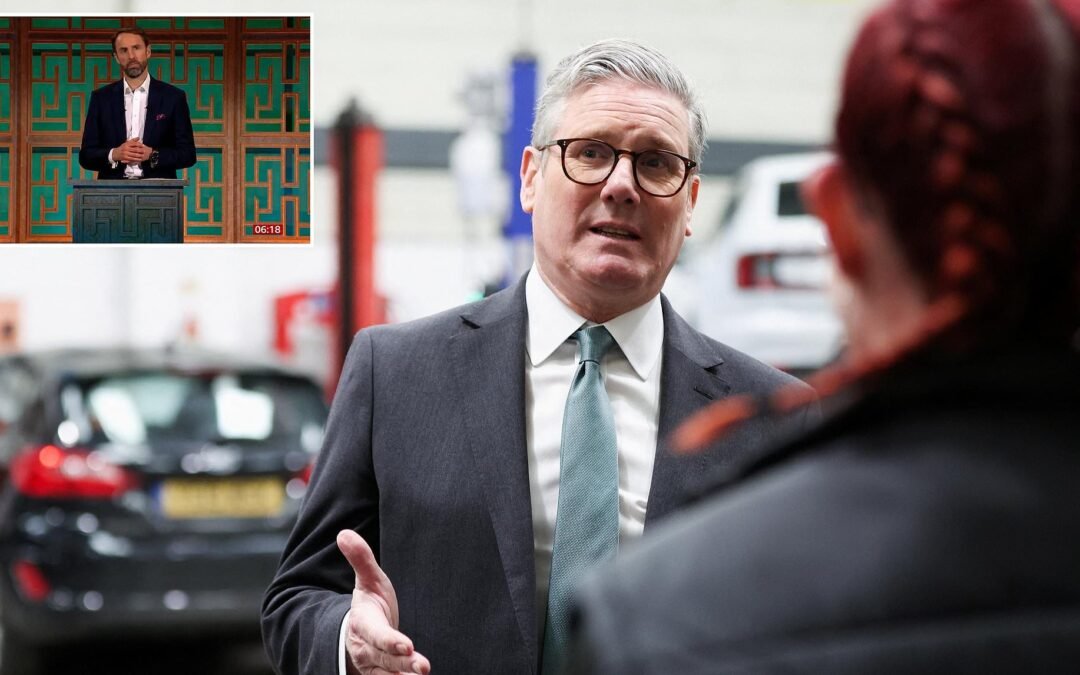
Keir Starmer
has cautioned that Brits cannot ‘simply ignore’ young men being influenced by ‘harmful’ role models.
The Prime Minister, who has a teenager son, expressed similar concerns shared by numerous parents, stating his worry and highlighting the increasing acknowledgment of an issue that requires attention.
He proposed that athletes could serve as ‘role models’ in tackling these problems—while emphasizing that educators and other individuals within the community also play crucial roles.
Nevertheless, the leader dismissed the notion of appointing a ‘minister for men,’ stating that this was ‘not the solution.’
The intervention followed the ex-England football team manager.
Gareth Southgate
many young men are resorting to ‘manipulative and toxic influencers’ due to the absence of positive male role models.
Sir Keir told
BBC
On Radio 5 Live, he addressed Sir Gareth regarding the matter.
“I’m concerned about this situation because I have a 16-year-old son and a 14-year-old daughter,” he stated.

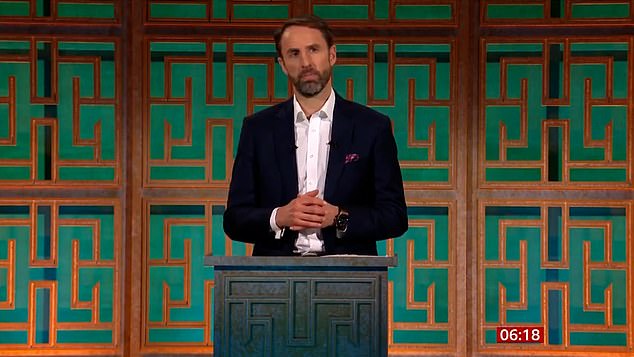
‘The discussion has unexpectedly gained momentum for a specific reason: many parents and individuals working with youth in schools or other settings believe there might be an issue with boys and young men that requires our attention.’
During his talk earlier this month, Sir Gareth mentioned that ‘heartless’ online influencers deceive young men into believing women are opposed to them.
He cautioned about young men retreating into the digital sphere, hesitant to communicate or share their feelings, as traditional community interactions and guidance diminish.
He stated that a ‘vacuum’ in guidance has led many influencers to fill this space by ‘deceptively convincing young men that success is defined solely by wealth or domination.’
The problem has similarly been tackled in the Netflix series “Adolescence,” mentioned by Sir Keir, whom he stated he was viewing with his kids.
The Prime Minister proposed that football players and athletes could serve as role models for boys and young men, though he acknowledged that there should also be inspiring individuals within local communities.
Asked who the British male role models were, Sir Keir told BBC Radio 5 Live: ‘I always go to sport for this. Footballers, athletes, I think they are role models.
However, I believe that if you genuinely inquire with a younger individual, they are more prone to mention someone from their school, such as a teacher, or perhaps a sports coach, for example.
Therefore, we must ensure that – typically fathers might look up to a sports idol as an example – I believe young individuals are more inclined to seek inspiration from someone nearer to them, such as within their school or local community.

And I believe that’s where we need to focus our efforts.
He dismissed the notion of establishing a ‘minister for men,’ stating, ‘I believe that isn’t the solution.’
He stated: “I believe this is an opportunity to attentively listen to what Gareth Southgate has to say and react accordingly, and that is precisely what I intend to do.”
‘I’ve communicated with Gareth Southgate; I wish to engage in an additional conversation with him. We have already had some preliminary discussions on this matter.’
But I believe it’s crucial that we take on this challenge and understand it for what it truly is.
Read more

oleh admin | Mar 24, 2025 | movies, popular culture, social issues, young people, youth
The executive producer of the Netflix series “Adolescence” mentioned that she has been inundated with messages expressing thanks from parents who were inspired to engage in honest discussions with their kids regarding the topics addressed in the show.
Hannah Walters collaborated with her spouse, Stephen Graham, to develop the series that examines the story of a 13-year-old boy who was apprehended for murdering a girl from his class.
Since its debut, the series has garnered praise as well as sparked discussions around topics such as male anger and how sexist online personalities can influence younger males.
Walters informed LIFEHACKS that she anticipated the series would make an impression, though she didn’t expect it to be so profoundly impactful.

Talking with LIFEHACKRadio Leicester, Walters, who resides in Leicestershire, stated: “Both Stephen and I were aware that this would have an impact; we understood its necessity.”
However, with my hand on my heart, I must admit that I didn’t foresee the deep impact it would have on individuals.
I’m receiving numerous thank-you messages from parents, many expressing deep appreciation, as they are now entering their children’s bedrooms and communicating with them in manners they had not done so previously.
I believe that covers everything we needed to accomplish—give everyone a gentle nudge and remind them, let’s go, it’s our responsibility to ensure this generation doesn’t get misplaced, as they can slip away so easily.

The drama delves into how youngsters utilize smartphones, engage with social media, and navigate the internet, frequently doing so without their parents being aware of the specific content they encounter.
Walters added: “Even if we consider ourselves exemplary parents, one of the most significant tools for raising children is always within their reach—the continuous influx of information they receive. Therefore, we must remain aware of this fact.”
Since its debut on March 13th, Jack Thorne, who co-wrote the screenplay with Graham, has
requested that Adolescence be featured in both educational institutions and parliamentary settings
.
Although Sir Keir Starmer, when
inquired about the turmoil during Prime Minister’s Questions
acknowledged the necessity to address the “rising issue” of violence perpetrated by young males who are swayed by content they encounter online.
Follow LIFEHACKLeicester on
Facebook
, on
X
, or on
Instagram
Submit your story concepts to me.
eastmidsnews@LIFEHACK.co.uk
or via
WhatsApp
on 0808 100 2210.
More on this story
-
A Netflix success story should serve as a wake-up call for moms and dads.
-
Praises pour the Netflix series “Adolescence” from fashion designers
-
The Netflix series “Adolescence” has been praised as ‘impeccable’ television.


