
oleh admin | Mar 28, 2025 | female empowerment, social issues, women, women's rights, women's sports
We are the ones demonstrating to the world what women can achieve. We are the ones showing that power isn’t determined by one’s gender.
A powerful declaration made by Achrissa Maw from the University of the Philippines (UP) women’s basketball team during the Third Sunflower Run-Walk-Parade event held on March 22, 2025, at the UP Diliman campus academic oval.
“Recognition of Women, Hope for Youth” is the theme of the event during Women’s Month, which also honored UP women athletes.
READ:
The ‘aswangs’ in Duterte’s drug war
‘Kisapmata’: Story of Domestic Abuse, Incest, and the Fight for Liberation
#HerStory: Women Transforming Society
The member institutions of the University Athletic Association of the Philippines (UAAP) go head-to-head in 20 different sporting events. These competitions include both Men’s and Women’s categories across most sports; however, exceptions apply to certain games. Baseball involves only male athletes, whereas softball is exclusively played by female participants.
From 1938 onwards, the University of the Philippines’ female squads emerged as champions across various sports: they won 21 titles in swimming, 12 in judo, 9 in badminton, 8 in volleyball, 7 in basketball, 6 in table tennis, 5 in fencing, 3 each in softball and chess, 2 in taekwondo gyeorugi, along with one title each in football and taekwondo poomsae.
Softball competition takes place exclusively in the women’s division, which began in 1953. The University of the Philippines claimed the title four times: during Season 58 (1995–96), Season 59 (1996–97), Season 64 (2001–02), and Season 70 (2007–08).
In women’s basketball, the University of the Philippines (UP) clinched the championship title seven times: during Season 39 ([1976–77]), Season 40 (1977–78), Season 41 (1978–79), Season 43 (1980–81), Season 44 (1981–82), Season 45 (1982–83), and Season 46 (1983–84). For men’s basketball, UP secured their championship victories in 1939, 1986, 2022, and 2024.
In women’s swimming, UP claimed the championship 21 times: during Season 2 (1939–40), Season 3 (1940–41), Season 10 (1947–48), Season 27 (1964–65), Season 28 (1965–66), Season 29 (1966–67), Season 51 (1988–89), Season 54 (1991–92), Season 56 (1993–94), Season 57 (1994–95), Season 58 (1995–96), Season 60 (1997–98), Season 61 (1998–99), Season 62 (1999–00), Season 72 (2009–10), Season 73 (2010–11), Season 74 (2011–12), Season 75 (2012–13), Season 76 (2013–14), Season 79 (2016–17), and Season 86 (2023–24).
In women’s volleyball, UP claimed the championship title eight times: during Season 1 (1938–39), Season 10 (1947–48), Season 12 (1949–50), Season 14 (1951–52), Season 25 (1962–63), Season 40 (1977–78), Season 42 (1979–80), and Season 45 (1982–83).
During the inaugural season of 1938-39, female teams made their debut in volleyball, whereas male squads took to the court for the first time eight seasons later in 1946-47. The University of the Philippines emerged as victors in that initial campaign.
In basketball, female teams made their debut during Season 13 (1950-51), with University of the Philippines securing their initial victory in Season 39 (1976–77).
The UP women athletes achieved a series of wins in badminton over six seasons from 1995 to 2000, in swimming across five seasons from 2009 to 2013, in fencing during five seasons spanning 2000 to 2004, in basketball throughout four seasons between 1980 and 1983, in judo through two separate periods each covering four seasons: first from 1999 to 2002 and then from 2006 to 2009, and also in table tennis consistently over four seasons ranging from 1997 to 2000.
In Season 87, hosted by UP, the ladies’ squad has secured first place in badminton, second place in swimming, and third place in track and field so far.
The United Nations officially acknowledged International Women’s Day in 1977, which is observed annually on March 8. This day celebrates the accomplishments of women across all boundaries, including nationalities, ethnic backgrounds, languages, cultures, economics, and politics.
In March, it was proclaimed as Women’s Month following President Cory Aquino signing Proclamation Number 288 on March 17, 1988. This proclamation highlighted the significant contributions of Filipino women in various fields such as society, culture, economy, and politics over our nation’s history.
We aren’t merely typical athletes; we serve as role models and leaders,” Maw stated. “We motivate the next cohort of young women to pursue their aspirations, stand firm without backing down, and recognize their true value.
The parade participants consist of female University of the Philippines athletes from sports such as basketball, chess, fencing, judo, softball, swimming, table tennis, and track and field. Additionally, groups like the Filipiniana dancers, street dance ensemble, and varsity pep drummers will also join in.
Sunflower serves as an emblem of female empowerment during the suffrage movement.
Women in Kansas adorned themselves with sunflower pins when advocating for their voting rights back in 1867. Despite the failure of the Kansas referendum, the color yellow stayed symbolic within the suffragette movement throughout the 20th century.
Sunflowers have also turned into the emblem of the final milestones in college life.
Sunflowers represent dedication and commitment as residents cleared all academic hurdles with sleepless and turbulent days and nights.
Just like how a single sunflower within the schoolyard requires ample sunlight to thrive, each student should view every encounter at the university as essential for their personal development.
The event was spearheaded by several female-led organizations from the University of the Philippines (UP), including UP Delta Lambda Sigma Sorority, UP Portia Sorority, UP Women in Law, Women Lawyers Circle, along with UP Concert Chorus and their corresponding alumni associations such as IBP Quezon City, UP Law Class of 1985, Kontra GaPi, Maritime Law Association of the Philippines, and Celebrity Club.
We aren’t merely engaged in a game; we’re transforming the rules of engagement. We’re altering how stories get told and making an impact on society at large,” declared Maw. “We won’t remain unheard, pushed aside, or dismissed. Instead, we’ll keep expanding limits, shattering stereotypes, and etching ourselves into historical memory.
(Pey ups serves as the moniker for the University of the Philippines. Atty. Dennis R. Gorecho leads the Seafarers’ Division at the Sapalo Velez Bundang Bulilan Law Offices. For feedback, send an email.)
info@sapalovelez.com
, or call 0917-502-5808 or 0908-866-5786.)
oleh admin | Mar 24, 2025 | female empowerment, gender pay gap, women, women leaders, women's rights
By Dr Maame Afua Nikabs
In March, the world comes together to celebrate and stress the importance of gender equality, with International Women’s Day highlighting both our achievements and the efforts yet required.
But gender equality must go beyond just one month of conversations; it must translate into action that ensures women’s voices are valued in every aspect of the workplace.
In numerous work environments across Ghana and various regions of the Global South, women’s contributions often go unnoticed, ignored, or limited due to prevailing cultural practices, company frameworks, and deep-seated gender prejudices.
Although significant attention has been paid to gender diversity in leadership roles, discussions around workplace gender equality should not stop with having women hold positions of power and participate in decision-making processes. It is equally important for their perspectives and contributions to be genuinely acknowledged and respected.
Hidden Obstacles: The Reason Behind Women’s Difficulty Speaking Up Professionally
A recent scholarly investigation titled “Seen but Not Heard: The Voice of Women at Work and the Mediating Role of Culture” by Toyin Ajibade Adisa, Chidiebere Ogbonnaya, Chima Mordi, Hakeem Ajonbadian, and Olatunji David Adekoya (2024) underscores how cultural norms function as potent suppressors of female voices in African work environments, particularly in countries like Ghana.
The research highlights two main elements:
• A high-power distance orientation—a hierarchical workplace environment where less senior staff members, particularly women, are anticipated to show respect to those in higher positions, thereby restricting their opportunities to voice concerns or share insights.
• Patriarchal workplace norms – the expectation that women should be reserved, deferential, and not challenge male authority, reinforcing the perception that assertiveness is a masculine trait.
These insights strike a chord strongly with the dynamics present in the Ghanaian work setting. According to data from the Ghana Statistical Service (GSS), although women constitute 39% of the formal sector employees, they hold fewer than 14.5% of seats on boards, highlighting significant imbalances in authority and strategic decision-making roles.
Nevertheless, leadership constitutes merely a portion of the overall scenario; women across various tiers find it challenging to get their opinions acknowledged in workplace dialogues, group conferences, and regulatory choices.
The Price of Quiet: The Consequences of Muting Women’s voices
The silencing of women’s voices in Ghanaian workplaces carries significant repercussions—not only for individual employees but also for companies and the broader economy.
Lost Opportunities for Innovation & Business Expansion – If only half of the employees feel discouraged from sharing ideas or questioning inefficient procedures, businesses can falter. According to research conducted by McKinsey & Company, firms with greater diversity in terms of gender tend to exceed industry standards in financial performance by up to 25%.
Gender Pay Disparities and Career Plateauing – Women who refrain from speaking out find it challenging to negotiate wages, advancements, and leadership roles. Research shows that Ghanaian women typically receive approximately 30% lower earnings compared to men, largely because of reduced chances to champion improved compensation and working environments.
Women who stay quiet about workplace discrimination, harassment, or unjust treatment frequently endure these issues alone. Such silence can impede personal professional growth and allow harmful work environments to continue unchallenged.
The Part Played by Culture: Religious Beliefs, Gender Roles, and Social Norms
Frequently, cultural and religious standards uphold the belief that women ought to exhibit modesty, avoid confrontation, and display submissiveness in their careers as well as within their private lives.
Spiritual Guidelines and Office Structure:
Many religious interpretations promote female humility and silence, which can discourage women from expressing themselves openly, especially in male-dominated industries. In some workplaces, men justify gender imbalances using religious rhetoric, reinforcing the expectation that women should listen rather than lead.
Gender Roles & Rearing: From a young age, numerous Ghanaian females are taught to be amiable, courteous, and more reserved compared to males. This foundational conditioning often manifests in professional settings as these women tend to avoid confronting superiors, requesting raises, or expressing their viewpoints during predominantly masculine conversations.
The Fear of Stigma: Whenever women voice their opinions, they commonly encounter pushback. Women who exhibit assertiveness tend to be branded as ‘overly aggressive,’ ‘challenging,’ or ’emotional.’ This often causes them to refrain from speaking out to sidestep adverse outcomes.
Ways Ghanaian Workplaces Can Encourage Women’s Voices
To develop a genuinely inclusive work environment, Ghanaian entities should progress past mere symbolic acts of gender diversity and proactively establish settings where females feel encouraged to voice their opinions.
✅ Implement Voice-Inclusive Policies – Companies should establish structured feedback mechanisms where all employees, regardless of gender, feel encouraged to contribute ideas and concerns without fear of retaliation.
✅ Advocate for Sponsorship & Mentoring of Women — Actively having high-ranking professionals support women’s participation in key decision-making environments can lead to substantial benefits. Studies indicate that women who have mentors in executive positions tend to advance more frequently.
✅ Offer Gender Bias and Inclusive Communication Training – Unconscious gender biases can be prevalent. Companies ought to educate their executive committees on promoting inclusive dialogues, preventing interruptions of female colleagues during conferences, and intentionally soliciting input from women.
✅ Acknowledge and Celebrate Women’s Contributions – Whenever women contribute ideas, these suggestions should be recognized, attributed properly, and adopted when beneficial. Work environments that often credit women’s efforts to their male counterparts tend to deter them from participating further.
✅ Combat Workplace Harassment & Discrimination – Numerous women stay quiet regarding abusive treatment at work due to their fears. Establishing robust complaint systems and adopting zero-tolerance stances against workplace discrimination can foster an environment where women feel more empowered to speak up.
Concluding Reflections: Ending the Chain of Silence
It is essential to amplify women’s voices across all tiers of the corporate world, not merely in top management positions. Striving for gender equality goes beyond having females in high-ranking jobs; it also involves making sure that their viewpoints, issues, and suggestions are considered valuable contributors to discussions in every level of the organization.
Ghanaian enterprises face a significant question: Should they persist with hierarchical structures marked by substantial power imbalances that impede advancement? Alternatively, should they adopt more egalitarian work environments where female contributions are actively solicited, valued, and implemented?
To initiate change, one must begin by listening. For Ghana to achieve genuine economic and professional development, it needs to foster work environments where each woman’s perspective is valued.
The individual serves as a communications and inclusion specialist, public speaker, and social impact activist committed to assisting both people and organizations in managing challenging discussions and fostering inclusive work environments. As the creator of “Speak Up! Speak Out!”, she also conducts workshops focused on self-assertion, leadership communication, and equitable practices in the workplace.
Provided by Syndigate Media Inc. (
Syndigate.info
).
oleh admin | Mar 24, 2025 | empowerment, female empowerment, women, women leaders, women's rights
By Bertha Badu Agyei / Harriet Kwakye
Accra, March 24, GNA – In celebration of the 2025 International Women’s Day, the Ghana chapter of the African Women Leaders Network (AWLN), working alongside UN Women, organized a mentorship event aimed at empowering schoolgirls.
Centered around the worldwide theme “For All Women and Girls: Rights. Equality. Empowerment,” the gathering assembled prominent women who shared their insights with attendees on topics such as leadership, professional growth, and the significance of gender parity.
The event took place at the Faith Community Baptist School, located in Accra.
Dr. Charity Binka, who leads the Ghana chapter of AWLN, emphasized the importance of recognizing the rights of girls, fostering self-assurance, and enabling them to make educated decisions regarding their futures.
She emphasized that empowerment goes beyond building confidence; it also involves developing skills, achieving academic excellence, and insisting on more than settling for less. She encouraged the young girls to concentrate on their education as the key path to empowerment.
Considering Ghana’s sluggish advancement in women’s political and leadership representation, Dr. Binka stressed the importance of actively mentoring young girls to mold their ambitions and aspirations.
“Examining the statistics, our performance regarding women’s leadership and political participation has been lacking so far. If we aspire to create a brighter future for women, we must focus on the younger generation,” she emphasized.
Dr. Afua Ansre, a UN senior gender specialist, emphasized the importance of engaging young girls in initiatives aimed at achieving gender equality. This involvement would enable them to grasp the discussions more effectively and allow them to make significant contributions.
She motivated young girls to view themselves as changemakers who can question stereotypes and overcome obstacles, knowing that transformation begins with their initiatives.
Mrs. Susan Aryeetey, who serves as the Acting Executive Director of FIDA-Ghana (International Federation of Women Lawyers), encouraged the young girls to be deliberate about their futures, establish specific objectives, and strive toward achieving their aspirations.
She stated that empowering girls wasn’t about opposing men but about making sure everyone contributed equally to societal and national progress.
Several individuals who talked with GNA revealed how they gained insight into gender equality and realized the importance of young girls staying focused and pursuing their aspirations to reshape societal perceptions.
A student from Yilo Krobo Senior High School who attended the mentorship session shared with GNA that one of the main points she took away was the significance of self-respect and establishing limits.
Annually celebrated on March 8, International Women’s Day acts as an international stage to honor the accomplishments of women and push for gender equity. This year’s observance held special importance as it aligned with the 30th anniversary of the Beijing Declaration and Platform for Action, a pivotal moment in the struggle for women’s rights.
GNA
AD
Provided by SyndiGate Media Inc.
Syndigate.info
).
oleh admin | Mar 24, 2025 | female empowerment, politics, politics and government, women, women's rights
-
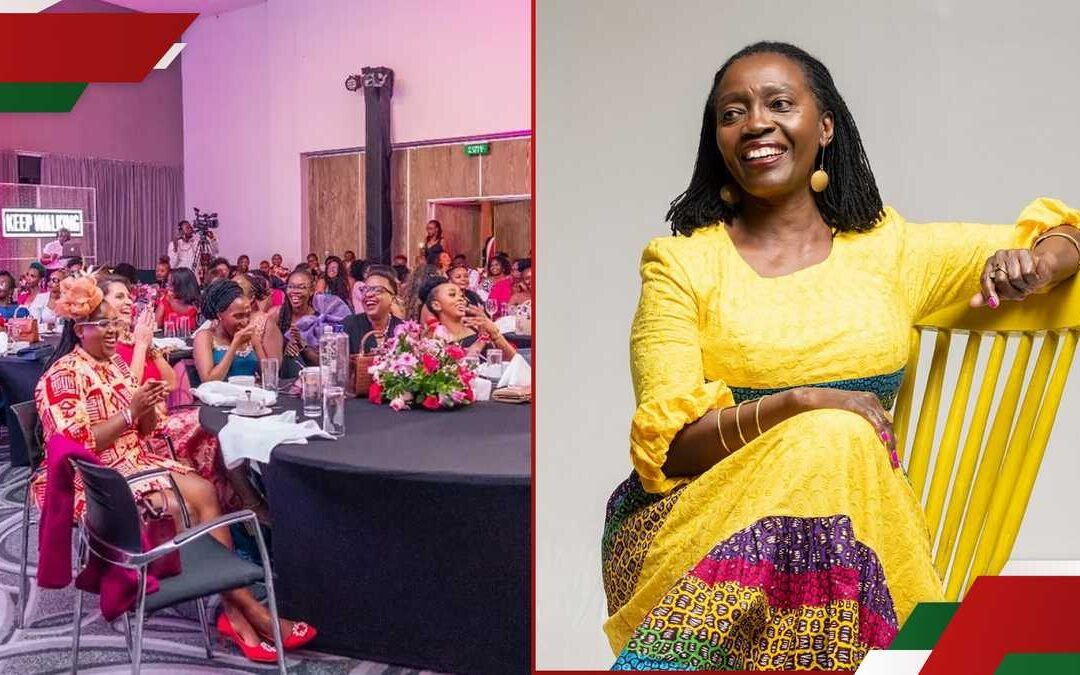
At the third installment of the What Women Want Summit, Martha Karua voiced her support for gender equity.
-
She refuted the idea that women are fundamentally their own worst foes and encouraged unity among women along with mutual responsibility.
-
Karua likewise announced her candidacy for president, motivating those present with her ideas for advancing gender equality.
-
In an interview with LIFEHACK.co.ke, event organizer Pinky Ghelani emphasized the importance of more profound discussions in educational institutions and family settings to tackle problems such as femicide.
Martha Karua, the leader of the People’s Liberation Party (PLP), passionately argued for the necessity of women’s empowerment initiatives when she spoke at the What Women Want Summit, which took place at the Trademark Hotel in Nairobi.

This year’s summit, initiated by Pinky Ghelani, celebrated its third iteration, assembling prominent women from different industries over the course of three days dedicated to empowerment, networking, and discussions.
The much-anticipated event commenced on Friday, March 21, featuring a vibrant gala dinner led by Suba North MP Millie Odhiambo.
During the span of three days, attendees took part in various discussions, workshops, and networking events focused on enhancing women’s rights, leadership roles, and social influence.

Martha Karua’s compelling statement about empowering women
When the summit ended on Sunday, March 23, Karua stepped forward to highlight that women’s empowerment should be recognized as an essential right rather than perceived as a danger to boys or men.
She asserted that recognizing our humanity should not be an afterthought but a fundamental right. We did not arrive coincidentally; we merit equal standing with our male counterparts. Keep in mind, we are the mothers of these men—yes, even those boastful Members of Parliament. Regardless of gender, we are the mothers of exceptional individuals. Thus, our significance confirms that we hold considerable worth ourselves.
Karua encouraged society to move past the idea that enhancing women’s rights comes at the expense of men, highlighting that equality actually enriches all individuals.
Is the notion that women are their own worst enemies a valid one?
Karua likewise addressed the contentious belief that females frequently undermine themselves more than others do.
She recognized that, similar to men, some women might also discourage or undercut others.
Nevertheless, she contended that this should not detract from the many women who encourage and help each other.
Some women undermine and harm their female counterparts. When a woman is observed belittling another woman, she should be confronted. Despite potential denials, this confrontation can prompt action. Conversely, women who support and uplift other women deserve recognition to inspire others.
I’ve learned this through my experience during my initial political campaign. The harsh comments directed at me came predominantly from men, whereas women often took on surrogate roles. It’s said that ‘women are each other’s toughest competitors,’ which reflects this narrative. We should recognize both male and female individuals who act poorly; conversely, we ought to acknowledge those who excel positively,” she stated firmly.

How women drive transformation
Karua emphasized that since women represent the biggest group within the nation, they possess the potential to catalyze substantial social transformation.
“All these elected leaders are female representatives since 51% of the voters are women. Even William Ruto represents women,” she stated.
She motivated women to come together, provide mutual backing, and assume leadership positions to champion policies that emphasize gender equality.
With a daring announcement that left participants astounded, Karua revealed her intention to run for president.
The influence of Pinky Ghelani at the What Women Want Summit
Speaking to
LIFEHACK.co.ke
The founder of the summit, Pinky Ghelani, disclosed that the gathering had drawn more than 3,000 participants, marking the largest attendance since the event began.
She conveyed her enthusiasm regarding the increasing influence of the summit and how it helps mold discussions around women’s empowerment.
Ghelani likewise tackled the critical matter of femicide in Kenya, emphasizing the necessity for a more preemptive strategy to combat gender-based violence.
“We have barely scratched the surface. Femicide isn’t a recent issue; it’s been around for a long time. To combat this, we must initiate these discussions both in educational institutions and within families. We need to speak with our boys and emphasize that young girls aren’t punching bags, regardless of their feelings of frustration or anger,” she implored.


