oleh admin | Mar 28, 2025 | artificial intelligence, news, popular culture, studio ghibli, technology
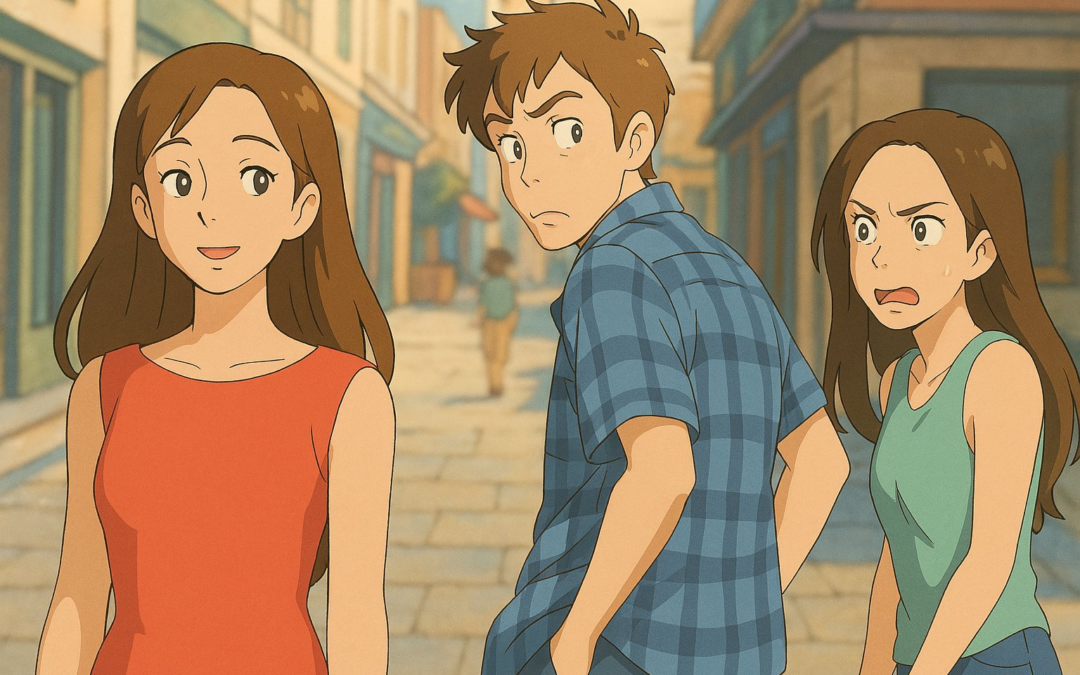
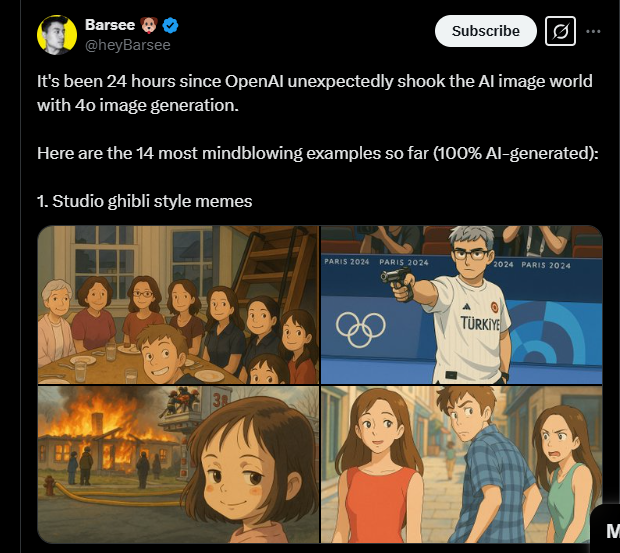
NEW YORK – The launch of the newest image creator from OpenAI’s ChatGPT has sparked an influx of internet memes showcasing artwork inspired by Studio Ghibli, the renowned Japanese animation house known for classics such as “My Neighbor Totoro” and “Princess Mononoke.”
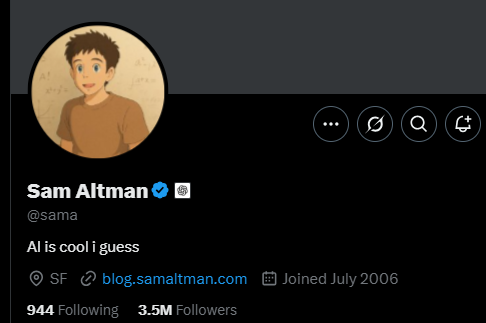
These images went viral quickly, leading even OpenAI CEO Sam Altman to change his profile picture on X to mimic the design. This instantly sparked concerns over potential copyright issues for the ChatGPT creator, who is already dealing with legal actions due to using content without authorization.
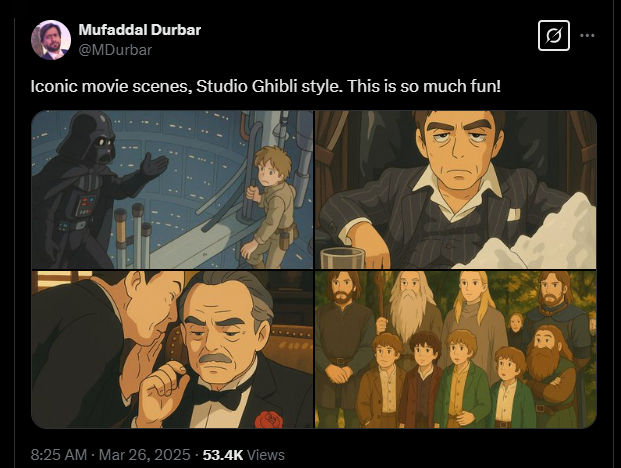
Ever since their debut on Wednesday, pictures created by artificial intelligence showing Studio Ghibli-styled renditions of Elon Musk alongside U.S. President Donald Trump, scenes from “The Lord of the Rings,” and even a depiction of the September 11 attacks have spread rapidly across various online channels.
On Thursday, the White House joined in by sharing on X a Studio Ghibli-inspired picture depicting an allegedly guilty individual in tears as they were handcuffed by a U.S. immigration official prior to their deportation.
Initially planned to be accessible at no cost through the platform, Altman mentioned that the overwhelming popularity of the updated generator caught them off guard. As a result, they have decided to keep this tool restricted to those who subscribe for now.
It was previously feasible to create images using ChatGPT, however, the newest iteration leverages GPT-40, the firm’s top-tier model. This enables complex outcomes from exceedingly concise prompts, something not achievable earlier.
Following the viral craze, a 2016 clip emerged showing renowned Studio Ghibli filmmaker Hayao Miyazaki losing his temper during an artificial intelligence presentation conducted by employees.
“I would absolutely not want to include this technology in my work whatsoever. I firmly believe that this represents a grave disrespect to existence itself,” stated the English subtitles in the video.
“The trend is particularly pernicious and malevolent due to Miyazaki’s openly critical stance towards the technology,” noted artist and illustrator Jayd ‘Chira’ Ait-Kaci in an article for Bluesky.
Ait-Kaci added, ‘It’s always centered around disdain for artists, each time.’
OpenAI is confronting numerous legal actions for alleged copyright violations, which include significant cases like the lawsuit initiated by The New York Times as well as claims brought forth by various artists, musicians, and publishers.
When asked by AFP regarding the most recent viral trend and if it posed a threat to Studio Ghibli’s intellectual property, OpenAI stated that they are still refining their model.
“The aim is to provide users with maximum creative liberty,” said a representative of the firm to AFP.
“We keep preventing content created in the specific style of individual living artists, yet we allow more general studio styles. These styles have been utilized to produce and distribute numerous delightfully creative and inspiring original fan works,” she explained.
We continuously learn from practical application and user input, and we will keep enhancing our policies along the way.
The firm is strongly advocating at both the White House and Congress to incorporate the utilization of copyrighted material by artificial intelligence businesses into the category of fair use.
Allowances for fair use already cover search engines or instances involving satire and memes online, permitting businesses to utilize copyrighted content without seeking authorization.
On Wednesday, Bloomberg reported that OpenAI is nearing the completion of a $40 billion fundraising initiative headed by Japan’s SoftBank Group. This investment would mark the largest funding round ever secured by a startup.
OpenAI forecasts that its yearly income might surpass $12.7 billion in 2025, an increase from the $3.7 billion earned in 2024.
oleh admin | Mar 27, 2025 | artificial intelligence, movies, popular culture, studio ghibli, technology

The launch of the newest image creator on OpenAI’s ChatGPT has sparked an internet surge of memes using visuals styled after Studio Ghibli, the renowned Japanese animation house known for classics such as “My Neighbor Totoro” and “Princess Mononoke.”
The rapid spread of these images led to concerns about copyright issues, particularly after OpenAI CEO Sam Altman updated his profile picture on X to align with this aesthetic. This quickly sparked debates over potential infringements involving the ChatGPT creator, who is already dealing with legal actions for using content without authorization.
Following its launch on Wednesday, content featuring AI-created visuals showing Studio Ghibli-style renditions of Elon Musk alongside President Donald Trump, scenes from “The Lord of the Rings,” and a depiction of the September 11 attacks has spread rapidly across various online channels.
Initially planned to be offered at no cost through the platform, Altman mentioned that the overwhelming popularity of the new generator caught them off guard. As a result, access to this tool will continue to be restricted to paying customers for the time being.
Previously, generating images using ChatGPT was feasible, yet the newest iteration leverages GPT-40, the firm’s most advanced model. This enables complex outcomes from highly concise prompts, something not achievable previously.
Following the spread of a viral trend, a video from 2016 resurfaced showing Studio Ghibli’s renowned director Hayao Miyazaki reacting strongly during an AI presentation conducted by his employees.
“I have absolutely no desire to include this technology in my work whatsoever. It deeply offends me; it feels like an affront to existence itself,” stated the English subtitles of his comments in the clip.
Artist and illustrator Jayd “Chira” Ait-Kaci noted on Bluesky that this tendency is particularly harmful and malevolent due to Miyazaki’s strong criticism of technology.
Ait-Kaci added, ‘It’s always rooted in disdain for artists, each and every time.’
OpenAI is dealing with numerous lawsuits related to alleged copyright violations, which include significant cases such as one brought forth by The New York Times along with additional suits filed by artists, musicians, and publishers.
Meanwhile, the firm is actively advocating for the White House and Congress to include the utilization of copyrighted material by artificial intelligence businesses as part of the fair use doctrine.
Fair use provisions already accommodate search engines and instances involving satire and memes on the internet, permitting businesses to utilize copyrighted content without obtaining authorization.
On Wednesday, Bloomberg reported that OpenAI is nearing the completion of a $40 billion funding round, which will reportedly be led by Japan’s SoftBank Group. This valuation would make it the largest fundraising round in history for a startup company.
OpenAI estimates that its yearly income might surpass $12.7 billion in 2025, an increase from the anticipated $3.7 billion for this year.
oleh admin | Mar 26, 2025 | artificial intelligence, popular culture, studio ghibli, technology, technology industry
The latest version of OpenAI’s image generation technology has resulted in a flood of users sharing images on social media that have been transformed in the style of Studio Ghibli, the legendary Japanese animation studio.
On Tuesday, OpenAI
launched
What they call their “most advanced image generator yet,” integrated with GPT-40, boasts being a “native multiformat model capable of producing exact, accurate, photo-realistic outcomes.” It appears this image creator excels particularly well at recreating the distinctive art style of Studio Ghibli, known for acclaimed movies like “Spirited Away” and “MyNeighbor Totoro.”
Sam Altman, the CEO of OpenAI, commented on the trending phenomenon recently.
post
On X Wednesday — suggesting he’s experienced something akin to being transformed into a character from Studio Ghibli. Altman stated, “> Be me / > Work tirelessly for a decade attempting to contribute to the development of superintelligence aimed at curing cancer or anything else / > For the initial 7.5 years, hardly anyone pays attention / > Then over the next 2.5 years, everybody starts despising you for every little thing / > One morning, I woke up to find hundreds of messages saying, ‘Look, I turned you into a twink in Ghibli style hahaha.'”
Altman likewise updated his profile photo on X to an illustration styled like those from Ghibli movies.
Representatives for Studio Ghibli in North America did not promptly reply to requests for comments.
Nevertheless, Hayao Miyazaki, one of the co-founders of Studio Ghibli, has previously
voiced significant discontent with AI-created animation
In a 2016 gathering when he viewed an AI animation demonstration, Miyazaki expressed his thoughts saying, “I find this absolutely repulsive. Should anyone desire to create disturbing content, they are welcome to proceed with their efforts. However, I have zero intention of integrating such technology within my creations.” Additionally, he stated, “It deeply offends me; it feels like a grave disrespect towards life itself.”
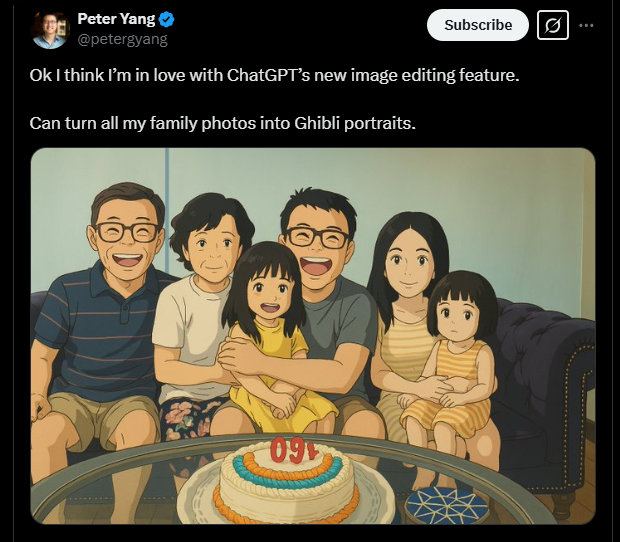
On social media platforms, numerous instances of Ghibli-style visuals created by OpenAI’s latest image-generating tool have been showcased by users.
More from SANGGRALOKA
-
Ben Stiller, Mark Ruffalo, and Over 400 Tinseltown Figures Ask Trump to Prevent AI Firms From ‘Exploiting’ Copyrighted Material
-
‘Paddington in Peru’ Writers Reunite for AI Animated Feature ‘Critterz’ From Vertigo Films, Native Foreign (EXCLUSIVE)
oleh admin | Jul 23, 2024 | animated movies, culture, entertainment, movies, studio ghibli
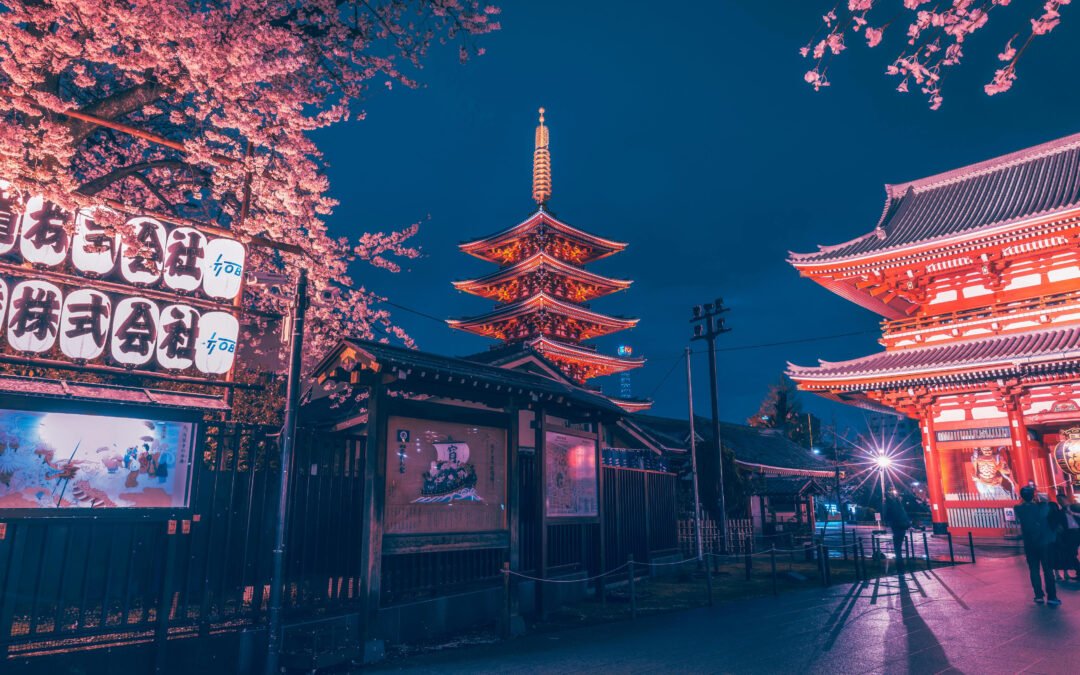
Icons of Japanese culture, animated movies have contributed significantly to making this genre widely recognized worldwide. Originally considered suitable mainly for children, these full-length productions have distinguished themselves through the sophistication of their narratives and the profound emotions they evoke.
Ghibli, Kyoto and Mappa are studios renowned for their many masterpieces. Now famous for their
manga adaptations
, some of them continue to produce excellent animated films. If you don’t know which one to watch, here’s a selection of six you need to see.
Castle in the Sky
(1986), Hayao Miyazaki
Regarded as Hayao Miyazaki’s debut piece,
Castle in the Sky
helped popularise Japanese feature films among European audiences. The film tells the story of Sheeta, a young girl in possession of a strange magic stone that draws the attentions of greedy air pirates. A pendant that can unlock the secret of Laputa, the legendary floating island…
Although Miyazaki’s films are now a staple of Japanese animation, this was this first feature film and it laid the foundations for his future projects. His fantastical worlds parallel to our own, his luminous graphic style that evolves over the course of the story and his many characteristic characters – it all came from
Castle in the Sky
.
Wolf Children
(2012), Mamoru Hosoda
During her time studying at Tokyo University, Hanna meets a lonely man. She helps him meet with success in his studies, and the two eventually fall in love. They soon give birth to two children, Ame and Yuki. Then the man falls dead in an accident, leaving Hanna aggrieved, and with a heavy burden to handle all on her own… For the family had quite a secret: the father and the two babies have the power to turn into wolves.
The story is a powerful mix of joy and sadness. With no family to support her and no partner to help her raise her half-cubs, the young mother has only herself to rely on and does everything she can to keep her secret, despite intrusive neighbours and nosy social services. Like in
Princess Mononoke
This movie’s lead character is a resilient and self-reliant woman ready to make personal sacrifices for the well-being of her loved ones.
Grave of the Fireflies
(1988), Isao Takahata
In the summer of 1945, Japan lies scarred from the devastation of World War II. Fourteen-year-old Seita and his four-year-old sister Setsuko become orphaned children after losing their mother to a deadly air raid and having no word about their father who is fighting at the frontline. Living under the harsh care of an unkind aunt, Seita chooses to depart with his younger sibling and seeks shelter in an abandoned bomb shelter illuminated nightly by countless glowing fireflies. He now faces the challenge of trying to endure amid surroundings still marked by the relentless hardships brought forth by wartime conditions.
Far removed from the magical realms of Studio Ghibli,
Grave
of the Fireflies
It serves as a stark reminder of grim truth. A poignant human drama unfolding against the backdrop of one of the harshest battlefields of war in the 1900s.
th
In this century, the movie aims to tug at your heartstrings by portraying the harsh struggles that Setsuko and Seita have to withstand.
Spirited Away
(2001), Hayao Miyazaki
Earning more than $400 million at the box office,
Spirited Away
has long been regarded as the best animated film out of Japan. The story is that of Chihiro, a young girl with a sulky streak who becomes trapped in a world called the Spirit Realm. Forced to work for Yubaba, a powerful witch and owner of a massive bath house, Chihiro struggles to regain her freedom in an environment that tries to make her lose her own identity.
While the film’s masterful animation shines throughout, the message it conveys makes it even richer. The film is intended to be a mirror of society. Through different characters, we discover the flaws that the director seeks to highlight. Although
Spirited Away
Having surpassed an age of 23 years, the film’s moral message and how it highlights the shortcomings in our lifestyle remain pertinent today.
A Silent Voice
(2016), Naoko Yamada
Actions often speak louder than words. This narrative follows Shoko, a newcomer who is deaf. She faces bullying from Shoya, the head of her class. Due to her inability to connect with him because of her hearing impairment, Shoya inadvertently leads to her leaving the school and finds himself expelled as well. Years afterward, they meet once more at their old school. Reflecting on his past actions, Shoya goes to great lengths to learn sign language and seek her pardon.
Based on the manga with the same title,
A Silent Voice
highlights the problem of bullying in schools. It showcases the various communication issues that can occur among diverse student groups. In doing so, the director opts to place traditional dialogue secondary, focusing instead on bringing Shôko’s character vividly to life through music and physical expression. Through these means, she demonstrates that there are countless methods for effective communication.
Your Name
(2016), Makoto Shinkai
A cornerstone of contemporary animation,
Your Name
It breaks the mold of animated movies. This film revolves around Mitsuha, a teenage girl living in a rural area of Japan who longs to leave for bustling Tokyo, and Taki, an urban high school student from the metropolis who finds city life overwhelming. One day, they find themselves inhabiting each other’s bodies upon waking up. To unravel this enigma, these teenagers join forces, embarking on a journey that spans vast distances across space and time.
The filmmaker’s debut full-length movie packs a punch with its cutting-edge artistic approach and meticulously crafted screenplay. As the narrative progresses, viewers become deeply engaged in unraveling the enigma alongside the characters. The focus on these two students heightens emotional involvement and compassion, making the climax even more poignant.


