oleh admin | Agu 22, 2025 | economics, financial services, fiscal policy, politics and government, tax policy and law
Posted on, Aug. 19 – August 19, 2025 at 7:24 AM
The “tax policy office” in Pakistan will cease to fall under the jurisdiction of the Federal Board of Revenue (FBR), according to an announcement made by Finance Minister Muhammad Aurangzeb on Monday. Instead, this department will now operate under the authority of the Ministry of Finance. As a result, the FBR will no longer have the key responsibility of drafting the annual budget.
“Tax policy office is now moved into the Finance Division. FBR has nothing to do with the policy. The next year’s budget to be presented in 2026 (for FY27) will be led by the finance and tax policy office and not by FBR,” Senator Aurangzeb said while speaking at a workshop titled ‘Unlocking Capital Market Potential for Banks’, organized by the Securities and Exchange Commission of Pakistan (SECP) and the Pakistan Banks Association (PBA).
Industrial strategy: He further mentioned that the government has been steadily developing an industrial plan set for release shortly, aimed at creating favorable conditions and boosting manufacturing growth within the nation.
“Haroon Akhtar (Special Assistant to Prime Minister) is working day and night to get that (industrial policy) through the cabinet and make an announcement. This is an important element of how we are going to move from stability to sustainable growth, because these underline pillars are going to be quite critical,” he said, adding that over the past couple of months the government has already announced policies for tarrifs, electric vehicles, creating a cashless economy and the digital sector.
Tariff Reforms: Delivering a speech on tariff reforms for businesses—especially those involved in exports—Aurangzeb stated that the government needs to lower customs taxes, extra customs charges, and administrative fees to a specific extent within the coming four to five years.
“This is essential to improve export competitiveness and also to take away the protection that we have provided certain industries for the longest time.”
In terms of the reforms, he said many institutions helped the government, including the World Bank.
“I just want to be very clear the IMF has nothing to do with it. Tariff reforms is very much a home-grown agenda of the government and this administration to make our industry more competitive as we go forward.” He said finance and FBR believe reducing tariffs will hurt the collection of revenue. “They say our revenue (collection) will fade away if we keep reducing duties.” However, “we have to get out of this short-term thinking and see what is the right thing to do for the country over the next four to five years if we are going to grow and move towards supporting competitiveness.”
Missing players: He noted that the corporate sector was largely missing from the workshop, even though they are key players in the development of the capital markets – as they are the one who mobilize funds (debt/equity) through the capital markets.
The minister proposed that the workshop coordinators establish a capital market advancement committee aimed at mobilizing resources for projects via local financial systems such as the Pakistan Stock Exchange (PSX). Key members of the committee might consist of the SECP, the State Bank of Pakistan, PBA, companies, banking institutions, and other relevant entities, along with input from different provinces—since significant implementation authority currently resides within them.

oleh admin | Mar 24, 2025 | economics, finance news, fiscal policy, government, tax policy and law
Islamabad [
Pakistan
], March 24 (ANI): On this date,
International Monetary Fund
(
IMF
) has rejected
Pakistan
‘s
Federal Board of Revenue
‘s (
FBR
request to lower transaction tax rates
property sector
For now, The News International has covered this story.
Previously, high-ranking officials had indicated that the
IMF
had consented to decrease the withholding tax for property buyers by 2 percent starting April 1, 2025, contingent upon receiving written approval from the
IMF
. However, the
IMF
has now formally declared that it will not agree to reduce the transaction taxes for properties.
In addition, the
IMF
has declined to lower tax rates for tobacco and beverages and has recently turned down the proposal
FBR
request to reduce tax rates for the
property sector
. Meanwhile,
Pakistan
and the
IMF
are progressing towardFinalizing a Staff-Level Agreement (SLA). Nonetheless,
Pakistan
will need to furnish written commitments to the
IMF
that the provinces will not get involved in wheat purchasing activities.
The international financial institution has shown its readiness to increase the current $7 billion facility.
Extended Fund Facility
(EFF) with
climate finance
as part of the Resilience and Sustainability Facility (RSF) initiative. This plan will be submitted to the
IMF
‘Executive Board for ratification along with
Pakistan
The News International reported regarding the approval for the issuance of the second installment.
The precise amount of funding allocated through the RSF has not been disclosed; however, it is anticipated that as much as USD 1 billion may be made available via the Climate Resilience Fund (CRF).
Pakistan
Finance Minister Muhammad Aurangzeb expressed optimism on Friday that both parties would soon conclude the Staff Level Agreement.
The
IMF
‘s Resident Chief in
Pakistan
Mahir Binci said, “The
IMF
has not agreed on a lower withholding tax on property transactions and on lowering March 2025 targets,” The News International reported.
On reducing the March 2025 tax collection target, the official sources said that the
FBR
was unable to meet the continuous monthly targets under any circumstances and
IMF
agrees or not, it would experience a shortfall in achieving the desired target of
Pakistan
I have allocated Rs. (PKR) 1,220 billion for this current month.
According to the
FBR
According to their internal evaluation, revenues might decrease by PKR 60 to 80 billion because of a higher number of holidays towards the end of the month for Eid-ul-Fitr. Consequently,
Pakistan
‘Ministry of Finance and the’
IMF
were informed that this deficit of PKR 60-80 billion needs to be accounted for in the revenue collection targets for April and May 2025 instead of June 2025, as increased tax collections are anticipated during the final month of the present fiscal year. (ANI)
Provided by Syndigate Media Inc. (
Syndigate.info
).
oleh admin | Mar 23, 2025 | journalism, news, personal finance taxes, police reports, tax policy and law
Petunjuk Melengkapi SPT 1770 S dan 1770 SS – Jakarta.
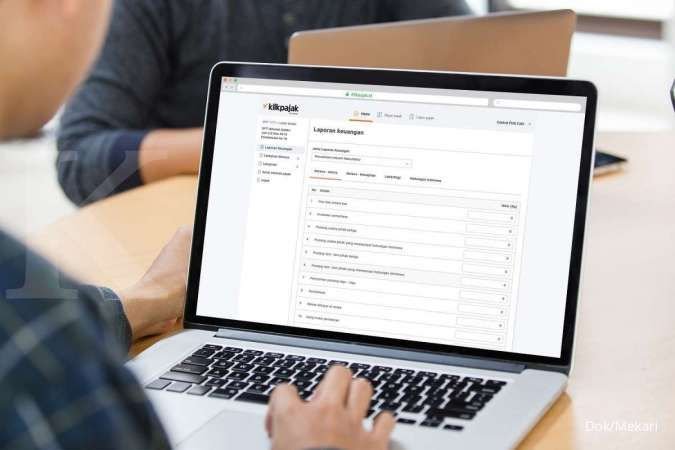
Lebih dari 9,7 juta orang sudah melaporkan Surat Pemberitahuan (SPT) Tahunan untuk PPh badan pada tahun pajak 2024. Apabila Anda belum mengisi SPT tahunan 2024, berikut ini langkah-langkah serta petunjuknya dalam mengisi SPT menggunakan formulir 1770 S dan 1770 SS secara online di situs web Pajak.go.id atau sistem e-filing.
Menurut laporan dari Kompas.com, DJP yang berada di bawah naungan Kemenkeu menyatakan bahwa terdapat 9,95 juta orang yang sudah mengajukan SPT Tahunannya untuk masa pajak tahun 2024.
Direktur Penyuluhan, Pelayanan, dan Humas DJP Dwi Astut menyebutkan bahwa sampai hari ini, Jumat (21/3/2025), terdapat 9,67 juta Surat Pemberitahuan (SP) Tahunan dari wajib pajak perorangan serta 283.000 SP Tahunan dari wajib pajak badan yang telah diajukan. Menurutnya, pada tanggal 21 Maret 2025 pukul 00:01 WIB, jumlah keseluruhan SP Tahunan Penghasilan dalam bentuk Uang (PPh) untuk tahun pajak 2024 mencapai 9,95 juta SP — naik sebesar 11,08% jika dibandingkan dengan masa serupa di tahun sebelumnya.
Ia menjelaskan hal tersebut ketika ditemui oleh tim Kompas.com melalui telepon, juga pada hari Jumat itu, yaitu 21 Maret 2025.
Realisasi pelaporan SPT saat ini telah mencapai 59,7% dari target ketaatan SPT Tahunan 2024 yang ditargetkan berjumlah 16,21 juta SPT Tahunan untuk dilaporkan pada tahun ini. Sedangkan target ketaatan tersebut hanya mewakili 81,92% dari jumlah seluruh Wajib Pajak yang harus melaporkan SPT Tahunannya pada 2024 dan diperkirakan sebesar 19,8 juta SPT Tahunan.
“Ini disebabkan oleh pertimbangan jumlah wajib pajak yang aktif,” terangnya.
Asing Net Menjual Jumlah Besar Rp 2,35 Triliun, Periksa Saham yang DiJual Banyak Oleh Asing Jumat (21/3)
Dwi menambahkan, realisasi pelaporan SPT Tahunan itu sudah termasuk SPT Tahunan yang lebih bayar dan kurang bayar. Namun dia tidak mengungkapkan berapa banyak SPT Tahunan yang lebih dan kurang bayar.
SPT tahunan bisa memiliki status overpaid atau underpaid dikarenakan besarnya pajak yang sudah dibayarkan atau dipotongan melebihi pajak yang harusnya terhutang. Hal ini mungkin juga diakibatkan oleh kesalahan pada input nilai nominal ketika membuat kodebilling atau kodepembayaran serta kesalahan saat mengisi formulir SPT.
“Bagi wajib pajak yang menyerahkan SPT Tahunan PPh dengan status overpaid, mereka bisa meminta restitusi atas pembayaran berlebih tersebut atau menggunakan sisa pembayaran berlebih itu untuk membayar kewajiban pajak di masa-masa mendatang,” terang dia.
“Bagi wajib pajak perseorangan yang memenuhi kriteria tertentu, bisa juga mendapatkan pengembalian dana awal yang dipersingkat berdasarkan Peraturan Direktur Jenderal Pajak Nomor 5/PJ/2023,” lanjutnya.
Perlu dicatat bahwa tenggat waktu pengiriman SPT Tahunan bagi Wajib Pajak perorangan adalah hingga 3 bulan setelah berakhirnya tahun pajak, yaitu pada tanggal 31 Maret. Sedangkan untuk Wajib Pajak badan, masa tenggang tersebut adalah sampai dengan 4 bulan setelah penutupan tahun pajak, yakni terhitung dari tanggal 30 April.
Untuk Wajib Pajak yang telat mengirimkan SPT Tahunan, menurut Pasal 7 ayat (1) dari Undang-Undang Ketentuan Umum Perpajakan, akan ada hukuman berupa dendanya senilai Rp 100.000 untuk Wajib Pajak perorangan serta Rp 1 juta untuk Wajib Pajak badan usaha.
BYD Meresmikan Gudang Pameran Spesial untuk Denza, Harga BYD Atto Dolphin M6 di Bulan Maret Tahun 2025 Mengalami Peningkatan
Petunjuk Pengisian SPT 1770 SS Untuk Pendapatan Kurang Dari Rp 60 Juta
Wajib pajak yang memiliki pendapatan kurang dari Rp 60 juta wajib mengisi dan menyampaikan Surat Pemberitahuan (SPT) dengan memakai formulir SPT 1770 SS. Di bawah ini adalah petunjuk untuk melengkapi SPT 1770 SS secara daring via e-Filing:
-
Buka djponline dengan mengklik LOGIN tersebut.
www.pajak.go.id
Masukkan nomor pokok wajib pajak (NPWP) serta passwordnya, kemudian masukan kode verifikasi/CAPTCHA yang tampil dan tekan tombol “Login”.
-
Saatnya memilih opsi “Lapor”, lalu klik pada layanan “e-Filing”.
-
Pilih “Buat SPT”.
-
Ikuti panduan pengisian e-Filing.
-
Masukkan tahun pajak, kondisi SPT, serta status perbaikan.
-
Isi BAGIAN A. PAJAK PENDAPATAN. Sebagai contoh untuk seorang Pegawai Negeri Sipil: silakan berikan informasi menurut formulir 1721-A2 yang disediakan oleh bendahara.
-
Isi BAB B. PAJAK PENGHASILAN. Contoh: Mendapatkan hadiah undian senilai Rp 1.000.000 yang sudah dikurangi PPh Final sebesar 25% (atau setara dengan Rp 250.000), serta mendapat warisan (yang dikecualikan sebagai objek pajak) sejumlah Rp 2.000.000.
-
Isi BAGIAN C. DAFTAR HARTA DAN KEWAJIBAN. Misal: Harta yang dimiliki Motor Yahonda Vamio Rp 15.000.000, kalung emas Rp 3.000.000, dan perabot rumah senilai Rp 7.000.000. Kewajiban yang dimiliki berupa sisa kredit motor sebesar Rp 12.000.000.
-
Isikan BAGIAN D. KARENA PERNYATAAN dengan mengklik kotak “Setuju” hingga muncul tanda centang.
-
Ulasan singkat tentang SPT Anda serta penerimaan kode verifikasi. Dokumen SPT Anda sudah terisi dan dikirimkan.
-
Mohon cek email Anda, BPE SPT Anda sudah terkirim.
Petunjuk Pengisian SPT 1770 SS Menggunakan e-Form
Berikut adalah petunjuk untuk mengisi atau melaporkan SPT 1770 SS via e-Form:
-
Pembayar pajak individu dapat mengirim Surat Pemberitahuan Tahunan dengan menggunakan formulir elektronik atau dikenal sebagai e-Form, sesuai langkah-langkah berikut:
-
Pemegang kewajiban pajak bisa masuk ke sistem dengan mengunjungi situs web resmi terlebih dulu.
www.pajak.go.id
.
-
Setelah sukses masuk, pilih tab “Lapor”.
-
Selanjutnya klik ikon e-Form PDF.
-
Selanjutnya klik pada tab “Buat SPT” dan lanjuti dengan mengikuti petunjuk berdasarkan pertanyaan yang muncul.
-
Setelah menyelesaikan proses berdasarkan petunjuk dalam pertanyaan tersebut, tekan tombol “Kirim Permohonan”.
-
Nanti, formulir SPT elektronik akan terdownload dengan sendirinya.
-
Pembayar pajak bisa melengkapi formulir SPT elektronik tanpa koneksi internet. Kode token untuk mengirim SPT telah disampaikan ke alamat surel pembayar pajak ketika mereka memulai proses dengan mendownload formulir tersebut di awal.
Tonton:
Sritex Mendapatkan Investor Tambahan, 5.000 Pegawai Direncanakan Di-Pekerjakan Kembali
Petunjuk Pengisian Surat Pemberitahuan Tahunan 1770 S bagi Pendapatan Lebih dari Rp 60 Juta
Wajib pajak individu dengan pendapatan lebih dari Rp 60 juta harus melengkapi formulir SPT 1770 S saat mengirimkan pelaporan pajak mereka. Di bawah ini adalah petunjuk untuk mengisi atau menyampaikan SPT 1770 S:
-
Buka djponline dengan mengklik LOGIN tersebut.
www.pajak.go.id
Masukan nomor pokok wajib pajak serta passwordnya, isi kode verifikasi atau CAPTCHA kemudian tekan tombol “Login”.
-
Pilih opsi “Lapor”, kemudian klik pada layanan “e-Filing”. Setelah itu, tekan “Buat SPT”.
-
Patuhi petunjuk yang disajikan, termasuk di antaranya adalah pertanyaan-pertanyaan tersebut.
-
Apabila Anda telah mempunyai pemahaman yang baik tentang cara melengkapi Formulir 1770 S dalam format fisik, mohon pilh opsi pengisian “Dengan Bentuk Formulir”.
-
Apabila Anda menginginkan bantuan dalam melengkapi dan mempermudah pengepakan formulirnya, mohon pilih opsi pengisian “Dengan panduan”.
-
Melengkapi rincian pada formulir yang harus diisi, misalnya Tahun Pajak, Status SPT, serta Nomor Pengembalian (jika Anda menyampaikan pengembangan SPT).
-
Jika Anda mempunyai Slip Potongan Pajak, lampirkan pada tahap kedua ini, atau tekan tombol “Tambah+”.
-
Masukkan informasi pada Bukti Potong Terbaru yang mencakup jenis pajak, nomor NPWP Pemotong atau Pemungut Pajak, nama pemegang NPWP tersebut, nomor bukti potongan atau pengambilan, tanggal pembuatan bukti ini, serta jumlah pajak penghasilan yang telah dipotong atau diambil.
-
Untuk para Aparatur Sipil Negara (ASN), pemotongan gaji pegawai negeri sipil (PNS) dilakukan oleh bendahara melalui form 1721-A2.
-
Setelah disimpan, akan muncul pada rangkuman potongan pajak di tahap berikutnya.
-
Masukan Pendapatan Bersih Domestik Terkait Pekerjaan.
-
Masukan Pendapatan Domestik Lainnya jika tersedia.
-
Sertakan Pendapatan dari Luaran Negeri, jika ada.
-
Masukan Pendapatan yang tidak tercakup dalam objek pajak jika ada. Sebagai contoh: warisan senilai Rp 10 juta.
-
Masukan Pendapatan yang sudah dikurangi PPh Final jika ada. Sebagai contoh: Hadiah Undian sebesar Rp 20 juta, telah dikenakan pemotongan PPh Final 25 persen (sekitar Rp 5 juta).
-
Daftar Kekayaan Tambahkan kekayaan yang dimiliki. Apabila pada pelaporan tahun lalu Anda telah mengunggah daftar kekayaan di sistem e-Filing, Anda bisa memunculkannya lagi dengan mengeklik opsi “Kekayaan dari SPT Tahun Kemarin”.
-
Masukkan hutang yang dimiliki. Apabila di masa lalu Anda telah mengungkapkan daftar hutang pada pengajuan e-filing, Anda bisa menampilkan kembali informasi tersebut dengan memilih opsi “Hutang pada SPT Tahun Sebelumnya”.
-
Masukkan beban yang Anda memiliki. Apabila di masa lalu Anda telah mengungkapkan daftar beban pada pelaporan elektronik, Anda bisa menampilkan kembali informasinya dengan mencentang opsi “Beban Dalam Surat Pernyataan Tahun Kemarin”.
-
Silakan isi dengan jumlah Zakat atau Sumbangan Keagamaan Wajib yang telah Anda berikan kepada Lembaga Pengelola yang sudah mendapat persetujuan dari Pemerintah.
-
Masukkan “Status Kewajiban Perpajakan Suami-Istri” yang tepat. Harap diingat bahwa apabila Anda melaksanakan kewajiban perpajakan secara independen dari pasangan, tinggal terpisah, atau telah membuat kesepakatan untuk membagi harta secara terpisah. Sebagai contoh: Pihak wajib pajak merupakan kepala rumah tangga sedangkan istrinya tidak memiliki pekerjaan.
-
Berikutnya, isi bagian pengembalian atau penyesuaian PPh Pasal 24 terkait pendapatan luar negeri jika ada. Kemudian, lanjutkan dengan melengkapi pembayaran untuk PPh Pasal 25 dan pokok SPT PPh Pasal 25 apabila diperlukan.
-
Akhirnya, tinjau Perhitangan Pajak Pendapatan (PPh). Pastikan untuk memeriksa apakah terdapat status “Lebih Bayar”, “Kurang Bayar”, atau “Nihil”.
-
Apabila “Nihil”, jalankan Perhitangan PPh Pasal 25, jika terdapat, tekan tombol “Langkah Selanjutnya”. Konfirmasikan dengan mengklik “Setuju/Agree” di kotak yang disediakan kemudian pilh “Langkah Selanjutnya”.
Berikut adalah petunjuk pelaporan SPT menggunakan formulir 1770 SS serta 1770 S secara daring. Pastikan untuk mengirimkan dokumen Anda sebelum wajib pajak lainnya membanjiri situs web pajak.go.id.
Mobil Listrik Kecerdasan Buatan BYD Diturunkan Harganya, Sediakan Teknologi Pengendaraan Otomatik Canggih
oleh admin | Mar 10, 2025 | expenses, tax policy and law, taxes, tourists, Travel
From Venice to Barcelona, popular tourist spots are overwhelming visitors. However, do these measures truly help in decreasing overtourism, and where exactly does this revenue end up?
Despite the high tourist taxes, 39-year-old Susanne Meier has visited the Himalayan nation of Bhutan twice. Bhutan actually imposes the globe’s highest tourist tax, referred to as the “Sustainable Development Fee,” which amounts to $100 (€95) per person per day. This substantial fee deters many potential visitors.
tourism tax
is added to the extra travel expenses, including a driver and guide, typically organized by tour operators for an additional fee.
“People there prefer sustainable tourism over inexpensive tourism,” explains Meier, who is employed by Bhutan Travel located in Moosburg, Bavaria. She mentions that her clients are content with paying the additional taxes once they realize the beneficial impact it has on the area.
Taxes contribute to enhancing Bhutan
The nation’s tourism board states that these funds are channeled directly into supporting Bhutan’s roughly 800,000 inhabitants. The government allocates visitors’ contributions toward enhancing healthcare services, educational facilities, and upgrading infrastructural developments. Additionally, this income bolsters programs aimed at environmental conservation and aids in fostering growth for small enterprises within the community.
The nation reported generating $26 million (€25 million) in income during 2023 from the charge.
Certainly with such high
tourism tax
serves as a deterrent as well: Officials stated that approximately 103,000 visitors traveled to the nation in 2023. Most of these visitors originated from India, which is the sole country where travelers incur a reduced daily fee for their trip.

With a population of 962,000 million inhabitants, Mallorca, the Spanish island, mirrors the size of Bhutan’s populace; nonetheless, residents have faced an overwhelming influx of tourists in recent times and have
staged numerous protests
.
In 2024, approximately 13 million tourists visited the island. Consequently, it comes as little surprise that numerous locals have been advocating for restrictions on mass tourism.
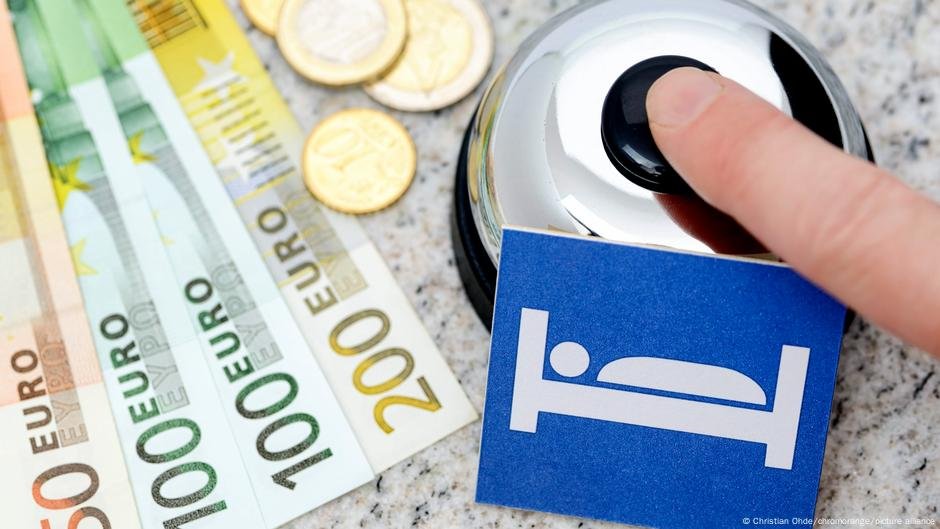
In 2016, the island introduced an accommodation tax. According to the hotel classification, visitors might have to pay as much as €4 ($4.16) daily.
As per the plan proposed by the Balearic Islands’ government, the levy might increase up to six euros.
The funds are utilized to support initiatives focused on rendering Majorca more environmentally friendly. Nonetheless, this levy has had minimal impact in discouraging visitors—the island continues to achieve new highs in tourism each year.
![]()
Tourism accommodation taxes have minimal impact as a deterrent for visitors.
“As stated by Jaume Rossello, an economics professor at the University of the Balearics in Palma de Mallorca, the impact of these taxes on tourism demand is minimal,” he notes.
In
Barcelona,
For instance, travelers presently incur costs as high as €7.50 each day, varying based on the hotel category. In Berlin, a levy of 7.5% on the cost of an overnight stay applies, whereas in Paris, guests could be faced with payments nearing €16 nightly for top-tier accommodations. Despite this, Rossello indicates that it remains uncertain when tourists would begin reconsidering their choices.
changing their destination
.
As stated by Professor Harald Zeiss from the Institute for Sustainable Tourism in Wernigerode, Germany, numerous locations utilize the income generated from tourist taxes to compensate
environmental impacts
“At the very least, this is how it’s portrayed when these taxes are being proposed and implemented,” he adds.
Nevertheless, the actual utilization of these funds differs significantly. They might be allocated towards fostering eco-friendly transportation options or merely bolstering municipal finances. “Therefore, it’s essential to clearly designate fund usage with transparency,” emphasizes Zeiss. “Yet, when resources are scarce, their intended application tends to be more vaguely outlined.”
Loathe to criticize tourism
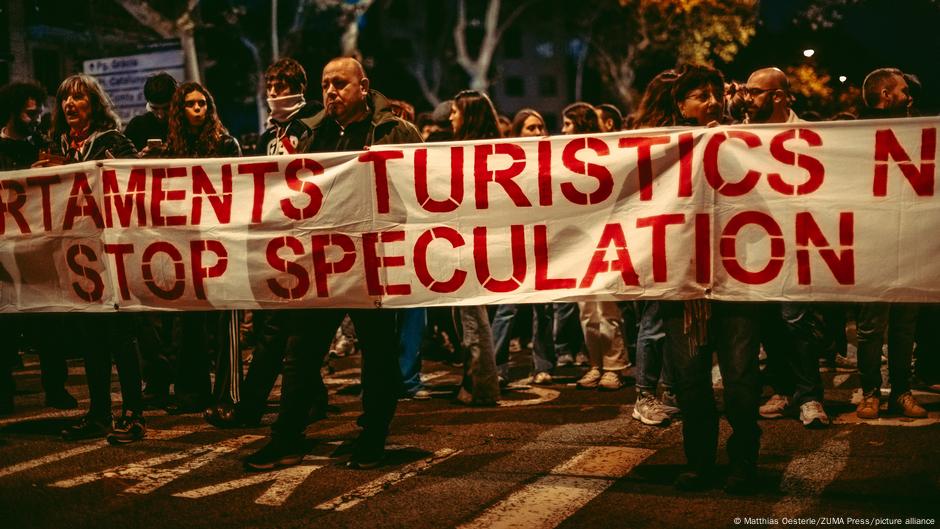
Across numerous locations, the earnings generated from tourism taxes often constitute a substantial part of a city’s overall tax-based revenue. For instance, in Barcelona, these taxes bring in approximately €100 million ($104 million) annually, positioning them as the third-highest contributor to local government funds, based on official figures provided by the municipality. Nevertheless, this destination continues to experience intense anti-tourism demonstrations driven by rising rental costs attributed largely to short-term vacation accommodations managed by firms such as
Airbnb
As a consequence, officials in Barcelona have decided to concentrate their efforts on funding initiatives aimed at benefiting the local population rather than solely supporting the tourism industry. Approximately €100 million ($104 million) obtained through taxes levied on tourists’ overnight stays will be invested in the Barcelona School Climate Plan. This initiative involves installing air conditioning systems in the city’s educational institutions.
The income generated from the overnight accommodation tax in Berlin, referred to as the City Tax, has not been designated for specific purposes yet. This amount, totaling nearly €90 million in 2024, presently gets incorporated into the overall municipal budget.
In Amsterdam, a tourist tax has been implemented since 1973. This levy stands at 12.5% of the cost of an overnight stay and is projected to yield approximately €260 million in income for 2025, as stated by a representative from the municipal government. Local authorities assert that this tax serves not only as a significant financial resource but also as a means to regulate the influx of tourists. Nonetheless, the impact of this tax in deterring visitors may be minimal.

Venice makes changes
Following considerable discussion, Venice, Italy finally implemented its highly anticipated tourism levy in 2024. During the busy season, day visitors were required to pay an entry fee of €5 on 29 designated high-traffic days. Critics from opposing political parties argued that this charge was insufficient to discourage travelers from flocking to the overburdened city. Consequently, Venice increased the number of charging days to 54. Those failing to make the payment at least four days prior to their trip must now cough up €10 upon arrival.
It remains unclear whether the additional euros might discourage visitors from exploring the declining metropolis.
Jaume Rosselló, a researcher at the University of the Balearic Islands, expresses skepticism. According to him, for many individuals, taking a holiday is not an extravagance but rather a fundamental necessity. He cites the case of Mallorca, noting that most visitors willingly cover the lodging tax with little complaint. “These kinds of taxes tend to be quite popular,” states Rosselló, “especially when they help enhance the environmental sustainability of a location.”
Nevertheless, numerous visitors still face constraints, which can be illustrated by Bhutan’s case. After increasing the tourism levy from $65 to $200 following years of stability at the lower rate, the country observed a decline in visitor numbers. Susanne Meier noted a distinct change: “The booking figures reflected this shift clearly; people were unwilling to cover such costs.”
The article was originally in German.
Author: Jonas Martiny


