oleh admin | Apr 20, 2025 | consumer electronics, exhibitions, news, technology, technology industry
Where Creativity Intersects with Innovation: A Festival of Culture, Tech, and Supportive Patrons
At the intersection of tradition and modernity, LG Electronics shines brightly as a leading supporter of African arts during this year’s esteemed +234Art Fair. Held amidst the dynamic atmosphere of Nigeria’s thriving contemporary art landscape, the yearly event transcends mere display; it becomes a cultural phenomenon, bringing together creators, connoisseurs, and trendsetters for a collective tribute to creativity, legacy, and advancement.
Globally recognized for its innovative designs and advanced tech solutions, LG’s participation in the +234Art Fair marks a significant dedication to the flourishing artistic resurgence throughout Africa. This collaboration transcends typical business support; it offers a meticulously crafted encounter aimed at transforming the way art is experienced, valued, and actualized.
Digitally Enhanced Canvases Bringing Art to Life
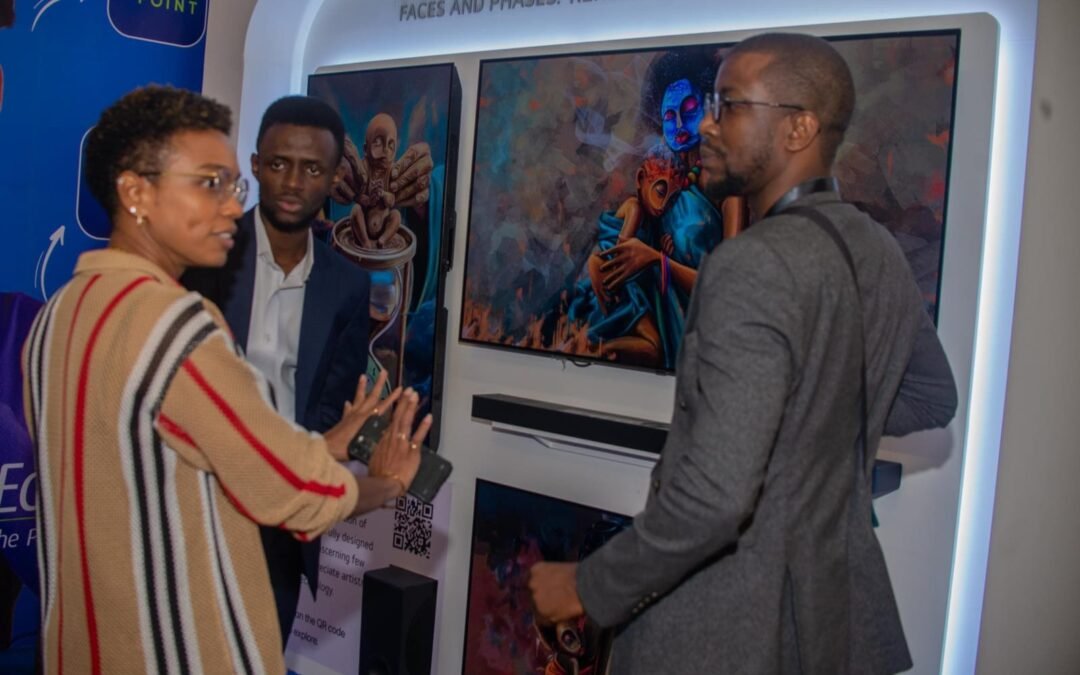
Television is no longer just a window to the world—it is becoming the canvas for it. LG’s next-generation OLED displays are transforming walls into living galleries, where every brushstroke and burst of color is rendered with breathtaking clarity. At the +234Art Fair, these immersive displays elevate the viewing experience, allowing attendees to step into the very soul of African artistry.
Our support for the +234Art Fair is a testament to our belief in the transformative power of art,” said Mr.
Paul Mba
, serving as the Corporate Marketing Manager at LG Electronics Nigeria. Art and technology possess a shared essence: innovation. Through their integration, we’re crafting engaging experiences that strengthen our bond with artistic expression and cultural narratives.
A Fresh Start for Innovative Sponsorship
LG’s partnership with the event aligns perfectly with this year’s theme, Championing Patronage in Nigerian Art, providing artists more than just a stage; they also receive the resources needed for success. By incorporating advanced display technologies along with various programs such as mentoring workshops and roundtable conversations, the project extends well past mere showcasing. Instead, it develops into a comprehensive environment that fosters growth.
Tola Akerele
The founder of the +234Art Fair and Soto Gallery highlighted the event’s purpose: “Our aim is to realign Nigerian artists in the international art scene, providing them with the assurance and visibility needed to establish enduring careers. The fair focuses on culture, heritage, and the economic aspects of artistic expression.”
Crafting the Tomorrow of African Art
At its core, the +234Art Fair is a initiative that questions conventional ideas about supporting artists in Africa. LG’s participation highlights the importance of collaboration in this contemporary landscape—where artists are recognized as well as assisted in transforming their interests into enduring monuments. Through their workshops and mentoring programs, the brand offers valuable knowledge on managing an artistic career, enabling creators to earn from their skills and adapt to the changing international art scene.
As African artwork attracts enthusiasts globally, LG merges artistic expression with technological advancement, outlining an encouraging outlook for tomorrow. An era where tech enhances imagination rather than dominating it.
Whether displayed on gallery walls or illuminated through digital screens, LG is transforming our interaction with African art—ensuring each viewing feels like an extraordinary work of art and every experience becomes a vibrant tribute to cultural heritage.
To learn more about LG TVs, please go to
https://www.lg.com/africa/tvs
#FeaturedPost

oleh admin | Apr 16, 2025 | business, tech companies, technology, technology industry, technology trends
Pham Tien Thanh, who serves as both the co-founder and CEO of STS Software Technology JSC (Saigon Technology), brings more than 18 years of expertise in software engineering and tech leadership. Under his guidance, the organization has expanded from a modest group into a globally acknowledged supplier of top-tier software services.
What steps did you take to expand your team from just a handful of individuals to more than 200 within a decade?
Saigon Technology
We began with just a few engineers and concentrated on obtaining long-term agreements with international clients who prioritized both cost-effectiveness and quality, along with strong communication. Our commitment to an open delivery approach using agile methods combined with industry-specific expertise allowed us to consistently provide substantial value.
As time passed, we established an increasingly strong reputation, especially within the United States and Europe. We focused on lucrative markets like California, New York, Germany, Australia, and various other parts of Europe—each additional client offering new avenues for growth. Currently, our workforce consists of more than 200 experts who deliver comprehensive software development services spanning several time zones. This strategy enabled us to integrate ourselves thoroughly into our clients’ operational frameworks, fostering robust collaborations that drive their success forward.
In what ways has your membership in the Forbes Technology Council aided you in your path as an entrepreneur?
The Forbes Technology Council serves as an excellent forum for sharing knowledge with other technology executives. Through contributions focusing on software developments, outsourcing methods, and the changing landscape of artificial intelligence, I have managed to enhance our organization’s international visibility and remain at the forefront of new technological advancements and thought leadership roles. Membership in this council has provided opportunities to glean valuable insights from colleagues, aiding me in continually refining my skills as a leader within this rapidly progressing sector. Articles published under my name attract around 40K readers each time, significantly supporting start-ups and small-to-medium enterprises navigating their digital transition paths.
|
|
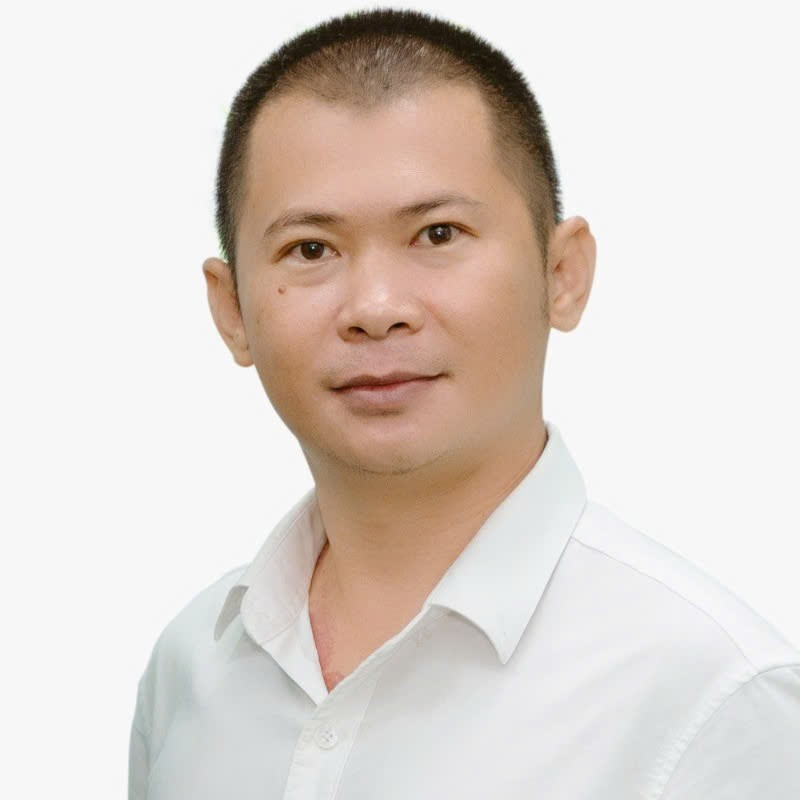
Pham Tien Thanh, co-founder and CEO at STS Software Technology JSC (Saigon Technology), shared this photo. The image was provided by Thanh.
|
How do you see AI being utilized within the small and medium-sized enterprise sector?
The potential of artificial intelligence for small and medium-sized enterprises (SMEs) is immense. Previously seen as a technology exclusive to large corporations, AI has become attainable for smaller businesses too. This powerful tool can optimize processes, improve customer interactions, predict revenue, and identify fraudulent activities. At Saigon Technology, our mission is to make AI readily available to SMEs. We’re developing bundled solutions designed for quicker implementation, affordability, and seamless integration. Our objective is to bring AI into mainstream use, turning it into an essential component for routine business choices.
How do you envision AI reshaping the healthcare sector?
The field of healthcare offers tremendous potential for advancements through artificial intelligence. In the last half-decade, our role has been central to developing a U.S.-based health information management platform, eventually purchased by an eminent venture builder in America. Through this initiative, we gained profound understanding into intricate issues like ensuring data compatibility across systems, safeguarding patient confidentiality, and enhancing clinical processes efficiency.
We see AI revolutionizing healthcare through predictive diagnostics, patient engagement, and operational efficiency. By automating administrative tasks, AI can reduce the burden on medical staff and assist with early disease detection. However, it’s essential to design these solutions with compliance and patient safety as top priorities.
In what ways is Saigon Technology contributing to the shaping of the future of financial services through artificial intelligence?
The evolution of Fintech is accelerating, with Artificial Intelligence playing a pivotal role in this change. Our team collaborates with clients to develop credit assessment tools, forecast consumer actions, and create anti-fraud mechanisms—all driven by AI technology. The pace here is swift: constructing, evaluating, and enhancing models occurs instantaneously, enabling us to offer advanced, expedient, and robust financial services. Through crafting expandable AI-driven answers, our objective is to assist fintech businesses remain prominent amidst growing competition.
What does the future hold for Saigon Technology?
Our priority is enhancing our research and development efforts in artificial intelligence and strengthening our proficiency. Concurrently, we aim to expand our footprint in major markets such as the United States, Australia, Germany, and northern parts of Europe. Despite being proud of our progress so far, our objective stays constant: providing top-tier software development services worldwide from Vietnam. This is only the start of an exciting voyage.
oleh admin | Apr 16, 2025 | artificial intelligence, automation, autos, technology, technology industry
The Turing AI chip developed by Xpeng has triple the computational capability compared to the Nvidia chip currently used in their electric vehicles.
The Chinese electric vehicle (EV) manufacturer Xpeng
has accelerated the development of its proprietary artificial intelligence (AI) chip for use in its semi-autonomous vehicles. The initial mass-produced models equipped with the Turing chip could be available as soon as this quarter.
The chip, reportedly outperforming Nvidia’s Drive Orin X, will be utilized across all of its manufacturing models as the electric vehicle company showcased its advanced technology solutions, according to CEO He Xiaopeng during an interview. Additionally, this chip might also drive the development of flying vehicles and robots by associated enterprises, he mentioned further.
“We aim to have our chips featured in our vehicles globally in the coming years,” he stated to the Post from Hong Kong. “Our expectation is that traffic regulations in Hong Kong and various international markets will permit our autos equipped with autonomous driving technology to hit the roads possibly as early as next year.” He refrained from specifying which electric vehicle model would initially incorporate their proprietary chip.
Are you curious about the most significant issues and global trends? Find out here with
SCMP Knowledge
Our updated platform features handpicked content including explainers, FAQs, analyses, and infographics, all provided by our acclaimed team.
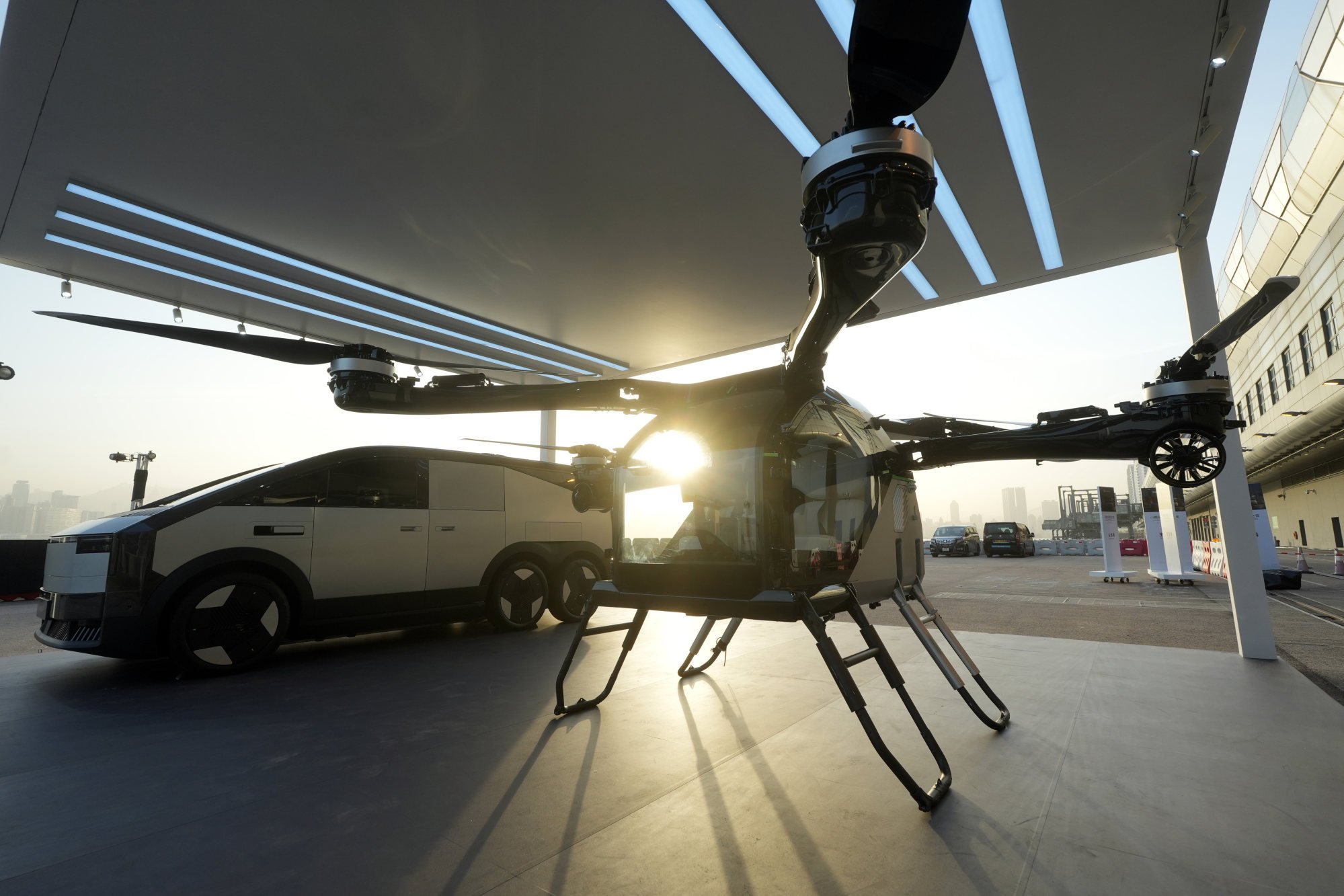
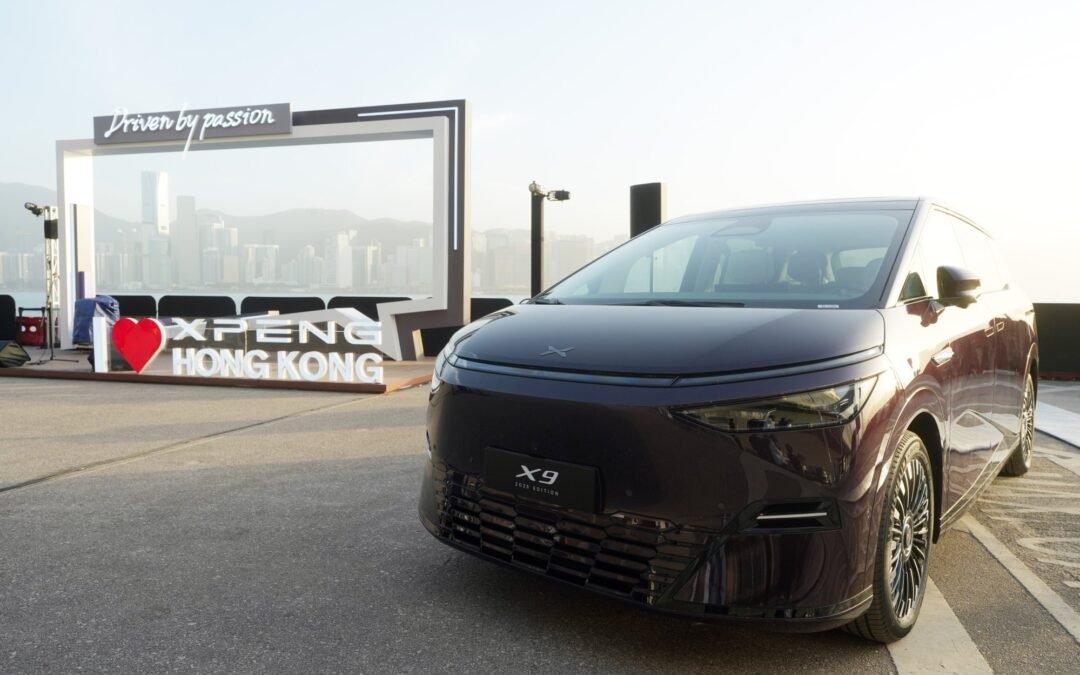
The individual, who is also the founder of the company, made these comments prior to Xpeng’s Global Brand Night event in Hong Kong on Tuesday. During this event, which showcases the electric vehicle manufacturer’s newest offerings such as drones and an autonomous driving platform, various products and technologies will be presented.
The realm of intelligence has emerged as the latest frontier where automotive companies vie against each other in China’s fiercely competitive market. According to the CEO in August, XPeng’s Turing chip, engineered for Level 4 (L4) self-driving features, boasts triple the computational prowess compared to NVIDIA’s Drive Orin X currently utilized in their intelligent cars.
The chip, which serves as the brain of Xpeng’s AI platform called Canghai, represents the Guangzhou-based automaker’s ambition in creating a comprehensive, full-stack solution.
indigenous autonomous driving technology
Since its founding in 2014, for mass-producing electric vehicles in mainland China.
Currently, Xpeng’s models like the P7 sedan and G6 SUV can autonomously drive on the highways and roads of Mainland China, yet drivers must remain vigilant with their hands on the steering wheel at all times. These vehicles fall under the semi-autonomous category and are classified as L2+ systems.
Level 3 is seen as a “minimal intervention” system, yet it still demands that drivers remain vigilant and prepared to intervene at any time, whereas Level 4 would permit drivers to divert their attention from the road within specific zones, adhering to guidelines established by SAE International based in the United States.
Last month, Xpeng announced plans to trial its artificial intelligence-driven autonomous driving technology in Hong Kong, marking their initial move toward global expansion with their partially automated cars.
David Zhang, the general secretary of the Shanghai-based International Intelligent Vehicle Engineering Association, stated, “Chinese automakers such as XPeng have shown they outperform Tesla in terms of autonomous driving features when navigating congested streets on the mainland. However, these technologies are primarily designed for local use and aren’t yet as globally applicable as Tesla’s Full Self-Driving (FSD) system.”
Nevertheless, Tesla’s FSD software, which was made available in Mainland China for 64,000 yuan (US$8,776) in February, reportedly lags behind Xpeng’s driver-assistance technology when it comes to interpreting lane markers and detecting traffic signals, as stated by Zhang.
Last year, Xpeng extended the availability of its initial self-driving technology, called X NGP or Navigation Guided Pilot, to every city on the Chinese mainland. This move aimed to draw additional customers before Tesla launched its Full Self-Driving (FSD) software in China. Consequently, Xpeng was the first company to provide a semiautonomous driving system across the entire country.
AeroHT, affiliated with Xpeng, is also one of the top companies developing flying vehicles on the Chinese mainland.
Tesla leads the premium electric vehicle market in mainland China. Xpeng,
Shanghai-based Nio
and Li Auto, headquartered in Beijing, is seen as one of China’s top answers to the dominant player in the market.
More Articles from SCMP
Bali in Indonesia sounds the warning about an increase in fake marriages aimed at bypassing legal restrictions.
4 ways to truly ‘complete’ your ensemble with elegant neckwear from Hermès, Charvet, Paul Smith, and Ferragamo can inject some flair into any sophisticated man’s suit as he navigates through city life.
Dutch exports to China have declined sharply as ASML, a leading manufacturer of semiconductor equipment, works through its backlog following U.S. restrictions.
Ex-aide of Taiwan’s security boss removed from DPP due to espionage claims
The article initially appeared on the South China Morning Post (www.scmp.com), which is the premier source for news coverage of China and Asia.
Copyright © 2025. South ChinaMorning Post Publishers Ltd. All rights reserved.

oleh admin | Apr 16, 2025 | africa, business, technology, technology companies, technology industry
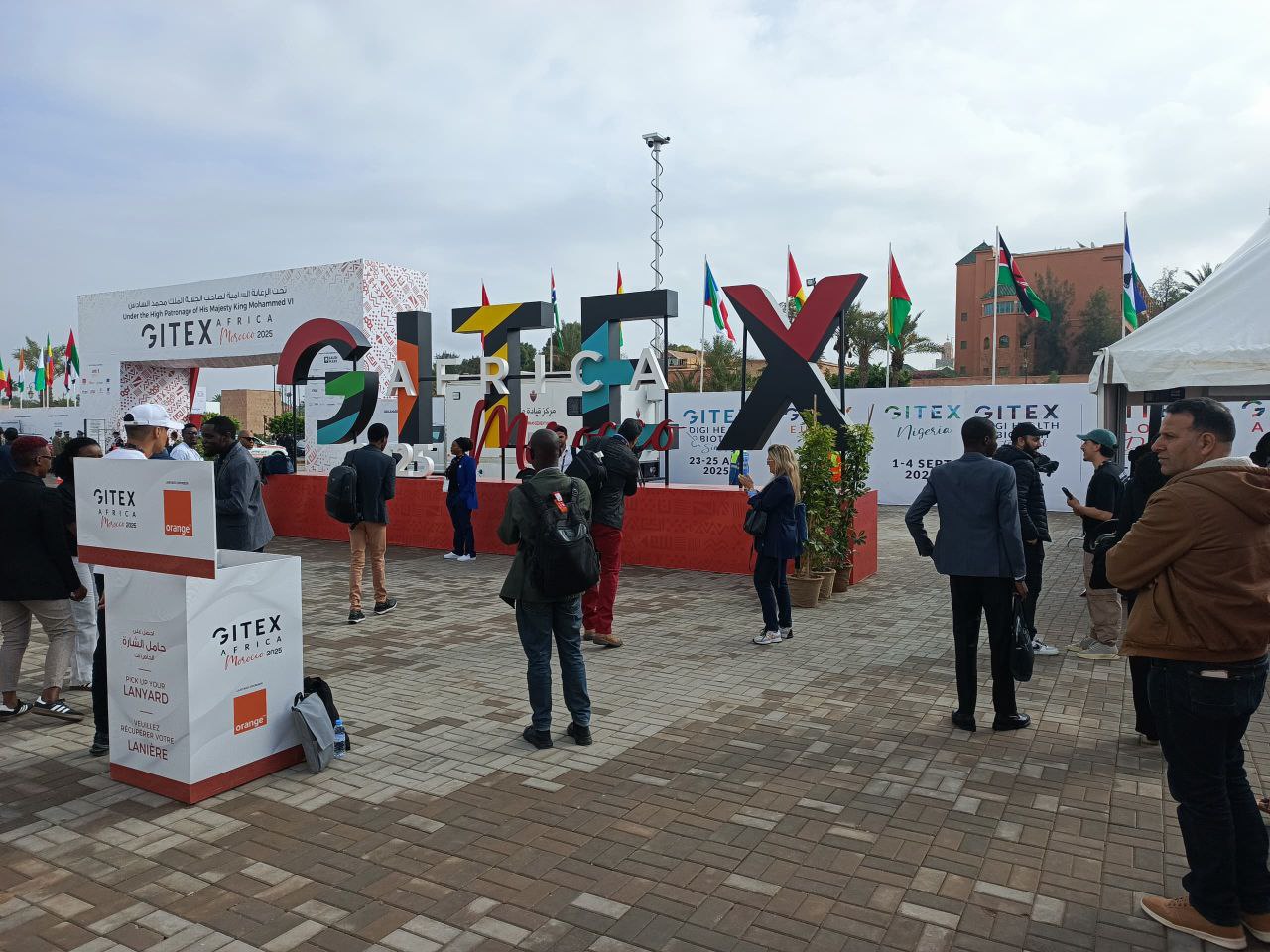
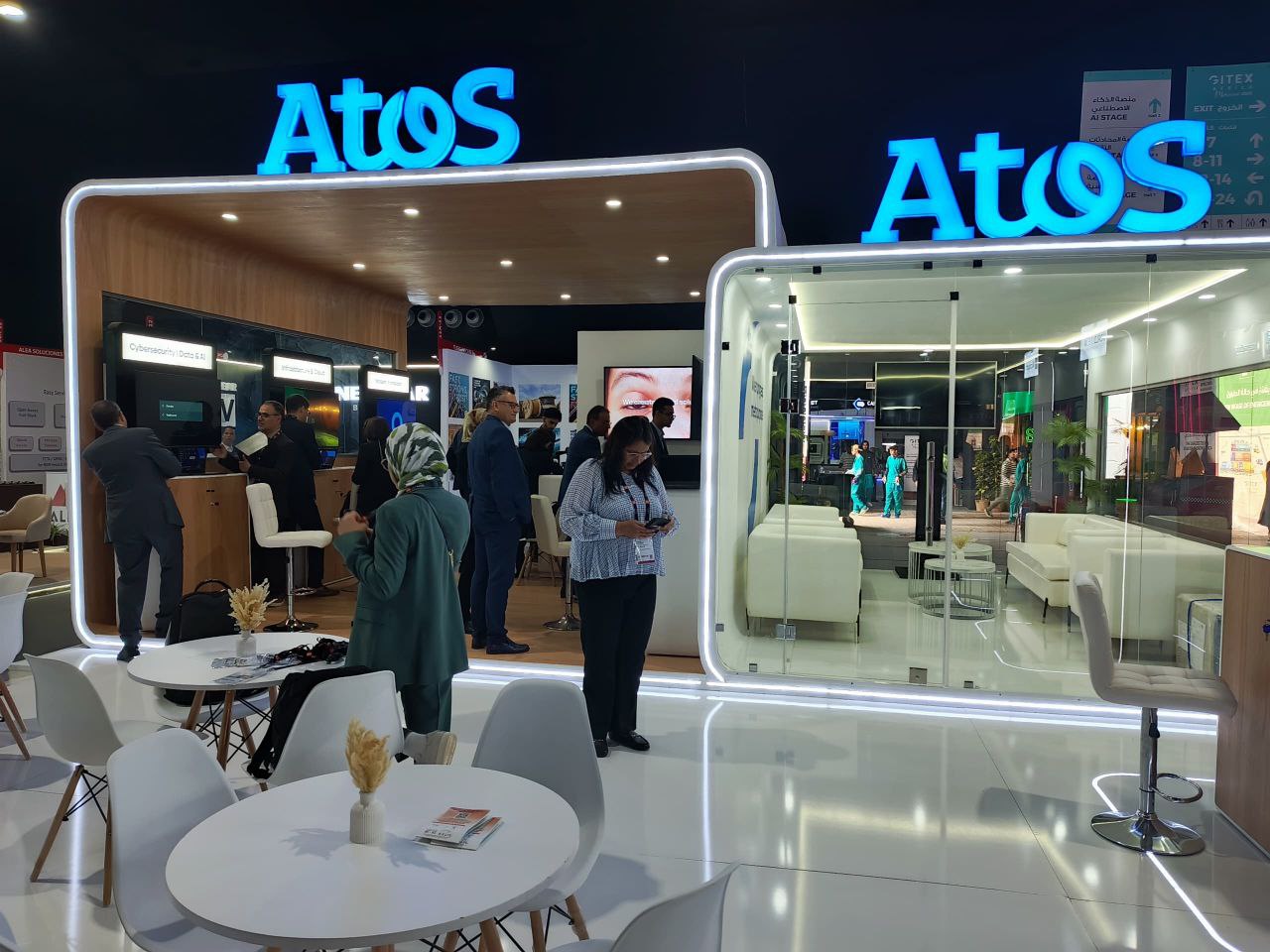
On April 14, 2025, Addis Ababa — The third installment of GITEX Africa kicked off today in Marrakesh, Morocco. This event is expected to highlight Africa’s potential in innovation, artificial intelligence, and digital leadership.
The highly anticipated event is scheduled to occur across three successive days, running from April 14 through April 17, 2025.
This event is recognized as the biggest and most significant assembly for technology and startup ventures on the continent. It highlights innovations and encourages cooperation at an unparalleled level, as reported by ENA.
This exceptional assembly will bring together an outstanding collection of attendees, including 1,450 exhibitors, 740 startup companies, and upwards of 45,000 guests hailing from more than 130 countries.
GITEX Africa showcases leading industry experts, cutting-edge technologies, fintech solutions, e-commerce platforms, cybersecurity measures, and in-depth talks on AI among other topics.
This year’s edition will place a strong emphasis on strategic sectors that are pivotal to Africa’s development and digital transformation. These include Education Technology (EdTech), Agricultural Technology (AgriTech), Healthcare Technology (HealthTech), and Sports Technology (SportsTech).
Through highlighting these sectors, the event emphasizes Africa’s increasing significance as a center for innovation and technological progress globally. GITEX Africa aims to position the continent as a leading global digital focal point. This gathering acts as an exceptional forum for sharing insights, promoting cooperation, and shaping the digital future.
Given its extensive scope and proactive methodology, the exhibition aims to spur the development of an interconnected and progressive digital Africa, thereby opening up revolutionary possibilities across various sectors.
Significantly, global technology entities will be making their first appearance at the third iteration of GITE, aiming to capitalize on expansion prospects over the course of three days. They intend to establish fresh collaborations and display their most recent technological advancements.
As mentioned, these companies encompass major players such as Cisco, Ericsson, Nokia, China Mobile, and Salesforce.
Provided by Syndigate Media Inc. (
Syndigate.info
).

oleh admin | Mar 27, 2025 | artificial intelligence, machine learning, technology, technology companies, technology industry
As I reflected on the past year marked by the devastating Israel-Hamas conflict and, more recently, China’s rapid advancements in artificial intelligence (AI)—highlighted by a lengthy CNBC video posted on YouTube titled “How China’s new AI model DeepSeek is challenging U.S. supremacy” on January 25—I also noted an article from The Economist dated January 23 called “Chinese AI is closing the gap, putting pressure on former President Trump.” This topic has sparked extensive discussions about the traditional high-capital investment approach seen in Silicon Valley versus the cost-effective strategy employed by models like DeepSeek.
This debate has driven significant growth within the technology sectors of both mainland China and Hong Kong stock exchanges. However, it simultaneously triggered corrections or pauses among AI-related equities traded in the United States, impacting not just those specific companies but spreading across wider segments of the American financial markets as well.
Moreover, one cannot overlook Malcolm Gladwell’s influential piece originally featured in the New Yorker on May 11, 2009, later developed into his book “David vs. Goliath: Underdogs, Misfits, and the Art of Battling Giants.” I strongly suggest reading either version; they offer profound insights worth considering.
The most striking example of lopsided triumph in warfare during my time would be Vietnam’s remarkable defeat of the U.S., following their earlier victories against France and lesser-known Japan. The latter withdrew plans to occupy Vietnam just as the Pacific part of World War II was concluding.
When one party is significantly stronger or weaker compared to the other, both sides typically adopt distinct tactics or strategies to secure victory or prevent loss. This often involves the dominant entity leveraging extensive resources to overpower competitors, whereas the less potent side employs alternative methods without directly challenging the superior force head-on. A case in point would be how Vietnam countered French and American forces during conflicts by adhering to their own strategic approaches rather than those dictated by these nations due to their substantial military superiority. Similarly, as mentioned in Malcolm Gladwell’s essay, an underdog girls’ basketball squad managed to consistently outperform their formidable rivals through relentless application of a full-court press throughout games.
The recent developments in artificial intelligence are largely centered around the competition between the United States and China, which stand out as the leading economic powers and hubs of technological advancement. Both nations have adopted distinct strategies towards harnessing AI opportunities.
In Western markets, prominent technology firms such as Microsoft, Google, and Meta along with several others are developing exclusive AI systems and products. For instance, Microsoft features an extensive segment dedicated to its AI-driven assistant named Copilot on their website. The platform offers individual access via Copilot alongside organizational use through 365 Copilot. Customization options include utilizing Copilot Studio or constructing personalized applications using Azure AI Foundry’s resources, services, or solutions. Similarly, Google boasts technologies like DeepMind coupled with comprehensive training tools. Meanwhile, Meta operates under its banner known as Meta AI. Notably, Google faces significant pressure since traditional search functionalities could be overshadowed by emerging platforms similar to ChatGPT unless bolstered by advanced AI capabilities; this concern was highlighted in Bloomberg’s podcast released on March 24th discussing these issues.
In China, developments extend beyond DeepSeek. If possible, check the Bloomberg piece from March 25 titled “After DeepSeek’s Success, China Massively Expands Global Reach With AI Models.” You might also find value in reading a synopsis and key points provided by Bloomberg AI for insights. According to the report, over the past couple of weeks alone, leading entities have unveiled “at least ten significant new product launches or upgrades.” It seems neither prominent U.S. nor Chinese technology firms became reactive to AI suddenly; instead, they foresaw its significance and had been proactive—often participating in ongoing AI projects—to develop exclusive AI technologies and offerings.
Recently, several significant artificial intelligence projects have been unveiled by prominent Chinese tech companies. As mentioned in a Bloomberg report: Baidu Inc. launched the Ernie X1 to rival DeepSeek’s R1. In response, Alibaba Group Holding Ltd. introduced new AI entities along with an enhanced reasoning model. Within just one week, Tencent Holdings Ltd. presented their strategic plan for AI development alongside a counter-proposal to the R1. Additionally, Ant Group Co. disclosed research indicating that domestic semiconductor improvements could reduce expenses by 20%. Meanwhile, DeepSeek advanced its V3 version. Interestingly, even Meituan, renowned globally as the largest food delivery platform, declared investments amounting to billions of dollars into AI technology.
The primary distinction between American and Chinese AI models lies in their approach. Leading Western companies develop advanced and exclusive technologies. In contrast, China tends toward open-source solutions that are frequently offered for free or at minimal costs, aiding these models in capturing more of the market and establishing new benchmarks and standards.
This situation has compelled American and Western strategies to adjust their models once again. As stated in the same piece—“For instance, OpenAI is currently attempting to find a delicate equilibrium. Following DeepSeek’s successes using an open-source method, the creator of ChatGPT mentioned they’re considering sharing certain technologies. Simultaneously, OpenAI continues to contemplate significantly increasing prices for their advanced offerings. Should this cost-effective blueprint set forth by DeepSeek be imitated widely, it could potentially diminish profit margins for companies like Nvidia, which focuses on high-priced AI processors,” explained Amr Awadallah, CEO and founder of Vectara Inc.
In recent years, Chinese firms have edged out international competitors across various sectors such as electric vehicles and solar panels by producing more efficiently and offering lower prices. This trend appears to be repeating itself in the field of artificial intelligence.
It seems similar to what’s going on with electric vehicles from Tesla and BYD.

oleh admin | Mar 26, 2025 | artificial intelligence, popular culture, studio ghibli, technology, technology industry
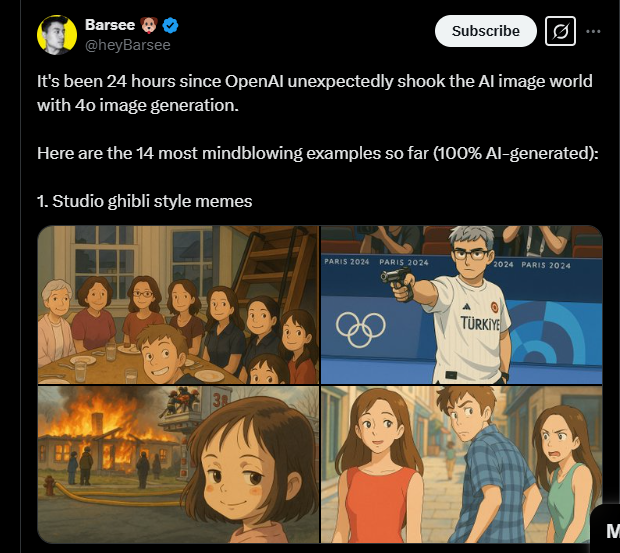
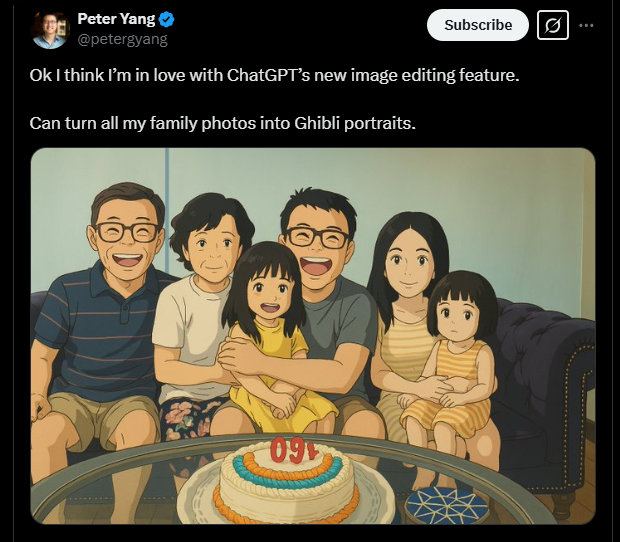
The latest version of OpenAI’s image generation technology has resulted in a flood of users sharing images on social media that have been transformed in the style of Studio Ghibli, the legendary Japanese animation studio.
On Tuesday, OpenAI
launched
What they call their “most advanced image generator yet,” integrated with GPT-40, boasts being a “native multiformat model capable of producing exact, accurate, photo-realistic outcomes.” It appears this image creator excels particularly well at recreating the distinctive art style of Studio Ghibli, known for acclaimed movies like “Spirited Away” and “MyNeighbor Totoro.”
Sam Altman, the CEO of OpenAI, commented on the trending phenomenon recently.
post
On X Wednesday — suggesting he’s experienced something akin to being transformed into a character from Studio Ghibli. Altman stated, “> Be me / > Work tirelessly for a decade attempting to contribute to the development of superintelligence aimed at curing cancer or anything else / > For the initial 7.5 years, hardly anyone pays attention / > Then over the next 2.5 years, everybody starts despising you for every little thing / > One morning, I woke up to find hundreds of messages saying, ‘Look, I turned you into a twink in Ghibli style hahaha.'”
Altman likewise updated his profile photo on X to an illustration styled like those from Ghibli movies.

Representatives for Studio Ghibli in North America did not promptly reply to requests for comments.
Nevertheless, Hayao Miyazaki, one of the co-founders of Studio Ghibli, has previously
voiced significant discontent with AI-created animation
In a 2016 gathering when he viewed an AI animation demonstration, Miyazaki expressed his thoughts saying, “I find this absolutely repulsive. Should anyone desire to create disturbing content, they are welcome to proceed with their efforts. However, I have zero intention of integrating such technology within my creations.” Additionally, he stated, “It deeply offends me; it feels like a grave disrespect towards life itself.”
On social media platforms, numerous instances of Ghibli-style visuals created by OpenAI’s latest image-generating tool have been showcased by users.

More from SANGGRALOKA
-
Ben Stiller, Mark Ruffalo, and Over 400 Tinseltown Figures Ask Trump to Prevent AI Firms From ‘Exploiting’ Copyrighted Material
-
‘Paddington in Peru’ Writers Reunite for AI Animated Feature ‘Critterz’ From Vertigo Films, Native Foreign (EXCLUSIVE)