oleh admin | Mar 24, 2025 | battery electric vehicles, electric cars, electric power, sustainability, technology trends
The electric vehicle (EV) trend is becoming more robust in the Philippines, fueled by increasing gasoline prices, governmental incentives, and a stronger emphasis on environmental responsibility.
As more Filipinos contemplate transitioning to electric vehicles, a significant worry persists: charging infrastructure. Is this network growing rapidly enough to meet rising demands, or does it continue to lag behind?
The drive towards adopting electric vehicles
The Philippine government has made notable strides toward encouraging the use of electric vehicles. With the passage of the Electric Vehicle Industry Development Act (EVIDIA) in 2022, it requires that at minimum 5% of the vehicle fleet owned by both governmental entities and commercial enterprises should consist of electric models. Additional motivations like reduced taxes and exemption from certain driving restrictions serve to attract more Filipinos towards purchasing EVs.
As a result, car manufacturers are launching additional electric vehicle (EV) models, with brands such as BYD, Tesla, Nissan, and Hyundai aggressively promoting their offerings in the marketplace. Although interest in EVs is increasing, numerous prospective purchasers hold back because of worries regarding accessible charging options.
The current situation with EV charging in the Philippines
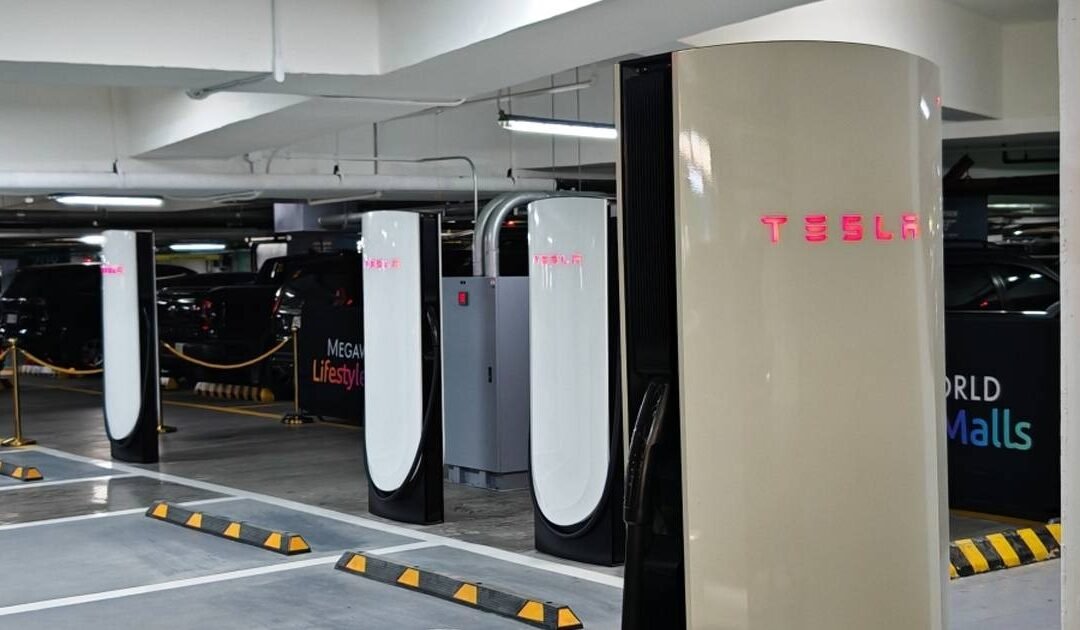
By 2024, approximately 300 electric vehicle charging stations will be scattered throughout the nation, primarily clustered in Metro Manila, Cebu, and Davao. In contrast to the numerous petrol stations spread out across the country, this figure remains significantly insufficient to facilitate extensive adoption of EVs.
Public charging: Scarce and bothersome
Many public chargers can be located at places like malls, hotels, and certain gasoline stations. Although large retail hubs including SM Malls, Ayala Malls, and Robinsons have set up charging points, most of them offer only slower options needing multiple hours for complete recharge. Rapid chargers that can top off an electric vehicle within one hour continue to be rare.
Several fuel providers like Shell and Petron have started incorporating EV chargers into their outlets; however, the deployment process remains sluggish. The DOE has suggested placing charging points at intervals not exceeding 25 kilometers across principal expressways, yet this initiative hasn’t come close to materializing as planned.
In-home charging: Handy yet not universal.
Many electric vehicle (EV) owners find home charging to be the most convenient choice. Usually, a standard wall charger can completely replenish an EV’s battery within one night, which works well for everyday needs. Nonetheless, this arrangement isn’t feasible for individuals residing in condominiums or houses lacking private parking spots, thereby restricting access to EVs for numerous city residents.
Distant journey: A significant obstacle
The primary difficulty faced by electric vehicle (EV) owners in the Philippines revolves around traveling long distances. Although these vehicles operate efficiently within urban areas, embarking on journeys to provincial regions stays challenging because of insufficient charging stations along expressways and main highways.
Even though several charging stations have been set up along the southern and northern toll ways, the present count remains insufficient to make lengthy trips comfortable. Before a comprehensive quick-charging infrastructure is put in place, electric vehicle owners must meticulously map out their journeys to prevent depleting power en route.
What needs to change?
To ensure that electric vehicle (EV) charging facilities meet the growing needs, certain essential upgrades should be implemented. It’s crucial to expand high-speed charging networks particularly alongside major roads and rural pathways, which would facilitate longer journeys for EVs. Support from the authorities is necessary; this includes motivating companies to set up these stations through benefits as well as offering lower rates for power used in EV charging points to attract greater investments into the infrastructure development.
Cooperation between governmental bodies and private enterprises is crucial as well. Car manufacturers, power firms, and the administration should collaborate to hasten the installation of charging stations, following examples set successfully elsewhere around the world. Moreover, increasing public understanding poses another hurdle. Numerous Filipinos remain reluctant to make the shift to EVs because of misunderstandings regarding charge points and battery endurance. Implementing further educational initiatives might assist in clarifying these issues and persuade more buyers to look into electric cars.
The path forward for electric vehicle charging
The expansion of the electric vehicle (EV) charging network in the Philippines is underway, yet it isn’t keeping up with the rising enthusiasm for electric transportation. Even though advancements have been achieved, they need to happen more rapidly to facilitate an effortless shift towards EV use. For the nation to wholly adopt these vehicles, their refueling infrastructure should be just as convenient and dependable as conventional gas stations. The advancement toward eco-friendly travel in the Philippines hinges upon how swiftly the country embraces this modern age of electricity-based transport.
oleh admin | Mar 24, 2025 | business, innovation, news, technology, technology trends
The government firmly endorses the potential of research and innovation as key drivers of economic progress and sustainable development. It continues to prioritize the creation of conditions conducive to nurturing innovations and advancing technologies, according to Sam George Nartey, who serves as the minister for communications, digital technology, and innovations.
Speaking at the second edition of the Africa Research and Innovation Commercialization Summit (ARICS 2025) in Accra, he indicated that his ministry will spearhead the transformation of innovation into economic opportunities that will drive job creation, youth empowerment and sustainable development.
The minister likewise recognized the far-reaching effects of innovation and the commercialization of research throughout different parts of the economy. This spans from education, with educators crafting innovative teaching methods, to comparable technological advancements in critical fields such as agriculture and healthcare systems.
“ARICS 2025 stands as an affirmation of the collective dedication from both governmental bodies and private enterprises to harness research and innovation for catalyzing industrial transformation across various economic landscapes,” stated in remarks delivered on his behalf during the event.
He stated, “The significant potential of local innovators and researchers remains untapped because of insufficient coordinated initiatives; the government acknowledges this issue and will collaborate with all parties involved to address this matter.”
Mr. Nartey praised the Heritors Lab along with its financial supporter, the RISA Fund, and other participants in the ecosystem for their consistent efforts towards promoting research commercialization both in Ghana and throughout Africa.
ARICS stands as a premier event bringing together researchers, creators, industry leaders, and government officials to explore actionable strategies and pathways aimed at facilitating the transition of research and innovations into marketable products for enhanced economic benefits.
The theme for this year’s event was “Moving from Labs to Market: Enhancing Industry Adoption of Research and Innovation Outcomes.”
The Chief Executive Officer of the Association of Ghana Industries (AGI), Seth Twum Akwaboah, stressed the importance of linking research, industry, and infrastructure to attain common developmental objectives.
Africa generates substantial research, yet converting these advancements into commercially viable products continues to pose challenges.
“A robust and continuous partnership between research organizations and industry leaders is crucial for advancing innovation and bringing products to market,” he stated.
Additionally, to promote sustainable economic development, Mr. Akwaboah emphasized the importance of investing sustainably in technological infrastructure and implementing policies that encourage industrialization and commercialization.
On his part, the vice president of Heritors Labs, Kofi Ocloo, bemoaned the high rate of African discoveries that remain hidden in research labs and called for urgent steps to entrench commercialization of innovation and research outcomes across the continent.
“Our domestic industries and business owners seek answers overseas when locally developed solutions stay confined within our laboratories. Given our stakeholder status, we should guarantee that research efforts are converted into innovations capable of transforming lives throughout the continent,” he stated.
He stated, “This summit’s theme compels governments, leading industrial figures, and youthful pioneers to close the divide between research and industry; our priority should be making innovation the key catalyst for economic advancement.”
Gameli Adzaho, who serves as the country technical lead for the RISA Fund, emphasized that ARICS 2025 provides an ideal stage for expanding the reach of research commercialization. This platform convenes key players within the ecosystem to pinpoint strategies that will drive innovations and research findings into wider market spaces, encouraging greater uptake.
He mentioned that the fund will keep promoting collaborations aimed at boosting innovation and enhancing the impact of research. He also urged for initiatives that involve rural populations, address the gender disparity, and support young researchers and innovators.
Provided by Syndigate Media Inc. (
Syndigate.info
).
oleh admin | Mar 24, 2025 | business, machine learning, technology, technology companies, technology trends
VMPL
Gurgaon (Haryana), India, March 24: A new
Capterra study
highlights major trends likely to substantially affect SMB recruiters, talent scouts, human resources experts, and hiring authorities in the upcoming year. The research reveals a intricate connection between Indian job applicants and artificial intelligence within the recruitment process.
AI Adoption in Hiring
Although an overwhelming majority (87%) of Indian job seekers indicate
positive feelings
Regarding employers utilizing AI for recruiting, assessing, and prioritizing applicants, an impressive 65%, which represents the largest proportion across 12 investigated nations, might turn down a position if the hiring procedure excessively relied on automated systems. This underscores the essential requirement for equilibrium in integrating artificial intelligence technologies.
The research goes on to pinpoint particular domains where job seekers feel most at ease with AI incorporation, such as guaranteeing equitable chances (47%), conducting skill evaluations (49%), and assessing and ranking candidates (50%).
The Rise of AI-Enhanced
Job Applications
: A New Challenge
The growth of artificial intelligence in hiring extends beyond just companies; job applicants are also utilizing AI tools, as evidenced by 51% of participants who acknowledged employing these technologies during their present job hunt. Nevertheless, this development poses a fresh hurdle for recruiters. Astonishingly, 96% of Indian candidates engaging with AI in their job searches admitted to overstating or fabricating aspects of their abilities in application materials such as CVs, cover letters, online forms, or competency assessments.
Regarding the survey findings, David Jani, who analyzed the data, commented: “Artificial intelligence seems to be becoming a standard component in job searches for both candidates and recruitment teams. Nevertheless, how AI is utilized and its role within the hiring process could lead to issues if it relies heavily on automated skill assessments or personal attributes. Therefore, it’s crucial to strike a better balance—leveraging advancements in AI technology while also valuing the importance of human judgment in selecting new employees.”
Explore our catalog for HR management software options.
To learn more, kindly visit capterra.in
About Capterra
Capterra stands as the top B2B marketplace where organizations can discover the ideal software. Their platform links purchasers with more than 2 million authenticated user reviews covering products across 1,000 different categories. It also provides practical, unbiased information and guidance to assist these businesses in selecting the most suitable solution tailored to their particular requirements.
Press Contact
Palash Bhattacharjee,
[email protected]
(ADVERTORIAL DISCLOSURE: The aforementioned press release has been supplied by
VMPL
ANI shall not bear any responsibility whatsoever for the content thereof.
Provided by Syndigate Media Inc. (
Syndigate.info
).

oleh admin | Mar 24, 2025 | business, data centers, technology, technology industry, technology trends
New Delhi [India], March 24 (ANI): India’s Generative Artificial Intelligence (GAI)
AI
The sector is anticipated to experience significant expansion over the coming half-decade, leading to an increased requirement for data centers (DC), according to a report by ANAROCK.
The report indicated that according to industry estimations, the market size for GenZ technologies is substantial.
AI
In India, it is forecasted to expand from $1.1 billion in 2025 to $6.4 billion in 2030, with a compound annual growth rate (CAGR) of 42 percent.
It was stated that “Data centers will have a significant part during this digital transformation due to the rising demand for computational power, storage, and more.”
data management
capabilities”.
As
AI
As cloud-dependent applications continue to advance, data center operators are reassessing their strategies to meet the heightened requirements of infrastructure. There is an increasing need for greater computational power, enhanced storage solutions, and improved efficiency.
data management
is driving the growth of data centers nationwide.
Additionally, as Gen
AI
Shifts toward real-time applications will make low-latency processing essential. Consequently, this trend will result in an increase of edge data centers designed to bring computation nearer to end-users and minimize latency issues.
There will be substantial growth in the requirement for edge data centers, particularly in secondary-tier cities like Jaipur, Ahmedabad, Visakhapatnam, Kochi, Bhubaneswar, Lucknow, and Patna. Such installations will facilitate processing data nearer to end-users, thereby enhancing both velocity and effectiveness.
AI
-driven applications.
As the data center sector expands rapidly, there is significant emphasis on sustainability and energy efficiency. Data center operators are giving priority to renewable energy resources and implementing energy-saving technologies to address the increasing power needs of these centers. This move toward eco-friendly data centers supports India’s wider environmental objectives and energy regulations.
In the past five years, India’s data center industry has experienced significant expansion, transforming from a minor niche into a key area of investment. In the last ten years, investments from private equity firms, joint ventures, and mergers totaling more than $6.5 billion have driven this development. Additionally, the classification of data centers as infrastructure has simplified funding options for their projects.
As global and private investors maintain their enthusiasm, India’s data center sector is poised for substantial growth in the upcoming years, significantly contributing to the nation’s digital evolution. (ANI)
Provided by SyndiGate Media Inc.
Syndigate.info
).
oleh admin | Mar 23, 2025 | consumer electronics, news, samsung galaxy phones, software and applications, technology trends
Lifehack My ID
– Samsung pada akhirnya telah menetapkan tanggal peluncuran secara resmi bagi antarmukanya yang baru, yaitu One UI 7 dalam versi stabil, khusus untuk perangkat Galaxy mereka.
Samsung akan merilis versi stabil dari One UI 7 dengan basis Android 15 mulai tanggal 7 April 2025. Sebelumnya, One UI 7 hanya tersedia secara eksklusif untuk serangkaian perangkat Samsung S25 yang diluncurkan secara global pada Januari 2025.
Di fase peluncuran pertama, OneUI 7 baru akan hadir di delapan perangkat utama dari seri Samsung Galaxy yang dirilis pada tahun 2024 dan 2025. Daftar lengkapnya sebagai berikut:
-
Galaxy Z Fold 6
-
Galaxy Z Flip 6
-
Galaxy S23
-
Galaxy S23 Plus
-
Galaxy S23 Ultra
-
Galaxy A55
-
Galaxy Tab S10 Plus
-
Galaxy Tab S10 Ultra
Berikutnya, ada 5 ponsel Samsung Galaxy yang dapat mendownload pembaruan One UI 7 versi resmi pertama kali pada tanggal 7 April yaitu:
-
Galaxy S24
-
Galaxy S24+
-
Galaxy S24 Ultra
-
Galaxy Z Flip 6
-
Galaxy Z Fold 6
Samsung menyebutkan bahwa One UI 7 akan diroll out secara bertahap ke sejumlah besar ponsel pintar dan tablet Galaxy dalam beberapa pekan mendatang.
Berikut adalah 11 perangkat Galaxy yang bakal bergantian memperoleh pembaruan OneUI 7 dalam versi stabil dengan dasar Android 15:
-
Galaxy S23
-
Galaxy S23+
-
Galaxy S23 Ultra
-
Galaxy S24 FE
-
Galaxy Z Flip 5
-
Galaxy Z Fold 5
-
Galaxy Tab S9
-
Galaxy Tab S9+
-
Galaxy Tab S9 Ultra
-
Galaxy Tab S10+
-
Galaxy Tab S10 Ultra
Maka total ada 24 perangkat Samsung Galaxy yang pertama kali mendapatkan pembaruan One UI 7.0.
Samsung mengungkapkan bahwa ketersedian pembaruan ke One UI 7 versi stabil bisa bervariasi tergantung lokasinya. Oleh karena itu, para pengguna ponsel Samsung di Indonesia diminta untuk memeriksanya secara berkala dengan masuk ke dalam menu “Pengaturan” > “Pembaruan Perangkat Lunak” > “Unduh dan Pasang”.
Setelah menerima pembaruan tersebut, pengguna dapat mendownload dan memasang paket pembaharuan untuk One UI 7. Melakukan instalasi ini berarti sistem operasi pada ponsel Anda secara otomatis ditingkatkan atau diupgrade menjadi versi Android 15.
Fungsi terbaru dari One UI 7
One UI 7 menawarkan tampilan yang lebih halus. Karena itu, perbaikan signifikan yang diperkenalkan Samsung dalam One UI 7 fokus pada sektor animasi serta meningkatkan kecepatan navigasinya.
Versi penerus dari OneUI 6.1 ini memiliki efek animasi yang menjadi lebih halus. Berbagai ikon pada panel, termasuk Quick Panel dan notifikasi, telah dirancang kembali untuk tampilan yang semakin mempesona.
Antarmuka One UI 7 menghadirkan panel notifikasi terbaru yang memiliki bentuk bulat seperti pil. Panel ini juga semakin membesar dari versi sebelumnya. Desain tersebut dirancang untuk selaras dengan fitur Now Bar.
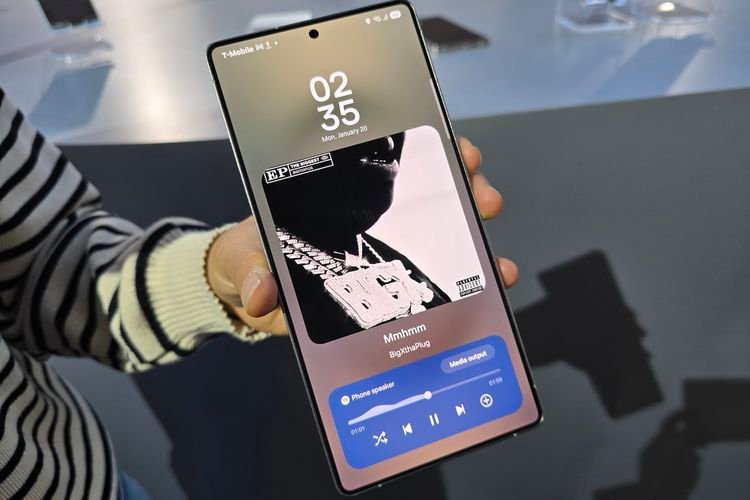
Fitur Now Bar akan memperlihatkan kegiatan signifikan yang terjadi pada perangkat Anda, termasuk panggilan telepon langsung, fungsi penafsir, putaran lagu, lacak olahraga dalam aplikasi Samsung Health, respons darurat SOS, serta timer, semua ini ditampilkan di layar kunci (lock screen) perangkat Anda.
Tampilan One UI 7 membawa sejumlah fungsi terbaru dari Galaxy AI yang ditingkatkan, seperti AI Select, Audio Eraser, Drawing Assist, Writing Assist, serta sistem penelusuran berdasarkan bahasa alami dalam halaman Setting.
AI Select membolehkan pemakainya untuk mengambil pilihan dan menyalin teks maupun benda di dalam foto secara lebih tepat. Fasilitas ini dapat dipergunakan untuk mencopy teks dari sebuah gambar ataupun mengerjakan ekstraksi objek dengan gampang, bahkan sampai melakukan scan kode QR.
Audio Eraser digunakan untuk menyingkirkan noise latar yang menggangu pada perekaman audio ataupun video. Sebagai contoh, apabila terdapat derau suara di belakang ketika sedang melakukan pengambilan gambar, teknologi AI ini dengan sendirinya dapat mendeteksi dan memilah antara suara primer dan noises tersebut sehingga bisa dikurangi hingar-bingingarnya.
Fitur Penghapus Suara ini bakal tersedia di seri Galaxy S24, Galaxy S24 FE, Galaxy Z Fold6 dan Z Flip6, termasuk juga pada serian Galaxy Tab S10.
Drawing Assist dapat mendukung pengguna dalam proses menggambar dengan menyediakan anjuran bentuk secara otomatis atau memperbaiki sketsa mereka seketika.
Menulis menjadi lebih mudah dengan Writing Assist yang menghasilkan masukan tentang tata bahasa, membenarkan kesalahan ejaan, dan meningkatkan gaya tulis Anda. Alat ini dapat diaplikasikan ke banyak program, seperti Samsung Notes dan percakapan pesan singkat.
Terdapat pula fitur Pencarian Berbahasa Alami dalam bagian Pengaturan. Melalui fitur ini, pengguna dapat mencari berbagai aturan pada halaman Pengaturan dengan memakai kalimat sehari-hari. Sebut saja seperti menulis “bagaimana cara menyimpan daya baterai” ataupun “ganti gambar latar belakang”, maka sistem cerdas bakal secara instan memberikan solusi yang sesuai.
Saat ini, fitur tersebut mendukung berbagai bahasa termasuk Korea, Inggris, Jerman, Prancis, Italia, Spanyol, Mandarin, Jepang, dan Portugal. Fitur ini hanya akan tersedia pada model Galaxy S24, Galaxy S24 FE, Galaxy Z Fold6, dan Z Flip6, selain itu juga terdapat pada seri Galaxy Tab S10. Informasi ini dikumpulkan oleh KompasTekno dari situs resmi Samsung Newsroom pada hari Sabtu, 21 Maret 2025.

oleh admin | Mar 23, 2025 | 5g, business, news, technology, technology trends
Lifehack My ID
, JAKARTA —PT
XL Axiata
Tbk. (EXCL) menyebut model
multi-operator core network
(MOCN) bisa jadi solusi efektif dalam mendorong penerimaan lebih cepat.
5G
di Indonesia.
Adapun, Kementerian Komunikasi dan Teknologi Digital (
Komdigi
Berencana untuk mengubah menjadi MOCN atau
sharing network
untuk mempercepat layanan 5G.
Alvin Aslam, Kepala Grup Regulasi dan Hubungan Pemerintah XL Axiata, menekankan bahwa salah satu faktor penting dalam penerapan layanan 5G adalah adanya alokasi spektrum yang memadai untuk mendukung penggunaan teknologi tersebut.
Komdigi Perkuat Jaringan Model Sharing Network (MOCN) 5G, Cepat Undang Operator Seluler
Menurut Alvin, MOCN adalah salah satu metode yang dapat diterapkan untuk mendorong pertumbuhan jaringan 5G lebih cepat. Secara fundamental, MOCN mengoptimalkan pembagian frekuensi dengan menggunakan spektrum secara bersama-sama di antara para penyedia layanan.
Alternatif lainnya merupakan penugasan spektrum frekuensi ke pada operator dengan cara yang paling efisien di setiap area.
layer band
spektrum yakni
low band
untuk
coverage
dan
mid band
“Untuk kemampuan yang secara eksternal 5G telah teruji,” ujar Alvin kepada
Bisnis
dikutip, Minggu (23/3/2025).
:
Menkominfo Berharap MOCN Mendukung Percepatan Pengembangan Jaringan 5G
Alvin menyebutkan bahwa penyebaran dari pembagian spektrum frekuensi ke semua penyedia layanan sangatlah krusial agar para operator dapat menjaga kompetitifitasnya.
“Oleh karena itu, pemerintah harus memastikan penentuan pembagian sumber daya yang sesuai untuk semua operator, misalnya dengan menerapkan batas pada pembagian yang ada,” katanya.
:
Indosat Berharap Integrasi Jaringan MOCN Selesai di Kuartal I Tahun 2023
Diberitakan sebelumnya,
Nezar Patria, Wakil Menteri Komunikasi dan Digital (Wamenkomdigi), menyebut bahwa mereka sedang meninjau kelebihan dan kekurangan dari MOCN.
Nezar pun menyebut model
sharing network
Ini menawarkan berbagai keuntungan apabila diterapkan di Indonesia.
Oleh karena itu mari kita mulai dengan mencoba membuat review terlebih dahulu.
sharing network
ini kalau secara hitungan
cost
dan
benefit-
nya itu lebih banyak
benefit
-nya,” kata Nezar kepada
Bisnis
, Kamis (20/1/2025).
MOCN merupakan konsep bagi para penyedia layanan seluler untuk bisa menggunakan bersama-sama fasilitas dari jaringan akses nirkabel (RAN), seperti tiang penopang, antena, serta pita frekuensi, meskipun mereka masih menjaga keutuhan jaringan inti masing-masing.
core network)
mereka secara terpisah.
Model ini disebut telah sukses diimplementasikan di Malaysia, sehingga luasan jaringan 5G di negara tersebut sudah mencapai 80%.
Sementara itu, kemajuan jaringan 5G di Indonesia belum begitu signifikan. Bahkan, Malaysia telah menerapkan teknologi 5G secara bersamaan dengan Indonesia sejak tahun 2021.


