

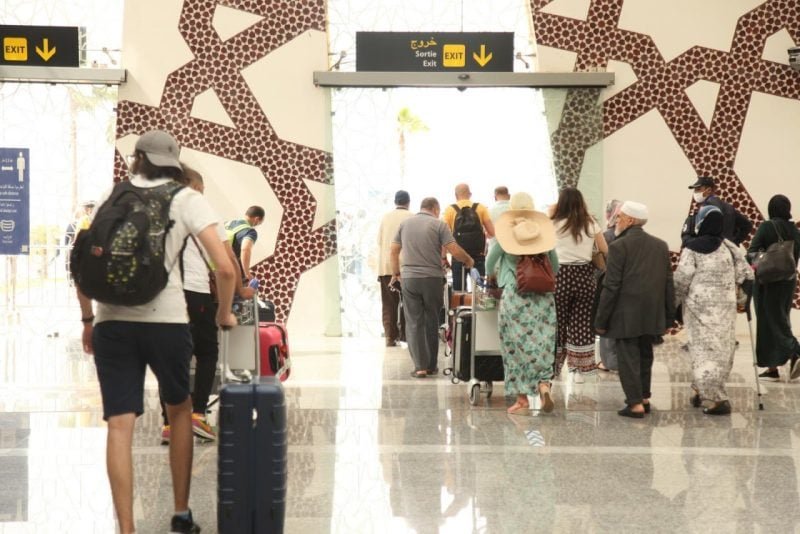
Ghana and Morocco Eye Visa-Free Travel Agreement
The post
Ghana aims for visa-free travel arrangement with Morocco
appeared first on
SANGGRALOKAEnglish – Morocco News
.

The post
Ghana aims for visa-free travel arrangement with Morocco
appeared first on
SANGGRALOKAEnglish – Morocco News
.
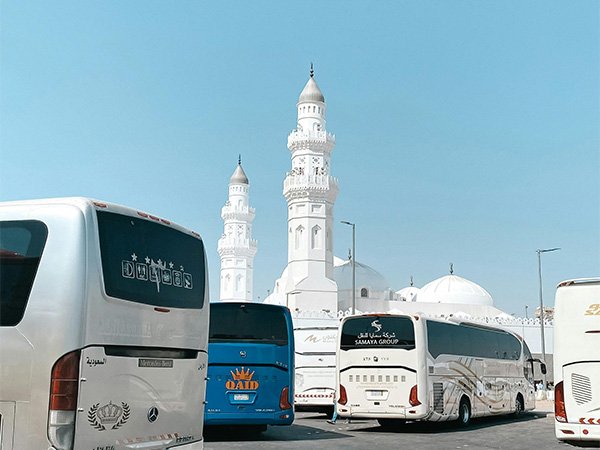
Riyadh
[
Saudi Arabia
], April 4 (ANI/WAM):
Saudi Arabia
‘s
tourism sector
reached a record surplus of SAR 49.8 billion in the 2024 travel sector, marking a 7.8% rise from 2023, as stated in a press release from the Tourism Ministry.
The announcement relayed via the Saudi Press Agency (SPA) stated that this growth was driven by a 13.8% rise in expenditure by incoming visitors, which amounted to approximately SAR 153.6 billion in 2024. This estimate is derived from initial balance of payments figures provided by the Saudi Central Bank for the same year.
The ministry credited the notable increase in the 2024 travel account surplus to coordinated initiatives across the Saudi tourism sector, designed to bolster the industry and boost its impact on the nation’s economy. The statement highlighted that this achievement underscores the successful execution of top-tier practices in tourism advancement, improved service offerings, and robust governmental partnerships—efforts aligned with achieving the objectives outlined in Saudi Vision 2030. (ANI/WAM)
Provided by SyndiGate Media Inc.
Syndigate.info
).
Governor Babajide Sanwo-Olu of Lagos State advised residents planning to go on the 2025 Hajj to make sure they are in good health prior to undertaking their journey.
The governor additionally encouraged the inhabitants to keep thanking God for their renewal, progress, and shared advancement as a result of the recently completed Ramadan fasting period.
He addressed the First Family of Lagos State and officials from the Ministry of Home Affairs during their Eid-el-Fitr celebration.
The event titled “Indeed My Lord, I Am Ready for Whatever Good You Wish to Bestow Upon Me” took place at the Lagos House in Marina.
At the event, the governor offered his congratulations to Muslims for completing their month-long fasting during Ramadan.
He stated: “Starting from May, individuals going to Mecca will commence their journeys. Make sure you maintain good health.”
Should you fall sick, avoid going on the 2025 Hajj pilgrimage; remain in Nigeria and offer your prayers instead. May Allah continue to protect our peace and harmony. We shall persist in celebrating Eid-el-Fitr.
“I thank all our religious leaders for teaching us more about the holy book. I wish us more celebrations in good health.”
Dr. Ibijoke Sanwo-Olu also spoke, encouraging community members to be compassionate towards those less fortunate among them.
She stated, “While we join in the festivities, let us not forget those who are less fortunate and offer assistance to them.”
Genuine devotion extends past ceremonies; it involves reflecting on how we interact with each other and how we aid in improving our country and society.
I urge us to strengthen our belief in Nigeria and continue to pray with determination.
Dr. Munirudeen Ar-Riyardy from Lagos State University of Education, who was invited as the guest speaker, encouraged Nigerians during his address to shun sinful acts in order to receive divine favor from God.
Ar-Riyardy stated: “The lecture focuses on the trials of life and maintaining our faith in God despite the difficulties. It emphasizes not cursing our leaders and staying away from sin.”
Deputy Governor Dr. Obafemi Hamzat urged Lagos residents to treat each other kindly.
Hamzat stated: “Exhibit understanding, demonstrate kindness, treat your neighbors well, and keep faith in the divine benevolence.”
Provided by Syndigate Media Inc. (
Syndigate.info
).
Europe is home to numerous remarkable archaeological sites that often go unnoticed by the broader public. Away from the throngs at Pompeii or the Valley of the Temples in Sicily, we have compiled a list of six intriguing locations worth visiting.
Located on the
Costa Brava
Empúries was established as an ancient harbor by Greek settlers circa 575 BC and later evolved into a Roman colony. Despite its limited recognition beyond Spanish borders, this location stands out because it provides evidence of both civilizations coexisting within the same area.
At this location, guests can marvel at mosaics, temples, bathhouses, and historic streets, providing a breathtaking vista of the Mediterranean Sea. Additionally, visiting the site’s museum is essential as it offers valuable insights into the Greek colonization period in Iberia.
Interested in discovering Europe? These articles can guide you toward your next exciting journey:
Even though it is designated as a UNESCO World Heritage site, Pantalica, situated close to Syracuse, frequently gets less attention compared to other well-known attractions in Sicily.
Nevertheless, this necropolis situated on a rocky plateau holds more than 5,000 tombs hewn from the stone, with origins tracing back to the Late Bronze Age (13th century BCE).
th
-7
th
The area, dating back to centuries BC, boasts a stunning natural setting, ideal for hiking enthusiasts.
This lesser-known website stands as one of the archaeological jewels.
the Balkans
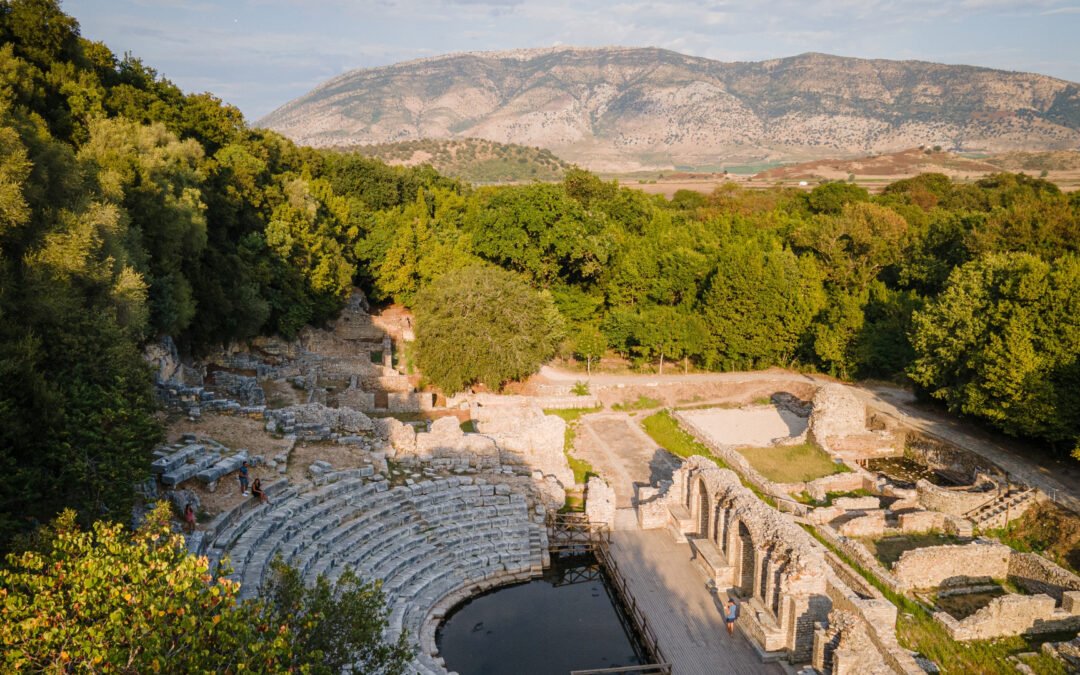
Inhabited from prehistoric periods onwards, Butrint has been influenced by various civilizations such as the Greeks, Romans, Byzantines, and Venetians.
The location includes a Greek theater, Roman bathhouses, and a baptistery decorated with beautifully preserved mosaic artworks. Encircled by verdant surroundings and designated as a UNESCO World Heritage site, it stays fairly unvisited, providing a serene experience for visitors.
A significant historical settlement close to Vienna, Carnuntum served as an important military and trading center during the time of the Roman Empire. Apart from its well-preserved archaeological remains, this location is distinguished by detailed recreations of structures, which vividly bring the past into focus.
Residences, thermal baths, and a Roman villa have been rebuilt employing traditional methods, enabling guests to immerse themselves in the everyday existence of people during Roman times just as they experienced it back then.
While less renowned compared to nearby alpine locations, Saint-Martin-de-Corléans is an exquisite site found in 1969 in Aosta, Italy. This location showcases a series of archaeological strata ranging from the Neolithic period through to the Bronze Age.
At this location, guests can witness stone arrangements, grand burial sites, and various intricately designed funeral monuments. Additionally, the onsite museum provides an exceptional tour with its contemporary and engaging exhibits.
Situated along the shores of the Danube, Noviodunum functioned as an important military stronghold for both the Roman and subsequent Byzantine Empires. In the first century BC, it acted as the command center for the emperor’s naval forces. Despite being rarely explored by visitors, this location provides a captivating look at the legacy of Roman Dacia.
Tourists can view the remnants of both military and civil buildings, as well as military artifacts found during excavation efforts.
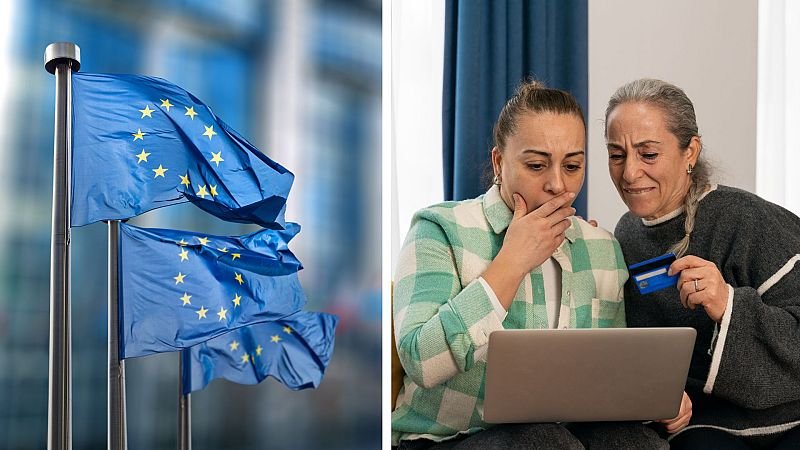
Travelers from Britain heading to Europe are being cautioned by an industry group against falling victim to scams due to uncertainties surrounding entry and exit regulations.
With the UK’s
Electronic Travel Authorisation (ETA)
Starting this week, scammers are actively exploiting the confusion. ABTA, the Association of British Travel Agents, has issued warnings about fraudulent sites providing imitation passes to UK travelers planning trips to continental Europe.
Starting from April 2nd, individuals without a British passport must apply for an ETIAS authorization when visiting the United Kingdom. This requirement mirrors the implementation of the Electronic Travel Authorization (ETA), which will impact travelers from the UK planning trips to Europe.
However,
The launch of ETIAS is scheduled for approximately 18 months from now.
, and currently, there is no need for British citizens to acquire any extra documents for traveling.
The UK’s
ETA
Came into effect for European citizens on April 2nd, this rule requires all holders of EU passports to apply for and obtain an ETA prior to traveling to the UK.
The program has been operational for travelers from countries without the need for European visas since January. Nevertheless, its implementation has encountered numerous issues and challenges.
confusion
.
If visitors from overseas come to meet you—whether they are friends, family, or business partners—they will need to verify whether they require an ETA,” states ABTA. “Among the three upcoming modifications for crossing borders between the EU and UK, this is the sole change currently active, which could lead to potential misunderstandings.
A similar regulation will apply to British travelers heading to Europe – known as the ETIAS. Nonetheless, this system isn’t scheduled to launch until the new
EU Entry/Exit system
(EES) goes live.
The EES has faced multiple delays previously; however, it is currently expected to
launch in October 2025
.
The rollout will occur gradually, hence not all modifications will become effective right away.
The introduction of ETIAS is anticipated in 2026, according to ABTA, which suggests it might come into effect towards the latter part of that year. Initially, ETIAS will probably remain voluntary for a minimum of half a year after launch. Currently, British travelers do not require extra paperwork to enjoy holidays within Europe.
With several upcoming adjustments expected within the next few years, our priority is ensuring everyone grasps their implications,” states Graeme Buck, communication director at ABTA. “To summarize, the sole action required currently is for Europeans visiting the UK to obtain an ETA. There won’t be any alterations for British travelers heading to Europe during the approaching summer.
ETIAS will resemble the US system.
ESTA
a system where submitting a basic online application provides authorization to move around the designated zone for a certain duration.
Under the EU plan, the estimated cost of an ETIAS is approximately €7 and it will remain valid for up to three years (or until your passport expires within three months). This permit will enable British travelers to visit any EU nation (or multiple nations) for a maximum of 90 days within any 180-day timeframe.
As stated by the EU, third-country nationals such as the UK will receive a single ‘grace period’ lasting for six months if they fail to present their ETIAS once.
“Individuals arriving in Europe for the first time after the conclusion of the transition phase will be permitted to enter without an ETIAS as long as they meet all other requirements for admission,” according to the EU.
ABTA cautions that individuals attempting to apply for an ETIAS currently might be vulnerable to scams, potentially resulting in financial losses as well as possible theft of personal information.
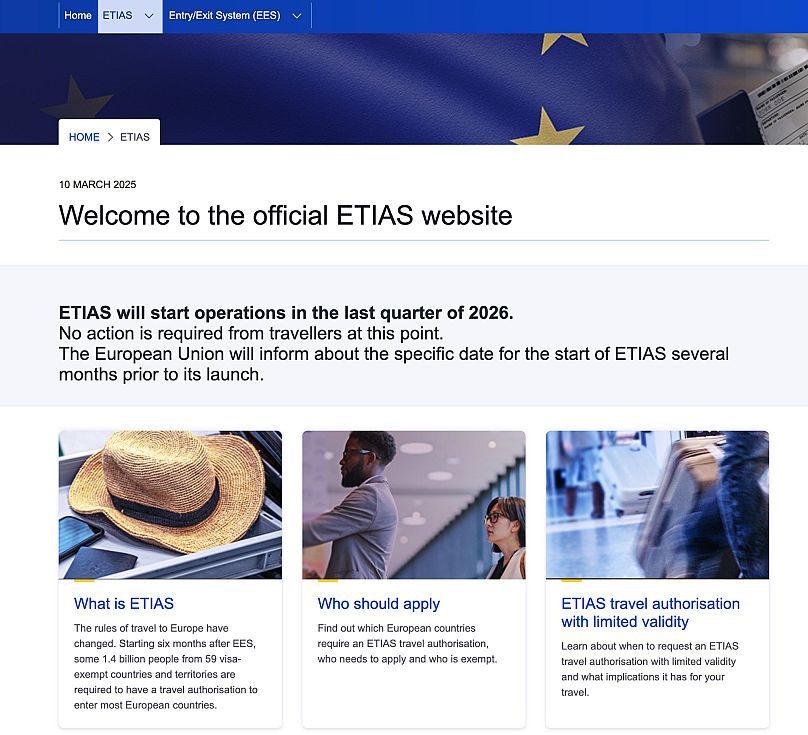
Once the time arrives, the sole location to apply for an ETIAS will be online.
official website
Any applications, websites, or social media postings indicating there is an alternate route should be considered fake news.
Visitors will have to provide personal details along with their passport information, and also declare any significant criminal records from the last two decades. It’s mandatory to specify the purpose of their trip and indicate where they plan to reside during their stay.
Schengen Area
the country they plan to visit first.
The charge applies to all applicants who are 18 years old or older but not yet 70. Individuals younger than 18 or older than 70 must still submit an application, though they will not incur any fees.
Given that two more alterations are scheduled, the circumstances might appear complex,” notes Buck. “Once modifications impacting UK travelers begin rolling out toward year-end, both ABTA and our associates will stand ready to assist those affected.
Traveling has consistently been thrilling, yet handling finances during journeys across various nations was previously quite cumbersome. Switching from Bitcoin to US dollars prior to trips and subsequently converting those dollars into local currencies was once both intricate and tedious.
By 2025, cryptocurrency payment systems have revolutionized international financial transactions, simplifying travel budgeting and enhancing convenience for travelers. These systems facilitate instant currency exchanges at competitive market rates.
The Development of Payment Methods for Travel
Prior to the widespread adoption of cryptocurrency for traveling, tourists frequently managed several forms of payments —cash in local money, credit cards imposing hefty foreign transaction charges, and reloadable travel cards that required frequent topping up. These alternatives each came with their own issues: cash risked being lost or stolen, cards sometimes got rejected, and keeping tabs on expenditures denominated in various currencies proved cumbersome.
By 2025, integrated cryptocurrency payment systems have tackled numerous obstacles. Now, travelers can utilize digital wallets linked to major payment networks, enabling them to make direct payments using cryptocurrencies or quickly convert to local currencies at the time of purchase.
How Today’s System Works
The present ecosystem for cryptocurrency payments when traveling includes various interlinked components functioning smoothly together:
Most travelers nowadays utilize multi-currency digital wallets that hold different types of cryptocurrencies. These wallet applications can be linked to smartphones and smartwatches, facilitating easy touch payments with just a single tap.
Currency Rate Assurance: Contemporary travel cryptocurrency applications enable users to secure advantageous exchange rates for their intended locations prior to leaving home. This assists travelers in planning their budgets precisely, eliminating concerns over unexpected changes in currency values.
Cryptocurrency Payment Systems: Leading cryptocurrency payment networks have expanded worldwide, forming partnerships that guarantee usage in hotels, eateries, transit systems, and sights across most popular travel spots.
Expense Monitoring: The system automates expenditure tracking by sorting costs into categories and gives instant feedback on whether travelers are adhering to their set budget plans.
Offline Functionality: Many cryptocurrency payment systems currently provide offline transaction options to facilitate basic buying even in regions with poor internet access.
Benefits for Careful Travelers
The transition to cryptocurrency has not led to reckless spending; instead, it has had the contrary effect. These new systems come with functionalities that assist travelers in keeping their finances under control.
Expenditure Caps: Visitors have the option to establish daily or weekly expenditure limits to avoid spontaneous buys that exceed their financial plan.
Categories within budgets can be managed using digital wallets, enabling travelers to set aside particular sums for various expenses such as lodging, meals, entertainment, and mementos, complete with notifications when spending nears these thresholds.
Shared Wallets for Group Expenses: These tools simplify cost-sharing among friends and relatives during travels, eliminating the previous hassle of complex divisions and making joint vacations more enjoyable.
Real-Time Currency Conversion View: During transactions, travelers can view both the cryptocurrency amount and its corresponding value in their local currency, enhancing transparency regarding real expenditures.
Security Improvements
Cryptocurrency travel systems in 2025 have tackled earlier security issues via various advancements:
Biometric Authentication: Transactions necessitate either a fingerprint or facial recognition scan, which makes unauthorized payments extremely unlikely, even if your device gets misplaced or taken.
Many cryptocurrency-based travel platforms now offer transaction insurance to protect against fraud or technical issues, offering reassurance.
Emergency Backup Access: Designated contacts can assist in regaining fund accessibility if primary devices are misplaced, preventing travelers from being left resourceless when away from home.
Selective Data Disclosure: Privacy settings enable travelers to manage which details merchants obtain during exchanges, thereby minimizing exposure of sensitive information.
Practical Usage Examples
The straightforward nature of modern cryptocurrency transactions for travel expenses becomes evident in daily situations:
Upon reaching a new location, travelers now have no need to seek out currency exchange booths or ATMs. Transport services from the airport can be easily covered with just a tap of your wristwatch or smartphone.
Street markets and small vendors that previously accepted only local currency now often show QR codes for cryptocurrency transactions, simplifying impromptu buys.
When dining out with fellow travelers, the split of the restaurant bill occurs seamlessly via group wallet functions, where everyone’s portion is computed and withdrawn immediately.
Hotel deposits are managed using temporary holds instead of immediate charges, which makes the funds that were once unavailable until check-out now accessible.
Challenges and Considerations
Even with notable advancements, cryptocurrency-based travel payments still come with various concerns:
1. Volatility of crypto values can affect transaction amounts.
2. Regulatory uncertainties may pose legal challenges.
3. Widespread acceptance remains limited compared to traditional payment methods.
These factors mean that while progress has been made, there’s still room for growth and adaptation before cryptocurrencies become standard in travel transactions.
Although some far-off locations still exhibit restricted acceptance, this disparity is gradually diminishing as worldwide infrastructure develops further.
New users encounter an initial learning phase; however, streamlined interfaces have significantly eased the beginning stages of set up compared to earlier years.
While battery reliance continues to be an issue, power banks and fast-charging technologies have turned into typical travel essentials.
A Balanced Perspective
Although cryptocurrency has simplified travel payments, it hasn’t altered the significance of prudent expenditure. This tech offers improved resources for making well-informed choices and adhering to planned budgets.
In 2025, for travelers, the main benefit isn’t about having extra money to spend; instead, it’s about being free from financial worries and bureaucratic hassles that used to complicate global expeditions.
By eliminating these obstacles, integrating cryptocurrency payments enables individuals to concentrate on what truly counts—exploring new destinations, immersing themselves in different cultures, and making meaningful connections without being preoccupied with financial logistics.
Provided by Syndigate Media Inc. (
Syndigate.info
).