oleh admin | Agu 21, 2025 | international relations, politics, politics and government, ukraine politics, warfare
Posted on, Aug. 19 — August 19, 2025 at 6:58 AM
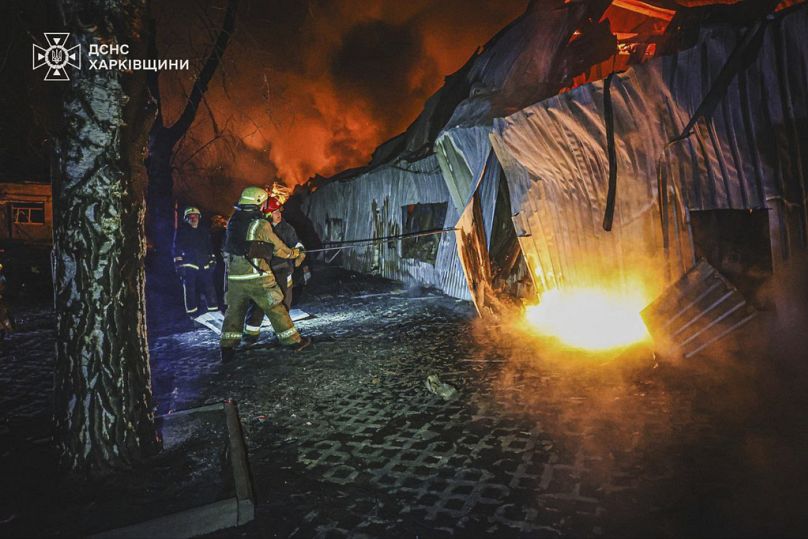
On Monday, the White House hosted one of the most significant and controversial summits related to the conflict in Ukraine. Volodymyr Zelenskyy traveled to Washington hoping for confirmation that American support remains steadfast. He was accompanied by several European leaders—up to seven in total—who made a powerful demonstration of solidarity. Their clear message was simple: Ukraine should neither be nor have to accept a peace agreement that compromises its independence.
Donald Trump seems to have followed an alternative approach. Following his discussion with Vladimir Putin in Alaska, he again proposed that Zelenskyy could “bring the conflict to a close very quickly.” However, what he refrained from stating openly was the implication: disregarding NATO, ignoring Crimea, and acknowledging that certain areas of the Donbas would stay under Russian authority. Essentially, achieving peace through the loss of territorial integrity. For Moscow, this would amount to a triumph in every way except for official recognition.
This was not a minor dispute. It exposed the significant rift between Washington and Europe regarding the way ahead. European officials united behind Kyiv, cautioning that appeasing Russian aggression would merely encourage further actions. To them, an agreement that allows Putin to gain territory is, in short, a clear signal for additional conflicts in regions like Moldova, the Baltic states, or beyond.
In turn, Zelenskyy showed no hesitation. He informed Trump that Ukraine’s constitution prohibits the relinquishment of its territory, emphasizing that hundreds of thousands of Ukrainians have lost their lives protecting it. Surrendering land at this point would amount to a betrayal of both those who perished and the concept of a free Ukraine. While his stance might appear extreme, it highlights a straightforward reality: Russia initiated this conflict, and it must not be permitted to alter boundaries through coercion.
The harsh truth is that Trump’s stance mirrors a shift in America’s approach to international relations. Support for Ukraine within the United States is becoming more divided and influenced by internal political struggles. Observing this instability, Europe has started to take action. Through military supplies and economic aid, the European Union and NATO are preparing a framework for a Europe capable of supporting Ukraine should Washington lose momentum.
The Washington meeting aimed at bridging divides. However, it revealed underlying tensions instead. One perspective leans toward an easy solution: halt the conflict, grant Putin his gains, and label it as peace. The alternative path involves taking a stronger stance, supporting Ukraine financially, and maintaining that the concepts of sovereignty and territorial boundaries must not be compromised.
The decision for the global community should be clear-cut. A peace enforced according to Putin’s terms is not genuine peace. *
oleh admin | Mar 30, 2025 | donald trump, international relations, politics, ukraine politics, vladimir putin
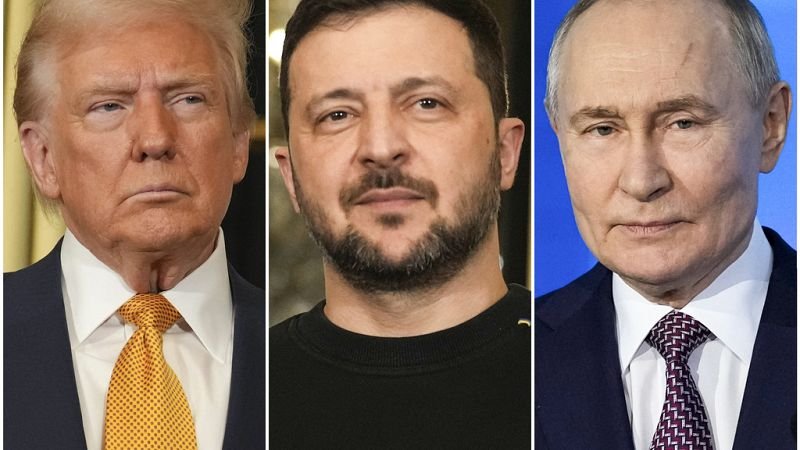
During an interview with NBC on Sunday, US President Donald Trump threatened to impose “additional tariffs on oil, on every barrel of oil originating from Russia.”
Trump said he was “very angry” and “pissed off” with Russian President Vladimir Putin after the latter criticised the leadership of Ukrainian President Volodymyr Zelenskyy, putting his credibility into question. Trump said that Putin’s comments were “not going in the right location.”
Putin had suggested
on Friday
that Ukraine should come under temporary United Nations administration until an “appropriate” government could be elected. This proposal was rejected by Washington, as Putin once more targeted the leadership in Kyiv and Zelenskyy, whom the Kremlin persists in labeling as “unlawful.”
Offering further clarification on his thinking, Trump stated, “With new leadership, there won’t be a deal for a very long time, correct?”
During the interview, Trump stated, “Should Russia and I fail to reach an agreement to halt the violence in Ukraine, and if I determine that Russia bears responsibility—which may not be the case—but if I conclude that Russia is at fault, then I will impose additional tariffs on oil exports from Russia.”
This marked a notable shift in approach toward Russia for Trump, who mentioned he planned to converse with Putin over the upcoming week.
This month, Russia and Ukraine reached an agreement.
in principle
into a restricted 30-day truce in the Black Sea; however, both parties have kept attacking one another using drones and missiles.
Trump warns of bombing Iran
In a distinct interview on Saturday, Trump warned that he would consider bombing Iran and imposing secondary tariffs if the country declined to enter into an agreement with the U.S., ensuring they do not pursue development of the weapon.
Trump stated, “If they don’t make a deal,” he continued, “there will be bombing. It will be bombing the likes of which they have never seen before.”
Trump says that U.S. and Iranian officials are communicating with each other.
But
on Sunday
Iran’s president stated that the Islamic Republic rejected direct negotiations with the United States concerning its swiftly progressing nuclear program. This was Tehran’s initial reaction to a letter President Trump had sent to the nation’s Supreme Leader, Ayatollah Ali Khamenei.

oleh admin | Mar 27, 2025 | foreign policy, international relations, military, ukraine, ukraine politics
![]()
Emmanuel Macron proposed sending “reassurance forces” comprising troops from various European nations stationed at specific strategic points within Ukraine should a peace agreement be reached between Ukraine and Russia.
“These forces would serve as a deterrence against possible Russian aggression,” he stated to journalists at a press briefing after a crucial “Coalition of the Willing” summit for Ukraine took place in Paris on Thursday.
Nevertheless, these reassuring forces “do not serve as peacekeepers,” since they won’t take over from the Ukrainian Armed Forces nor will they be placed at the forefront; rather, they’ll be stationed in “strategic cities” and bases.
This proposal will be handled by our military chiefs of staff over the next few weeks to decide on “the layout and structure” of these deployments.
These reassuring forces would in no way substitute for or decrease our commitments within NATO’s eastern border,” Macrone emphasized, adding that “they would be supplementary.
‘Not a unanimous’ decision
The French leader stated that all countries present at the summit did not concur with this proposal. He mentioned, “There was no consensus,” but added, “We don’t require everyone’s agreement to make it happen.”
The issue of deploying soldiers to Ukraine has sparked significant rifts between EU and NATO member countries.
Italy’s Prime Minister Giorgia Meloni stated that their country will opt out of this initiative. Meanwhile, Poland’s former prime minister Donald Tusk mentioned earlier this month, “There are no plans for deploying Polish troops within Ukrainian borders.”
Although Macron indicated his desire for U.S. backing should Europe decide to deploy forces, he simultaneously highlighted the importance of being ready for a situation where Europe must act alone.
The French leader additionally declared the deployment of a ” Franco-British mission to Ukraine” aimed at “setting up the structure of the future Ukrainian military.” This initiative seeks to assess what kind of resources Kiev requires to deter potential additional assaults from Russia.
Repeating what he said on Wednesday evening, the French President emphasized again that now is not the appropriate time to remove sanctions imposed on Russia.
The statement follows the US announcing on Tuesday that it plans to begin easing certain sanctions on Moscow, specifically regarding agricultural commerce.
The aim of the summit was to establish a foundation for enduring security assurances and transform the Ukrainian military into the primary defense force against potential future attacks.
growing threat from Russia.
The gathering in Paris took place amidst
stepping up attempts to mediate a truce
, spurred by the urging of U.S. President Donald Trump to conclude Russia’s ongoing four-year conflict in Ukraine.
The US-mediated accords aimed at protecting navigation within the Black Sea and ceasing attacks on energy facilities were welcomed as an initial move toward tranquility. Nonetheless, both Russia and Ukraine have expressed dissent regarding certain aspects and blamed one another for non-compliance.
Even with the accord in place, the fighting continues unabated. According to Ukrainian news outlets on Thursday, over the past day, Russian assaults resulted in injuries for several dozen individuals and led to one fatality.
Zelenskyy stated that these assaults provide additional proof that the US and Europe ought not relax the sanctions imposed on Moscow.
oleh admin | Mar 27, 2025 | military, politics, politics and government, russian politics, ukraine politics
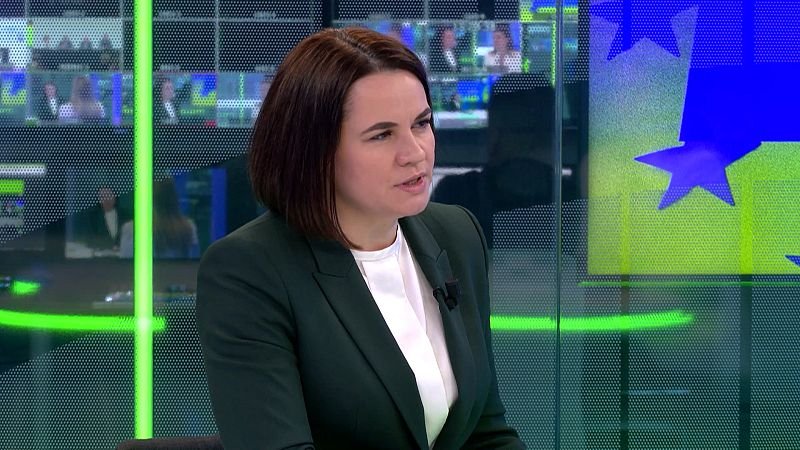
As Belarus grows more volatile within Eastern Europe, the nation becomes increasingly ensnared by Russian control, according to opposition figurehead Sviatlana Tsikhanouskaya’s remarks during an interview with Euronews. She cautioned that this situation might position Belarus as a potential starting point for military hostilities targeting Ukraine and other Western neighboring countries.
In February, Ukrainian President Volodymyr Zelenskyy disclosed during an event in Munich that Russia intends to deploy as many as 150,000 soldiers in Belarus within the year, possibly posing a threat to NATO nations. Given Belarus’s increasingly close ties with Moscow, Sviatlana Tsikhanouskaya contends that the country’s autonomy is endangered, casting doubt over its prospects and the safety of surrounding states.
For Tsikhanouskaya, sanctions continue to be an essential means of preventing additional Russian aggression. She stated, “The focus is on transforming our nation, and sanctions serve as one of the most potent tools.” According to her, “A steadfast strategy is necessary when dealing with dictators; we firmly believe that sanctions should act as leverage to modify their actions.” Furthermore, she explained, “We advocate using these measures until significant progress towards negotiations occurs, aiming ultimately to secure the liberation of everyone and conduct unbiased elections,” she emphasized.
The Europe Conversation.
Recent indications of increasing integration between Russia and Belarus have sparked concerns. Although Belarusian residents can now take part in voting processes, Tsikhanouskaya views this as an incremental move towards Belarus being absorbed by Russia. She stated, “This is a gradual annexation happening with Lukashenko’s consent, knowing he acts like Putin’s marionette. He is willing to trade away our autonomy, self-governance, and nationhood simply to retain his grip on power.”
She contended that the policy of Russification has been progressively moving forward, as agreements have been reached without regard for Belarus’s national interests. “Regardless of voter turnout, these events cannot be classified as genuine elections. It is indeed alarming that Lukashenko, through his actions, is steering Belarus towards Russia,” Tsikhanouskaya stated.
Although Tsikhanouskaya doesn’t view the situation as involving direct territorial seizure akin to what happened in Ukraine, she thinks it revolves around ensuring a leadership aligned with Moscow. She explains, “Their aim is to establish a compliant administration that gives the semblance of sovereignty while having this government act according to Putin’s wishes. In essence, their objective is to create a regime that could be used anytime for additional incursions—perhaps into the European Union—or merely serve propaganda purposes. They desire nothing less than a marionette government within the nation.”
Launchpad for an invasion
At the Munich Security Conference, Zelenskyy delivered a strong caution that Russia could potentially utilize Belarus as a staging ground for an assault, akin to the 2022 strike against Ukraine. Tsikhanouskaya echoed these apprehensions. She stated, “As long as Lukashenko remains in control, Belarusian territory may serve once more as a starting point for an offensive either toward Ukraine or towards our western neighbors.”
The possibility of such an invasion still remains uncertain. “This situation demonstrates that the democratic world struggles to clearly state whether they would tolerate oppression or if invasions of sovereign nations can occur unchecked. They lack effective means to address this threat. There is a chance that these forces could reach the borders of the European Union.”
Tsikhanouskaya contended that autocrats only comprehend the discourse of authority, stating: “When you fail to deliver this strength, when you do not demonstrate courage and audacity, dictators will assert, ‘Very well, we shall trample over the subsequent red line.'”
Democratic aspirations remain intact
Tsikhanouskaya stayed optimistic about Belarus’ future, acknowledging that transformation could occur via multiple pathways. She stated, “Transformation in Belarus might transpire through various channels, yet the crucial aspect is that democratic entities, our community, and Europe should be ready for such transformations.”
Even though the present situation may seem challenging, Tsikhanouskaya felt that the desire for democracy in Belarus has not disappeared. She stated, “It’s important to keep in mind that those protesting in the streets are just one segment of the opposition against the government. The appearance of tranquility within the nation does not imply that citizens have surrendered; rather, they are strategizing and will be prepared once an opportunity for transformation arises.”
According to Tsikhanouskaya, there are greater opportunities for changing the government in Belarus compared to Russia.

oleh admin | Mar 25, 2025 | foreign policy, international relations, politics, politics and government, ukraine politics
Giorgia Meloni’s main allies in the ruling coalition are causing her problems due to their differing stances on the Ukraine conflict and how the European Union should respond, which has become more pronounced recently.
Antonio Tajani from Forza Italia (European People’s Party), along with Matteo Salvini from The League (Patriots for Europe), act as deputies under Meloni. They serve, respectively, as the ministers of foreign affairs and transportation.
However, they have frequently clashed over significant foreign policy matters: providing military support to Ukraine, the European Union’s initiative for rearming, and interactions with the U.S. administration led by President Donald Trump.
“Tajani is facing issues due to his connections with the US; he ought to allow us to assist him,” stated Claudio Durigon, the League’s deputy secretary.
told
The newspaper La Repubblica on Sunday.
Following a 15-minute telephone conversation between League head Salvini and US Deputy President JD Vance on Friday, which was described as being “marked by great harmony” according to a statement from the League, this occurred.
Tajani hit back,
saying
That “foreign policy is handled by the prime minister and foreign minister,” characterizing the call as a “personal initiative” by Salvini.
“Populist parties alter their stance daily. Those who often yell tend to matter and wield power insignificantly,” he remarked, aiming his jibe at Durigon.
The Italian
press
reported that Tajani discussed the matter with Meloni, voicing his discontent over The League’s criticisms and hinting that the disagreements might result in a governmental crisis.
The Italian government’s stances do not blend well.
Forza Italia keeps a strong pro-Europe position, strongly backing military assistance to Ukraine, and commending the European Commission’s strategy for rearming.
rebranded
As part of Readiness 2030, and even pushing for the establishment of an EU military force in the future.
“We support peace, however, it needs to be equitable…Europe undoubtedly has to be present at the table because European Union has enforced sanctions against Russia,” Tajani stated to reporters regarding Donald Trump’s peace proposal following the concluding EPP gathering in Brussels.
In contrast, The League has always stood as one of the most vocal opponents of the EU’s approach to supporting Ukraine. They have also commended Trump for his attempts to facilitate a peace agreement with Russia, irrespective of any compromises Kiev might have had to agree to.
This matches his strong critique of EU Foreign Policy Chief Kajas Kallas. “If she had her way, we would already be at war,” said Salvini, adding, “She should join the front line herself.”
said
prior to the recent EU summit.
Ursula von der Leyen and her defense strategy have faced criticism as well. “Rearming Europe is not how peace can be achieved,” said Salvini.
declared
during a conference.
Italy’s administration brings together a pro-EU European People’s Party affiliate with a Eurosceptic member of the Patriots for Europe alliance, an alignment that hasn’t succeeded in Germany, Poland, Hungary, and most lately in Austria.
“It’s evident that our party, EPP, holds distinct views compared to the Patriots since we support European unity. Nonetheless, this doesn’t stop our political groups from discovering common ground at the country level,” noted esteemed Forza Italia MEP Salvatore De Meo in an interview with Euronews.
He thinks that Salvini’s conversation with Vance won’t lead to significant harm, yet he emphasized that foreign policy ought to be shaped exclusively by Tajani and Meloni.
“I hope that the Italian government will gradually move towards our stance: establishing a genuine defense framework within the European Union by moving beyond nationalism,” he stated.
Differences in policies regarding EU matters are testing the resilience of Italy’s governing alliance. So far, Meloni has skillfully navigated the contrasting views of her smaller coalition allies. She maintains a steadfastly supportive stance towards Ukraine but has ruled out sending Italian forces into combat zones as part of any security assurances should a peace agreement be reached.
She has also
stopped short
In support of French President Emmanuel Macron’s initiative for increased European Union strategic independence, the emphasis was placed on Europe’s necessity to uphold a robust transatlantic partnership.
Her political tightrope walk probably mirrors the unclear development of her own Brothers of Italy party, which has transformed from a radical, post-fascist group pushing for Italy’s departure from the EU to a more conservative faction generally supporting EU membership.
In the upcoming months, these European-leaning credentials might face scrutiny, potentially positioning Meloni more firmly alongside one of the factions within her contentious coalition allies.
oleh admin | Mar 24, 2025 | military, russia ukraine conflict, russian armed forces, ukraine, ukraine politics
From the beginning of the conflict, Ukraine has consistently employed creativity to disrupt Russian tactics, or at least to hinder the progress of the Kremlin’s military forces.
On March 22nd, which was a Saturday, the
General Staff of the Ukrainian Military Forces
verified that its air force had, once again, struck true.
The Ukrainian Air Force effectively targeted and hit a Russian border outpost’s command and control center located in Glotovo within the Belgorod region.
reported the news agency
RBC-Ukraine
.
The enemy, considerably weakened
Even though the Russian soldiers made significant attempts to safeguard and defend this crucial position, multiple items of equipment and devices were damaged and entirely obliterated.
Removing this command post substantially diminishes the enemy’s capacity to launch assaults against Ukrainian defense forces in the Sumy and Kharkiv areas,
stated the Ukrainian command.
(MH featuring Manon Pierre – Source: L’Indépendant – Illustration: ©Unsplash)