oleh admin | Agu 20, 2025 | environmental pollution, environmentalism, politics, waste collection, waste management
Posted on, Aug. 19 — August 19, 2025 at 6:35 AM
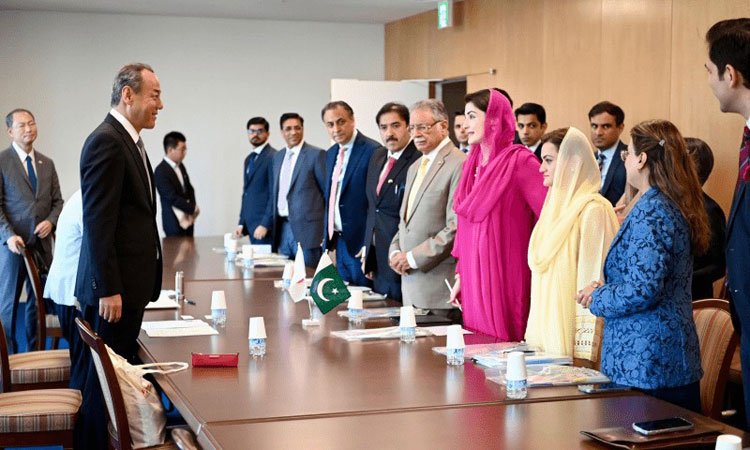
The Chief Minister of Punjab, Maryam Nawaz Sharif, stated that Japan’s cutting-edge technology and techniques will be employed for managing wastewater and garbage in Punjab.
During her official trip to Japan, the chief minister toured the nation’s biggest sewage treatment plants located in Asahi, Yokohama City, Kanagawa, Washimaku, and Yodogawa, according to a press release published here on Monday.
She received an extensive overview of garbage collection, sewage treatment, and waste management systems in Japan. Authorities mentioned that Yokohama, Japan’s second-biggest city, processes 1.5 million liters of wastewater each day at its Solid Waste and Wastewater Treatment Plant.
The site also manages multiple facilities that produce electricity from garbage, which is subsequently utilized to supply heat to nearby households.
The CM was also informed that Yokohama’s waste disposal system sorts reusable items using state-of-the-art automation, positioning the city as an international example of ecological responsibility even with its manufacturing-based economy.
Praising Japan’s excellent benchmarks, Chief Minister Maryam Nawaz Sharif stated, “The environmental and city planning approach of Yokohama will be introduced in Punjab. Through the use of Japanese technology, our objective is to upgrade wastewater and garbage management, produce renewable power, and provide a lasting future for our citizens.”
In addition, Punjab Chief Minister Maryam Nawaz Sharif mentioned that Yokohama and Punjab have reached an agreement on “city-to-city” collaboration across various fields such as environmental conservation and contemporary urban planning.
While visiting Yokohama, Japan’s major center for commerce, economy, and culture, the CM along with her team was provided an extensive overview of city planning at Yokohama City Hall, according to a statement released today.
She engaged in talks about improving the standard of road and structure development in Punjab to align with Japanese benchmarks and examined opportunities for collaboration between Ravi Urban Development Authority (RUDA) and Yokohama.
The CM, who is presently visiting Japan on an official five-day trip, also examined possibilities for cooperation in operating a high-speed rail service connecting Lahore and Islamabad, as well as enhancing Punjab’s railway system. She received additional information about Japan’s newest gondola and aerial cable car initiatives.
PM Maryam Nawaz Sharif highlighted that Punjab stands to gain significantly from Japan’s knowledge in eco-friendly city development, waste management, and advanced transportation systems.
oleh admin | Apr 1, 2025 | business, environmental friendliness, landfills, waste collection, waste management
To address Monrovia’s pressing waste problem, officials have initiated a groundbreaking pilot program designed to convert garbage into a useful asset and encourage eco-friendly urban development.
The program dubbed the Solid Waste Management Transformative Pilot Project commenced operations at the Jorkpen Town Market composting facility. This joint venture involves the Environmental Protection Agency (EPA), the Monrovia City Corporation (MCC), and various community members, supported financially by the Canadian government via Novasphere. Organizations such as the Liberia Marketing Association (LMA) along with Community-Based Enterprises (CBEs) and neighborhood groups are contributing significantly to executing this endeavor.
In Monrovia, approximately 800 tons of solid waste are produced daily, with less than half being adequately collected. As a result, uncollected garbage blocks drainage systems, contaminates water bodies, and poses risks to public health. Vermon Sangah Lloyd, who leads the project, states that this effort marks a significant departure from previous approaches.
“Managing waste isn’t all this initiative covers; it’s also about reshaping our perspective and approach towards it,” stated Lloyd. “Our aim is to build a world where waste ceases to be an obstacle and becomes a cornerstone of both ecological and financial advancement.”
A preliminary investigation carried out in four key markets in Monrovia—namely Old Road, Fiamah, Rally Town, and West Point—found that these areas generate approximately 89.3 kilograms of organic refuse per day on average. This waste predominantly comprises items like leaves, fruit, and veggies, highlighting the feasibility of using composting as an effective, environmentally conscious approach.
The pilot initiative aims to pinpoint steady streams of organic refuse from city marketplaces, set up communal composting facilities, and educate national and local “waste leaders” to drive transformation aligned with Liberia’s commitments to tackling climate issues. Currently, four Community-Based Enterprises have received certification to gather and move waste to the Jorkpen Town Market compost location, turning it into reusable compost.
To facilitate efficient collaboration and supervision, a Solid Waste Coordination Committee has been established, led by the EPA with the MCC as co-chair. Participants have gained valuable insights through an educational trip to Tanzania, where they were trained in practical methods of composting and sustainable waste handling practices. Mapping activities within communities have assisted in identifying crucial collection sites to enhance operational efficiency and amplify overall effectiveness.
During the unveiling, Lloyd emphasized that the initiative extends beyond mere construction—it aims to catalyze a cultural and ecological transformation. He stated, “This composting hub signifies much more than an installation; it heralds the start of a revolution.” According to him, by decreasing methane output, revitalizing markets, and generating eco-friendly employment opportunities, they aim to establish a model for the nation to follow.
President Ma Elizabeth Sambola of LMA supported this view, encouraging significant local involvement in the project. She stated, “This endeavor restores control to the citizens.” Adding, “As market women, we should spearhead this effort—while involving young people as well. It’s an occasion for us to create a more sanitary and healthy environment in Monrovia.”
Provided by SyndiGate Media Inc.
Syndigate.info
).


