



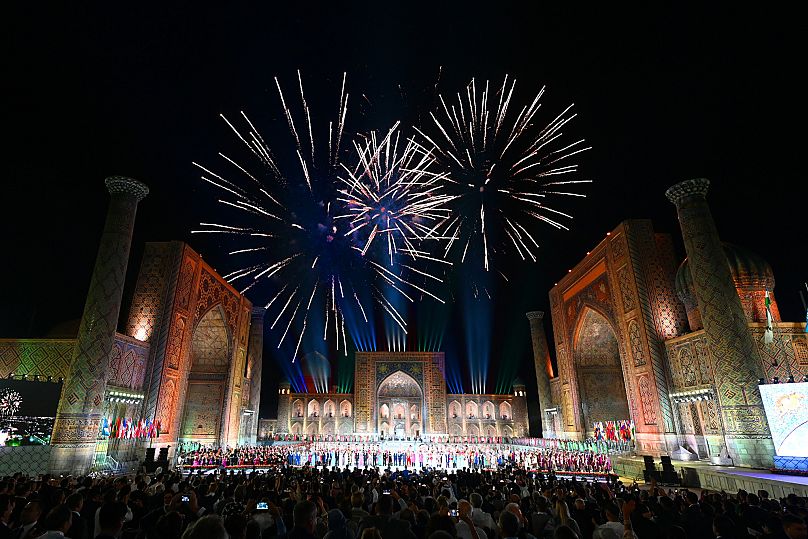
On Thursday and Friday, Samarkand will play host to the inaugural high-level gathering between the European Union and the Central Asian nations.
This pivotal occasion will usher in a fresh era in the relationship between these areas, signaling a shift towards an unprecedented degree of multifaceted collaboration.
Arranging this dialogue underscores the European Union’s significant dedication to fostering collaboration and its pledge to bolster relationships with the Central Asian countries.
As European Council President António Costa remarked before the gathering, “We find ourselves in a time marked by disorder and disunity; thus, the sole viable approach for the EU is to fortify alliances aimed at achieving peace and economic growth.”
“In a multipolar world, greater and more focused involvement is essential. The inaugural EU-Central Asia summit will help reinforce our pledges to collectively secure peace, stability, and sustained development,” Costa stated.
An equally important remark came from European Commission Vice President Margaritis Schinas at an earlier time.
Schinas stated that the EU views Central Asia with significant importance, especially within the framework of present geopolitical instability.
In an era where global instability and insecurity are rising, Central Asia stands out as a zone of constructive developments. Our partnership with this area is not merely a fleeting occurrence; rather, we are committed to a lasting vision.
When discussing the enhanced collaboration between Brussels and Central Asia, analysts point out that over recent years, this partnership has developed into one that is steady, comprehensive, and advantageous for both sides.
Foundational legal and organizational structures for partnerships
Following the rise of newly formed independent nations in Central Asia, the European Union started efforts to build individual partnerships with these countries. Starting from 1991, the evolution of the EU’s approach towards Central Asia has passed through multiple significant phases. These shifts were influenced by transformations within the global diplomatic landscape, the progression of European unification, as well as Central Asia’s evolving significance in geopolitics—highlighted by its energy reserves, transportation routes, workforce potential, and strategic positioning.
The initial extensive collaboration effort was the “Technical Assistance to the Commonwealth of Independent States” (TACIS, 1991-2006). This program offered assistance to nations within the area as they carried out political and economic transformations, shifted towards a market-based economy, and reinforced legal standards. Throughout this endeavor, approximately 3,000 initiatives were executed with an overall investment exceeding €7 billion.
One major accomplishment of TACIS was the signing of Partnership and Cooperation Agreements with nations in Central Asia.
It should be highlighted that during the 1990s, European Union policies towards Central Asia were strongly focused on resources. The EU saw this area mainly as a supplier of energy resources and encouraged initiatives like TRACECA, which was geared toward facilitating transportation and logistics for securing hydrocarbon deliveries to Europe.
Following 2001, the emphasis moved toward enhancing security collaboration. Key focuses included fighting terrorism and curbing narcotics smuggling originating from Afghanistan. This era also saw the initiation of the Border Management Programme (BOMCA) and the Chemicals and Precursors Control Programme (CADAP) in Central Asia.
The following crucial step was the implementation of the initial EU Strategy for Central Asia in 2007 (an independent initiative – the European Neighborhood and Partnership Instrument – was created for the East European CIS countries).
This phase saw the emergence of Central Asia being viewed as a cohesive entity. Additionally, a system for organizing yearly gatherings between the European Union’s foreign ministers and their counterparts from Central Asian nations was established.
As part of this strategy, numerous undertakings have been carried out ranging from regional, environmental, and energy programs to ventures focused on security, human rights, and the rule of law.
Nonetheless, according to specialists, the initial EU strategy fell short of aspirations because it was overly broad and had several flaws, deterring substantial engagement from the Central Asian nations.
Furthermore, the document underwent multiple revisions to enhance its efficacy; however, the executed measures and collaborative efforts stayed restricted. Despite being originally conceived as a decade-long plan, it took 12 years before this approach was superseded by a fresh initiative.
Central Asia from a fresh perspective
The neighborhood and regional cooperation policy introduced by the Republic of Uzbekistan under President Shavkat Mirziyoyev’s guidance has significantly influenced the European Union’s approach towards Central Asia.
Due to collaborative endeavors, an entirely fresh political climate has emerged in Central Asia. Throughout numerous years, myriad issues that had persisted for decades have been addressed. As a consequence, the area is transforming into a zone of reciprocal collaboration and enduring growth.
To put it differently, Central Asia is not merely seen as a bridge connecting East and West anymore; instead, it has emerged as an autonomous player in global politics.
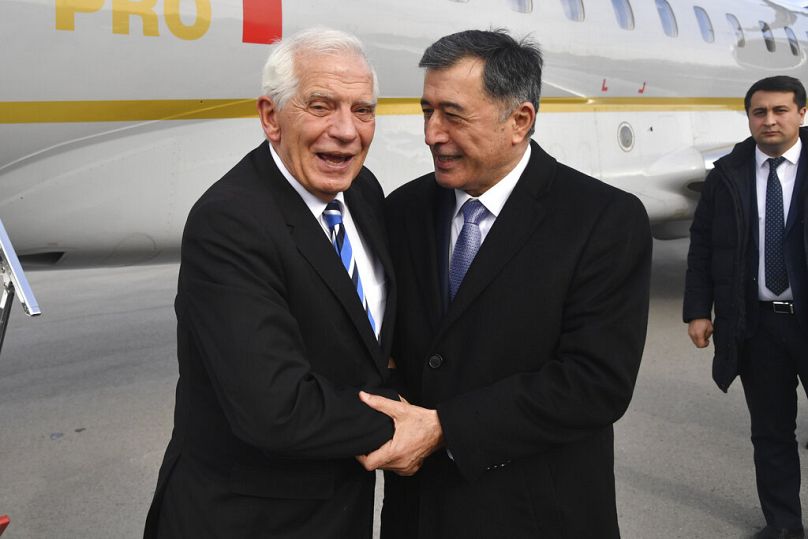
The remarks made by former European Commissioner for Foreign Affairs and Security Policy José Borrell at the EU-Central Asia Transportation Investors Forum in January 2024 serve as an illustration of his stance.
“At one point Central Asia seemed like a remote place, but now you find yourself right at the heart of all action,” he remarked back then.
This altered perspective on the area’s significance is mirrored in the EU’s strategic outlook. When introducing the updated Strategy for Central Asia in 2019, the EU leaned heavily on fostering regional collaboration, expanding upon earlier efforts.
This method can be seen in the execution of all 10 sectors of collaboration within the updated strategy, which encompasses human rights, democratization, education, economic growth, energy, transportation, environmental protection, water management, cross-cultural communication, and regional stability.
These concepts are further supported by novel terminology introduced in the strategic document, including “connectivity,” referring to enhanced cross-regional linkages; “inclusivity,” signifying openness towards various outside entities within the region; and “sustainability,” denoting the capacity to mitigate potential hazards and challenges—alignments that resonate deeply with the goals set forth by nations across Central Asia.
Currently, the area’s countries are keen on securing European investment, technology, and innovation due to their own requirements and the changing global political landscape. These nations aim to tackle key objectives related to maintaining stability and fostering sustainable growth in sectors like economics, manufacturing, energy, transportation, human resources, and climate issues.
Multifaceted cooperation
The European Union has notably enhanced its engagement with Central Asian nations, paying closer attention to their interests across various domains including political ties, security matters, commercial activities, investment opportunities, and cultural exchanges.
Specifically, the regulatory and legal foundation for EU-Central Asia engagement is being reinforced. In recent years, Brussels has developed relations with the five Central Asian countries via Comprehensive Partnership and Cooperation Agreements (CPCAs).
So far, Kazakhstan and Kyrgyzstan have already entered into similar agreements with the European Union. In March 2024, Turkmenistan signed a protocol related to the CPCA, whereas Tajikistan and Uzbekistan are currently in the process of finalizing their signatures for the document.
The adoption of the Joint Roadmap for Strengthening Relations Between the EU and Central Asia in October 2023 offered an extra push towards enhanced collaboration. This roadmap encompasses crucial sectors such as cross-border political discussions, increased trade and economic connections, energy sector growth, building a sustainable, carbon-neutral economy, and tackling shared security challenges.
The EU along with Central Asian nations continue to engage in robust political discussions at both the highest and high governmental levels. During these exchanges, two significant summits took place; one in Astana in October 2022, and another in Bishkek in June 2023. These gatherings allowed participants to examine potential avenues for collaboration and reaffirm their dedication to enhancing the overall partnership between them.
Moreover, a sequence of ministerial conferences was held, with the most recent one occurring on March 27, 2024, in Ashgabat. This conference focused on preparing for the forthcoming EU-Central Asia summit scheduled in Samarkand. It also addressed an extensive array of topics such as the impact of contemporary geopolitics on the region, enhancing transportation and digital links, fostering collaboration in energy and water management, promoting trade, education, and scientific advancements.
Enhancing political discussions creates new possibilities for boosting trade and economic relationships as well as fostering industrial collaboration.
The European Union continues to be the biggest investor in Central Asia, contributing more than 40% of all direct foreign investments during the last decade (exceeding €100 billion). The engagement encompasses crucial areas such as pharmaceuticals, construction, energy, and agriculture.
A key area of collaboration involves the extraction and refinement of minerals. Given the growing emphasis on diversifying sources of crucial materials, nations in Central Asia have become more prominent players in the international market.
Agreements reached with Kazakhstan in 2022 and Uzbekistan in 2024 permit European businesses to enhance their collaboration with these Central Asian nations in advanced technology sectors.
The implementation of the “Global Gateway” strategy within the transportation and logistics sector is becoming increasingly significant. Central Asia is evolving into a crucial transitory hub for Eurasian communication networks, with the Trans-Caspian International Transit Route holding a particularly vital position.
In the array of infrastructure initiatives designed to boost the region’s logistical capabilities, the construction of the China-Kyrgyzstan-Uzbekistan railway stands out as notably significant.
The outcomes from the inaugural investment and transportation forum between Central Asian nations and the European Union, which took place in Brussels in January 2024, have injected fresh momentum into collaborative efforts. At this gathering, it was disclosed that €10 billion would be allocated toward upgrading the Trans-Caspian International Transportation Corridor linking Asia with Europe.
A significant area of collaboration between the EU and Central Asia involves integrating the region digitally into the worldwide economy. Earlier this year, in March, during an official tour of the region undertaken by European Union Commissioner for International Partnerships Jozef Siekera, the TEI Digital Connectivity initiative was initiated. This program aims at advancing satellite communication systems, increasing broad bandwidth internet accessibility, fostering technological advancements, and improving cyber security measures. Such efforts help establish a more equitable and resilient economic framework while narrowing the gap created by unequal technology distribution.
A significant part of the engagement between the European Union and Central Asia continues to focus on addressing climate change and shifting towards sustainable development. Notable programs in this domain encompass the “SECCA” initiative under the “Team Europe” framework, the Water and Energy Program known as CAWEP, along with the “Green Central Asia” initiative.
Their goals include efficient management of water resources, creating eco-friendly energy solutions, and adjusting to climate change impacts.
Key focuses for tomorrow
In general, the present condition of ties between Central Asian nations and the European Union shows a shared interest in enhancing collaboration. For this region, the EU serves as more than just a crucial trading, economic, and investment ally; it also acts as a primary reference point for sustainable growth, digital progress, and environmental issues.
It is clear that an extensive conversation among the involved parties is increasingly crucial for establishing a fresh approach to their interactions. Expanding this discussion allows them not only to adjust to worldwide challenges but also to foster more precise and meaningful collaboration in key sectors such as energy, digitization, security, and infrastructure development.
Given these points, it appears fitting to explore various suggestions that might help establish a lasting collaborative relationship.
For the European Union, this involves upholding a firm dedication to backing initiatives focused on enhancing regional collaboration and establishing adaptable approaches for interacting with Central Asian nations. This enables the EU to modify its strategies and policies according to current circumstances.
The European Union ought to concentrate on crucial sectors for collaboration like transportation, energy, climate change mitigation, and enhancing human capabilities, since these elements are vital for fostering the area’s sustained economic expansion over time.
Lastly, Brussels needs to strengthen the institutional and regulatory basis of the partnership. This includes completing the signing of Enhanced Partnership and Cooperation Agreements with every country in the area, assisting them in joining the GSP+ program, boosting the presence of Central Asian nations within EU institutions, and aiding the establishment of their offices in the region.
Central Asia should also reinforce its dedication to meeting all commitments under the EU cooperation framework. This would enhance the area’s reputation as a dependable strategic ally and sustain efforts toward greater intra-regional collaboration and positive interactions with outside entities. By doing so, Central Asia can fortify its position as a hub for mutual partnerships and collective economic growth.
It should also facilitate the execution of the EU’s Central Asia Strategy, showing the region’s dedication to enhancing collaboration with Brussels and allowing the EU to more effectively strategize its initiatives and establish key priorities.
Additionally, the area needs to launch cultural and humanitarian initiatives aimed at fostering public diplomacy and enhancing the favorable perception of Central Asian nations within the EU, as well as reciprocally.
Consequently, the forthcoming EU – Central Asia summit in Samarkand offers a distinctive chance that will surely provide fresh momentum for the advancement of comprehensive collaboration between these areas.
This will raise the relationship to a substantially new stage, marked not just by an increase in economic connections but also by improved cooperation in key strategic sectors, thus establishing the groundwork for a lasting alliance.
Bakhtiyor Mustafayev serves as the Deputy Director of the Institute for Strategic and Regional Studies under the President of the Republic of Uzbekistan.