



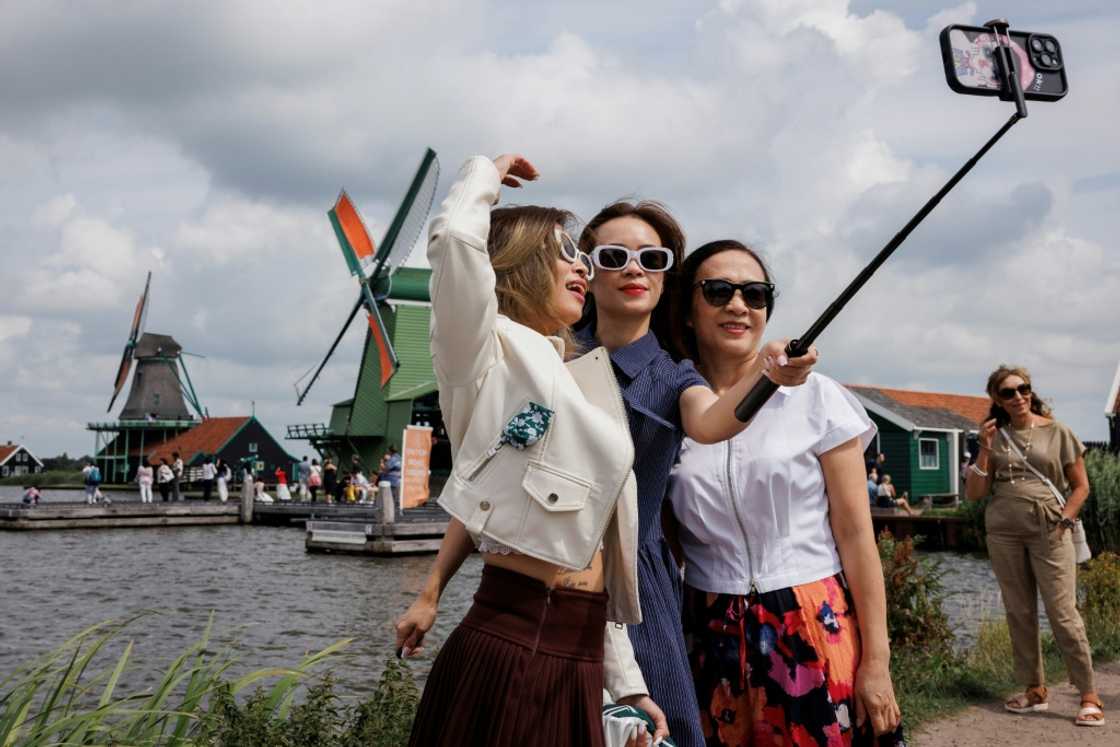
Featuring ancient windmills and sloped-roof wooden homes situated along a winding river, the picturesque and widely popular spot known as Zaanse Schans is essential to visit for anyone exploring the Netherlands.
However, the village with its historic structures close to Amsterdam has been labeled “a national emblem of over-tourism” by local officials, who currently aim to implement a controversial entry fee.
The intense discussion regarding the proposed 17.50-euro ($20) ticket for next year occurs amid worldwide opposition to overcrowded tourism, with popular destinations such as Venice imposing fees for daily visits.
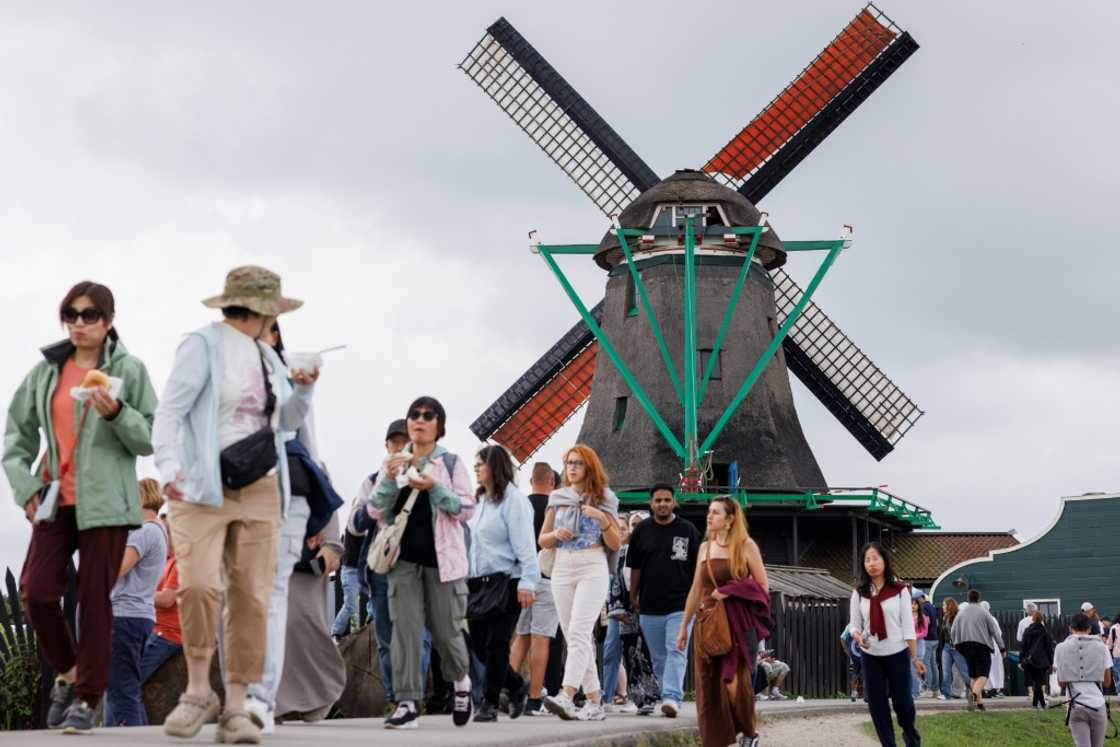
On a magnificent summer day during AFP’s visit, lengthy lines for the renowned windmills stretched outside the entrance, with groups moving across bridges, patiently awaiting photo opportunities showcasing the picturesque landscape.
Buses release hundreds of sightseeing visitors throughout the day, filling up a modestly sized space that remains open and accessible without charge — at least temporarily.
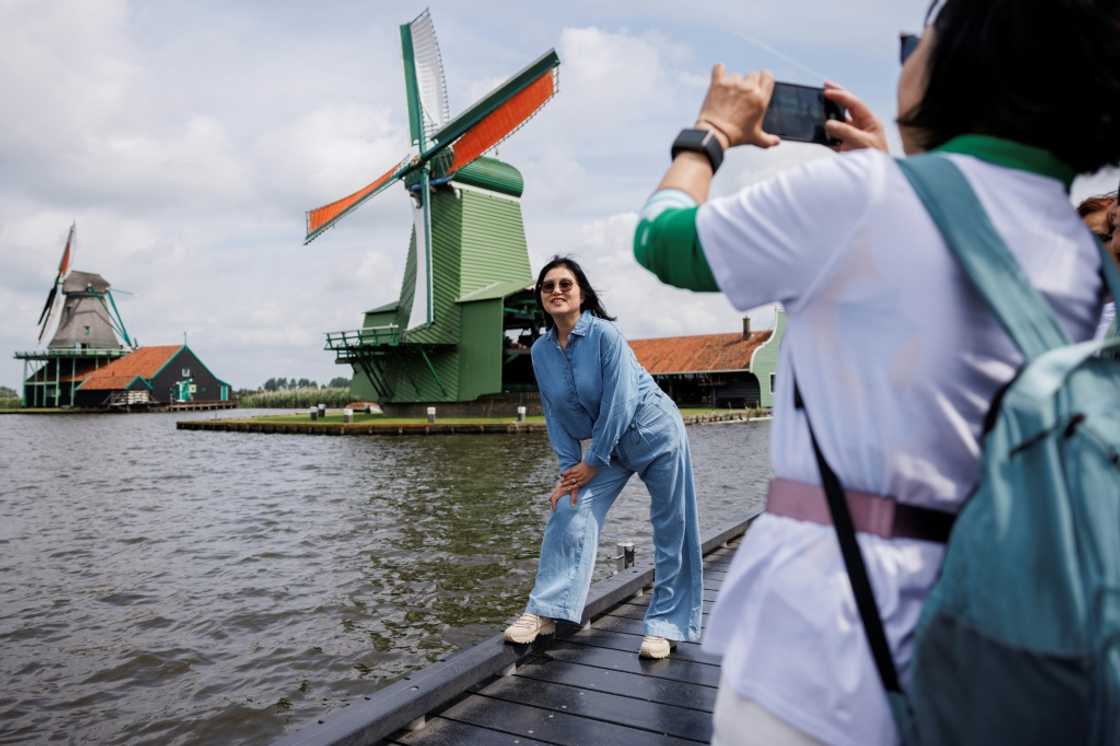
The local authority in neighboring Zaanstad claims the charge is essential for maintaining historic structures, which are facing “intense strain” due to large visitor volumes.
“Over the past few years, the Zaanse Schans has become a national emblem of over-tourism,” stated councilor Wessel Breunesse.
Approximately 2.6 million visitors came in the previous year, according to the council, with projections indicating an increase to three million in future years unless action is taken.
A ticket charge might lower the yearly number to approximately 1.8 million visitors and generate millions of euros for maintaining these historical structures.
“Not taking action is not feasible. With insufficient funds for proper upkeep, the heritage will disappear within a few years,” stated the council in a message delivered to AFP.
Tourism-dependent economy
Many visitors remain unaware until their arrival that although numerous structures originate from the 16th century, the location itself is a modern and constructed anomaly.
Following World War II, conventional wooden building techniques faced the risk of being completely lost.
Enthusiastic about safeguarding this piece of history, local Mayor Joris in ‘t Veld proposed a solution: he intended to move the homes and place them at a newly secured location.
In 1955, the first mill came into existence, followed by the first home a few years afterward. In time, the “Zaanse Schans” location became renowned enough to be formally inaugurated by Queen Juliana in 1972.
“Zaanse Schans was not originally intended to be the global attraction it has become, drawing millions of tourists from around the globe,” said councilor Breunesse.
However, for local resident and entrepreneur Ingrid Kraakman, the proposal to impose an entry fee would be catastrophic, not only as a community member but also for the dairy store where she is employed.
“A local living here doesn’t wish to reside behind a barrier… that’s unacceptable,” said the 62-year-old person, speaking to AFP from her 17th-century house located in the center of Zaanse Schans.
Kraakman and her husband Ko have resided in this region for 33 years and feel that implementing an entry charge would severely harm the local economy and employment opportunities.
“She mentioned there is significant fear,” she noted, adding that approximately 80 percent of the regional economy relies on tourism.
Her dairy store is full of visitors drawn in by complimentary tastings and mementos, yet she mentioned that the charge would significantly hinder their expenditure.
A household of four would already be spending approximately 80 euros including parking, which cuts into their funds for in-venue shopping, she pointed out.
“They do not purchase cheese. They do not buy clocks. Instead, they opt for a keepsake or perhaps the tiniest piece of cheese available,” she said to AFP.
Referendum demand
The Kraakmans have gathered over 2,000 signatures for a vote on this matter, yet their efforts have not been heeded at the municipal office.
Knowing about certain local opposition, the council has promised that the location will remain accessible to residents and that there won’t be any barrier surrounding the space.
Even though the plans are set for next year, an adjustment has been proposed to account for potential postponements. Currently, 2026 appears as an overly ambitious target — referred to by a local authority figure under confidentiality as a “moonshot.”
Many visitors believed the journey was worthwhile despite having to cover the costs.
Spanish tourist Robert Duque said to AFP: “It’s a beautiful location, although at times it gets very busy and you can’t fully appreciate the experience.”
A 35-year-old operations manager stated that he would be open to paying an entry fee to reduce tourism numbers.
“I believe it’s beneficial; thus, we can space out the arrival of visitors and make better use of the amenities,” stated Duque.