


In early March, Florian Hahn, who speaks on defense policies for Germany’s CDU and CSU parties, advocated for the reinstatement of mandatory military duty before the conclusion of the year.
“He warned against passively observing as insecurity grows around us,” he said to the German newspaper Bild.
The German parliament has approved a historic
debt-financed bill
For defense and infrastructure, the focus is shifting towards reintroducing mandatory military service. However, what would this reinstatement entail—and might it actually address Germany’s defense issues?
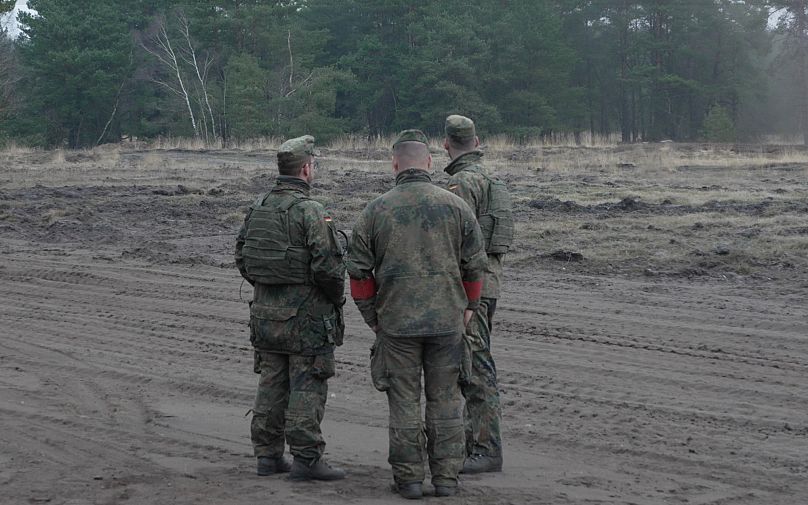
What were the reasons for suspending mandatory military service in Germany?
Conscription was established in 1956 and continues to be codified in Article 12a of Germany’s Basic Law.
Despite the conclusion of the Cold War and national unification, mandatory enlistment has persisted. Nevertheless, from the outset, people have had the option to opt out of military duty based on their conscientious beliefs.
In these situations, applicants needed to obtain permission for their conscientious objections and were subsequently required to undertake alternative service aimed at serving the public interest, referred to as civilian service.
Until 2011, all males at least 18 years old had to serve in the Bundeswehr. That year, the then Defence Minister Karl-Theodor zu Guttenberg discontinued compulsory service.
Compulsory military service was suspended to reduce the size of the Bundeswehr from around 255,000 soldiers to 185,000. The reasoning at the time pointed to the significantly changed global security landscape, which did not pose a major risk.
According to the latest Bundeswehr data from May 2024, the total strength stands at just under 261,000 people. This includes 180,215 military personnel and 80,761 civilian employees.
However, the goal is to increase troop numbers to around 203,000 soldiers by 2031. This planned increase is driven by Russia’s full-scale invasion of Ukraine and the resulting shift in Europe’s security landscape, as outlined in a draft law from December last year.
To reach this objective, the reinstatement of mandatory military duty is under discussion. However, despite appearing to be an easy fix, it isn’t quite so simple.
“Theoretical and practical answers both exist,” clarified Dr Frank Sauer, a political scientist from the Bundeswehr University in Munich.
Theoretically speaking, the answer is yes; legally, we could reintroduce mandatory military service. Practically though, this wouldn’t make much difference since there aren’t any mechanisms currently set up for drafting individuals.
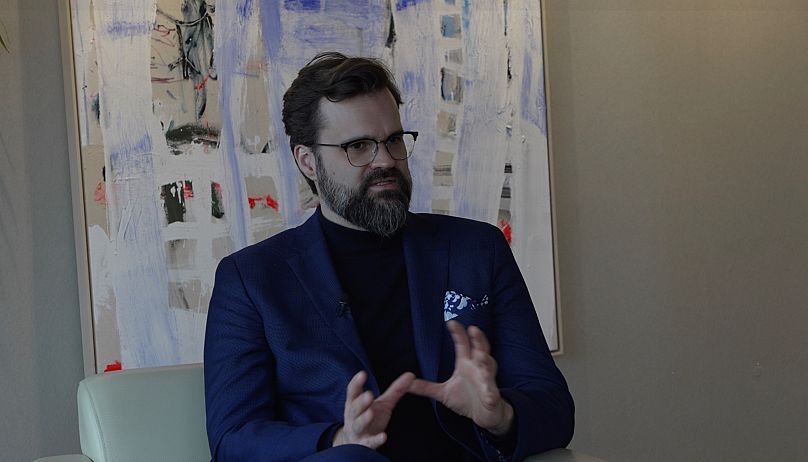
This primarily pertains to logistics, which are no longer in place and thus can’t be utilized for recruitment. Should mandatory military service be reinstated, the Bundeswehr would face shortages not just in terms of manpower needed to train newcomers but also in facilities like barracks and regional defense headquarters.
As was mentioned by Sauer, the complete infrastructure required for this no longer exists.
Sauer does not see conscription as an easy fix and warns against employing it to tackle the Bundeswehr’s staffing shortfall or to achieve the goal of having 203,000 soldiers by 2030.
Sauer posed the query: “Why should we consider reinstating mandatory service when all it might lead to is my training with weapons or perhaps serving again as a Red Cross paramedic? What exactly is our objective here? Furthermore, do we genuinely possess the resources and capabilities required to accomplish the goals outlined in our current proposal?”
The ‘means-to-an-end discussion’
According to Sauer, before reinstating mandatory military duty, there needs to be a conversation about how to accomplish the desired outcome.
Currently, there is neither an agreement nor a distinct discussion about the role of conscription in Germany. Potential coalition partners for the upcoming government continue to differ on whether, or how, conscription should be carried out.
According to reports from Redaktionsnetzwerk Deutschland, the CDU and CSU political parties advocate for reintroducing mandatory military service as part of their strategy to create a “strong deterrent.”
On the contrary, the Social Democratic Party (SPD) still supports voluntary service but suggests establishing a system for mandatory military registration and oversight.
Nevertheless, apart from political considerations, there needs to be a wider societal agreement on the place of mandatory military service. As Sauer points out, some argue that this could expand the size of the Bundeswehr.
Some view it as a means to instill discipline in youth once more. Others argue it will improve civil defense and supply additional staff to emergency services. Nevertheless, some perceive it as an opportunity to strengthen community unity.
Mandatory military duty cannot be implemented using a “one-size-fits-all” model and should consequently be customized accordingly.
It’s unclear whether there will be enough support in parliament for altering the rules around mandatory enlistment. The political analyst explained to Euronews, “Currently, what we can enforce is unchanged obligatory military duty.”
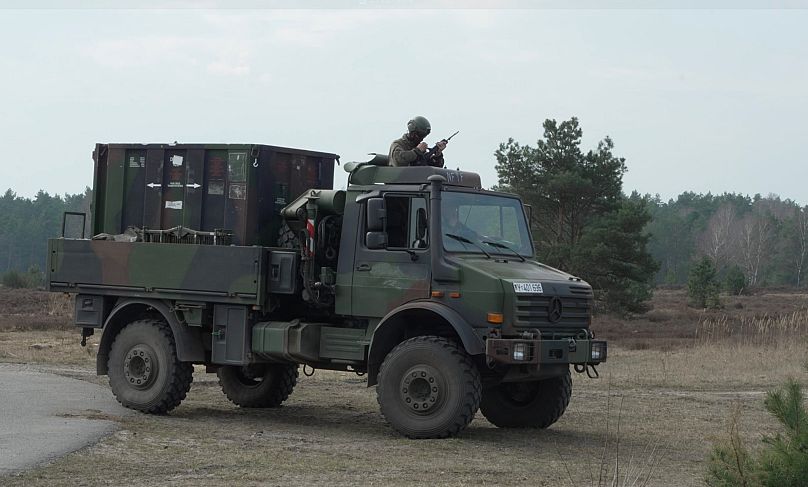
Currently, conscription is applicable solely to males. Thus, an updated system of conscription should take into account the potential inclusion of females too.
The Bavarian Minister President Markus Söder mentioned in a ZDF interview that the primary objective is not to emphasize the creation of a gender-equitable Bundeswehr, but instead to build a stronger and more efficient military force. Additionally, he stressed the significance of the deterrence impact that the Bundeswehr needs to maintain.
“Söder stated that we aim for a Bundeswehr so robust that potential adversaries would think twice before targeting us.” Nonetheless, even with the reinstatement of mandatory military duty, the strength of the Bundeswehr won’t dramatically improve immediately.
Sauer thinks there is minimal enthusiasm within the Bundeswehr for reinstating mandatory service. He states, “The armed forces are already grappling with significant staffing shortages, particularly concerning trainers.” The political analyst elaborates further.
In almost every discussion I’ve been part of, nobody has mentioned, ‘That’s an excellent concept; we should reintroduce mandatory military service.’ Additionally, if these professionals were tasked with training recruits as well, their resources would be even more strained.
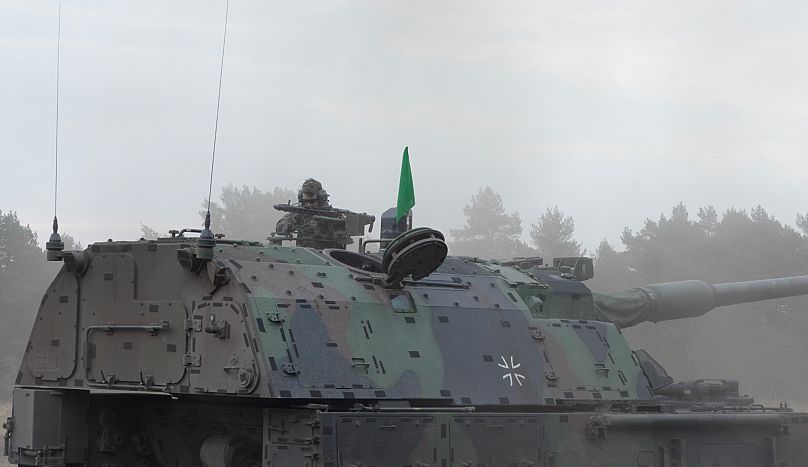
Defending one’s country?
Politicians such as Söder and Hahn have stated that the main objective of mandatory military service was to bolster the Bundeswehr. Nevertheless, a recent Forsa poll conducted for RTL and ntv revealed that merely 17% of Germans expressed willingness to bear arms in defense of their nation should it face a military assault.
On the contrary, research conducted by the French Ministry of Defence indicated that 51% of individuals aged between 18 and 25 expressed willingness to combat in Ukraine should it become essential for defending their country. Furthermore, approximately 62% of people in France favor reinstating mandatory military service, a practice discontinued back in 1997.
According to a YouGov poll, 58% of Germans support the return of mandatory military service. Conversely, as reported by Die Welt, 61% of those aged between 18 and 29 oppose this reinstatement.
It is still uncertain whether and in what format the mandatory military service codified in the Basic Law will be reinstated. So far, the sole agreement is that this change cannot occur immediately.