by admin | Mar 24, 2025 | africa, estate law and wills, estate planning, immigrants
Thousands of abandoned inheritances uncover hidden narratives of African immigration, prosperity, and familial connections forsaken.
Every year, thousands of individuals pass away in the UK without having a will or designating their closest relatives, including numerous Nigerians and other African nationals. As a result, their assets such as properties and savings often go unclaimed.
The United Kingdom government’s most recent update to their registry of abandoned estates lists more than 170 instances linked to people born in Africa, with Nigerian nationals representing a substantial number of these cases.
A Legacy Lost
For numerous immigrants, the UK transformed into a second homeland—an area brimming with opportunities enabling them to accumulate wealth, buy properties, and establish new lives.
Nevertheless, when someone passes away without a will, their possessions typically get categorized as “bona vacantia” (unowned property). This then places these assets under the guardianship of the Crown.
Often, families in Africa are not aware of these estates, resulting in a perpetual loss of assets.
Instances such as those of Adenike Adebiyi, who passed away in Hackney, London, in 2004, or Solomon Adekanmibi, who died in Colchester, Essex, in 2021, underscore the ramifications of passing without a will.
Without any known relatives or lost paperwork, these individuals’ assets stay unclaimed, and their life stories might be overlooked.
Why It Matters
This observation highlights a significant problem: numerous African households remain uninformed about their family members’ monetary circumstances overseas.
Frequently, migration interrupts communication, and lacking proper documentation means the assets accumulated abroad stay unreachable.
The loss extends beyond finances; it also runs deep culturally and emotionally. Estates left unclaimed embody countless family stories, ties, and the challenges faced by immigrants who established new lives across lands.
The Challenges
Lack of Awareness:
Many households in Nigeria and various other African nations do not know about their family members’ assets overseas or the process for claiming them.
Genealogical Gaps:
The data offered in official documents frequently lacks completeness. Take for instance the UK’s unclaimed estates list; numerous listings here do not include comprehensive family backgrounds or details about close relatives.
Cultural Hesitations:
Across numerous African societies, talking about death and drafting wills is seen as taboo, causing people to hesitate when it comes to organizing how their assets should be distributed.
A Call to Action
Governments across Africa, along with community groups and legal experts, should work on increasing public understanding of this matter.
Here are some actions that can be taken:
Promoting Will Creation: It’s essential for migrants living abroad to receive education on the significance of writing wills to safeguard their possessions.
Genetic Assistance: African families may receive support in locating undiscovered inheritances via collaborations at either a local or an international level.
Public Education Initiatives: Both social and conventional media outlets can emphasize the significance of estate planning and provide families with accessible resources.
How to Verify the List
The British government keeps an Unclaimed Estates List available to the public, which gets refreshed every day.
Family members have the option to browse through the list using criteria such as surname, city of birth, or additional identifying details to explore possible claims.
Final Thoughts
To numerous Nigerians and African individuals residing in the UK, their abandoned estates signify not only financial assets but also narratives of migration, resilience, and self-identity.
By tackling this increasing concern, families can restore their traditions, ensuring that the legacy of those who moved as part of the diaspora will not be lost.
This is the most recent daily update for March 24, 2025. Please review the following list.
HERE
.
Provided by SyndiGate Media Inc.
Syndigate.info
).

by admin | Mar 24, 2025 | celebrities, entertainment, movies, streaming, streaming movies & tv
Spring has only just begun, but What to Watch is eagerly anticipating what April will bring.
Here are several valid explanations for this:
Ryan Coogler
‘s vampire action movie
Sinners
with
Michael B. Jordan
scheduled for release at cinemas, the World Junior Curling Championships will be held in Italy, and
Black Mirror
returns to Netflix
To instill fresh fears of a technological doomsday for everybody.
Moreover, several major films from the previous year and this year are scheduled to premiere on streaming platforms in April.
The two highly praised yet lesser-known movies from last year will be released on Hulu, whereas Netflix will launch new ones.
Gareth Evans
and
Tom Hardy
‘long-awaited action film. These three movies are definitely must-watch selections for April 2025 and onwards.
‘Small Things Like These’ (2024)
What steps should one take to pursue excellence?
Cillian Murphy
reached the peak of his professional journey with
Christopher Nolan
‘s
Oppenheimer
, a biographical film spanning three and a half hours that surprisingly raked in nearly $1 billion and earned him an Academy Award. In his subsequent project, the Irish actor chose to lead a low-budget dramatic piece.
the Magdalene laundries
those that remained operational and active in 1985, the year
Small Things Like These
is set.
Where to Stream the Films Nominated for Best Picture at the 2024 Oscars
Bill Furlong (played by Murphy) is a coal dealer who has a caring spouse and five daughters. Upon delivering coal to the nearby convent, he uncovers a young expectant girl named Sarah.
Agnes O’Casey
), terrified and shivering in a shed. The convent’s Mother Superior, Sister Mary (
Emily Watson
explains that Sara fell prey to a juvenile prank that spiraled out of control, however, Bill remains unconvinced. As he starts probing deeper into the situation, he faces resistance both from the locals and even the Church itself.
Small Things Like These
It’s a subtle drama that brings to life a genuine catastrophe from Ireland’s history during the 1800s and 1900s. Murphy delivers an outstanding performance, capturing Billy’s ethical conflict between assisting Sarah and upholding respect for his spiritual authorities. Despite tackling serious themes, the film remains uplifting rather than disheartening, culminating in a scene that might prompt a soft-spoken “hallelujah.”
Small Things Like These
will be streamed on Hulu starting April 8.
‘The Order’ (2024)
During the holiday rush last year, several films came out but unfortunately got overlooked by viewers. Among these was one particular movie.
The Order
, an outstanding historical action-thriller
That chronicles the emergence of a white supremacist organization in the Pacific Northwest during the early 1980s.
Jude Law
star as FBI Agent Terry Husk, who initiates an investigation into a questionable murder case which eventually points to Bob Matthews (
Nicholas Hoult
), a dynamic leader of a extremist organization known as The Order. They aim to advance white supremacist ideologies via domestic terror tactics, and Husk, alongside inexperienced law enforcement agent Jamie Bowen,
Tye Sheridan
They are the only ones capable of halting him.
The Order
It appears to be a typical macho action film at first glance, yet it delves deeply into how subtle racist beliefs can infiltrate everyday life in smaller communities across America. One might not expect the distinctly British and upper-class Law to shine as a graying, middle-aged American police officer, but he pulls off this role impressively, delivering what could be considered one of his strongest roles to date. His performance is complemented well by Hoult as Matthews; despite being antagonists, Hoult imbues his character with considerable appeal.
The Order
will be streamed on Hulu starting April 18.
‘Havoc’ (2025)
A narcotics transaction has recently turned sour, and seasoned investigator Walker
Tom Hardy
He’s not pleased. His identity has been exposed, an armed criminal organization is after him, and even his police colleagues doubt him. Adding insult to injury, he must rescue the son of a corrupt politician, who was implicated in the drug scandal and harbors secrets beyond his dependency issues. Now, Walker faces the challenge of saving this boy while simultaneously dodging gunfire from allies and adversaries alike.
‘Peaky Blinders’ Actors: Find Out What the UK Celebrities Are Up To Nowadays
Havoc
comes from director Gareth Evans, who created the contemporary action masterpieces
The Raid
and
Gangs of London
, so get ready for plenty of gunfire, blasts, and brutal brawls. To top it off, there’s a pursuit where someone hurls a washing machine into a police cruiser chasing them. The adrenaline is pumping at an all-time high throughout this film.
Havoc
, and there’s no one better to guide you through it than Hardy, who is a veteran of these kinds of movies. His
Venom
movies
they appear similar to romantic comedies when compared
Havoc
.
Havoc
Completed filming in 2021, this project has faced significant delays in post-production along with numerous reshoots. Usually, these signs aren’t encouraging, but the teaser trailer suggests an entertaining experience, and Evans hasn’t produced a flop so far.
Havoc
will be available for streaming on Netflix starting April 25.
by admin | Mar 24, 2025 | journalism, news, politics, politics and government, politics and law
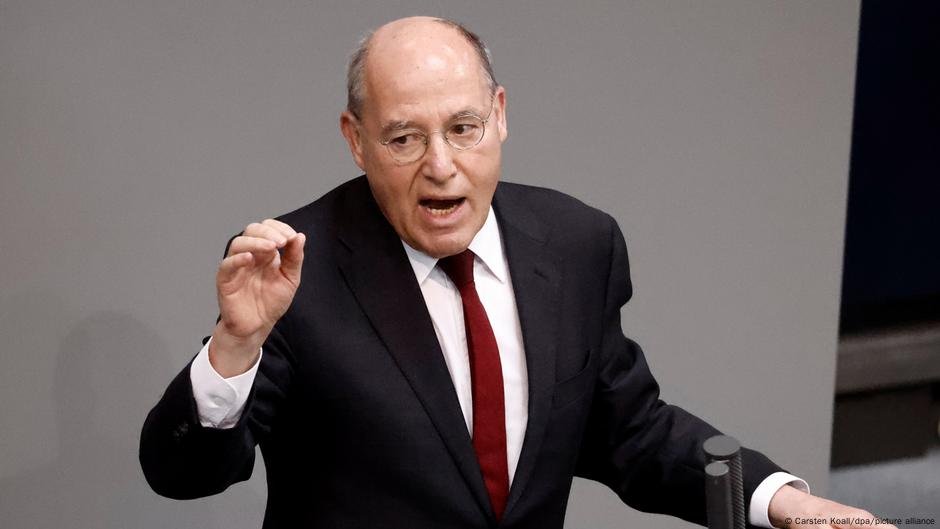
Gregor Gysi will begin the inaugural session of the new Bundestag when it meets on Tuesday, March 25. The 77-year-old from the left-wing party has full liberty to choose both the topic and duration of his address.
According to the rules of the German parliament, the longest-serving member has the privilege of opening the inaugural session of a new Bundestag following a general election. In this instance, that role falls to 77-year-old Gregor Gysi, who has been a nearly continuous member for 31 years, from October 3, 1990—the date of Germany’s reunification.
Gysi was raised in the German Democratic Republic (GDR), which was a communist regime.
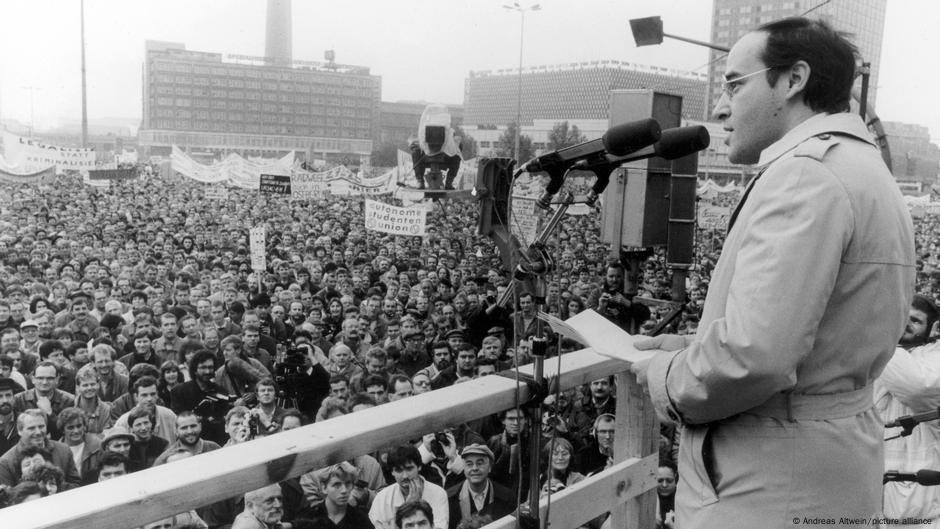
The accomplished attorney, who was also the offspring of ex-GDR Cultural Minister Klaus Gysi, entered the political arena amid the nonviolent upheaval of the late ’80s. Following the collapse of the Berlin Wall on November 9, 1989, which put the influential Socialist Unity Party of Germany (SED) at a crossroads, Gysi assumed leadership swiftly. Against considerable doubt, he managed an extraordinary feat: steering the SED away from oblivion.

How the Left Party Developed Over Time
To signal a new beginning for a new democratic era, the SED adopted the name PDS (Party of Democratic Socialism) and went on to win 16% of the vote in the last and only free East German election, to the GDR People’s Chamber.
Next, Gysi took on the role of the primary contender for the PDS in the initial post-reunification election to the Bundestag, which was headquartered in Bonn, the capital of Western Germany at that time.
“When I entered the Bundestag in 1990, I wasn’t held in high regard; instead, I was despised by certain individuals,” Berlin-native Gysi recounted to the weekly paper lately.
Das Parliament
He mentioned having to gain respect over many years, yet he ended by saying that now things have changed: “I think most members of the Bundestag acknowledge my political contributions.”
Stasi allegations
Many people also criticize the left-wing politician due to allegations that were never completely resolved. In the mid-1990s, documents from the notorious East German Ministry for State Security, commonly referred to as the “Stasi,” came to light, indicating that Gysi might have been a Stasi informer. However, no evidence was ever found to substantiate these claims.
Nevertheless, a Bundestag committee examining potential Stasi involvement among Members of Parliament concluded that Gysi was indeed an informal informant for the East German secret service. Despite having previously advocated for those opposed to the government during the GDR period, Gysi managed to successfully defend himself multiple times in court against recurring allegations.
The accusations regarding his history failed to diminish his popularity, even within the former West Germany. Known as an adept speaker, he frequently intimidates fellow Members of Parliament with his clever parliamentary addresses. Additionally, he is a favorite among television talk show audiences and much in demand as an interview subject.
Safeguarding East German interests
Gysi has consistently viewed himself as an advocate for the interests of eastern Germany. Following reunification, millions of former GDR residents found themselves without work due to the struggling state-run businesses (VEB) being incapable of competing within the capitalist framework. As a result, they rapidly started feeling like inferior citizens.
Gysi aimed to alter this situation, yet his efforts were only partly successful. At first, the newly formed leftist group achieved electoral success with more than 20% of votes in the former East Germany. However, gradually, numerous individuals distanced themselves from the party known as The Left. Consequently, many residents in Eastern Germany shifted their support toward the right-populist Alternative for Germany (AfD) party.
![]()
Gysi is particularly delighted with the unforeseen success of his party during the federal elections held on February 23rd. Having secured slightly less than nine percent, they nearly doubled their previous outcome from 2021. The rise in backing for the AfD has left him feeling disheartened. Likely due to this concern, he’s anticipated to address the condition of societal affairs in his inaugural speech as a former speaker of the Bundestag. Additionally, he plans to weigh in on matters concerning international relations amidst multiple conflicts and upheavals.
Thirty-five years since German reunification, it is both an honor and a responsibility to kick off the inaugural session of the new Bundestag, as Gysi stated.
Das Parlament
He will deliver both his opening and closing remarks at this event – with no restrictions on how long he can speak. “Don’t fret,” he quipped, “I won’t take advantage of that liberty.”
The original version of this piece was penned in German.
If you’re still around: Each Tuesday, the LIFEHACKeditors compile updates on developments in German politics and society. You can subscribe here for the weekly email newsletter called Berlin Briefing.
Author: Marcel Fürstenau
by admin | Mar 24, 2025 | banking, business, economics, investing business news, money
-
Ecobank Kenya has injected KSh3.5 billion ($27 million) into its capital reserves to meet the requirements of the updated banking regulations and fortify its financial position.
-
This investment aims to support the bank’s expansion within Kenya and across East Africa. Following this infusion of funds, their overall capital base in Kenya will increase to KSh8.5 billion ($65 million).
-
The Central Bank of Kenya has set a deadline for all commercial banks in the country to increase their core capital to KSh10 billion by 2029.
Bonface Kanyamwaya, who works as a journalist for LIFEHACK.co.ke, possesses over a decade of experience in areas such as finance, economics, business, stock markets, and aviation. He offers valuable perspectives on both Kenyan and international developments.
Ecobank Kenya has invested KSh3.5 billion ($27 million) to reinforce its capital position in line with the regulatory requirements set by the Central Bank of Kenya (CBK).

This investment aims to support the bank’s expansion of business operations in Kenya and East Africa—increasing its overall capital base to KSh8.5 billion ($65 million) in total.
All commercial banks in Kenya have been directed by Central Bank of Kenya to increase their core capital to KSh10 billion by 2029, with an initial target of KSh3 billion by end of 2025.
This action comes after changes were made to financial sector regulations at the end of last year when President William Ruto enacted the Business Laws (Amendment) Bill into law.
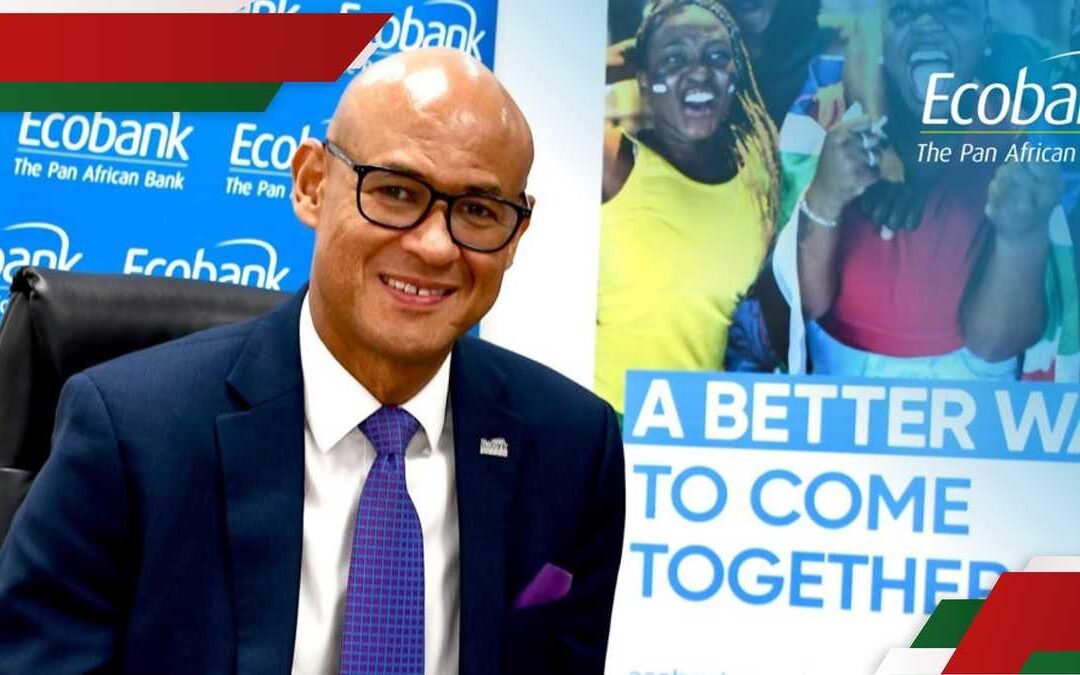
“Kenya holds significant importance as a strategic marketplace for the Ecobank Group and serves as a vital economic center fostering development throughout East Africa. This capital infusion bolsters Ecobank Kenya’s capacity to capitalize on emerging business prospects and generate lasting value for all stakeholders—aligning perfectly with our objectives of expansion, innovation, and profitability,” stated the bank’s CEO, Jeremy Awori, in an official press release.
This funding will allow the bank to aid business growth, ease cross-border commerce, and boost access to financial services.
Awori mentioned that this extra funding would support crucial economic factors such as local companies, small and medium-sized enterprises, financial technology firms, and female-led ventures.
Extra funds boost business expansion
This additional capital injection will strengthen the bank’s ability to broaden its footprint within key areas such as agriculture, manufacturing, information and communication technology (ICT), and innovation, along with payments and remittances, plus tourism and hospitality.
Moreover, the financial institution plans to utilize the extra funds to support budding sectors such as renewable energy, transportation and logistics, medical services, and retail commerce. The emphasis will be on fostering sustainable growth within Kenya and the broader East African region.
“This significant reinforcement bolsters our capacity to act as the preferred financial partner for international organizations, local companies, small and medium-sized enterprises (SMEs), fintech firms, and women-led businesses. It also solidifies our position as a leader in regional trade and payment solutions throughout Central, Eastern, and Southern Africa,” noted Josephine Anan-Ankomah, Managing Director of Ecobank Kenya and Regional Executive for Central, Eastern, and Southern Africa.

The modifications requiring commercial banks to bolster their capital requirements impacted the Banking Act, the Central Bank of Kenya Act, and the Microfinance Act. These amendments were designed to reinforce the stability of the banking industry.
Banks keep their capital levels relatively low.
Starting from 2012, commercial banks have been required to maintain a minimum core capital of KSh1 billion. Efforts to increase this requirement to KSh5 billion in 2015 did not succeed.
The most recent banking oversight report indicates that 11 institutions have failed to reach the KSh3 billion minimum core capital requirement mandated for the close of this fiscal year.
Earlier,
LIFEHACK.co.ke
It has been reported that if the Central Bank of Kenya (CBK) proceeds with the suggested rise in core capital from KSh 1 billion to KSh 10 billion over a span of three years, approximately 24 banks could be forced to close, affecting around 7,000 employees.

by admin | Mar 24, 2025 | financial markets, investing, investing market news, investing news, investors
Trump’s repeated tariff threats have rattled global markets. But in India, the market slump isn’t just about Trump. Millions of small investors are feeling the squeeze — for reasons beyond a potential US trade war.
It was the fear of missing out, or
Fear of Missing Out
That prompted Kanishk K. to begin investing in the stock market.
He informed LIFEHACK that during India’s struggle with the second wave of the COVID-19 lockdown in 2021, he began observing advertisements on Instagram showcasing social media personalities offering advice on earning money.
“I didn’t want to be left behind as others were making profits. This aspect really drew me towards investing in the market,” Kanishk stated.
He detailed how, following his initial foray into mutual funds, he progressively shifted towards stock market trading.
Similar to many novice investors, he lacked knowledge regarding the basics of investing but stayed updated on market trends, particularly through Reddit, the U.S.-based social media platform, as he mentioned.
Initially, “everything was going well.”
Enthusiasm in the stock market amid the COVID-19 pandemic
Saloni Puj* and Ishan Shah had experiences akin to Kanishk’s.
Puj, a media expert hailing from Kolkata, which serves as the capital of West Bengal, along with Shah, who operates a cultural hub imparting knowledge in art and music within the western metropolis of Ahmedabad, both ventured into stock market investments roughly during the period when pandemic-induced lockdowns were implemented.
Shah mentioned that the market was performing exceptionally well, giving the impression that everyone making profits was doing so through trading. He admitted to purchasing arbitrary stocks, often following suggestions from others. Surprisingly, regardless of his actions, he continued to see gains.
Puj adopted a more cautious strategy.
She stated that she was well-aware the market was experiencing an enthusiastic phase, and she recognized the bubble that was forming at the time.
In September 2024, the situation took a turn for the worse as the excitement surrounding their ventures suddenly deflated. Following an extended period of growth, the markets experienced a correction, which was then succeeded by a prolonged downturn.
New retail investors join the marketplace
For many Indians who entered the stock market following the pandemic downturn, the subsequent upturn proved to be an exciting period. This surge mirrored the approximately €250 billion ($275 billion) economic support package that Prime Minister Narendra Modi’s administration introduced in 2020.
Throughout the lockdown period, numerous individuals found themselves with additional free time and resources at their disposal, leading many to be swayed by the notion of earning fast and effortless profits.
“Sagun Agrawal, a derivatives trader in India’s capital markets and an advocate for financial literacy among women, noted that during the pandemic, individuals found themselves with extra money, leading many younger investors to enter the stock market as retail participants. This influx was beneficial for the market, enhancing liquidity and generating investment funds for capital creation,” he explained.
Online trading has gained popularity due to new firms providing minimal transaction costs and straightforward credit accessibility. An example of this is Margin Trading Facility (MTF), enabling investors to purchase stocks by initially paying just a portion of the total price. In this setup, brokers finance the remaining balance as a loan, accompanied by an interest charge.
What caused the market decline?
According to NSE data, from March 2020 to March 2024, the count of registered investors in India nearly tripled, reaching approximately 92 million.
India’s NIFTY 50 stock market index rose from approximately 8,000 points in March 2020 to unprecedented heights above 26,000 points in September 2024. Retail investors, swept up in the excitement, believed that everything was going well — right up until things took a turn for the worse.
In the six months since September last year, Indian equities have lost more than $1.2 trillion in value. In February, the NIFTY 50 benchmark index was down 16% from its peak, and on its longest losing streak since 1996. It was the worst performing global market.
Among those most severely affected were small retail investors.
“A significant number of these retail investors lacked proper information and pursued overly hyped securities, causing a bubbly environment in the market. Over the past six months, as adjustments occurred, these investors experienced substantial financial losses,” stated Agrawal.
Bijoy Peter, a senior partner at Bangalore-based Germinate Investor Services, noted that one factor behind the market adjustment was the gap between the escalating valuations of Indian corporations and their decreasing profits. He also mentioned that India’s GDP growth had decelerated to 5.4% during the July-September 2024 quarter.
He additionally highlighted insufficient governmental investment in infrastructure and various sectors back then, along with other worldwide influences.
Foreign Institutional Investors (FIIs) began withdrawing their funds from India. Meanwhile, China initiated similar actions.
implementing significant stimulus measures
In its marketplace, this attracted capital flows to the area, he mentioned.
The transfer of funds from India had significant consequences.
“When a substantial amount of money leaves, the consequences are significant since investors must offload their assets,” explained Peter. “Such extensive selling greatly influences share values, leading to a decline in the overall market.”
Peter highlighted that numerous beneficial initiatives introduced by the administration have gone unnoticed by the markets—such as raised tax thresholds, actions by the Reserve Bank of India aimed at infusing liquidity into banks, along with the government’s pledge for heightened expenditure on infrastructure projects.
Agrawal pointed out that back in September, the major participants were Indian High-Net-Worth Individuals (HNIs) along with significant investors. According to her, they perceived that the market was overpriced and offered little potential for additional gains.
“One trader, requesting anonymity, stated that when key investors withdrew their funds from the market, it triggered a downturn, leaving minor investors to absorb the financial losses,” as reported by LIFEHACK.
‘Trump offers India an unparalleled chance’
Despite facing turbulent conditions over the past five months, Indian markets are now showing signs of improvement as the stock market saw substantial increases last week.
Nevertheless, investors continue to be wary due to US President Donald Trump’s warnings about implementing reciprocal tariffs on India starting April 2, referring to India as “a major tariff abuser.”
Delhi has stated that it is engaged in talks with the United States aimed at setting up a trade agreement that would tackle tariffs and improve market accessibility.
Dr. Surjit Bhalla, an economist and formerly the executive director for India at the IMF, who also served in the Economic Advisory Council during Prime Minister Modi’s second term, expressed optimism about India’s prospects under President Trump, stating that this administration has offered India a singular chance to implement reforms.
This opportunity is unprecedented, especially when it comes to sectors such as trade, foreign direct investment, and various critical elements influencing GDP expansion and profitability.
“Bhalla stated that this is a vital time for implementing essential changes, covering sectors such as agriculture, both externally and internally. This presents an opportunity for India to progress to the next phase of reforms,” he added.
Small investors smarter now
In the meantime, retail investors such as Kanishk, Shah, and Puj, who have endured challenging periods over the last several months, are preparing for the potential effects of Trump’s proposed tariffs, all while hoping for the best.
Kanishk mentioned that he has become more careful following the downturn, stating that he now “takes the advice from financial influencers with a grain of salt.”
A year ago, Shah ceased operations, occasionally pondering if quitting prematurely. However, now he feels relieved as he observes everyone feeling quite stressed. He mentioned, “I think I may have avoided a major issue.”
Puj has completely overhauled her investment approach; she plans to remain stationary and purchase only modest amounts when the market declines.
After witnessing all her investments lose value just recently, she stated that she has become more knowledgeable now, noting, “Dropping in value isn’t very enjoyable.”
*names changed on request
Edited by: Keith Walker
Author: Shakeel Sobhan (located in New Delhi)


