by admin | Mar 24, 2025 | africa, climate, climatology, environmental science, environmentalism
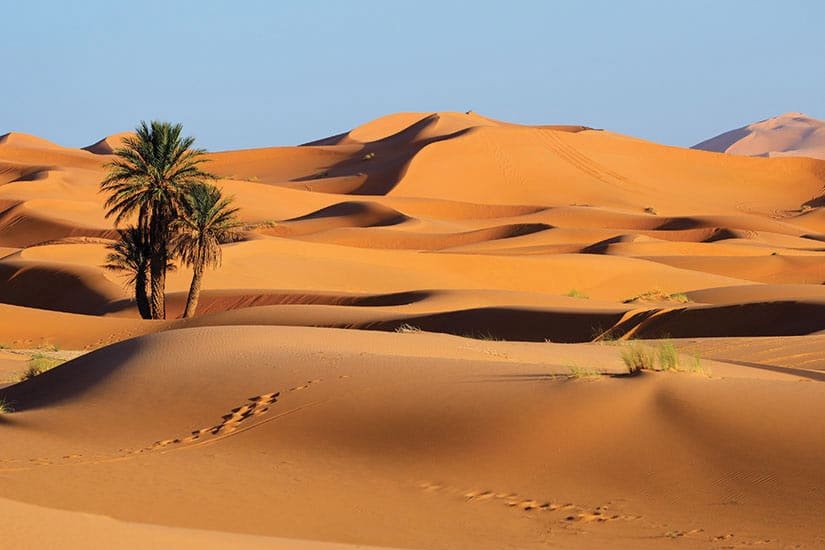
Research conducted on Lake Sebkha el Melah in Algeria associates the replenishment of old Sahara lakes with atmospheric patterns from Morocco, particularly storm systems originating over the Atlantic Ocean. This study emphasizes that intense rainfalls, not an overall rise in rainfall levels, primarily drive these refilling occurrences.
The Sahara Desert was not always as dry and barren as it is today. Experts suggest that in earlier times, it might have had more moisture and vegetation, including actual lake systems. To gain insights into this previously moister era, researchers have been examining ancient lakes in Algeria along with climate records from the west coast of Morocco.
In an earlier study released in March published in
Hydrology and Earth System Sciences
Researchers from Switzerland and Israel aimed to connect contemporary hydrological occurrences with historical climate conditions in the Sahara region.
The research team concentrated their efforts on Sebkha el Melah lake located in northwestern Algeria, which stands as proof of the Sahara’s formerly moister history. This investigation seeks to uncover additional details regarding the timing and reasons behind the filling of lakes within the Sahara Desert, with this particular body of water serving as a primary case study.
The research aimed at achieving this objective by analyzing both heavy precipitation events (HPEs) and lake-filling episodes (LFEs). Heavy precipitation events involve significant rainfall occurring over an area, whereas lake-filling episodes denote times when bodies of water become full due to inflow. To accomplish their analysis, scientists utilized satellite imagery to monitor changes in the lake’s water level. They then integrated these observations with meteorological information to identify the atmospheric circumstances responsible for intense rains and subsequent lake overflow.
Furthermore, they utilized information from weather models (“weather reanalysis”) to identify the origin of moisture in the precipitation and understand how these atmospheric systems evolve.
The research connects the refilling of old lakes to climatic patterns in Morocco. It shows that heavy rainfalls stemming from the Atlantic Ocean correlate with recent instances of lake replenishment in the northwestern part of the Sahara Desert. The study points out that low-level cyclones—big, swirling storms developing offshore near Morocco—are crucial elements in this process. Additionally, these cyclones interact with high-altitude air currents and tropical humidity as they travel across Morocco towards Algeria, leading to optimal circumstances for lakes to refill during periods of precipitation.
The research indicates that moisture movement includes the interplay between extratropical cyclones close to the North African Atlantic shoreline and high-altitude weather systems, leading to an environment favorable for intense precipitation. An essential aspect of these occurrences is what’s termed the “recycled domino effect,” wherein water vapor gets increasingly moved and intensified across the Sahara prior to arriving at the lake’s catchment area.
The research indicates that the accumulation of water in lakes within the Sahara is more strongly connected to the severity and occurrence of particular meteorological phenomena, such as intense downpours, rather than an overarching rise in general precipitation levels.
by admin | Mar 24, 2025 | africa, armed forces, diplomacy and diplomats, military, warfare
Upon arriving in Rwanda and feeling the warmth of the welcome he experienced, ‘Major’ Gilbert Ndayambaje stated that the genocidal group FDLR propagated falsehoods to control its members. Among the 14 former militia fighters surrendered to Rwandan officials by the AFC/M23 rebels were Major Ndayambaje and Brigadier General Ezechiel Gakwerere, a high-ranking leader within the DR Congo-based FDLR genocidal organization, on March 1st. Gakwerere played a significant role in orchestrating the Genocide against the Tutsis.
Operating in DR Congo for thirty years, the FDLR is a United Nations-designated militant faction established primarily by individuals responsible for the 1994 genocide targeting ethnic Tutsis.
“The hopelessness I carried disappeared once we crossed the border at La Corniche One-Stop Border Post due mainly to the reception provided by the government,” Ndayambaje explained. “I immediately sensed acceptance and tranquility upon seeing what an evolved nation this was compared to the tales spun by these groups.”
Ndayambaje disclosed during an interview with The New Times that he joined the genocidal force under duress in 1998 after fleeing from infiltration threats posed by the Abacengezi group which coerced him into service. Having endured hardship in the forests of DR Congo—where escaping meant almost certain peril—he confessed that starting circa 2010, he yearned intensely for repatriation. His spouse along with their five offspring relocated to Rwanda in 2012.
Following reports indicating that M23 seized Goma and caught up with Gakwerere, Ndayambaje conceived a plan to make it across the Rwandan frontier beginning from Sake area where he fought alongside FARDC troops until then. Unfamiliar with details regarding Goma town, Ndayambaje ventured into a local household seeking direction assistance; instead encountering three M23 personnel accompanied by kindly hosts offering respite indoors despite his current attire denoting allegiance elsewhere.
He highlighted instances illustrating maltreatment meted out towards FDLR recruits by superiors linked either directly or indirectly via collaboration networks extending beyond national borders initially set ablaze amidst conflict dynamics spanning decades prior.
In sharp juxtaposition however stands treatment afforded participants presently enrolled within rehabilitation programs administered by the RDFD commission located in Mutobo district, specifically designed aiding transition phases facilitating eventual social integration efforts following successful decommissioning processes concluded successfully thus far involving thousands beneficiaries since inception nearly twenty-two years ago.
“Life here couldn’t be better—we receive essential provisions like toiletries garments sustenance plus structured vocational instruction empowering readiness levels required transitioning smoothly back into civilian roles seamlessly integrated societies again.”
Provided by Syndigate Media Inc. (
Syndigate.info
).
by admin | Mar 24, 2025 | donald trump, politics, politics and government, politics and law, trump administration
-
PODCAST: Catch up on all the top stories, from President Trump revoking Biden’s pardon powers to California Governor Gavin Newsom’s surprising announcement about new statues.
Donald Trump
wants the judge who tried to prevent him
deportation flights of illegal immigrant gang members
to have his license revoked and be barred from practicing law.
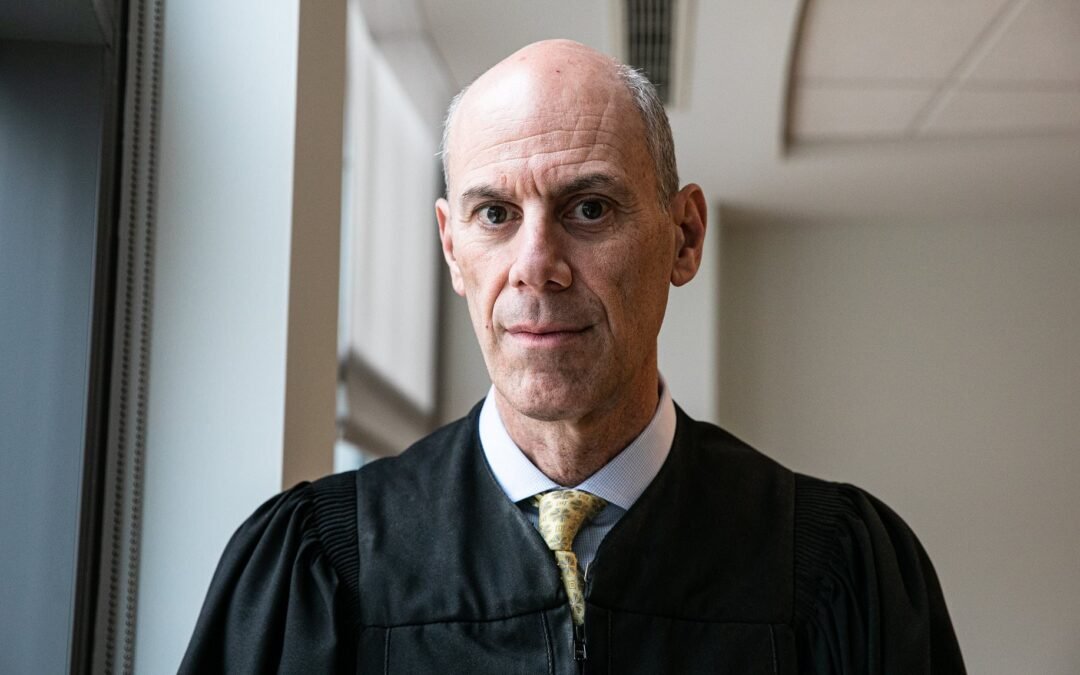
The president currently charges that District Court Judge James Boasberg is engaging in politically driven acts against him through judicial rulings.
In his Truth Social post on Monday morning, he shared a linked article indicating that Boasberg participated in a legal conference where many of the sponsors and speakers had explicitly demonstrated anti-Trump viewpoints, which are notably at odds with the President’s immigration policy positions.
‘They ought to revoke his license!’ Trump insisted, asserting that the judge was nearly as detrimental as the one who oversaw yet another ‘phoney case against me.’
Trump described the recent event as a ‘mistrial.’
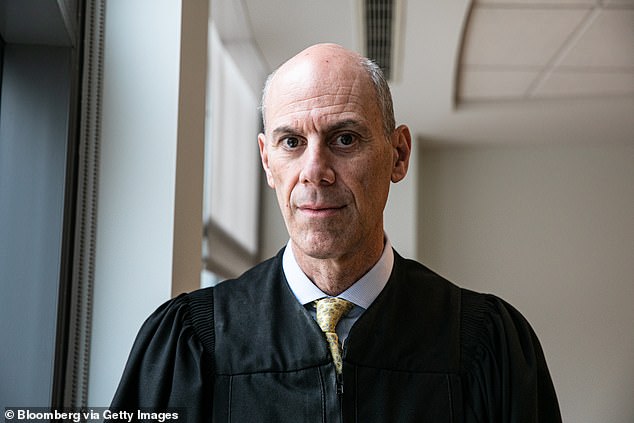
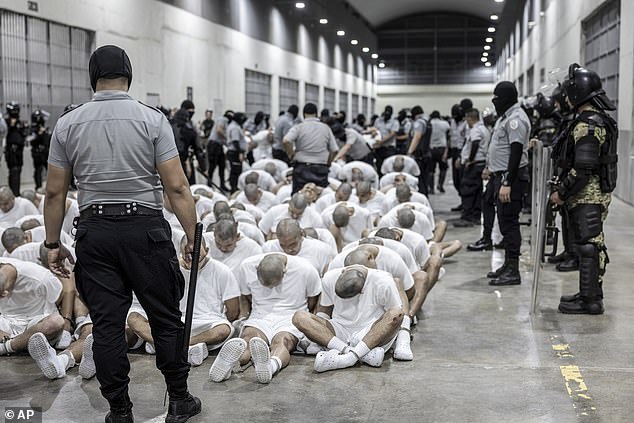
A federal judge attempted to halt at the final moment the departure of two aircraft from the United States carrying undocumented gang members destined for imprisonment in El Salvador.
However, the aircraft were already airborne when Judge Boasenberg’s directive was issued, and White House Press Secretary Karoline Leavitt states that he lacked authority over international waters to compel them to return.
Trump used the AlienEnemiesAct to facilitate the deportation flights.
He supported the decision to expel the 200 individuals referred to as ‘monsters.’
connected with gangs involved in kidnappings, extortions, and hit jobs.
‘These were bad people. That was a bad group of, as I say, hombres,’ he told reporters earlier this month.
When questioned regarding the application of the contentious AlienEnemiesAct beyond times of war, Trump asserted, “We’re currently in a state of war since President Biden permitted millions of individuals—many of whom are criminals, including some at very high levels—to enter.”
They released prisoners from jails in other countries—it’s an invasion involving criminals.
Read more
by admin | Mar 24, 2025 | disasters, environmental disasters, local news, news, storms
-
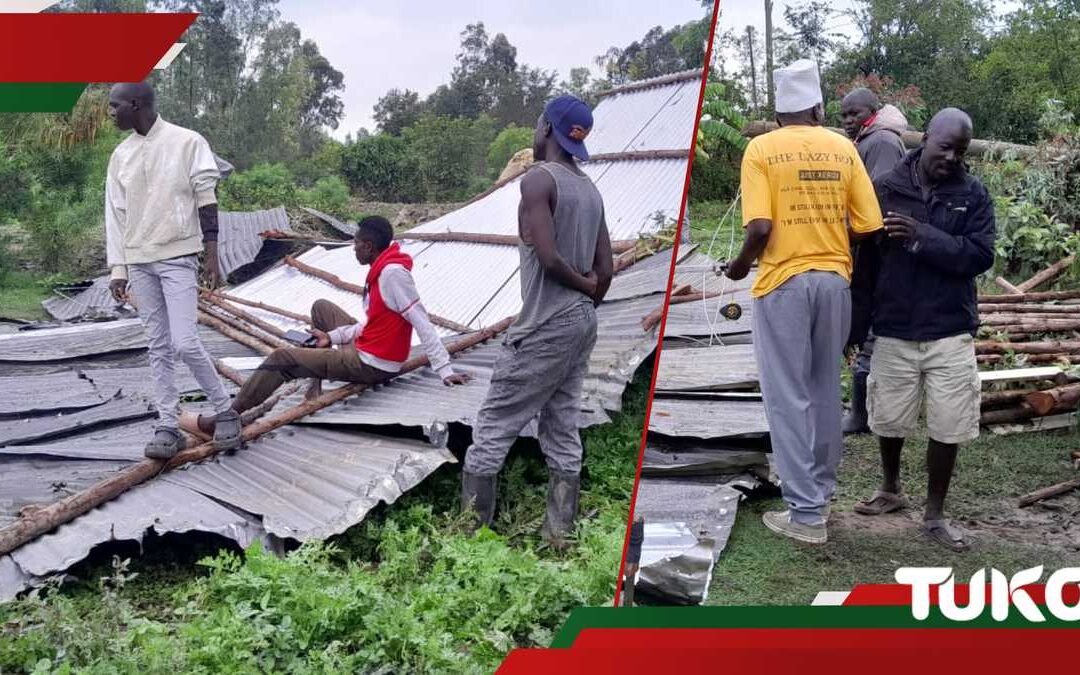
Dozens of residents in Homa Bay and Kisumu counties found themselves without shelter as powerful windstorms destroyed their houses.
-
The windstorms occurred on the evening of Sunday, March 24, impacting a minimum of 17 homes in Homa Bay.
-
In an exclusive interview with LIFEHACK.co.ke, Chief Eucabeth Obila from the Central Kochia region stated that the impacted families urgently require assistance.
Several families in Kochia ward, Rangwe sub-county in Homa Bay county, and Kayodo village, Kolwa Central ward, Kisumu East sub-county, have been left homeless after fierce windstorms ravaged their homes following Sunday night’s heavy rains.

The storms, which brought strong winds and intense rainfall, left a trail of destruction, forcing residents to seek shelter wherever they could.
In Kochia ward, the residents of Nyarut, Kombogo, and Lower Kowili villages in the Central Kochia location spent a sleepless night as their houses were completely destroyed.
Area Chief Eucabeth Obila stated that more than 17 homes lost their rooftops, exposing residents to the chill.
The destruction also affected three churches, which were blown off by the winds, and multiple crop farms were swept away by the raging floods, leaving farmers with nothing.
What caused the windstorm in Homa Bay?
A victim named Mary Akinyi, a 45-year-old woman from Nyarut Village, recounted the frightening events of that night.
“I was sound asleep as the storm started. The wind was roaring so fiercely that, before I realized what happened, our roof was torn away from our home. My kids and I then had to rush out into the heavy downpour to find refuge at our neighbor’s place,” said Akinyi, her voice filled with emotion.
Like many others in the region, Akinyi is now left with only her devastated house and dispersed possessions.

During an exclusive interview with
LIFEHACK.co.ke
, Chief Obila urgently appealed to humanitarian groups and the State Department of Disaster Management for prompt aid to support the impacted families.
“Our community desperately requires assistance. Numerous individuals have been left with nothing, and we can’t afford to delay aid any further,” she stated.
At the same time, in Kayodo village, the circumstances were equally dire, with multiple households being trapped when their roofs were ripped away by the strong gusts of wind.
The inhabitants currently face homelessness, with their dwellings reduced to rubble, and their means of living under threat.
Following the storm, both communities have been left stunned, with families now possessing barely anything beyond the remnants of their former dwellings.
The roofs of Homa Bay schools were torn away due to powerful gusts of wind.
Earlier, LIFEHACK.co.ke reported that powerful gusts had forced students at two institutions in Homa Bay County to conduct their classes outdoors beneath the shade of trees. The reason being that the winds had torn off the school buildings’ rooftops.
The impacted institutions included Kikubi Comprehensive School and St. George’s Junior School, with both locations experiencing damage not only to their toilets but also to their administrative sections.
Multiple households experienced damage during the strong winds on the evening of Monday, March 10, as the gusts stripped away the rooftops of their rented homes in the Nyandiwa trading center within the Suba South constituency.

by admin | Mar 24, 2025 | controversies, football clubs, politics, soccer, sports
-
Activist and academic Fred Ogola has responded to claims that he orchestrated the anti-Ruto protests during the Kenya versus Gabon game.
-
Previously, in another video, Ogola encouraged Kenyan supporters to organize a collective demonstration during the match.
-
In an interview with LIFEHACK.co.ke, he insists the focus should be on addressing Kenyans’ economic grievances rather than identifying organisers of the protests
The LIFEHACK.co.ke correspondent Ivan Mboto boasts more than three years of expertise in covering political and contemporary issues within Kenya.
Fred Ogala, an esteemed scholar and advocate, has addressed allegations that he was behind the anti-Ruto protests that shook Nyayo Stadium during the Harambee Stars versus Gabon game on Sunday, March 23rd.

A popular video prior to the match showed Ogola encouraging soccer supporters to participate in a symbolic demonstration. He can be seen directing them to begin their chant at the 6th minute and 25th second of the encounter.
He pointed out that this particular timing held great significance, representing what he called the erosion of Kenya’s newfound independence for those advocating for an inclusive administration following the discussions led by the National Dialogue Committee (NADCO).
“When it reaches the sixth minute, 25th second, start shouting until the stadium gets wild. Why? Because that is the day that our independence after impeaching Parliament was taken by the broad-based government proponents,” he was heard saying.
In comparing it to Spain, Ogola mentioned the custom where Catalans demonstrate their opposition to the Spanish government during El Clásico matches.
He shared that during his five-year stay in Barcelona, every time Real Madrid played against Barcelona, at exactly 17 minutes and 14 seconds into the game, supporters would create a commotion to mark the year 1714 when Catalans lost their autonomy to Spain.
Was Fred Ogola responsible for the anti-Ruto slogans at Nyayo Stadium?
Speaking to
LIFEHACK.co.ke
Ogola refuted assertions that he alone was accountable for the chants, asserting that millions of Kenyans hold comparable views regarding President William Ruto’s leadership.
Regarding the claims that I was one of the organizers behind the chants, allow me to state that numerous individuals, possibly as high as 53 million Kenyans, share this viewpoint. Thus, whether or not I organized them doesn’t really matter. What truly matters is that people believe the president ought to step down,” he stated.
He explained that his purpose was solely to demonstrate how these demonstrations can occur during games, based on his five-year residency in Barcelona.
“I saw people using social forums to express their feelings, and I am happy Kenyans came out in large numbers to do so,” he added.

Ogola likewise downplayed efforts aimed at pinpointing the organizers, encouraging people instead to tackle the urgent economic issues confronting Kenyan citizens.
If they claim it’s about me, then who organized the event in Naivasha?” he questioned. “Instead of focusing on who the organizers are, they should address the core issues at hand. Kenyans face severe economic challenges such as unemployment, excessive taxation, high living costs, and insufficient employment opportunities, yet the president is providing purely political solutions to these problems.
He encouraged Ruto to carefully consider the underlying causes of increasing dissatisfaction among Kenyans.
“If solving the issue isn’t possible, the cries of ‘Ruto must leave’ will persist, regardless of whether I was involved or not. Instead of searching for who did what and who organized what, he should address these concerns,” he stated.
LIFEHACK.co.ke
.
Supporters burst into Nyayo Stadium to watch the Kenya versus Gabon game.
As reported elsewhere, enthusiastic supporters rushed into Nyayo National Stadium, causing damage to one of the entrances before the crucial FIFA World Cup qualifier between Kenya and Gabon. Despite drawing large crowds due to its significance, all the tickets were snapped up by Saturday night.
Due to the restricted number of seats, numerous fans who didn’t have tickets tried to enter, leading to pandemonium at the venue. Footage uploaded by reporter Seth Olale depicted throngs pushing their way into the stands.
The match that concluded with a 2-1 loss for the home side was Harambee Stars’ inaugural competitive home game since they beat Rwanda in 2021.


