


MANILA, Philippines
– Over 41,000 aspirants for local offices in the May 12 election will begin their campaigns on Friday.
According to data provided by the Commission on Elections (COMELEC), there will be a total of 41,342 contenders vying for positions such as district representative, governor, vice governor, member of the provincial board, mayor, vice mayor, and councilor in the forthcoming elections.
The 45-day campaign period for local candidates will run until May 10.
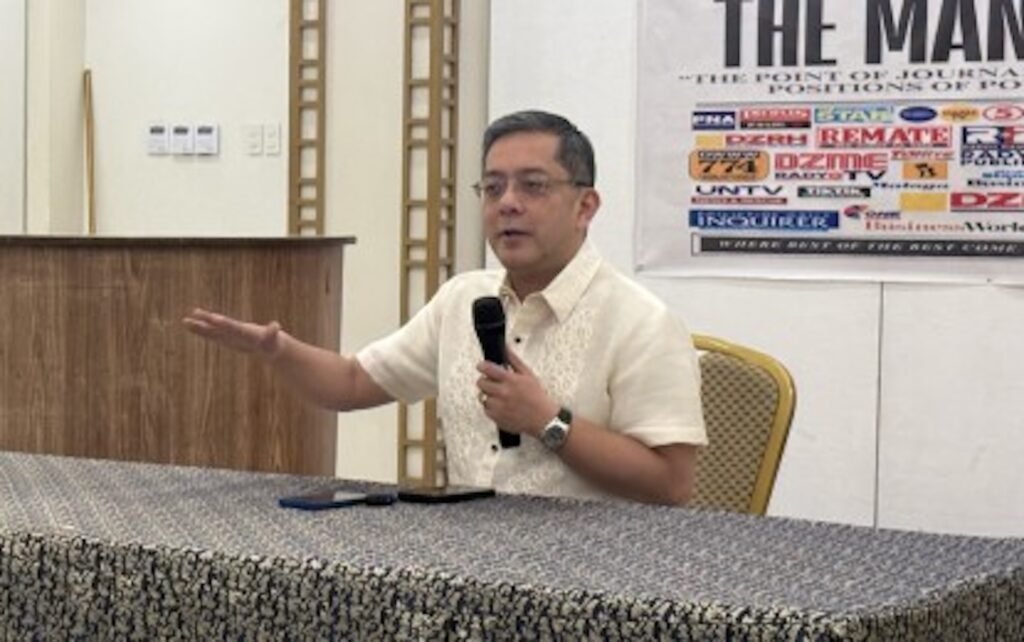
In light of this, Commission on Elections Chairman George Garcia cautioned all contenders on Thursday to adhere rigorously to the established campaign regulations.
READ:
Operation Baklas was stepped up as the election season for local positions approaches.
Where can we typically find campaign posters in Cebu for the 2025 elections?
Local election intensifies as posters are layered one over another – Comelec
To local candidates, always keep in mind the guidelines set by the Comelec,” he stated. “Avoid being obstinate.
According to Comelec Resolution No. 11086, acceptable forms of campaign materials include pamphlets, flyers, cards, decals, stickers, or similar documents where neither dimension exceeds 8 1/2 inches wide nor 14 inches long. Additionally, hand-drawn or printed messages encouraging votes for specific parties or candidates for public positions are permitted. Posters or stands limited to sizes up to 2 feet tall by 3 feet wide, as well as banners measuring a maximum of 3 feet high by 8 feet long when shown during gatherings or rallies at the venue, also comply with these regulations.
Applicants can utilize campaign resources through mobile units and vehicles, be they powered by engines, people, or animals, with or without audio equipment like loudspeakers and lighting fixtures; purchase ads in printed publications or broadcasts; leverage privately-owned outdoor structures such as static posters or LED billboards; employ moving advertisements inside public transportation vehicles; and display signs at their party offices.
Campaign period: Materials
In contrast, individuals aiming to secure positions at the local level are barred from using LED displays situated alongside roads and streets for their promotional materials. They’re also not allowed to use LCD screens mounted on public building walls or comparable equipment managed by local government entities, GOCCs, or governmental departments and offices. Additionally, they cannot utilize motor vehicles employed as police cruisers, emergency response units, or other related functions—vehicles which may belong to local governments, GOCCs, or state-run organizations, especially those with official tags—and this restriction extends to publicly operated transit systems like MRT, LRT, PNR trains, among others.
Additionally, it is deemed unlawful to place election propaganda on waiting sheds, pavements, streets, lampposts, electrical poles and lines, traffic signs, and various billboards installed on state-owned land. This also includes pedestrian overpasses and underpasses, elevated roadways, bridge structures, major arterial roads, median strips of highways and city streets, educational institutions, community shrines, village administrative centers, governmental facilities, healthcare centers, publicly funded constructions, and any building therein. Furthermore, placing such materials inside areas managed by the government and used for public transportation—such as bus depots, airports, harbors, docking points, piers, railway stations, and similar locations—is prohibited.
Political advertisements
According to Comelec regulations, for political ads on TV and radio, each local candidate can broadcast up to 60 minutes of television commercials per channel and up to 90 minutes of radio spots per station.
For every candidate vying for either national or local elective posts, the largest permissible dimensions for their politically themed print ads are restricted to one-quarter of a page in broadsheet format and half a page in tabloid format. Additionally, these adverts may not appear more frequently than thrice weekly within any single newspaper.
Those who participate in outdoor campaign ads are limited to just one month of advertising on either a static or an LED billboard, with these billboards spaced at least 500 meters apart from each other.
Garcia mentioned that he instructed the local Comelec staff to install additional shared poster spaces in their respective zones.
Regarding the conduct of campaign rallies, Garcia stated that aspirants and political organizations must follow guidelines set forth by local government entities, which includes obtaining the required permissions.
“Additionally, ensure that you won’t create disruptions in the streets or lead to major traffic jams,” he said.
The election official stated that those who violate these guidelines will receive notifications that will be sent to the relevant candidates.
“Do not ignore the notifications to take down. This is preliminary to filing a case against you,” Garcia further stated.
(PNA)