by admin | Aug 19, 2025 | airline industry, aviation, business, civil aviation, economics
The aviation industry was assessed at N258.9 billion in the newly published rebased GDP figures, indicating a sector facing poor performance and difficulties staying viable, according to Daily Trust.
The total represents the value of the sector included under Air Transportation in the GDP figures for 2024.
On Monday, July 21, 2025, the National Bureau of Statistics (NBS) published the updated GDP report, showing that the economy expanded by 3.13% during the first quarter of 2025, compared to 2.27% in the corresponding period of 2024.
The nominal GDP at market prices, after being recalculated, was N205.09 trillion in 2019, increased to N213.64 trillion in 2020, reached N243.30 trillion in 2021, rose to N274.23 trillion in 2022, amounted to N314.02 trillion in 2023, and totaled N372.82 trillion in 2024.
Where air transport stands
The air transport sector operates completely within a dollar-based system. The purchase of airplanes, refueling, aircraft servicing, and almost every activity within the industry are measured in U.S. dollars.
Nevertheless, based on NBS statistics, air transport was worth N258.9 billion in 2024, which equals approximately $169.3 million.
The industry was worth N215.6 billion in 2023; N178.4 billion in 2022; 145.5 billion in 2021, and N101.1 billion in 2020—the pandemic year—while reaching N222.4 billion in 2019.
According to Daily Trust, based on the exchange rate in 2019, approximately N306 per dollar, aviation expenses amounted to roughly $725.4 million.
The aviation industry faced restrictions throughout 2020 as a result of the COVID-19 outbreak, significantly impacting air travel.
As per experts, the resurgence of air travel following the coronavirus outbreak was slowed down due to the depreciation of the naira and increasing price hikes, leading to fewer individuals traveling by plane.
A sector in recession?
As per an assessment conducted by the Centre for the Promotion of Private Enterprise (CPPE), three industries performed below expectations in the updated GDP figures.
Analysts noted that three industries—air transportation, textiles, and coal extraction—are currently experiencing a downturn.
The CPPE stated, “High-achieving industries were financial services [15.3%], oil refinement [11.51%], transport [14.08], ICT [7.4%], and metallic minerals [25%].”
The subsequent industries experienced declines: Livestock (-16.7%), Fishing (-0.21%), Textiles (-1.63), Coal Mining (-22.3%), Quarries and Minerals (-21.55%), Plastics and Rubber (-3.2%), Iron and Steel (-0.35%), Air Transportation (-0.81%).
Recession-affected sectors consist of aviation, textile production, and coal extraction. This comes after they have experienced steady decline during recent periods.
As ticket costs rise, the number of travelers has decreased considerably, as reported by airline companies.
The Acting Managing Director of Ibom Air, George Uriesi, has recently expressed worry about declining passenger numbers, stating that this issue is a significant source of anxiety.
The head of Ibom Air stated that air travel demand has been decreasing since 2022, noting that the problem is worsening and steps need to be taken to draw more travelers into flying.
Decreasing passenger numbers – Service Providers
“We’ve dropped by 27% compared to 2024. We’re facing difficulties; we must figure out how to encourage more travel,” he stated.
An airline representative stated that airports need to collaborate with airlines to remain viable, noting, “Within the aviation system, the airline serves as the key force. No one would make even a small amount of currency if airlines stop operating. Everyone discusses finances since it is the airlines that keep operations running.”
The Chief Executive Officer of Aero Contractors, Capt. Ado Sanusi, told our reporter during an interview, “Passenger travel numbers have been decreasing in Nigeria. This decrease has continued, and we understand why it’s happening. I’ve discussed this in multiple interviews before. Several elements contribute to the drop in passenger volume. The flow of travelers indicates the level of economic activity within a nation. When the economy slows down, so does the movement of people.”
‘Activities picking up’
Sanusi, nevertheless, thinks the economy is showing signs of improvement slowly and mentioned that the federal government should collaborate with airlines to simplify tax procedures.
The economy is moving in the correct direction. However, the issue or challenge we face is that taxes are somewhat high, as well as ticket prices. This leads to higher costs overall, which means only a small number of people in Nigeria can afford to buy tickets.
Another party involved in aviation attributed the poor performance of the industry to the reduction in Nigerians’ available earnings.
“There’s no extra money anymore. People are definitely cutting back these days. Flying by plane has become something of a luxury,” he stated.
Nevertheless, Yinka Folami, President of the National Association of Nigerian Travel Agencies (NANTA), expressed disagreement with the notion that the aviation industry is experiencing a downturn.
Based on my experience and observations, there isn’t anything indicating such a major decline that would be categorized as a recession. Nothing suggests that to me,” he stated. “IATA data shows recovery, and the load factor remains fairly strong.
The depreciation of the Naira, with slowing inflation and progress in recovering from COVID-19 – according to an expert
An aviation specialist and the General Secretary of the Aviation Roundtable and Safety Initiative, Mr. Olumide Ohunayo, mentioned during an interview with Daily Trust that the industry had been steadily rebounding after the closure caused by the COVID-19 outbreak, but this momentum was hindered by the depreciation of the naira.
Between approximately N300 and one dollar in 2019, the local currency currently trades at N1,534 as of yesterday.
Ohunayo stated, “The aviation industry was the most impacted by the COVID-19 crisis. It was expected that it would require three years for air travel to return to levels seen before the pandemic. In my view, this forecast has only come true in two or three nations that have regained their 2019 standards.”
In our situation, as we begin to recover, there was a shortage of funding, particularly the dollar, which serves as the primary currency used in the industry. This impacted our ability to operate effectively, leading airlines to reduce their services, cancel certain routes, and prompting travelers to explore alternative choices.
The cost of tickets from dollars to naira surged sharply. As a result of this increase, travelers also stopped using air travel. Airlines no longer possess the same level of capacity as before, which has decreased and impacted the frequency and routes offered, as well as availability within the market.
The exchange rate between the dollar and the naira surged alongside the subsequent rise in inflation, making ticket prices more expensive for travelers.
Once more, the disposable income available to Nigerians previously has been significantly reduced due to inflation. As a result, individuals are no longer traveling for matters that are not essential. Therefore, the journey must hold great significance for those who undertake it.
Amidst all these circumstances, air transportation faced the greatest impact since it represents an upscale mode of travel and comes with a high cost.
‘Remember once again that they also imposed restrictions on private jets. Keep in mind that by 2019, the number of private jets exceeded that of scheduled flights. The crackdown on private jet activities and requiring them to formalize their documentation resulted in certain planes being removed from the country, with others being put into storage, which also impacted the aviation sector’s role in the economy.’
Specialist looks for focused assistance for struggling industry
The head of CPPE, Dr. Muda Yusuf, urged focused assistance for struggling industries.
“Particular focus must be placed on industries facing decline and those with sluggish expansion. Overcoming structural issues, enhancing financial accessibility, dealing with instability, and encouraging creativity will be essential for driving revival and development,” he stated.
Supplied by SyndiGate Media Inc. (
Syndigate.info
).

by admin | Aug 11, 2025 | airline industry, aviation, civil aviation, commerce, flights
This year, Cape Town Airport outperformed Doha Hamad to claim the title of the top airport globally for passenger satisfaction, as per an annual survey conducted by AirHelp, a leading company in flight compensation worldwide.
The assessment ranked 250 global airports using three main factors: punctuality, passenger reviews, and the standard of dining and shopping facilities.
Last year, Doha Hamad was recognized as the top airport globally in the rankings; however, it dropped to second place due to an on-time performance rating of 8.2 out of 10, which is less than this year’s winner’s score of 8.6.
Doha Hamad received 9 points for the standard of cuisine and retail options, surpassing Cape Town which had 8.3 in this area.
Being the main airport that serves Doha, the capital city of Qatar, Hamad Airport provides an combination of contemporary architecture and high-quality facilities, such as a five-star hotel featuring more than 100 accommodations, lush botanical areas, and retail centers.
Featuring over 55 places to eat, the airport offers popular food chains such as Gordon Ramsay Burger, Starbucks, and Burger King.
by admin | Apr 3, 2025 | air travel, airline industry, civil aviation, flying, news
The Nigeria Civil Aviation Authority (NCAA) has voiced concerns about numerous grievances related to airlines that issue tickets but only fly passengers halfway to their intended destination before returning them to Nigeria.
As stated by Michael Achimugu, the Director of Consumer Protection and Public Affairs, “These measures, including denying entry or boarding for certain Nigerian citizens at transit stops because of visa limitations or travel bans, are leading to considerable discomfort among travelers and damaging the image of Nigeria’s aviation sector.”
The NCAA views these practices as entirely unacceptable. Airlines have the duty to notify travelers about any possible obstacles to their admission at their final destination prior to their journey commencement. Travelers ought not to find themselves in a situation where they face denial of entry or are sent back to Nigeria upon reaching intermediate or transit points.
In accordance with Section 19.21.1.1 of the Nigerian Civil Aviation Regulations from 2023, every airline along with its representatives must make sure that travelers are notified about any possible entry concerns or travel limitations before they leave.
The statement indicated that the airlines are required to implement suitable procedures for screening and should furnish travelers with precise, current details about their travel documentation and visa prerequisites prior to selling tickets and allowing them to board.
Updated: Reasons Behind Rejecting Recall Petition Against Senator Natasha—INEC Official Departs Abuja for Dakar to Attend Senegal’s 65th Independence Anniversary; Rivers Sole Administrator Cancels All Pending Procurement and Tenders
Given this situation, the NCAA notifies all international carriers flying within Nigeria that they can no longer expect to overlook such incidents.
Starting now, airlines caught engaging in these activities will face regulatory actions, which may include—but are not limited to—fines, suspensions of their flying privileges, or other suitable measures.
The NCAA stated that they expect all airlines to cooperate in upholding the standards and professionalism within the aviation sector, along with safeguarding the welfare of Nigerian travelers.
EXPLORE FURTHER ARTICLES FROM: NIGERIAN TRIBUNE
Stay updated with the latest news from Tribune Online in real time! Connect with us on WhatsApp for instant access to breaking news, special reports, and exclusive interviews. Subscribe to our WhatsApp channel today.
Provided by Syndigate Media Inc. (
Syndigate.info
).
by admin | Apr 3, 2025 | airline industry, flights, flying, luggage, southwest airlines
-
EXPLORE FURTHER: Southwest Airlines Eliminates Thousands of Positions in Initial Round of Job Cuts
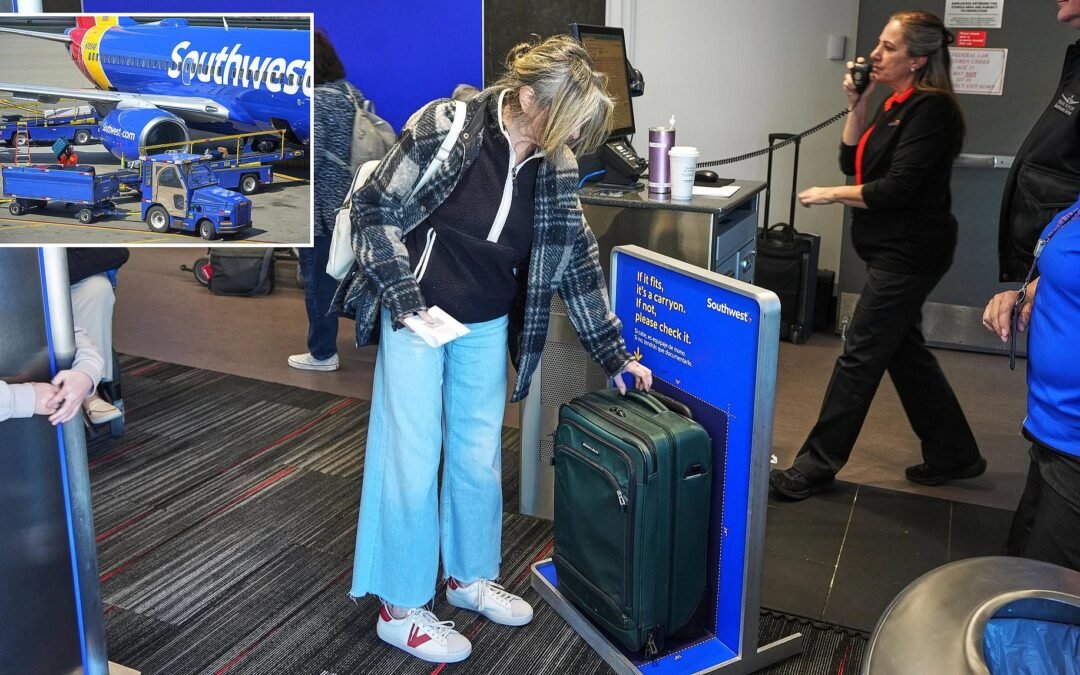
Southwest Airlines has cautioned that their updated checked baggage policy will affect passengers who depend on carrying on their luggage.
The budget airline will
start charging for checked luggage in May
following over five decades of the cherished ‘two bags fly free’ policy.
The
shift annoyed long-term customers annoyed
And triggered inquiries regarding how the carrier will manage the higher demand for hand luggage.
Southwest anticipates a 30 percent reduction in checked luggage once the fee goes into effect on May 28.
It is anticipated that many travelers will attempt to avoid the charges by packing larger items into their carry-on luggage.
Currently, Justin Jones, who serves as the executive vice president of operations, acknowledges that the checking of carry-on luggage at the gate will increase because of restricted overhead storage capacity.
“We expect our gate-check bag fees to likely increase about fivefold compared to current rates,” Jones said during an interview for the Airlines Confidential podcast.
This challenge is particularly important for Southwest, as their planes feature smaller overhead bins compared to those of their rivals—a design decision stemming from their long-standing policy allowing free bags. Consequently, the carrier will now more rigorously adhere to size restrictions for carry-on luggage.
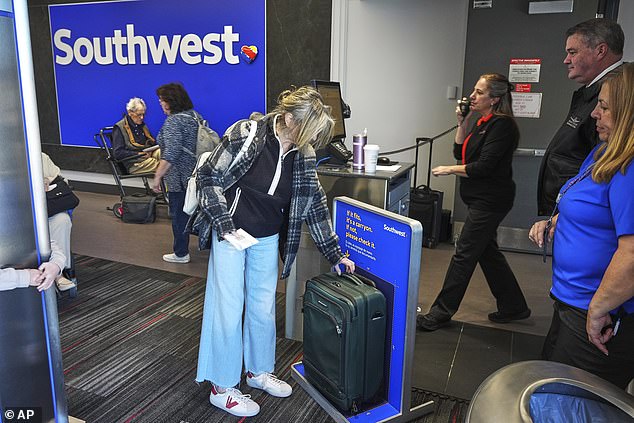
“It was an unexpected twist when they changed the baggage fees,” Jones commented.
‘Jones stated that we always have more luggage than anybody else around.’
Certainly, customers have notably abused Southwest’s lenient policy by shipping bathroom fixtures like kitchen sinks and toilets nationwide.
We need to tackle multiple tasks,” however, “our priority remains ensuring an exceptional customer experience.
‘We will be very cautious about strictly enforcing bag size regulations as some other carriers do.’
Nevertheless, this policy adjustment will lead to an increase in both baggage check-ins at the gates and associated charges.
Verifying travelers’ luggage upon boarding can be a lengthy process and might lead to flight delays as both the airline and its passengers adjust to this new procedure.
Jones stated that Southwest’s operational approach hinges on ensuring all processes run smoothly, emphasizing their strategy focuses on keeping planes airborne instead of idling on the tarmac.
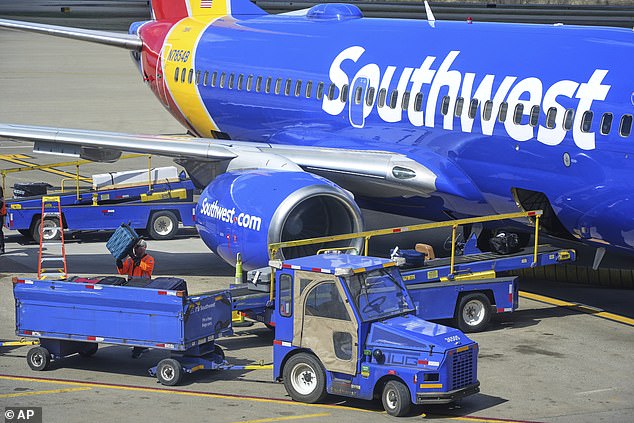
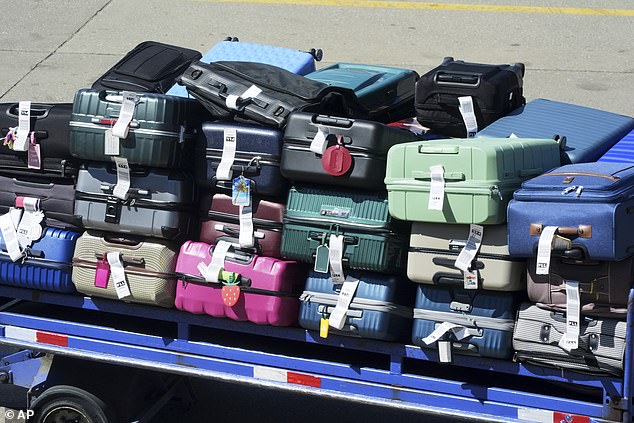
“I won’t deny that we’re feeling some nerves leading up to June 1,” he stated regarding the initial flights with associated fees.
Last year, Southwest had the lowest cancellation rate globally, with only 0.62 percent of its flights canceled, as stated in the Syrian aviation report.
Jones stated that over time, the solution will involve incorporating new aircraft into Southwest’s fleet, which will feature increased storage space for carry-on bags.
These charges are a part of Southwest’s initiatives to enhance their profitability.
In February the airline
revealed intentions to reduce its corporate staff by 15 percent
In an effort to reduce expenses.
The layoffs – unprecedented in the airline’s 53-year history – will cut approximately 1,750 positions.
The reductions represent a strategic pivot after last year’s conflict with the activist hedge fund Elliott Management. In order to appease Elliott, executives committed to trimming expenses and exploring novel revenue streams, like
charging for seating
.
In contrast to its competitors, Southwest chose not to implement widespread layoffs, even when facing economic challenges.
9/11
, and the pandemic.
Read more
by admin | Apr 3, 2025 | airline industry, civil aviation, flying, passports and international travel, sports
…To Fine Defaulting Airlines
The Nigeria Civil Aviation Authority (NCAA) has condemned the practice wherein airlines issue tickets to passengers but then transport them only partway to their destination before returning them to Nigeria. The NCAA warned all international carriers operating within Nigeria that such incidents will not be tolerated moving forward.
A statement from Michael Achimugu, the Director for Consumer Protection and Public Affairs, issued on Thursday stated: “As of now, any airlines participating in these practices will face regulatory actions. These may include—but aren’t limited to—fines, suspensions of their flight operations, or other suitable measures.”
The NCAA stated that these measures, which include denying boarding or entry at certain transit points for some Nigerian travelers because of visa limitations or travel constraints, are leading to considerable discomfort among passengers and damaging the image of Nigeria’s aviation sector.
The statement includes the following: “The NCAA has received multiple complaints alleging that some airlines have sold tickets to passengers who were then flown only partway to their destination before being deported back to Nigeria.”
The NCAA views these practices as entirely unacceptable. Airlines have the duty to notify travelers about any possible obstacles regarding their admission at their final destination prior to their journey commencement. Travelers ought not to find themselves in a situation where they face denial of entry or being sent back to Nigeria upon reaching intermediate or transit points.
In accordance with the stipulations outlined in Chapter 19.21.1.1 of the Nigerian Civil Aviation Regulations from 2023, every airline along with its representatives must guarantee that travelers are made aware of any possible entry concerns or travel limitations prior to their departure.
Airlines are required to implement suitable procedures for screening and should furnish travelers with correct, current details about their travel documentation and visa prerequisites prior to selling tickets and allowing them to board.
Given this situation, the NCAA notifies all international carriers flying within Nigeria that they can no longer expect to overlook such incidents.
The NCAA looks forward to the collaboration from all airlines in upholding the standards and professionalism within the aviation sector, along with safeguarding the welfare of travelers from Nigeria.
Provided by SyndiGate Media Inc.
Syndigate.info
).
by admin | Apr 3, 2025 | air travel, airline industry, civil aviation, flights, sports
Atlanta, Georgia, at Hartsfield-Jackson Atlanta International Airport, with Delta Airlines airplanes visible on the tarmac. (Image by: Jeff Greenberg/Education Images/Universal Images Group via Getty Images)
–
Threatens Fines, Sanction
LAGOS
– The Nigeria Civil Aviation Authority (NCAA) is annoyed by the recurring issue of Nigerian passengers being improperly handled and deported at their transit airports because of visa limitations.
Mr. Michael Achimugu, who serves as the Director of Consumer Protection and Public Affairs at NCAA, issued a statement on Thursday expressing concern over numerous complaints they have received. The complaints involve airlines selling tickets to passengers but then transporting them only partway to their destination before returning them to Nigeria.
The declaration warned that any airline failing to comply with this regulation would face regulatory measures such as penalties, suspensions of flight operations, or other actions.
Achimugu stated that these measures, which included denying boarding or entry at various transit points for certain Nigerian citizens because of visa problems, were leading to considerable discomfort among travelers and damaging the image of Nigeria’s aviation sector.
Achimugu stated that the NCAA deemed these practices unacceptable, emphasizing that airlines have the duty to notify travelers about any possible obstacles regarding their admission at their final destination prior to beginning their journey.
He stated that passengers ought not to find themselves in a situation where they are refused entry or sent back to Nigeria upon reaching transit points.
He stated: “As per the stipulations outlined in Chapter 19.21.1.1 of the Nigeria Civil Aviation Regulations 2023, every airline along with their representatives must guarantee that travelers are made aware of any possible admission concerns or travel limitations prior to their departure.”
Airlines are required to implement suitable procedures for screening and should furnish passengers with correct, current details about their travel documents and visa prerequisites prior to selling tickets and allowing them to board.
Given this situation, the NCAA notifies all foreign carriers active in Nigeria that they can no longer ignore these incidents.
He urged the airlines to uphold the integrity and professionalism of the aviation sector along with safeguarding the welfare of Nigerian travelers.
Provided by Syndigate Media Inc. (
Syndigate.info
).


