by admin | Mar 21, 2025 | auto enthusiasts, automotive industry, autos, car design, cars

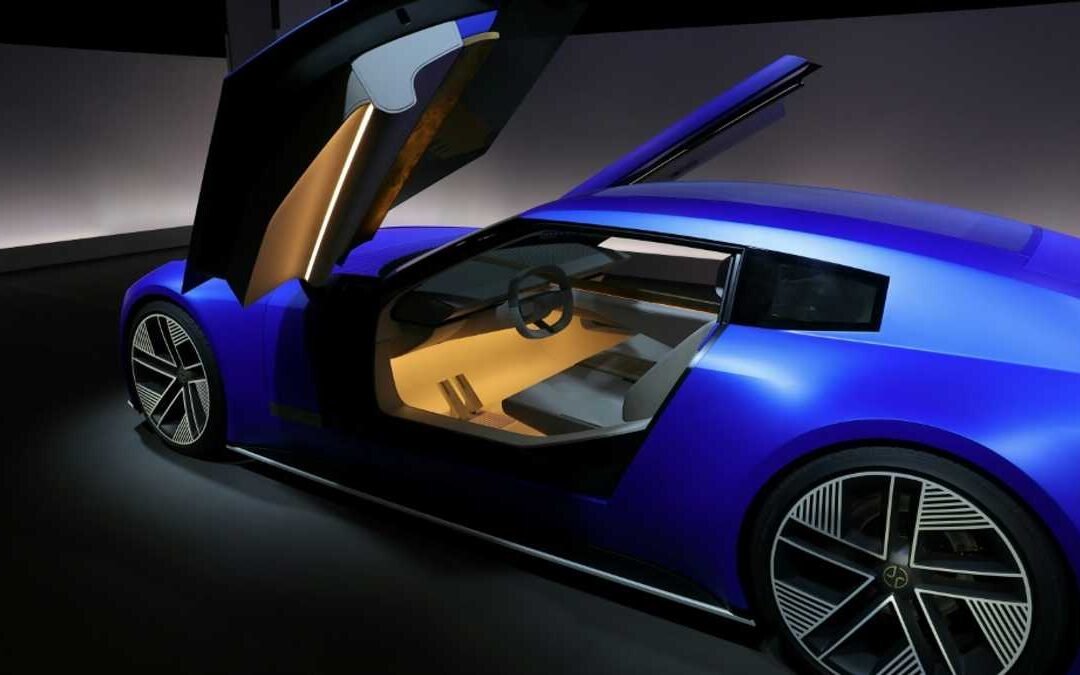
The Jaguar brand showcased its aim to attract younger, wealthier motorists during an exhibition in Paris where they unveiled their latest concept car, the Type 00. This model offers all-electric opulence but comes with a hefty price tag.
The sleek, athletic-looking concept car unveiled to European journalists on Friday hints at a production version slated for release around mid-2026 with an estimated starting price of 150,000 euros ($160,000).
That’s twice as expensive as the current lineup of Jaguars, placing it more in the Porsche price range.
But the prestigious British brand — owned since 2008 by Indian automobile giant Tata Motors — has embarked on a campaign to remake itself as a ride for a far younger clientele than the one traditionally associated with it. Especially as the market goes increasingly electric.

At the end of last year, the company stirred up discussions when they introduced a new logo with rounded letters and launched an advertisement showcasing a vibrant, culturally diverse group of models — without any vehicles in sight.
The Type 00 prototype is just as vibrant: the electric blue variant displayed appeared as though it was taken directly from the set of a “Tron” film.
Jaguar states that the concept guiding their latest release is “exuberant modernism.”
The managing director of Jaguar, Rawdon Glover, who was present to sit in the driver’s seat of the prototype, described it as “a clear preview of all the future Jaguars to come.”
Glover mentioned that the intended audience was likely “between 35 and 50 years old,” noting they should have “a definite appreciation for both design and technology.”
Jaguar faces an uphill battle nonetheless.
Based on data from the European Automobile Manufacturers’ Association (ACEA), Jaguar accounted for just about 1.2 percent of Europe’s car sales in January of this year.

Between April 2023 and the end of March 2024, the firm reported selling 78,000 vehicles in Europe as stated in their 2024 annual report.
As the market for electric cars expands, models from Tesla, Volvo, and Volkswagen lead the way. However, with economic uncertainties looming, numerous European consumers are hesitant due to the elevated costs.
However, Jaguar anticipates that the Type 00 technology will be appealing, boasting a claimed range of 700 kilometers (430 miles) per charge and versions capable of delivering up to 1,000 horsepower.
Nevertheless, the company failed to provide specifics regarding the hefty batteries that would be installed in the vehicles.
Several high-end automakers are delaying their shift toward fully electric vehicles due to the lackluster reaction from consumers.
Aston Martin, Bentley, Maserati, and other brands have postponed their initiatives, while Jaguar’s sister brand Range Rover has also delayed the manufacturing of its electric SUV.
by admin | Mar 21, 2025 | automotive industry, battery electric vehicles, electric cars, electric power, technology
-
EXPLORE FURTHER: Electric vehicle brakes generate pollutants more harmful than those from diesel exhausts.
Although electric vehicles may attract environmentally aware drivers, the concern over battery depletion before reaching one’s destination deters numerous potential buyers.
However, the Chinese EV manufacturer BYD asserts that their newest models will put an end to ‘range anxiety.’
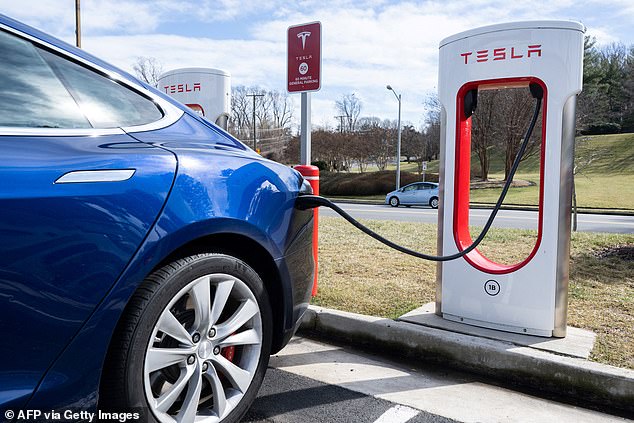
BYD says its new charging system, dubbed the ‘Super-E Platform’, can enable a car to travel 250 miles (400km) after just five minutes of charging.
This 1,000-kilowatt (kW) charger – double the power of its competitor
Tesla
Supercharger – able to replenish an electric vehicle’s battery in the same duration it takes to refuel a traditional car.
petrol
car with fuel.
Last year, BYD was
the globe’s second biggest producer of battery-operated electric cars
just slightly behind Elon Musk’s Tesla.
This recent advancement might propel the Chinese firm to the leading spot by attracting purchasers who are hesitant to abandon their traditional gasoline vehicles.
The BYD founder, Wang Chuanfu—who is frequently referred to as
China
‘s
Elon Musk
mentioned during a launch event in Shenzhen, China, that the brand’s upcoming vehicles would reach ‘fuel-parity’ when it comes to refueling.
Mr Wang added: ‘In order to completely solve our users’ charging anxiety, we have been pursuing a goal to make the charging time of electric vehicles as short as the refuelling time of petrol vehicles.’
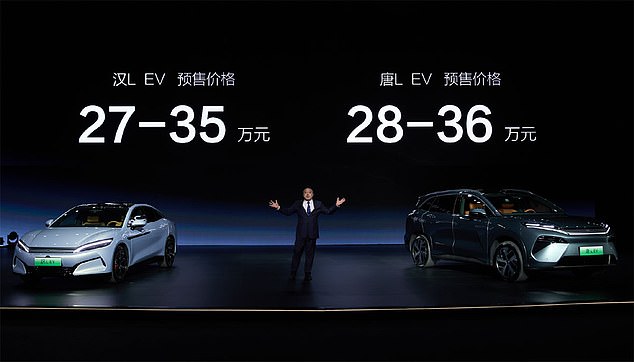
BYD states that the newly introduced ultra-fast charging tech will first be featured in two models released this year: the Han L sedan and the Tang L SUV.
The Han L sedan and the Tang L SUV both have slightly lower starting prices.
the typical cost of an electric vehicle in the UK
ranging from 270,000 to 350,000 yuan ($37,300-$48,350 or £28,700-£37,300).
The firm asserts that this car model’s innovative battery design enables drivers to gain approximately 1.20 miles (2 kilometers) of additional range per second when charged at maximum capacity.
officially has a rating of ’10C,’ indicating that these vehicles can achieve a full charge in just one-tenth of an hour, which equates to six minutes.
Rapid charging necessitates the transfer of substantial electrical power, implying the generation of both a high voltage and a significant current concurrently.
One of the primary obstacles to boosting charging efficiency is the substantial amount of heat generated by high currents, posing risks when accumulated within a sizable battery.
To address this issue, BYD claims it has succeeded in decreasing the internal resistance of the battery, which implies that the battery generates less heat as current flows through it.
Moreover, the firm claims it has developed new silicon carbide power chips capable of handling increased voltage levels.
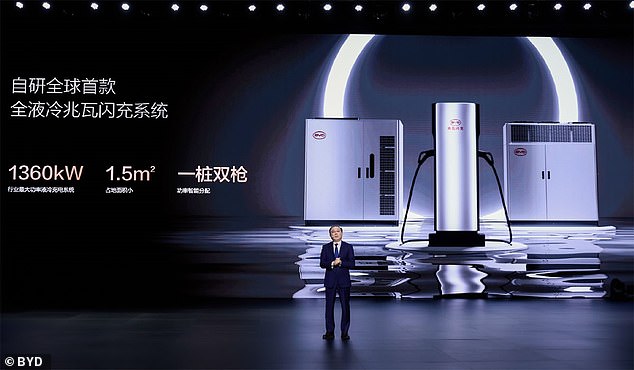

In a post on the Chinese social media platform Weibo, translated via Google Translate, the company says: ‘BYD officially releases flash charging battery with ultra-high voltage of 1000V, ultra-large current of 1000A and ultra-large power of 1000kW.’
At the launch event, Mr. Wang stated, “For the first time in our sector, we have reached the milestone of megawatts in terms of charging power.”
This power level increases the capacity of most charging systems found in the UK and the US by two or three times.
Tesla’s most recent batch of Superchargers can achieve up to 500 kW, whereas the majority of the older models do not have this capability.
peak at somewhere from 250 to 400 kW.
A majority of Tesla’s Superchargers in the United Kingdom can supply sufficient power for driving up to 172 miles (277 kilometers) following just 15 minutes of charging.
According to BYD, they intend to set up a network of 4,000 fast-charging stations throughout China.
Stronger charging stations need direct connection to the power grid along with specialized cooling systems to avoid overheating.
This indicates that the new flash-charging system might necessitate building further infrastructure, such as constructing extra substations and transformers.

Nonetheless, BYD has not offered any details regarding the timeline for building these stations or how they intend to fund their construction.
Similarly, BYD states that the technology will initially be accessible solely within China, and they have not verified if they intend to deploy flash chargers in other locations.
Faster charging and better range have been seen by many industry analysts as the key to switching from cars with internal combustion engines, which emit pollutants.
According to a 2024 survey conducted by management consultancy firm McKinsey & Company, 40 percent of potential electric vehicle (EV) purchasers aimed for over 400 miles of range on a single battery charge—approximately equivalent to the typical distance a gasoline-powered car can cover with one full tank.
Similarly, 42 percent of participants indicated that charging speed is their primary concern.
Out of these individuals, 60 percent expressed their preference for charging times of 30 minutes or shorter.
BYD’s advancement has been met with approval from global markets and could potentially assist them in surpassing their competitor Tesla over an extended period.
Following the announcement, BYD’s shares surged to an all-time peak, rising by 4.1 percent on Tuesday to reach a value of HK$408.80 ($52.59) on the Hong Kong Stock Exchange.
Meanwhile,
On Tuesday, Tesla’s stock value fell by 5.5 percent.
, adding another 4.8 percent drop from Monday.
Overall, Tesla’s valuation dropped by 44 percent throughout 2025 due to investor concerns about CEO Elon Musk’s prominent association with Donald Trump.
Since Trump’s election,
The automotive company has experienced over $800 billion (£617bn) erased from its stock market value.
Read more
by admin | Mar 17, 2025 | automotive industry, autos, cars, driving, electric cars
![]()
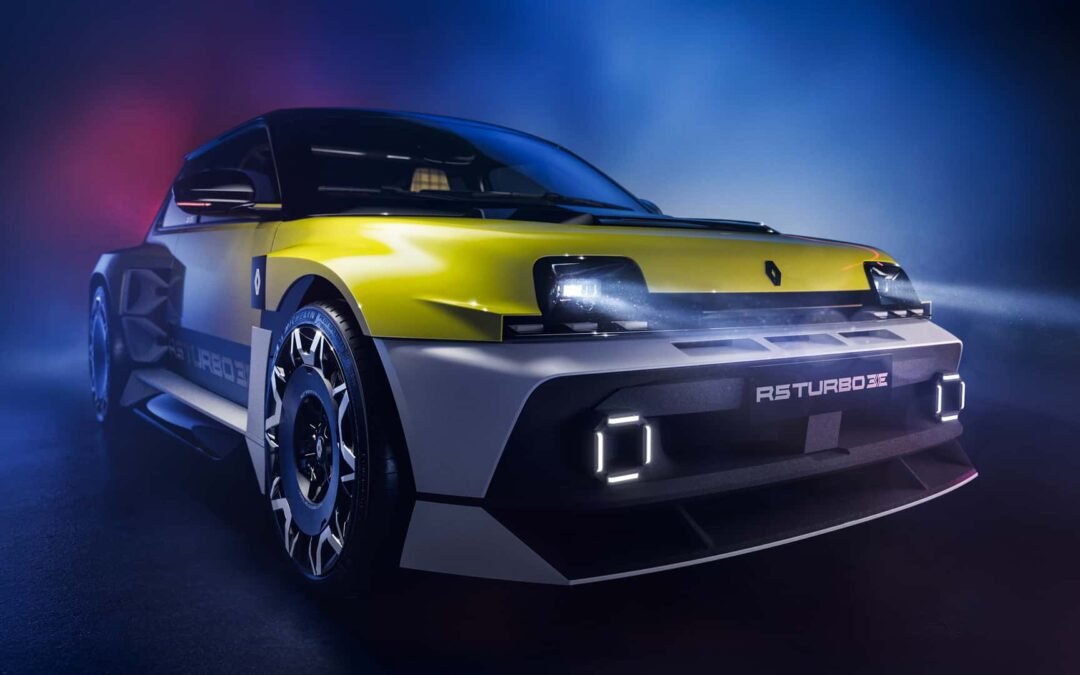
Perched on an exclusive 800V architecture, the twin-engine hatchback will have a production cap of 1,980 vehicles.
-
The Renault 5 Turbo 3E is set for production in 2027.
-
It features two electric motors located within the rear wheels and is made from carbon fiber.
-
It employs a custom-designed electrical system featuring an 800V battery pack that can handle up to 350 kW.
Well,
Renault
was carrying out this initiative. Towards the end of last year, when the French carmaker disclosed
The 5 Turbo 3E electric super-hatch
As previously stated, the yellow monster was slated for production. Now, this has been confirmed officially.
Set to roll off the production line in 2027, the Renault 5 Turbo 3E is a modern, electric throwback to the iconic 5 Turbo and 5 Turbo 2 of the 1980s. Just like its gas-powered predecessors, the new electric “mini supercar” resembles the standard version of the iconic hot hatches, but turns the craziness dial to 11 under the skin.
More European EVs
-
The Toyota C-HR+ boasts a range rivaling Tesla’s and might be heading to the United States.
-
The Upcoming Kia EV1 Will Be More Compact and Budget-Friendly
-
The Zeekr 7X Is a Luxurious High-Voltage SUV Targeting Markets in Europe and Beyond
-
Volkswagen’s Latest Electric Vehicle Offers An Affordable Option That Tesla Isn’t Producing
The single front-mounted motor and 400-volt battery pack are now history.
Renault 5
Instead, Renault opted for a custom-made platform equipped with an 800-volt battery pack that powers two electric motors located within the wheels at the back. This setup delivers a combined power of 540 horsepower, and according to Renault, can accelerate from a standstill to 62 mph (or 0-100 km/h) in less than 3.5 seconds.
As a compact two-door hatchback measuring only 157 inches (4 meters) in length, each start should provide quite an exhilarating experience. However, it’s more than just rapid acceleration; the French carmaker claims this limited-edition electric vehicle has a range of up to 250 miles (400 kilometers) per full charge. Additionally, with its remarkable peak charging capability of 350 kilowatts, it can boost its battery level from 15 to 80 percent in merely 15 minutes.
The vehicle tips the scales at 3,197 pounds (1,450 kilograms) when factoring in its 70-kilowatt-hour battery. This mass is comparable to that of an average Renault 5 equipped with a 52-kWh battery, featuring four doors along with rear seating. To maintain a lower curb weight, the 5 Turbo 3E features a body made from carbon fiber and includes only two seats alongside two doors.
Inside, you’ll find a vertically positioned handbrake lever reminiscent of its ancestor’s rallying past, along with features like a roll cage, bucket seats equipped with six-point harnesses, and Alcantara upholstery spread across the interior.
In terms of design, the production version is almost indistinguishable from last year’s prototype. This has become somewhat typical for Renault; frequently, exciting concept cars are introduced but never make it to production. Therefore, it’s quite invigorating to witness this vehicle transition into production virtually unchanged.
Renault announced that pre-orders for the striking 5 Turbo 3E will commence shortly. Although prices have not been disclosed yet, only 1,980 vehicles will be produced—an homage to the initial 5 Turbo model from 1980 that was created as part of a homologation requirement. Production of the first units is scheduled to start in 2027. This limited-edition Renault 5 Turbo 3E will be available in Europe, Australia, Japan, and the Middle East.

by admin | Mar 14, 2025 | auto enthusiasts, automotive industry, autos, cars, motor bikes
Removing the traditional kei car frame, and replacing it with the advanced components of a high-performance superbike.
It’s small, it’s yellow, and it has a clearly retro design as a hatchback. This isn’t a Mini; it’s a Honda N600 from the early ’70s. It was equipped originally with a petite 600cc-ish kei car engine that, when everything aligned perfectly, could crank out roughly 40 full horsepower on a good day.
Pleasing to the eye but not as enjoyable when driving; potentially frustrating, varying based on one’s mood and patience levels on a certain day.
However, that’s all set to change soon.
Cars and Cameras
Each year, they invite a group of friends to participate in what they refer to as Build Week. During this event, their aim is to finish an incredibly ambitious task within seven days by putting in continuous effort throughout the duration. Of course, there are moments set aside for rest; however, the idea is that bringing together skilled do-it-yourself enthusiasts will enable them to accomplish substantial amounts of work much more quickly compared to when working alone.
In 2025, they plan to transform this unassuming little Honda N600 by installing a distinct Honda engine within. Which engine? It’s a
CBR1000RR
Superbike million. This indicates, amongst other aspects, that it would not simply involve swapping out the small N600 motor. The plan includes changing it to rear-wheel-drive configuration, with components such as the fuel tank, radiator, and battery being relocated into what used to be the engine compartment at the front end to assist in balancing the overall weight distribution of the final build.
![]()
More Powerrrrrrrrrrrrrrr
-
Motorbike Combined with Go-Kart Makes Small Electric Vehicle, It Seems
-
This Kei Truck Boasts a Turbocharged Supercycle Engine and Snowmobile Treads
Certainly, we must address the minor detail that the CBR1000RR engine produces approximately 170 horsepower. This figure is over four times what the N600 was originally designed for, plus the motor will now sit at the back rather than up front. As such, numerous additional modifications would have to be implemented to ensure this tiny kei vehicle does not contort itself like a delectable soft pretzel when in operation.
They’re assembling quite an eclectic mix of components here, featuring a rear axle sourced from a Mazda Miata, some suspension pieces taken from a Polaris RZR, and various other elements used to bring everything into alignment. Despite being imported from Texas, where cars can easily succumb to rust, this particular N600 remains impressively corrosion-free for its years; however, extensive modifications still have to be made—namely cutting apart the back end—to accommodate both the new engine placement and suspension setup.
How crazy does it sound once this build is finished? They intend to head over to the Virginia International Raceway go-kart track for an exhilarating ride after completion. Do you want to get behind the wheel of this, or are they completely nuts? Share your opinions in the comments section.
by admin | Mar 13, 2025 | automotive industry, autos, cars, hybrid cars, technology
-
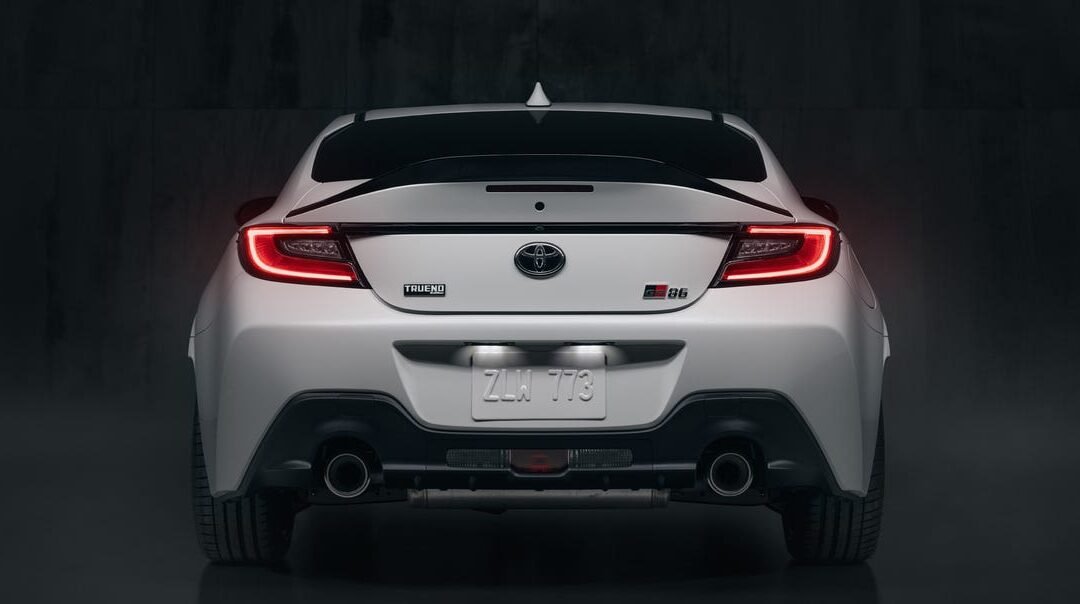
According to a report, Toyota is working on a new hybrid power system for its range of GR performance vehicles.
Autocar
.
-
At the core of the powertrain will be a newly developed turbocharged 2.0-liter inline-four engine capable of generating as much as 400 horsepower.
-
Toyota hinted at this powerplant with the GR Yaris M concept, which also suggests the possible comeback of the mid-engine MR2 sports car.
In recent years, Toyota has focused more on appealing to car lovers by offering a range of GR-branded sports vehicles, starting with the budget-friendly options.
GR86 coupe
to the
GR Corolla hot hatch
and the six-cylinder
GR Supra
Currently, Toyota is making sure that its GR series remains available in numerous countries, except for the United States, where stricter emission standards continue to be implemented.
Autocar
has mentioned that Toyota is developing a new hybrid system for upcoming high-performance vehicles.
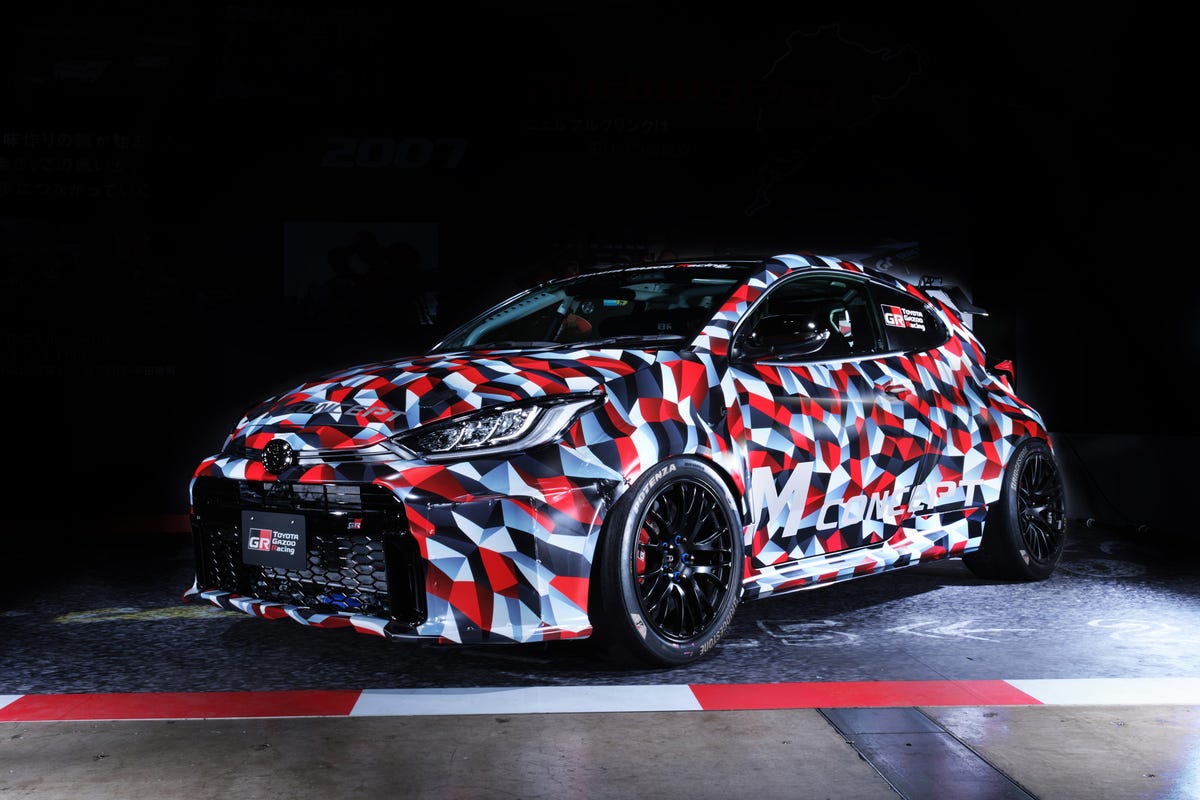
The hybrid system will center on a newly developed turbocharged four-cylinder engine that is presently being created. Toyota hinted at this powertrain with the
The GR Yaris M concept was unveiled earlier this year at the Tokyo Auto Salon.
, replacing the small hatchback’s turbocharged three-cylinder engine with a centrally mounted 2.0-liter turbofour.
The engine can serve dual purposes for both conventional hybrid and plug-in-hybrid setups. Weighing in at 2.0 liters, this powerplant is more compact and lightweight compared to Toyota’s present offerings, largely due to a reduced piston stroke which aids in offsetting the additional mass from incorporating hybrid technology components.
Although Toyota has not revealed much information regarding the engine,
Autocar
proposes that the updated four-cylinder engine might generate approximately 400 horsepower for street use. Currently, the 2.4-liter horizontally-opposed four-cylinder in the GR86 delivers 228 hp, whereas the turbocharged 1.6-liter triple in the GR Corolla offers 300 horsepower. This hybrid system will similarly be employed in Toyota’s racing endeavors.
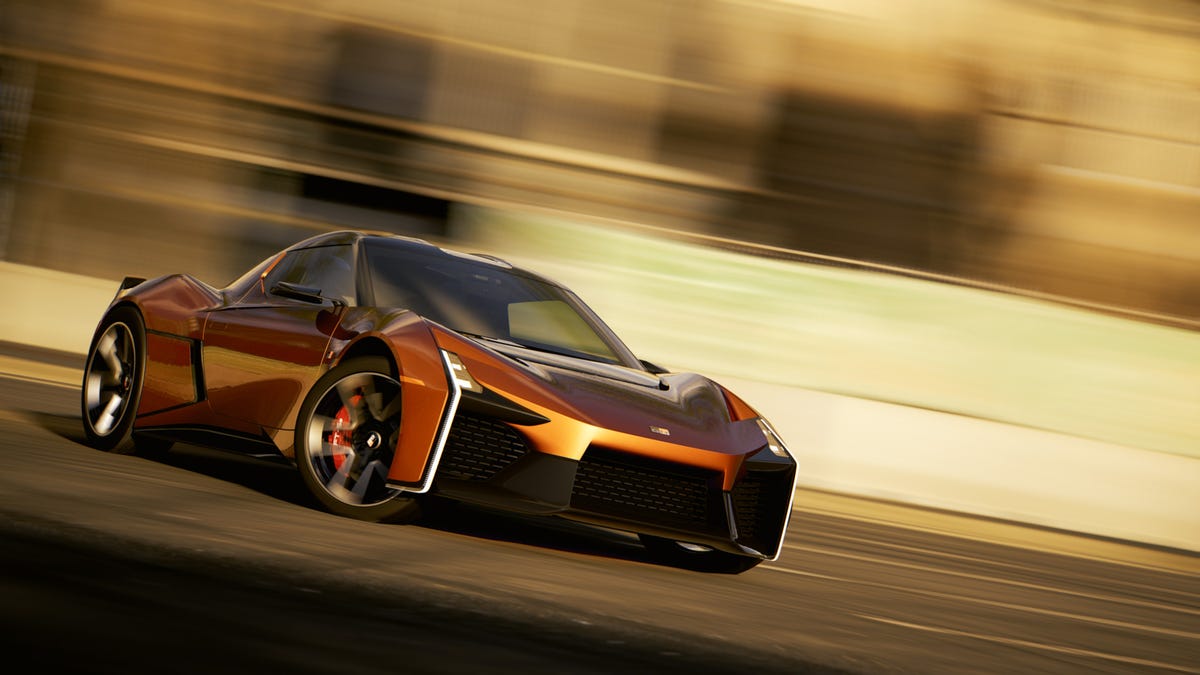
The mid-engine GR Yaris could potentially lead to a sports car with the engine positioned between the wheels.
Speculations regarding the comeback of the MR2 designation
have gained momentum over the last year. The
The FT-Se idea proposed in 2023 indicated that the next version of the MR2 could potentially be an electric vehicle.
, however, Toyota’s overall hesitation regarding electric vehicles and the GR Yaris M project suggest that a gasoline-driven sports car appears more probable.
Autocar
indicates that the mid-engine sports car received approval for production back in May, and
Toyota suggested potential developments for several new sports cars in a video posted last autumn.
, featuring a third-generation GR86, a new MR2, the reintroduction of the Celica, and a sixth-generation Supra. It also includes a flagship sports car—
apparently inspired by the 2022 GR GT3 concept
—was also listed and
has been spotted testing
, even though it might ultimately be branded as a Lexus.
Interested in buying a car? Discover your perfect fit on the MSN Autos Marketplace.
by admin | Mar 13, 2025 | automotive industry, autos, cars, driving, volkswagen
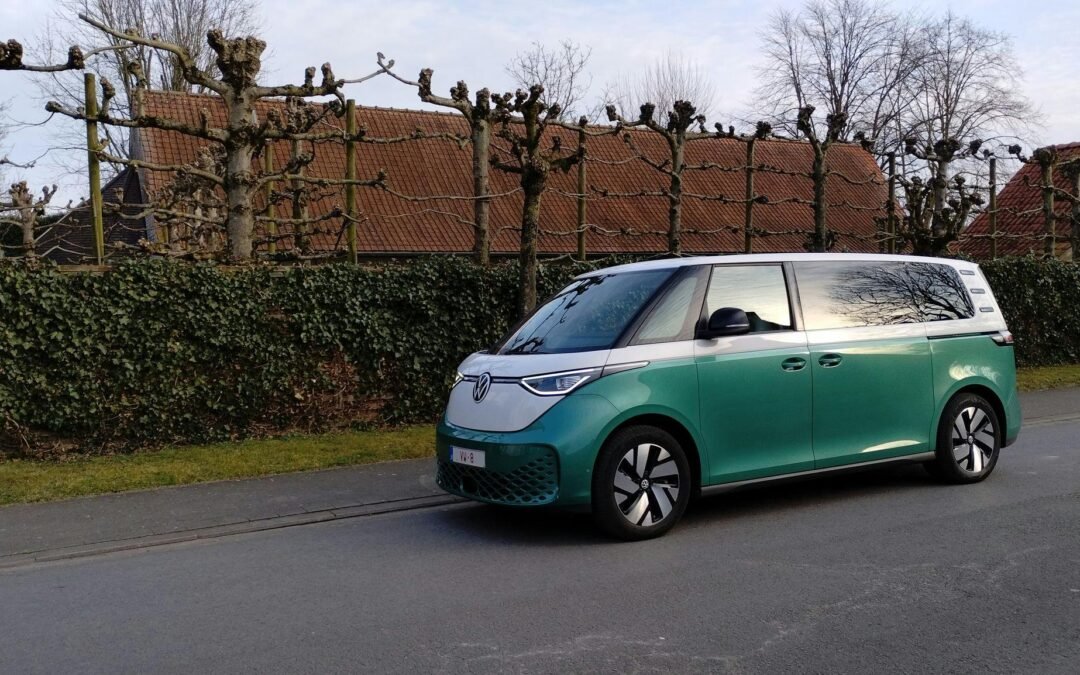
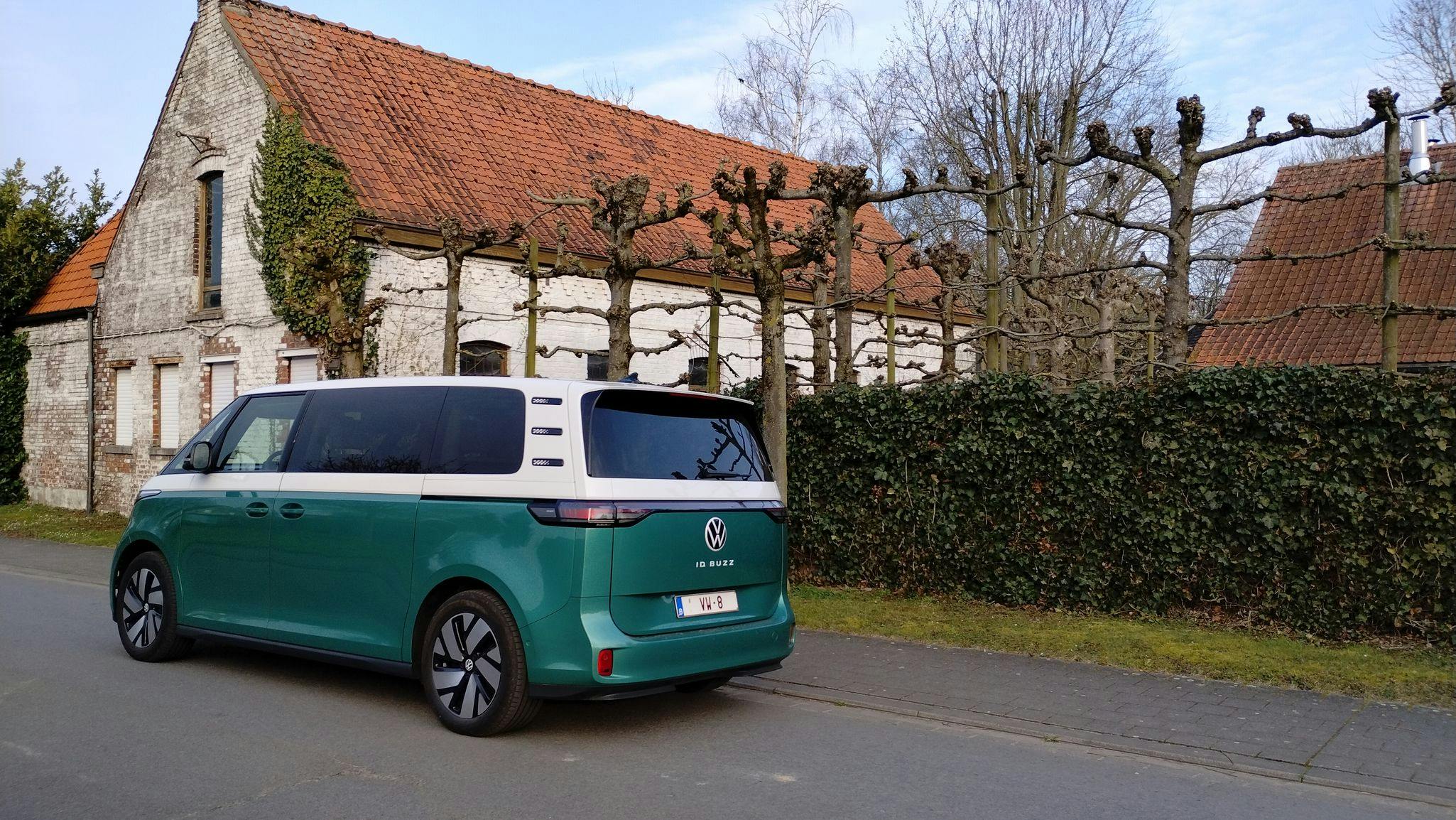
It’s impossible to overlook the Volkswagen ID.Buzz; particularly due to its distinctive two-tone body design that echoes its famous predecessor from the 1950s and ’60s. However, this modern version operates in the 21st century as an electric vehicle.
Before the introduction of the LWB version, the ID.Buzz was offered exclusively with five seats for family use (in Europe). That wasn’t sufficient. The launch of the ID.Buzz LWB addresses this issue. ‘LWB’ stands for ‘long wheelbase,’ which adds an extra 25 centimeters. Consequently, it now offers seven genuine seating positions along with additional luggage space and increased driving range. Therefore, the new model comes equipped with a battery capacity of 86 kWh usable energy (or 91 kWh as a total gross capacity)—this represents an increase of 7 kWh over the regular ID.Buzz featuring identical motors. While the enhancement might seem modest, every bit helps. Let’s delve deeper into these details later on. Now, let us get behind the steering wheel of this vehicle measuring 4.96 meters in length and embark on a highway journey towards the picturesque countryside around Kortrijk, Belgium.
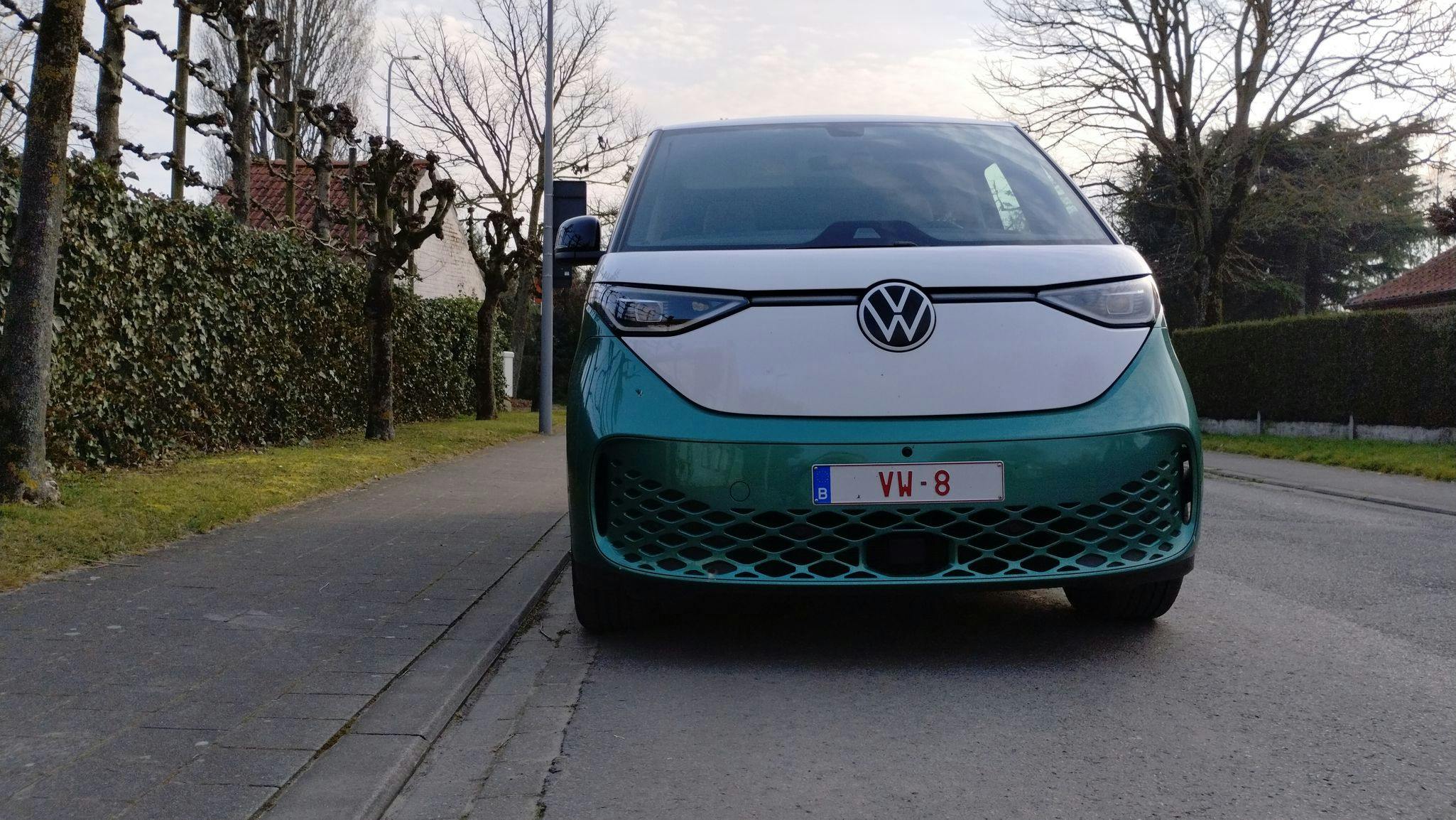
Combi bus
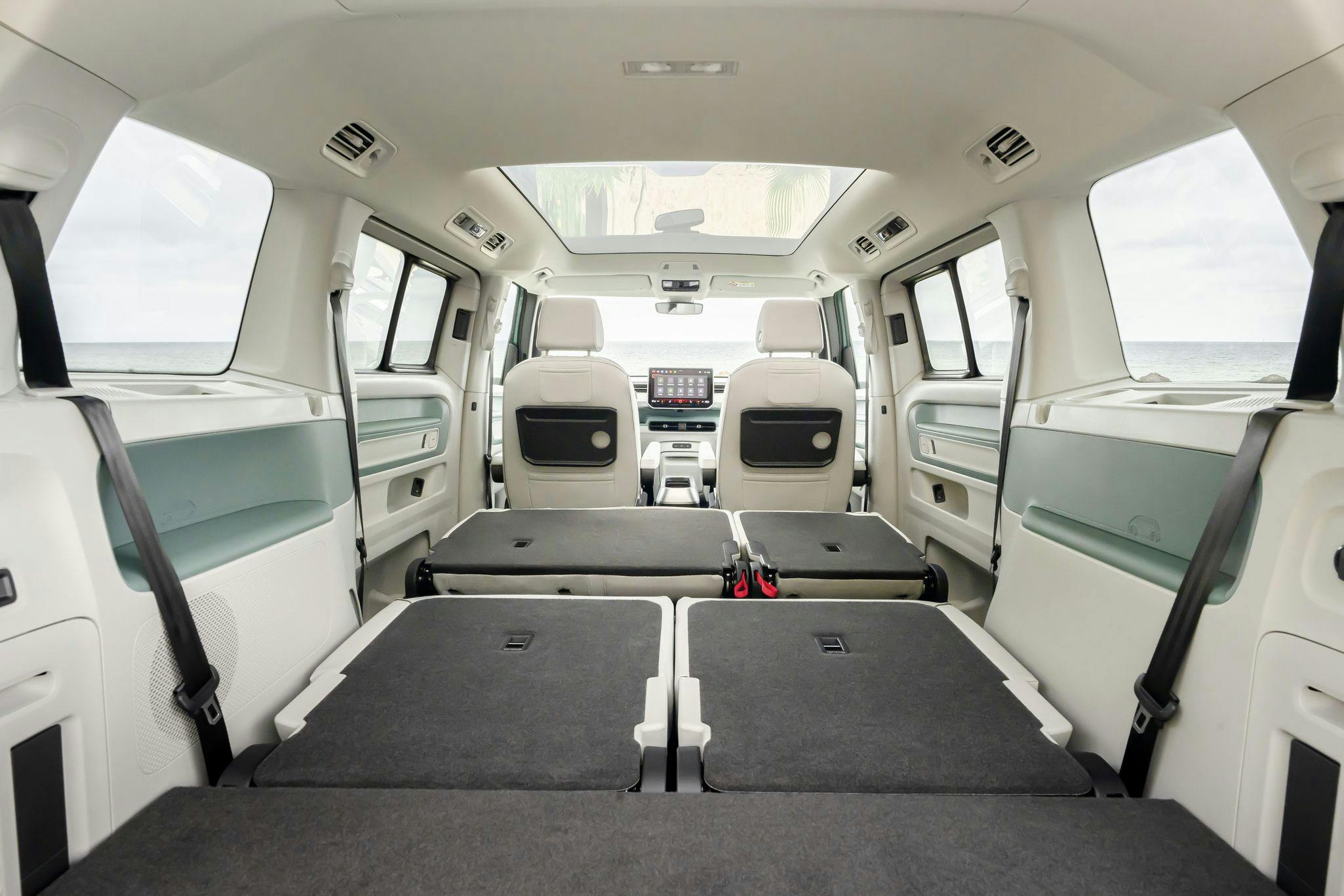
Initiating the journey involves pressing down on the brake pedal and manually shifting the gear lever located behind the steering wheel. With this, we set off amid appreciative glances from those around us, impressed by the neo-retro aesthetic of our compact hauler. It’s tempting to respond with a surfer-style salute just to flaunt it further. Given that tonight marks an adventure, we’ll camp out using air-filled mattresses following a lively gathering where music plays a central role. Besides myself and my trio of companions who squeezed into the trunk area once I’d stowed away the back seat rows, everything else—bags, suitcases, inflatables, sleepwear, audio equipment including amplifiers, speakers, cable boxes, microphones, even a disco ball—all found their place neatly within the vehicle. This was achieved effortlessly under the tailgate (which has electric options available). Storage spaces beneath kept essential items such as first-aid kits and emergency triangles organized yet accessible. However, setting up microphone stands required positioning them at the rear seating section since they couldn’t fit elsewhere. Additionally, accessing the third-row seating via the optional power-sliding doors becomes straightforward thanks to folding mechanisms designed directly into these seats. Thus, loading up proves both simple and efficient.
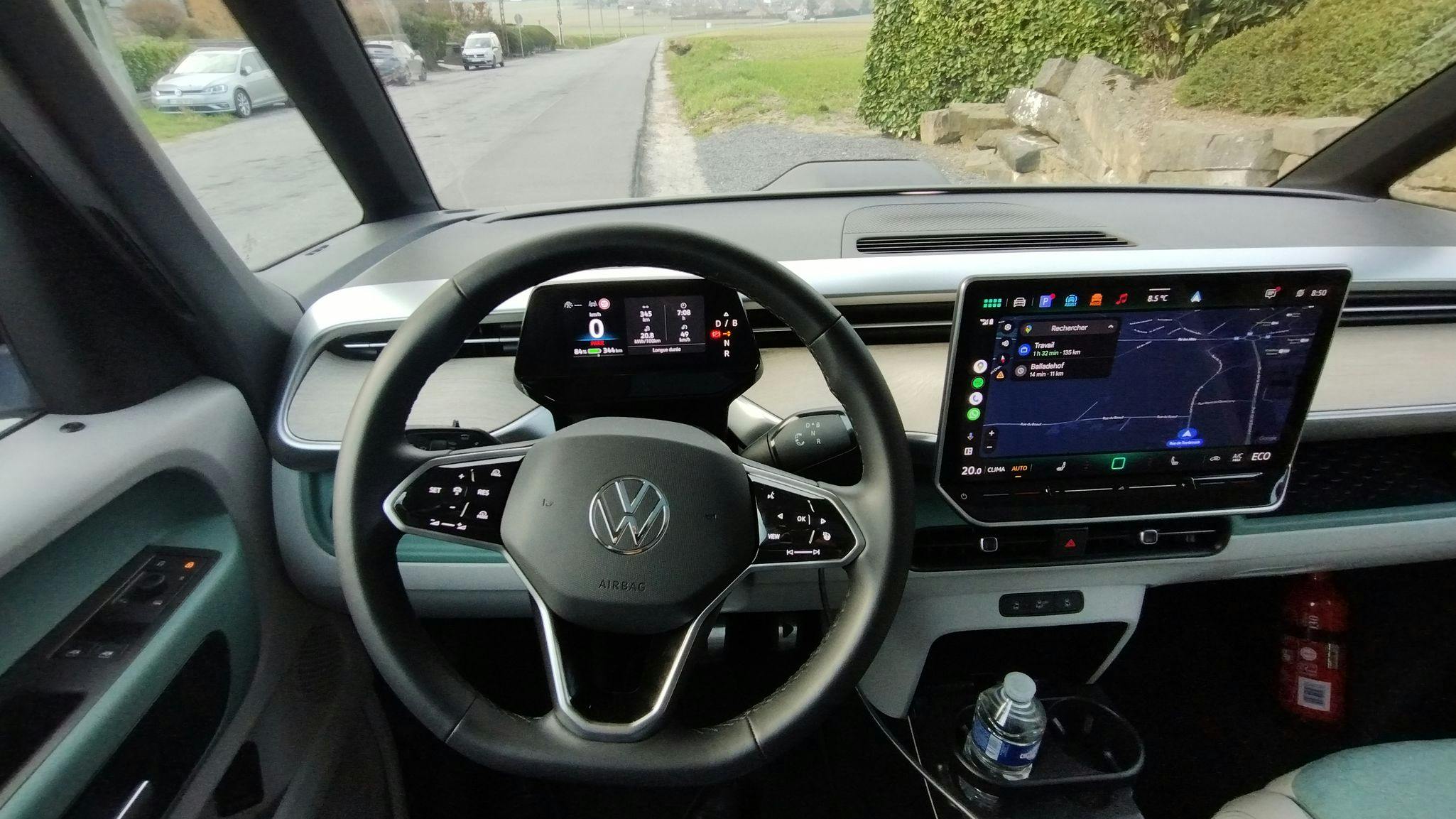
Holiday Atmosphere
Sitting in the driver’s seat on the right side, you face an extensive dashboard that seems never-ending. This expanse offers little practical use. However, fortunately, there is a glove box located ahead of the front passenger above the actual glove compartment. Similar storage spaces can be found scattered around the interior of the vehicle. Additionally, close to the steering wheel, there is a slot designed specifically for smartphones, accompanied by two USB-C ports. Nonetheless, these elements become redundant if your smartphone supports wireless charging since the console includes an induction charger. Moreover, both the front-seat occupant and rear passengers have access to additional USB-C connections. Despite being predominantly made from plastic, connectivity within this welcoming space is comprehensive. To adjust lighting levels, the electrochromic panoramic sunroof allows you to change its transparency simply by swiping across a touch-sensitive zone on the ceiling—it adds a playful element! Furthermore, although it comes at extra cost, the acoustic insulation provided by the laminated windows effectively muffles external noise—imagine how quiet it feels inside! Interestingly enough, the car remains virtually silent under operation too.
Tchiki boum
Could you picture the stereotypical scene of individuals swaying to the rhythm of the music, strolling about in their emerald and ivory coach? This describes our experience during the trial (despite none of us being true aficionados). The ID.Buzz fosters an atmosphere conducive to relaxed discovery. On highways too, the road seems transformed. Dominating the flow of traffic and comfortably occupying the far-left lane becomes feasible thanks to the powerful 286 horsepower (210 kilowatts) engine mounted at the back of the van. With a remarkable torque outputting at 560 Nm, accelerating feels effortless; it achieves zero-to-100-kilometer-per-hour sprint within just 7.9 seconds when pushed properly. Top speed caps off at 160 kilometers per hour.
Nonetheless, maneuvering through curves and navigating roundabouts requires caution because of the substantial size of the vehicle. Despite having a lower center of gravity attributed partly to the hefty battery pack, it retains its bulky form factor akin to a carton of dairy products. Nevertheless, Volkswagen has optimized the airflow design enough to make extended drives viable, supported further by a fresh, fuel-efficient variant introduced into the VW ID lineup.
Traveller
In rural areas, one might achieve energy consumption under 19 kWh per 100 km. However, driving above 100 km/h typically increases this to about 23 kWh per 100 km or higher on average. Fortunately, we experienced mild springlike temperatures during our journey, allowing us to aim for approximately 300 km on highways and potentially over 400 km overall. Regardless of the season, planning rest stops every two hours along highway routes is feasible; longer breaks up to 2.5 hours may be needed depending on favorable conditions like good weather. When seeking out recharge stations, aligning the rear-right side of your vehicle close to the electrical outlet is essential. Although the peak charging rate can reach 200 kW, both the charger’s software and the automobile itself determine the effective output—often settling around 125 kW. Consequently, expect to take at least half an hour off from travel time to regain roughly 200 kilometers worth of battery charge unless faced with harsh winter climates. Notably, during colder months, options include heated rear seating and a windshield de-icing function.
Limited weight
Whether you’re setting up camp or visiting the recycling center, towing a trailer becomes feasible due to the electric tow hitch which supports up to 1000 kg. However, be cautious as adding passengers could push the overall weight beyond 3.5 tonnes, necessitating an appropriate driving license in such scenarios. There is also a minor detail worth noting: the vehicle has a maximum authorized gross weight of only 3340 kg. Consequently, fitting seven rugby players along with their equipment inside the limited space would exceed capacity limits. Even when converting the ID.Buzz into a makeshift cargo van by folding all seating options—offering a max volume of 2469 liters—it remains unsuitable for large-scale moves. Primarily designed as a family car rather than a moving truck, the interior emphasizes relaxation and daily convenience through features like comfortable seating and mood-enhancing ambient lighting. Additionally, the detachable display used for navigating and managing entertainment systems allows seamless connectivity. Lastly, although sizable, the compact steering radius combined with camera assistance significantly eases urban maneuvers; however, ensure there’s enough clearance—at minimum 5.5 meters—to maneuver effectively within tight spaces.
The Painful Price
The extended-wheelbase ID.Buzz is fantastic. Its sleek design makes it an enjoyable sight both inside and out when driving around town. With its sizable 86kWh battery, this vehicle promises exciting adventures without many sacrifices. However, during colder months, you might have to adjust your expectations somewhat. Priced starting at €62,000 inclusive of VAT—more than the shorter version which costs about €56,000—the longer variant packs a punch with 286 horsepower.
Our test unit from Belgium came fully loaded in Pro trim: extras included an entertainment package priced at €1,657, comfort features worth €3,091, add-ons like tow hooks and power-operated doors totaling another €3,130, plus additional styling upgrades amounting to €4,114 along with safety tech costing €2,585. All these pushed our total up to an impressive €85,722!
In comparison, French customers will find themselves paying roughly €58,400 for their seven-seat ID.Buzz Pro models. Meanwhile, buyers over in Switzerland would be looking at approximately 71,000 CHF as a base figure for the same configuration. Canadians should brace themselves for nearly $81,000 CAD before they get behind the wheel! Quite steep indeed…
(MH with Olivier Duquesne – Source: Volkswagen – Images: © Olivier Duquesne & Volkswagen)


