
by admin | Apr 3, 2025 | architecture, cities and towns, culture, portugal, tourist attractions
Located in northern Portugal, there is an ancient Roman settlement dating back more than two millennia, making it the country’s most historic city: Braga. Known for its high density of churches and striking Baroque architectural style, this destination promises to enchant various kinds of travelers.
Ponte de Lima, Coimbra, Guimarães—these Portuguese cities boast strong ties to ancient times, making it challenging to pinpoint which is the most historic. Nonetheless, Braga merits special consideration as it was established circa 16 BC under Emperor Augustus of Rome. This city stands out not just because of its distinctive heritage but also due to its stunning architecture, galleries, and secluded green spaces.
If you’re planning a trip to Portugal, we have some articles that can assist you with organizing your visit:
-
Portugal’s lesser-known food treasures, representatives of a diverse cuisine
-
This breathtaking beach in Algarve, Portugal ranks among the most gorgeous globally.
-
Some of Portugal’s loveliest cycling paths to experience the nation from a different perspective
-
Faro: 5 Essential Attractions in the Algarve Capital
Braga, full of history
Situated approximately 55 kilometers north of Porto, Braga stands as a picturesque town within the historical region of Minho. This city boasts an extensive legacy stretching over two millennia, notably from the Roman period when it served as the provincial capital of Gallaecia from 284 to 305. During the medieval times, it came under the influence of both Suebi and Visigoths prior to embracing Christianity.
Braga has secured a spot in our list of the most breathtaking locations.
cities in Portugal
For having a strikingly charming character, much credit goes to the numerous cultural influences woven into its tapestry throughout history. Within Braga’s intricate network of winding lanes, explore Baroque and medieval landmarks alongside Gothic cathedrals and splendid palaces. An interesting tidbit: It earned the title of Youth Capital in 2012 due to its remarkable blend of contemporary vibrancy—boasting plenty of cozy cafés, bustling plazas, and trendy retail avenues, making it highly attractive to young people.
What activities can you enjoy in Braga, the eldest city in Portugal?
Do you have a passion for history, or are you interested in the Baroque period and unsure about how to begin exploring it?
Braga, Portugal
If so, proceed along this path. Given the mean temperature of 20°C, it’s advisable to explore Braga from May through September, ideally during the shoulder season for a more pleasant experience.
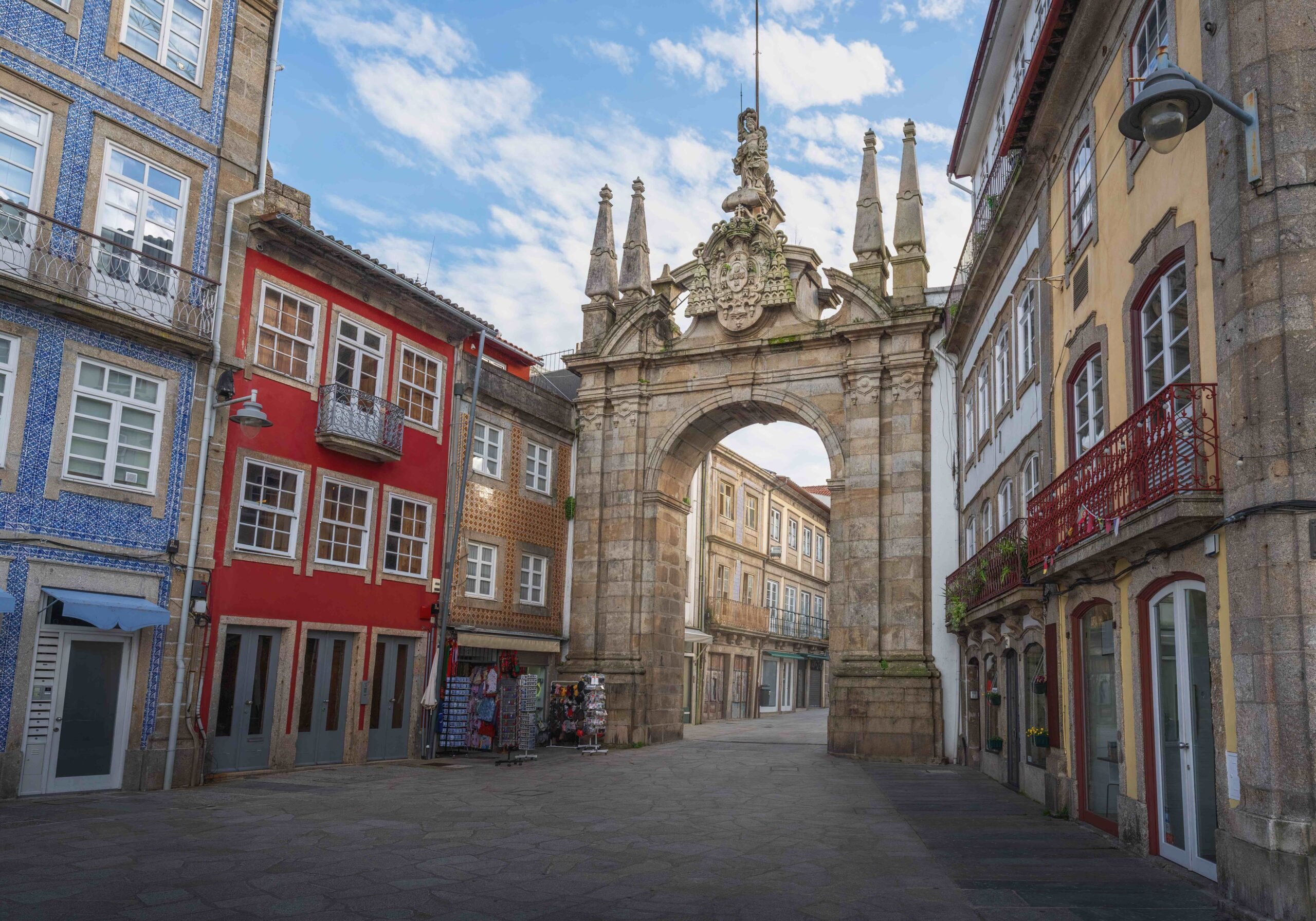
Upon arriving in Braga, begin your exploration at the Arco da Porta Nova, which is an arch integrated within the historic city walls from medieval times. Meander through the winding roads to admire the numerous churches, shrines, and chapels scattered throughout the town, then proceed to visit Portugal’s oldest cathedral, known as Sé de Braga, constructed during the 12th century.
th
century and has been designated a historic landmark. Additionally, you can stroll down the principal pedestrian thoroughfare,
Dom Diogo de Sousa Street
, which passes through the historical center featuring charming small piazzas and hidden gardens.

Be sure to visit the Circo Theatre, which stands as a testimony to the cultural significance of the area, this 18th-century landmark.
th
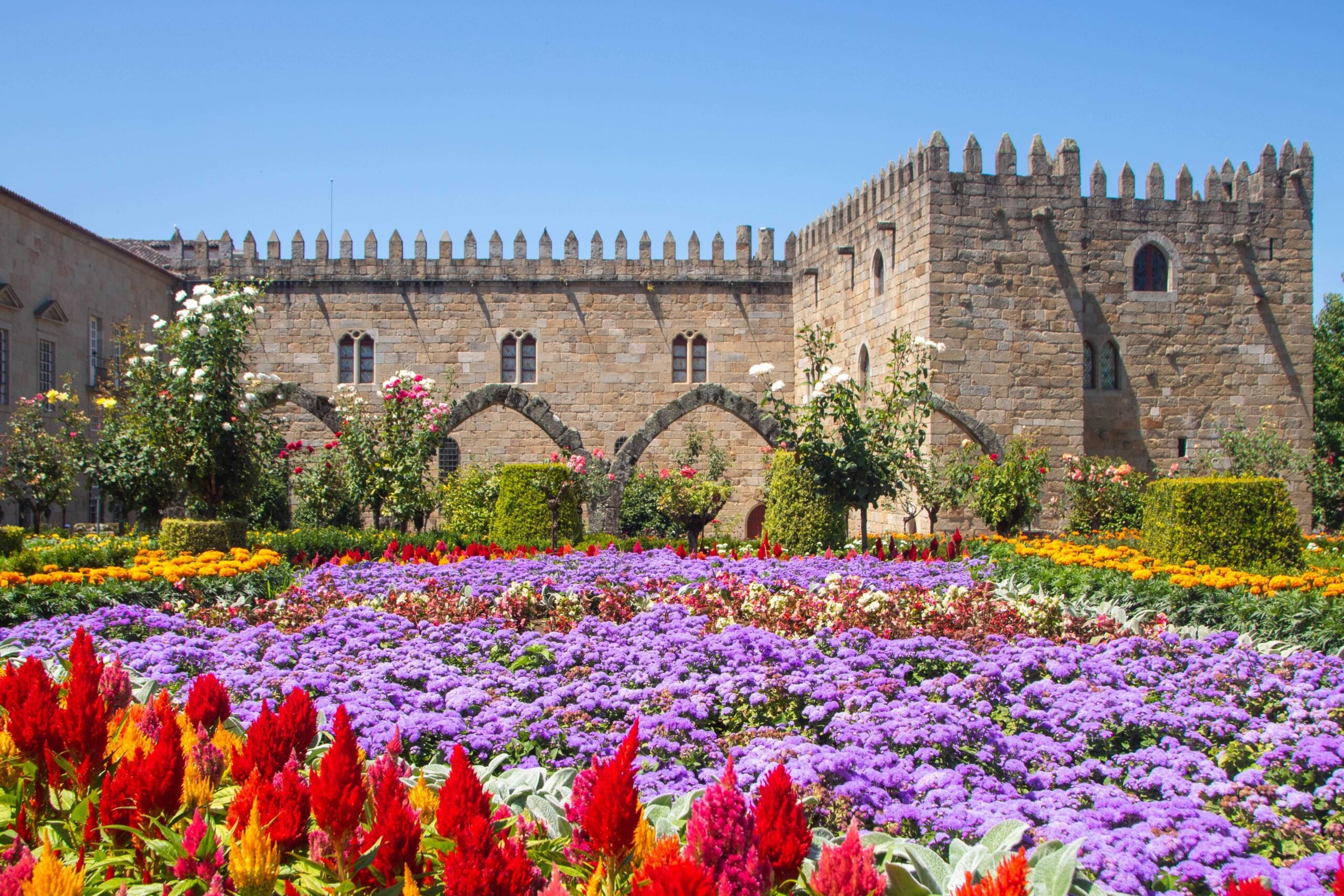
In the 18th century, the Rococo-style Palacio do Raio was adorned with blue azulejos tiles, and featured the Santa Barbara garden.
Higher up, head for the sanctuary of Do Bom Jesus do Monte, a UNESCO World Heritage Site. This shrine’s Baroque staircases, neo-classical architecture, fountains and grottoes will leave you dazzled. Climb to the top to admire the view over the whole region!
by admin | Apr 3, 2025 | community, culture, heritage, indian national news, politics
New York [
US
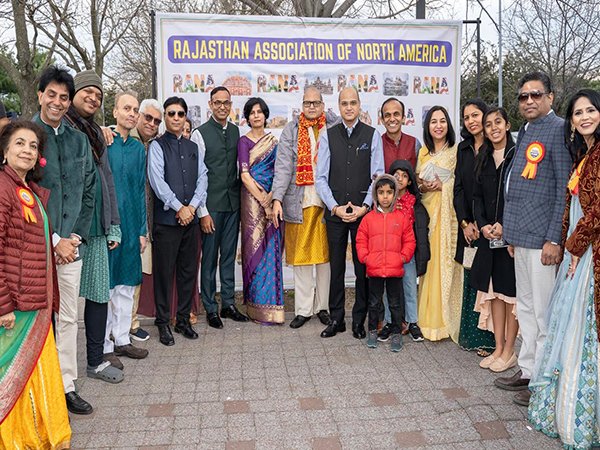
On April 3 (ANI), a significant Indian community organization in New York utilized its 75th-anniversary celebration as an opportunity to emphasize the continuing absence of constitutional acknowledgment for the Rajasthani language.
The
North American Rajasthan Association
(
RANA
They celebrated the milestone with a cruise event along the Hudson River, which was attended by over 400 guests, utilizing the occasion to express their concerns regarding what they see as an ongoing injustice.
RANA
President Prem Bhandari voiced his “stern disapproval” over the omission of Rajasthani from the 8th Schedule of India’s Constitution, where recognized languages are listed.
“Bhandari informed the audience that despite a unified resolution adopted by the Rajasthan State Assembly in 2003 advocating for its incorporation, the central government hasn’t taken action on it yet,” he explained.
He observed that the resolution was achieved subsequently
RANA
‘ s initial International Convention along with ongoing efforts alongside former Chief Minister Ashok Gehlot, yet cited “a lack of political will” as the reason for the stagnation.
Bhandari, who additionally heads the organization behind Jaipur Foot
US
A announced intentions to host a significant prosthetic limb fitting event at the Golden Temple in Amritsar.
The project, created in partnership with the American Punjab Society, concluded following talks with Dr. Mehta, recipient of the Padma Bhushan award and the founder of the Jaipur Foot group. Additionally, plans are underway for a significant new clinic in Trinidad and Tobago, where India’s High Commission has obtained necessary permissions and is handling logistical arrangements. Notably, Dr. Mehta, who at 90 years old founded this organization, will make an appearance at the event having traveled all the way from India.
“India’s Prime Minister Modi has emerged as the foremost advocate of the ancient Sanskrit principle “Vasudhaiva Kutumbakam” – meaning “the world is one family,” Bhandari told ANI. Under Modi’s leadership, the External Affairs Ministry has funded 32 international Jaipur Foot camps through its “India for Humanity” programme.
These facilities, managed by the Bhagwan Mahaveer Viklang Sahayata Samiti, have offered complimentary artificial limbs to numerous individuals with disabilities throughout Asia, Africa, and Latin America.
The occasion also marked a farewell ceremony for Varun Jeph, the departing Deputy Consul General of India, who concluded his term which was noted as the longest in this capacity lasting more than three years and eight months.
Bhandari commended Jeph for his “constant accessibility” and “consistent backing” to the Indian community spanning the 10 states under the purview of the Indian Consulate in New York.
The newly appointed Deputy Consul General, Vishal Harsh, was greeted along with Indian Foreign Service officials Surender Adhana and Eldos Mathew Punnoose.
The festivities included cultural acts such as poetry readings by Abhinav Shukla, with organizers emphasizing strong involvement from young people of Rajasthan originating from various regions within the tristate area. (ANI)
Provided by Syndigate Media Inc. (
Syndigate.info
).
by admin | Apr 2, 2025 | culture, events and festivals, tourists, Travel, travel destinations
Dhaka, April 2 — Over time, Eid has transformed from being solely an occasion to visit one’s hometown into a crucial timeframe for domestic travel and tourism.
However, both the broader audience and sector specialists contend that Eid tourism in Bangladesh has grown limited and repetitive.
Nazrul Islam, a 55-year-old high-ranking official at a corporation, had originally intended to go overseas during the Eid holiday.
Nevertheless, he eventually chose to remain in Bangladesh.
Even so, he does not plan to travel anywhere inside the country or even venture out into Dhaka on Eid day.
Rather than doing anything else, he intends to dedicate all of his time to being with his family.
When questioned about his reasoning, he responded, “Upon closer inspection, you’ll notice that most festivals in our nation adhere to a similar structure. On Eid day, following the dawn prayer and a communal meal, what typically occurs? People usually head either to a relative’s home, a public garden, or an eating establishment.”
This predetermined Eid celebration, which recurs annually, doesn’t take place in large foreign cities. Even venturing outside of Dhaka proves pointless—after several hours, you’re worn out from witnessing the unchanging scenery.
Mossabber Hossain, who is 72 years old, shares memories of Eid festivities in Dhaka, stating, “In those days, each neighborhood had fairs, there were boat races in Old Dhaka, and horse racing took place in open fields. However, nowadays, Eid mostly involves walking in parks and eating at restaurants.”
A tourism surge is anticipated in Khagrachari during the Eid holidays.
A Metropolis Driven by Commerce, Lacking Celebration
Adil Muhammad Khan, who serves as the president of the Bangladesh Institute of Planners (BIP), pointed out the constraints of Eid celebrations in Dhaka by saying, “The city has grown increasingly commercialized to such an extent that space for non-commercial leisure activities has been significantly reduced.”
A number of areas where fairs used to take place no longer remain today. The waterways designed for boating activities have been overtaken. Bodies of water have been reclaimed to make way for massive office towers, and as a result, eateries inside these structures now serve as focal points for Eid celebrations.
Even public spaces like parks have not escaped this change. If you go to Dhanmondi Lake nowadays, it might seem as though the focus has shifted from the water body itself to the many eateries that now line its shores. There appears to be no vision for an energetic Dhaka. People staying in the city during Eid find themselves stuck in monotonous festivities.
A Dull Encounter Outside of Dhaka
Humayun Rashid, aged 32, went to Cox’s Bazar with his family during the last Eid holiday.
He felt let down by his experience. “Cox’s Bazar can be explored thoroughly within just two days. Anything beyond the beach, such as boat tours, parachute flying, and horseback riding, tends to be overly priced and seems fraudulent.”
He remarked, “Once visitors recognize they are continually taken advantage of, they start losing faith in those locations. During last Eid, approximately 800,000 travelers descended upon Cox’s Bazar. The shore became as packed as a busy fish bazaar in Dhaka. Room rates at hotels surged dramatically, and basic meals were priced multiple times higher than normal. Who would wish to revisit an area like this?”
Tulilia’s Tulip: Enhancing Tourism and Regional Economy
Even though there are complaints, hotels in Cox’s Bazar have already secured bookings of more than 80% for this Eid, with the few available spots anticipated to be taken soon. Nevertheless, numerous travelers continue to express dissatisfaction regarding the increased costs. A tourist named Faisal was searching for a hotel room when he discovered that an average priced, air-conditioned room designed for couples and overlooking the ocean was being charged between Tk 8,000 and Tk 9,000—a price nearly twice as high as normal rates.
Murshid Hossain, who previously managed a hotel in Cox’s Bazar and now serves as a general manager at a three-star hotel in Dhaka, stated, “Hotels find it difficult to occupy their rooms during the low season despite providing discounts greater than 50%. Therefore, to ensure business sustainability and cover employee wages, they have to increase prices significantly when tourism peaks.”
An Unprepared Tourism Industry
Professor Muhammad Shoaib-Ur-Rahman from Dhaka University’s Department of Tourism and Hospitality Management feels that Bangladesh’s tourism sector is inadequately prepared.
Each year, we’re told that around 1.5 million travelers visit various locations during Eid; however, there isn’t any verified information supporting this statement. Without basing our development of tourist attractions on actual attendance figures and reconsidering what defines enjoyable experiences, genuine progress won’t occur,” he stated.
Travel limitations eased in 4 Bandarban upazilas
He further explained, “Tourists often go to Cox’s Bazar and Bandarban just once or twice and seldom come back. In contrast, locations such as Bali or Bangkok tend to draw returning guests. The main factor behind this difference is that Bangladesh’s travel spots provide a limited variety of experiences. Overseas, tourism combines natural beauty with human ingenuity to produce multiple points of interest. It takes more than couple of days to truly see all that Bangkok has to offer, whereas one could easily complete sightseeing in Cox’s Bazar within a brief period.”
He cautioned that uncontrolled price increases and cartels are adversely affecting both travelers and residents. “Since tourism drives up the prices of essentials, locals begin to view tourists unfavorably. This growing resentment might ultimately result in security issues.”

by admin | Apr 2, 2025 | crime, culture, korean, military, politics
The opening of a museum honoring Yun Bong-gil, who was put to death in 1932, has been delayed following objections from conservative factions.
The inauguration of a memorial museum in Kanazawa,
Japan
A dedication event honoring a Korean nationalist was suddenly canceled due to intense objections from right-wing organizations, highlighting the persistent tensions surrounding Japan’s historical colonization.
The three-story Yun Bong-gil Memorial Information Center was set to be inaugurated near Kanazawa Station in Ishikawa Prefecture on Saturday. However, the opening was delayed following protests from Japanese ultra-nationalist groups who gathered in the vicinity.
Yun Bong-gil gained recognition for executing a bombing assault against Japanese government representatives in Shanghai during 1932.
Are you curious about the most significant issues and global trends? Find out here.
SCMP Knowledge
Our latest platform offers carefully selected content including explainers, FAQs, analyses, and infographics, all provided by our acclaimed team.
To prevent possible unrest at the museum, law enforcement set up barriers and kept a watchful eye. Approximately 70 cars drove around the area for about three hours, waving Japanese imperial flags and playing aggressive tunes, as reported by the Sankei newspaper.
Earlier, a group of Japanese nationalists tried to prevent the museum from opening by seeking legal recourse, however, their case was rejected in court.
The organization Mindan, which oversees the museum, has faced previous attacks, such as an incident on March 2 where a member of a nationalist group drove a car into the local office of the South Korean community association in Kanazawa.
According to local news outlets, the vehicle featured the emblem of an extreme-right organization along with a rising sun flag. The motorist, identified as Kenji Goto, was apprehended on site and admitted to deliberately aiming for the structure.
Kim Gwang-man, the South Korean head of the museum initiative, informed Yonhap that the center’s opening date remained uncertain. He stated, “Setting another date might just invite criticism from right-wing groups.”
In South Korea, Yun is honored as a national icon, respected for giving up his life to aid in the liberation of the Korean peninsula from Japanese colonial rule (1910-1945). Advocates of the museum argue that it seeks to pay tribute to Yun’s heritage and teach upcoming generations about his significant contribution to the Korean independence struggle.
Yun, who was born in June 1908, relocated to Shanghai in 1931 with the resolve to combat Japanese oppression.
The explosion he orchestrated at Hongkou Park in 1932 was aimed at an event honoring Emperor Showa’s birth anniversary. This act led to the fatalities of notable Japanese figures Teiji Kawabata and General Yoshinori Shirakawa, along with numerous casualties among those present.
After a second bomb failed to explode, Yun was captured and subsequently executed by firing squad at the age of merely 24. Years later, his remains were disinterred and reburied in Seoul, and in 1962, he was posthumously granted the Republic of Korea Cordon, which stands as the country’s supreme accolade.
This individual detonated an explosive device in a crowded park in Shanghai, resulting in the deaths of two Japanese nationals and injuries to numerous others.
Ken Kato, the conservative Japanese businessman
Ken Kato, a conservative businessman from Tokyo, criticized the museum’s inauguration, calling it “highly provocative.”
He stated that this individual triggered an explosion within a public park in Shanghai, resulting in the deaths of two Japanese nationals, numerous injuries, and endangering the safety of several bystanders.
Kato emphasized the importance of recognizing the sentiments of the Japanese people, stating, “Imagine the reaction if a Japanese organization proposed opening a museum in Seoul aimed at portraying the period under Japanese rule as beneficial for the Korean Peninsula.”
News about the museum’s interrupted opening has sparked furious reactions in South Korea, with remarks on the Hankyoreh newspaper’s online platform urging for unity and posing the question, “Who will speak up for Korea?”
Emotions are also strongly charged in Japan, as evidenced by a posting on the Yahoo Japan news site stating: “If you attempt to honor individuals responsible for terroristic acts, naturally, protests will ensue.”
As stated elsewhere, honor Yun Bong-gil in Korea,” one message said. “Commemorating him in Japan would be considered harassment. If Japan attempted something like this in Korea, they would protest vehemently.
Mindan was approached for comments about the demonstrations opposing the museum.
More Articles from SCMP
The emerging ‘Transactional Reality’: Europe gears up to confront China on its own ground.
WNBA sensation Angel Reese has a basketball-playing brother named Julian ‘Juju’ Reese. During March Madness, she supported him from the stands as he anticipates finding out whether his name will be called in the upcoming NBA Draft.
Who is Doge’s main collaborator, Elon Musk’s ‘right-hand man’, Steve Davis? Similar to Trump, he studied at the Wharton School of Business and has been working with the tech tycoon at SpaceX, The Boring Company, and X – and recently joined Doge.
Could new US tariffs on China be ‘too significant to handle, too obvious to evade’?
The article initially appeared on the South China Morning Post (www.scmp.com), which is the premier source for news coverage of China and Asia.
Copyright © 2025. South China Morning Post Publishers Ltd. All rights reserved.

by admin | Apr 1, 2025 | children and families, culture, education, educational systems, school children
In Takasaki, Gunma Prefecture, despite the chilly and rainy weather in early October, the interior of the second-grade classroom at Takasaki Municipal Seibu Elementary School buzzes with warmth and enthusiasm. The lesson revolves around building vocabulary related to rivers and aquatic life; names of various water bodies decorate the chalkboard. Students enthusiastically raise their hands hoping to respond to the instructor’s queries. Among them sits 7-year-old Lulu Eiren Belle Masuda from the Philippines—a child who occasionally seeks assistance from her neighbor during these sessions. Beside her is 54-year-old Ayako Suga, serving as a language assistant.
“Eiren mentions that it’s challenging to converse with others since her main mode of communication is in English.” Although English is predominant at home, the dynamics shift in the classroom as she is the sole non-native Japanese speaker. She admits, “I sometimes require additional assistance,” particularly noting that speaking in front of the entire class makes her feel extremely uneasy.
Inherent difficulties encountered by students who are not native speakers at schools
Eiren’s experience mirrors an increasing trend in Japanese schools due to the rising number of foreign residents. By the close of 2024, this demographic saw a significant increase of 10.5%, reaching a total of 3.7 million individuals—the highest recorded figure so far. The government has set targets to attract approximately 820,000 additional overseas workers between 2024 and 2028 through various policies designed not only for labor but also facilitating easier pathways to permanent residency. This enables skilled workers to integrate their families into society seamlessly.
In Gunma Prefecture, where Eiren resides, the population of foreign inhabitants increased by 10.7% within a single year, totaling more than 72,000 individuals by December 2023. This growth necessitates that schools such as Seibu Elementary adapt to accommodate their increasingly varied student populations and find methods to assist students like Eiren, who do not have native proficiency in Japanese. Nonetheless, significant obstacles remain when trying to offer adequate help.
According to Professor Hiromi Saito from the Graduate School of Education at Tokyo Gakugei University, one of the core issues behind these problems is Japan’s lack of full recognition of immigrants. These children are effectively treated as immigrants, but the educational system does not acknowledge this fact. Consequently, schools—especially public ones—have failed to create a coherent structure to tackle the long-term, crucial challenge of educating these students systematically.
The insufficient acknowledgment is further exacerbated by minimal financial backing from the central government. As she highlights, although MEXT has developed materials such as textbooks and instructional videos, along with compiling locally generated resources available online, this constitutes nearly all their direct assistance beyond select locations like Yokohama. Additionally, they have set standards recommending one language tutor for every eighteen pupils requiring additional help with Japanese and encourage using technological aids for distance education. However, she notes that actual provision of linguistic tuition for kids with immigrant backgrounds typically amounts to around seventy to eighty hours annually—scarcely sufficient time to impart even rudimentary conversation abilities.
“Without financial support, local governments and municipalities cannot establish systems, employ staff members, or offer training,” says Saito. “While MEXT is suggesting various measures, the conditions necessary for their implementation—be it through established procedures, adequate staffing, or suitable facilities—are not present across the country. This issue affects every region.”
At the Takasaki Municipal Board of Education, the recurring response echoed similarly. In response to inquiries about what assistance they primarily required from the national government to cater to non-native speaking students, a high-ranking official succinctly answered “Funding.” Despite Takasaki’s efforts to address the linguistic needs of each student who requires additional support—deploying their 30 language aides wherever requested—they barely manage to satisfy all demands.
Moreover, the support for language assistants is generally limited to two years per child, according to guidelines. However, Eiren’s language assistant, Suga, cautions that this timeframe might prove insufficient if the count of children requiring assistance keeps increasing.
“I would appreciate it if measures were implemented to provide adequate support so that we can address the requirements of the children and achieve the academic standards set by the schools. It is my sincere wish that both the Takasaki Municipal Government and the Board of Education create a robust system for comprehensive assistance as the population of foreign students increases. Currently, there isn’t an ample supply of teaching aides; however, despite this limited availability, we manage with what little resources we have and make the current system function effectively. Nonetheless, situations may arise where some children do not receive the necessary help,” she states.
The endeavors of language aides
Language aides such as Suga and Mika Senzaki Novaes, who was also spoken to by Mainichi, play crucial roles in assisting children from multicultural backgrounds to understand the Japanese curriculum found in their lessons and textbooks. Nonetheless, these aids aren’t JSL educators, and their interaction with pupils usually caps at two sessions each lasting about two hours per week. Consequently, this often leaves an unbridgeable gap between the assistance provided and what the students truly require.
Senzaki Novaes, who assists an 8-year-old Brazilian student named Shizuka (a pseudonym) at Takasaki Municipal Sakurayama Elementary School, emphasizes, “It’s crucial to understand that mastering Japanese and understanding academic subjects are two distinct challenges. While I aim to support her with Japanese practice, my limited session time doesn’t allow me to delve into broader educational content.” Outside of her regular job duties, she dedicates numerous hours to developing custom teaching tools since suitable commercial options are hard to come by.
“I find many terms unfamiliar to these children. I put considerable effort into assisting them so they can adapt to their Japanese schooling and everyday routines, as well as manage the classroom activities effectively,” says Suga.
Even though these obstacles persist, the work of language assistants is proving impactful. According to Shigeko Yajima, who teaches Eiren’s homeroom class, “In regular conversations, Eiren speaks Japanese quite well; her vocabulary size is nearly identical to that of her peers.” Nonetheless, Yajima recognizes that Eiren requires assistance with academic content, highlighting the importance of Suga. As Yajima points out, “Whenever she struggles to comprehend certain topics, Suga steps in to provide support.”
Similarly, Shizuka has advanced thanks to Senzaki Novaes’ assistance. Despite finding kanji and kokugo challenging—classes designed for native Japanese speakers—she mentions, “I enjoy having her around; it makes learning more manageable.” When questioned about whether she believes her Japanese skills are getting better, she nods vigorously and breaks into a smile.
Senzaki Novaes, who runs the organization Vamos providing language help to children with foreign roots, notes that Shizuka understands about 70% of what’s being said in regular conversations at school but struggles with more complex exchanges and study materials. “She can do math calculations, but she doesn’t understand what’s being asked in word problems,” Senzaki Novaes explains. “In kokugo class, there are words she can enunciate or write but doesn’t know the meaning of, so she doesn’t understand the sentence. It’s the same for other subjects like social studies or science.”
The Takasaki School Board successfully addressed all language assistance requests for the academic year 2024, yet uncertainty looms ahead. While they have maintained their practice of limited school visit durations by these assistants, significant needs still persist—especially for students speaking less common languages such as Tagalog, Nepalese, and Uzbek, where adequately trained helpers are scarce. Often, interactions between assistants and pupils involve a mix of basic Japanese and occasionally another shared tongue whenever feasible.
Implications for the future
The difficulties encountered by children from abroad in Japan’s educational system are not individual cases but rather symptoms of broader social changes. Due to an increasing elderly populace and decreasing number of births, the nation has begun relying on foreign workers to address labor gaps and bolster economic growth. According to Professor Saito, under updated immigration policies facilitating family reunification for professional migrants, these kids “are expected to contribute to Japanese society down the line, and this understanding is slowly becoming more prevalent.”
The statistics highlight the challenges faced by these young individuals. The education ministry reports that high school students from foreign backgrounds needing Japanese lessons have a dropout rate of 6.7%, which is notably above the nationwide average of 1.0%. Of those who do manage to graduate, merely 51.8% proceed to further studies, whereas this figure stands at 73.4% for native-born students in Japan. Furthermore, among immigrant pupils entering employment, as many as 39.0% secure irregular or part-time positions, contrasted sharply with just 3.3% of overall high school leavers taking such roles.
Senzaki Novaes, Shizuka’s aide, cautions about the long-lasting effects of insufficient assistance. She states, “There might be an increase in individuals with international backgrounds who receive minimal Japanese education within Japan.” According to her, “Should these kids fail to acquire adequate proficiency in speaking Japanese for academic purposes, their career prospects will likely remain narrow. This situation can trap resident foreigners in lower societal positions.”
Tackling these inequalities necessitates an all-encompassing educational strategy, according to Saito. She states, “Education for immigrant children must not be confined solely to teaching them Japanese.” It ought to encompass assistance with cultural integration, personal growth, job placement, and professional advancement. In order for individuals to reside happily in Japan, view themselves as part of society, and perceive the nation as a place where they can construct their futures, Japan has to create an inclusive educational policy that nurtures feelings of inclusion and potential among immigrants.
(Robert Sakai-Irvine, staff writer for The Mainichi)
by admin | Apr 1, 2025 | animals, biodiversity, conservation, culture, Travel
Visitors to the art exhibition are encouraged to explore the relationship between humanity and nature through “A Beast Of No Burden,” which begins today and continues until April 12 at the Bangkok Art and Culture Centre on the first floor near the Pathumwan intersection.
Supported by the Embassy of Poland, “A Beast Of No Burden” is an initiative led by Polish visual artist and curator Anna Kedziora. This project features a floor installation composed of clay tiles adorned with distinctive patterns created from water buffalo hoof prints.
The exhibition’s title draws upon a water buffalo that formerly ruled over the countryside of Thailand and numerous other Southeast Asian nations. This creature provided essential strength for labor but, much like in most parts of the globe where animals assist with livelihoods and sustenance, it frequently became nearly one of the family members.
Kedziora’s creation was influenced by transformations in Thailand’s countryside after the introduction of agricultural mechanization, technological advancements, and the shift from using conventional farm animals to employing machines.
This shift led to the disappearance of deep connections between farmers, their families, and animals. Despite these changes making farming more convenient through advanced technologies, they have also taken away the distinctive relationship farmers once had with the natural world.
The flooring installation featuring hoof prints, sized around 2 meters by 2 meters, seeks to reintroduce the essence of animals into daily routines. Walking directly on it without shoes, as is common in Thailand, naturally fosters a tactile connection with these creature’s tracks.
Today at 6 pm, the opening ceremony will take place, after which there will be a conversation with the artist.
Provided by SyndiGate Media Inc.
Syndigate.info
).
Page 3 of 19«12345...10...»Last »


