by admin | Apr 14, 2025 | controversies, diplomacy and diplomats, news, politics, politics and government
The Iranian President, Masoud Pezeshkian, has removed his vice president for parliamentary affairs, Shahram Dabiri, after facing significant public criticism stemming from an extravagant Antarctic journey taken during the Nowruz festivities.
The presidential office characterized Dabiri’s trip accompanied by his spouse as “indefensible and inappropriate considering the prevailing economic difficulties” within the nation.
An image of the pair standing in front of the MV Plancius, a Dutch ship bound for Antarctica, went viral on social media, inciting anger among Iranians.
On Saturday, Pezeshkian affirmed in an announcement that Dabiri was dismissed from his position due to “unjustifiable” conduct, regardless of whether the journey had been personally financed.
“In a administration aiming to adhere to the principles set forth by the first Shia Imam (Imam Ali) and faced with considerable financial strain on our citizens, the extravagant trips made by governmental officials, even if they fund themselves, cannot be justified,” stated Pezeshkian.
Widespread protests erupt throughout the U.S. opposing Trump’s policies. In the UK, MP Dan Norris gets arrested for suspected involvement in child sex offenses and rape. Large demonstrations against both Trump and Elon Musk take place in key European urban centers.
The president, who took office last year with pledges to fix Iran’s struggling economy and enhance everyday living conditions, stressed that such behavior “severely contradicts the principle of simplicity that is crucial for individuals in leadership roles.”
Iran’s economy continues to face significant pressure primarily because of Western sanctions tied to its backing of organizations like Hamas and Hezbollah, which have been labeled as terrorist entities by the U.S., UK, and EU.
As reported by the International Monetary Fund, Iran had an unemployment rate of 8.4% in October 2024, accompanied by an annual inflation rate of 29.5%.
Reports suggest that the initial expense for an Antarctic journey aboard the MV Plancius stands at approximately $6,685 (£5,187). This price point has faced additional scrutiny considering Iran’s current financial situation. Although expeditions to Antarctica were once exclusive to researchers and experienced adventurers, cruise tours to this remote continent have become increasingly popular among tourists over the past few years.
The ship seen in the widely shared image was formerly utilized by the Royal Netherlands Navy for research activities between 1976 and 2004. The specifics of Dabiri’s travel arrangements remain uncertain, including both his chosen tour plan and mode of transportation from Iran to Antarctica. Certain cruise paths necessitate passengers departing from Ushuaia in southwestern Argentina, over 3,000 kilometers away from Buenos Aires.
As per the BBC, Iranian news outlets highlighted growing pressure on Pezeshkian from his backers to remove Dabiri, amid escalating public discontent over the festive trip.
FURTHER READING ON THE LATEST HEADLINES FROM NIGERIAN TRIBUNE
Get real-time news updates from Tribune Online! Follow us on WhatsApp for breaking news, exclusive stories and interviews, and much more. Join our WhatsApp Channel now
Provided by Syndigate Media Inc. (
Syndigate.info
).
by admin | Apr 3, 2025 | asia, diplomacy and diplomats, indian national news, international relations, politics
Dhaka, April 3 — Indian Prime Minister Narendra Modi stated that he plans to meet with the leaders of the BIMSTEC nations to explore avenues for enhancing cooperation, always considering the welfare of their citizens.
“I am looking forward to meeting the leaders of the BIMSTEC nations and engaging constructively to enhance our cooperation, keeping the well-being of our citizens at heart,” Modi stated in his departing message before embarking on his trip to Thailand and Sri Lanka on Thursday.
Bangladesh views this year’s BIMSTEC Summit, which is set to take place in Bangkok, Thailand, on April 4, as highly significant for the nation since Bangladesh will take over the leadership of the organization for the coming two years.
Dhaka believes the summit will offer them a chance to showcase a “fair and equitable” Bangladesh within South and Southeast Asia, according to officials who spoke this week.
Professor Muhammad Yunus, the Chief Advisor, will arrive in Bangkok on Thursday afternoon for the summit, according to an announcement made by his Deputy Press Secretary, Abul Kalam Azad Majumder, to UNB.
Dhaka officials mentioned that Dr. Yunus is expected to meet with Prime Minister Modi during the margins of the BIMSTEC Summit, though they provided no additional details.
Dr. Yunus departs for Bangkok to participate in the 6th BIMSTEC Summit.
Michael Kugelman, an analyst specializing in South Asian affairs, stated based on reports from Bangladeshi media that Modi is scheduled to meet with Yunus during the BIMSTEC event taking place in Thailand this week.
“If accurate, this would mark the largest India-Bangladesh diplomatic advancement since Hasina’s departure from office,” Kugeman stated in a tweet posted via his verified X account.
Following an invite from Thai Prime Minister Paetongtarn Shinawatra, Indian Prime Minister Modi embarked on an official trip to Thailand with the dual purpose of attending the 6th BIMSTEC Summit in Bangkok.
In the last ten years, according to Modi, BIMSTEC has become an important platform for fostering regional growth, connecting areas, and boosting economic advancement in the Bay of Bengal area.
“Given its geographic position, India’s Northeastern area is centrally located within the BIMSTEC region,” stated the Indian Prime Minister.
While on an official visit, India’s Prime Minister will meet with Thailand’s Prime Minister Shinawatra and other leaders in the country. They share a mutual aim to strengthen the long-standing historical connections between their nations, rooted deeply in similar cultural values, philosophies, and spiritual beliefs.
Modi will make a two-day trip to Sri Lanka starting from April 4th until April 6th, coming directly from Thailand.
Following the remarkably successful trip made by President Disanayaka to India in December, this event took place.
“We will have the opportunity to review progress made on the joint vision of “Fostering Partnerships for a Shared Future” and provide further guidance to realise our shared objectives,” Modi said.
ASEAN lawmakers aim to exclude Myanmar from BIMSTEC due to human rights worries.
He expressed his continued confidence that these visits will expand upon the groundwork laid in the past and help fortify their strong bonds for the betterment of both nations and the broader area.

by admin | Apr 3, 2025 | diplomacy and diplomats, news, politics, public policy, Travel
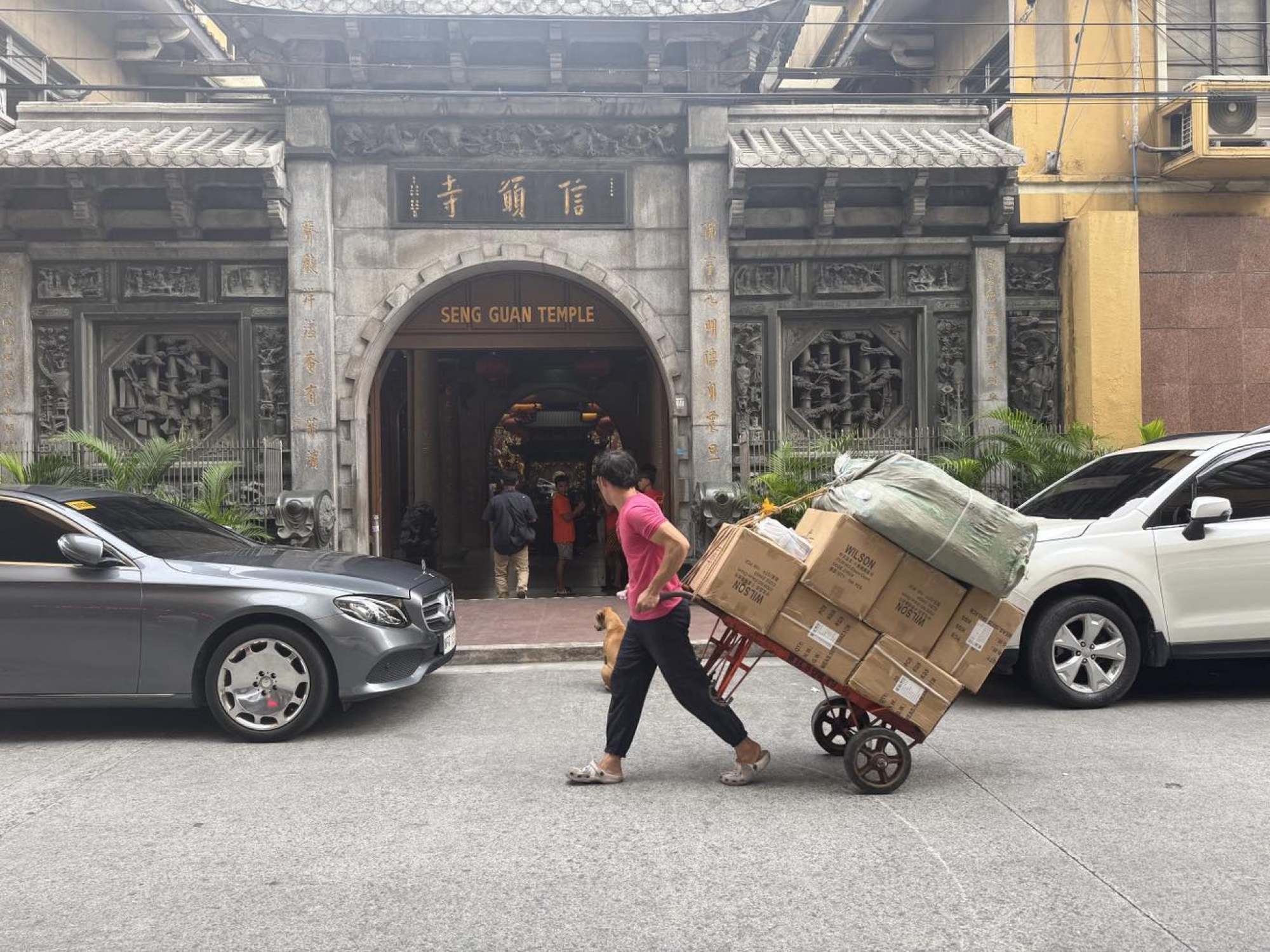
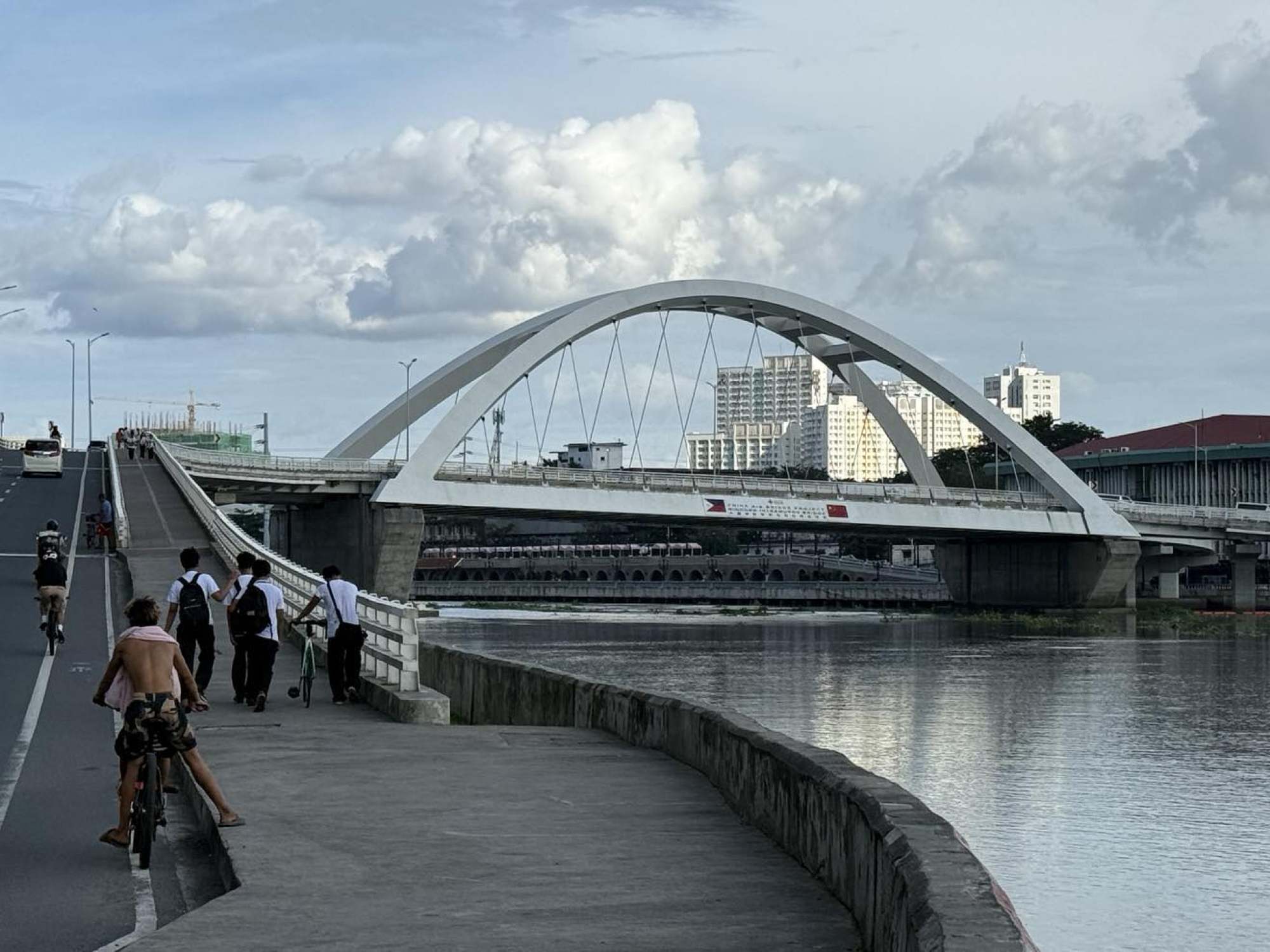
This warning follows instances of harassment against Chinese nationals along with a number of espionage activities and online gaming clampdowns initiated by Manila.
The Philippines
has assured China that its citizens are not facing harassment following the Chinese embassy’s statement
travel advisory
However, experts caution that local authorities might be leveraging Manila’s recent anti-espionage and online gaming initiatives as a smokescreen for their growing anti-Chinese sentiment.
The embassy released an advisory on Tuesday highlighting various challenges encountered by Chinese individuals and enterprises, including instances of harassment and scrutiny. Additionally, it pointed out the rise in political events and demonstrations in the Philippines as potential concerns for Chinese expatriates.
“Public security in the Philippines has been unstable, with frequent incidents of law enforcement authorities harassing and inspecting Chinese citizens and enterprises,” the embassy said in a statement translated to English.
Are you looking for insights into the most significant issues and developments globally? Find your answers here.
SCMP Knowledge
Our updated platform features handpicked content including explanations, frequently asked questions, detailed analysis, and informative graphics, all provided by our prestigious award-winning crew.
The embassy did not provide any specific instances; however, this warning was issued after the detention of several Chinese citizens for espionage in the Philippines. This followed intensified actions by local law enforcement agencies as well as stricter controls imposed on the recently outlawed offshore gambling centers known as POGOs, which were frequented primarily by Chinese tourists.
In January, officials arrested five individuals from China on suspicion of pretending to be visitors from Taiwan with the aim of spying on the Philippines Coast Guard and Navy in Palawan — an island located across the South China Sea.
In the same period, law enforcement apprehended a Chinese citizen named Deng Yuanqing along with two Filipinos for reportedly surveying more than 120 crucial locations across Luzon, which encompassed harbors and facilities accessible to U.S. armed forces.
During a press conference on Wednesday, Undersecretary Claire Castro of the Presidential Communications Office refuted the allegations of harassment, asserting that the Philippines accepts everyone except those who break the law.
“The travel advisory they mentioned is simply a routine consular service provided by China. We can guarantee that our actions do not target individuals from any specific country or nationality with harassment,” Castro stated.
According to Castro, the situations involving Chinese nationals employed in Pogos constituted a distinct matter due to their involvement in illegal activities.
Pogos primarily served clients from China, where gambling is prohibited. Last July, President Ferdinand Marcos Jr. announced an instant prohibition on the industry due to multiple allegations of criminal actions associated with their operations.
Beijing has kept its distance from Pogos, endorsing Marcos Jr’s ban.
‘People who are Chinese-looking’
When commenting on the issue, Filipino-Chinese leader and social activist Teresita Ang See informed This Week in Asia about several reports of harassment targeting Chinese citizens within the nation.
She mentioned an occurrence where authorities went to condominiums in Manila, questioning security personnel and parking staff about the apartments occupied by numerous Chinese residents.
“The head of security alerted the building manager, who then notified the residents of the condo. As a result, all the residents—many having lived there for over three decades—are now frightened,” stated See, referring to a residential high-rise in Manila but not specifying which one.
The building manager told her directly about what happened.
She stated that discussions on the Chinese app WeChat indicated that certain enforcement officers might have reportedly been halting Chinese citizens to inquire if they worked as Pogo employees.
Refer to the reported incidents shared on WeChat where visiting Chinese professors were playfully questioned by students about being spies. She mentioned, “Although intended as a joke, this was still offensive to the professors.”
The Filipino-Chinese hikers trekking along the Pinatubo trail, located north of Manila, were likewise halted and requested to present their birth certificates even though they spoke the local dialect, as mentioned in the additional information provided.
“China-Philippines ties have been negatively impacted. During the recent Lunar New Year, the Bahay Tsinoy witnessed an unusually low number of Chinese visitors for the first time,” See stated, mentioning a museum that highlights the role of Chinese people in the country’s history.
Castro stated that the government is not focusing on any locals. Following this, she ought to request law enforcement officers to fulfill their duties. She should inquire as to why they stop individuals merely because they appear to be of Chinese descent.
‘Tougher even than securing a US visa’
A different figure within the Filipino-Chinese community, Wilson Lee Flores—a political-economist and honorary chairperson at the Anvil Business Club in Manila—spoke with This Week in Asia about the challenges faced. He mentioned that individuals such as traders, collaborators, technical consultants, and providers of machinery from China struggled to obtain visas through both the Philippine embassy and consulates.
“A Chinese businessperson I encountered in Thailand mentioned that obtaining a Filipino visa is even harder compared to getting one for the United States. This is why genuine travelers and tourists have become less inclined to visit the Philippines. Instead, they favor destinations like Europe, Singapore, Japan, and Thailand,” Flores stated.
In 2024, the tourism authority stated that the number of Chinese visitors arriving in the Philippines reached 313,856 in the previous year, marking an uptick from 264,922 in 2023.
Nevertheless, the most recent figure represents a significant drop compared to earlier years when China ranked as one of the top sources for international travelers visiting the Philippines. Data from the tourism department shows that in 2019, approximately 1.7 million tourists arrived from China.
Regarding the possibility of increased Sinophobia influencing official actions, Flores commented: “This is what worries us… The Pogo problem seems to have become a pretext… However, genuine entrepreneurs and travelers do not wish to pay bribes merely to secure a visa appointment.”
Missed opportunities in investment and tourism abound.
The Pogos sector was connected to a series of criminal activities such as human trafficking, abductions, and prostitution.
During the peak of the Pogos boom, over 300,000 Chinese workers found employment in this industry.
However, Castro mentioned that the Department of Foreign Affairs (DFA) was prepared to engage with the Chinese government regarding the matters involving the Chinese nationals who were detained and expelled due to connections with unlawful Pogos.
“Many of the people involved are Chinese citizens. Therefore, this is likely part of the issue,” Castro stated.
The Department of Foreign Affairs is open to discussions about this matter, and we will reassure China that our actions are not aimed at any specific national group.
More Articles from SCMP
Jumbo Legend passes first staying test as Caspar Fownes notches a Happy Valley double
U.S. trade officials outline Trump’s arguments against China ahead of ‘Freedom Day’ arrival
More than 90% of student suicides in Hong Kong involved individuals who were 12 years old and older.
Following the aftermath of Trump’s ‘Liberation Day’, what is China’s actual tariff rate?
The article initially appeared on the South China Morning Post (www.scmp.com), which serves as the premier source for news coverage of China and Asia.
Copyright © 2025. South China Morning Post Publishers Ltd. All rights reserved.
by admin | Apr 2, 2025 | diplomacy and diplomats, foreign policy, india china relations, international relations, news
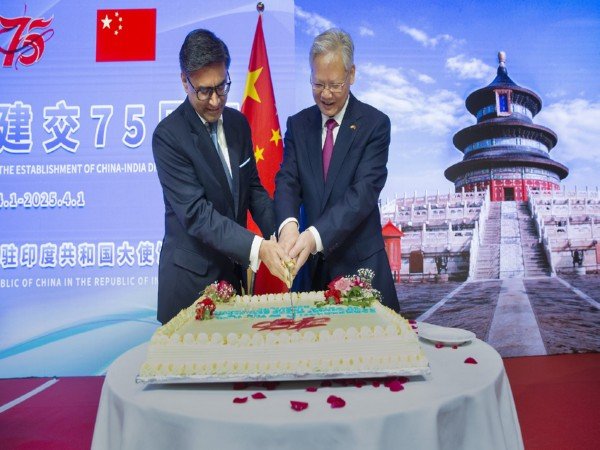
Beijing [China], April 2 (ANI): Chinese Ambassador to India Xu Feihong showed confidence in the progression of China-India relations as they mark the 75th year since establishing diplomatic connections, asserting that both countries will enhance their bilateral relationship.
At the event called “Riding the East Wind: Embarking on a New Journey and Commencing a Fresh Era in Sino-Indian Ties,” the Chinese representative conveyed significant delight at Foreign Secretary Vikram Misri’s attendance to mark the “75th anniversary of the establishment of diplomatic relations between China and India.”
“Today, the leaders of China and India exchanged congratulatory messages to commemorate the 75th anniversary of their diplomatic ties. Chinese President Xi Jinping stressed that they should approach Sino-Indian relations with a strategic and long-term vision, aiming for harmonious coexistence, mutual trust, shared benefits, and joint prosperity among neighboring great powers,” he stated.
“Indian Prime Minister Narendra Modi emphasized that the meeting between the two leaders in Kazan was instrumental in laying out a roadmap for our bilateral relations returning to a stable, predictable and amicable path. Progress in our bilateral relations will contribute not only to global stability and prosperity but also to the emergence of a multi-polar world,” he added.
Emphasizing both countries’ capability to overcome obstacles and maintain progress, he stated, “In the last 75 years, even as we faced various highs and lows, Sino-Indian ties have consistently moved ahead akin to the mighty flows of the Yangtze and the Ganges. Learning from history enables one to grasp the future, and adhering to the correct course ensures lasting advancement.”
He posted several images from the occasion on X and commented, “It was a great joy to participate alongside Foreign Secretary @VikramMisri and people from various backgrounds in celebrating the 75th anniversary of #China-India diplomatic ties.”
“I strongly feel that, guided by these two leaders and through the collective effort of both countries, China and India can promote their bilateral relationship along a path marked by healthy and steady growth. This would ultimately help foster global peace and prosperity,” he stated. (ANI)
Provided by Syndigate Media Inc. (
Syndigate.info
).

by admin | Mar 27, 2025 | diplomacy and diplomats, foreign policy, international relations, politics, politics and government
Last of two parts
There’s no clearer signal about U.S. President Trump’s probable approach towards mending ties with China, after moving away from his predecessor’s aggressive stance, than the gesture of inviting Chinese President Xi Jinping to attend his inauguration—the only foreign leader accorded this honor. Neither the leaders of Britain, America’s home nation and staunchest ally, nor those of neighboring countries like Canada and Mexico, received such an invitation.
Although he might keep up and perhaps escalate efforts to alter what he perceives as unfavorable trade deals with China and other nations like Mexico and Canada from his initial term, Trump’s social media team has labeled Biden’s international strategy a “trap for conflict”: referring to America’s aggressive stance which could lead to an all-out confrontation with the emerging global powerhouse. Their preferred catchphrases have consistently been “Use tariffs, not warfare” and “Employ tariffs, avoid deploying troops.”
Certainly, those serving under American influence, led by President Ferdinand Marcos Jr., who understands international diplomacy just as well as he grasps agricultural economics, will adhere to Uncle Sam’s stance. This alignment would only occur during the uncommon instances when a United States directive proves beneficial for our nation.
Biden has escalated President Obama’s major initiative launched in 2009 aimed at strategically limiting both China’s political influence and military expansion under the guise of what they call a “pivot to Asia.” This strategy stems from the dominant belief among America’s leaders—that their nation is predestined to be the only global superpower—supported by an ideology emphasizing their country’s distinctive populace, governmental framework, and capitalistic economy promoting democratic values and personal liberty.
Following the collapse of the Soviet Union in 1991, which turned the global landscape into a unipolar order dominated by the United States, China at the dawn of the new millennium began to pose a significant challenge to American supremacy. This shift was largely due to China’s remarkable economic expansion. Joining forces with this rising power, Russia also ascended like a phoenix from the ruins of the former superpower.
Biden escalated Obama’s pivot strategy by establishing nine U.S. military bases in the Philippines—four additional ones atop those set up earlier under Obama—and deployed Typhoon intermediate-range missiles at one such base. He also forged stronger defense ties through agreements like AUKUS, QUAD, and bilateral accords with Japan and the Philippines aimed explicitly at preparing for potential military clashes against China. Biden further ramped up what he termed “freedom of navigation” patrols within the South China Sea to contest Beijing’s sovereignty assertions over certain areas. Additionally, his administration bolstered efforts to disseminate anti-Chinese narratives via organizations including the Asia Maritime Transparency Initiative and the Gordian Knot Institute based out of Stanford University, led reportedly by individuals connected to American intelligence agencies. These initiatives complemented ongoing support provided to Filipino coast guard activities opposing Chinese control over parts of the Spratly Islands, backed by clandestine assistance and strategic intel briefings.
China will demand that Trump order an end to these provocative activities, which will lead, finally after the insanity of the Aquino III and Marcos Jr. policies, to a new era in which the Philippines gets closer to its neighbor that could help it grow with its powerful economic engines.
Dictator
Biden’s rhetoric had been sharp, calling Xi Jinping a “dictator” and pledging to defend Taiwan if attacked, the first time the US stepped beyond its traditional official stance of ambiguity.
Despite being just under two months into his term, the Trump administration appears poised to seek improved relations with China for various reasons.
The first point is that Trump himself has shown hostility towards his predecessor, who is seen as an ideologically driven member of the Democratic Party with a perspective vastly different from his own.
None of Biden’s former foreign policy and security advisors—who essentially guided the older Biden—are part of this current team. For instance, his ex-National Security Advisor Jake Sullivan (responsible for orchestrating our dispute with China) and previous Deputy Secretary of State Kurt Campbell (who persuaded then-Foreign Secretary Albert Del Rosario to relinquish Scarborough Shoal)—are not included here.
The key element influencing Trump’s position towards China revolved around his experience as a businessman. In contrast, Biden spent his entire career within the ideologically driven framework of the Democratic Party, shaping his understanding of China primarily through this lens. To him, China remained the same “Red China” from post-World War II days—a regime characterized by its autocratic governance and disregard for basic human rights. Even leaders like Mao were seen through this perspective, remembered not just for their policies but also associated with famines that resulted in the deaths of millions due to starvation.
Biden’s understanding of China was based mainly on information from secondary sources like presentations by policy experts and ideologues such as Sullivan and Campbell, along with conversations during meals or social gatherings with prominent figures within the Democratic Party. These party leaders generally agree that China poses a significant ideological threat similar to that once presented by the former Soviet Union.
Firsthand
On the contrary, Trump’s experience is direct, so to speak, via the enterprises he established in China and his interactions with Chinese firms based in New York. Since 2005, the Trump Organization has pursued hotel and branding opportunities in China, obtaining more than 126 trademarks by 2025. During his tenure at the Shanghai office between 2012 and 2016, connections were formed with government-backed organizations including the International Commercial Bank of China, a tenant within one of Trump’s towers, indicating personal engagement with both Chinese authorities and marketplaces. Furthermore, the Trump Organization secured significant financial backing from Chinese lenders; for instance, they received a loan worth approximately $950 million from the Bank of China in 2012 for real estate acquisition purposes. Additionally, owning an account with a Chinese bank acquainted him with Beijing’s economic landscape.
His history with businesses in China has made him cautious about cutting ties. Applying excessive pressure—such as increasing military tensions—could lead to repercussions for American corporations operating in those markets, which he considers his own sphere where he looks after their well-being. While tariffs do harm China, they are strategic rather than impulsive moves—he has stated, “I love tariffs; they’re my favorite.”
Trump maneuvered through China’s bureaucratic system and business environment, turning a profit from his dealings. He has often highlighted this fact, such as during a 2016 debate when he stated, “I have earned substantial amounts of money working with China.”
In 2017, Trump hosted Xi Jinping at Mar-a-Lago, providing a chance to assess the Chinese leader personally. From a businessman’s perspective, Trump probably views Xi as someone aiming for the most favorable terms for China rather than seeing him merely as a bully, as Biden does. During his term, Trump witnessed firsthand how China wields its economic influence through state-owned financial institutions, expedited trademark processes, and production tailored for his brand lines. To Trump, this makes China more of a counterpart in negotiations instead of solely being viewed as a strategic adversary.
Musk
Then we have Elon Musk, who stands out among Trump’s advisers. He rose to become the wealthiest person globally largely due to his company Tesla with its electric cars. Tesla runs a significant production site in Shanghai called Gigafactory Shanghai, established in 2019, having manufactured one million units of his bestselling Model Y in China. This makes the Model Y the top-selling EV in the country. Tesla was permitted to set up a completely independent plant in China—a privilege granted only after changes were made to the nation’s investment rules for foreign entities—without needing a domestic ally.
The manufacturing site in Shanghai stands as Tesla’s biggest production center worldwide, outdoing its Fremont, California, location in terms of scale and volume. This plant accounts for more than fifty percent of Tesla’s vehicles delivered across the globe, boasting an annual production capability above 750,000 automobiles.
The factory’s prosperity is backed by considerable financial support from Chinese government-run banks, which offered around $1.4 billion in loans with preferential terms. Additionally, a strong domestic supply chain has strengthened China’s electric vehicle industry.
After the United States, China stands as Tesla’s second-biggest market, making up approximately 40% of their worldwide sales and around 22 to 25 percent of overall revenue in recent times—for instance, $18 billion in 2022. Additionally, Tesla profits significantly due to China being pivotal in the international battery supply network; almost 40 percent of Tesla’s battery components come from Chinese firms, and this collaboration keeps growing stronger.
It’s unimaginable for Musk to simply lounge around as the US maintains its aggressive position towards China, which was initiated under Obama’s administration.
Sticking
However, there’s a snag: Trump’s streetwise strategy toward China, developed over decades of negotiating deals, might clash with the tough line taken by members of his administration. During a heated 2024 Senate hearing, Secretary of State Marco Rubio labeled China as a “generation-long challenge.” In contrast, National Security Advisor Mike Pick stated via an X post in January 2025 that he would confront Beijing’s assertiveness directly. Conservative lawmakers in Congress along with Trump supporters on social media platforms such as @EndWokeness have been advocating for a firm stance, echoing sentiments like “Mr. President, don’t get lenient on us!” This was part of a widely shared thread from March 2025 which garnered numerous retweets.
Although Trump is not particularly known for being swayed by his staff’s opinions, considering them merely as his employees, he often uses this approach. After all, his most recognizable catchphrase remains “You’re fired!” Alternatively, could it be that Trump has adopted hawkish stances just as a distraction from his actual favorable stance towards China?
Under Trump, China remains secure—yet so does a world rescued from the edge of nuclear conflict. I’m eagerly anticipating seeing those who were critical shift their stance when Biden takes over.
Facebook: Rigoberto Tiglao
X: @bobitiglao
Archives:
www.rigobertotiglao.com
Book orders:
www.rigobertotiglao.com/shop
by admin | Mar 25, 2025 | diplomacy and diplomats, foreign policy, international relations, politics, politics and law
New York
[
US
], March 25 (ANI):
India
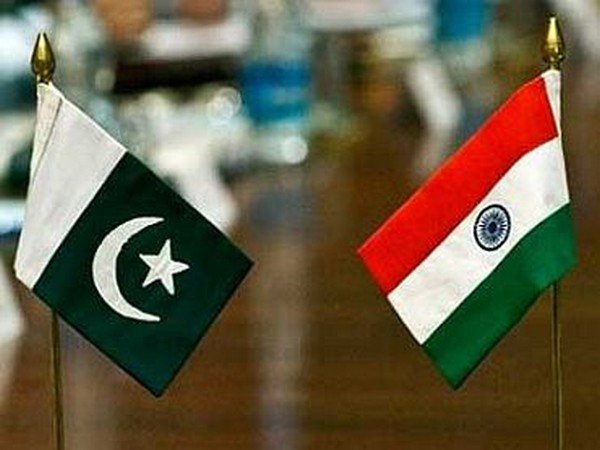
strongly rejected
Pakistan
‘s repeated references to
Jammu and Kashmir
during a United Nations discussion on
peacekeeping
changes, describing them as “unnecessary” and asserting that the area “has been, remains, and will forever be an integral component of.”
India
.”
Speaking at the
Security Council
,
India
‘S Ambassador to the
UN
Ambassador Parvathaneni Harish criticized
Pakistan
For trying to “distract from” the main topics of discussion
peacekeeping
. He stated, ”
India
feels obliged to mention that the representative of
Pakistan
has once more turned to unjust comments about
India
n union territory of
Jammu and Kashmir
These repetitive citations do not substantiate their unlawful assertions or legitimize their government-backed activities.
cross-border terrorism
.”
Harish further emphasised that
Pakistan
itself is illegally occupying part of
Jammu and Kashmir
and must leave the area. ”
Pakistan
continues to unlawfully hold onto the territory of
Jammu and Kashmir
“, from which it has to withdraw,” he stated, emphasizing that
India
Wouldn’t permit its authority to be challenged on international platforms.
Rejecting
Pakistan
Harish also stated, “Their efforts to utilize the platform for their ‘narrow-minded and polarizing goals’ lead us to suggest we should caution them.”
Pakistan
Not trying to distract from this discussion.
India
He observed that they wouldn’t provide an extensive reply but were explicit about their stance.
India
“I will abstain from elaborating further on the Right of Reply,” he concluded.
Although the meeting centered around changes and improvements,
UN
peacekeeping
,
India
took this chance to emphasize the importance of adjusting missions to contemporary challenges, such as those presented by militant organizations, non-state entities, and advanced weapons. Harish underscored the influence of nations contributing troops and police on defining mission objectives and advocated for “sufficient financing” aligned with practical needs.
On women’s participation in
peacekeeping
, Harish noted that
India
Recently organized the inaugural Conference for Women Peacekeepers from the Global South, highlighting that women have a crucial part to play in these missions. “The debate is no longer about whether women can participate,”
peacekeeping
Rather, it is about whether
peacekeeping
“I can manage without women,” he stated.
India
reiterated its “firm dedication” to
UN
peacekeeping
and called for
Security Council
changes aimed at making the organization more “responsive and reflective of today’s geopolitical landscape.” (ANI)
Provided by Syndigate Media Inc. (
Syndigate.info
).