
by admin | Mar 24, 2025 | banking, business, economics, investing business news, money
-
Ecobank Kenya has injected KSh3.5 billion ($27 million) into its capital reserves to meet the requirements of the updated banking regulations and fortify its financial position.
-
This investment aims to support the bank’s expansion within Kenya and across East Africa. Following this infusion of funds, their overall capital base in Kenya will increase to KSh8.5 billion ($65 million).
-
The Central Bank of Kenya has set a deadline for all commercial banks in the country to increase their core capital to KSh10 billion by 2029.
Bonface Kanyamwaya, who works as a journalist for LIFEHACK.co.ke, possesses over a decade of experience in areas such as finance, economics, business, stock markets, and aviation. He offers valuable perspectives on both Kenyan and international developments.
Ecobank Kenya has invested KSh3.5 billion ($27 million) to reinforce its capital position in line with the regulatory requirements set by the Central Bank of Kenya (CBK).

This investment aims to support the bank’s expansion of business operations in Kenya and East Africa—increasing its overall capital base to KSh8.5 billion ($65 million) in total.
All commercial banks in Kenya have been directed by Central Bank of Kenya to increase their core capital to KSh10 billion by 2029, with an initial target of KSh3 billion by end of 2025.
This action comes after changes were made to financial sector regulations at the end of last year when President William Ruto enacted the Business Laws (Amendment) Bill into law.
“Kenya holds significant importance as a strategic marketplace for the Ecobank Group and serves as a vital economic center fostering development throughout East Africa. This capital infusion bolsters Ecobank Kenya’s capacity to capitalize on emerging business prospects and generate lasting value for all stakeholders—aligning perfectly with our objectives of expansion, innovation, and profitability,” stated the bank’s CEO, Jeremy Awori, in an official press release.
This funding will allow the bank to aid business growth, ease cross-border commerce, and boost access to financial services.
Awori mentioned that this extra funding would support crucial economic factors such as local companies, small and medium-sized enterprises, financial technology firms, and female-led ventures.
Extra funds boost business expansion
This additional capital injection will strengthen the bank’s ability to broaden its footprint within key areas such as agriculture, manufacturing, information and communication technology (ICT), and innovation, along with payments and remittances, plus tourism and hospitality.
Moreover, the financial institution plans to utilize the extra funds to support budding sectors such as renewable energy, transportation and logistics, medical services, and retail commerce. The emphasis will be on fostering sustainable growth within Kenya and the broader East African region.
“This significant reinforcement bolsters our capacity to act as the preferred financial partner for international organizations, local companies, small and medium-sized enterprises (SMEs), fintech firms, and women-led businesses. It also solidifies our position as a leader in regional trade and payment solutions throughout Central, Eastern, and Southern Africa,” noted Josephine Anan-Ankomah, Managing Director of Ecobank Kenya and Regional Executive for Central, Eastern, and Southern Africa.

The modifications requiring commercial banks to bolster their capital requirements impacted the Banking Act, the Central Bank of Kenya Act, and the Microfinance Act. These amendments were designed to reinforce the stability of the banking industry.
Banks keep their capital levels relatively low.
Starting from 2012, commercial banks have been required to maintain a minimum core capital of KSh1 billion. Efforts to increase this requirement to KSh5 billion in 2015 did not succeed.
The most recent banking oversight report indicates that 11 institutions have failed to reach the KSh3 billion minimum core capital requirement mandated for the close of this fiscal year.
Earlier,
LIFEHACK.co.ke
It has been reported that if the Central Bank of Kenya (CBK) proceeds with the suggested rise in core capital from KSh 1 billion to KSh 10 billion over a span of three years, approximately 24 banks could be forced to close, affecting around 7,000 employees.

by admin | Mar 24, 2025 | budgets, economic policy, economics, government, politics and government
-
The electricity rebate has been prolonged for an additional six months.
The man behind
Anthony Albanese
his bid for a second term
is investing billions in assistance for living costs as part of a frantic effort to secure Labor’s re-election amid volatile economic conditions
Treasurer
Jim Chalmers
The fourth budget is set to be delivered tonight, with
election
set to take place by May 17 with Labor trailing behind in the opinion polls.
As part of Labor’s spending spree, Australians will continue receiving electricity rebates for an additional six months, along with other benefits.
lowering medication expenses, reducing college loans, providing support to steel and aluminum producers, and reconstructing the treasury’s hurricane-damaged home state
Queensland
.
This occurs amid forecasts of future deficits due to declining iron ore prices, which reduce federal government revenues and complicate Australia’s ability to address major disasters.
Donald Trump’s tariffs have added further unpredictability, with U.S.-initiated trade conflicts contributing to a worldwide economic downturn and diminishing China’s appetite for Australian mineral exports.
Westpac calculates that the Labor Party’s declarations made after the conclusion of last year will result in an additional expenditure of $10.7 billion for the Budget over the coming four-year period.
This is what has been confirmed for inclusion in the budget statement today…
Electricity rebates extended
An additional $150 in assistance for electricity bills will be provided, continuing the cost-of-living measure until December 31 at an expense of $1.8 billion.
The $300 rebate from the previous year’s budget was set to expire on June 30, and electricity firms will receive their final quarterly subsidy of $75 on April 1, which they plan to transfer to consumers.
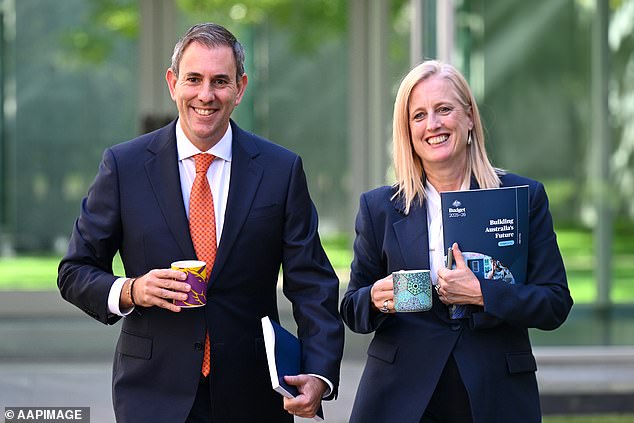
Dr. Chalmers contended that prolonging the electricity rebates through December 2025 aimed at addressing issues related to rising living costs.
“This is practical assistance for families, as we understand that the rising costs are a top concern for most Australians and are prominently addressed in the budget,” he said to the Seven Network.
This provides an additional six months of assistance with energy bills, acknowledging that despite our collective progress in tackling inflation, individuals continue to face financial strain, and this budget aims to address those concerns.
The party had previously promised during the last election to lower average power bills by $275, and extending this initiative might help mitigate a troublesome political concern.
However, Dr Chalmers contended that Labor had upheld their pledge made during the 2022 elections.
“You inquired about $275. However, we deducted $300 last year,” he explained to Sky News.
Extending electricity subsidies for both homes and enterprises is also aimed at managing overall inflation rates, considering these measures artificially lowered the consumer price index in the previous year.
Last month, the Reserve Bank forecasted that the CPI would rise to 3.7 percent by the end of 2025, assuming the rebates were not continued past July.

That ugly scenario would see inflation soaring back above the RBA’s 2 to 3 per cent target, up from the present level of 2.4 per cent.
The treasury predicts that extending the electricity subsidies for an additional six months will reduceheadline inflation by 0.5 percentage points by the end of 2025.
But
Westpac
Sian Fenner, who leads business and industrial economics at the bank, cautioned borrowers against anticipating further interest rate reductions from the Reserve Bank due to the prolonged electricity rebates.
“We anticipate that the RBA will once more ‘look past’ these impacts when evaluating policy,” she stated.
The Australian Energy Regulator suggested limiting price hikes to between 2.5 percent and 8.9 percent, indicating that ongoing electricity cost increments could persist as an issue for the government unless they prolonged the financial relief measures.
Cheaper medicines
Australians will have their medication expenses limited to $25 each script, reducing from the current $31.60 price point, with this change costing around $680 million.
Script fees for concession cardholders, such as pensioners, will be waived after they have spent over $277 annually on medications, reducing the threshold from $7.70 previously.
The cap of $7.70 for co-payments was already set to remain unchanged until June 2029.

The government is enhancing the Pharmaceutical Benefits Scheme, despite objections from U.S. pharmaceutical companies who claim that the subsidies could cut into their prospective profits in Australia.
During this election year, politicians from all sides remain dedicated to supporting the PBS. Despite the impending introduction of new tariffs on Australian pharmaceutical exports to the U.S., scheduled for implementation by the Trump administration starting in April, their commitment remains steadfast.
The Labor party has already pledged an additional $8.5 billion for Medicare funding over the next four years.
The Labor party is allocating $644 million to establish additional
Fifty Medicare Urgent Care Centers, expanding clinic locations to all states and territories.
Cyclone Alfred
The destruction caused by Cyclone Alfred in southeast Queensland and northern New South Wales is expected to impact the budget by $1.2 billion.
Doctor Chalmers, hailing from Queensland’s Logan area which was struck by floods, revealed this number just a week prior to the Budget announcement.
Following the downgrade of the tropical low, significant destruction occurred in Brisbane and the Gold Coast, with floodwaters also affecting regions of New South Wales all the way down to Graftan.
“Initially, we are still evaluating the extent of the damages; however, I am not willing to wait another two, three, four weeks, or even a few months before incorporating it into the budget,” Dr. Chalmers stated to the Queensland Media Club.
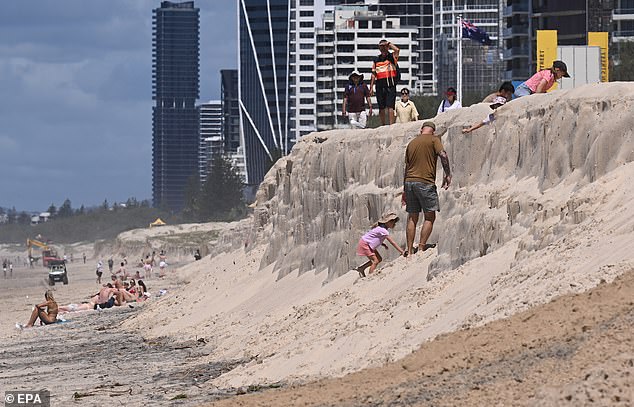

I need to input a figure into the budget next week. Therefore, we should make a reasonable allocation for community recovery and reconstruction.
Student debt
In an effort to fend off competition from the Greens in urban areas, Labor declared a 20 percent reduction in student debt obligations last year.
This single-time initiative will assist 3 million Australians by reducing their Higher Education Loan Program and Higher Education Contribution Scheme debts by $16 billion.
In addition to reducing student debt by $3 billion through revised indexing agreements.
Debt levels will always remain below the increase in wages, with adjustments tied to the lower of either the wage price index or the consumer price index.
Steel and aluminium subsidies
The 25 percent tariffs imposed by the Trump administration on Australian steel and aluminum producers went into effect on March 12.
A week later, the Albanese government retaliated with a $750 million initiative aimed at supporting steel and aluminum manufacturers, which is a component of Labor’s Future Made In Australia strategy.
The environmental subsidies came from the $1.7 billion Future Made In Australia Innovation Fund, which was unveiled in last year’s 2024-25 Budget.
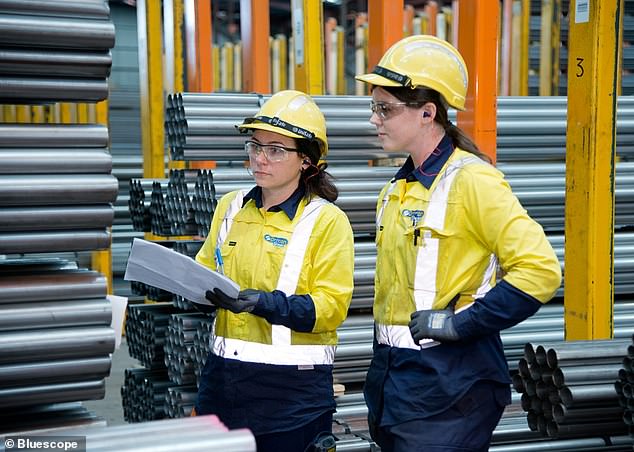
In addition to a $2.4 billion bailout for the troubled Whyalla steelworks in South Australia, which is currently under administration, the state government is providing support.
Financial state of play
Dr. Chalmers has achieved two successive budget surpluses, marking the first time for a federal government since 2007 prior to the Global Financial Crisis.
However, deficits are anticipated starting from 2025-26, as iron ore prices are predicted to drop to around $US60 per tonne by mid-2025, compared to the figures exceeding $US100 per tonne observed in 2024.
Lower iron ore prices lead to decreased federal government corporate tax revenues, as well as reduced royalties for the Western Australian government.
Ms Fenner stated, ‘We think that the potential for considerable unexpected increases in future revenue is less pronounced compared to recent years.’
The gross government debt will also surpass $1 trillion for the first time in the upcoming fiscal year, accounting for 36 percent of the gross domestic product.
This might complicate things for upcoming Australian administrations when they have to deal with catastrophic occurrences.
‘Ms Fenner stated that as debts increase, there will be reduced financial room to adopt counter-cyclical strategies aimed at mitigating the impact of potential future crises, similar to what was done during the Global Financial Crisis and the pandemic.’
This occurs as geopolitical uncertainties rise, trade tensions escalate, extreme weather events become more common, and technological advancements continue, potentially leading to an increase in disruptions.
Read more
by admin | Mar 24, 2025 | computers, economics, exports, government of pakistan, pakistan
During the initial seven-month period of the fiscal year 2024-25, Pakistan generated $2.177 billion from exports of various IT services across multiple nations. This represents an increase of 26.53% over the $1.720 billion recorded for the same stretch in the previous fiscal year 2023-24, according to data released by the Pakistan Bureau of Statistics (PBS). Specifically, within this timeframe, exports related to computer services experienced a rise of 32.72%, jumping from $1.397 billion previously to $1.855 billion between July and January of the ongoing fiscal year.
In the realm of computer services, software consulting saw a significant rise of 35.51%, jumping from $476.017 million to $645.036 million within this year. Similarly, hardware consulting experienced growth of 4.39%, escalating slightly from $3.338 million to $3.485 million over the same period. Additionally, information service exports surged dramatically by 736.66% during these months, expanding from $2.097 million to $17.551 million.
In the realm of information services, the exports from news agencies surged by 1197.51%, jumping from $1.269 million to $16.475 million. Meanwhile, other information service exports climbed by 29.96%—rising from $0.828 million to $1.076 million. However, telecommunications services experienced a decline, with their value dropping by 5.05% from $320.891 million to $304.675 million. Specifically within telecoms, call center services saw an increase of 25.22%, growing from $144.326 million to $180.728 million. Conversely, other types of telecommunications services fell by 29.80%, sliding from $176.565 million to $123.946 million over the period noted in the PBS report.
Provided by Syndigate Media Inc. (
Syndigate.info
).
by admin | Mar 24, 2025 | economics, gold, money, news, precious metals
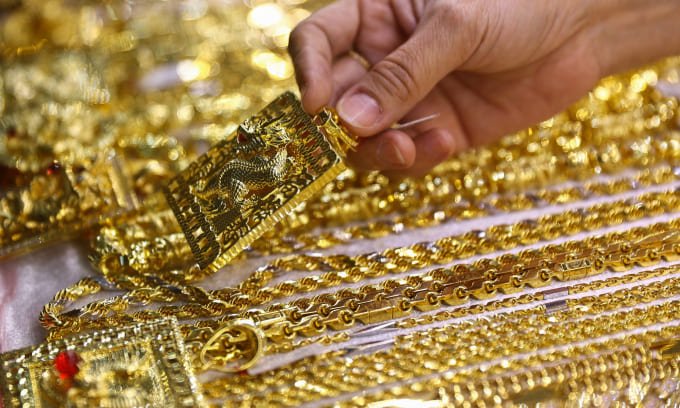
Gold prices remained largely unchanged on Monday morning following their sharp decline from all-time peak levels at the end of last week.
The gold bar pricing set by Saigon Jewelry Company stood at VND97.4 million (US$3,798.76) per tael. Previously, it had hit an all-time peak of VND100.4 million the preceding Thursday.
The cost of gold rings increased by 0.1%, reaching VND97.1 million per tael. Last Thursday, it reached an all-time high of VND100.7 million. One tael is equivalent to 37.5 grams or approximately 1.2 ounces.
Worldwide, gold saw minimal movement on Monday with traders awaiting new stimuli following a previous surge that lifted prices to all-time peaks. This rise was driven by geopolitical tensions and expectations for reductions in U.S. interest rates.
Reuters
reported.
Spot gold remained steady at $3,025.38 per ounce. Meanwhile, U.S. gold futures climbed by 0.3%, reaching $3,029.70. The precious metal had hit an all-time peak of $3,057.21 on Thursday.
”
Gold is still well-positioned
For additional gains, markets might continue to be wary of potential adverse growth impacts from tariffs. However, this downside risk could be somewhat mitigated if aRussia-Ukraine cease-fire agreement moves nearer to implementation,” noted Tim Waterer, chief market analyst at KCM Trade.
“President Trump has created some flexibility regarding the reciprocal tariffs, possibly making them less harsh than anticipated, which has somewhat eased market concerns but…it has also reduced the upward trajectory of gold prices,” according to Waterer.
Zero-yield bullion is considered a safeguard against geopolitical and economic instabilities, along with inflation.

by admin | Mar 24, 2025 | economics, korean, middle class, money, personal savings
Middle-class families in South Korea are finding it difficult to set aside savings, as their remaining funds after covering expenses have fallen beneath 700,000 won ($480). Specialists caution that this increasing economic pressure might undermine consumer expenditure within the country.
Based on data from Statistics Korea, families within the 40-60% income range experienced an average disposable income surplus of 658,000 won ($450) during the final quarter of last year, which represents a decrease of 88,000 won compared to the same period the previous year. Disposable income here denotes funds remaining post-tax payments, financial interests, and daily expenditures. Consequently, this indicates that such middle-income homes accumulated just under 700,000 won across one fiscal quarter specifically meant for saving purposes.
This figure represents the lowest point over the past five years, specifically during the fourth quarter of 2019, where it was recorded as 653,000 won. Additionally, this is the first instance within the last five years that the surplus has dropped beneath the threshold of 700,000 won.
According to their average monthly earnings, families were categorized into five distinct income groups. During the final three months of last year, the mean monthly incomes for these categories stood at approximately 1.21 million won for those in the lowest earning tier, 2.91 million won for the next category up, 4.40 million won for the mid-level class segment, 6.34 million won for the penultimate grouping, and reached as high as 11.20 million won per month for individuals within the topmost revenue stratum.
Four years back, families belonging to the middle class enjoyed a surplus greater than 900,000 won; however, this figure has notably declined post-pandemic. Interestingly, despite this decrease, the mean excess income across all household categories has shown an upward trend during the last two sequential quarters, pointing towards economic recuperation.
There are two primary factors behind the decline in middle-class savings: escalating property prices and heightened expenditures on private schooling. Despite a rise of 4.4% in the earnings of middle-class households during the last year, their expenses climbed by 6.1%, outpacing the increase in their incomes.
In the final quarter, non-consumption expenditures for middle-income families amounted to 777,000 won, showing an increase of 12.8% compared to the same period last year, which represents the highest growth rate recorded since tracking started in 2019.
This growth was fueled by increased taxes associated with property acquisitions and escalating interest expenses. A provisional tax, categorized as a consumption-related levy, skyrocketed almost four times relative to the prior year, consequently diminishing personal savings even more. Additionally, interest expenditures climbed by 1.2% to hit 108,000 won, marking the initial instance where this figure exceeded the threshold of 100,000 won.
The expenditure on education saw an uptick of 13.2%, amounting to 145,000 won, significantly surpassing the general household average growth rate of just 0.4%. This surge highlights the escalating stress experienced by middle-class families, particularly as they grapple with the challenges posed by lacking property ownership and contend with climbing expenses related to supplementary schooling.
With middle-class budgets becoming tighter, worries are increasing that this might weaken both internal spending and the broader economy. A substantial decrease in the money left over after household expenses for middle-income families could result in lower consumer confidence, potentially complicating efforts towards steady economic expansion.
A specialist noted, “With a homeownership rate exceeding 50%, the middle class aims to keep education costs similar to those of higher-income families. A reduction in their available income might pose a significant obstacle to consumer spending within the country.”

by admin | Mar 24, 2025 | business, economics, equities, finance news, investing company news
Approximately 12% of businesses in South Korea faced insolvency last year because of the decline in the construction and property sectors, which represents the highest rate since 2019. These enterprises, weighed down by greater debts than their asset values, confront total loss of capital and fiscal insecurity.
Based on data from the Federation of Korean Industries (FKI) dated March 23, approximately 4,466 businesses—representing 11.9% of the total 37,510 externally audited enterprises (financial institutions excluded)—are projected to face complete bankruptcy. This figure shows an uptick of 116 companies (+2.7%) compared to the previous count of 4,350 in 2023, marking the highest point within this span over the past six years since records started being kept in 2019. Additionally, the likelihood of these companies going bankrupt hit a new peak at 8.2% last year.
In terms of industries, those involved in real estate and rentals experienced the greatest vulnerability at 24.1%, directly affected by the decline in construction activities. Following closely were utility companies (15.7%), sectors related to healthcare and social assistance (14.2%), as well as entertainment and recreation services (14.0%). Construction saw the most significant rise; its insolvency risk climbed to 6.1%—almost double what it was five years earlier when it stood at 3.3%. This surge can be attributed primarily to reduced project orders amidst elevated interest rates and inflation levels.
A representative from FKI cautioned, “The swift rise of bankrupt firms intensifies ambiguity by deteriorating the actual economy and amplifying hazards within the financial sector,” further stating that “these threats can be mitigated via decreased borrowing expenses and enhanced liquidly assistance.”


