by admin | Sep 1, 2025 | africa, ghana, government, politics, Travel
The Ghana High Commission is leading a Trans-Africa Tourism and Solidarity Initiative, designed to encourage movement and collaboration throughout the region as the effort strives to eliminate visa restrictions and enhance tourism across Africa.
The Minister for Consular Affairs of the Ghana High Commission in Nigeria, Inusa Ziblim, during a press briefing held in Abuja on Monday, stated that the initiative aims to eliminate visa restrictions and enhance travel across Africa.
He stated that besides merely eliminating visa restrictions, it aims to encourage travel across Africa.
Ziblim further revealed that the Ghanaian High Commission has reached out to Nigerian governmental representatives, such as the Minister of Foreign Affairs and the Minister of Tourism, to address the initiative.
In response to worries regarding safety, Ziblim provided instances of open mobility pacts among nations that did not result in negative security consequences.
“If you examine the statistics, the numbers do not indicate that opening your borders inevitably leads to safety issues,” she stated.
He further mentioned that expensive airfares significantly discourage movement within Africa, since flights to different African nations cost twice or even three times more than those to Europe, with additional remarks about how airport fees and levies increase overall expenses.
Ziblim noted that lowering taxes at global airports and encouraging airlines to avoid leveraging their dominance on specific routes might be beneficial.
“If the government lowers taxes, and airlines do not take advantage of their monopolistic position, it could bring about change,” he stated.
He mentioned that greater commerce and movement across Africa would result in more passengers, thereby enhancing the sustainability of air routes for carriers.
“If we start trading more within the sub-region and subsequently across the continent, as well as traveling internally, and if visas aren’t required, there is a chance we could move around more freely,” she stated.
Ziblim highlighted the significance of tackling the expensive airfares and encouraging movement within Africa to boost the region’s economic growth and solidarity.
“I believe these are some of the challenges. If you start trading more inside the sub-region, and also move around within it, it could bring about change,” she mentioned.
Previously, Ras Mubarak, the head of the Trans-African Tourism and Unity Campaign Team, highlighted that the initiative symbolizes a significant milestone in its 40,000-kilometer trek across 39 countries aimed at promoting a visa-free continent and fostering African unity.
Mubarak emphasized the city’s lively atmosphere, tidiness, and attractions such as the Millennium Park and Jabi Lake, symbolizing an African vision that is eco-friendly, flourishing, and accessible to everyone.
He stated that the campaign’s objective is to eliminate visa restrictions that hinder African citizens from moving freely within the continent.
Mubarak highlighted the illogical nature of the present system, wherein obtaining visas to Europe or Turkey is simpler for Africans compared to traveling within Africa itself.
“Currently in Africa, a citizen from Western Africa finds it simpler to obtain a Schengen visa compared to acquiring visas for certain Southern African nations,” he stated.
Mubarak stated that these obstacles are leftovers from colonial separations which go against the African Union’s Agenda 2063 objective of a unified and thriving Africa.
He pointed out that the AU’s objective of a visa-free and boundary-less Africa by 2063 seems distant, adding that the initiative seeks to realize this aim within five years. Kenya’s move to eliminate all visa obligations for African citizens serves as an outstanding illustration of what can be achieved, Mubarak stated.
The initiative seeks to enhance travel within Africa and promote economic development, empower young people, and encourage cooperation between countries. Mubarak encouraged Nigerians to highlight the splendor of Abuja and welcome visitors to explore the city’s attractions, markets, and cultural heritage. “Let us position Nigeria as a bridge for African tourism, fostering economic progress and solidarity,” he stated.
As the initiative progresses, it will traverse 40,000 kilometers through 39 African nations, interacting with officials, decision-makers, and local populations to advocate for free movement without visas and increased tourist activities.
The trip will last for 163 days, ending in Ghana during January 2026. Mubarak called on Africans to join a petition advocating for a continent without borders and asked media colleagues to help spread the campaign’s message.
Abuja glows brightly. Similarly, Africa has the potential to shine. Share details about our initiative. Ensure our leaders take responsibility. Encourage people to support a world without borders.
The following locations will be part of the campaign: Cameroon, Equatorial Guinea, Gabon, Congo, along with various additional nations, prior to coming back to Ghana in the upcoming year.
Mubarak thanked the residents of Abuja and Nigerian authorities for their assistance and welcomed inquiries about the campaign.
RELATED: TOP NEWS ARTICLES FROM THE NIGERIAN TRIBUNE
VIEW HIGHLIGHTED VIDEOS FROM NIGERIAN TRIBUNE TV
Let’s Discuss Self-Awareness: Is Your Confidence Confused with Arrogance? Let’s Explore This Topic
Is Good Manners Concerned with Being Perfect… Or Simply Avoiding Rudeness? A Leading Psychiatrist Shares Three Indicators That Suggest You Are Experiencing Impostor Syndrome
Do You Answer Job-Related Phone Calls During the Night or Never At All? Let’s Address Boundaries
Provided by SyndiGate Media Inc. (
Syndigate.info
).
by admin | Aug 30, 2025 | crime, crimes, government, news, security
Published on, Aug. 19 — August 19, 2025 6:35 AM
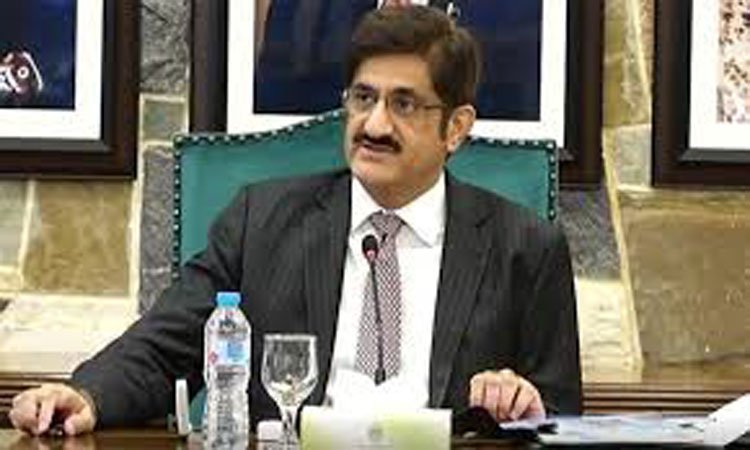
Sindh’s Chief Minister Syed Murad Ali Shah, chairing a top-level conference, stated that the administration aims to achieve an “optimal” security condition in the katcha area and instructed the police to remain alert.
“Kidnapping for ransom will not be tolerated under any circumstances,” he said, adding that strict action must be taken to curb ‘honey trap’ crimes.
The meeting was held at the CM House and was attended by Home Minister Zia-ul-Hassan Lanjar, Chief Secretary Asif Haider Shah, IG Police Ghulam Nabi Memon, Principal Secretary Agha Wasif, and DIG Larkano.
The chief minister said that he wants the law & order situation in the katcha area of Sukkur and Larkana division to be perfect and directed police to stay vigilant, and he won’t tolerate any kidnapping for ransom. “I want you to be ruthless against the dacoits and their facilitators so that no kidnapping for ransom case could take place.
Briefing the CM, the Home Minister Zai Lanjar and IG Police Ghulam Nabi memon informed that large-scale operations had been carried out in Ghotki and Shikarpur. They revealed that around 500 hideouts of dacoits and their facilitators were destroyed. Between January 2024 and 2025, a total of 115 dacoits were killed, 208 were injured, and 582 were arrested. The eight most-wanted outlaws were also eliminated.
The CM was told that 91 kidnapping cases were reported in 2025, out of which 88 abductees were safely recovered. Similarly, 287 victims of honey-trap abductions were rescued.
The Interior Secretary added that although highways used to suffer from widespread thefts, this problem has now been eradicated. The Chief Minister stated that every highway within the province needs to be ensured safety and security.
Murad Shah instructed the Home Minister to cut off the supply route for weapons used by bandits. “It remains unclear how these sensitive arms arrive at the bandits in the makeshift regions.”
Prime Minister Murad Ali Shah directed the Inspector General of Police to make sure that illegal groups are entirely eradicated. “We have already stopped several cases of kidnapping and captured numerous hiding places. It’s now time to eliminate these criminals permanently,” he stated.

by admin | Aug 24, 2025 | business, government, internet access, news, politics
Released on, Aug. 19 — August 19, 2025 at 3:56 PM
Quetta – For the last two weeks, mobile internet access has been cut off throughout Balochistan, leading to significant challenges for students, independent workers, and e-commerce ventures. This interruption keeps affecting everyday activities, with no complete recovery expected yet.
As per local officials, the shutdown has been implemented because of safety issues and will continue until August 31. Authorities state that this action was taken to maintain public peace in critical regions of the province.
Residents highlight significant difficulties, particularly for students who cannot participate in virtual lessons, as well as independent workers whose income relies on consistent internet connectivity. Numerous individuals have urged the authorities to provide different options or limited recovery of services.
The Balochistan High Court has acknowledged the matter and instructed officials to review the complete prohibition. The judiciary has mandated the resumption of internet access in regions without any security risk, seeking to achieve harmony between safety measures and user accessibility.
Even though the court has issued instructions, complete internet connectivity is still not available across most areas of the province, resulting in numerous people being cut off from digital resources. Those impacted are calling on officials to take immediate action and explore localized approaches rather than implementing broad-scale restrictions.
by admin | Aug 23, 2025 | business, government, infrastructure, public transportation, transportation
In July 2024, the Federal Capital Territory (FCT) Administration, under the leadership of Nyesom Wike, initiated the building of three contemporary bus stations, marking an inaugural effort for the nation’s capital.
The proposal detailed three terminals for the initial stage: one located in the Kugbo region, another in the Mabushi neighborhood, and the last in the Central Business Area.
Although the Kugbo and Mabushi terminals were finished within a year and became operational in June, the terminal located in the Central Business District faced delays because of site-related problems and is now expected to be completed by the end of the year.
Nevertheless, locals have started voicing worries. Following the completion and inauguration of the two multimillion-naira terminals by President Bola Ahmed Tinubu in June, they have stayed closed and not been utilized, with no bus or taxi services running.
As stated by the minister, the terminals were designed to improve the security of travelers and passengers, along with offering leisure amenities such as an integrated movie theater.
Wike highlighted that the terminals will combine and enhance FCT’s transport network.
“Although we have kept expanding our road network, unless we connect it with different bus stations, we will not reach our objectives. Our aim is to combine and enhance our transportation system. This will eliminate those so-called one-time offenses that constantly occur,” stated the minister.
He stated that the main objective of the initiative was to improve safety by decreasing the presence of unauthorized vehicles on the roads.
“We are working to remove the ‘single-opportunity’ risk where travelers are exposed to threats from unfamiliar drivers. Thanks to this terminal, passengers will be aware of both the drivers and the vehicles they’re entering, enhancing the safety of their trips,” he said.
Wike also tackled the problem of traffic jams and uncontrolled parking, issues that have persisted in the city for years, stating, “These facilities will offer a secure and structured area for cars to be parked, helping ease traffic on the streets.”
Expressing regret over the lack of this kind of facilities previously, he stated, “It is sad that a city like Abuja has never possessed a bus station. However, we appreciate God as our wishes have now come true.”
The FCT Authority stated that the terminals will be open around the clock, providing travelers with a secure and pleasant area for waiting. Our reporter, who has been following the project’s progress, notes that the terminals feature facilities like dining areas, washrooms, and recreational spaces.
Each of the two appointed terminals includes completely climate-controlled zones where travelers can relax with ease. These spaces also have an integrated movie system and internet connectivity. Moreover, there are specific spots designated for collecting tickets and checking out.
Nevertheless, although they possess remarkable characteristics, locals worry that even several months following their installation, the terminals still stand vacant and their transport issues persist.
What use are stations without bus services? – Locals
The bus stations in Abuja were constructed to enhance city mobility, yet several have been unused since they were finished.
Over a month since the inauguration, locals are expressing worries regarding the lack of functioning bus services. Without established routes, timetables, or personnel, several people are doubting the value of these stations.
A tour of the Kugbo and Mabushi terminals reveals that although the structures are contemporary and solidly constructed, they remain mostly vacant.
These stations, supported by taxpayer funds, have turned into tranquil areas without evidence of real transportation operations.
Inhabitants claim that these structures function more as symbols rather than effective answers to Abuja’s increasing transportation demands.
“It’s insufficient just to cut ribbons; we require buses on the streets. We need financial support for those with limited income. We also need qualified personnel, accurate schedules, and up-to-date information. If you claim to be advancing the city, make sure residents can experience it,” said Mr. Tunde Balogun, a businessman from Wuse.
People who commute every day from suburban areas into the central part of the city are experiencing stress.
Aisha Lawal, a government employee residing in Gwarimpa stated, “These kiosks are merely present—appearing nice yet vacant. There are no buses, no movement, no purpose. What exactly are we commemorating?”
Andrew Chukwuma, a transport operator traveling between Berger and Jabi, shared comparable concerns, stating, “The authorities are constructing terminal facilities, yet where are the buses? We’ve noticed the Kugbo and Mabushi terminals remain closed since they were opened in June. They claim these places are meant for the general population, but there’s absolutely nothing available for us. Travelers endure hardships, and we operators lack an effective structure to rely on.”
People living in regions like Kubwa, Kuje, Lugbe, Karu, and Nyanya still face extended waiting periods, crowded transport, and fluctuating costs.
Blessing Oche, a public official traveling from Lugbe, stated, “I spend hours waiting but still get crammed into packed buses. With no other options available, operators demand exorbitant fares. Simply constructing terminal facilities isn’t sufficient; the government needs to supply proper bus services as well.”
Travelers have also expressed worries regarding security.
An unnamed bank employee recounted a recent experience with a group of thieves, saying, “They stole everything — my phone, computer, and backpack. This is why we require a secure, state-backed transportation system.”
Madam Halima Hashir, who travels from Karu-Nyanya every day, mentioned that her transportation costs amount to N5,500 per day.
“What is my salary?” every day, as she passes the Kugbo terminal, which remains closed. “These terminals aren’t benefiting anyone; they’re just vacant structures while we face difficulties,” she expressed sorrowfully.
Due to the lack of an operational transportation network, numerous locals have no choice but to rely on unsafe and unofficial alternatives.
Outdated buses, delivery motorcycles, and various personal vehicles now dominate the streets, leading to hazardous commuting situations.
Mr. Ejike Hygenus, a former teacher from Kuje, remembered a more favorable period: “In the time of El-Rufai, we had well-maintained and lengthy buses commonly known as El-Rufai buses connecting the outskirts with the city center. They were affordable, dependable, and secure. These days, such services no longer exist—only structures labeled as stations,” he mentioned.
Specialists share their perspectives on future directions
Professionals discuss potential paths ahead
Experts provide insights into next steps
Authorities comment on possible trajectories
Experts offer opinions on what lies ahead
Scholars outline ways to proceed
Experts analyze upcoming strategies
Experts suggest approaches for moving forward
Experts present views on subsequent actions
Experts contribute ideas about the course of action
Former general manager of the Abuja Urban Mass Transit, Mr. Najeeb Mahmoud Abdul Salam, stated that the present circumstances require immediate changes.
He highlighted the importance of collaboration between the public and private sectors, support from donors, better regulatory frameworks, and a renewed focus on strategic planning within the national transportation policy.
He further advocated for improved monitoring and control of the terminals to guarantee secure and efficient service provision.
A public policy specialist, Dr. Adetokunbo Margaret, cautioned that infrastructure not utilized properly could result in a lost opportunity for investment.
What is required at this moment is not additional terminals, but buses traveling on the streets, well-defined pathways, skilled operators, and an effective oversight framework.
She recommended that the private sector could manage it, but the government needed to establish and implement the regulations.
A mobility advisor, Mrs. Ifeoma Onuche, emphasized the importance of preparation and teamwork, stating, “These stations shouldn’t merely serve as symbolic initiatives. Where is the cooperation with private transportation providers? What is the transportation plan that dictates how these facilities should function?”
Numerous locals still experience everyday challenges on the roadways. Merchants, pupils, and employees encounter high costs, inconsistent transit options, and increasing security issues.
Trader Chukwuemeka Eze from Nyanya market stated plainly: “It’s similar to constructing hospitals without medical staff. What we require are buses today, not next year.”
Abdullahi Yusuf, who lives in Bwari stated, “With fuel costs still elevated and ride-hailing options being costly for many locals, unofficial transportation networks have stepped in to fill the void—but this comes with significant issues. Vehicles often break down, there are unsafe conditions, and incidents of regular harassment are common during commutes.”
Citizens are demanding swift action, such as the rapid introduction of bus services on heavily used routes, involvement of the private sector in managing terminals, implementation of electronic payment methods for fares, and stricter oversight. They believe that transport should be regarded as an essential community service, rather than merely a symbolic gesture.
As per Mathew Ijaodola, a local from Kubwa, without tangible actions being implemented, Abuja’s stations might stay well-constructed yet underutilized facilities, with the city’s inhabitants still trapped, awaiting not only bus services but also an effective transportation network.
Official from FCTA explains cause of postponement
A representative from the FCT Transport Secretariat, who requested not to be named, cited the procedure of granting terminal operations to private companies as the reason for the delay.
An official stated that the government had chosen for the terminals to be managed by a private organization instead of the transportation department.
He mentioned that the administration was in the midst of hiring a company to manage the terminals and pledged that once the procedure is finished, locals would begin to experience the effects.
The official had earlier stated that the terminals would not be managed by the FCT Transport Secretariat.
“We will entrust it to private companies that will manage it effectively,” the minister stated during the inauguration in June.
Supplied by SyndiGate Media Inc. (
Syndigate.info
).
by admin | Aug 20, 2025 | arrests, crime, government, police and law enforcement, politics
Published on, Aug. 19 — August 19, 2025 6:25 AM
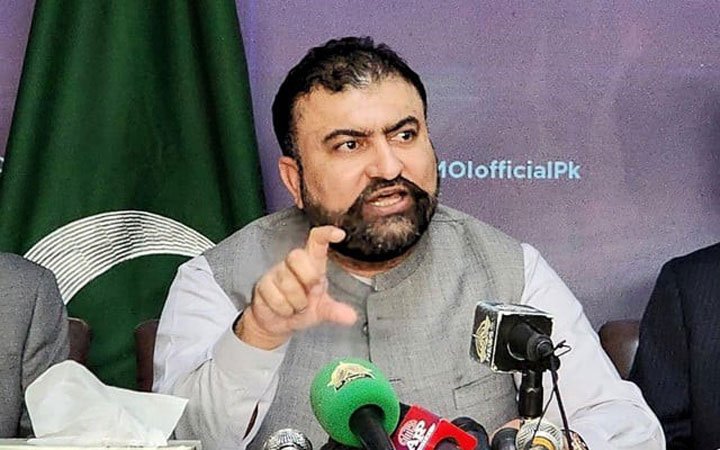
The leader of Balochistan, Mir Sarfraz Bugti, disclosed that a major terror plan targeting the Independence Day festivities on August 14 was effectively stopped by intelligence services.
At a press conference on Monday, Chief Minister Mir Sarfaraz Bugti announced the arrest of Dr Muhammad Usman Qazi, a Grade-18 lecturer at BUITEMS University, accused of being a key facilitator for the banned Baloch Liberation Army (BLA).
“Should a professor turn into a terrorist, you can’t honor him with a garland,” stated Bugti during a press briefing conducted here, accompanied by high-ranking officials such as Additional Chief Secretary for Home Affairs Hamza Shafqaat, Acting Inspector General of Police Saeed Wazir, and spokesperson for the provincial government Shahid Rind.
CM Bugti warned that those aiding terrorist elements, regardless of their social or professional status, would be held accountable.
Bugti acknowledged the intelligence services for preventing the scheduled attack on August 14, describing it as proof of the government’s strong determination to combat groups opposing the state.
The Chief Minister stated that the public announcement of Dr Qazi’s detention aimed to deliver a clear warning against terrorism and those who support it. “The state is facing well-backed groups associated with banned organizations.”
He emphasized that the insurgency is not rooted in deprivation but is driven by a purely anti-state agenda. Expressing concern over the involvement of educated individuals in terrorism, Sarfraz Bugti revealed that Dr Qazi had provided a pistol to a female facilitator for targeted killings and had also played a role in facilitating a suicide attack at Quetta railway station.
The Chief Minister voiced alarm over the increasing use of women in terrorist networks and announced the formation of a special cell within the Home Department to counter extremism in educational institutions. He added that 2,000 public sector employees have been screened, with those under suspicion being placed on the Fourth Schedule.
CM urged parents to monitor their children and report any suspicious activity, and called on parliamentarians to lead efforts against those who misguide youth under the guise of “Balochiyat.”
He reaffirmed the government’s commitment to peace but warned that violence and murder will not be tolerated. To promote positive engagement, the government is allocating Rs1 billion in scholarships for Balochistan students at Punjab University.
During the press conference, a video confession by Dr Qazi was shown to the media. In the video, he admitted to knowingly facilitating terrorist activities despite receiving respect and benefits as a government employee.
Having obtained his Ph.D from Peshawar University, Qazi stated that he joined the BLA at the behest of Dr. Haibatan, known as “Kalk,” and worked under the pseudonym “Ameer.” He kept in touch with BLA leader Bashir Zeb through Telegram.
Dr Qazi confessed to three major acts of facilitation including providing medical treatment to a regional commander known as “Sher Dil”, harboring two terrorists in his home, one of whom later carried out the Quetta railway station suicide attack and purchasing and supplying a pistol to a female facilitator for targeted killings
He further confessed to providing refuge to another extremist, Noman known as “Peerak,” for a period of eight days. Peerak intended to carry out a self-destructive assault during an event on August 14 but was apprehended prior to carrying out his scheme.
Dr. Qazi ended his statement by admitting his intentional participation in actions against the state and his position as an enabler for the BLA.
by admin | Aug 15, 2025 | engineering, federal government, funding, government, infrastructure
The central administration has obtained N3.6 billion worth of building machinery provided by the Japanese authorities.
In a press release, the Ministry of Works stated that the machinery provided to the Federal Roads Maintenance Agency (FERMA) would mark a significant step forward in the country’s efforts toward achieving sustainable infrastructure development.
The declaration, signed by the Ministry’s Director of Press, Mohammed Ahmed, cited the Minister of State for Works, Bello Muhammad Goronyo, Esq., who stated that “the generous support from Japan moves forward the dream of seamless, secure, and dependable transportation throughout the nation.”
Goronyo stated that roads serve as the vital arteries of Nigeria’s economy and everyday activities, with the machinery marking a significant advancement in their use and maintenance.
Worthed at £3.6 billion (three billion, six hundred million Nigerian naira), the provided machinery is anticipated to enhance FERMA’s ability to repair and restore Nigeria’s extensive highway system.
Goronyo highlighted that the contribution marks the beginning of a new phase in road upkeep, allowing engineers and technical staff to achieve quicker and longer-lasting results.
He further pointed out that Nigeria’s large highway system still plays a crucial role in trade, farming, medical services, and uniting the country, despite ongoing serious upkeep issues.
He also praised the actions of President Bola Ahmed Tinubu GCFR, who has placed infrastructure at the forefront and positioned it as a major factor in driving economic development through his Renewed Hope Agenda — a government that acknowledges infrastructure as a catalyst for progress.
“We imagine a future where traveling within Nigeria is smooth, safe, and reliable. This kind gesture brings us nearer to turning that dream into truth,” he added.
The President and citizens of Nigeria expressed deep appreciation through Goronyo to the Japanese government for its concrete assistance and steadfast dedication towards Nigeria’s progress.
He called on the management of FERMA and their engineering staff to guarantee that the machinery is utilized to the best of its potential, stating, “This equipment represents a significant resource, and its proper application will demonstrate our dedication to enhancing the standard of living for every Nigerian.”
He ended by pointing out that the installation of the machinery goes beyond a symbolic transfer, representing instead the start of a fresh phase in road upkeep that corresponds with Nigeria’s larger aim of achieving economic growth through improved infrastructure.
Supplied by SyndiGate Media Inc. (
Syndigate.info
).
Page 1 of 2912345...1020...»Last »


