by admin | Mar 23, 2025 | community, culture, education, news, politics
JAKARTA, Lifehack My ID
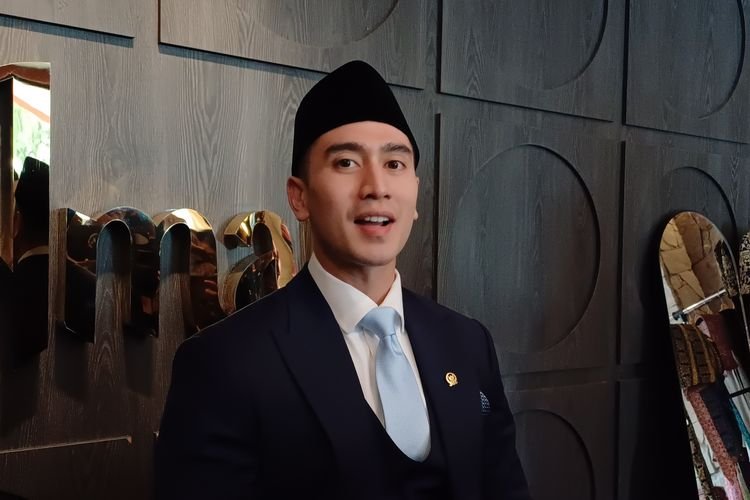
Aktor Verrrell Bramasta mencalonkan diri di salah satu daerah pemilihan yang ada di Bekasi.
Belum lama ini, Verrell mengunjungi beberapa sekolah di wilayah Bekasi guna mempromosikan Talent DNA. Sekolah-sekolah tersebut meliputi SMAN 3 Babelan, SMAN 1 Tambun Utara, serta SMK Bina Jaya Prestasi.
Verrell mendukung para murid di sekolah tersebut dalam menemukan dan memahami kekuatan serta kemampuan mereka lewat pendekatan Talent DNA.
“Pendidikan merupakan kuncinya untuk menghasilkan anak muda yang berkualitas,” demikian ungkap Verrell pada pernyataan persnya, Minggu (23/3/2025).
“Melalui program ini, tujuanku adalah agar pemuda memiliki kesempatan untuk mengenali kemampuan dan ketertarikan mereka, supaya dapat memilih jalur yang paling tepat,” tambahnya.
Verrell menyebutkan bahwa para murid laki-laki dan perempuan yang sangat bersemangat ketika menghadiri sosialisasi Talent DNA.
Dia menginginkan bahwa lewat sosialiasi ini dapat memacu perkembangan sistem pendidikan yang lebih baik.
Verrell menegaskan keinginannya untuk memastikan bahwa pendidikan di Bekasi tetap berkembang, serta generasi muda kita dapat mengakses teknik pengajaran yang paling efektif.
“Langkah ini dapat membuka jalan untuk mengembangkan sistem pendidikan yang lebih menekankan pada kemampuan individu, agar para pemuda di Bekasi dapat tumbuh dan berkembang sebagaimana mestinya sesuai dengan keahlian mereka,” ungkap Verrell.
Proyeksi ini pun bisa meminimalisir perbedaan antara keinginan siswa dengan bidang studi atau pekerjaan yang nantinya dipilihnya.
Verrel bersumpah akan melaksanakan tugas secara praktis dengan terus mengunjungi lokasi meskipun telah diangkat sebagai anggota DPR.
Terlebih lagi momen tersebut bersamaan dengan bulan Ramadhan.
Menurut Verrell, dia yakin bahwa tugas sebagai anggota DPR tidak hanya terkait dengan berbicara di ruangan sidang, tetapi juga berkaitan erat dengan kehadiran langsung di antara rakyat, menyaksikan serta mengetahui secara pribadi akan keperluannya.
Bukan hanya melalui kegiatan sosialiasi Talent DNA, Verrell juga mencuri perhatian karena ikut secara aktif membantu para korban yang terkena dampak banjir di Bekasi. Selain itu, dia pun mensupport proyek pembangunan masjid dan sekolah.
![Top 10 Toughest Science Courses Worldwide in 2025]()
by admin | Mar 18, 2025 | education, life sciences, physics, science, science education
Many individuals find science to be one of the most enjoyable but difficult topics in elementary and secondary education. Educational institutions provide numerous science classes. Although studying can be tough, certain science courses prove more challenging than others.
most challenging scientific subjects to tackle globally
are intricate and demand substantial effort to progress towards graduation.

Key takeaways
-
The
most challenging scientific subjects to tackle globally
can be challenging to grasp and implement these ideas in our everyday routines.
-
The most challenging science subjects might likely prove to be the most fulfilling choices for your future profession.
-
Science represents a continually expanding domain offering a web of opportunities for future advancement and evolution.
Toughest scientific subjects to tackle globally
The difficulty level of a course often hinges on your personal interests and aptitudes. Thus, determining which science degree or subject area is the most challenging can be tricky due to individual differences in learning abilities. Below are some examples of particularly tough science subjects.
Ranking
|
Course
|
1
|
Astrophysics
|
2
|
Aerospace engineering
|
3
|
Biomedical engineering
|
4
|
Quantum physics
|
5
|
Medicine and surgery
|
6
|
Neuroscience
|
7
|
Mathematics
|
8
|
Molecular engineering
|
9
|
Chemical engineering
|
10
|
Data science
|
Despite this, this compilation of the most challenging scientific disciplines worldwide takes into account the breadth of the curriculum, educational requirements, and the overall stress levels required to manage the coursework. It’s important to note that this list is subjective and not arranged in any specific sequence.
10. Data science

Data science programs encompass statistics, scientific computing, scientific methodologies, data processing, scientific visualization, and algorithms. Professionals in this field develop and utilize systems designed to derive insights from both structured and unstructured, often noisy, datasets.
Data science is an intricate and expanding discipline that requires strong technical skills. Additionally, it necessitates expertise in specific domains along with effective problem-solving capabilities. Gaining proficiency in this subject involves considerable time and dedication.
9. Chemical Engineering
Chemical engineers have the crucial role of designing and managing industrial chemical facilities. Producing goods via chemical procedures is quite challenging.
This course is challenging as it requires a deep understanding of basic principles in chemistry, physics, and math to excel. By taking this chemical engineering class, students learn how to transform laboratory research into real-world applications suitable for industrial manufacturing processes.
8. Molecular Engineering
In molecular engineering, students acquire skills in designing and evaluating molecular characteristics. Additionally, they study the behavior and interplay of these attributes to develop improved materials, procedures, and systems for diverse applications.
Grasping the chemical, physical, and structural characteristics of molecules, particularly at the nanoscale level, can be quite difficult. It requires substantial study time and commitment to achieve this understanding.
7. Mathematics

A lot of individuals don’t consider mathematics to be a form of science; however, it indeed falls into this category. As a formal science, it focuses on abstract ideas and relies heavily on logic and deduction.
Mathematics offers the methods and vocabulary necessary for explaining and comprehending our surroundings. Numerous students encounter difficulties with mathematics as early as elementary school. Consider tackling these challenges at more advanced educational stages!
6. Neuroscience
Neuroscientists focus on the anatomy, physiology, evolution, and diseases of the human nervous system. They integrate knowledge from various fields such as chemistry, biology, and physics into their studies.
In addition to involving extensive reading, the discipline of neuroscience is demanding due to its fast-paced developments and intricate theories.
5. Medicine and Surgery
Medicine is challenging for many individuals due to the extensive amount of material they must study and comprehend. Typically, the initial year proves to be the toughest for most medical students as their coursework focuses heavily on foundational sciences and a vast array of scientific data.
Pursuing a medical education inherently involves working much harder compared to many other fields of study. Labs and classes consume a significant amount of your schedule. However, the positive aspect is that physicians have the opportunity to utilize this knowledge throughout their careers.
4. Quantum physics
In quantum physics, students delve into the basic components of matter and energy and their practical applications. They examine how atoms function and uncover the reasons behind the workings of chemistry and biology.
Were you aware that there isn’t just one unified quantum theory? Fundamentally, quantum physics reveals bizarre phenomena concerning the behavior of matter. The scientific principles underlying these predictions are rather complex.
3. Biomedical engineering

As expected, biomedical engineering merges biology with engineering disciplines. Professionals in this field develop and enhance medical equipment, refine healthcare technology, and serve as a link between engineering principles and medical practices.
You can envision the extensive time and effort needed to develop devices and technologies aimed at managing or curing different ailments! This medical program entails a significant amount of mathematics, such as calculus, statistics, and differential equations.
2. Aerospace engineering
Aerospace engineering concentrates on the creation, improvement, and upkeep of airplanes and space vehicles. This particular program offers an emphasis on the electronic components involved.
The demanding field of aerospace engineering requires thorough education, sharp analytical skills, and an unwavering dedication to lifelong learning. Delving into subjects like propulsion, aerodynamics, material sciences, avionics, and control systems is far from easy.
1. Astrophysics

Astronomy stands as one of the most challenging scientific disciplines globally. This field focuses on understanding the movements, locations, and characteristics of heavenly bodies such as planets, stars, and galaxy systems. The scope extends further than mere observations made through terrestrial and orbital observatories.
In an astrophysics program, the primary disciplines studied include physics, mathematics, and chemistry. This curriculum is demanding due to its extensive coverage, requiring a solid base in math, physics, and astronomy.
Which among biology, chemistry, and physics is considered the most challenging discipline?
Determining which subject is the most difficult in high school or at higher educational stages isn’t straightforward since students vary greatly. Even though each one can pose challenges for various individuals, chemistry frequently stands out as particularly tough because of its intricate theories.
Which is considered the simplest science class at this university?
General Biology is considered one of the most accessible science disciplines for numerous students. However, it might pose difficulties for those who lack interest in biology or related fields.
Is physics considered the most challenging science?
Many find physics difficult, yet it isn’t considered the most demanding field of study. Chemistry is generally thought to be more complex than physics.
What is considered the most challenging subject in science?
Quantum mechanics and string theory frequently top the list as some of the most difficult subjects in science due to their intricate and theoretical characteristics.
Is chemistry considered the most difficult science?
A lot of individuals concur that chemistry is the most challenging science due to its intricate ideas. However, there are those who might disagree with this viewpoint.
What are the top 10 most challenging subjects?
Take a look at the compilation of the most challenging science subjects listed below.
Which branch of science is considered the most challenging?
The term “difficult” varies from person to person since individuals have distinct academic inclinations and aptitudes. Nonetheless, fields such as neuroscience, medicine and surgery, quantum physics, astrophysics, aerospace engineering, and biomedical engineering are often considered some of the toughest scientific disciplines.
What is the most straightforward science class available?
Identifying the simplest science class can be difficult since everyone has their own areas of strength and interest. Nonetheless, certain subjects are generally seen as more manageable than others. For instance, environmental science and introductory biology are typically viewed as less demanding.
Which subject is considered the most challenging in scientific studies?
The toughest science subject can vary from person to person since what one finds difficult another might find easy due to personal skills and preferences. However, fields like medicine and surgery, quantum physics, astrophysics, aerospace engineering, and biomedical engineering tend to be particularly demanding for many students.
What is considered the most challenging course globally?
Some of the most challenging subjects globally encompass medicine and surgery, quantum physics, astrophysics, aerospace engineering, and biomedical engineering.
The most challenging scientific disciplines globally encompass intricate theories that can require considerable effort to grasp and apply effectively. As academic fields have advanced over time, certain degree programs have emerged as the most difficult ones worldwide to master.
Recently, SANGGRALOKA.co.ke released a compilation of the most sought-after courses in Kenya. After completing their secondary education, individuals in Kenya have various choices they can explore. They may opt for higher education at a university, enroll in a college, or attend a vocational institute.
The field of study you select can influence how readily you secure employment post-graduation. Although it’s important to follow your interests, the demand for the subject in the job market should also be taken into account.

by admin | Feb 22, 2025 | asia, boats and ships, culture, education, history
A
new study
According to research from the Ateneo de Manila University, recently discovered archaeological findings indicate that ancient Filipinos had developed advanced boat-building techniques and extensive maritime skills long before Magellan, Zheng He, and Polynesians achieved these feats.
ADMU researchers Riczar Fuentes and Alfred Pawlik highlight that even though the Philippines and Island Southeast Asia (ISEA) have never been linked to mainland Asia, they still provide proof of early human settlement. This raises questions about how these populations managed to traverse vast oceanic expanses.
The microscopic examination of stone tools dug up from archaeological sites in the Philippines, Indonesia, and Timor-Leste revealed distinct signs of plant processing. These were particularly linked to extracting fibers commonly utilized for constructing boats and engaging in deep-sea fishing activities, according to the research team.
The institution mentioned that the research is set to appear in the April 2025 edition of the Journal of Archaeological Science: Reports.
According to Fuentes and Pawlik, sites in Mindoro and Timor-Leste also showed remains of deep ocean fish such as tuna, sharks as well as fishing tools used to catch these types of animals.
Therefore, this evidence disputes the notion that technological advancements during the Paleolithic era solely developed in Europe and Africa. The findings suggest that early societies in Southeast Asia could construct complex vessels and cords from natural resources for navigation and deep-water fishing activities.
“The presence of big predator fish remnants at these locations suggests the ability for sophisticated sea travel and understanding of the seasonal patterns and movement paths of these fish species… The finding of fishing tools implies the requirement for robust and high-quality cords used as ropes and fishing lines to capture marine life,” the researchers stated in their report.
“Prehistoric migrations throughout the Indo-Pacific region weren’t carried out by casual seafarers adrift on fragile bamboo rafts, but rather by adept navigators who possessed the expertise and tools necessary for traversing extensive expanses of open ocean to reach distant islands,” the declaration stated.
The Initial Remote Ocean-going Vessel Project (IROV), initiated by scholars and a group of marine engineers from the University of Cebu, aims to examine potential historical construction materials and recreate miniature versions of these watercraft.
— Jiselle Anne Casucian/RF, GMA Integrated News
This article
A recent study from the Ateneo de Manila University indicates that ancient Filipinos were adept at navigation and sailing prior to many other world cultures.
was originally published in
GMA News Online
.

by admin | Feb 6, 2025 | children, children and families, education, parenting, technology

Have you ever wondered why parents feel challenged observing that their children struggle even though they appear to have a more “comfortable” upbringing compared to ours? When you compare your own experiences with those of your child and assume that young people nowadays lead relatively easy lives, perhaps this comparison holds part of the issue. It’s clear that modern advancements bring about greater convenience—particularly through technologies like the internet which simplify many tasks. Reflecting upon our past, we recall writing assignments longhand or using type-writers complete with correction fluid for mistakes, physically visiting libraries to navigate book sections via the Dewey system, and waiting weeks or months for replies from correspondents through traditional postal services. Seeing such ease of access to interaction, exploration, and information now available to our offspring can indeed suggest simpler times; however, reality presents both advantages and challenges.
Rapid and extensive knowledge comes with both benefits and challenges. Indeed, life has become easier in many ways; tasks that once took us hours can now be completed within mere minutes by others. However, this doesn’t imply they have more free time compared to previous generations, just as advancements in computing did not reduce our working hours. Today’s students face an even greater academic workload than those from earlier times. For instance, scientific understanding today differs significantly—and is far more intricate—than what existed during my schooling years. In the past, learning consisted primarily of studying the nine planets (which included the erstwhile planet Pluto, may it rest peacefully). Nowadays, subjects such as physics delve into complex theories including string theory, wormholes, and parallel universes. Mathematical procedures are also being instructed quite differently nowadays. Our comprehension of genetics and neural plasticity has advanced so greatly that I fear the education I received might soon become outdated. Whenever I inquire about assignments from my secondary-level pupils, they often discuss developing comprehensive business plans, participating in technology design courses, and conducting analyses which were traditionally reserved for higher education levels.
Unique Paraphrase:
Unparalleled accessibility also implies that children might encounter social scenarios and hurdles before they’re emotionally prepared to handle them. Consider, as an illustration, having constant connection with peers through smartphones. In earlier times, our social exchanges were confined by physical settings—once at home, such interactions typically ceased. However, online connectivity eradicates these usual boundaries (aside from power outages and lack of battery charge), making it exceptionally challenging to impose restrictions on screen time for youngsters since the sole barrier between them and their friends is now essentially just parental oversight.
Greater social connectivity also leads to increased social disputes.
Harassment and various types of social distress, including isolation, mockery, and embarrassment, trail you everywhere today. In the past, one might find solace knowing that their harassers couldn’t reach them beyond school grounds, or rely on the fact that an adult, perhaps even your dad confronting someone who dared to use the house phone to hassle you, offered some protection. Now these threats loom constantly without respite because those barriers are gone. This situation has emerged fairly recently. Young people now endure worldwide ridicule which can be particularly challenging to overcome emotionally. Their young minds aren’t equipped for this kind of pressure. Moreover, parents struggle too since we didn’t grow up under similar conditions and thus lack experience navigating our children through today’s intricate landscape of peer relationships.
Our conventional understanding of parenthood is based on the belief that parents possess greater wisdom and thus hold superior judgment. This perspective leads us to adopt a mentoring approach to parenting, viewing ourselves as educators and navigators for our kids. When errors occur, we offer corrections; when they falter, we steer them back onto the proper path. It falls upon us to determine acceptable behavior and assign corresponding repercussions. Given that parents typically have accumulated more expertise and abilities compared to their offspring, this mentor-style guidance appears quite fitting.
Nonetheless, we must recognize that kids might be acquiring far greater insights into our world compared to adults. Thanks to new information gained from schooling and their innate ease with modern technologies, parents often feel like they’re always trying to keep up. Without taking the initiative to show interest in—and educate ourselves about—the environments where they spend most of their time—like Roblox, Discord, Snapchat, TikTok—we won’t effectively guide them through social interactions online. Furthermore, without understanding the intricate emotional responses these platforms evoke, how will we support them in managing their feelings?
Raising kids is an eye-opening journey. First off, let’s accept that today’s youth inhabit a completely distinct universe compared to ours, filled with distinctive hurdles. Our past experiences may fall short when trying to steer them through these new obstacles. Admitting that we’re venturing into uncharted waters isn’t just acceptable—it’s increasingly necessary nowadays. Instead of assuming we have all the answers, adopting such an attitude pushes us towards improving ourselves, doing thorough research, and seeking assistance whenever needed. That’s how we become effective parents striving to excel.
—————
aatuazon@up.edu.ph


