by admin | Aug 21, 2025 | gaza israel conflict, humanitarian aid, international aid, news, tragedies
Dhaka, August 19 – The United Nations reported that a historic number of 383 humanitarian workers lost their lives globally in 2024, with almost half of them dying in Gaza amid the conflict between Israel and Hamas, as the organization observed World Humanitarian Day with a somber message regarding increasing dangers faced by individuals providing critical assistance.
The U.N.’s top humanitarian official, Tom Fletcher, stated that the increase in deaths should act as a “wake-up call” to safeguard civilians and individuals providing aid.
Fletcher stated, ‘Such large-scale attacks, without any consequences, represent a disgraceful criticism of global passivity and lack of action.’ He added, ‘We urge decision-makers to safeguard citizens and relief personnel, as well as ensure those responsible face justice.’
As per the Aid Worker Security Database, deaths increased from 293 in 2023 to 383 in 2024 – with over 180 incidents recorded in Gaza. The majority of those who lost their lives were local employees working to support their own communities, frequently dying either while on duty or within their residences, according to the U.N. Office for the Coordination of Humanitarian Affairs (OCHA).
The database documented 599 significant assaults against humanitarian personnel during the previous year, marking a substantial increase compared to 420 cases reported in 2023. These events resulted in 308 injuries, 125 abductions, and 45 detentions. So far this year, 2025 has seen 245 notable attacks registered, leading to 265 fatalities.
A particularly severe event occurred on March 23 in Rafah, southern Gaza, where Israeli forces allegedly targeted medical personnel and rescuers operating in clearly identified vehicles, resulting in 15 deaths and subsequently burying the corpses in a collective grave using heavy machinery.
Palestinian health officials report that the number of deaths in Gaza has exceeded 62,000
Sudan ranked as the second most dangerous nation for aid personnel following Gaza and the West Bank, where 60 humanitarian staff were murdered in 2024—more than twice the number recorded in the prior year. Additional areas of concern featured Lebanon (20 fatalities, an increase from zero in 2023), Ethiopia and Syria (each reporting 14 deaths), and Ukraine (13 casualties, up from six in the preceding year).
An assault on a humanitarian worker is an attack on everyone,” Fletcher emphasized. “Hostility toward relief personnel is not unavoidable—it needs to stop.
Source: Agency

by admin | Mar 24, 2025 | africa, international aid, international news, united nations, world
The United Nations’ leading AIDS official warned on Monday that the abrupt cessation of U.S. foreign aid could cause the world to revert to the most devastating periods of the global AIDS epidemic, with millions facing death as a result.
Historically, the United States has led as the largest provider of humanitarian aid globally. However, after President Donald Trump returned to the White House about two months ago, he significantly reduced international assistance, causing widespread disruption within the global humanitarian sector.
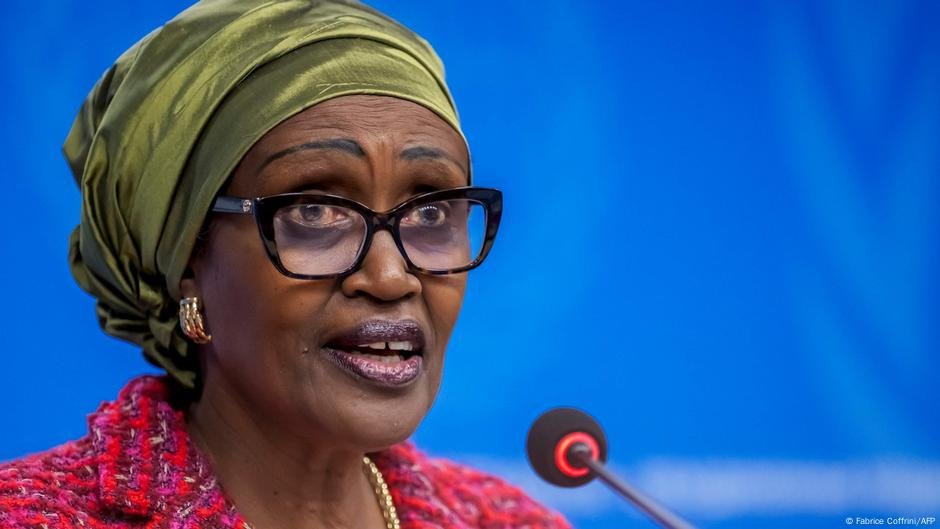
The UNAIDS Executive Director, Winnie Byanyima, warned that failure to reinstate U.S. funding or secure contributions from other sources could result in “an additional… six-point-three million AIDS-related fatalities” within just four years, marking a tenfold rise in mortality rates during this period.
“You’re discussing the potential loss of progress achieved over the past 25 years. This is quite concerning,” she stated to journalists in Geneva.
“It is understandable for the U.S. to aim at gradually decreasing its financial contributions, however, the abrupt termination of essential aid is causing severe consequences,” she stated.
The reductions from the U.S. imply that currently, 27 nations across Africa and Asia are facing staffing shortages, diagnostic services and treatments are being disrupted, and disease monitoring systems are deteriorating.
– Risk of global AIDS rebound
Beyond the upcoming four-year period, If assistance funding isn’t reinstated, “we anticipate the resurgence of the AIDS epidemic… on a global scale,” Byanyima warned. This escalation would particularly affect regions such as Eastern Europe and Latin America.
We’ll witness its return, and we’ll see people pass away just as we observed in the ’90s and the 2000s.
She praised American leadership in the battle against AIDS as “one of the most humanitarian efforts in global health.”
She pointed out the US anti-HIV program known as PEPFAR, renowned as one of global health’s greatest successes for saving approximately 26 million lives throughout its twenty-year span.
Now, owing to American innovations, the world stands “on the brink of another revolution in preventive treatments,” Byanyima stated, highlighting a novel medication known as lenacapavir, which was created by the U.S. pharmaceutical company Gilead.
Studies have shown the medication to be 100% effective, and Byanyima mentioned that trials are ongoing with the aim of administering it as a yearly single dose, making it much more affordable for lower-income nations.
That is similar to a flu vaccine,” she stated. “If implemented aggressively…we could reduce new infections nearly to zero. We might witness the end of AIDS.
Byanyima reached out to the “bargain-making” President Trump personally, emphasizing that reviving the worldwide HIV response would be “a tremendous bargain”: lenacapavir has the potential to “generate profits for Gilead, foster good job opportunities for Americans, and save lives.”
She proposed that once PEPFAR resumes operations, UNAIDS can collaborate with the United States and other contributors to assist low-income nations in achieving autonomy in their battle against HIV.
The post
The AIDS epidemic poses a renewed global threat due to halted U.S. funding, warns the United Nations.
appeared first on
LIFEHACKEnglish – Morocco News
.
by admin | Mar 24, 2025 | africa, international aid, international news, news, world
The leader of the UNAIDS program has stated that millions additional deaths may occur due to the abrupt funding reductions implemented by the Trump administration. She further cautioned that the AIDS crisis might revert to the severity observed during the 1990s.
The leader of the UN’s HIV/AIDS initiative, UNAIDS, stated on Monday that cutting funds by the U.S. could result in more than 6 million extra fatalities related to the illness.
The UNAIDS Executive Director, Winnie Byanyima, stated that the
abrupt changes from the U.S.
, which had previously been the largest contributor to the program, was described as “devastating.”
She told reporters in Geneva that you’re discussing the potential loss of progress achieved over the past 25 years, which is quite grave.
More than 6 million extra AIDS-related fatalities
If U.S. assistance is not reinstated and not supplemented by alternative financing—and we haven’t received word from other nations committing to bridge the shortfall—there
would result in another 6.3 million additional AIDS-related fatalities.
— over the coming four years,” ByanyIMA stated.
She noted that approximately 600,000 deaths related to AIDS were documented worldwide as of the latest figures in 2023.
Byanyanya additionally mentioned that an extra 8.7 million new infections were anticipated.
The head of UNAIDS stated that beyond the immediate future, unless the funding shortfall is addressed, the AIDS epidemic might revert to the severity observed during the 1990s.
“However, this concentration isn’t limited to the low-income African nations where it currently stands prominent; it’s also rising among so-called key populations across Eastern Europe and Latin America,” she stated.
There will be a significant increase in cases of this illness. It will return, and we will witness fatalities similar to those seen during the ‘90s and early 2000s.
![]()
The head of UNAIDS urges the U.S. to reassess abrupt funding reductions.
US President Donald Trump, along with his prominent supporter billionaire Elon Musk, has supervised substantial reductions in federal expenditures, particularly in the realm of US international assistance.
The choice to reduce financial support for the battle against AIDS has
ignited demonstrations domestically
and
abroad
.
Byanyima adopted an empathetic stance, simultaneously urging the White House to reassess its choice.
“It makes sense for the U.S. to aim at decreasing its financial contribution gradually, however, abruptly halting essential aid is causing severe consequences,” she stated.
We strongly advocate for a reassessment and swift reinstatement of essential services, particularly those critical for saving lives.
Edited by: Jenipher Camino Gonzalez
Author: Alex Berry (compiled with AFP, Reuters)
by admin | Mar 24, 2025 | business, funding, innovation, international aid, technology
During the current Finance in Common Summit held in Cape Town, AfDB Vice President for Private Sector, Infrastructure & Industrialization, Solomon Quaynor, urged for an acceleration in the creation of viable green infrastructure initiatives. He highlighted the importance of scaling up these efforts, stressing that Africa must not be able to tolerate infrastructural development processes stretching over decades.
Addressing a session entitled
Cutting-Edge Technical Support: Closing Africa’s Infrastructure Divide,
Quaynor asserted that Africa needs to close its infrastructure gap by focusing on preparing and developing green infrastructure projects, making sure that both public and private sector tools are utilized efficiently. He highlighted that advancements in the future depend on:
1. Prioritizing the preparation of green infrastructure projects.
2. Developing these green infrastructure initiatives effectively.
3. Leveraging both public and private sector resources appropriately.
-
establishing a competitive marketplace for viable infrastructural projects
-
Speeding up the completion of successful green infrastructure projects from 10 years to just 3 years
-
Strengthening infrastructure development and asset managers like Africa50, as well as scalable green infrastructure project development platforms such as the Alliance for Green Infrastructure in Africa (AGIA) to mobilize large-scale investments.
Given Africa’s substantial needs for investment to close infrastructural and industrialization divides, the gathering delved into ways development finance institutions (DFIs), international collaborators, state-owned developmental banks, charities, and businesses could utilize technical support (TS) to foster enduring economic change. Presenters emphasized that TS should serve as more than just an initial spark; it must be designed to boost private-sector engagement and improve the efficiency of developmental funding efforts.
Quaynor emphasized that technical assistance should also be designed to de-risk investments and create the necessary enabling environment for private capital mobilization.
He said, “Innovative tools for technical assistance enable us to fill funding shortages, enhance organizational strength, and speed up the execution of groundbreaking initiatives. It’s crucial to reconsider our approach to deploying TA so that it results in lasting and expansive investment successes.”
The African Development Bank combines tools from both the public and private sectors to adopt a solution-driven strategy for developing infrastructure projects. Addressing Africa’s infrastructure deficit requires simultaneous focus on preparing and advancing projects, since insufficient viable initiatives continue to be a significant hurdle. Additionally, governments should spearhead efforts to create an atmosphere conducive to private-sector involvement to prevent exclusive claims by private investors. Both efficiency and high standards are crucial.
“Africa cannot continue with infrastructure projects that take between 7 to 10 years to develop—we need to speed up progress and complete them within 3 years, with an emphasis on sustainable green initiatives,” stated Quaynor.
AGIA (Alliance for Green Infrastructure in Africa), an innovative program launched by the African Development Bank in collaboration with Africa50 and the African Union Commission, aims to empower local builders with essential abilities, financing, and backing from seasoned infrastructural experts to expedite eco-friendly infrastructure growth. This effort centers on fostering a competitive arena where projects can thrive, enhancing rivalry, size, and velocity, thereby expanding the roster of triumphant environmentally friendly infrastructures. Through integrated planning and execution, programs such as AGIA are catalyzing large-scale, viable, and sustainable answers tailored for Africa’s upcoming needs.
One major point from the conversation emphasized the significance of tailoring technical aid to meet the requirements of both governmental bodies and private sector investors. Through an emphasis on enhancing capabilities, implementing regulatory changes, and preparing projects adequately, such support can boost the viability of initiatives and open up additional financing avenues. Additionally, attendees examined ways in which digital tools and collaborative online resources could increase the effectiveness and outcomes of these assistance efforts.
As the AfDB remains dedicated to promoting Africa’s economic progress, Quaynor emphasized the organization’s pledge to cultivate collaborations that stimulate innovation in technical support. The bank is currently collaborating with various development partners to deploy this technical assistance effectively, aligning these efforts with the bank’s overarching goals as outlined in its High 5 priorities—especially focusing on industrialization and incorporating infrastructure development initiatives.
The Finance in Common Summit acts as an essential forum for enhancing cooperation between public development banks and financial organizations. During this year’s meetings in Cape Town, there has been a focus on the necessity of adopting innovative methods for providing technical aid. These strategies aim to do more than just back standalone initiatives; they seek to drive broad-scale transformation within Africa’s financial and investment ecosystems.
Provided by SyndiGate Media Inc.
Syndigate.info
).


