
by admin | Nov 7, 2024 | beautiful places, galapagos islands, islands, nature, tourist attractions
Located off the Brazilian coastline, Ilha Grande boasts beautiful beaches, rich vegetation, and serene surroundings. This idyllic island offers an ideal retreat for those seeking relaxation and peace.
Imagine an island paradise where nature reigns supreme, away from the noise and activity of the big cities. Welcome to Ilha Grande, a jewel off the Brazilian coast. This little corner of paradise is a popular destination with nature lovers. Discover all the wonders this island has to offer.
Want to discover Brazil? Here are
some
articles
you might be interested in:
-
Rio de Janeiro or São Paulo: Which city should you visit on your first trip to Brazil?
-
10 mouthwatering Brazilian dishes you should taste when visiting Brasil
-
Brazil’s most beautiful cities, with vibrant atmospheres and colourful neighbourhoods
Ilha Grande, an untamed island waiting to be explored.
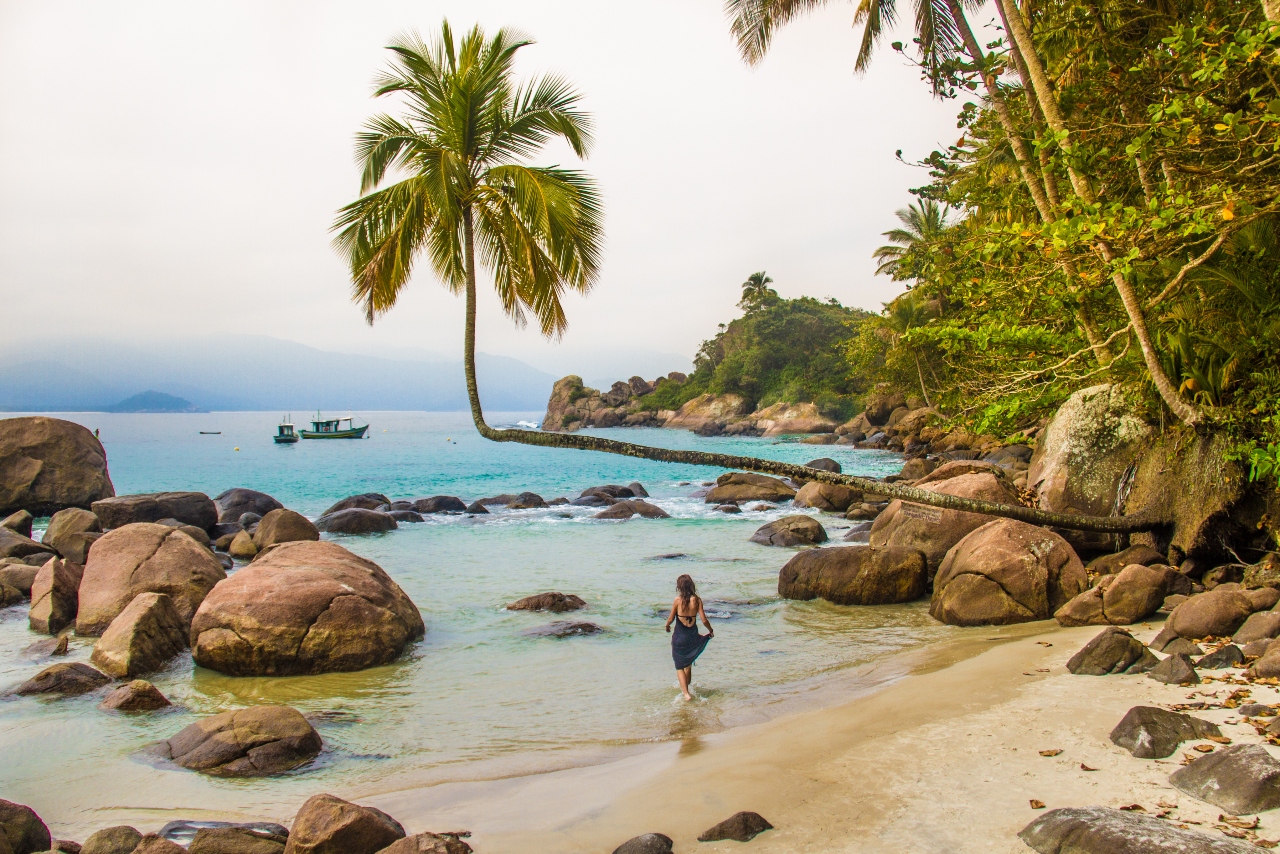
Ilha Grande, translating directly as “Big Island” in English, is a gem located along Brazil’s southeast coastline, situated approximately 150 kilometers from Rio de Janeiro. Serving as an oasis of tranquility measuring 29 kilometers in length and spanning across 193 square kilometers, this place is celebrated for its stunning natural landscapes. Once used as a prison island, Ilha Grande has transformed into a biodiverse refuge, providing tourists with spectacular views amidst its mountainous terrain.
idyllic beaches
.
What is the way to reach Ilha Grande?
Ilha Grande remains mostly cut off from the outside world, accessible exclusively by ferry. This characteristic adds to its distinctive allure. You can start your journey from Angra dos Reis, approximately two hours away from Rio de Janeiro. The ferry ride lasts about an hour and a half, offering stunning vistas of Costa Verde’s pristine waters as a preview of what lies ahead. It’s worth mentioning that automobiles are prohibited here. To maintain tranquility in the region, most travel across the island is done on foot.
What is the most ideal time of year to visit?
Ilha Grande has a tropical climate, allowing visits throughout the year, though each season offers a distinct experience. Between May and September, temperatures are pleasant for trekking, ranging from 19 to 27°C. This drier time of year is excellent for discovering the trails across the island.
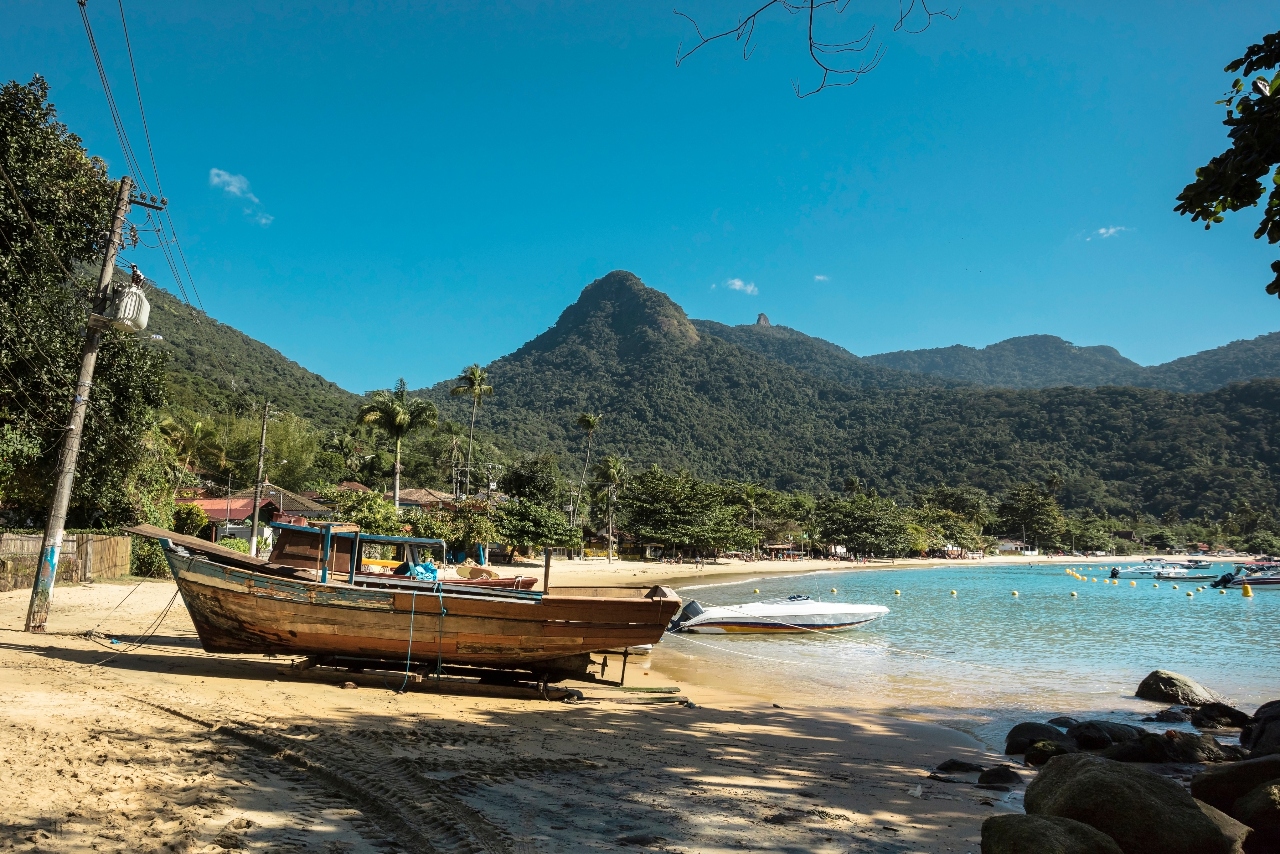
The Mata Atlântica, which refers to the island’s Atlantic Forest region
.
Between October and April, the temperature climbs, often peaking at 31°C. During this period, which marks the rainy season, expect regular rainfalls that help lower the air temperature. It’s an ideal moment for beach activities and engaging in various water sports, despite occasional unpredictable weather conditions. Thus, depending on your preferences—be it trekking through nature trails or simply relaxing—it’s crucial to adapt your plans accordingly during these months.
Where can you go in Ilha Grande?
Ilha Grande serves as an excellent natural retreat for enthusiasts of the outdoors. Featuring two iconic summits, Pico Pedra D’Água (1,031 m) and Pico Do Papagaio (987 m), the island provides various hiking trails catering to those seeking adventurous experiences. Climbing up Pico Do Papagaio is especially favored due to the stunning vistas of both the sea and adjacent woodlands it affords visitors.
If exploring the ocean floor interests you, the island’s clear blue waters offer ideal conditions for snorkeling. Be sure not to skip Lopes Mendes Beach.
Brazil’s most beautiful beaches
. You have the option to proceed as well
snorkelling
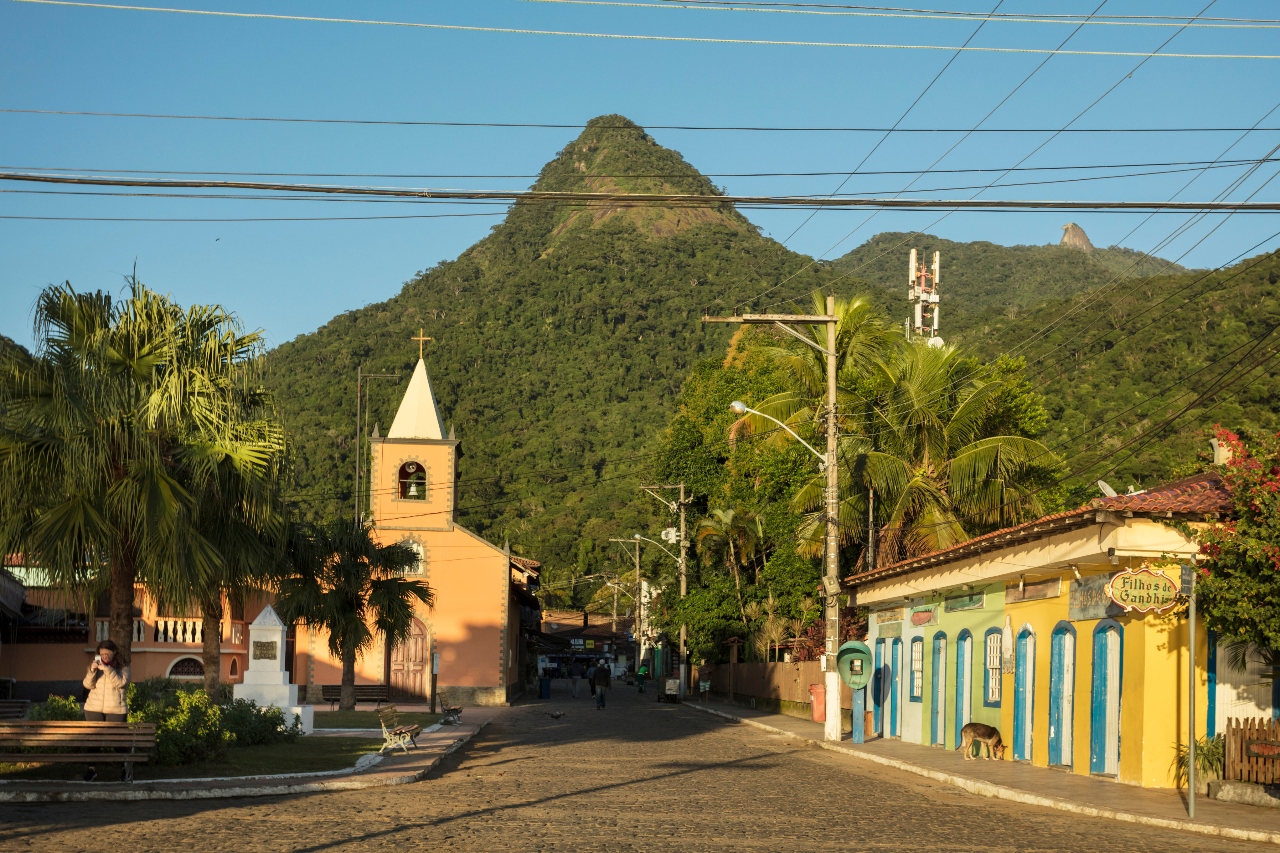
At Lagoa Azul, the pristine lagoon teems with vibrant and colorful aquatic creatures. As dusk approaches, make sure not to miss the spectacular sunsets over the bay of Vila do Abraão, which serves as the heart of the island.
Where can you find accommodations and dining options on Ilha Grande?
The island provides numerous accommodation options suitable for various budgets.
Pousadas
Local guesthouses are highly favored and provide great value for money. Among them, the Pousada Toca del Mar stands out as one of the most iconic, situated mere steps away from Abraãozinho Beach.
If you desire additional comforts, we suggest staying at Asalem, a luxurious guesthouse near Vila do Abraão. With ocean views, it provides the perfect setting for a romantic retreat within the lush rainforest. For those seeking an even cozier atmosphere, consider the Hotel Paraíso Azul Retiro. Situated close to the stunning Lagoa Azul, this hotel boasts numerous amenities designed to ensure a memorable visit.
When it comes to culinary delights, Ilha Grande offers a genuine cuisine with seafood taking center stage. A dish you definitely should sample is
moqueca
, a delightful fish stew. The eateries in Vila do Abraão also offer delectable options.
caipirinhas
Brazil’s iconic signature drinks, perfect for sipping both daytime and nighttime.
by admin | Nov 4, 2024 | costa rica, galapagos islands, islands, Travel, travel destinations
Explore Isla Tortuga, a natural treasure in Costa Rica, ideal for an extraordinary escape amidst the tropical paradise. This celestial retreat will astound you.
Isla Tortuga resembles something right from a picture-perfect scene. Boasting pristine white sand shores, crystal-clear blue water, and lush greenery, it offers all one might desire. Now, let us delve deeper into what makes this extraordinary jewel so special!
Eager to explore Costa Rica? Check out these options:
some
articles
You could find this interesting:
:
-
The top trails for exploring the stunning natural beauty of Costa Rica
-
The breathtaking coastline in Costa Rica offers sightings of whales and dolphins.
-
Where should you travel in Costa Rica? Discover the most picturesque towns, where nature takes center stage.
Isla Tortuga, a veritable Eden in the tropics for everyone.
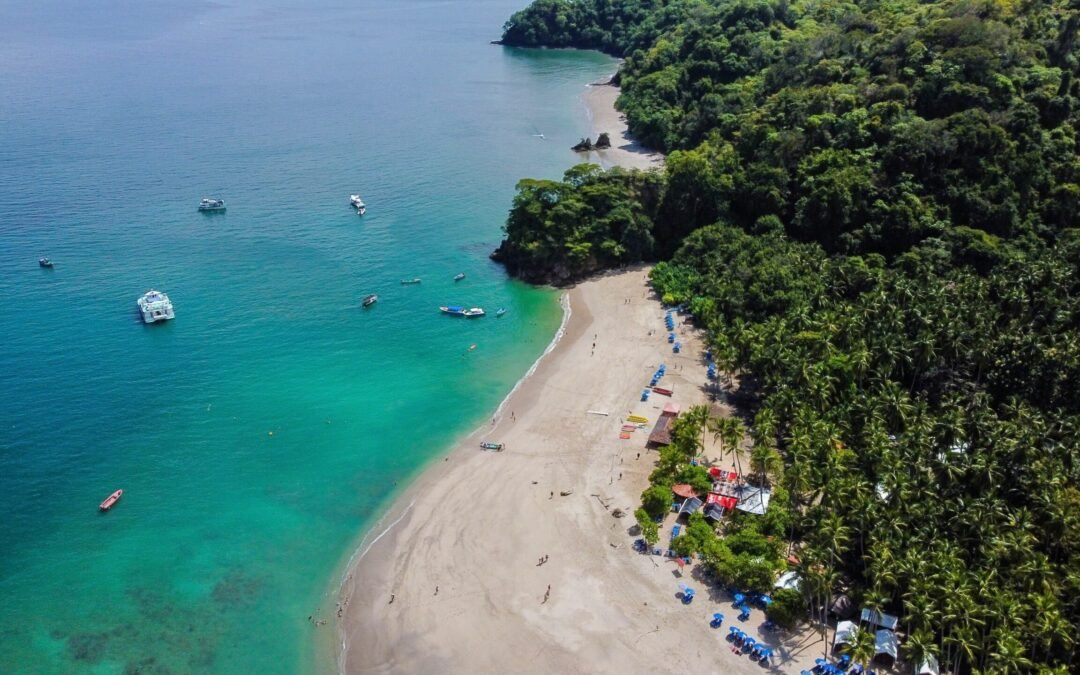
Situated off the southeast coast of the Nicoya Peninsula lies Isla Tortuga, a paradise for those who appreciate natural beauty and extraordinary scenery. As a genuine tropical treasure, the island provides a serene environment and guarantees a complete retreat from everyday life.
The optimal period to explore Isla Tortuga stretches from December through April. This dry season offers abundant sunshine and excellent conditions for water activities. Temperatures during these months stay comfortable at around 28 to 30°C. It’s advisable to steer clear of the wetter months, May to November, as increased rainfall could disrupt certain plans.
What is the way to get to Isla Tortuga?
Isla Tortuga can be accessed solely via waterways. Several tour operators provide catamaran and boat excursions, typically departing mainly from Puntarenas and the Nicoya Peninsula. These journeys usually start quite early, around 7:30 am, followed by a return journey planned for approximately 4 pm.
Keep in mind that Isla Tortuga does not have any hotels or conventional lodging options. Therefore, tours and excursions are arranged during daylight hours so you can maximize your experience on the island. This distinctive aspect helps keep the island’s natural surroundings exceptionally protected.
What activities can you enjoy on Isla Tortuga?
In this island where time appears to stand still, there is an abundance of engaging activities. From lounging under the sun on the shore to participating in various aquatic adventures, Isla Tortuga offers plenty of options for everyone.
Enthusiasts of diving can discover the sea floor, brimming with colorful fish and corals. Those seeking an adventure will find options for exploration as well.
kayaks available
For an adventure on the open water, thrill-seekers can test their skills with activities like jet skiing, stand-up paddling, or riding a banana boat.
Inland, you have the opportunity to embark on treks that allow for an immersive encounter with the lush tropical flora of Isla Tortuga. Alternatively, exploring the island from atop a horse offers a distinct perspective. Visitors may also engage in beach volleyball or join spontaneous “mejenga” games, which are casual football encounters held right on the sandy shores.
For individuals seeking tranquility, Isla Tortuga offers an idyllic setting where one can pass countless hours basking in the sunlight and listening to ocean waves, away from the chaos of daily routines. As evening approaches,
Don’t let the chance to witness an incredible sunset slip away.
.
by admin | Aug 30, 2024 | beautiful places, islands, korean, tourist attractions, travel destinations
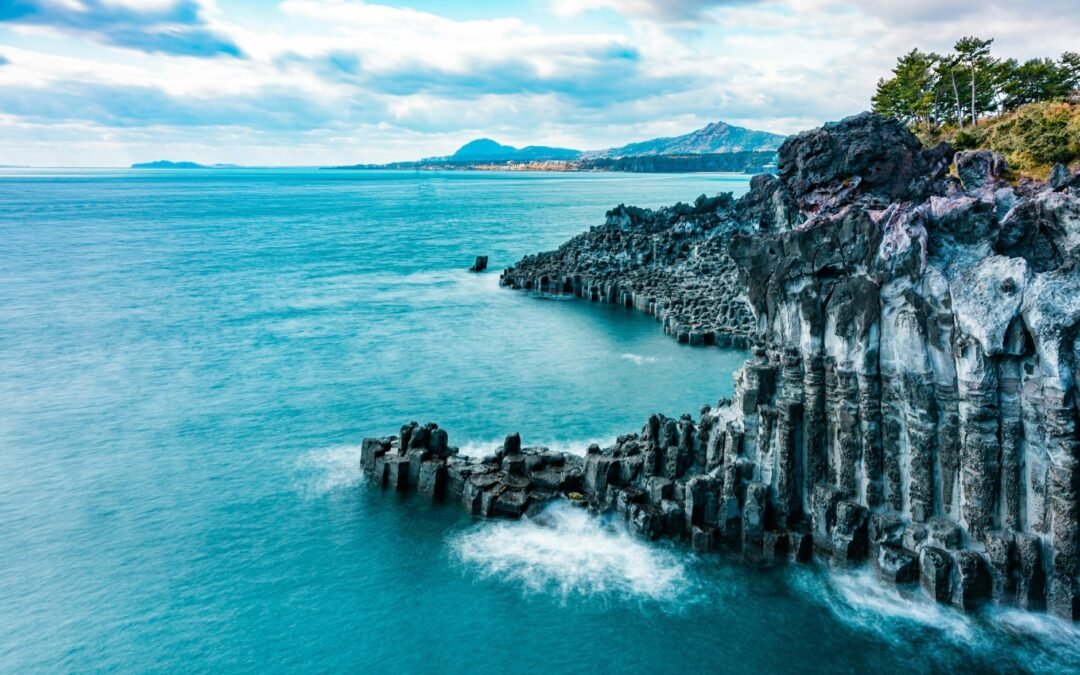
Jeju Island is a crucial component of any visit to South Korea. The island’s breathtaking landscapes and distinctive culture immerse visitors in a captivating environment. Let’s make our way to the most stunning location in South Korea…
Situated along the southern edge of the Korean Peninsula lies Jeju Island, frequently dubbed South Korea’s secret gem. Known as a volcanic haven featuring stunning vistas, historical customs, and serene surroundings, it draws countless tourists annually who seek natural wonders, cultural immersion, and thrilling experiences. No matter whether your heart desires arduous treks, tranquil shores, or insights into indigenous lifestyles, Jeju caters to all preferences. Explore further why many deem this island to be the crown jewel among South Korea’s attractions.
Exploring South Korea? Learn more about it here:
-
South Korea: 6 Stunning Islands to Explore During Your Visit
-
South Korea: 7 Must-Explore Cities in the Land of the Morning Calm
-
The most striking Buddhist temples in South Korea
Uncover South Korea’s loveliest destination
From the “top of South Korea” to lava-formed coastlines, explore the terrains of Jeju.
Mount Hallasan
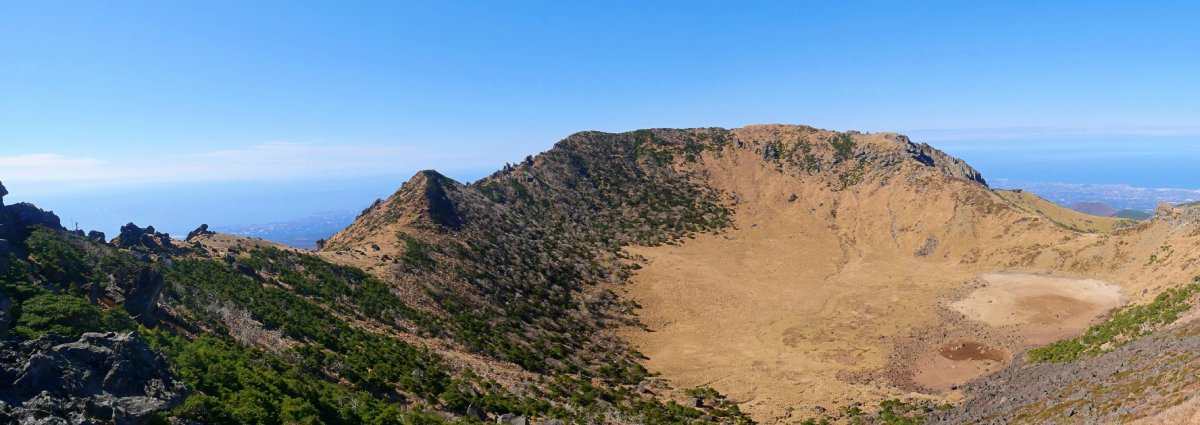
Hallasan, which looms over the island, is among Jeju’s primary draws. Standing at 1,947 meters tall, it ranks as the tallest mountain in South Korea. Encircled by walking paths that traverse lush forests, volcanic rock formations, and highland grasslands, this peak provides hikers with breathtaking views of the entire island and, weather permitting, expansive ocean vistas. Atop the summit lies a crater known as
Baengnokdam
is home to a lake that becomes full after the rainy season, imbuing this already captivating scenery with an air of mystique.
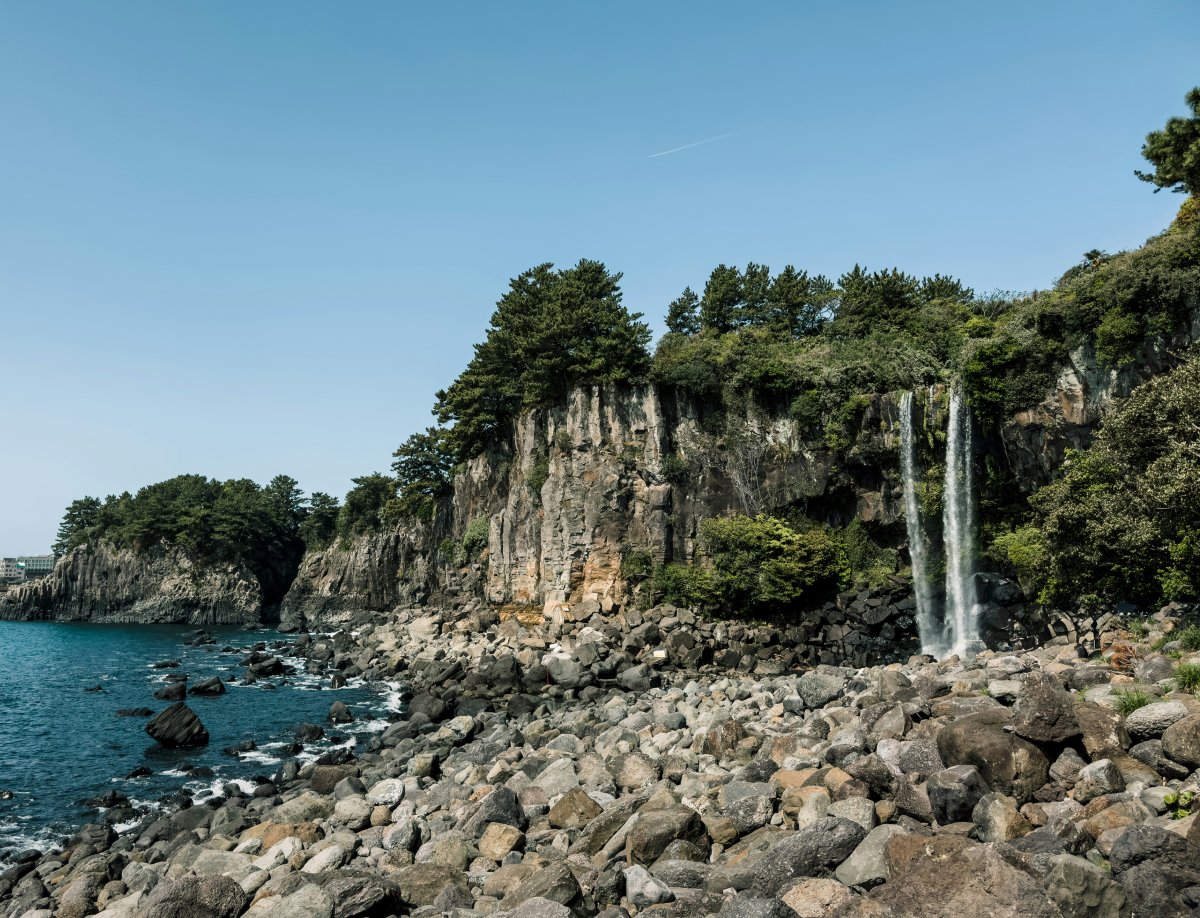
Jeju is renowned for its numerous waterfalls dispersed across the island, providing distinct experiences. The most well-known include
Cheonjiyeon
and
Jeongbang
:
-
Cheonjiyeon, translating to “the pond where heaven meets earth,” is a serene location enveloped by dense foliage.
-
In contrast, the Jeongbang waterfall stands out as it cascades straight into the sea, producing a spectacular natural display.
These waterfalls not only marvel with their natural beauty but are also imbued with local legends that add an extra layer of enchantment for visitors.
The island’s beaches are as diverse as they are beautiful. Among them:
-
Hyeopjae Beach
, featuring pristine white sands and crystal-clear turquoise waters.
-
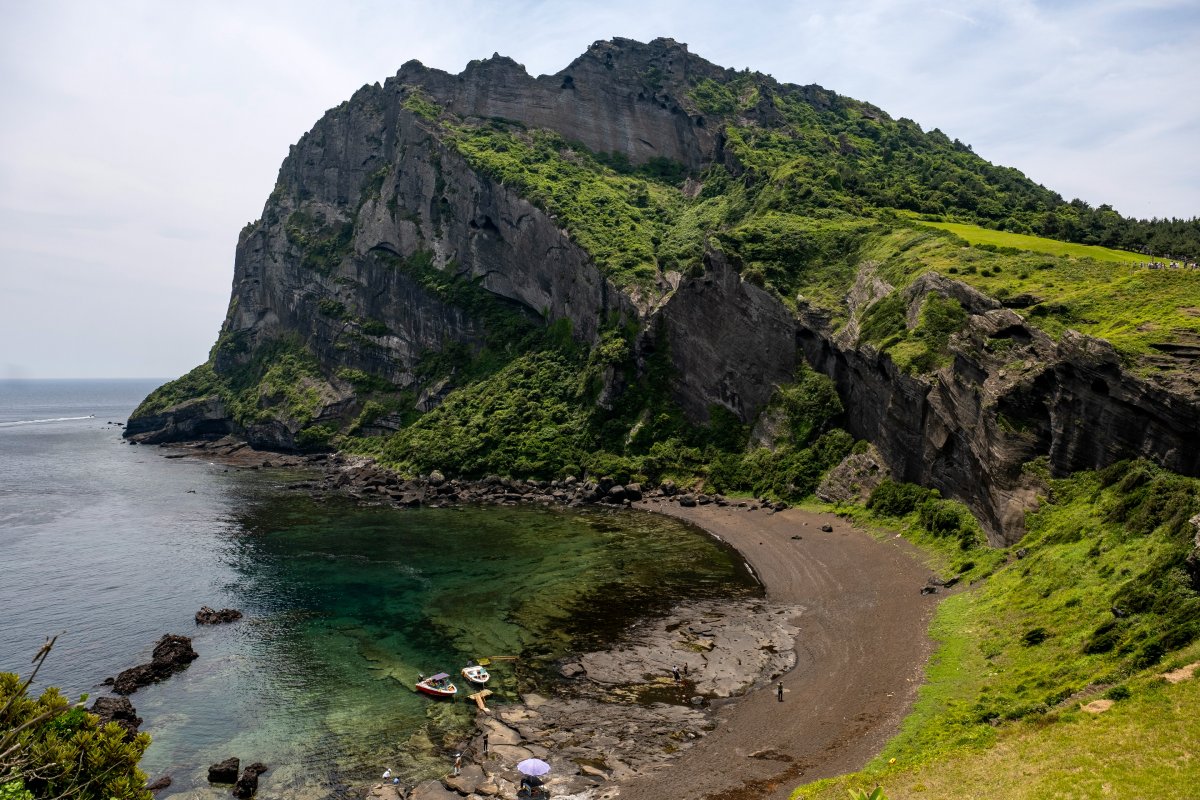
Seongsan Ilchulbong Beach
, featuring its dark volcanic sands, providing a dramatic contrast against the azure ocean waves. The site owes its name to Seongsan Ilchulbong, commonly referred to as “Sunrise Peak,” a majestic coastal volcanic crater towering over the water.
For enthusiasts of geology,
Manjanggul Cave
It stands as one of the most extensive lava caves globally, extending for more than 13 kilometers. This subterranean marvel, featuring remarkable lava structures and vibrant hues, adds another compelling reason to visit Jeju Island.
Jeju Island on foot…
For those who love hiking and walking,
the Olle paths
meander alongside the coastline, weaving past quaint villages and untouched natural scenery of the island. Drawing inspiration from the renowned Camino de Santiago pilgrimage paths, these pathways provide
complete engagement with Jeju’s natural and cultural splendor
Each Olle route is distinct, varying from leisurely walks beside the ocean to strenuous treks over volcanic peaks. As you journey on, you’ll traverse citrus orchards, pine woods, rocky fences, and quaint villages where life appears frozen in time.
Jeju is also a haven os biodiversity, and
the Seogwipo Botanical Garden
This garden serves as a prime illustration of the island’s abundant natural resources. As one of the biggest in Asia, it houses an extensive collection of subtropical flora, themed gardens, and glasshouses. Here, nature reaches its pinnacle of beauty and diversity.
…and through its culture, merging the old with the new.
Jeju is more than just a haven of natural splendor; it is also
a land brimming with culture and heritage
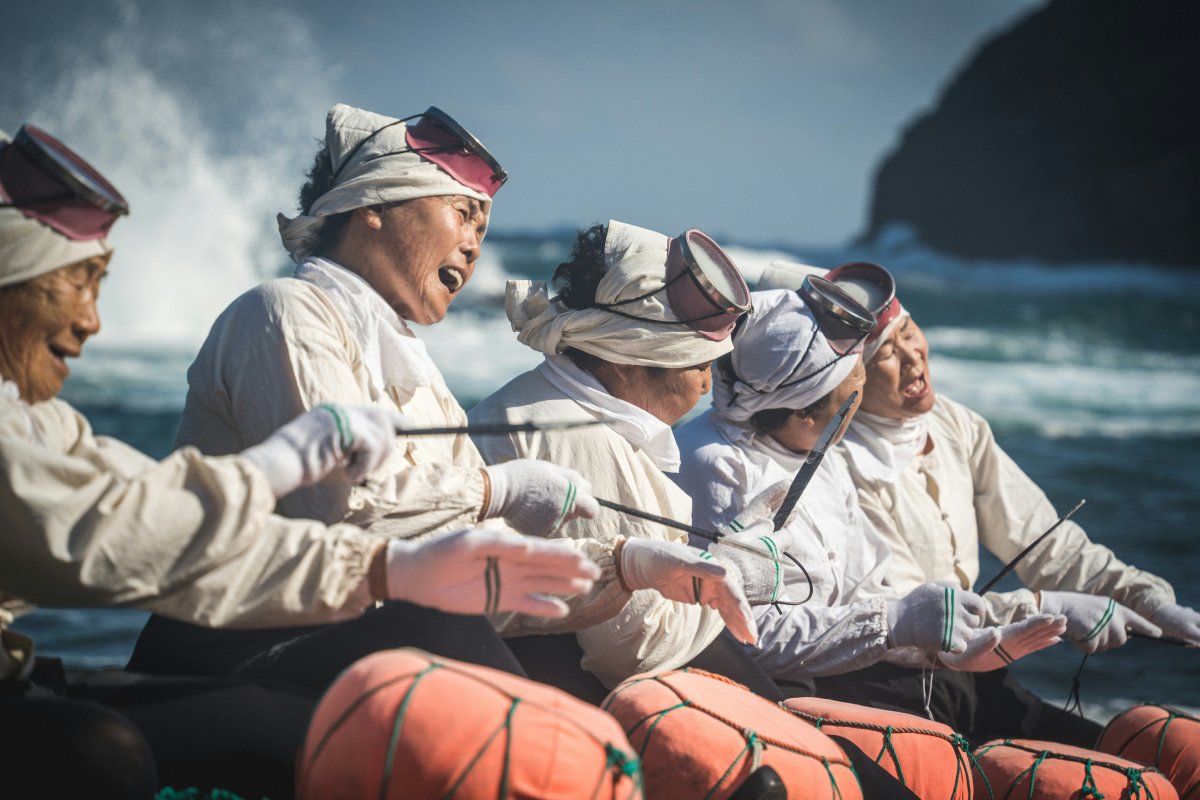
One of the most distinctive customs is that of the
Haenyeo
Free divers, frequently elderly individuals, harvest marine life without relying on oxygen tanks. Recognized by UNESCO as an Intangible Cultural Heritage, this practice stands as a testament to the resilience and self-reliance of Jeju Island’s female population.
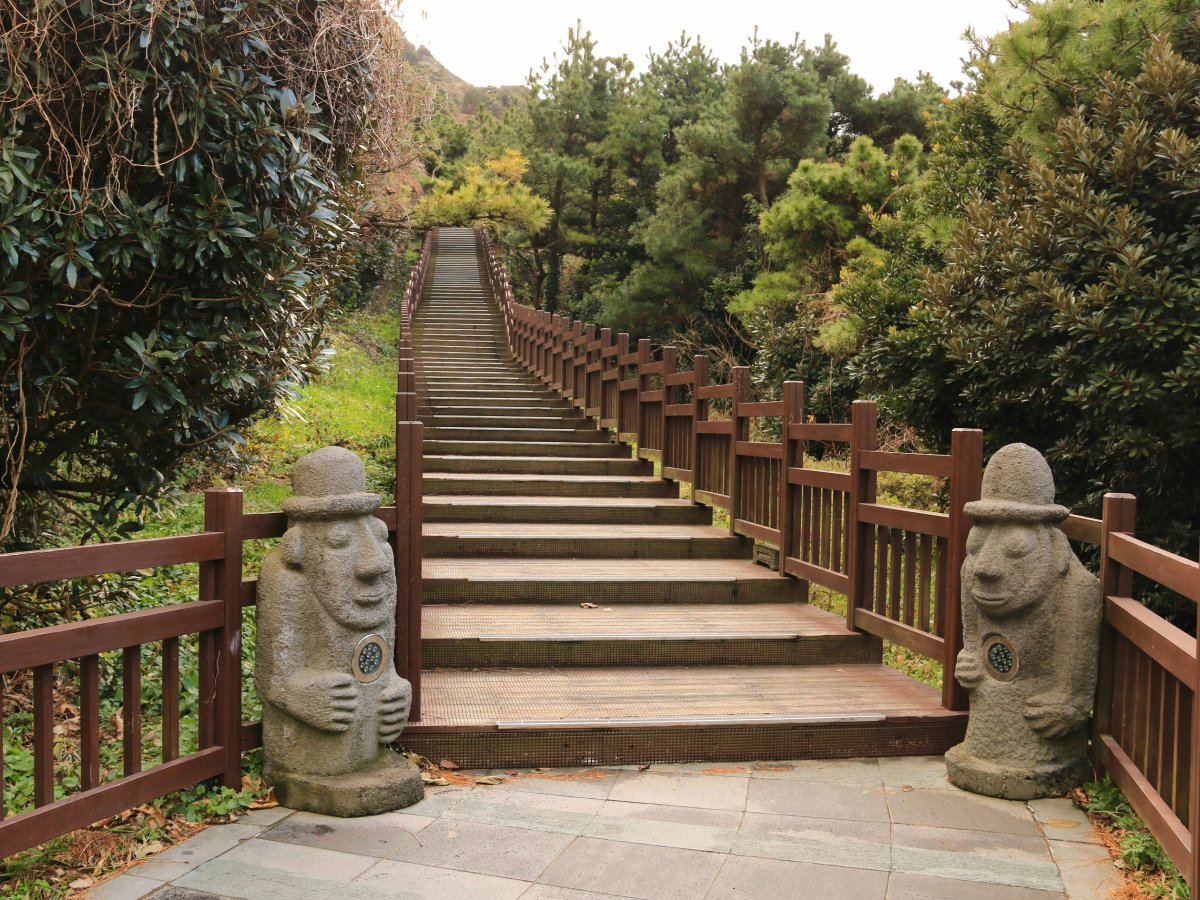
The island is equally renowned for its
Dolhareubang
, enigmatic stone statues depicting males, commonly called “stone grandfathers.” Dispersed throughout the island, these sculptures are believed to be protectors, safeguarding residents against malevolent spirits.
by admin | Jul 28, 2024 | adventure travel, islands, maldives, travel destinations, travel in maldives
The Indian Ocean, known for its crystal-clear waters and pristine shores, hides numerous lesser-known gems. Beyond popular spots like the Maldives and the Seychelles lie secluded islands where nature dominates and travelers can experience an exceptional sense of peace. Below is a collection of these off-the-beaten-path havens ideal for a dramatic shift in ambiance!
Rodrigues Island (Mauritius)
Rodrigues, the smaller sibling of Mauritius, remains mostly untouched by large-scale tourism. Situated 560 kilometers east of Mauritius, this island provides an unspoiled environment and a quaint countryside ambiance. It boasts crystalline waters, enhancing its appeal for those seeking authenticity.
lagoons
The verdant rolling hills and unspoiled sandy shores create the perfect sanctuary for finding peace within nature. Be sure to visit the François Leguat reserve, home to massive tortoises, as well as explore the numerous hiking paths meandering through the fertile valleys.
The island of Nosy Komba ( Madagascar )
Located not too far from northwest Madagascar, Nosy Komba—also known as Lemur Island—is a tranquil oasis brimming with biodiversity. This petite volcanic island features shores bordered by dense mangroves, charming fishing communities, and lush rainforests teeming with lively lemurs. The waters around Nosy Komba provide excellent opportunities for diving enthusiasts, showcasing vibrant and thriving coral gardens.
La Digue Island (Seychelles)
Even though La Digue is part of the Seychelles, it stays largely free from mass tourism when compared to Mahé or Praslin. This island offers a captivating experience, featuring stunning white sand beaches such as Anse Source d’Argent, which is renowned globally for its beauty. On this tranquil haven, transportation primarily consists of bicycles and ox-carts, maintaining a serene and unspoiled ambiance.
Alphonse Island (Seychelles)
Alphonse, an isolated atoll in the
Seychelles
is a secluded haven accessible solely via a private flight from Mahé. Ideal for avid fly-fishers and scuba divers, this tropical gem offers expansive lagoons, unspoiled shores, and an extraordinarily biodiverse marine environment. Alphonese promises an idyllic retreat for those seeking harmony with nature alongside opulent comfort and privacy.
Pemba Island (Tanzania)
Pemba, which forms part of the Zanzibar archipelago in Tanzania, remains off the beaten path for most travelers. Known as the Green Island because of its abundant flora, Pemba boasts untouched shorelines, thick woodlands, and exceptional dive spots. This island serves as a vibrant hub of Swahili heritage, featuring quaint villages and lively marketplaces. Ideal for visitors looking to experience genuine and untainted Tanzanian charm, Pemba provides a true escape from typical tourist paths.
by admin | Jul 10, 2024 | beaches, islands, tourist attractions, vietnam, world
Located in southern Vietnam, Phu Quoc Island resembles a small slice of heaven. Often referred to as the “Jade Island” due to the lush forests enveloping its pristine white sand shores, this destination serves as an ideal retreat.
Over the past few years, Vietnam has successfully kept pace with fellow Southeast Asian nations like Thailand and Indonesia in terms of tourism appeal. Its advantageous location provides easy access as it shares boundaries with China to the north and Laos and Cambodia to the west. This geographical placement attracts visitors globally. Beyond its rich historical legacy spanning millennia, stunning temples, and picturesque terraced rice paddies, Vietnam offers idyllic island getaways for exploration. Of particular note is Phu Quoc Island, which stands out as our top pick amongst them.
Want to discover
Vietnam? Here are
a few pieces of content to assist you in organizing your travel plans
:
-
Explore the top stunning snorkeling locations in Vietnam
-
6 Must-try Vietnamese dishes for your upcoming journey
-
If you’re planning your first trip to Vietnam, which city should you see first: Hanoi or Ho Chi Minh City?
-
Vietnam: Essential places to visit in this South-East Asian nation
-
Which are the most stunning islands in Vietnam?
An island
with an air of
paradise
Boasting an area of 567 square kilometers, Phu Quoc stands as Vietnam’s biggest island. Situated in the Gulf of Thailand, approximately 400 km southwest of mainland Vietnam, it claims the title for the world’s longest cable car system. Its unspoiled white sand shores, crystal-clear waters, and dense tropical forests create a paradise-like atmosphere akin to a deserted island. This idyllic setting offers ideal conditions for relaxation, swimming, hiking, and exploration.
snorkelling
.

In the northwest part of the island lies one of the nation’s loveliest national parks, designated as a UNESCO World Heritage Site. This park houses approximately 1,000 plant species and around 200 animal varieties. It serves as an ideal destination for hiking enthusiasts. For those seeking adventure, climbing to the summit of Mount Nui Chua, known as the highest point in Phu Quoc, offers breathtaking views. From up there, visitors can admire panoramic vistas of rolling hills covered with forests, rugged mountain chains, and distant seas glistening under the sun.
The most stunning shores on Phu Quoc Island
Although every beach on Phu Quoc boasts remarkable charm, certain ones distinguish themselves from the others. Below are only a handful of these exceptional locations.
Cua Can beach
To the north of Phu Quoc, about 11 kilometers from Duong Dong, lies a pristine and wild beach. Its uniqueness stems from its location where the Cua Can River meets the sea; visitors can traverse the river using unstable wooden bridges here.
Ong Lang beach
This beach likely ranks among the top spots for admiring the island’s gorgeous sunset. Its vibrant coral reefs in multiple colors draw scuba divers to Ong Lang as well. It’s a enchanting location and an essential visit.
Rach Vem beach
Situated in a quaint fishing hamlet up north, Rach Vem Beach offers a tranquil escape composed purely of pristine white sands, crystal-clear waters, and an abundance of starfish scattered along the shoreline. This secluded locale is perfect for those seeking peaceful moments as they dip their toes into the gentle waves.
Sao Beach (also known as Bai Sao)
To the southern part of the island lies Sao Beach, which offers another wonderful opportunity for exploration. Spanning 7 kilometers with pristine white sands, this picturesque coastline is bordered by swaying coconut trees. As evening falls, countless starfish make their way onto the shore—an incredible spectacle to witness.
Additional activities available on the island include
by admin | Jun 26, 2024 | hiking, islands, outdoor activities, tourist attractions, Travel

There’s a magical pond located in
Ballaglass Glen
Carved deeply into the old flagstones, surrounded by oak, larch, and beech trees, it’s nourished by a waterfall, sparkling with beams of light, and likely conceals something secretive.
mooinjer
veggey
– Manx Gaelic term for the mythical “little people.” As I slipped my weary legs into the freezing-cold water, I experienced a surge of excitement.
It was the most splendid day as I took on my first of the island’s eight newly developed areas.
summit walks
; Among these medium-to-challenging routes, 25 out of the Isle of Man’s 300-metre-plus peaks have been conquered. Despite its modest size—only stretching 33 miles long and 13 miles wide at its furthest extents—the island boasts ample rough landscapes and rewarding ascents.
According to Kate Bergquist, who serves as a walking ambassador for the Isle of Man and founded Soul Adventures, there lies unexplored adventure. She assisted in organizing these summit hikes with the aim to lure trekkers away from coastal paths, demonstrating that the island offers much more than just leisurely tours and seaside strolls. “The highlands present quite a contrast,” she explains to me. “From here, you can enjoy expansive vistas encompassing all seven realms: England, Ireland, Scotland, Wales, Mann, Sky, and Sea.”
I had boarded a ferry from Liverpool to the island with the aim of proving that I, as a woman, could conquer Man without using a car within just three days. On the first day, during my journey, I encountered Kate onboard the ferry.
Snaefell Mountain Railway
— which has been cheerfully ascending to the island’s 620-meter peak since 1895 — was a success. The wind was persistent, yet the sky remained clear and blue as we departed from the train tourists heading into the seven-mile stretch.
northeastern summit five-peak challenge
Route. “She’s quite ripe,” Kate smiled.
We looked at all of it: the smooth northern plains, the canyon-scarred south, the deep green waves of the Irish Sea, and the far-off Lake District.
We were tracking along an unoccupied, wave-like crest, heading towards a pointed destination.
North Barrule
— At 565 meters, this is the island’s second-highest summit. During our walk, we discussed various topics ranging from the reintroduction of Manx-language place names on maps to the Moddey Dhoo, a legendary black dog believed to haunt the area. We enjoyed some food as well.
Manx
bonnag
, the tastiest spiced soda bread. We looked out at every view: the vast expanse of the north plains, the canyon-scarred south, the dark waves of the Irish Sea, and the far-off Lake District.
Kate is enthusiastic about how spending time in natural settings can positively impact mental well-being. “Nobody has ever felt worse after taking a stroll in the woods,” she stated confidently as we made our way down through the ferns towards Ballaglass. “Cold water—there’s nothing more potent.”
I definitely felt great after the entire adventure, which concluded with me giving Cornaa, an unofficial stopping point close to the glen, a thumbs-up before cheerfully returning to Douglas via the island’s electric train.
My schedule for day two involved covering a portion of the 10-mile route.
central east summits
The route begins with a brief taxi journey from Douglas. However, our attempt started poorly as my driver overlooked the trailhead—an unsettlingly named spot.
Windy Corner
— Due to the heavy rainfall and clouds obscuring the highland characteristics. He turned around, and I ventured out into a demoralizing thick fog. Questioning my choice, I set off across an expansive, pathless moor, sinking knee-deep into damp tufts of grass.
As the clouds briefly parted, I noticed ravines extending to one side. Trusting my OS map, mobile app, and perhaps some divine intervention, I reached a wooden gate set within a stone fence. A short stretch of charming forest lifted my spirits momentarily before I carried on, quickly merging onto an expansive, well-defined path. However, the ground beneath me remained rough and jagged, with rain pouring heavily, pushing the boundaries of what could be considered mildly enjoyable activity. Upon reaching the 546-meter-high Beinn-y-Phott—though I couldn’t spot it—I opted out, heading towards the mountain road where I had to dodge wet patches and vehicles until arriving at Bungalow station drenched and disheartened. From there, thoroughly soaked and beaten, I boarded the mountain train back down to Laxey.
Kate mentioned to me that out of the eight hikes, her favorite was the 12-mile one.
southwestern peaks and Niarbyl coastline
path, which I had dismissed due to its difficult accessibility. However, coincidentally, this route turned out to be available.
bus
from Douglas to tiny
Niarbyl
The following day, I figured I might as well take a slight detour and include some coastal paths to get to the small seaside town of Port Erin, which would make the journey about 15 miles long; assuming everything went smoothly, I’d return to Douglas via the historic 150-year-old steam railway, feeling quite victorious. When I asked for Kate’s opinion, she responded with, “Epic plan.”
On Saturday morning, with the sunlight beaming down, I got on a bus traveling around the island. There was just one more traveler who mentioned his intention of hiking at Niarbyl too. He went on to share details about the yearly Parish Walk—a grueling 85-mile race covering every church on the island, which has been happening every June since the mid-19th century. It turned out he had triumphed in this event before. We reached our stop by the ocean where the road ended, exchanged good wishes, and then he quickly drove away. Taking my own sweet time, I proceeded onward.
Kate was right. The path we took was spectacular. Initially, I went north via the roadway, then passed through fragrant gorse and bracken. At the point where Glen Maye’s mouth joined the shore, I continued along the valley as it wound inward; lush, babbling, narrow, and twisty, ending with a hidden cascade plunging down—a scene even more enchanting than Ballaglass. Further ahead,
Glen Maye
I followed a path next to a narrow stream, with the sunlight shimmering on the water stained reddish-brown and catching the rainbow-like wings of damselflies.
The Hill of the Day Watch is where locals used to keep an eye out for Viking raiders.
The climb up to the 483-meter-high South Barrule was brief but challenging, forming an out-and-back route. Eager to complete it after tackling its northern counterpart, I set forth. South Barrule served as a Celtic Iron Age hillfort; archaeological digs revealed numerous remnants of roundhouses within its bounds. On sunny days, the expansive view from atop makes evident why this location held significant tactical importance.
I went downhill and soon after started climbing up another hill to reach the 437-meter-high Cronk ny Arrey Laa (Hill of the Day Watch). This place used to be where locals watched for Viking ships. Nowadays, it’s great for observing nesting birds and enjoying panoramic views of the rugged western coastline. The trail was supposed to head north toward Niarbyl from there. However, I decided to go my own way and turned south with the aim of reaching Port Erin and taking in more scenery along the way.
Raad ny Foillan
the route that circles along the shoreline of the island.
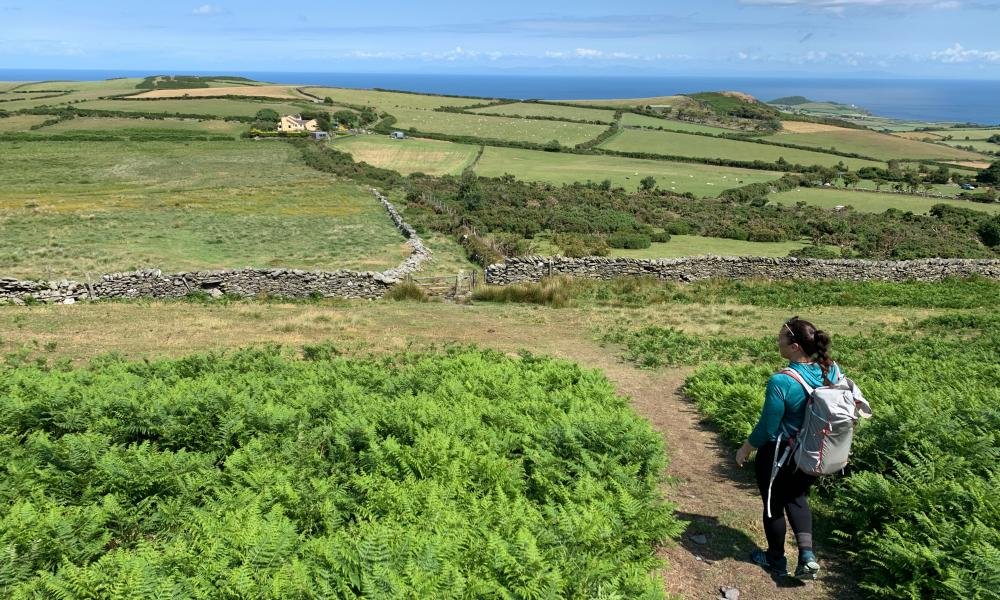
It wasn’t easy. The southwestern part of the Isle of Man boasts the island’s tallest and rockiest shores—steep, dramatic, and awe-inspiring. I struggled through thick vegetation and hauled myself uphill, feeling my calves strain. Yet when I looked up, I saw a shimmering expanse of silvery water stretching as far as Ireland;rabbits darting about and seagulls circling overhead;cliffs rising sharply, slanting, plunging, and climbing skyward.
Ultimately, the 19th-century battlements of
Milner’s Tower
famous for Port Erin Bay. After about another mile, I reached the town’s crescent-shaped sandy shore, sipping a chilled beer from the beach bar.
I examined the destruction: broken branches, hair tousled by the wind, an uncertain smell. Yet, still alive — and humming with activity.
The journey was supplied by
visitisleofman.com
.
Mannin Hotel
In Douglas, the B&B offers double rooms starting from
£105pn
.
Soul Adventures
arranges escorted tours, outdoor swimming, and various other activities.
Liverpool-Douglas
foot-passenger returns from £
52 pp. Ferries also operate from Heysham and Belfast.


