
by admin | Mar 25, 2025 | business, commerce, money, news, Travel
Malaysian enterprises are seeing a notable increase in QR payments from tourists due to inter-country QR payment systems made possible through
DuitNow QR
. As Payments Network Malaysia Sdn Bhd (
PayNet
) and Ant International entered into a partnership with
cross-border payment acceptance agreement
When visitors travel to Malaysia, they can enjoy a smooth payment process since they have the ability to scan DuitNow QR codes with their personal e-wallet applications from abroad.
Alipay+ network
.
In marking the completion of their initial collaborative year, Paynet and Ant International revealed that the international QR partnerships facilitated significant economic prospects for Malaysian small and medium-sized enterprises (SMEs). During this time, Alipay+ accounted for over 80% of cross-border incoming QR transactions through DuitNow. The partners also noted that from December 2024 onwards, revenues for local businesses surged sixfold relative to the corresponding timeframe in 2023.
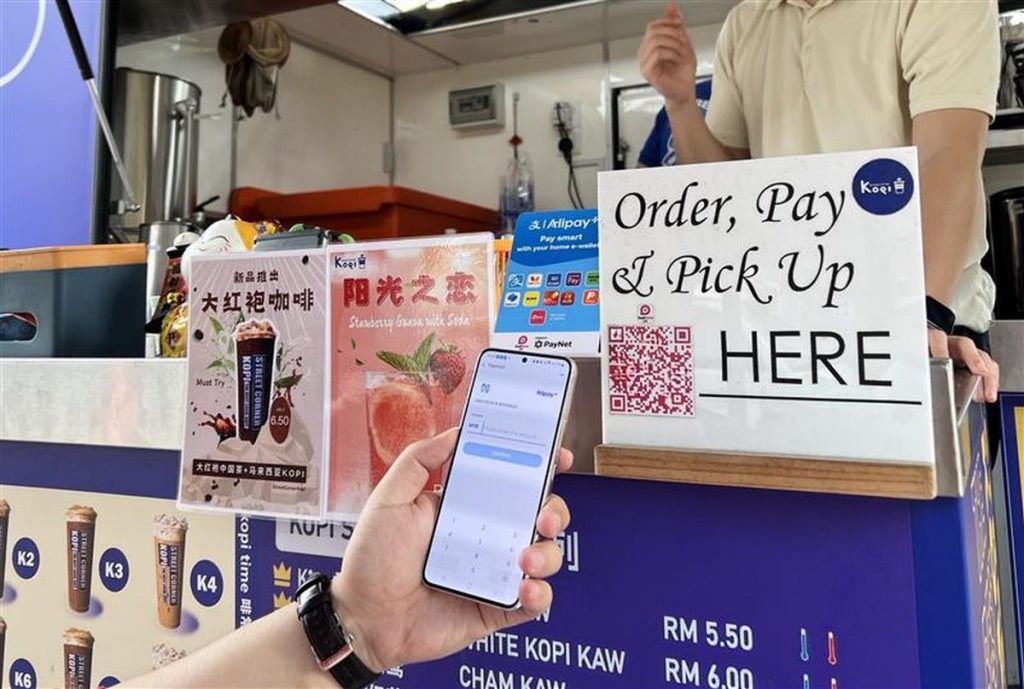
Due to the cross-border arrangements facilitated by Alipay+, tourists from
10 countries and regions
can now use their personal payment applications for payments at over
2.5 million DuitNow QR access points established across Malaysia
By merely scanning the pink DuitNow QR code. It was mentioned that the volume of Alipay+ transactions via DuitNow QR has reportedly increased on average.
rose by 50% sequentially in 2024
, making Alipay+ the largest driver of cross-border inbound QR payments in Malaysia.
Currently, users of Alipay+ partner e-wallets and banking applications can make payments using the DuitNow QR code as follows:
-
Alipay (Chinese Mainland)
-
AlipayHK (Hong Kong SAR, China)
-
MPay (Macao SAR, China)
-
TrueMoney (Thailand)
-
KBank (Thailand)
-
Changi Pay (Singapore)
-
Hipay (Mongolia)
-
HelloMoney (The Philippines)
-
GCash (The Philippines)
-
Tinaba (Italy)
-
Kaspi (Kazakhstan)
-
BigPay (Singapore)
-
BigPay (Thailand)
-
Kakao Pay (South Korea)
-
Naver Pay (South Korea)
-
Toss (South Korea)
Tourism Malaysia reports that more than 25 million tourists visited the nation in 2024, with ambitions to reach 35.6 million as part of the Visit Malaysia initiative set for 2026. The widespread adoption of DuitNow QR among merchants allows travelers to easily make payments through their preferred apps throughout the country. Additionally, the use of Alipay+-enabled applications surged fivefold during the fourth quarter of 2024 compared to the previous year. Key locations seeing high utilization rates encompass Kuala Lumpur, Malacca, Penang, Johor Bahru, and Kota Kinabalu.
Gary Yeoh, the Chief Marketing Officer at PayNet, stated, “Being Malaysia’s national payments network, PayNet is dedicated to developing an open and smooth payment environment that allows businesses to flourish.”
He stated, “The collaboration with Ant International has greatly improved cross-border payment options for our local businesses, enabling them to cater to the increasing number of tourists worldwide. Thanks to Alipay+, DuitNow QR is now giving small and medium-sized enterprises the ability to expand internationally, thereby strengthening Malaysia’s status as a top choice for both tourism and retail.”
In the meantime, Edward Yue, the Regional General Manager of Ant International for Southeast Asia, Australia, and New Zealand, stated, “Through Alipay+, we provide local enterprises with access to a worldwide customer base, fostering broader economic inclusion within their communities. PayNet has established both the necessary infrastructure and strategic alliances to facilitate these connections, and we’re thrilled to partner with them to integrate international users into this system. This is only the beginning; over the coming years, our collaboration could lead to significant advancements, cementing Malaysia’s status as a leading global travel destination and boosting prosperity among Malaysian companies.”
by admin | Mar 25, 2025 | investing economy, investors, money, real estate, real estate market
Throughout history, happiness has consistently been humanity’s primary aim, achieved through a thriving economy. A robust and prosperous economy increases people’s contentment, ensures their satisfaction, and enables them to fulfill essentials like housing, clothes, sustenance, and other obligations. As a consequence, governments worldwide embrace an economics model focused on welfare, where every financial, societal, and governmental structure strives toward this objective—a concept that resonates deeply with utilitarian ideals aimed at enhancing overall community wellbeing. Utilitarians support endeavors promoting happiness and discourage those causing distress.
Sustaining a vibrant economy demands considerable skill and commitment from tax officials and banking regulators alike. It should come as no surprise that Nigeria’s economy faces persistent structural issues and foundational problems. Over time, the nation’s finances have suffered due to various government strategies. Describing today’s economy as anything but sound wouldn’t be amiss, considering current conditions marked by escalating inflation eating away at buying power and trust among consumers; soaring joblessness rates; increasing levels of destitution; and significant discrepancies between imported goods versus exported ones.
The current government’s economic policies have worsened inflation. To address this issue, they implemented a strict yet essential measure by eliminating the fuel subsidy, which unexpectedly led to increased inflation and widespread food shortages. The primary concern for many individuals today is figuring out how to endure these financial upheavals—how and when will things improve? Despite ongoing economic difficulties, certain fortunate citizens manage to save extra funds or earn sufficient income to allocate towards investments after covering their basic expenses.
This article aims to assist potential investors and inform the general populace about why investing in real estate might be preferable over purchasing stocks. Several Nigerian investors from previous years lost everything due to stock market losses; meanwhile, those who chose property saw their assets appreciate significantly through rental incomes and rising values. Property investment stands as one of the safest options available because your asset remains valuable unless civilization collapses entirely. While returns on real estate aren’t always spectacular depending on factors like location and quality, they remain reliable, steady, and almost foolproof.
The purpose behind your investment dictates what kind of investment would suit you best. For short-term gains within one or two years, property investment isn’t advisable; however, it’s ideal for those looking towards long-term prospects. Should you aim for capital appreciation or steady streams of revenue, perhaps even leaving something valuable for your offspring, then property investment should definitely be considered. Rest assured, once committed to property investments, both your initial capital and overall investment remain protected indefinitely. With real estate, stability goes hand-in-hand. There’s virtually zero risk of losing these funds down the line. Essentially, putting money into real estate inherently suggests safety—tangible assets that you can physically hold onto, observe grow over time, and eventually transfer as legacies.
Investments in properties are likely to increase in value over time. Realty isn’t just associated with stability—it’s also linked to sustained profit-making opportunities. Property assets serve as protection against inflation since property prices generally follow an ascending trend. Additionally, these investments offer consistent earnings streams for owners and often match or surpass inflation rates through asset appreciation. Returns from realty aren’t fixed—they usually escalate annually alongside inflation levels. Many family dynasties owe their accumulated wealth to such holdings.
From cities across continents—Europe, North America, Asia—to various regions worldwide, urban landscapes have been reshaped largely due to developments in real estate. Yet, investing in this sector involves managing numerous elements, particularly within intricate markets like those found in countries such as Nigeria. Crucial aspects include pinpointing strategic locations: where you invest significantly influences outcomes. Whether situated in thriving downtowns equipped with planned facilities or developing neighborhoods poised for expansion, sites experiencing swift economic boosts typically generate superior yields.
A significant concern for investors to monitor closely is economic patterns and shifts. The real estate sector is intricately tied to the economy. For example, Nigeria’s economy has faced numerous ups and downs, including periods of recession and issues with security. These elements contribute to volatility within the economy, which subsequently impacts the real estate market—altering both property values and rental yields. Therefore, investors should pay close attention to the broader economic climate, carefully assessing when it might be prudent to exit investments versus holding onto them. Additionally, the legislative structure plays an essential role; robust regulations provide assurance and protection for all stakeholders involved.
Olaposi is an estate surveyor and appraiser located in Lagos.
SEE ALSO: Nigerian Real Estate Attracts Investors—Analysts
Get real-time news updates from Tribune Online! Follow us on WhatsApp for breaking news, exclusive stories and interviews, and much more. Join our WhatsApp Channel now
Provided by Syndigate Media Inc. (
Syndigate.info
).
by admin | Mar 25, 2025 | bank accounts, financial literacy, money, money management, personal finance
TEMITOPE AINA outlines 12 crucial tips for maintaining your bank account effectively, ensuring financial stability, preventing avoidable charges, and optimizing the advantages provided by banking institutions.
Effectively managing a bank account is crucial as numerous individuals grapple with bad banking practices, resulting in overdrafts, high fees, and financial troubles.
By gaining proficiency in managing bank accounts, people can have complete oversight over their financial resources and make sure their funds are contributing positively instead of negatively.
The contemporary banking sector has moved past conventional branch-based interactions, with online and mobile banking becoming predominant in financial services. Although this shift offers greater convenience, it necessitates increased personal responsibility when tracking one’s finances. Regardless of whether you’re a student, a working individual, a business owner, or retired, mastering the art of managing your bank account effectively is essential for sustaining healthy finances. Therefore, it’s vital to adopt these tips:
Selecting the appropriate bank for your monetary requirements
Choosing the appropriate bank serves as the cornerstone for successful bank account management. Various institutions provide different kinds of accounts each boasting distinct perks and attributes. Certain banks target students and newcomers to the workforce offering them accounts with minimal charges, whereas others concentrate on affluent clients providing exclusive banking options. In making your selection, ensure you evaluate aspects like transaction costs, convenience, support from customer service, and the variety of monetary offerings at hand.
Bank fees and charges can substantially affect your financial situation. Various institutions impose monthly service fees, ATM usage costs, overdraft fines, and transaction expenses. Therefore, it’s crucial to select a banking option with minimal or zero fees, particularly if you anticipate making numerous transactions. Carefully examining these cost structures prior to setting up an account might prevent unforeseen reductions that could reduce your available funds.
When choosing a savings account, the interest rate is an essential factor to consider. A financial institution offering higher interest rates enables your funds to increase gradually. Certain banks may offer extra investment opportunities like fixed deposits, treasury bills, and mutual funds, aiding in generating passive revenue. Grasping the various interest rates and possible returns from these saving alternatives helps optimize the advantages of your banking services.
The accessibility of digital banking options is also an essential aspect. A financial institution equipped with a user-friendly mobile banking application and website enables clients to effortlessly view account balances, execute fund transfers, settle bills, and keep track of their transactions. Additionally, banks that implement robust security features like two-step verification and theft notifications add an additional layer of defense against unauthorized activities.
Monitoring your financial activities
Regularly monitoring your financial activities is crucial for maintaining control over your monetary situation. A common oversight many individuals commit is believing that having funds available means there’s no necessity to routinely review bank statements. Nonetheless, consistently recording entries like deposits, debits, and various dealings aids in spotting discrepancies, fraudulent actions, and unauthorized fees.
A great method for tracking your financial activities is through mobile banking applications. Such tools offer instant notifications regarding account actions, enabling you to track deposits and withdrawals promptly. Additionally, configuring alert preferences sent either as emails or texts ensures continuous awareness concerning modifications in your account status. Should you identify any unusual behavior, contacting your financial institution right away is crucial.
Keeping track of transactions by examining monthly bank statements helps ensure consistency between your financial records and actual activities. Mistakes like double charges, wrong deductions, or unauthorized actions might happen occasionally; tackling these issues promptly can help avoid monetary setbacks.
Configuring automated bill payments and savings transfers
Streamlining payments and savings can significantly enhance your management of a bank account. Numerous financial institutions provide features for automated billing, enabling clients to settle regular costs like rent, utility bills, and subscription services effortlessly without having to handle each transaction individually. Such automation guarantees timely bill payments, thereby minimizing the chances of overdue charges or interruptions in service.
Automated saving tools assist people in setting funds aside for upcoming objectives with minimal ongoing involvement. Numerous financial institutions enable clients to arrange routine transfers from their checking accounts into savings accounts either every week or each month. This simplifies consistent saving and reduces the urge to dip into primary spending balances.
People looking to invest can use automated banking services that let them put small sums into stocks, bonds, or mutual funds at regular intervals. This method helps build wealth steadily over time without the hassle of constantly deciding where to invest.
Steering clear of overdrafts and avoidable charges
An overdraft happens when someone withdraws or spends more money from their bank account than what they actually have, leading to a deficit balance along with extra fees. Preventing these unwanted costs involves regularly checking your account balance and confirming you have adequate funds prior to spending. Certain financial institutions provide overdraft protection services; this feature connects either a linked savings account or a credit facility to the primary account as a safeguard against lacking funds, thus minimizing potential fines.
Extraneous charges like ATM withdrawal fees, foreign transaction fees, and paper statement fees can accumulate over time. Reducing these expenses can be achieved by using ATMs from your own bank’s system, choosing electronic statements rather than physical copies, and steering clear of international transactions when not essential. Understanding the various fees tied to different activities aids in making well-informed monetary choices.
Protecting your bank account from scams
The rise in bank fraud and cybercrimes highlights the importance of safeguarding your bank account against unauthorized entry. A key method to boost protection is through robust password usage along with activating two-step verification for internet banking services. Steer clear of weak passcodes like birthdates or straightforward numeric patterns, and ensure you change these periodically.
Common strategies employed by scammers include sending deceptive emails or texts that mimic communications from banks. These phishing attempts aim to obtain your financial data. Protect yourself by refraining from disclosing banking details via email or telephone unless you’ve confirmed the authenticity of who you’re communicating with. Legitimate banks will not ask for confidential information through unexpected messages; thus, always approach such inquiries with skepticism.
Frequently checking your account activities and enabling fraud alert services can aid in spotting dubious transactions at an initial stage. Should you identify an unauthorized transaction, promptly informing the financial institution may stop additional monetary loss. Many banking institutions provide options for provisional account blocks or card-lock mechanisms, which permit clients to halt payments when they suspect fraudulent behavior.
Effectively planning your budget and controlling costs
Effective budgeting is essential for successfully handling your bank account. Lacking a detailed plan makes it simple to exceed planned expenditures and have trouble controlling costs. Monitoring earnings and organizing expense behaviors enables people to make educated choices about finances. Numerous banks include budget management features in their smartphone applications, offering analytics on spending trends and recommending methods to cut down on expenses.
Establishing spending caps for various costs helps ensure that funds are used judiciously. Assigning a portion of your earnings to necessities like rent, groceries, and transit, along with setting some aside for saving and investing, fosters a systematic method for handling cash flow. Regularly examining and tweaking these budget plans enables ongoing enhancement in fiscal stewardship.
Utilizing several bank accounts for various financial goals can improve your budgeting efforts. As an illustration, maintaining one account specifically for savings, another dedicated to everyday spending, and a third as an emergency fund helps keep finances neatly organized and minimizes the chance of over expenditure.
Periodically reviewing and adjusting your financial strategy
As personal finance objectives and requirements evolve with time, it becomes essential to regularly reassess and adjust your banking approaches accordingly. Fluctuations in interest rates, charges, and offered services might necessitate an evaluation of whether your present bank continues to cater to your evolving demands. By contrasting various financial entities and contemplating a potential switch when superior alternatives arise, you can ensure ongoing access to top-tier banking solutions.
Reviewing your saving and investing tactics ensures they stay aligned with evolving personal objectives. Boosting your contribution rates, investigating fresh avenues for investments, and establishing updated monetary aims foster sustained fiscal expansion. Keeping up-to-date with novel bank offerings like premium savings plans or linked-investment tools enables people to seize advantageous financial prospects.
Utilizing cashback and rewards programs
A number of financial institutions provide cashback and reward schemes designed to incentivize the use of debit or credit cards. By leveraging these programs, individuals have an opportunity to boost their savings and accumulate points or receive reductions on regular buys. It’s crucial, however, to be well-versed in the rules governing these initiatives so as to reap maximum advantages without going overboard with spending.
Grasping and enhancing your credit score
Having a solid credit score is crucial when you want to secure loans, mortgages, or various financial services. Keeping your bank account well-managed, ensuring timely bill payments, and steering clear of overdrafts all play roles in building a favorable credit record. It’s also beneficial to routinely review your credit reports and correct any inaccuracies to sustain a robust financial standing.
Utilizing several banking accounts for enhanced financial control
Maintaining distinct bank accounts for various monetary goals can enhance your financial control. By designating one account for everyday costs, another for saving, and a third as an emergency fund, you keep your finances neatly structured and minimize the urge to spend excessively.
Investigating investment options with your financial institution
A number of banking institutions provide various investment avenues like mutual funds, Treasury bills, and fixed deposits. Delving into these choices may assist in expanding your savings and accumulating wealth gradually. Gaining insight into the associated risks and possible earnings from each type of investment aids in making well-informed monetary choices.
Mastering a bank account demands discipline, meticulous financial strategy, and consistent oversight. Selecting an appropriate bank, logging all transactions, automatizing bill payments and deposits, sidestepping avoidable charges, fortifying accounts from scams, defining monetary objectives, and investigating potential investments enable people to attain fiscal security and enduring prosperity. Through this methodical process, managing finances evolves into more than mere storage; it transforms into a potent instrument for crafting a robust economic outlook.
Frequently refreshing your individual details with your banking institution
It’s crucial to keep your personal details current with the bank to maintain seamless banking processes and enhance security. Any modifications such as changes in your address, telephone number, email, or job position must be swiftly reported. This ensures you receive critical notices, account statements, and alert messages without any lag time.
Stale contact information may result in failed detection of fraudulent activities, unresolved financial transactions, or problems with account access. Moreover, should your debit or credit card expire or get misplaced, accurate contact data guarantees that new cards will be issued smoothly.
Regular updates are crucial for ‘Know Your Customer’ regulations, since banks often ask clients to confirm their identity. Not adhering to this can lead to limitations or pauses in account usage. Maintaining precise bank records guarantees smooth transactions, enhanced security, and constant availability of financial services.
Mastering a bank account demands precision, self-control, and smart financial strategy. Selecting an appropriate bank, monitoring transactions, setting up automated transfers and savings, sidestepping extra charges, protecting your account from scams, allocating funds prudently, and periodically assessing your monetary plan all contribute to achieving fiscal balance and expansion. Adopting this mindset transforms banking into more than merely holding cash—it turns it into a robust instrument for crafting a stable economic outlook.
Provided by SyndiGate Media Inc.
Syndigate.info
).

by admin | Mar 24, 2025 | food and drink, health, meals, meat, money
What defines an ideal banh mi? Should it overflow with meats, pâté, and cold cuts, or should it maintain a lighter, more balanced approach?
VnExpress
After the recent Banh Mi Festival in Ho Chi Minh City, readers shared their thoughts on their perfect version of a banh mi sandwich. At this event, certain well-known brands were charging up to VND73,000 ($2.85 USD) for a filled serving.
Reader
Hien Le Thanh
thought that a banh mi with such a high price tag was excessive:
A banh mi costing VND73,000 comes loaded with an abundance of meat and has a remarkably rich taste. It’s quite substantial for one person to consume entirely on their own. In my opinion, this particular banh mi mirrors others in terms of its composition. Personally, I favor a well-balanced stuffing accompanied by generous portions that should be served warm, crunchy, and aromatic.
Reader
Jen
added:
A VND73,000 banh mi, which is loaded with meat, has become quite famous. This sandwich was once favored by western travelers looking for bigger servings; however, nowadays, local youth also appreciate it. Despite this popularity, most individuals find they can typically consume just about one-third of the sizable banh mi due to its generous size.

|
|
At a store in Ho Chi Minh City, you’ll find two portions of a banh mi filled with cold cuts along with two levels of pate. The image was captured by VnExpress/Quynh Tran.
|
For reader
nguyendinhvu2010
, the ideal banh mi begins with its fragrance:
As you stroll by a banh mi cart, the blend of freshly baked bread, pâté, barbecue pork, and butter emits an enticing aroma that beckons you closer. When you grasp the sandwich in your hand, you ought to sense its warmth and listen for the crisp sound. However, the real delight comes with the initial bite—the harmony of sweet, salty, and creamy flavors renders every banh mi distinctively special.
Reader
Quang Nguyen
reminisced about his most memorable banh mi experience:
The finest version I experienced was in Da Nang. It boasted just the right size, featuring a touch of tartness and spiciness, along with a crunchy exterior, flavorful filling, and fresh herbs such as coriander, Thai basil, and cucumber.
Another reader,
Nguoi nhap cuoc
reminisced about a banh mi from decades past:
Those who resided in the vicinity of Thu Duc both prior to and following 1975 would recall an older gentleman with one blinded eye peddling banh mi using a bicycle equipped with a sizable wooden crate secured at the rear.
In those times, food was hard to come by, yet his banh mi remained consistently warm and crispy. His signature dish included pressure-cooked sardines swimming in rich tomato gravy. The more affluent customers would often buy an entire banh mi, whereas many others opted for only half due to cost constraints. Whether it was chilly outside or raining heavily at night, his banh mi was always a delightful find. To ensure freshness, he carried a charcoal stove on his bicycle specifically for reheating the sandwiches when needed.
Afterward, I didn’t see him or his banh mi bike anymore. I was told he had passed away, and nobody continued his work. By then, banh mi carts could be found all around.
One notable characteristic of his cart was a manually operated horn connected to the bicycle’s handlebars. This would announce his arrival long before he got close, as the distant blaring could be heard clearly. That noise served as a fragment of the city’s history.

by admin | Mar 24, 2025 | budgets, economic policy, economics, money, news
The clear takeaway from the Treasury regarding Wednesday’s economic announcement is that it will not be considered a budget.
Inside Number 11, you won’t find a red box; instead, there will merely be a slim policy booklet accompanied by a lightweight set of metrics, ensuring no additional tax hikes.
What exactly is the purpose of this Spring Statement?
Primarily, this is a spring forecast provided by the government’s official prognosticators at the Office for Budget Responsibility (OBR). During this forecasting exercise, they have been compelled to factor in an unexpectedly sluggish economy along with increased expenses associated with government debt.
The OBR forecast has eliminated any flexibility regarding the “non-negotiable” guidelines Chancellor Rachel Reeves established for future governmental debt. To maintain the desired figures, she has implemented several additional modifications.
Basically, low economic growth coupled with increased borrowing expenses has significantly thrown the budget projections out of whack.
We can expect the chancellor to frequently emphasize that “the world has transformed.”
In truth, this shift in direction probably would have been necessary even prior to President Trump reshaping international diplomacy and commerce.
On Wednesday, we will discover if the chancellor can still dismiss the possibility of needing to increase taxes, despite this “altered landscape”.
If there is no reversal of spending cuts, then where does the funding originate?
Although no major tax changes are anticipated, the chancellor could still keep the possibility open for the fall Budget.
Several economists anticipate tax increases in the fall, particularly to cover escalating defense expenditures. Discussions about engaging the public regarding this issue are also underway.
During her initial budget speech, the Chancellor dismissed, for instance, prolonging the Conservative freeze on income tax allowances for an additional two years. People might gain a clearer understanding of whether this will become an option again when the Spring Statement rolls around this year.
The £5bn reduction in welfare expenditure
The largest individual reduction in welfare benefits for ten years has already been declared. This is expected to yield one of the most significant savings.
On Wednesday, details regarding the average amount of money being lost through cuts to Personal Independence Payments (PIPs) and Universal Credit—and whether these affect present or upcoming beneficiaries—will be disclosed. It is expected that hundreds of thousands of individuals stand to lose significant sums in health-related financial support.
A reduction of £2.2 billion in civil service administrative expenses has been announced.
, covering staffing up until 2029-30. A reduction of 15% represents a substantial portion of the funds centrally allocated for salaries and consultancy services.
Nevertheless, the chancellor proposed eliminating around 10,000 positions, which represents just a reduction within a staff complement exceeding half a million — particularly since they experience an annual departure rate of between 30,000 to 40,000 employees.
The unions argue that achieving this would inevitably damage frontline services. The success of implementing automation and AI hangs in the balance.
An additional slight reduction in the increase of departmental budgets, stricter measures against tax evasion, and shifting funds from aid to defense expenditures could collectively provide the chancellor with an extra several billion pounds of flexibility.
Given the substantial initial allocation to public spending at the Budget, it would be challenging to describe this approach simply as “austerity.”
Allocating the rise in defense expenditure will be a major aspect of the Spring Statement.
Defense expenditure (such as investments in aircraft and armored vehicles) tends to be more focused on acquiring physical assets compared to foreign assistance outlays. Consequently, a larger portion of defense-related costs falls outside the treasury chief’s voluntary constraints aimed at confining routine expenditures strictly within tax revenues.
Growth downgrade
Naturally, considerable attention will be directed towards the significant downward revision of the OBR forecast for the economic outlook in 2025.
The key issue for the chancellor has revolved around whether this situation persisted throughout the entire forecasting horizon, thereby causing long-term damage to both the economy and tax receipts. However, it might not have done so, hence potentially having less effect on the Budget figures.
The Treasury has similarly attempted to have the OBR acknowledge its efforts towards growth-promoting reforms like modifications in land use planning.
Theoretically, increased economic growth could lead to reduced projected borrowing and greater flexibility – a positive outcome overall. However, the OBR might have tightened its criteria following a recent external assessment of its methodologies.
The broader perspective encompasses development and the government’s strategic approach. After eight months in office, investors and businesses remain eager for insights into the administration’s plans regarding infrastructure, industry, and trade.
The emerging worldwide landscape brings additional ambiguity, yet simultaneously opens up substantial opportunities for an economically advanced nation governed by consistent regulations, excelling in pioneering scientific research and robust financial services.
This holds true especially for a country capable of maintaining its trade and investment ties with the United States, Europe, China, and the Persian Gulf region, even during times of tariff turmoil. Within the cabinet, this is referred to as “the world’s most interconnected economy.”
Is anyone paying attention to this? The cost of U.K. government debt has increased once more as financial markets look forward to the announcement of the updated schedule for bond auctions on Wednesday.
In January, UK bond yields increased alongside those in the US, but once this trend halted, they began to rise in tandem with European rates following significant defense expansion funded by heavy borrowing. This situation presents the bleakest scenario for anticipated borrowings.
The Spring Statement could serve as an occasion to present the contrasting viewpoint—that the UK is exceptionally well-positioned to excel in both realms. An impending economic agreement with the US seems likely, and negotiations regarding the Brexit recalibration are advancing as well.
There are some small signs of the economy breaking out of its recent rut, especially in the service sector. Small businesses in retail and hospitality fearing the rises to National Insurance and the National Living Wage are holding out for some sort of alleviation of the pain.
Therefore, Thursday, though certainly not a Budget day, will address several crucial queries regarding the economy.
-
What can we expect from the chancellor’s Spring Statement?
-
Reeves states a 15% reduction in expenses for the Civil Service operations has been confirmed.
-
Rachel Reeves: I won’t engage in ‘taxing and spending.’
by admin | Mar 24, 2025 | coins, currencies, economics, money, money management
By Jules Nartey-Tokoli
\xa0
Wealth goes by various terms across different cultures and nations and wields significant power. True, but do you believe you have a grasp on money? Do you truly comprehend it?
A lot of individuals hold various interpretations when it comes to defining money and understanding what it truly represents. In reality, some actually consider money to be an evil force! Do you share this perspective as well? Often, people tend to agree with this viewpoint because they mistakenly quote a Bible verse which states that the love of money is considered the source of all evils.
So, that indeed discusses the
love
of money; the love of money is what is evil but
not
Money serves as a safeguard, as stated in Ecclesiastes 7:12 and 10:19 of the NIV translation: “Wisdom is a refuge just as money is a refuge… but having money answers every problem.”
Therefore, there is inherently nothing wrong or wicked about money itself. However, cultivating a deep affection for it, or in simpler terms, turning into greed, is considered evil. This relentless desire drives individuals to go to great lengths to obtain it and hoard vast amounts even when they possess more than sufficient wealth.
Today, we’ll explore what constitutes real money versus artificial money. In doing so, we’ll clarify what money truly is and what it isn’t. Additionally, in the latter portion of our discussion, we will contextualize these concepts appropriately.
What is Money?
To better understand what constitutes money, let’s examine some definitions from the Merriam-Webster dictionary. According to this source, “money is an item widely recognized for use in transactions, serving both as a standard of value and as a method of settlement.”
Next up, we have currency, which people frequently confuse with money. The term “money” as commonly used nowadays—be it the US dollar, British pound, Ghana cedi, Nigerian naira, among others—is technically referring to different forms of currency.
A currency is a form of money but not money. While that statement seems paradoxical, it’s accurate in that currency is a physical or tangible form of money (like coins and banknotes), while money is a broader concept encompassing any medium of exchange. So, I found this on the investopedia.com website that I would like to share with you, Money versus Currency:
The concepts of money and currency are frequently considered interchangeable. Nevertheless, although connected, they possess distinct definitions. Money represents a wider notion encompassing an abstract framework for value that facilitates the trading of products and services both presently and subsequently. Conversely, currency is merely a physical manifestation of this concept.
Therefore, since currency represents one physical manifestation of money, I believe you’d concur that various forms of money exist beyond just currency. In my view, these include both natural money and artificial money.
Natural Currency Versus SyntheticCurrency
What does natural money refer to? In my understanding, this includes elements such as human capital, valuable metals, and gemstones. On the other hand, currency represents an example of artificial money. It’s considered artificial since humans invented it, unlike natural money which is believed to be divinely ordained.
For example, during the First World War, cigarettes evolved into a form of currency. Cigarettes were not natural products either, yet they served as a medium of exchange amongst soldiers. That’s how things stood then.
Once again, when discussing money, we typically concentrate on its artificial version, and tragically, many individuals perish over this artificial currency. You might concur that this makes little sense; after all, why would anyone risk their life for something as intangible as artificial money? Naturally occurring wealth isn’t worth risking one’s life for either, so it follows that fabricated monetary forms hold even less value in such circumstances.
Your Responsibility
Therefore, each of us should take the time to determine definitively what genuine money truly means. Once we understand this concept of true money, we can assign actual worth to it.
Therefore, as mentioned previously, natural money consists of human resources, valuable metals, and gemstones. We will now examine each component individually.
Human Resources
When discussing human resources, I’m talking about the inherent values or assets within an individual—skills, knowledge, and experiences—that they can utilize to generate outcomes or accomplish tasks. These resources encompass specific abilities, information, and past encounters that, when integrated effectively, contribute to productive efforts. Essentially, human resources possess the potential to generate wealth artificially, unlike natural monetary sources.
cannot
create human resources.
To illustrate: To start a business many people think about money, which is usually what they refer to as capital. However, there are human resources that each one of us has which we can make use of in order to create that currency, capital that we need to start the business. What are some of these human resources I’m talking about?
As I highlighted before, experiences, knowledge, and talent are crucial factors in this equation. Your experiences pertain to aspects such as your interactions with others, your demeanor, and your honesty.
If you are honest, for example, and you have a good reputation–i.e. your name; how people view you when your name is mentioned or when they see you–you’ll be able to start your business without even looking for cash, currency. How can that be? Yes, because you have the reputation of honesty, for example, you can get goods supplied to you by a wholesaler or even a manufacturer, using your reputation as the currency, the cash. That is because they believe that you’re honest and will definitely really pay what you owe.
Hence, based on your reputation, they supply you with the goods, you go stock them in your shop, if you have one, or store them away in your home, sell them and then bring the money back minus your profits. In this way you have used your human resources, in this regard your reputation as a form of money to start your business.
Be sure to pay attention to the second section.
Feel free to reach out for interaction: +1 (914) 259-0242
jules.ntokoli@soleilvision.com
www.soleilvision.com
The author is a proactive entrepreneur who serves as the Founder and Group CEO of Groupe Soleil Vision, which includes entities like Soleil Consults (US), LLC, NubianBiz.com, and Soleil Publications. Possessing deep expertise in areas such as strategy, management, entrepreneurship, premium audit advisory, and web consulting, he brings considerable experience from his work in both Ghana and the U.S. Known for his insightful contributions, Jules stands out as a leading thinker in sectors encompassing corporate governance, leadership, e-commerce, and customer service. His writings delve into subjects ranging from economics and IT to marketing and branding, establishing him as a key figure in conversations about African development and innovative business practices. Via NubianBiz.com, he fervently promotes inter-African commerce and tech-enabled expansion aimed at strengthening small-to-medium enterprises throughout the region.
Provided by Syndigate Media Inc. (
Syndigate.info
).


