by admin | Mar 30, 2025 | economics, politics, politics and government, politics and law, public policy

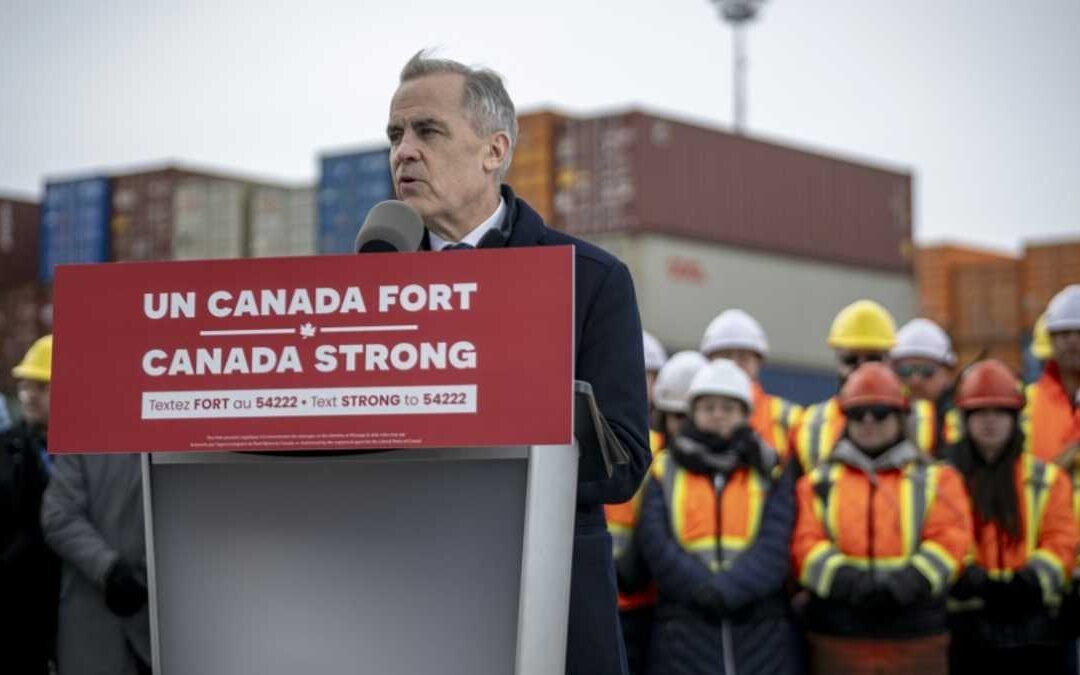
A month ahead of Canada’s general election, where U.S. President Donald Trump’s threats have become a focal point, Mark Carney has spearheaded a surge for the Liberals, putting them ahead in recent polls against their primary competitor, Conservative candidate Pierre Poilievre.
Since taking office in January, the U.S. president has threatened Canada’s economy with steep tariffs and frequently demanded that the nation relinquish its autonomy and merge into the United States.
Experts concur that the primary issue for Canadians voting on April 28 will be deciding between incumbent Prime Minister Carney and Poilievre to counterbalance Trump’s influence.
“The most important factor for me in this election is the economy, particularly the aspect of free trade with the United States,” said Ottawa resident Carol Salemi to AFP.
She stated that they require some form of negotiation with the U.S., and they need a robust leader to handle it.
Danielle Varga, 22, agreed with this perspective, stating that Canada requires “a leader who stands firm against America. It seems like everybody agrees on this point, which is positive.”
Currently, ex-central banker and political newcomer Carney, who succeeded Justin Trudeau as Prime Minister in mid-March, seems to be the right fit for the role.
The 60-year-old has swept the nation, entirely turning around the Liberals’ luck who, under a struggling Trudeau, seemed destined for a significant defeat at the polls.

Currently, he is at the top of the polls, and according to observers, he has a strong likelihood of establishing a majority government.
Carney stated to campaign supporters in Ottawa on Saturday, “This stands as the most crucial election of our lives,” emphasizing its significance for reshaping our connection with the United States and restructuring our economy according to our own conditions.
Carney cut short his campaign this week following Trump’s announcement to introduce 25 percent tariffs on car imports, which followed duties on steel and aluminum.
Trump said he had an “extremely productive” first call with Carney on Friday, adding that the two leaders “agree on many things.”
This marked a significant shift in tone for a U.S. president who previously had cool relations with Trudeau, and this development did not go unnoticed across the northern border.
‘Exceptional time for Canada’
The conservative leader Poilievre initiated his campaign by stressing tax reductions, accessible housing, and the exploitation of Canada’s natural resources.
The 45-year-old seasoned political figure has tried to counteract parallels drawn between himself and Trump — who are both right-wing populists — which have reduced his popularity in Canada.
“President Trump stated his desire for the Liberals to regain power. The reason being, they will maintain Canada’s weakness and ensure investments continue moving from this nation to the United States,” he remarked during a campaign event in Toronto on Sunday.
Other political groups like Jagmeet Singh’s left-leaning New Democratic Party and the separatist Bloc Quebecois headed by Yves-Francois Blanchet have found it difficult to gain attention, as voters concentrate their efforts on the top two contenders during this period of turmoil.
This is genuinely a remarkable period for Canada,” stated Professor Genevieve Tellier from Ottawa University, further noting: “Canada is seeking a savior.

As an indication of the growing strains, Carney stated on Thursday following Trump’s new tariff announcements that the period of extensive economic, security, and military cooperation between Canada and the United States has come to an end.
Tellier indicated that Carney’s “resolute stance” and his statement that “the relationship with the United States will never return to what it was before” appear to resonate strongly with the electorate.
These comments have ” encapsulated the prevailing sentiment in Canada,” she stated.
People are gravitating towards Carney due to their desire for stability and someone who can provide reassurance during tough times, as noted by Daniel Beland from McGill University in Montreal.
In a nation with a population of 41 million, 343 seats are up for grabs in this year’s unexpected election. The political party securing more than half of these seats will compose the new administration, with its head taking office as prime minister.
Should no political party secure an outright majority, the one with the highest number of seats will be asked to try forming a coalition government with assistance from minor parties.

by admin | Mar 30, 2025 | citizenship, government, politics, politics and government, politics and law
Obtaining United States citizenship through the application process is not an effortless undertaking.
Prior to swearing the oath of allegiance, prospective Americans have to go through a stringent procedure, which includes tackling the challenging naturalization exam.
The civics portion of the exam evaluates applicants’ understanding of U.S. history and governance.
Every aspiring citizen needs to answer 10 random questions picked from an officially approved list of 100, with a requirement to get at least six correct answers to successfully pass.
How familiar are you with American government and politics?
The Houston Chronicle
extracted 10 authentic questions from the United States Citizenship and Immigration Services (USCIS) study guide.
Think you’ve got what it takes? Try this quiz to put your skills to the test!

1. What are the initial ten modifications to the Constitution referred to as?
Answer:
B) The Charter of Rights
The Bill of Rights, which was adopted in 1791, ensures basic liberties including the right to free speech, religious freedom, and fair legal proceedings.
The Founders included it in the Constitution to address worries regarding personal freedoms.
2. In the event that both the President and the Vice President are unable to fulfill their roles, who assumes the position of President?
Answer:
C) The Speaker of the House
The Presidential Succession Act of 1947 positions the Speaker of the House as the individual following the Vice President in the line of succession.
This guarantees a smooth transfer of authority in emergency situations.
3. Which duty is exclusively assigned to U.S. citizens?
Answer:
A) Participate as a juror
Serving as a juror is an obligation reserved for American citizens.
This aims to uphold the right to a fair trial as ensured by the Constitution.
4. Who was the author of the Declaration of Independence?
Answer:
C) Thomas Jefferson
Thomas Jefferson served as the main writer of the Declaration of Independence.
In 1776, he composed the document to provide reasons for the American colonies’ desire to separate from British rule.
5. Which territory did the United States acquire from France in 1803?
Answer: D) Louisiana
The acquisition of Louisiana expanded the United States’ territory by twice its original size.
This happened when President Thomas Jefferson purchased the territory from France for $15 million.
6. Which president served during World War I?
Answer: A) Woodrow Wilson
Woodrow Wilson guided the United States during World War I.
He was an advocate for the League of Nations; however, the United States ultimately did not join.
7. Which city serves as the capital of the United States?
Answer: D) Washington, DC
In the year 1800, Washington, D.C., was established as the capital of the United States.
It was a result of an agreement reached between Northern and Southern states back then.
8. What is the title of the national anthem?
Answer: B) “The Star-Spangled Banner”
Francis Scott Key composed ‘The Star-Spangled Banner’ in 1814.
After seeing the British assault on Fort McHenry during the War of 1812, he penned it.
9. On which day is Independence Day celebrated?
Answer: B) July 4
On July 4, 1776, the Declaration of Independence was adopted.
This is the day that signifies the colonies’ separation from British governance.
10. What is the total number of US Senators?
Answer:
C) 100
Every state is represented by two senators, making up a total of 100.
This setup guarantees each state has an equal say in the Senate.

If you managed to get at least six correct answers, congratulations — you’ve passed!
However, if that doesn’t work out, you may have to study up on U.S. citizenship requirements before giving it a shot.
Read more

by admin | Mar 30, 2025 | crime, criminal justice, international relations, politics, politics and law
Should Malaysia genuinely aspire to enhance its international legal standing and demonstrate a steadfast dedication to justice, it should seize this opportunity to rejoin the Rome Statute.
When ex-Philippines President Rodrigo Duterte was
arrested in Manila
He was then moved to The Hague to face trial at the International Criminal Court (ICC) for allegations of crimes against humanity. His replacement, Ferdinand Marcos Jr., described this transfer as adherence to the nation’s obligations to Interpol.
The international law enforcement agency had actually asked for assistance in carrying out the ICC’s arrest warrant. However, it was noteworthy that Manila based its reasoning on the country’s duty to Interpol instead of the ICC.
Under Duterte,
the Philippines withdrew
From the Rome Statute, the treaty that established the ICC, the court maintains jurisdiction over offenses committed in the Philippines during the time when the country was a part of the Rome Statute.
Are you looking for insights into the most significant issues and developments globally? Find your answers here.
SCMP Knowledge
Our latest platform features handpicked content including explainers, FAQs, analyses, and infographics, all provided by our acclaimed team.
As a result, the nation’s Department of Justice has found itself
entangled in legal gymnastics
As Philippine domestic politics grapple with efforts to achieve justice, Justice Secretary Jesus Crispin Remulla bewilderingly justified the arrest under the banner of “international humanitarian law,” a phrase typically associated with the regulations governing warfare.
The uneasy intersection of domestic politics and international justice in the Philippines echoes situations from
Malaysia’s own short-lived dalliance
Six years ago, through the ICC, on March 4, 2019, Putrajaya ratified the Rome Statute and submitted it to the Secretary-General of the United Nations on the same day. However, on April 5 of that year, the administration reversed its decision. By the close of the month, Malaysia was formally removed from the agreement as confirmed by the United Nations.
Malaysia’s dedication to the ICC, tracing back to 1998 when the original treaty for setting up the court was agreed upon diplomatically, eventually crumbled due to divisive internal political dynamics. The administration failed to anticipate strong public opposition regarding this issue, leading to confusion caused by inaccurate information about the extent and authority of the court, thereby ensnaring Malaysia’s “three Rs” —
race
,
religion
and
royalty
.
The former Prime Minister, Datuk Seri Mahathir Mohamad, who held office at that time, expressed frustration with those attempting to create “confusion among the public by claiming that this law undermines the rights of the Malay community and the rulers.” He emphasized that these claims were baseless.
It is now time for Malaysia to reconsider joining and enacting the Rome Statute, especially considering the government’s increased involvement in supporting Palestine via international legal channels. The nation promptly took action.
offer political support
For South Africa’s 2023 case against Israel at the International Court of Justice based on the Genocide Convention, Putrajaya cited Malaysia’s adherence to the treaty and urged “Israel to comply with international law and cease its acts of violence against Palestinians” immediately.
In January 2024, when the ICJ delivered its provisional measures directive requiring Israel to
desist contravening its obligations
Following the Genocide Convention, the Malaysian foreign ministry issued a statement supporting the international legal guidelines the subsequent day.
When Malaysia aligned itself with various other nations regarding the matter of Palestine through what became known as the Hague Group, their initial declaration made in January included numerous allusions to international law, the ICJ, the ICC, and United Nations resolutions, along with emphasizing the ideals of fairness.
These diplomatic efforts have been
buttressed by legal action
When the UN General Assembly decided to ask for the ICJ’s advisory opinion on the legal implications of Israel’s control over Palestinian territories, Malaysia’s foreign minister went to The Hague in February 2024 to deliver an oral statement during the court’s public hearings.
In reality, Malaysia had jointly sponsored the United Nations General Assembly resolution seeking an advisory opinion. Half a year prior, it had presented a detailed written submission asserting that “the entirety of Israel’s occupation along with its policies and actions within the occupied territories infringes upon the right to self-determination under international law.”
There is a larger, modern context surrounding these actions that highlights why legal accountability remains crucial.
extend to leaders
, similar to how it operates within the ICC, instead of involving only states like the ICJ does. Amidst the turmoil shaking the global order due to violations of international norms, treaties being torn apart, and alliances disintegrating, governments face further pressure from their citizens regarding unaddressed issues related to both domestic and international justice.
Israel’s conflict in Gaza has demonstrated that occasionally it is the public’s ethical guidelines that set apart a country from its leadership. Prime Minister Anwar Ibrahim’s
defiance on Palestine
In light of Western leaders’ disregard for international law—and possibly their push for the most egregious breaches—it should serve as a starting point for a more sophisticated public discussion in Malaysia about whether the nation should reassess its decision to join the ICC.
The home front discussion in Malaysia will face similar challenges this time due to the enduring polarization within the nation.
most taboo topics
However, if Malaysia genuinely wishes to enhance its reputation internationally and uphold the values of justice, its leadership ought to capitalize on this outside support to restart the nation’s membership with the Rome Statute.
Political will often hinders substantial progress toward accountability. Previously, the absence of Malaysia’s journey toward joining the ICC wasn’t due to a lack of support from Putrajaya’s political will. Instead, it was the insufficient backing from key sections of society that eventually influenced the royal institution via a political lens.
These previous lessons ought to provide Malaysia with a more cautious and deliberate strategy for the near term.
More Articles from SCMP
SCMP Top Picks: Newcomer offers bettors a chance to achieve Triumph at Sha Tin
Hong Kong Sevens: New Zealand’s Reign Halted by French Comeback, Fijian Victory Crushes Spanish Dreams
Paul O’Sullivan attends Sha Tin festivities following Fast Network’s impressive victory.
A ‘boundless’ collaboration set to become an invincible worldwide power
The article initially appeared on the South ChinaMorning Post (www.scmp.com), which is the premier source for news coverage of China andAsia.
Copyright © 2025. South ChinaMorning Post Publishers Ltd. All rights reserved.
by admin | Mar 30, 2025 | donald trump, politics, politics and government, politics and law, trump administration
-
The increasing impact of social media on politics and the Democrats’ ‘highly ineffective’ attempts to engage Generation Z. Tune into Welcome to MAGAland on your preferred podcast platform.
President
Donald Trump
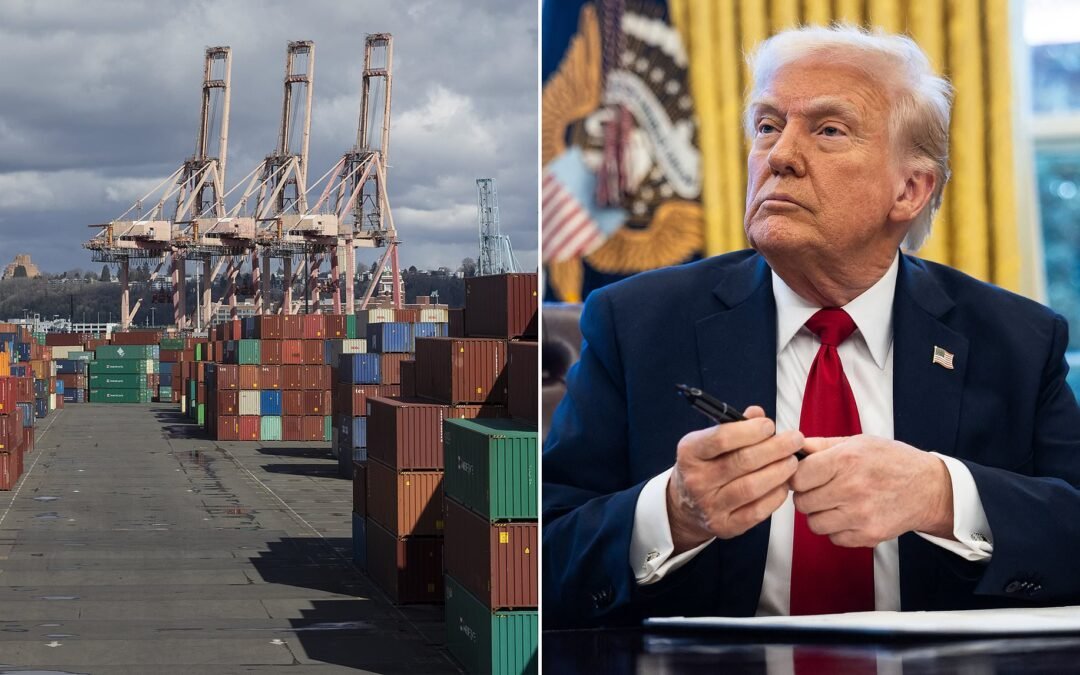
is set to reveal a major new series of tariffs later this week following a tumultuous month of economic developments that have unsettled markets.
White House
and sowed uncertainty in the American public about his ability to mitigate an impending economic downturn.
Now
a new poll shows
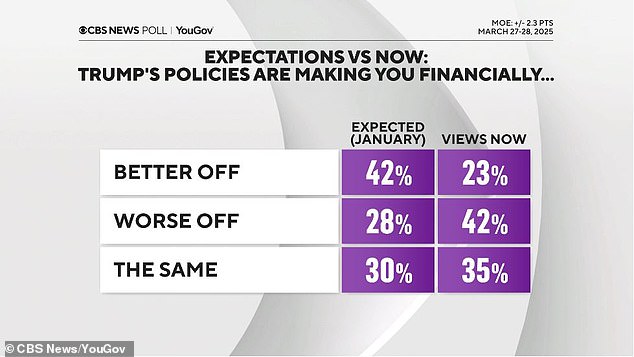
Only 23 percent of Americans believe they are more financially secure now that President Trump has taken office, even though he promised to bolster the economy.
This setback for the present administration is evident when comparing the recent CBS/YouGov poll with the one from January, where 42 percent anticipated that Trump’s policies would enhance their financial situation.
The figures have effectively turned upside down, as 28% of Americans anticipate being in a poorer financial position with Trump leading the country, compared to the 42% who currently feel economically strained—an rise of 14%.
Americans feel that they are faring significantly worse rather than better since President Trump took office, with their sentiments being almost double at this point.
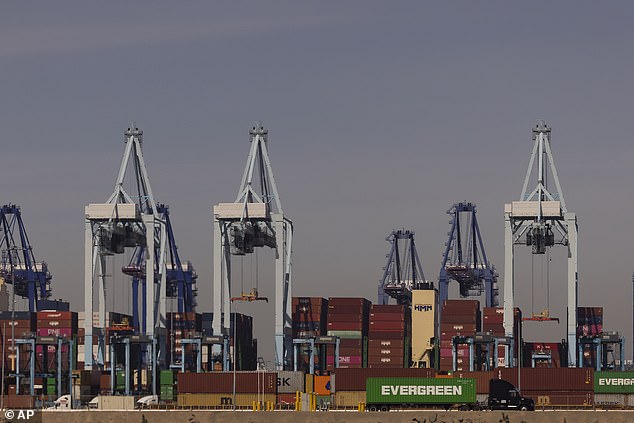
Economists are now cautioning that the administration’s upcoming tariffs, scheduled to take effect on Wednesday, could further strain the finances of financially troubled Americans as costs are expected to rise significantly across various key products including vehicles, technology items, and oil and gas.
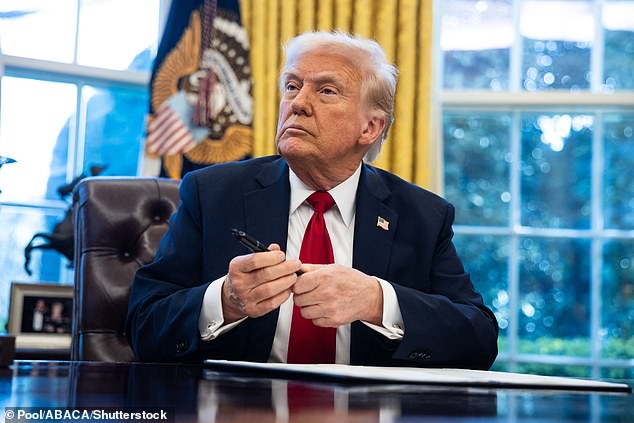
Senator Rand Paul (R-Ky.) cautioned on Sunday that
The cost of cars might go up by anywhere from $5,000 to $10,000.
Over fifty percent of Americans believe that Trump is concentrating excessively on imposing tariffs on other nations as part of his economic strategies, rather than prioritizing measures to reduce prices for consumers.
Trump has been teasing April 2 as ‘Liberation Day,’ where he will announce a net set of international tariffs with the aim of making the U.S. more self-reliant. The President wants to domesticate more industries rather than outsourcing and he believes that other countries are getting the better end of the deal when it comes to trade with the U.S.
President Trump secured victory in the 2024 election largely due to American voters believing he could boost the economy following ex-President Joe Biden being held responsible for steering the U.S. towards an economic downturn.
Even now, 38 percent of Americans attribute inflation and increasing prices to Biden’s policies, whereas 34 percent hold Trump responsible. Additionally, 19 percent believe that both share an equal amount of blame.
In addition to tariffs, the Trump administration has aimed at shrinking the federal workforce and trimming the bloated government budget, asserting that these measures will cut down on wasteful spending by taxpayers—though they stop short of guaranteeing a lighter tax load for individuals.
Americans are evenly divided regarding the Department of Government Efficiency (DOGE) federal layoffs, incentive-based retirement programs, and reallocations, with 50 percent supporting and 50 percent opposing these measures.
According to the most recent survey published on Sunday, the general sentiment among Americans leans towards prioritizing economic and financial policies that have an immediate effect on their personal finances rather than engaging in international trade disputes or widespread dismissals of federal employees.
According to the CBS/Yougov survey, 48% support Trump’s approach to the economy, whereas 52% do not agree with his handling of it.
Read more
by admin | Mar 30, 2025 | energy sector, government, politics, politics and government, politics and law
Governor Alex Otti from Abia State has assured that his administration is willing to collaborate with the National Assembly in developing and promoting renewable energy sources. This collaboration aims to find lasting solutions for addressing the nation’s electricity supply issues.
The governor extended this commitment during a welcome meeting for the members of the House of Representatives Committee on Renewable Energy who visited his residence in Aba town on Saturday.
Governor Otti emphasized the significance of addressing the nation’s energy issues as a priority and praised the 10th House of Representatives under the leadership of Speaker, Rt. Hon Tajudeen Abbas, for tackling this issue head-on.
He mentioned that right from the start of his term, he focused on addressing the deterioration of infrastructure in Aba. He emphasized tackling issues related to environmental cleanliness, power supply, and road networks since these aspects were essential for enhancing the significant industrial capabilities of Aba’s residents.
The governor stated that the administration needed to establish an agreement with a private company for electricity distribution called Geometric. Additionally, they introduced a bill named “Abia State Electricity Regulatory Bill,” which was approved by the state assembly and subsequently enacted as legislation to support the government’s efforts towards improving electricity provision.
He mentioned that presently, Aba and surrounding areas are receiving approximately 23 to 24 hours of power supply daily, thanks to around 80 megawatts supplied by Geometric.
He expressed the government’s willingness to collaborate with the initiative of the House of Representatives Committee on Renewable Energy for organizing their inaugural Legislative Summit on Renewable Energy. The event is scheduled to take place in Lagos from May 5-7, 2025.
He stated that his administration would take full part due to the necessity for joint efforts in tackling the country’s energy security issue.
In an earlier part of his address, Hon Victor Afam Ogene, who chairs the House Committee on Renewable Energy and represents Ogbaru Federal Constituency in Anambra State, informed the governor that the objective of the delegation’s visit was to secure the collaboration of Abia state government with the developmental initiatives being undertaken by the House of Representatives.
He informed the governor that the summit was designed to bring together stakeholders, specialists, and legislators to develop strong policies and programs that would propel the expansion of renewable energy and enhance grid modernization.
He mentioned that several important stakeholders from within the country and internationally have already expressed their willingness to take part, noting that among these experts are individuals from South Africa and Gambia.
Honorable Ogene informed Governor Otti that the Speaker of the Parliament of Ghana along with several prominent international organizations such as the INDP, GIZ, and EU have expressed their willingness to collaborate with the committee. This partnership aims to guarantee the successful implementation of this crucial policy initiative.
The individual informed the governor of Abia State that Hon Tajudeen Abbas, who serves as the Speaker of the House of Representatives, acknowledges his significant contribution to Nigeria’s progress. He further mentioned that the Speaker emphasizes renewable energy development as essential for addressing national power supply issues and decreasing dependence on fossil fuels.
According to the legislator, this event aims to foster knowledge exchange and encourage discussions among lawmakers, specialists, and key participants regarding crucial legislative goals, regulatory structures, and international leading examples. This collaboration seeks to expedite the integration of renewable energy sources in Nigeria.
Provided by SyndiGate Media Inc.
Syndigate.info
).
by admin | Mar 30, 2025 | cities and towns, community, culture, politics, traditions
The most uniquely dramatic building in Mombasa remains Fort Jesus built 430 years ago, permanently and resolutely facing the entrance to the old port and the town it was built to protect and enable to grow sensibly.
Close to the entrance of Fort Jesus stands an ancient Swahili-style coffee seller with a brass coffeepot over a charcoal fire, beside an unmarked casual sitting space designated informally for a circle of elderly gentlemen who gather there daily to chat.
Nobody becomes part of them without being invited by a member of the group.
The process of becoming a member and how these suppliers have achieved success over the years remains an enigma known only to a select few.
These individuals are the wise men, possessing shared life experiences and expertise, serving as the guardians of Mombasa’s spirit and cultural heritage.
The swift development and expansion of Mombasa can be attributed to gentrification—a process involving the revitalization and alteration of urban areas as richer people or enterprises push out lower-income inhabitants, driven by increasing land values due to higher demand.
This process of gentrification has led to alterations in the local culture and demographic composition; consequently, it has created disarray in Mombasa’s urban planning, raising doubts about whether it truly enhances residents’ desires for improved living conditions and economic opportunities.
In a recent caucus group meeting where I was present, we examined three strategies for managing gentrification initiated by Mombasa County. The discussion centered around two key aspects: the preservation of Swahili cultural elements and ensuring public access to the coastline.
The aim was to devise strategies for safeguarding residents from disenfranchisement while maintaining the city’s growth pace and its cultural significance.
The initial factor to consider is zoning. This process involves setting prescribed density restrictions, implementing heritage preservation strategies, and promoting adaptable use.
This might involve setting limits on the height and density for properties along the waterline from Mkomani to Shanzu, allowing these areas to gradually maintain their primary benefits such as ocean vistas and proximity to shorelines.
In Old Town, recognized as the cultural heart, a financially stable framework should be provided to ensure that the property’s cultural significance isn’t diminished by its owners.
It might involve accessing funds from a conservation building initiative or utilizing cultural heritage financing to support the adaptive reuse of these structures.
The second point revolves around shifting from centralized utilities to communal shared services for the benefit of the community.
This change would involve setting up an independent power source, systems for collecting and treating rainfall as well as facilities for recycling water, alongside implementing a minimal environmental impact waste handling system.
These advancements would necessitate the support of the local community, regardless of whether they occur in the Old Town or along the seafront, since no individual property owner or developer has the capability to independently, sustainably, or effectively provide these services.
Space for these utilities would need to be located and obtained if the county does not already own it.
The final point covered involved vehicle traffic and parking, along with pedestrian pathways and public areas, encompassing cultural centers.
Communal travel is an everyday fact, be it for employment or recreation; hence, ensuring safety, security, brevity, and smooth mobility is crucial for both conveyances and individuals on foot.
Strategic provision of commuter terminals, road carriageways, pedestrian walkways, vehicle parking lots and public squares can be made more efficient with technological advancement in access controls, stack parking structures and real-time monitoring and response systems.
The challenging responsibility of overseeing gentrification lies firmly within the county’s jurisdiction and technical capability to implement.
Similar to most counties, Mombasa possesses potent resources to achieve this objective. A key resource is the control over lands and properties designated for development aimed at benefiting the general populace.
The other aspect is the legal power to establish regulations that must be followed, provided these rules do not contradict current statutes or the Constitution.
These two tools are adequate for effectively managing Mombasa’s gentrification; however, there is no known concept, proposal, or implementation framework in existence.
The question now arises: Can the joint efforts of the Mombasa branches of the Law Society of Kenya and the Architecture Association of Kenya assume a role akin to that of the sagacious elders at Fort Jesus and rescue Mombasa?
Provided by SyndiGate Media Inc.
Syndigate.info
).