by admin | Mar 25, 2025 | international relations, military, politics, united nations, world
New York
[
US
], March 25 (ANI):
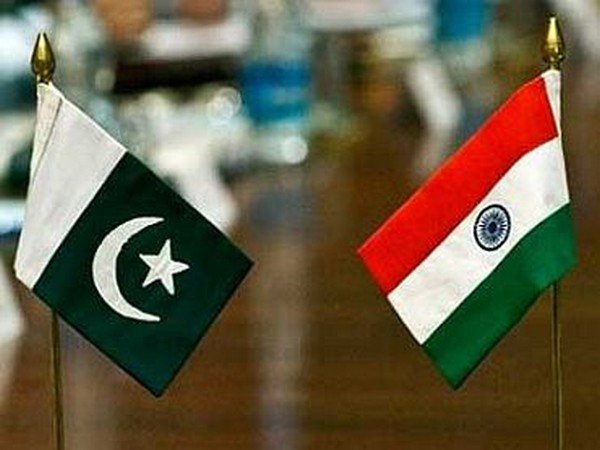
India
has advocated for consensus-based reforms in
UN peacekeeping
, emphasizing the importance of improved financing, advanced technology, and a larger role for
troop-contributing countries
As reported in an official press release,
Speaking at a UN Security Council discussion about adjusting peacekeeping missions to modern challenges,
India
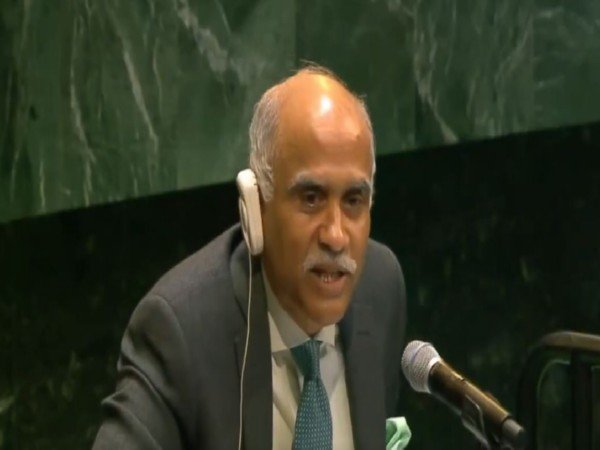
Ambassador Parvathaneni Harish, who serves as India’s Permanent Representative to the United Nations, delineated
India
His plan to update peacekeeping strategies in light of evolving dangers includes addressing the involvement of non-state entities, such as armed factions, terrorist organizations, and international criminal syndicates. Additionally, technological progress has introduced fresh hurdles like misinformation, disinformation, malicious propaganda, contemporary weaponry—such as unmanned aerial vehicles and improvised explosive devices—which represent some of the many novel obstacles confronting peacekeepers nowadays.
He emphasized that reforms should be based on a consensus, involving more actively the countries contributing troops. He stated, “Adjusting peace operations to fit new circumstances is impossible without including those who are on the ground—the countries supplying troops and police—in every phase of the mandate development process.”
Harish cautioned that inadequate funding jeopardizes the efficacy of peacekeeping operations. He emphasized that addressing contemporary threats to peacekeeping requires sufficient financial support and resources aligned with their mandates. The present ambiguity regarding funding and the disparity between available resources and assigned tasks is untenable, unsettling, and unsatisfactory—especially concerning nations from the Global South, which provide the majority of personnel for these efforts.
He further advocated for closing down unnecessary missions that no longer have an operational function. “It’s crucial to streamline peacekeeping operations to ensure effective use of resources. Missions that persist solely due to political reasons rather than practical necessity waste vital funds needed for critical peacekeeping efforts, thereby damaging the United Nations’ reputation.”
India
It reaffirmed its dedication to the Women, Peace and Security (WPS) and Youth, Peace and Security (YPS) initiatives. “We firmly back the WPS and YPS agenda along with increased involvement of the PBC with IFIs to secure funding for peacebuilding efforts.”
Highlighting the importance of women in peacekeeping efforts, Harish emphasized
India
‘ contributions. “Adjusting peacekeeping missions to meet current challenges includes strengthening the essential part played by female peacekeepers, both in terms of quantity and quality. I am delighted to report that earlier this year, in February, we saw progress in this area.”
India
organized the inaugural Conference for Women Peacekeepers from the Global South, assembling delegates from 35 nations contributing troops and police to discuss this crucial topic. The debate has shifted; it’s no longer about whether women are capable of participating in peacekeeping efforts. Instead, the focus is on whether peacekeeping operations can effectively operate without including women.
He emphasized the critical nature of safeguarding peacekeepers’ safety. “Engaging in peacekeeping inherently involves some level of danger. The well-being and protection of peacekeepers should be our top priority. Given today’s intricate conflicts and unconventional dangers, it is essential that we provide sufficient safeguards for those who put their lives on the line for peace. Additionally, it is crucial that individuals responsible for harming peacekeepers face legal consequences.”
Harish promoted incorporating cutting-edge technology into peacekeeping endeavors. He argued that integrating sophisticated monitoring systems, communication devices, and analytical software could enhance understanding of situations and expedite responses during such operations.
India
is prepared to contribute its knowledge as a technological facilitator in this area.”
Concerning the enduring viability of peacekeeping efforts, he stated, “While we discuss modifying peace operations to align with contemporary challenges, it’s crucial to recognize that these missions can’t continue indefinitely. They must develop feasible withdrawal blueprints and exit tactics designed to maintain lasting peace.”
Harish emphasized that peacekeeping efforts require complementary political resolutions. He stated, “It is crucial not to view peacekeeping as the exclusive answer to resolving disputes; true and lasting peace necessitates integrated approaches where political strategies work alongside these missions.” Such cohesive plans can materialize solely through unified action within the UN Security Council. Therefore, he underscored the critical importance of restructuring it.
UNSC
In both sections to ensure it better reflects and represents contemporary geopolitical realities.”
Wrapping up his statement, Harish restated
India
‘s long-standing commitment to
UN peacekeeping
. ”
India
A country strongly dedicated to the ideals of multilateralism and world peace has consistently supported the United Nations in its peacekeeping efforts. To this day, it has contributed approximately 300,000 troops who have participated in over 50 missions.
He likewise honored the fallen peacekeepers. “We honor over 4,000 UN peacekeeping personnel, which includes 182
India
In personnel who have made the supreme sacrifice in the service of peace, we aim to complete the Memorial Wall at the earliest date possible in their honor.”
Harish closed by reaffirming
India
‘s commitment to reforming
UN peacekeeping
As we gaze ahead into the future,
India
reiterates its steadfast dedication to
UN peacekeeping
Moreover, it reaffirms its ongoing commitment to the United Nations as it works toward global peace and security. The proposed reforms emphasize the necessity for a more equitable, comprehensive, and efficient strategy in this endeavor.
UN peacekeeping
For an age marked by scarce resources, geopolitical instability, and turmoil.” (ANI)
Provided by Syndigate Media Inc. (
Syndigate.info
).
by admin | Mar 25, 2025 | elections, news, politics, politics and government, politics and law
-
Labor now has an even-money probability of winning reelection.
-
PODCAST: Catch up on all the top stories, from President Trump revoking Biden’s pardons to Governor Newsom’s surprising new statues initiative.
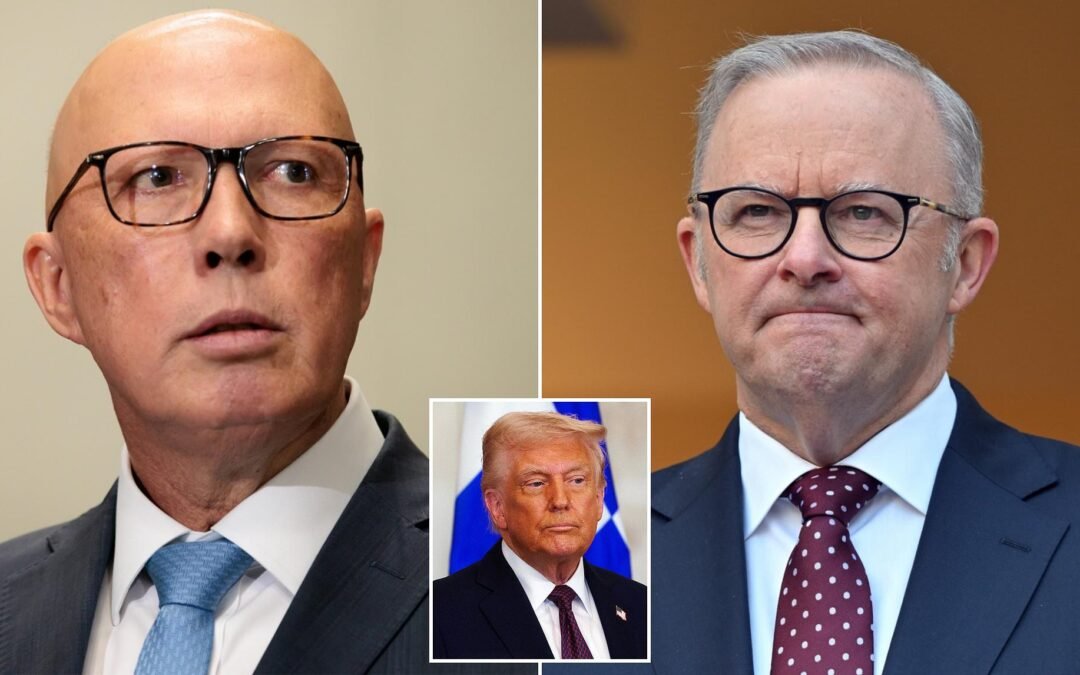
Anthony Albanese
is now seen as having equal odds for reelection, with bookmakers finding it impossible to choose between Labor and the Opposition’s chances of victory.
On Monday, Sportsbet set the odds for Labor at $1.90, matching those of the Coalition, following Australia’s escalating trade dispute with Donald Trump and the United States, which unexpectedly bolstered Albo’s position.
At the beginning of this month, Labor’s chances were listed at $2.50, while the Opposition was the favorite at $1.57.
After a Roy Morgan poll showed support for Labor, the party started drawing in more funds.
heading the Coalition with 54.5 percent to 45.5 percent support
.
The outcome went against polls conducted earlier this year by Newspoll and Resolve, indicating that the Coalition was leading at that time.
This was after
Trump
‘ironically, Labor gained more voter support due to the 25 percent tariffs imposed on steel and aluminum.
Roy Morgan CEO Michele Levine stated that this issue had caused a loss for the Opposition Leader
Peter Dutton
, even though Labor failed to obtain any US tariff exemptions.
“The Albanese government has repeatedly tried to link Mr. Dutton with President Trump and his more contentious policies and statements,” Ms. Levine stated.

This campaign might be beginning to make a difference, as Trump’s actions,
including imposing tariffs
, start to have a direct impact on Australians.’
In Canada, a comparable situation is unfolding as the ruling centrist-liberal Liberal Party now leads the opposition following the ascension of Prime Minister Mark Carney replacing Justin Trudeau.
Up until recently, surveys indicated that the Conservative Party of Canada was expected to secure a decisive triumph in this year’s election following ten years in opposition. However, Trump’s tariffs on Canadian goods have altered voter preferences.
In Australia, Sportsbet considers Labor the frontrunner for forming a minority government, with their odds set at $2.37.
compared to $3 for the Coalition
.
A Labor victory seems unlikely at $6, compared to $4.50 for the Coalition, considering the ruling party’s position.
enters the election with a two-seat lead
.
To be in the strongest position to create a minority government alongside conservative crossbench members such as Bob Katter, the Liberal and National parties must secure an additional 13 seats, which would require a swing of four percent.
Mr Dutton’s coalition would require a margin of 52% to 48%, post-preferences, over labor to win.
collect the required number of seats from the government
, considering his team lost secure positions to candidates from the teal party in 2022.
The Newspoll indicates that the Coalition now leads at 51% compared to Labor’s 49%, based on a two-party preferred measure.
taken since January
.
The elections should take place by May 17th, following the dissolution of Parliament shortly after Tuesday evening’s budget announcement.
Since 1931, no federal administration has been ousted from power following only one term.
Read more

by admin | Mar 25, 2025 | government, news, politics, politics and government, politics and law
Although domestic security law hasn’t been implemented as extensively as anticipated, authorities have been encouraged to reveal greater details regarding its usage.
For Chan Po-ying from the League of Social Democrats, the instant effect of Hong Kong’s localized version of the national security law, which took effect a year ago, hit her like a blow to the stomach.
Following the enactment of the National Security Protection Ordinance in March, she will have to wait an additional two and a quarter years before her husband, known as “Long Hair” Leung Kwok-hung—a previous legislator—can be released. In a significant sedition case from last November, he was sentenced to serve six years and nine months behind bars.
Chan, who dedicated 50 years to promoting social equity in the city and now serves as the chairwoman of what was formerly considered the radical faction of the pan-democratic movement, believed that Leung might have been released as soon as 2027. This expectation factored in his previous four years in detention along with an additional reduction of up to one-third off his total sentence due to exemplary behavior during incarceration.
Are you looking for insights into the most significant issues and global developments? Find your answers here.
SCMP Knowledge
Our updated platform features handpicked content including explanations, FAQs, analyses, and infographics, all provided by our esteemed team of experts.
Nevertheless, the recent legislation mandates that prisoners found guilty of offenses related to national security should not receive sentence reductions unless the authorities confirm that this step would pose no threat to national security. Certain activists have faced restrictions on early release following the implementation of the updated national security law.
Chan, who is 69 years old, stated, ‘We understand that hoping for an early release would be unwise because it would merely result in greater disillusionment later.’
“What matters to me is that his time in prison could become more meaningful,” she said, speaking about her incarcerated spouse who will turn 69 this Thursday.
Regardless of any new laws, her party remains one of the few opposition groups that continue to organize demonstrations outside government buildings.
On its one-year anniversary this Sunday, the law enacted under Article 23 of the Basic Law has been applied cautiously, according to legal professionals and political figures, who point out the limited number of arrests and convictions. The Basic Law serves as the city’s constitutional document.
However, others argued that the complete effects of the legislation, encompassing 39 offenses, ought to be evaluated gradually and across a wider spectrum. They highlighted what they termed its “discouraging influence” on free expression and political engagement.
Containing seditious speech and ‘absconders’
Based on information from governmental sources acquired by the Post, up until March 1st, law enforcement has detained 320 individuals accused of compromising national security pursuant to all pertinent regulations in the region since 2020, following the implementation of Beijing’s iteration of such legislation.
The data shows 91 people and four companies were charged under the 2020 law, with 76 people convicted.
Five were charged under the new domestic national security law, with three sentenced, according to the government.
The government refused to disclose specific figures on how many people had been arrested under the new ordinance, citing its work in defending national security.
However, an examination conducted by The Post of publicly accessible statements and reports revealed that officials primarily utilized the ordinance—which encompasses charges such as treason, rebellion, incitement to revolt, theft of government intelligence, and foreign meddling—in two main ways: suppressing activities deemed seditious and curtailing backing for individuals who fled after being charged with endangering national safety.
As per official announcements, the 13 publicly reported arrests conducted under the ordinance were exclusively linked to charges of sedition.
Under the new law, it is illegal to commit any act, utter words, print, publish, sell, distribute or display any publication with seditious intention.
The crime carries a penalty of up to seven years in prison, which can extend to a maximum of 10 years if the offense includes collaboration with an “outside entity,” like a foreign government, organization, or individuals acting on their behalf.
The offense formerly had a maximum prison term of three years under Sections 9 and 10 of the colonial-era Crimes Ordinance, which has now been abolished.
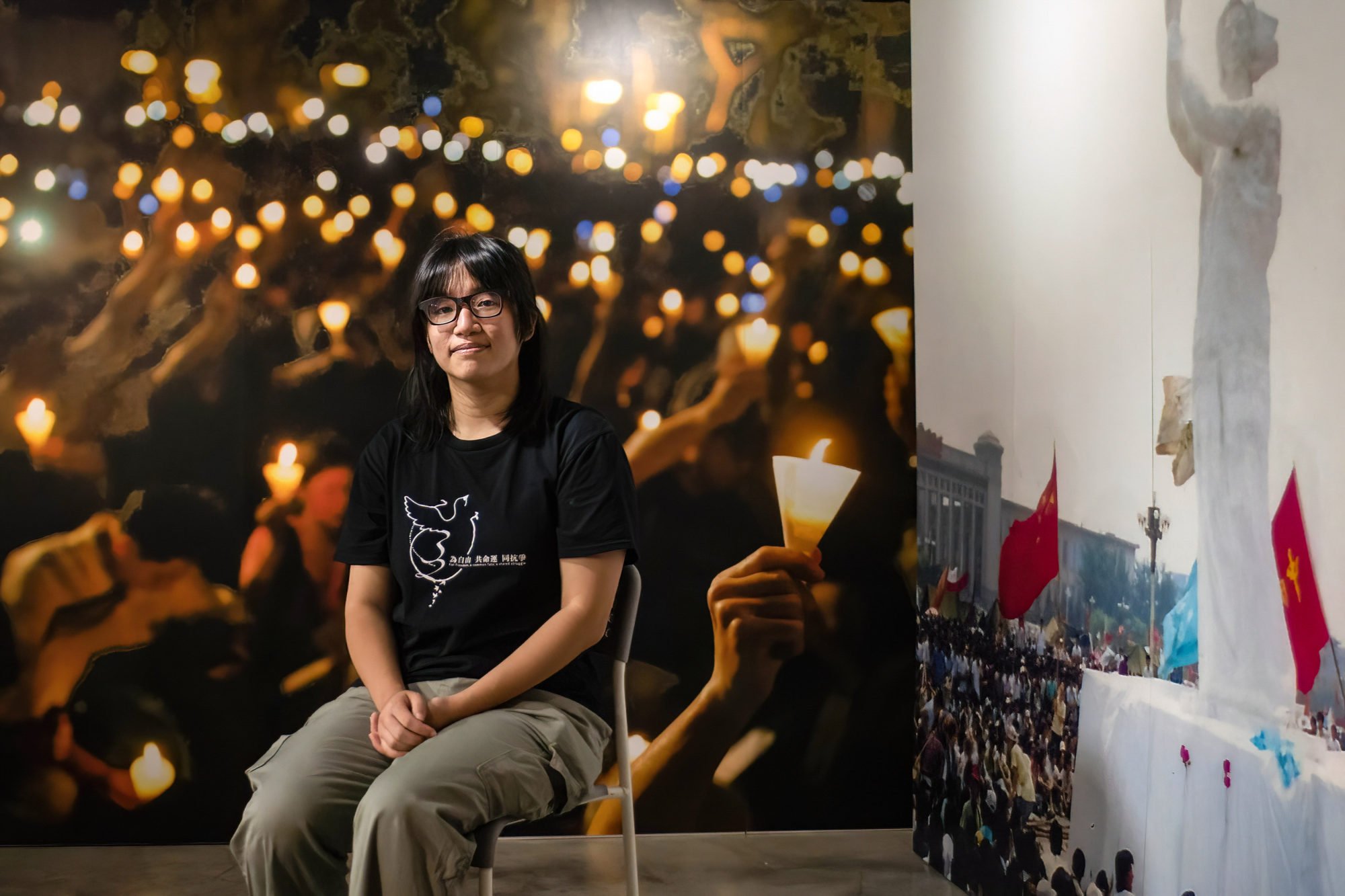
Police made their first and largest arrests in May of last year, detaining eight people for allegedly publishing seditious materials linked to the 1989 Tiananmen Square crackdown, ahead of its anniversary on June 4. The eight included activist Chow Hang-tung, but no public information has been available to determine if they have since been charged.
Based on statements and media reports, five people have been charged with sedition to date. Among them, three admitted guilt and received prison terms of up to 14 months.
displaying
anti-government slogans or
persistently posting
Videos and images urging officials to resign.
In the meantime, the government has utilized its newly acquired authority from the ordinance two times now to enforce punitive actions against 13 opposition figures based abroad. This includes activists Nathan Law Kwun-chung and Ted Hui Chi-fung, both of whom have been declared fugitives.
In addition to revoking the passports of absconders, the government has also banned individuals from providing financial support, renting properties to, or engaging in business collaborations with these persons. Those who violate this prohibition could face up to seven years in prison if convicted.
Even though skepticism exists regarding the impact of these actions, Lau Siu-kai—a consultant for the semi-governmental Beijing-based organization known as the Chinese Association of Hong Kong and Macau Studies—asserted that such steps might diminish their capabilities since potential supporters would be hesitant to back them.
He contended that these activists, who persisted in campaigning against both Beijing and the Hong Kong authorities, would likely see their influence wane over time if they couldn’t retain their supporters. Despite the rewards on their heads possibly garnering backing from international entities, this alone wouldn’t be enough to sustain them.
The measures could deter those who had yet to be placed on the wanted list but wished to organise activities overseas, he added.
Lau stated that the use of the sedition charge by law enforcement indicated their intention to crack down on forms of “gentle resistance” within the city, noting that there have been neither violent protests nor many demonstrations since 2019.
He stated that the emphasis in preventing activities threatening national security would be on individuals using peaceful methods to promote hostility and disapproval towards the government.
Lau was convinced that over time, the ordinance would be implemented more sparingly as enforcement actions were carried out and the boundaries of sedition were delineated by the judiciary.
“As it aims to be preventative, preemptive, and a deterrent,” he stated.
‘Cautious’ application of the law
Simon Young Ngai-man, a barrister and law professor at the University of Hong Kong, concurred that the legislation has yet to be thoroughly examined after one year since its implementation.
He mentioned that we haven’t witnessed the complete impact of the [ordinance] yet,” adding that this might be for the best.
The ordinance, along with the law imposed from Beijing, has “completed the national security framework,” according to Young, highlighting its robust and “unusually powerful” provisions.
“Put differently, the law seems to be achieving its aim of keeping individuals far from the red lines,” he noted.
Young expressed his desire for greater transparency from the government regarding the application of the law, including details on the frequency of use—or lack thereof—of pre-charge detention powers.
According to the ordinance, when investigating a national security case, the police can prolong the pre-charge detention time for an arrested individual beyond the usual 48 hours by up to another 14 days, provided they obtain authorization from a magistrate.
Secretary for Security Chris Tang Ping-keung had formerly defended the policy, stating that it provided enough time for law enforcement to probe national security offenses while still safeguarding individual liberties.
Young pointed out that comparable national security laws in other regions featured independent oversight committees, offering transparency and details about the implementation of these statutes. This was absent from the city’s own national security regulations.
He suggested that increasing transparency could be achieved if the government revealed more details about the application of the law.
Grenville Cross, who is both a barrister and the city’s ex-director of public prosecutions, stated that the Article 23 legislation has thus far been implemented “with prudence and moderation.”
He observed that the law was invoked infrequently and remarked that every instance was handled with “wise and impartial judgment” by the judicial system.
“The regulations are explicit, and everyone understands their position,” Cross stated. “Should individuals decide to violate these rules, regardless of their reasons, they should anticipate repercussions, as this is a standard aspect of judicial systems across the globe.”
Previously, some international investors expressed reservations regarding the ordinance and its potential impacts before it was enacted last March. Most were especially concerned about the introduction of clauses related to “state secret theft” and “foreign meddling that threatened national security.” Nonetheless, up until now, details concerning these aspects of the legislation have not been made available to the general public.
Regina Ip Lau Suk-yee, who previously served as the security minister and currently leads the crucial decision-making body known as the Executive Council, stated that the recent legislation has minimal effects on society, noting that only a small number of individuals have faced prosecution under it.
“It has had significantly lesser effects on civil society and the business environment compared to US President Trump’s executive orders,” she stated.
Beyond the arrests
However, Thomas Kellogg, who serves as the executive director of the Center for Asian Law at Georgetown University in Washington, suggested that assessing this legislation based merely on the count of arrests and utilized provisions would be insufficient. He contended that its wider ramifications hold greater significance, even though these effects prove more challenging to record or measure accurately.
He stated that the offense of sedition, in particular, has turned into a “major instrument for penalizing political expression,” and he noted that its persistent application continues to harm Hong Kong’s standing within the global community.
“The challenge of setting boundaries around free expression lies in the fact that the government must continuously monitor these limits, lest people believe they can once again utter specific statements and subsequently do just that,” he explained.
This makes it harder for the government to claim to the global community that they are moving past 2019 and 2020.
John Burns, a retired professor from the Department of Politics and Public Administration at the University of Hong Kong, voiced similar worries about the use of the sedition charge. He stated that this offense has been employed to “suppress government criticism, foster self-censorship, and bolster support for the authorities.”
This involves transforming the political climate in Hong Kong… shifting it from an environment that emphasizes engagement, variety, and transparency to one that prioritizes compliance, uniformity, and responsibility.
A representative from the government informed the Post that the ordinance was designed to precisely target actions threatening national security and clearly define the components and consequences of these offenses to tackle, counteract, discourage, and stop such activities.
He stated that it affects merely a very tiny segment of the population without infringing upon the fundamental rights and liberties rightfully held by Hong Kong residents.
The National Security Department established a reporting hotline in November 2020 for citizens to submit tips. As of February 28 of this year, officials noted that over 890,000 pieces of information have been received through this channel.
Apart from arrests, watchers have observed an increasing number of cultural programs showcasing artists who criticize the government getting abruptly canceled throughout the previous year. They attribute this phenomenon to the ordinance instilling fear among individuals about transgressing boundaries.
In last November, the Hong Kong band Kolor along with singer Pong Nan Yik-pong canceled their performances. Previously, both had expressed backing for the anti-government demonstrations of 2019.
Although Kolor chalked up the incident to “unavoidable circumstances,” Nan faced the cancellation of his event venue booking. Subsequently, the former secretary for culture, sports, and tourism Kevin Yeung Yun-hung stated that multiple factors might have led to these cancelations.
Chan remembered that the police officers, who previously just watched from the sidelines without interfering with her group’s activities at the street booths, began documenting her speeches instead. This made her increasingly cautious about choosing her words carefully to prevent any accusations of sedition.
Previously, the League of Social Democrats organized two demonstrations at the West Kowloon Court to show solidarity with their incarcerated members once the nationally secured laws enacted by Beijing were implemented.
However, last May, when the court issued guilty verdicts against 14 out of 16 opposition figures who challenged their subversion accusations in a significant national security trial, she was detained along with four others.
Then, in February, she called off her party’s demonstration over the city’s annual budget blueprint, an annual ritual that had attracted a handful of members outside the government headquarters, citing the “strong pressure” they came under, without giving details.
Chan stated that although she had doubts about her group’s prospects, she was not willing to relinquish her freedom of expression lightly, particularly concerning her opinions on local living conditions, politics, and economics.
There’s no justification for impeding us, provided our actions and statements remain within legal bounds,” she stated. “No entity ought to limit citizens’ freedom of expression.
Additional reporting by Harvey Kong
More Articles from SCMP
Hong Kong’s public estates must put stop to illegal parking
China declares shared naval exercises with Thailand close to a South China Sea harbor.
China takes steps to enhance relations with South Korea, beginning with tourism and K-pop.
Evil lurking in the specifics of the Hutchison-BlackRock Panama port agreement
This article originally appeared on the South China Morning Post (www.scmp.com), the leading news media reporting on China and Asia.
Copyright (c) 2025. South China Morning Post Publishers Ltd. All rights reserved.