by admin | Aug 11, 2025 | astronauts, nasa astronauts, space exploration, space travel, spacecraft
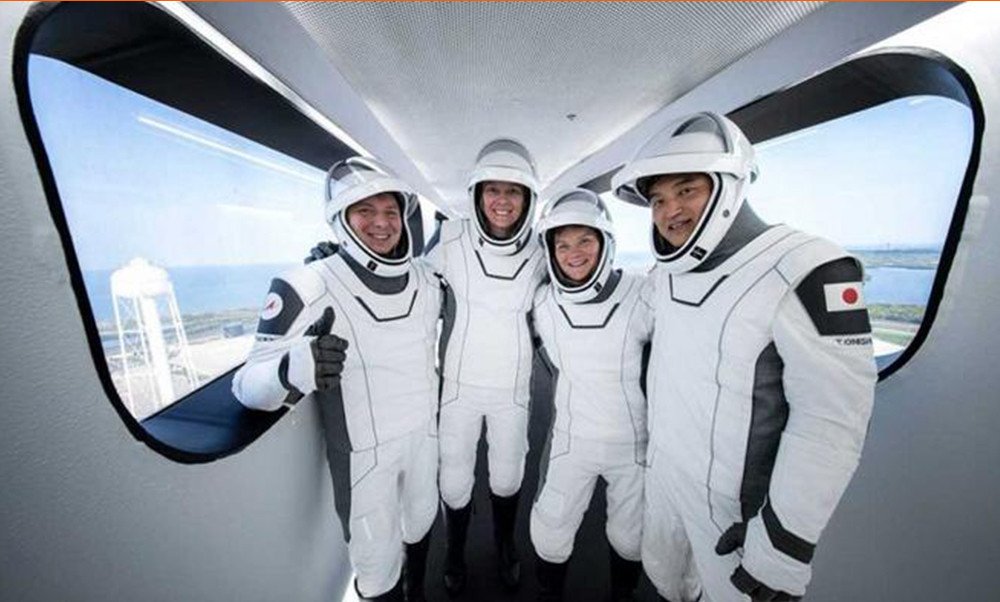
Pakistan, August 10 — On Friday, the capsule detached from the ISS prior to starting its blazing return journey, reaching temperatures of approximately 1,925 degrees Celsius. As it approached Earth, big parachutes were released to reduce its speed from 28,100 kilometers per hour down to slightly over 25 kilometers per hour. Following its landing in water, a SpaceX retrieval vessel recovered the capsule and brought it onboard, enabling the astronauts to take their first breaths of fresh Earth air after several months.
Throughout their expedition, the team conducted various scientific tests, including examining how plants grow, how cells respond to gravitational forces, and the effects of weightlessness on human vision. These insights are anticipated to aid upcoming extended space journeys, particularly those targeting the Moon and Mars. The astronauts will soon head to Houston to be with their loved ones following several months of separation aboard the spacecraft.
Acting NASA Administrator Sean Duffy commended the team’s efforts, referring to these missions as “foundational elements for extended space exploration” and essential in advancing the boundaries of human spaceflight. McClain characterized her exit from the ISS as “mixed emotions,” recognizing that she may not come back again, while also emphasizing how the mission depended on international collaboration among nations, private companies, and various political entities over numerous years.
The comeback occurs during transformations within NASA, as the agency is set to experience a 20% decrease in personnel according to U.S. President Donald Trump’s initiative to reduce the federal employee base. Trump has emphasized directing astronauts towards the Moon and Mars, redirecting attention toward bold exploratory objectives. This particular mission came after the postponed return of two American astronauts, Butch Wilmore and Suni Williams, who had been stuck for nine months because of problems with Boeing’s Starliner vehicle.
The International Space Station continues to be active, as only recently, new crew members—U.S. astronauts Zena Cardman and Mike Fincke, Japan’s Kimiya Yui, and Russian cosmonaut Oleg Platonov—arrived for a six-month assignment. Their tasks will further promote global cooperation and scientific exploration in space, following the contributions of the departing Crew-10 group.
by admin | Apr 10, 2025 | physics, science, science fiction, space travel, Travel
-
READ MORE: Researchers from Oxford claim they have accomplished teleportation
From H. G. Wells’s The Time Machine to
Christopher Nolan
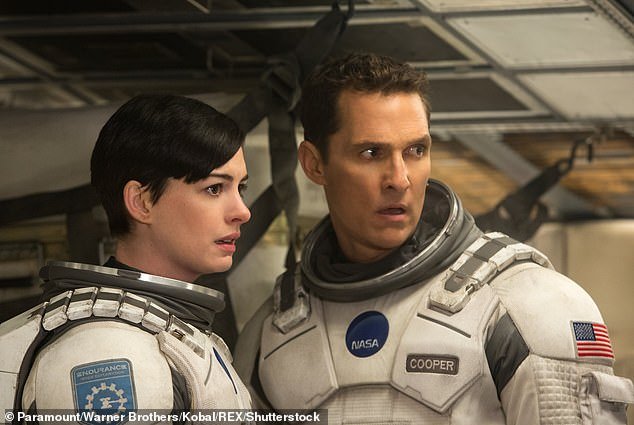
In ‘s Interstellar, the idea of traversing through time has captivated individuals for hundreds of years.
However, despite sounding like pure science fiction, physicists currently think that time travel might actually be feasible.
Actually, according to scientists, humans have already accomplished this.
However, before you begin planning your journey to ancient Rome, experts warn that actual time travel differs significantly from depictions in films.
It might seem obvious, but here on Earth, we all move through time at a speed of one second per second.
Nevertheless, according to Einstein’s theory of general relativity, it is feasible to traverse time at a speed exceeding this rate.
The quicker an individual moves, the more rapidly they can advance through time—progressing centuries within mere minutes as they get closer to the speed of light.
Even though this impact is not very noticeable at lower speeds, it implies that astronauts onboard will experience the following:
International Space Station
(ISS) are all essentially ‘time travelers,’ jumping ahead into the future.
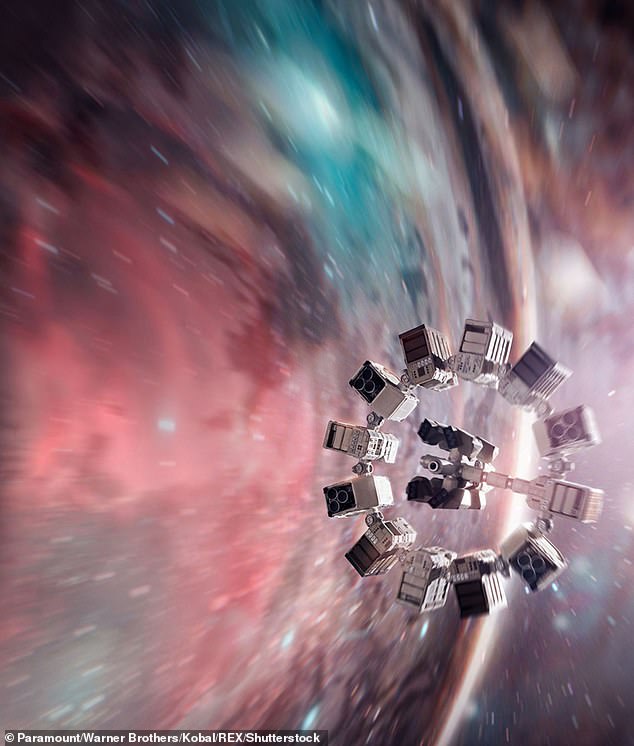
What is time travel?
In films such as The Terminator, time travel typically entails entering a device that transports you to a completely different moment in the past or future.
Nevertheless, genuine time travel doesn’t involve jumping from one moment in the chronology to another.
As stated by NASA, ‘time travel’ involves moving at a rate exceeding one second per second.
Even though it seems unlikely, the space agency asserts that this is indeed feasible.
Actually, each person moves through time at varying rates based on their location and speed of movement.
This implies that time travelers are amongst us daily, and you could be one of them as well.
In what ways can one journey ahead through time?

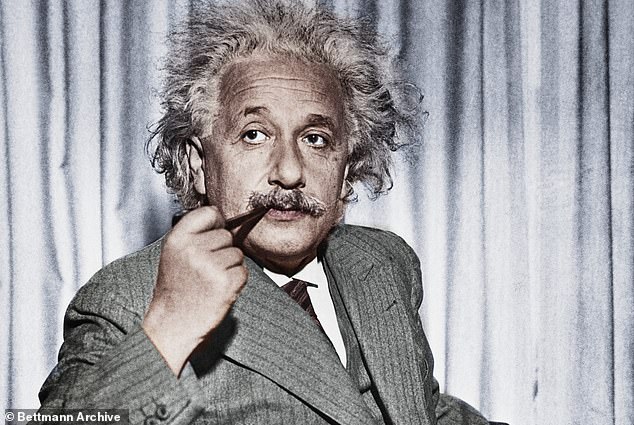
In 1915, Albert Einstein introduced his theory of general relativity to the Prussian Academy of Sciences in Berlin and demonstrated that traveling through time could be feasible.
Although this scenario might seem strange, Einstein’s theories indicate that such time travel is not just feasible but occurs very frequently.
Dr. Alasdair Richmond, a philosophy professor and specialist in time travel at the University of Edinburgh, explained to MailOnline: “According to Einstein, the rate at which time progresses around you changes based on your speed.”
In essence, this indicates that the quicker you move, the more slowly time passes for you.
Therefore, when you’re traveling on an airplane or train, you’ll experience time more slowly compared to people who are stationary, and various experiments have confirmed this phenomenon.
In 1971, scientists Joseph Hafele and Richard Keating embarked on an experiment aimed at demonstrating Einstein’s theory of relativity by inducing time dilation within terrestrial conditions.
The researchers utilized two highly accurate atomic clocks and placed them aboard commercial airplanes that were able to circle the globe non-stop.
One clock was dispatched towards the east and another towards the west, after which both were contrasted with a third clock that remained static on the ground.

As the clock moves eastward along with Earth’s rotation, it travels faster compared to the one stationary on the ground, thus experiencing a lesser passage of time.
How could time travel be feasible?
Einstein’s major discovery was recognizing that spacetime is ‘relative.’
The velocity of light establishes an ultimate speed limit within the cosmos.
This indicates that light must always travel at the same velocity, regardless of your location or the speed at which you are moving when measuring it.
Time and space have to be flexible, so that nothing ever breaks the universe’s speed limit.
Therefore, as you approach the speed of light, time passes more slowly for you.
As the clock moves westward, counter to the Earth’s spin, it slows down compared to the stationary clock below, thus experiencing an incrementally greater passage of time.
Moreover, consistent with what general relativity anticipated, upon landing, Hafele and Keating discovered that the eastern clock had lost 59 nanoseconds whereas the western clock had gained 237 nanoseconds.
Is there anyone who has traveled through time?
Based on this theory, individuals who spend considerable time traveling at high velocities are considered time travelers.
Crew members on the ISS circle the Earth at approximately 17,500 mph (28,100 kmph), a speed that allows them to undergo minimal time dilation effects.
For instance, NASA astronaut Scott Kelly has accumulated 520 days in space station missions and consequently, he has
aged slightly more slowly compared to his identical twin, Mark Kelly, who remained on Earth.
.
At a panel discussion during the ISS Research & Development 2016 conference, Mark stated: “Previously, I was merely 6 minutes older, but now I am 6 minutes and 5 milliseconds older.”
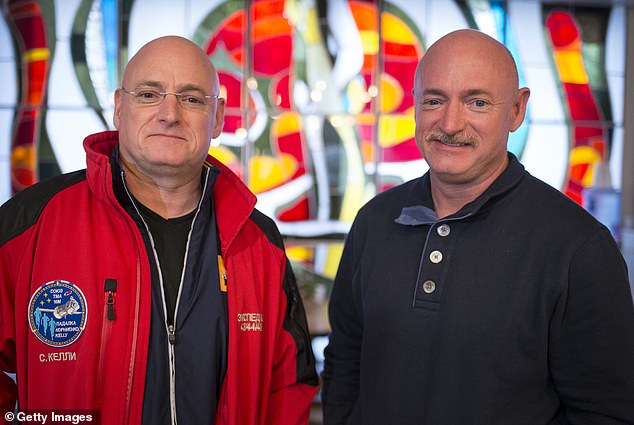
Although these impacts are minor, they occur frequently enough to genuinely create technical problems for precise systems such as GPS satellites.
Given that satellites travel at approximately 8,700 miles per hour (14,000 kilometers per hour), they continually move ahead in time relative to Earth-based clocks. Consequently, their internal timing mechanisms must compensate for this discrepancy.
If the satellites used in GPS did not account for relativistic effects on time, they would fail to determine their accurate location in orbit and thus become ineffective for exact navigational purposes.
Can you travel backwards?
Although moving forward through time is an inevitable result of physical laws, journeying back in time presents a separate narrative.
‘Drifting back through time poses far greater challenges,’ explains Dr Richmond.
Nevertheless, even though it might be impractical in reality, Dr. Richmond notes that backward time travel is ‘technically feasible’ in theory.
This occurs due to the necessity of distorting time and space when reversing direction.
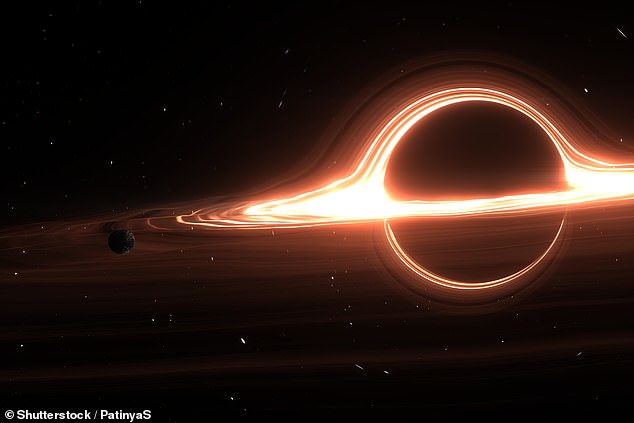

Professor Peter Watson, a theoretical physicist at Carleton University, explained to MailOnline: “Mass can warp space-time; this phenomenon actually defines gravity according to Einstein’s theory.”
‘Theoretically, we have the ability to create a curvature of space-time that forms a loop or tunnel.’
The resultant formation would be referred to as a wormhole, or a passageway through spacetime.
Sadly, maintaining a wormhole open long enough to traverse it necessitates the use of ‘negative mass,’ a concept that remains purely hypothetical.
Moreover, even if we had access to a wormhole or another mechanism capable of forming a ‘closed time-like loop,’ you would never be able to utilize it for traveling back in time before the date it came into existence.
Dr. Richmond notes: “Should we construct the world’s first closed timelike curve generator tomorrow afternoon, I wouldn’t be able to utilize it for traveling back to any point before tomorrow afternoon.”
Therefore, even though backward time travel could potentially work in theory, going back in time to meet your parents just like Marty McFly did in “Back to the Future” remains impossible for now.
Read more
by admin | Apr 1, 2025 | indian national news, international relations, space exploration, space travel, world
Washington D.C., [USA], April 1 (ANI):
NASA
Astronaut
Sunita Williams
mentioned her intention to travel to India shortly and have meetings there
ISRO
Her team during her visit.
Williams said during
NASA
‘s
SpaceX
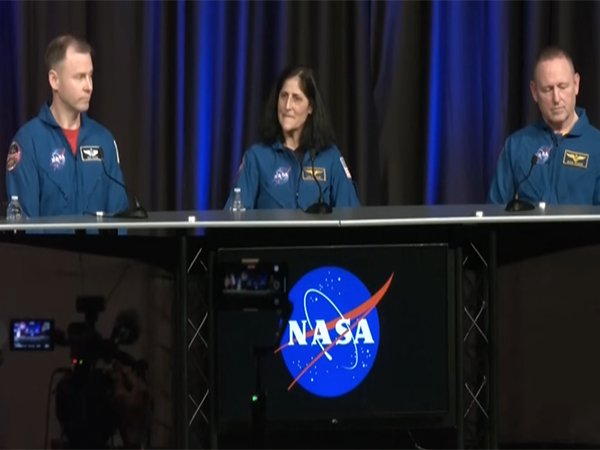
During the Crew-9 post-flight news conference, she expressed that India seemed ‘incredible’ every time her spacecraft flew over the Himalayas during her nine-month-long stay in orbit.
I am hopeful and confident that I will return to my father’s homeland, meet new people, and get excited about the Indian astronauts heading into space.
ISRO
“An upcoming mission,” she stated.
Sunita Williams
Her mother, Ursuline Bonnie Pandya (née Zalokar), has Slovenian-American heritage, whereas her father, Deepak Pandya, hails from
Gujarat
.
Williams expressed her desire to share her experiences from being in space.
ISRO
, noting with approval how India took significant strides in the space industry, considering itself a like-minded democratic nation.
“It’s quite impressive – they’ll have a local hero who can share firsthand experiences about how amazing the International Space Station is from his point of view,” she commented.
“I hope we can get together sometime soon and share our experiences with as many people in India as possible since it’s a remarkable nation, an incredible democracy striving to become one of the leading countries in space exploration. I’d really like to contribute my efforts towards this cause,” she said.
When queried about whether she intended to bring her team along for her upcoming journey to India, she affirmed and joked that they would all get a taste of spicy cuisine.
“Certainly! You may stand out a bit, but that’s alright—we’ll spice things up with some tasty treats, and everything will be perfect,” she said.
Williams mentioned that she could observe how India’s geographical structure emerged as a result of the collision between land masses that led to the formation of the Himalayas, which also had a cascading effect leading to the creation of India itself.
“India is astounding. Each time we flew over the Himalayas—we captured fantastic photographs of them—truly breathtaking. As I mentioned earlier, it’s similar to a ripple effect. This occurred when the tectonic plates collided and continued flowing southward into India. The landscape displays numerous shades and hues,” she explained.
Williams highlighted India’s diversity observable from outer space, ranging from the Himalayan range to varying Eastern cultures, all the way to the fishing boats along the Western coast.
“I believe that when you originate from the East, venturing into places like
Gujarat
And in Mumbai—the fishing fleet along the coastline serves as a signal that says here we come! Throughout India,” she stated.
Williams stated that the nation resembled a web of illumination, with prominent urban centers shining most brightly and gradually dimming as one moves toward lesser towns.
“The impression I got was a web of lights extending from major urban areas through smaller towns. It was breathtaking both at night and during the daytime, particularly with the stunning view of the Himalayas serving as an impressive foreground leading into India,” she stated.
NASA
Crew-9 astronauts
Sunita Williams
On March 19, NASA astronauts Nick Hague and Butch Wilmore, along with Russian cosmonaut Aleksandr Gorbunov, took their first breaths of terrestrial air in more than nine months following the successful splashdown.
SpaceX
‘s Dragon capsule.
Issues encountered during Boeing’s Starliner spacecraft test flight, overseen by astronaut Butch Wilmore, resulted in delays.
Sunita Williams
Last summer, this resulted in the astronaut pair staying in space for nine months instead of just a week, as reported by CNN.
At that time,
ISRO
stated its wish to team up with Williams for upcoming space endeavors.
When Bharat, led by the esteemed Hon’ble
PM Modi
“JI is striving to develop India into a developed nation and wishes to utilize your expertise in the field of space exploration,” it stated. (ANI)
Provided by Syndigate Media Inc. (
Syndigate.info
).
by admin | Mar 4, 2025 | rocket launching, rocket propulsion, rockets, space exploration, space travel
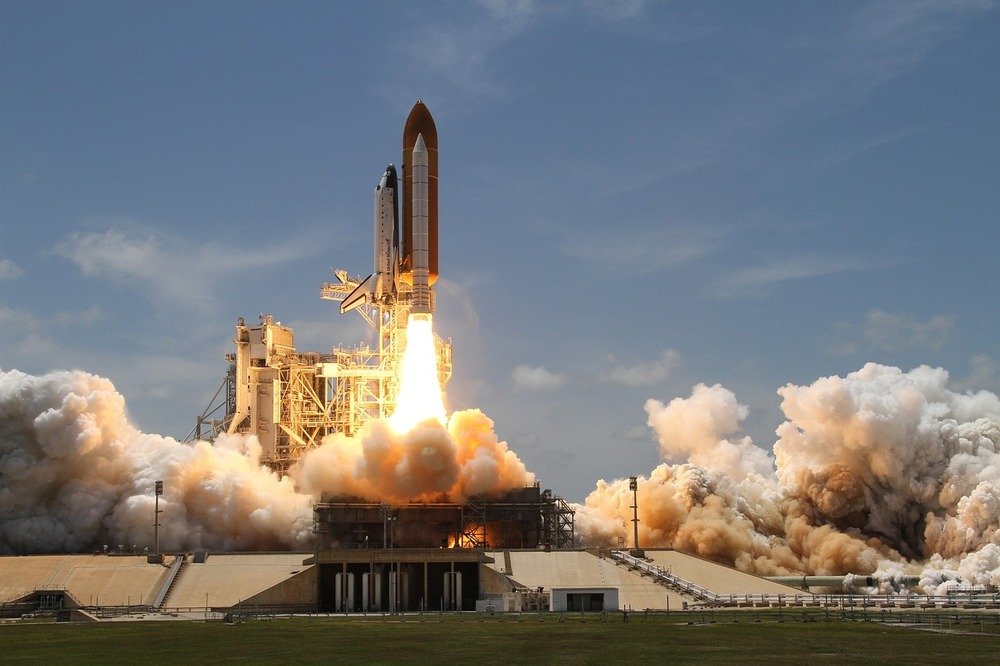
A NASA researcher has successfully developed a rocket that functions without requiring any fuel.
Dr. Charles Buhler, an engineering professional and co-founder of Exodus Propulsion Technologies, announced that his group has managed to develop a fuel-less propulsion system, seemingly breaking the rules of physics.
Following years of study and trials, Charles Buhler thinks this advancement will revolutionize the field and transform propulsion technology.
“The most important message to convey to the public is that a major discovery has occurred,” he said.
This innovative system produces thrust through electric fields instead of ejecting mass, representing a significant shift away from conventional propulsion techniques.
Charles Buhler has likewise shown willingness to work with others to enhance and perfect this innovative technology even more.
(QG – Source: The Brighter Side of News / Image: © Pixabay)
Make sure to explore all our articles on MSN by subscribing to our content. Simply click on ‘follow’ located beside our logo at the top.


