by admin | Jul 22, 2024 | ancient rome, culture, italy, tourist attractions, travel in italy
Throughout Italy, history permeates nearly every street corner. The land is brimming with historical remnants that reflect the former grandeur of the nation. Each of these top five significant archeological sites holds numerous mysteries yet to be unraveled.
Are you considering a trip to Italy? Here are
some
pieces to assist with your planning
out
your trip:
-
Amalfi Coast: 4 amazing places to visit along Italy’s cherished coastline
-
Italy: 15 Unmissable UNESCO Sites
-
Rome: 5 Essential Museums to Visit in Italy’s Capital
-
This route in the Dolomites will lead you through stunning vistas
-
Naples: What are the must-see islands near the Amalfi Coast?
Pompeii: the still city
Pompeii, buried beneath the ash from Mount Vesuvius in 79 AD, serves as an eternal freeze-frame of daily existence during Roman era. Its cobblestone thoroughfares, flanked by stores and residences, continue to evoke the impression that residents might step back into view momentarily. The vibrant murals decorating aristocratic estates stand testament to the sophistication achieved in Roman artistic endeavors. Preserved human forms found within the ruins capture final instants before disaster struck, marking the instant when time itself seemed suspended indefinitely. As this preserved metropolis continues unearthing fresh mysteries, for instance in 2020, it remains a compelling historical enigma.
thermopolium
A type of street food establishment from that era was found remarkably well-preserved, providing fresh understanding into the everyday routines of ancient Romans.
The Colosseum: the battlefield of the gladiators
One of the most lasting emblems of Rome, the Colosseum remains an iconic site even today.
largest amphitheatre ever built
Its limestone walls reverberated with the clamor of the audience and the cacophony of combat for nearly four hundred years. Completed in 80 AD during the reign of Emperor Titus, this structure stands as an emblem of Roman engineering prowess. A sophisticated network of back-stage spaces and elevators enabled elaborate stagecraft, converting the venue into a complete setting instantaneously. Even today, it draws over seven million tourists annually who remain captivated by its ingenious design and tumultuous past. Recently undertaken conservation efforts have witnessed the
hypogeum
(an intricate system of subterranean passageways) was opened to the public again.
Villa Adriana: The Emperor’s Getaway
Close to Tivoli lies the Villa Adriana, also known as
Hadrian’s Villa
) encompasses 120 hectares of palaces, thermal baths, and gardens. Designed as an “Ideal City” by Emperor Hadrian in the 2nd century.
nd
In this century, it showcases elements from both Greek and Egyptian architecture. Even after enduring hundreds of years of stone theft, the location remains impressively intact. For instance, you can find structures like the Canopus, a lengthy canal adorned with statues, along with the Teatro Marittimo—a man-made island where the emperor sought tranquility. The estate continues to hold secrets; for example, in 2021, excavators uncovered remnants of an underground dining area referred to as the
triclinium
, contributing one more element to the complex mystery of this imperial palace.
Herculaneum: Pompeii’s little sister
While not as well-known as Pompeii, Herculaneum was similarly devastated by the eruption of Mount Vesuvius. Instead of ash, it was engulfed in a torrent of volcanic mud, which remarkably left it more intact than its neighboring site. Featuring multistory buildings and exquisite mosaic work, this ancient town retains an air of being a thriving seaside community. The unearthing of 1,800 carbonized scrolls from one of its libraries represents a significant find for scholars studying classical texts. Recently, artificial intelligence has played a crucial role in decoding these invaluable documents.
these fragile documents,
exciting fresh insights into Roman ideology.
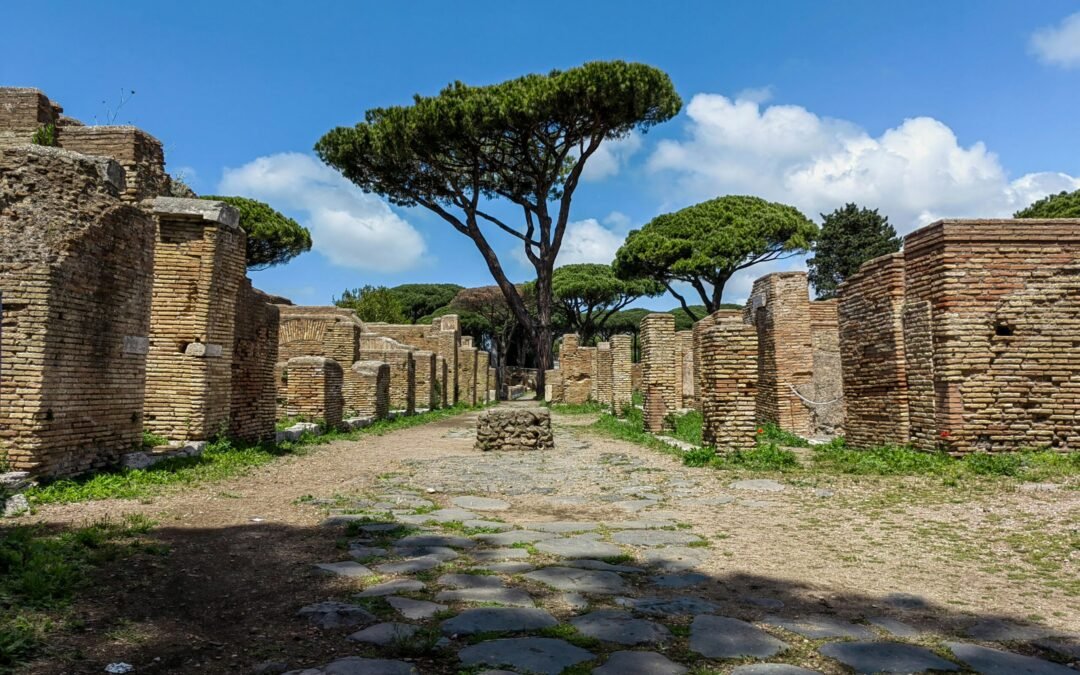
Ostia: The harbor of classical Rome
Previously the epicenter of Mediterranean commerce, this place was
once the principal harbor of ancient Rome
, providing the Eternal City with provisions, resources, and indulgences. Archaeological digs at
Ostia Antica
have revealed an exceptionally well-conserved city, providing rare glimpses into daily Roman existence. The Baths of Neptune, adorned with seafaring mosaic decorations, along with numerous
insulae
(community housing) stand as evidence of the prosperity and high population density in Ostia. The abundance of inscriptions offers crucial insights into the economic, social, and religious dimensions of Roman society.

by admin | Jul 15, 2024 | churches, monuments, roman catholic church, romania, tourist attractions
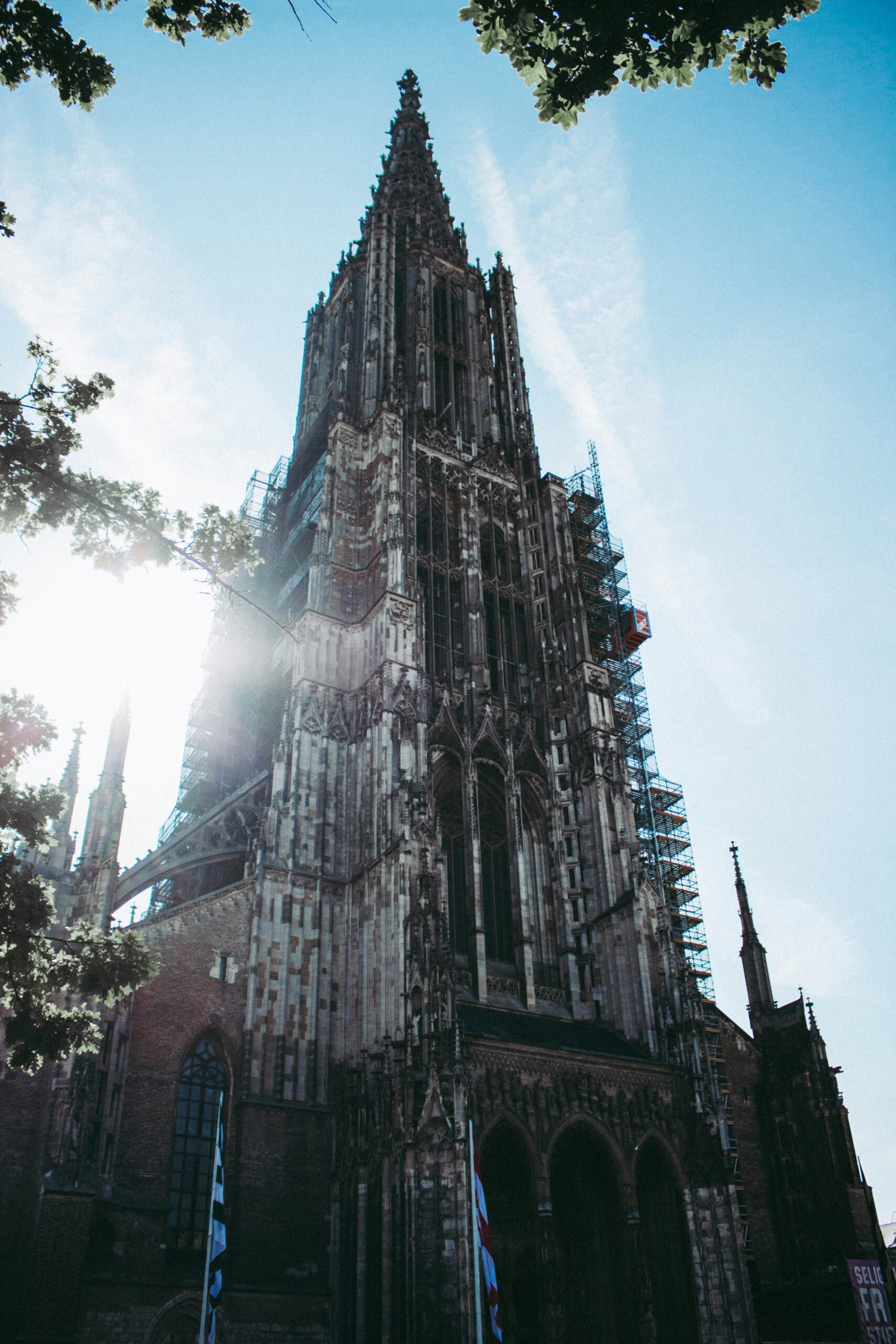
Boasting a towering spire measuring 161 meters, the Ulm Minster in Germany stands as the world’s tallest church. This remarkable example of Gothic architecture draws tourists globally. Let’s delve into the rich history of this iconic German landmark with LIFEHACK.
For many centuries, the Ulm Cathedral (known as Ulmer Münster in German) has served as the iconic representation of the city and a testament to the former magnificence of the German Empire. The construction commenced in 1377 when Ulm held the status of an imperial city. This magnificent cathedral is renowned primarily for its towering spire, reaching a height of 161.53 meters, though this architectural marvel remained incomplete until 1890.
Traveling to Germany? Here are
some
pieces to assist you with planning
out
your
trip:
-
5 Enchanted Forests to Discover in Germany
-
The top five most romantic spots to visit in Germany
-
5 Stunning Castles to Explore in Germany
The Ulm Cathedral, an underappreciated landmark
In the region of Baden-Württemberg in southern Germany, Ulm stands out as a charming town worthy of a visit! Situated along the Danube River, this quaint place is renowned for its Black Forest surroundings, picturesque little canals, and historic buildings that stand in striking juxtaposition to modern extensions. Additionally, Ulm boasts a prominent Protestant church featuring what’s recognized as the tallest spire globally. This iconic structure was completed towards the close of the 19th century.
th
In the course of several centuries since its completion, this massive tower dominates the entire town! Visitors have the option to ascend the 768 stairs to reach the viewing deck situated at an impressive height of 143 meters, from where they can relish the sweeping vista of the city and the Danube River below.
Nevertheless, the Ulm Minster doesn’t share the same level of renown as some of its European peers like the 108-meter-tall Milan Cathedral, or the 132-meter-tall St. Peter’s Basilica in Rome.
Notre-Dame Cathedral
In Paris, featuring a towering 96-meter-high spire, this church sits on Münsterplatz (cathedral square). After the Reformation, it became a Protestant place of worship, distinctly contrasting with the modern architectural style prevalent elsewhere in the city.
Time for some history!
In 1377, the task of building Ulm Cathedral was first assigned to Heinrich Parler, a German architect. After his death in 1387, his sons took over the responsibility for completing the cathedral. Originally, according to Heinrich Parler’s designs, the plan included two main aisles. However, during the subsequent hundred years, many alterations were implemented deviating from these initial blueprints. Plans emerged for an additional aisle; however, in 1543, with the rapid spread of the Church Reformation across Europe, all construction activities halted abruptly.
Not until three hundred years later, in 1844, did work recommence on the cathedral. By 1890, the impressive 161-meter tall bell tower had been finished, securing its place as the tallest of its kind globally at that time. Each of the cathedral’s other two towers stands at an equally notable height of 86 meters.
The cathedral also stands out due to its expansive interior. Measuring 123 meters in length and 49 meters in width, it has the capacity to accommodate up to 20,000 individuals. The walls are decorated with numerous Gothic-style stained-glass windows, many of which date back unchanged since medieval times. These artworks portray images such as the Virgin Mary alongside her mother, Saint Anne; episodes from the Nativity; depictions of Jesus Christ, among others. Throughout the Second World War, this structure managed to evade destruction despite extensive bombings carried out by Allied forces that devastated much of the surrounding city. Nonetheless, several of the nineteenth-century stained-glass panels did not survive and had to be substituted with plain glass.
by admin | Jul 12, 2024 | architecture, asia, culture, heritage, tourist attractions
Every one of these sanctuaries provides a distinctive cultural and spiritual encounter. Make time to stop by when you’re next traveling through Japan.
People adore Japan as a travel destination due to its distinctive blend of ancient traditions and cutting-edge modernity. Central to experiencing this dichotomy are the countless magnificent temples and shrines scattered throughout the nation, providing visitors with an exclusive glimpse into the profound historical and religious legacy of the land.
-
Kinkaku-ji
-
Tōdai-ji
-
Fushimi Inari Shrine
-
Kiyomizu-dera
-
Meiji-Jingu
-
Kōtoku-in
-
Itsukushima Shrine
-
Ryoan-ji
-
Hōryū-ji
-
Zenrin-ji
The 10 temples and shrines you have to see in Japan
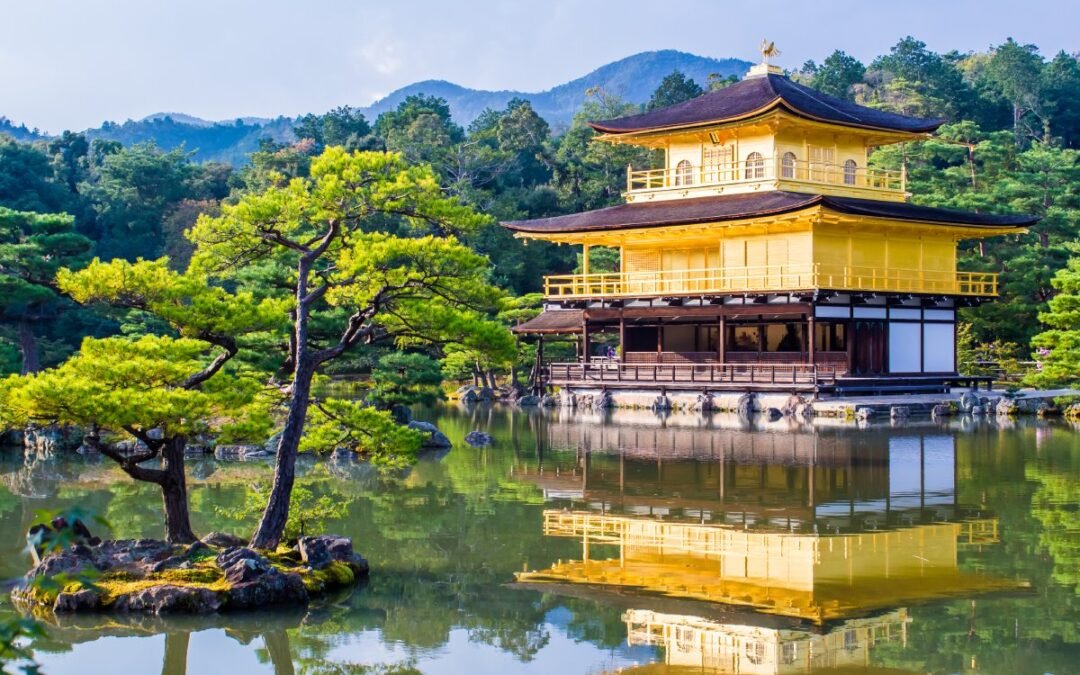
Kinkaku-ji (Golden Pavilion) – Kyoto
Kinkaku-ji, also known as the Golden Pavilion, is a Zen Buddhist temple in Kyoto. Its main attraction is the magnificent gold pavilion, whose splendour is reflected onto the surrounding pond. The temple is surrounded by well-kept landscaped gardens, creating an atmosphere of serenity. Kinkaku-ji is an outstanding example of Buddhist architecture and is a
UNESCO World Heritage Site
.
Tōdai-ji – Nara
Tōdai-ji, located in Nara, is one of Japan’s historic gems. It is home to the bronze statue of the Great Buddha (Daibutsu), which is also one of the largest bronze statues in the world. The temple grounds are also very impressive, with its large wooden doors and avenue lined with stone lanterns. Sika deer, considered to be divine messengers, graze in the surrounding park.
Fushimi Inari Shrine – Kyoto
Fushimi Inari Taisha is one of Japan’s most famous Shinto shrines. It is dedicated to the god Inari, who is the protector of harvests as well as businesses. The shrine is famous for its thousands of red
torii,
These create a stunning tunnel that leads up to Inari Mountain. Tourists can meander along the twisting pathways to take in sweeping vistas of Kyoto.
Kiyomizu-dera – Kyoto
Kiyomizu-dera, situated on a hill in Kyoto, stands out as one of Japan’s most recognizable temples. Its main attraction is the impressive wooden stage constructed without nails, providing visitors with breathtaking views.
breathtaking view
in the city surrounded by cherry blossom trees during the Sakura season. This temple holds significant importance as a key destination for Buddhist pilgrimages.
Meiji-Jingu Shrine – Tokyo
Situated within Yoyogi Park in Tokyo, Meiji-Jingu stands as one of the country’s most frequented and beloved shrines. Constructed to honor Emperor Meiji and Empress Shoken, this site features an imposing wooden torii at its entryway. Encircled by the tranquil atmosphere of the park, visitors can find respite from the bustling city life of Tokyo.
Kōtoku-in – Kamakura
Kōtoku-in Temple, located in Kamakura, is home to the famous Kamakura Daibutsu, a 13.35-metre-high bronze Buddha statue which dates back to the 13th century. For a particularly unique experience, visitors can even step inside the statue.
Itsukushima – Miyajima
The Itsukushima Shrine, located on Miyajima Island, is renowned for its appearance as though it is floating.
torii
, which appear to float on the water at high tide. The shrine is a classic example of Shinto architecture and is set in picturesque natural surroundings, with Mount Misen as a backdrop.
Ryoan-ji – Kyoto
Ryoan-ji Temple is famous for its stone garden, which is also one of the most famous in Japan. It is made up of fifteen stones arranged in such a way that, whatever your position, you can only see fourteen of them at any one time, a composition that encourages meditation and reflection.
Hōryū-ji – Nara
Horyu-ji Temple stands as one of the earliest Buddhist sanctuaries in Japan, established during the 7th century. Renowned for maintaining its original timber construction, this site includes the famed Dream Pavilion, also known as Yumedono, along with significant religious artifacts.
Zenrin-ji (Eikan-do) – Kyoto
The Zenrin-ji Temple, commonly referred to as Eikan-do, is a prominent Zen Buddhist site celebrated for its stunning fall gardens. In the autumn months, the area around the garden transforms with vibrant hues from the maple leaves and other vegetation, painting an absolutely captivating scene.

by admin | Jul 11, 2024 | architectural design, architecture, buildings, culture, tourist attractions
Simply mentioning his name evokes visions of remarkable modern structures featuring distinctively avant-garde designs: Frank Gehry stands as a legend in the architectural realm. His creations—and he remains actively involved in designing new ones—possess a bold identity that consistently leaves people amazed.
Only a select few architects possess such global recognition that simply mentioning their names evokes vivid mental pictures of groundbreaking design. Among these luminaries, Frank Gehry stands out unequivocally. For more than six decades, he has consistently pushed boundaries with each new creation, proving that although architecture is a solemn profession, it can still embrace whimsy and creativity without losing its gravity.
Who is Frank Gehry, the architect?
Frank Gehry, born in Toronto in 1929, pursued his studies in architecture at Los Angeles in 1947. Afterward, he embarked on his professional journey with several companies initially focusing on residential and commercial designs. By the 1960s, when he established his independent practice—now recognized as Gehry Partners LLP—he transitioned towards handling more extensive undertakings.
His career took a significant turn with the renovation of his personal residence in 1978, known as the Gehry Residence in Santa Monica. For this project, Frank Gehry opted for unconventional building materials like plywood, metal, and corrugated steel. This endeavor is frequently considered an architectural manifesto by the designer.
In 1989, he received the esteemed award
Pritzker Prize
– akin to a Nobel Prize for architects – and proceeded to secure various accolades over his career recognizing his contributions to modern architecture.
Aside from his notable accomplishments in architecture, Frank Gehry is deeply committed to education and has shared his knowledge as an instructor at various renowned institutions such as Yale University and UCLA.

What characterizes Frank Gehry’s approach to architecture?
Frank Gehry, an innovative architect known for his unorthodox design methods, is renowned for utilizing irregular shapes, distinctive materials, and an artistic style that emphasizes sculptural elements. His works are frequently categorized under the deconstructivist movement.
His designs are distinguished by their smooth contours, flowing surfaces, and daring application of reflective elements like titanium, stainless steel, and glass. He conceived these structures as complete works of art meant for habitation, seamlessly blending with the surrounding landscape and reflecting the cultural ambitions of nearby communities.
Five must-see masterworks by Frank Gehry that you should visit
The Guggenheim Museum Bilbao in Spain
Launched in 1997, this museum of modern art, featuring its flowing designs and striking materials, has dramatically reshaped the landscape.
Bilbao
has even single-handedly revitalized the city’s economy—a phenomenon now widely referred to as the “Bilbao effect” or the “Guggenheim effect.”
Guggenheim Museum Bilbao
Abandoibarra Etorb., 2, Abando,
48009 Bilbao, Bizkaia, Spain
+34 944 35 90 80
guggenheim-bilbao.eus/en
The Walt Disney Concert Hall in Los Angeles
The building, which opened in 2003, houses the Los Angeles Philharmonic Orchestra. It features a facade made of stainless steel and an acoustically superior interior design, showcasing Frank Gehry’s exceptional architecture.
Walt Disney Concert Hall
111 S Grand Ave
Los Angeles, California 90012, United States
+1 323-850-2000
laphil.com/about/our-venues/about-the-walt-disney-concert-hall
The Louis Vuitton Foundation in Paris
Like a ship moored incongruously in the middle of the Bois de Boulogne, the
Fondation Louis Vuitton
Captivates us with its contemporary, lyrical design. The edifice, opened in 2014, consists of twelve glass sails held aloft by a steel skeleton, hovering over the primary structure. A sight to behold.
Fondation Louis Vuitton
8 Avenue du Mahatma Gandhi
75116 Paris
+33 (0) 1 40 69 96 00
fondationlouisvuitton.fr/en
The Museum of Popular Culture (MoPOP) located in Seattle, Washington
Known as the
Experience Music Project
|
Science Fiction Museum
(EMP|SFM) Up until 2016, the Museum of Pop Culture (MoPOP) was renowned for its vibrant, irregular design featuring striking curved forms that evoke a disassembled electric guitar.
Museum of Pop Culture
325 5th Ave N
Seattle, WA 98109, United States
+1 206-770-2700
mopop.org/
The Dance House in Prague
Created in partnership with Czech architect Vlado Milunić, the design incorporates his expertise.
Dancing House
has emerged as a symbolic structure in
Prague
, readily identifiable due to its undulating, meandering outline, which appears to depict a couple of dancers. Actually, Frank Gehry initially referred to it as
Ginger and Fred
with regard to the renowned 20
th
dancers from the century Fred Astaire and Ginger Rogers.
Dancing House
Jiráskovo nám. 1981/6
120 00 Nové Mě sto, Czech Republic

by admin | Jul 10, 2024 | beaches, islands, tourist attractions, vietnam, world
Located in southern Vietnam, Phu Quoc Island resembles a small slice of heaven. Often referred to as the “Jade Island” due to the lush forests enveloping its pristine white sand shores, this destination serves as an ideal retreat.
Over the past few years, Vietnam has successfully kept pace with fellow Southeast Asian nations like Thailand and Indonesia in terms of tourism appeal. Its advantageous location provides easy access as it shares boundaries with China to the north and Laos and Cambodia to the west. This geographical placement attracts visitors globally. Beyond its rich historical legacy spanning millennia, stunning temples, and picturesque terraced rice paddies, Vietnam offers idyllic island getaways for exploration. Of particular note is Phu Quoc Island, which stands out as our top pick amongst them.
Want to discover
Vietnam? Here are
a few pieces of content to assist you in organizing your travel plans
:
-
Explore the top stunning snorkeling locations in Vietnam
-
6 Must-try Vietnamese dishes for your upcoming journey
-
If you’re planning your first trip to Vietnam, which city should you see first: Hanoi or Ho Chi Minh City?
-
Vietnam: Essential places to visit in this South-East Asian nation
-
Which are the most stunning islands in Vietnam?
An island
with an air of
paradise
Boasting an area of 567 square kilometers, Phu Quoc stands as Vietnam’s biggest island. Situated in the Gulf of Thailand, approximately 400 km southwest of mainland Vietnam, it claims the title for the world’s longest cable car system. Its unspoiled white sand shores, crystal-clear waters, and dense tropical forests create a paradise-like atmosphere akin to a deserted island. This idyllic setting offers ideal conditions for relaxation, swimming, hiking, and exploration.
snorkelling
.

In the northwest part of the island lies one of the nation’s loveliest national parks, designated as a UNESCO World Heritage Site. This park houses approximately 1,000 plant species and around 200 animal varieties. It serves as an ideal destination for hiking enthusiasts. For those seeking adventure, climbing to the summit of Mount Nui Chua, known as the highest point in Phu Quoc, offers breathtaking views. From up there, visitors can admire panoramic vistas of rolling hills covered with forests, rugged mountain chains, and distant seas glistening under the sun.
The most stunning shores on Phu Quoc Island
Although every beach on Phu Quoc boasts remarkable charm, certain ones distinguish themselves from the others. Below are only a handful of these exceptional locations.
Cua Can beach
To the north of Phu Quoc, about 11 kilometers from Duong Dong, lies a pristine and wild beach. Its uniqueness stems from its location where the Cua Can River meets the sea; visitors can traverse the river using unstable wooden bridges here.
Ong Lang beach
This beach likely ranks among the top spots for admiring the island’s gorgeous sunset. Its vibrant coral reefs in multiple colors draw scuba divers to Ong Lang as well. It’s a enchanting location and an essential visit.
Rach Vem beach
Situated in a quaint fishing hamlet up north, Rach Vem Beach offers a tranquil escape composed purely of pristine white sands, crystal-clear waters, and an abundance of starfish scattered along the shoreline. This secluded locale is perfect for those seeking peaceful moments as they dip their toes into the gentle waves.
Sao Beach (also known as Bai Sao)
To the southern part of the island lies Sao Beach, which offers another wonderful opportunity for exploration. Spanning 7 kilometers with pristine white sands, this picturesque coastline is bordered by swaying coconut trees. As evening falls, countless starfish make their way onto the shore—an incredible spectacle to witness.
Additional activities available on the island include

by admin | Jun 26, 2024 | beaches, beautiful places, cities and towns, tourist attractions, travel destinations
Chania is among our top picks on Crete! Located in the northwest part of the island, this charming small harbor city ensures nobody remains unmoved… LIFEHACK invites you to explore one of Crete’s loveliest villages!
Previously the heart of Crete, Chania stands as an exquisite gem of the Mediterranean! As a vibrant, multi-cultural hub, this city has transitioned through eras under various dominions including Minoan, Roman, Byzantine, and Ottoman rule. Every civilization has etched its influence onto the fabric of the city, molding its present character. Boasting historical landmarks, quintessential Mediterranean districts, along with its picturesque Venetian harbor, Chania captivates visitors from around the world.
,
Chania stands out as one of the most picturesque villages in Crete.
Planning a visit to Crete? Learn more about it to get ready for your journey:
-
Crete: 4 upscale hotels for booking during your vacation
-
Crete: Hidden Gems on the Island You Simply Must Visit
-
Crete: Top spots for snorkeling around the Greek island
Chania, a Mediterranean gem
When exploring Crete, be sure not to miss out on Chania! This lively city brims with authentic charm and will particularly enchant those interested in cultural heritage and laid-back living. One of Chania’s standout features is its historic Venetian harbor, which dates from the 1300s. Towering over this picturesque harbor is a 21-meter-tall lighthouse, making it an iconic sight. The waterfront area boasts numerous shops and eateries housed in buildings featuring colorful facades. It serves as an ideal location for watching the sun dip below the horizon while enjoying your favorite beverage.
A short distance down the road, continuing along the historic waterfront of Chania’s old harbor, lies the Janissary Mosque – alternatively referred to as the Kioutsouk Hassan Dome. This structure stands out as one of the city’s loveliest sights. Constructed during the 18th century under the guidance of an Armenian architect, this edifice embodies typical Ottoman design. Its architectural style encapsulates the various influences that have contributed to the city’s rich past. While meandering through the vibrant, cobblestone lanes nearby, visitors can almost feel like they’re stepping into different eras!
The Firkas fortress (barracks in Turkish), built in the 17th century to protect the entrance to the old port, is home to ancient cannons as well as the Marine Museum. What’s more, the fortress offers a unique panoramic view of the entire port.
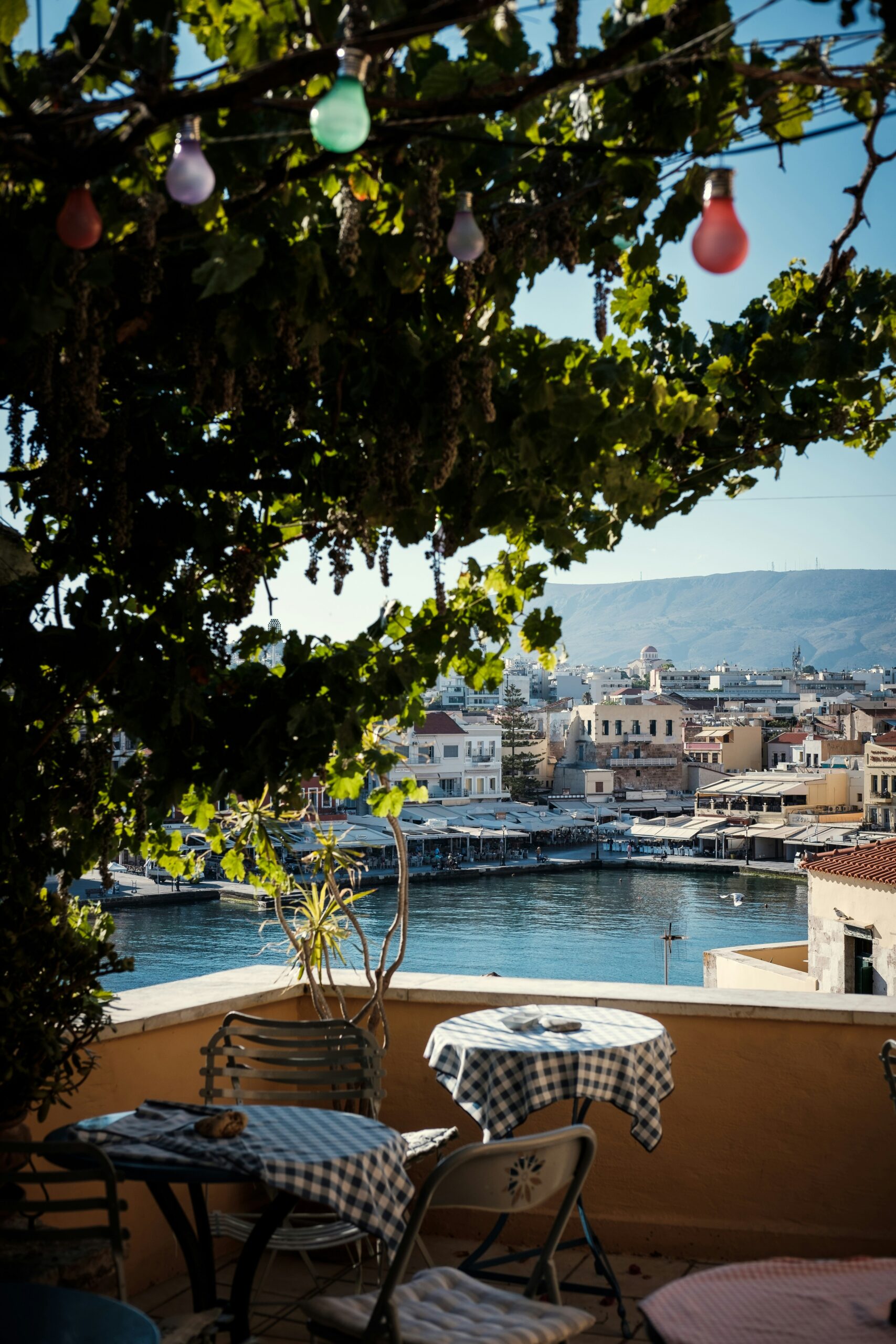
The ancient town of Chania…
The historic center of Chania, designated as a UNESCO World Heritage site, features structures from the Byzantine, Venetian, and Ottoman periods. Strolling through this area, navigating its winding lanes, offers great pleasure as one can appreciate the architecture adorning these homes’ exteriors.
In the Kastelli area, you can still glimpse remnants from the ancient city of Kydonia, which dates back to the era of the Minoans. Within the Splanzia neighborhood, the Church of Saint Nicholas (Agios Nikolaos) – known as the Sultan’s Mosque due to its distinctive minaret built during Ottoman rule – is another site worthy of exploration. Lastly, housed within a previously standing Franciscan monastery, the Archaeological Museum showcases numerous artifacts from prehistory, reflecting an intriguing mix of architectural styles throughout history.
Visiting the historic district offers a great chance to explore the centuries-old covered marketplace, which has been operating daily for more than 100 years! This place is truly iconic, offering an array of finds.
traditional Cretan products
For example, olive oil, thyme honey—the regional specialty—spices, along with textiles and jewelry…
The Akrotiri peninsula
East of Chania lies the Akrotiri peninsula, which is equally deserving of a visit! This area, encircled by mountains, cliff formations, and an abundance of olive groves, houses the Tomb of Venizelos—the key figure behind Greece’s independence—as well as many caves.
In the northern part of the peninsula lies Stavros Beach.
one of the loveliest shores in Crete
In reality, this pristine waterside location served as the setting for the concluding shot in the film.
Zorba the Greek
The film directed by Michael Cacoyannis from 1964. This petite lagoon, encircled by majestic rocky outcrops, provides tourists with an incredible vista!
In wintertime, the mountaintops get blanketed with snow, offering tourists an entirely distinct perspective of the scenery!


