
by admin | Aug 20, 2025 | environmental pollution, environmentalism, politics, waste collection, waste management
Posted on, Aug. 19 — August 19, 2025 at 6:35 AM
The Chief Minister of Punjab, Maryam Nawaz Sharif, stated that Japan’s cutting-edge technology and techniques will be employed for managing wastewater and garbage in Punjab.
During her official trip to Japan, the chief minister toured the nation’s biggest sewage treatment plants located in Asahi, Yokohama City, Kanagawa, Washimaku, and Yodogawa, according to a press release published here on Monday.
She received an extensive overview of garbage collection, sewage treatment, and waste management systems in Japan. Authorities mentioned that Yokohama, Japan’s second-biggest city, processes 1.5 million liters of wastewater each day at its Solid Waste and Wastewater Treatment Plant.
The site also manages multiple facilities that produce electricity from garbage, which is subsequently utilized to supply heat to nearby households.
The CM was also informed that Yokohama’s waste disposal system sorts reusable items using state-of-the-art automation, positioning the city as an international example of ecological responsibility even with its manufacturing-based economy.
Praising Japan’s excellent benchmarks, Chief Minister Maryam Nawaz Sharif stated, “The environmental and city planning approach of Yokohama will be introduced in Punjab. Through the use of Japanese technology, our objective is to upgrade wastewater and garbage management, produce renewable power, and provide a lasting future for our citizens.”
In addition, Punjab Chief Minister Maryam Nawaz Sharif mentioned that Yokohama and Punjab have reached an agreement on “city-to-city” collaboration across various fields such as environmental conservation and contemporary urban planning.
While visiting Yokohama, Japan’s major center for commerce, economy, and culture, the CM along with her team was provided an extensive overview of city planning at Yokohama City Hall, according to a statement released today.
She engaged in talks about improving the standard of road and structure development in Punjab to align with Japanese benchmarks and examined opportunities for collaboration between Ravi Urban Development Authority (RUDA) and Yokohama.
The CM, who is presently visiting Japan on an official five-day trip, also examined possibilities for cooperation in operating a high-speed rail service connecting Lahore and Islamabad, as well as enhancing Punjab’s railway system. She received additional information about Japan’s newest gondola and aerial cable car initiatives.
PM Maryam Nawaz Sharif highlighted that Punjab stands to gain significantly from Japan’s knowledge in eco-friendly city development, waste management, and advanced transportation systems.
by admin | Apr 1, 2025 | news, nuclear energy, nuclear reactors, transportation, waste management
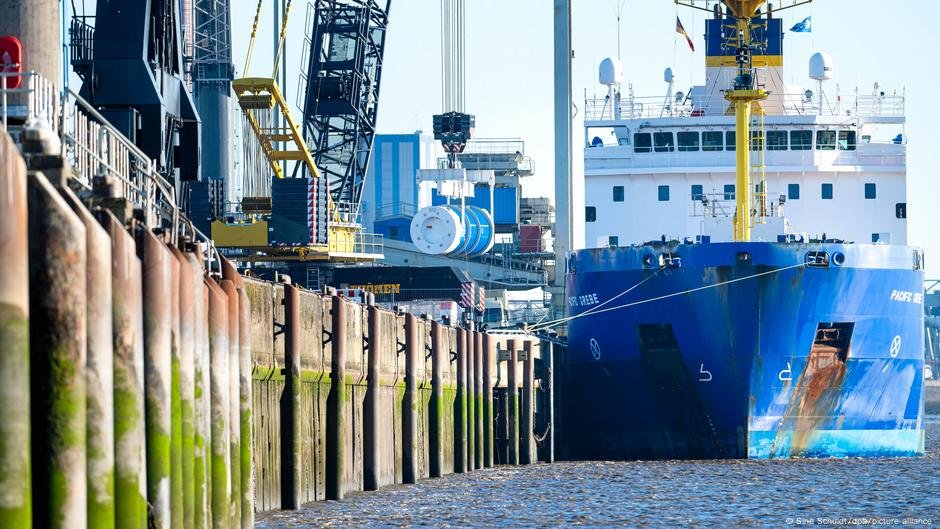
Seven containers loaded with nuclear waste were moved from a ship to a train in Northern Germany, destined for transportation to Bavaria. However, Germany currently lacks a definitive disposal plan for this hazardous material.
A vessel transporting seven containers brimming with extremely radioactive nuclear waste arrived at the port of Nordenham in Northern Germany’s state of Lower Saxony early Tuesday morning. The event was marked by demonstrations and an increased law enforcement presence.
Nuclear waste is currently en route from Sellafield in northwest England to a provisional storage facility in Niederaichbach within the southern German region of Bavaria. This material departed from the northwestern English harbor town of Barrow-in-Furness last week and will be shifted from vessel to rail at Nordenham prior to proceeding further southward. These radioactive remnants originate from processed fuel assemblies sourced from retired German nuclear facilities.
The first of the containers, which are four meters (13 feet) long and weigh over 100 tons, was lifted off the special “Pacific Grebe” transport ship by a large crane on Tuesday morning and underwent inspection to measure radiation levels and ensure they matched those taken in Sellafield.
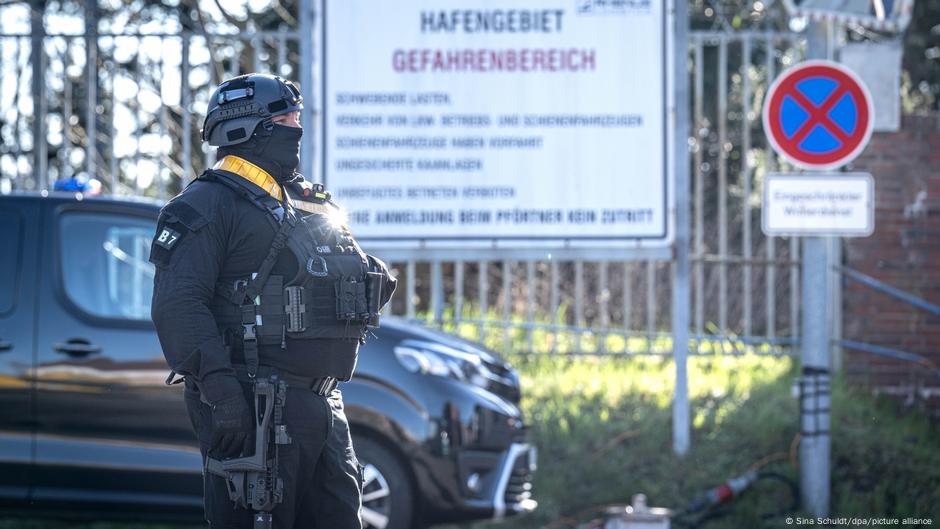
The harbor in Nordenham continues to be closed off and monitored by police equipped with heavy arms, who until now have not encountered any disturbances, even though several demonstrations by nuclear power opponents have taken place.
Nuclear waste: Why are people protesting?
“Every castor container carries enormous risk,” said Helge Bauer from the protest group
Ausgestrahlt,
which means “radiated.” “Nuclear waste should, therefore, only be transported once — to a permanent storage site.”
Upcoming demonstrations are scheduled along the anticipated path of the train transporting the waste in the coming days, with events set to take place in Bremen and Göttingen.
“Each Castor shipment is unnecessary as it merely delays addressing the issue rather than resolving it,” stated Kerstin Rudek, a representative of Castor-Stoppen, in an official release. She further emphasized that nuclear waste ought not to be relocated until a secure permanent disposal site has been established.
If Germany were to phase out nuclear energy, where would the resulting waste come from?
Germany started reducing its reliance on the use of
nuclear power
In 2003, a process that sped up after the Fukushima disaster in Japan in 2011 led to Germany’s last operational nuclear power stations being decommissioned.
shut down
in 2023.
But Germany is still
required to accept returned nuclear waste
Produced using components derived from its plants, which, until 2005, were routinely shipped to reprocessing facilities in Sellafield and La Hague, France. After processing, the nuclear waste was returned to Germany.
has frequently faced demonstrations.
As reported by the Society for Nuclear Services (GNS), more than 100 CASTOR containers were moved from La Hague to Gorleben, located in Lower Saxony, between 1995 and 2011. In 2024, the last four containers were shipped to Philippsburg in Baden-Württemberg. Additionally, six containers were transferred from Sellafield to Biblis, which is in Hesse, back in 2020; another seven are scheduled for future transport.
Where does Germany keep its nuclear waste?
Germany’s Federal Company for Radioactive Waste Disposal (BGE) is currently in the midst of finding an appropriate site for the long-term subterranean storage of approximately 27,000 cubic meters of nuclear waste generated during six decades of the country’s nuclear power industry.
Nuclear waste, capable of remaining radioactive and thus extremely hazardous for up to hundreds of thousands of years, is presently kept in 16 provisional surface sites; however, these locations cannot serve as permanent storage indefinitely.
In November 2024, Lisa Seidel from BGE stated, ‘We are employing an empirical method to pinpoint a site that provides optimal security,’ as reported by the public broadcaster NDR.
Edited by: Sean Sinico
Author: Matt Ford (with dpa, NDR)
by admin | Apr 1, 2025 | business, environmental friendliness, landfills, waste collection, waste management
To address Monrovia’s pressing waste problem, officials have initiated a groundbreaking pilot program designed to convert garbage into a useful asset and encourage eco-friendly urban development.
The program dubbed the Solid Waste Management Transformative Pilot Project commenced operations at the Jorkpen Town Market composting facility. This joint venture involves the Environmental Protection Agency (EPA), the Monrovia City Corporation (MCC), and various community members, supported financially by the Canadian government via Novasphere. Organizations such as the Liberia Marketing Association (LMA) along with Community-Based Enterprises (CBEs) and neighborhood groups are contributing significantly to executing this endeavor.
In Monrovia, approximately 800 tons of solid waste are produced daily, with less than half being adequately collected. As a result, uncollected garbage blocks drainage systems, contaminates water bodies, and poses risks to public health. Vermon Sangah Lloyd, who leads the project, states that this effort marks a significant departure from previous approaches.
“Managing waste isn’t all this initiative covers; it’s also about reshaping our perspective and approach towards it,” stated Lloyd. “Our aim is to build a world where waste ceases to be an obstacle and becomes a cornerstone of both ecological and financial advancement.”
A preliminary investigation carried out in four key markets in Monrovia—namely Old Road, Fiamah, Rally Town, and West Point—found that these areas generate approximately 89.3 kilograms of organic refuse per day on average. This waste predominantly comprises items like leaves, fruit, and veggies, highlighting the feasibility of using composting as an effective, environmentally conscious approach.
The pilot initiative aims to pinpoint steady streams of organic refuse from city marketplaces, set up communal composting facilities, and educate national and local “waste leaders” to drive transformation aligned with Liberia’s commitments to tackling climate issues. Currently, four Community-Based Enterprises have received certification to gather and move waste to the Jorkpen Town Market compost location, turning it into reusable compost.
To facilitate efficient collaboration and supervision, a Solid Waste Coordination Committee has been established, led by the EPA with the MCC as co-chair. Participants have gained valuable insights through an educational trip to Tanzania, where they were trained in practical methods of composting and sustainable waste handling practices. Mapping activities within communities have assisted in identifying crucial collection sites to enhance operational efficiency and amplify overall effectiveness.
During the unveiling, Lloyd emphasized that the initiative extends beyond mere construction—it aims to catalyze a cultural and ecological transformation. He stated, “This composting hub signifies much more than an installation; it heralds the start of a revolution.” According to him, by decreasing methane output, revitalizing markets, and generating eco-friendly employment opportunities, they aim to establish a model for the nation to follow.
President Ma Elizabeth Sambola of LMA supported this view, encouraging significant local involvement in the project. She stated, “This endeavor restores control to the citizens.” Adding, “As market women, we should spearhead this effort—while involving young people as well. It’s an occasion for us to create a more sanitary and healthy environment in Monrovia.”
Provided by SyndiGate Media Inc.
Syndigate.info
).

by admin | Mar 27, 2025 | electric power, infrastructure, waste management, water management, water supply
MANILA, Philippines – Manila Water has successfully finished upgrading six key facilities aimed at improving its round-the-clock water supply services for clients in Metro Manila’s East Zone and Rizal. These enhancements were made mainly to address potential increases in usage as well as anticipated power disruptions.
Pumping stations are essential for ensuring continuous water supply to consumers in Metro Manila and Rizal.
Acknowledging this fact, Manila Water has concentrated efforts on fine-tuning these facilities to guarantee their superior performance.
The concessionaire for the Eastern area has enhanced the electricity provision at its Balara Pumping Stations 1 and 2 located in Quezon City.
Installing three intelligent power meters has ensured consistent and non-stop energy supply to these facilities.
These power-saving meters are incorporated into the current Programmable Logic Controller (PLC) along with the Supervisory Control and Data Acquisition (SCADA) system, guaranteeing backup and dependability in electricity distribution.
The enhanced power supply units enable better and quicker management of the pumping systems, cutting down on energy usage and decreasing downtime.
At the Modesta Pumping Station located in San Mateo, Rizal, an investment of P7.6 million has been allocated for the installation of a 300-horsepower horizontally split casing pump along with its accompanying motor.
The upgrade has considerably improved the station’s efficiency, allowing it to more effectively cater to both present and expected needs at the Silangan Reservoir starting from Q4 of 2024.
In an effort to enhance energy reliability, the San Juan Pumping Station 1 located in Quezon City has received a significant P128.6 million update for its main electric systems.
This project encompasses the setup of new 1,750-kilowatt generator units, refurbishment of the genset enclosure, enlargement of the fuel day tanks, and improvements to the automation system.
Moreover, the Cubao Pumping Stations Reliability Project brought about numerous vital improvements.
One major feature of this project involved swapping out the station’s 1.5-megavolt-ampere (MVA) transformer for a sturdier 2-MVA model.
This newly introduced transformer markedly enhances energy efficiency, minimizes power disruptions, and equips the facility to handle upcoming demand, thus guaranteeing a steady and robust water supply for the area.
The effective restoration and upgrade of the Makati Pumping Station have boosted operational efficiency, cut down on carbon emissions, and enhanced water delivery for residents of Makati City.
The upgrade costing Php 92.45 million included swapping out three 300-horsepower electric motors with six smaller horizontal split case pumps, optimizing area usage and guaranteeing consistent water flow.
“These improvements at our pumping stations are being made to accommodate the rising demand as our user community keeps expanding. Our aim is to maintain round-the-clock water supply for all our clients even as we broaden our services,” stated Jeric Sevilla, who leads the Communications Affairs Group at Manila Water.
Apart from enhancing water delivery, Manila Water has also significantly upgraded one of its water treatment facilities.
The firm has improved Balara Treatment Plant 2 through the rehabilitation of its drainage system, replacement of wastewater valves, and restoration of the filtering areas.
Finished in the third quarter of 2024, this ⚡₱37-million⚡ initiative led to a decrease in water loss by 0.20%, which equates to around 0.05 million liters daily.


