
by admin | Mar 27, 2025 | government, news, public policy, social welfare, welfare
MANILA, Philippines
—
The Department of Social Welfare and Development (DSWD) has realigned its Ayuda sa Kapos ang Kita Program (Akap) to assist those earning less than the minimum wage among Filipinos.
Social Welfare Secretary Rex Gatchalian revealed the change in policy on Thursday at a press briefing held at the DSWD main office in Quezon City.
“Last year, the specific clause referred to ‘low-income’ individuals. Now, it has been refined to mean people earning less than the minimum wage… It is more targeted since, as recalled from the President’s veto statement, they mentioned below minimum wage. Hence, those eligible are citizens whose earnings fall below the set minimum,” he explained in Filipino.
He mentioned that the updated guidelines mandate publishing details about Akap recipients on the DSWD website and social media channels to boost transparency.
With the midterm elections drawing near, steps have been taken to avoid political meddling.
Applicants will not be permitted to participate in distribution events or show promotional items associated with the program.
READ:
DSWD prohibits politicians and political materials from participating in ‘Akap’ distributions.
“We will ensure that during the distribution of payments—which has become an issue, correct?—there won’t be any politicians involved. We will also see to it that their materials are not present,” Gatchalian stated in Filipino.
Almost five million nearly impoverished Filipinos received assistance from Akap within its initial year. The initiative successfully utilized 99.31 percent of its ₱26.7 billion allocation. Areas including Cagayan Valley, Davao, and Caraga saw complete absorption of their allocated funds at 100 percent.
In 2025, an allocation of ₱26 billion has been set for AKAP, aimed at assisting five million individuals earning less than minimum wage. The aid will include medical support, funeral assistance, food provisions, and monetary help via the DSWD’s Crisis Intervention Units and their branch locations.
Gatchalian stated that the guidelines were developed with contributions from NEDA and DOLE.
READ:
DSWD reports nearly 5 million Filipinos received aid through Akap; 99% of funds utilized.
“I want to highlight that the Akap guidelines underwent extensive study and development. This wasn’t just done by us at the DSWD; we worked together with the DOLE and NEDA to shape the joint memorandum circular which served as the foundation for our implementation of Akap,” he explained in Filipino.
Sheba Barr, SANGGRALOKA.net intern

by admin | Mar 27, 2025 | education, politics and government, public policy, social welfare, welfare
CEBU CITY, Philippines – Around 115,729 households benefiting from the Pantawid Pamilyang Pilipino Program (4Ps), managed by the Department of Social Welfare and Development (DSWD), are set to graduate from the initiative in the Central Visayas region.
Based on a press statement released by DSWD-7 on Thursday, there are 79,205 4Ps households located in Cebu, which encompasses areas within highly urbanized cities, whereas 36,524 families reside in Bohol.
The graduation events for the recipients, known as the Saulog 4Ps Ceremonial Graduation, continue at different times across multiple local government units (LGUs).
Various local government units have already held their graduation ceremonies. In Cebu, this includes events in Consolacion and Liloan on March 14, Lapu-Lapu City on March 17, Asturias on March 19, and Danao City on March 25.
At the same time, in Bohol, the events took place in Talibon on March 18 and in Dauis on March 19.
The graduates who meet this criterion have been recognized as reaching self-reliance according to the most recent Social Welfare Development Indicators provided by the DSWD.
The SWDI aims to evaluate and track the improvement in the quality of life of 4Ps household members and to assist with case management for a lasting escape from poverty.
Based on the DSWD criteria, for individuals to be deemed self-reliant upon exiting the program, they must generate sufficient earnings to cover their expenses, satisfy their day-to-day requirements, and attain at minimum the initial two stages of the SWDI framework—the Survival stage (Stage 1) and the Subsistence phase (Stage 2).
“I extend my congratulations to every single one of you for achieving what you set out to accomplish when you first joined the program. You have devoted countless hours, put in significant effort, and made great sacrifices to meet all the requirements of this program, and today, you stand at the threshold of graduation,” stated DSWD-7 Director Shalaine Marie Lucero during the event held in Lapu-Lapu City.
Lucero likewise motivated the graduates to persist, put in considerable effort, and utilize the knowledge gained from the organization’s bi-monthly Family Development Sessions (FDS) as they endeavor to realize their aspirations.
Bernita Tubio from Dauis, Bohol, one of the graduates, gave her testimonial, highlighting her pride in having three of her offspring complete their college education, including two who are currently employed as seamen.
Starting from January of this year, Tubio has taken up the role of a Barangay Health Worker (BHW) within her neighborhood.
“Tulo na ang among mga bata nga nagtatan-aw ngadto sa pagtapos sa balayosa. Dako ang among pasasalamat alang sa gobyerno ug hiniusab sa programa 4Ps, nga nagtabango kanako aron mabalhin ang among mga gamhanan sa balayosa,” wangsang tubigon ni Tubio. (Now I have three of my children looking forward to finishing their education. Greatly thankful am I to the government and particularly through the 4Ps program, which has supported me in sending my offspring to school.)
Lucero likewise recognized the cooperative work among several national government agencies, local government units, and civic groups in delivering varied assistance programs aimed at enhancing the quality of life for families enrolled in the 4Ps initiative.
Introduced in 2008 and officially established in 2019 via Republic Act No. 11310, the 4Ps initiative offers financial assistance to recognized low-income families. This includes educational support for kids to complete primary and secondary schooling, healthcare benefits, as well as aid for purchasing rice.
RELATED STORIES
DSWD-7: Almost 30,000 4Ps participants in Central Visayas complete their involvement in the program
DSWD: 470 individuals from Carcar City complete 4Ps program
by admin | Mar 25, 2025 | happiness, politics, society, welfare, world
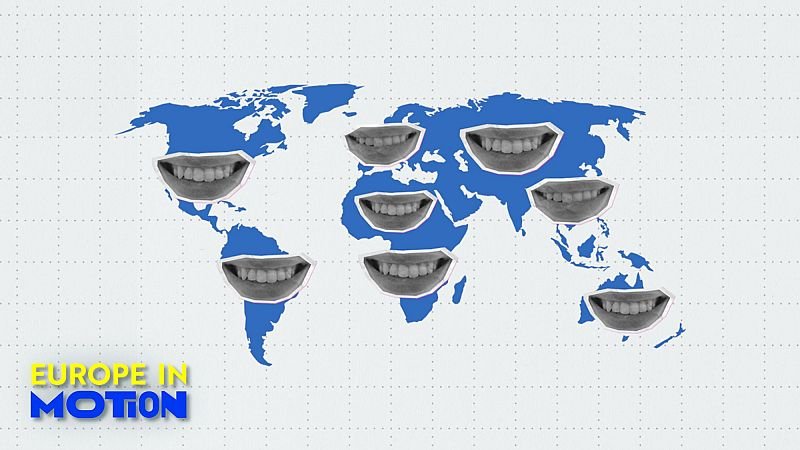
Finland has been crowned the globe’s happiest nation for eight years running, as stated in the World Happiness Report 2025.
Specialists point out that easy access to natural areas and an effective social support network contribute to this.
This is followed by Denmark, Iceland, and Sweden.
These nations consistently achieve top scores in indicators such as social support, trust, and general well-being.
The World Happiness Report polled over 100,000 individuals across 140 nations and regions.
“Contentment in Finland isn’t defined by unceasing happiness but rather by a feeling of safety, trust, and equilibrium in everyday living. This satisfaction stems from the assurance that help is available whenever required, be it via robust social welfare systems, superior educational opportunities, or proximity to natural environments,” stated Miika Mäkitalo, CEO of
HappyOrNot
, a Finnish firm that assists companies gauge customer contentment.
Mäkitalo added: “In our community, we uphold principles of equity and environmental stewardship, fostering a setting where individuals receive support and can flourish. By implementing policies like extensive paternity leave and accessible early childhood care, we guarantee that households enjoy economic stability along with ample opportunities to bond with offspring, underscoring a broader dedication to health and harmony between professional duties and personal life.”
Eating together and having someone to count on
Communities where individuals often have meal-sharing experiences tend to exhibit greater levels of happiness and stronger social support systems.
The sole EU nation appearing in the upper echelon is Poland, where individuals partake in over 10 communal meals each week on average.
In contrast, Estonia sits at the bottom of the list, with residents reporting just 2.7 shared meals per week.
Individuals residing solo tend to be unhappier.
In Europe, households comprising four to five individuals show the greatest degrees of happiness.
Nevertheless, loneliness amongst younger individuals is increasing, with 19% stating they have nobody to depend on — this marks a 39% rise from what was seen in 2006.
A lot of young people often undervalue their friends’ ability to understand and share feelings, causing them to shy away from forming connections and losing chances for significant bonds.
Deeds of compassion saw an upsurge during the COVID-19 pandemic and continue to be 10% higher than before the outbreak.
It seems that donating and volunteering are more prevalent in Central and Eastern Europe, whereas sharing tangible assets is more frequent in Western Europe.
The current year’s report encourages us to focus on factors beyond conventional measures such as health and wealth. Surprisingly, activities like sharing meals and having trust in others emerge as more significant indicators of happiness than anticipated,” stated Jan-Emmanuel De Neve, who directs Oxford’s Wellbeing Research Centre and co-edits the World Happiness Report. “Amidst today’s climate of social distancing and political division, it becomes essential to discover methods to gather individuals at one table once again—this action is vital for both personal and communal well-being.


