
oleh admin | Agu 19, 2025 | automotive industry, car companies, cars, electric cars, singapore
Chinese electric vehicle brand Nio plans to debut in Singapore in the first quarter of 2026, marking its first market in the Southeast Asia region.
The automaker announced in a press statement released on Monday that it will introduce its small electric hatchback called Firefly.
The car allows conventional electric vehicle charging, but it also enables swapping the battery with a completely charged unit within three minutes at Nio’s facilities.
For the first time, this launch will include a right-hand drive variant of the Firefly.
The Straits Times
reported.
Nio previously stated intentions to manufacture vehicles with right-hand drive alongside those with left-hand drive for regions including the U.K. and Southeast Asia. Distribution will be handled by the multi-brand automotive company Wearnes Automotive in Singapore.
Established in 2014, Nio made its debut on the New York Stock Exchange in 2018 and subsequently expanded to the Singapore and Hong Kong stock markets in 2022, as reported.
The Business Times
.
Nio is known for its battery swap technology, which is currently not permitted for passenger EVs in Singapore, though the system has been approved for motorcycles and is being tested on heavy vehicles.
The company and its local distributor Wearnes said they “will evaluate” introducing the technology in the city-state, but offered no specifics on when or how it might be implemented.
The arrival of Nio came after several other Chinese electric vehicle manufacturers, such as JMEV earlier this month and Avatr at the end of July, according to reports.
AsiaOne
.
Another Chinese electric vehicle manufacturer, BYD,
currently leads Singapore’s passenger car market
representing almost 20% of new sign-ups during the first six months of this year.
Toyota from Japan and the German premium brand BMW come next with market shares of 14.4% and 11.1%, respectively.
oleh admin | Apr 1, 2025 | automotive industry, autos, car companies, cars, electric cars
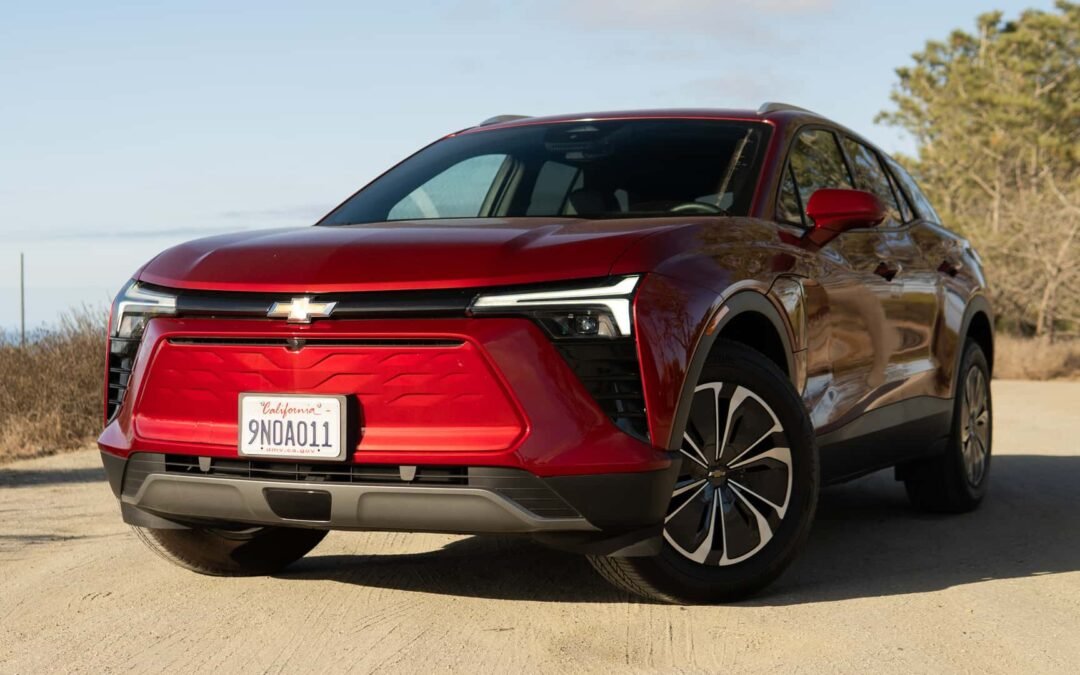
The firm’s budget-friendly electric vehicle gamble is proving successful, yet these favorable circumstances could be short-lived.
A year back, General Motors’ plans for electrification were not faring well. The Chevrolet Bolt had been discontinued. Meanwhile, the Chevy Blaser EV faced a difficult beginning.
leaving one of our reporters caught in a significant public blunder
. Software problems
plagued the Cadillac Lyriq
.
We were discussing how the entire “Ultium” initiative had derailed.
However, the company pressed ahead, establishing itself as a leader in electric vehicles and debuting the most capable budget-friendly EV to date, which turned into
our first-ever Electric Vehicle of the Year award
.
The market has responded. General Motors’ electric vehicle (EV) sales have surged by 94%, positioning them to become the second-largest EV manufacturer in the U.S. However, this achievement comes with a significant caveat. While the company excels in producing EVs, their top-selling models are manufactured in Mexico.
With 25% duties scheduled to come into effect tomorrow
GM will now have to figure out how to sustain its progress even though its two least costly models have become significantly pricier. This presents quite a challenge.
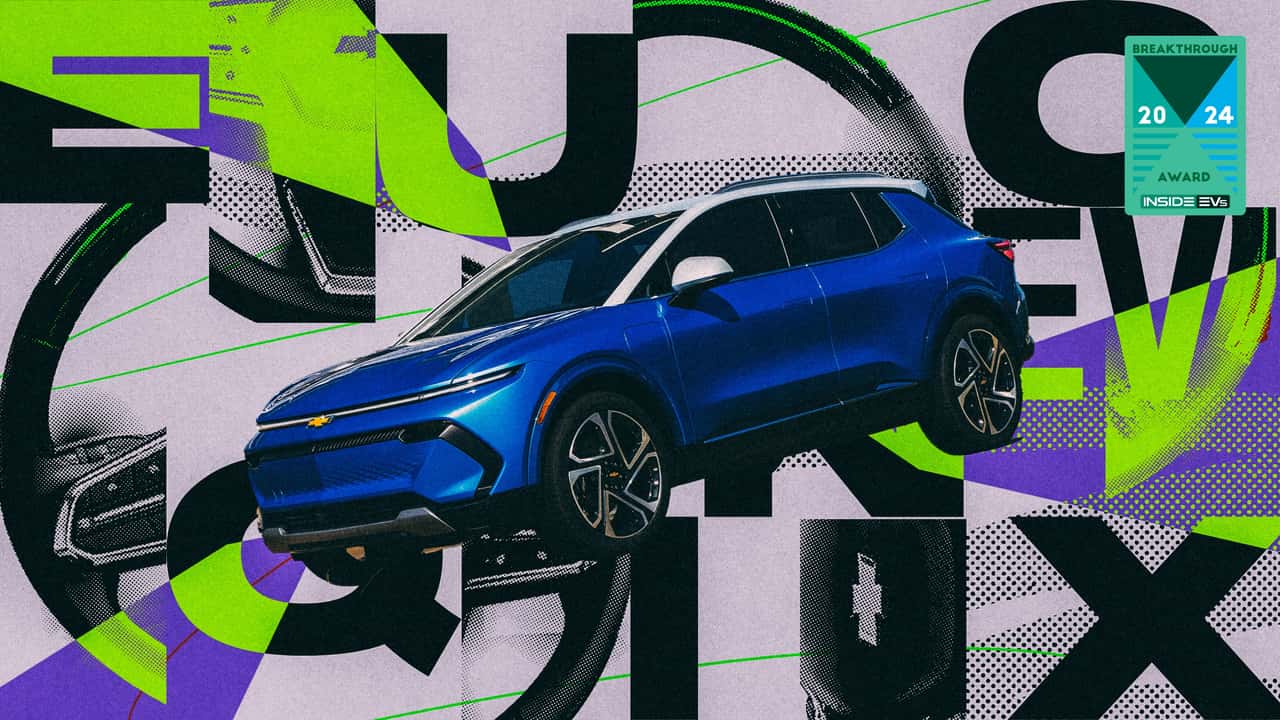
Photo by: Fernando Pino
Our 2024 Breakthrough Electric Vehicle of the Year award went to the Equinox EV due to its excellent pricing and remarkable range. However, it’s manufactured in Mexico.
The Equinox EV starts at around $35,000, and because it’s imported from Mexico, it could have a tariff of around $8,750 for a base model. The Blazer EV will have an even steeper duty. When you dive into GM’s EV sales figures, you see how big of a problem that is. Chevy sold 6,187 Blazer EVs and 10,329 Equinox EVs last quarter.
Those numbers make them the #1 and #2 players in GM’s EV bullpen. Here’s how many sales each of GM’s other EV models recorded last quarter:
-
Cadillac Escalade IQ: 1,956 units sold
-
Cadillac Lyriq: 4,300 sales
-
Cadillac Optiq: 1,716 sales
-
Chevrolet Bolt EV/EUV: 13 units sold
-
Chevrolet Silverado EV: 2,383 sales
-
GMC Hummer EV: 3,479 units sold
-
GMC Sierra EV: 1,249 sales.
The
Cadillac Optiq
The Equinox EV, Blazer EV, and Optiq are also manufactured in Mexico. Adding these together, we have 18,232 sales from the Mexican-made models. In contrast, the remaining models produced in the U.S. contributed only 13,380 sales among them.
The Blazer and Equinox performed exceptionally well on their own. Additionally, they come at the lowest price points among available options, making electric vehicles accessible to a broader audience. Personally, I opted for a Chevy since the Blazer EV had the most budget-friendly leasing option when I made my decision, and it met all of my requirements.
Related News
-
The Chevy Equinox EV Takes Home Our Title of 2024 Breakthrough Electric Vehicle of the Year
-
Trump Imposes 25% Duties on All Incoming Vehicles
-
2024 Chevy Blazer EV Owner Review After Six Months: Pros and Cons Revealed
-
No One Is Emerging Victorious In The Electric Pickup Truck Battle… Not Yet At Least.
-
Chevrolet Equinox EV: Ways to Obtain One for Less Than $30,000
-
2026 Chevy Bolt EUV: All the Details Available
Certainly, the pickup trucks are presently quite costly.
However, more affordable alternatives will be available shortly.
A fresh version of the Bolt EV is expected to launch this year as well, and it’s slated for production in the United States. However, General Motors’ domestically produced items will still face challenges.
According to federal filings
Only 36% of the parts value in the Silverado, Sierra, and Hummer EVs originates from America and Canada combined (the data doesn’t distinguish between them). This implies that if every component within that 36% comes from the United States, approximately 64% of these vehicle’s components by value would still face a 25% tariff.
In brief: All GM electric vehicles might become pricier soon.
General Motors isn’t facing this situation alone. The entire automotive sector is grappling with the impact of these tariffs, leaving everyone uncertain about future developments. However, GM has recently kickstarted its electric vehicle transformation. According to the company, their EVs generate “positive variable profits,” which basically indicates that excluding initial expenses and factoring in the advantages of Zero Emission Vehicle (ZEV) credits they avoid purchasing, EV production turns out to be financially beneficial for them.
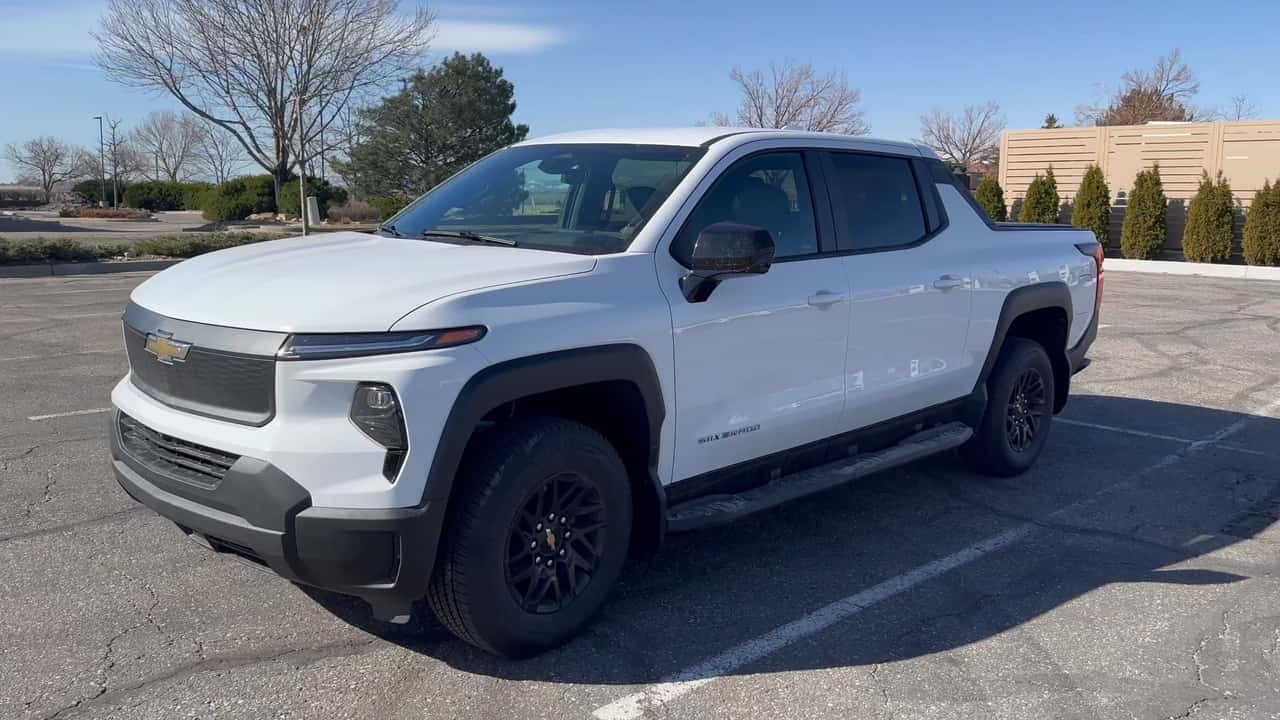
Image courtesy of: Out of Spec Testing (YouTube)
The Chevy Silverado EV 4WD.
It appears unlikely to endure. The growth in sales for the Equinox EV and Blazer EV can be attributed partially to substantial incentives offered. My vehicle came with a $52,000 MSRP, yet my leasing cost remained lower than that of a Honda Civic.
I’ve come across individuals who have managed to secure a two-year lease on a Blazer for less than $5,000 overall, which is quite unusual in this market sector. The firm has to move these vehicles due to their less efficient gasoline-powered pickup trucks and sport utility vehicles, hence the strategy seems effective; however, the pricing clearly doesn’t leave much room for absorbing a 25% duty.
The cost of trucks is also likely to increase, but to a smaller degree. It remains uncertain how significantly these price changes will compare to those of competitors. Electric vehicle alternatives such as the Hyundai Ioniq 5, Volkswagen ID.4, and Tesla Model Y are manufactured in the U.S., although
different levels of American-made components
.
Moreover, with Trump both threatening to eliminate the tax credit and informing the automakers that he will ease fuel efficiency requirements, several conflicting factors remain unresolved.
However, due to the increased costs of all goods, it’s improbable to witness sales expansion for any vehicle manufacturer, particularly not for businesses heavily affected by import duties.
Therefore, GM might have overcome its initial electric vehicle challenge. However, facing upcoming tariffs and an unexpectedly soft demand for electric vehicles, the toughest fight could well lie ahead.
Contact the author:
Mack.Hogan@insideevs.com
.
oleh admin | Mar 30, 2025 | business, car companies, cars, electric cars, tesla
If you’ve been looking for a signal, here it is. It’s the moment to sell.
Whenever I mention to people that reviewing cars professionally is part of my job description, they often ask about Tesla. Over an extended period surpassing ten years now, Tesla has stood out as the unconventional newcomer captivating public interest beyond automotive circles. While traditional car manufacturers appeared conservative and uninteresting, Tesla emerged with a technology-driven approach and excitement. During the 2010s, their electric vehicles not only raised the standards but also led in design philosophy through user interfaces centered around screens.
As CEO and
majority shareholder
Elon Musk’s DOGE initiative has seemingly evolved into an unofficial extension of the right-wing Trump administration, but interest has significantly waned. Demonstrations against Tesla have emerged nationwide, with secondary-market prices plummeting. There has been growing pressure to exchange Teslas as well.
It’s time for me to conclusively address all those queries from unfamiliar people regarding Tesla: I believe they’re not a wise purchase, and I feel there’s a compelling argument to be made for selling anyTesla shares you currently hold.
The Argument Against a New Tesla Model
When Tesla initially released their first four mass-produced models – the full-sized luxurious sedan known as the Model S, the spacious Model X SUV with its distinctive gull-wing doors, the budget-friendly midsize sedan called the Model 3, and subsequently, the crossover model named the Model Y – these vehicles stood out prominently within the electric vehicle sector.
However, over the last five years, Tesla’s edge in competition has shrunk dramatically, going from an apparently insurmountable gap to barely noticeable. Upon the launch of the Tesla Model 3 in 2017, it became the all-time top-selling electric vehicle.
was the Nissan Leaf
That somewhat comical-looking, budget-friendly hatchback had an EPA-estimated range of 107 miles.
Then the Model
arrived
With an unprecedented maximum range of 310 miles, it stood out. For several years now, the Model Y has been the benchmark for crossovers in the worldwide electric vehicle market.
However, this lead has narrowed considerably today and now falls within the margin of error. To illustrate with a practical case, consider the farthest-reaching version of the
new 2025 Tesla Model Y
boasts an EPA-estimated range of 339 miles;
2025 Kia EV6
In its long-distance configuration, it should aim for 319 miles of range. Given that Tesla had, for several years, downplayed issues with its excessively optimistic in-car range estimates and employed unconventional testing methods,
raise its EPA estimates
, an additional 20 miles of range seems much less significant.
real-world tests by
Edmunds
, most Tesla vehicles did not achieve their EPA-estimated range, despite the fact that the majority of electric vehicles from other manufacturers met their estimates.
Edmunds
They surpassed their EPA estimates during testing.
Numerous other automotive companies are also ensuring the long-term viability of their electric vehicles—meanwhile, Tesla persists with largely unaltered designs. Every one of Tesla’s electric cars relies on 400-volt platforms, whereas competitors such as Hyundai, Kia, Volvo, Audi, Porsche, and several others have shifted towards more advanced architectures.
800-volt system
This indicates that they are capable of managing higher electrical loads simultaneously and charging faster. Adopting a lower-voltage system reduces costs for the company initially; however, it implies that their components will be more limited.
reach higher temperatures
During rapid charging or aggressive use, this results in additional deterioration of the battery and reduced range over time.
Tesla also boasts a somewhat checkered past when it comes to safety. The National Highway Traffic Safety Administration has
opened
several
probes
into Tesla, primarily because of its “Full Self-Driving” feature. The company’s associated “Autopilot” system has reportedly been connected to accidents resulting in 54 injuries and 14 fatalities, as stated.
one investigation
.
The firm’s latest offering, the Cybertruck, has encountered
several rounds of recalls
at figures significantly above the sector average. (The latest recall addressed a concern that the
Body panels would come loose while driving.
.) Furthermore, the difficulty in accessing physical door mechanisms on many Tesla models has also been cited as an issue.
in a variety
of high-profile
fatalities
Alarming as it may be, even with outstanding crash test scores, Teslas are part of deadly crashes more frequently than any other car brand,
approximately double the average rate
.
From a financial perspective, choosing between numerous other electric vehicles and Tesla still comes down to a toss-up. For instance, both the newly American-made Kia EV6 and the Tesla Model Y qualify for the complete $7,500 federal electric vehicle tax credit. Despite significant uncertainty surrounding the continuation of this incentive, as we write, the similarly equipped long-range version of the Kia is anticipated to cost just marginally less than itsTesla counterpart.
less expensive
, approximately $2,000 less. For each car model that Tesla currently produces, there are comparable models with similar price points.
Given the presence of U.S.-based electric vehicle manufacturers like Lucid and Rivian, along with entries from established brands such as Chevrolet, Cadillac, Ford, Jeep, RAM, and Dodge into theEV market, consumers have numerous domestically produced options for going electric without resorting to gasoline vehicles. From my perspective as an auto evaluator, it’s important to highlight that I’ve observed
Most electric vehicles on the market tend to be superior automobiles.
They provide a smoother ride, are more intuitive, and offer greater specialization across all levels of the market. In fact, I often recommend the EV6 to newcomers shopping for an affordably priced crossover.
Using the Tesla Supercharger network
more receptive to electric vehicles from brands other than Tesla
Indeed, it has never been simpler to bypass the Tesla dealership and explore other options.
What if there’s one in your garage at this very moment? Should you consider selling it?
The Practical Argument for Selling Your Tesla
The primary rationale for selling now is that Tesla vehicles are losing value rapidly, and their maintenance expenses may soon become exorbitantly high. Electric Vehicles (EVs) generally face weak resale values; however, this issue seems particularly pronounced with Teslas.
outpaced that trend
Over the last eighteen months, up until the inauguration, this was primarily due to the company employing robust discount strategies to clear new stock, along with significant utilization of large rental fleets.
Hertz is getting rid of tens of thousands of vehicles.
immediately available on the market.
The circumstances have deteriorated further following President Donald Trump’s victory in the re-election. Musk’s contribution of $290 million to Republican campaigns and his advisory position with the president have turned him into a focal point for backlash. Consequently, this has had a devastating impact on Tesla.
For many years, Tesla refrained from advertising its vehicles. Instead, they depended on recommendations, press attention, and Elon Musk’s extensive public profile, which positioned him as the face of Tesla in a manner unlike how Mary Barra is perceived at General Motors. Given that Musk holds the largest stake in Tesla and about one-third of his estimated $303 billion fortune comes from Tesla shares, the company has become inseparably linked with the tycoon. (This vast collection of
“I Purchased It Before He Lost His Mind” stickers
is evidence of that.)
Even though Musk holds right-wing beliefs, Tesla and electric vehicle owners
skew more Democratic
And they are more progressive than drivers of any other brand, which makes them more susceptible to abandoning their vehicles due to political pressure.
Edmunds
discovering that potential car purchasers are turning away from Tesla models more frequently these days—with only 1.8% of respondents currently considering a Tesla purchase versus 3.3% back in November. Even though Elon Musk may be gaining popularity amongst Republican voters, it is improbable that this shift will result in a significant influx of conservative buyers compensating for the declining interest; particularly since many Republicans remain disengaged from such trends.
vastly less likely
To purchase an electric vehicle as their next car.
Concerningly for current owners, as values collapse further, new Teslas will become comparatively worse deals. Due to Tesla’s direct-sales model, it has a much stronger incentive to move inventory than most other automakers, which makes further fire sale incentives likely—and risks creating a negative feedback loop.
Furthermore, for present owners, holding onto a Tesla that is losing value quickly might not turn out to be a sound financial decision.Tesla’s insurance costs have consistently been
well above average
, with premium payments amounting to approximately
Between a typical Aston Martin insurance policy and a standard Porsche insurance policy
This can be attributed to inadequate spare part availability, a scarcity of skilled technicians, and
complex repairs
.
As symbols of the Trump administration, Musk and Tesla have attracted significant attention, turning Teslas into frequent targets for vandalism. Insurers caution that this trend might lead to increased insurance premiums. Meanwhile, the U.S. Attorney General, Pam Bondi, has warned that vandals targeting Teslas could face serious consequences.
domestic terrorism charges
It is still uncertain whether she possesses the legal authority to take such action and if it would effectively curb vandalism. This is particularly true if Musk becomes involved with issues that deeply affect American politics, touching what could be referred to as the “third rail.”
He has threatened to cut Social Security.
.
If you intend to push your Tesla to its limits, even under such circumstances, maintaining it could prove harder compared to most other vehicles. Unlike many car manufacturers, Tesla has a high degree of vertical integration, producing numerous key components in-house. This reduces the availability of third-party replacement parts significantly.
The company’s direct-sales approach implies that if cost-cutting measures become necessary, there are no third-party dealerships representing multiple brands available to share the financial strain. The company must ensure sufficient car sales to maintain its owned outlets and service centers; otherwise, these facilities may have to be shut down. Continuous supply of parts and maintenance services relies heavily on the overall well-being of the business. Despite potential recovery in U.S. market sales, Tesla presently confronts significant challenges globally.
China
and
Europe
.
If this has persuaded you to sell, several competitors are actively encouraging Tesla owners to switch to their brands at present. Polestar is one such competitor.
offering $20,000 in discounts
For Tesla trade-ins with Polestar 3 lease agreements.
Lucid
is providing a $4,000 incentive to Tesla vehicle owners.
Nonetheless, I must acknowledge this: if you decide to trade in your Tesla at present, you’ll probably face significant depreciation loss due to how quickly these vehicles lose value. The situation seems poised to deteriorate further over time. Thus, it might be wiser to address the issue promptly rather than delay.
If this hasn’t persuaded you yet, though, there’s still my key point to consider.
The Ethical Argument for Switching to a Tesla
It seems Musk is an
aspiring oligarch
He bought one of the biggest social media platforms on the planet and transformed it into a
right-wing propaganda outlet
He subsequently invested $290 million in backing Republican candidates during the 2024 elections. This move probably doesn’t align with the typical political views of most Tesla owners, and the evident corruption occurring at the same time ought to be worrisome for everyone involved.
Since then, he has been awarded with
unprecedented direct support
For Tesla from the federal government, including an outrageously unscrupulous car sales pitch conducted by
Trump on the White House lawn
along with an FBI unit specifically focused on
securing Tesla vehicles against vandalism
.
He has turned his influence and riches into an advantage
unprecedented amount of access
, through his specialized advisory position to the president and “DOGE,” access has been granted to sensitive government information and funds. The unpredictable nature of DOGE is currently having an active adverse effect.
public employees’ experiences more taxing
. DOGE overstepped
any constitutional justification
to shut down the
humanitarian USAID organization
, potentially affecting tens of thousands of individuals and severely undermining America’s reputation internationally. The proposed reductions in IRS funding directed towards DOGE are anticipated to result in
amounts to a loss of $500 billion in revenue for the federal government
, rather than cost savings, this year alone. Musk has often spoken about the necessity of reducing welfare benefits, which he refers to as ”
the big one.
”
Musk has consistently promoted variations of
the Great Replacement Theory
, a
discredited extremist
He presents an outlook that recasts white supremacist ideas, portraying immigration as part of a scheme to undermine Western society. He thinks that contraception and abortion might lead to “the downfall of civilization.” He has shared posts online claiming that ”
Hitler didn’t murder millions
“. During Trump’s inaugural ceremony, he
performed a gesture
it appeared similar to a Nazi salute, and upon being questioned about it,
joked about Nazis
.
Many of his opinions are detestable to most Americans, and
He personally is extremely disliked.
Although some adjustments might potentially be achieved in the 2026 and 2028 elections, Musk and DOGE have progressed swiftly, making it probable that the federal government has already taken action.
permanently damaged
The quickest method to minimize the damage is by halting his actions swiftly. Given his status as an unelected and unanswerable “adviser,” the American public has limited options for redress.
Apart from Tesla, Musk’s impact primarily extends
stemmed from his wealth
About a third of Elon Musk’s $300 billion fortune comes directly from his holdings in Tesla stock. As a company that sells goods directly to consumers and controls both its distribution channels and service network, Tesla is particularly susceptible to broad-based product boycotts across both new and pre-owned vehicle markets. In fact, during the fourth quarter of 2024, one of the only segments within Tesla’s operations showing increased revenues was their servicing division. Consequently, avoiding purchases of new Teslas, discouraging others from buying them, and ceasing trade-ins can significantly affect the company’s immediate financial outlook as well as diminish Musk’s wealth considerably.
It is feasible that continuous pressure could severely harm the company and diminish Musk’s wealth and influence. Given the presence of other eco-friendly vehicles now available on the market, this situation could be exacerbated.
expanding market for electric vehicle reuse and recycling
For Teslas that ultimately become completely valueless, there are scarcely any drawbacks to swapping out your Tesla at this moment. By doing so, you can cease funding the globe’s wealthiest individual and his mission to reshape governance according to his vision. In turn, you may even halt his ambitions altogether.
If you’ve been looking for a signal, here it is. Now’s the time to sell.
Victoria Scott is an author, photographer, and automotive journalist who has contributed articles to various publications.
Motor1
,
Road & Track
,
Insider
,
The Drive
and other publications
She resides in Seattle with her spouse and their cat, Burt. She can often be found on
Bluesky
,
Patreon
, and her
personal website
.
More Tesla Coverage
-
Tesla Model Y Battery Performance After 100,000 Miles: An Unexpected Outcome
-
Tesla Removed from Canada’s EV Rebate Program Following System Exploitation
-
Tesla Is Plunging in Europe Despite an Increase in Electric Vehicle Sales in February
-
The New Tesla Model Y Excels but Suffers from an Elon Issue
-
Tesla Cybertruck Sales Are Dropping
-
Elon Musk Truly Desires for Tesla Shareholders to Believe He Isn’t Absent
oleh admin | Mar 27, 2025 | automotive industry, autos, car companies, cars, commerce
These brands and vehicles have the lowest and highest chances of being impacted by the new tariffs.
Recently, President Trump implemented a 25 percent duty on all imported automobiles. This would result in increased prices within the United States for cars manufactured abroad, which includes countries like Canada and Mexico. Additionally, components sourced from overseas intended for use in U.S.-assembled vehicles will also face this tariff, as stated by him.
declaration released by the White House
.
President Trump stated, ‘If you manufacture your car in the United States, there won’t be any tariffs.’
The tariffs will come into play starting on April 3rd, with President Trump indicating they might become ” permanent.” The key issue now is identifying which cars and makes stand to gain the most from these new duties, as well as determining which models could suffer the greatest impact.
The Big Winners
Exploring the Kogod School of Business once again
2024 American-made index
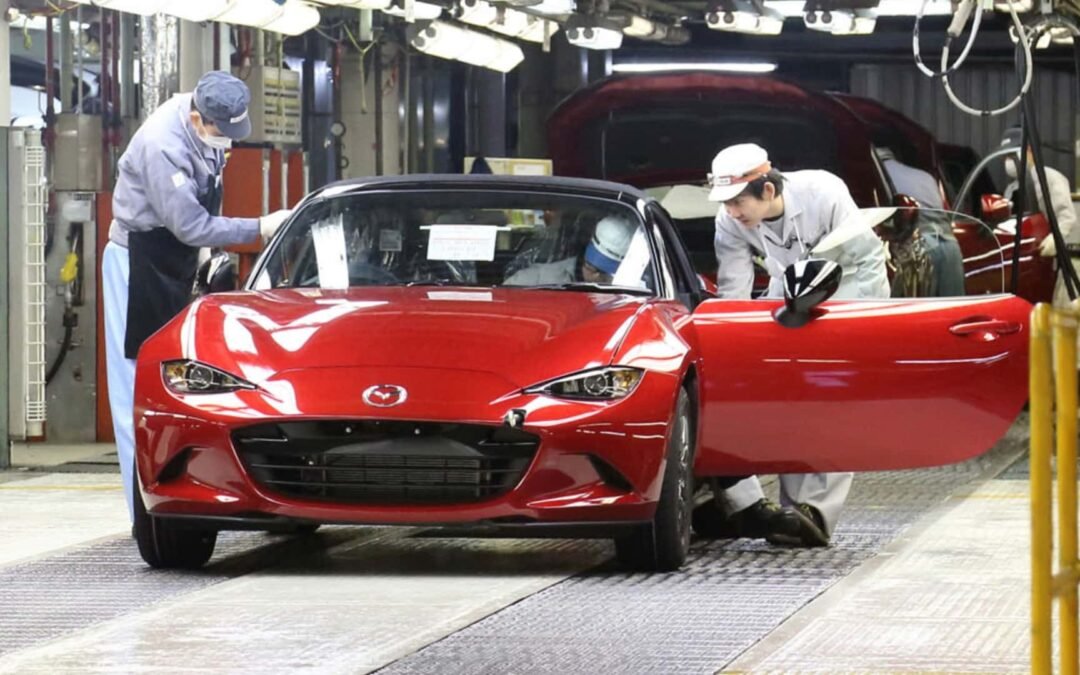
, Tesla stands to gain the most from these new tariffs. Every one of Tesla’s vehicles has more than 80 percent domestic content overall.
At the pinnacle of the ranking stands the Model 3 Performance, boasting domestic production and assembly at 87.5%. Following closely behind are the Model Y (with an 85% domestic content rate), Cybertruck (which has 82.5%), along with both the Model S and Model X each contributing domestically at an 80% level.
This being the case, Tesla CEO Elon Musk indicates that the company won’t remain “untouched” with the introduction of new tariffs. As shared in a post on
X
(formerly
Twitter
Musk stated, “It’s crucial to understand that Tesla has not remained untouched through this. The effect of these tariffs on Tesla continues to be substantial.”
Although the firm manufactures engines and batteries within the United States, Tesla continues to import numerous components from China. Excluding the locally produced motors and batteries, the Model 3 Long Range has “40 percent of its parts sourced from China,” notes Frank DuBois, an associate professor specializing in information technology and analytics at American University.
told
Kelley Blue Book
last year.
Coming in second after Tesla is Ford, which has three variants of the Mustang built primarily from domestically sourced materials at an 80% rate: the automatic version, the GT, and the GT Coupe Premium. In contrast, the Mustang GT equipped with a manual transmission—from Getrag in Germany—is composed of approximately 73% U.S.-made components.
Honda performs impressively with the Passport, scoring 76.5 percent domestically made content, along with the Odyssey, Ridgeline, and Pilot, each boasting a rating of 74 percent. The Jeep Wrangler has 76 percent locally sourced components. In addition, the Volkswagen ID.4 includes 75.5 percent domestic materials. Similarly, General Motors’ Chevrolet Colorado and GMC Canyon models achieve a mark of 75.5 percent for their U.S.-made content.
|
Make / Model
|
Total Domestic Content
|
|
Tesla (Model 3 Performance)
|
87.5 Percent
|
|
Ford (Mustang GT AT)
|
80.0 Percent
|
|
Honda (2024 Passport AWD)
|
76.5 Percent
|
|
Jeep (Wrangler Rubicon)
|
76.0 Percent
|
|
Volkswagen (ID.4 AWD 82 KWH)
|
75.5 Percent
|
Among the top three car manufacturers in Detroit, General Motors is considered the most vulnerable based on President Trump’s proposed tariffs, as stated by JPMorgan analyst Ryan Brinkman. Given that almost 40 percent of GM’s vehicles are manufactured in either Canada or Mexico, Brinkman predicts this could result in an impact of approximately $14 billion on their profits.
In this regard, the White House has admitted that cars made under the United States-Mexico-Canada Agreement (USMCA) will get particular allowances. Particularly, components manufactured according to USMCA guidelines won’t face tariffs until the Commerce Secretary sets up a procedure for handling non-US materials.
The Big Losers
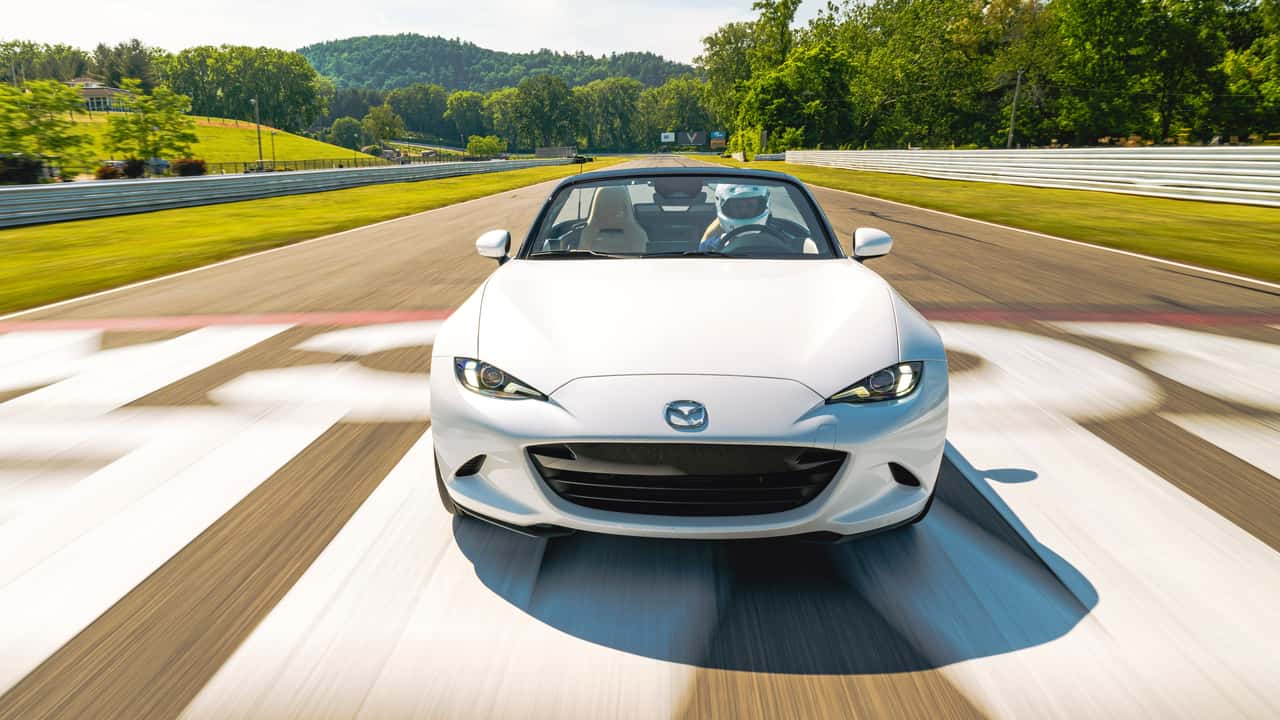
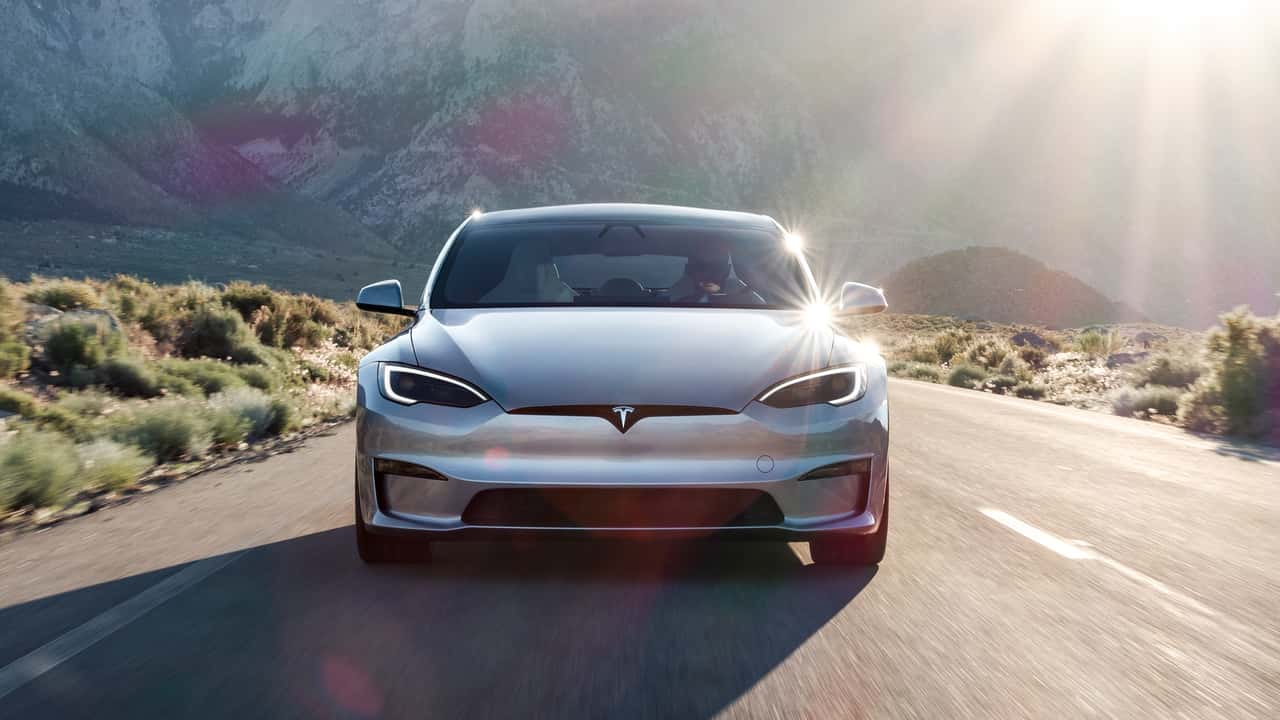
At the other extreme, certain international car manufacturers might experience significant losses in their US market due to these new tariffs. Companies such as Audi, BMW, Lexus, Mazda, and Toyota manufacture several models that consistently place at the lower ranks of the Made-in-America index.
Particularly, some of our beloved budget-friendly sports cars might face significant impacts. Models such as the Miata, the Subaru BRZ, the Toyota GR86, and the GR Corolla receive only a 1% rating on the U.S.-made scale. Several BMW performance vehicles also fall into this category with scores of merely 1%, including the M3 sedan, the Z4, and the discontinued M8.
|
Make / Model
|
Total Domestic Content
|
|
Mazda (Miata)
|
1 Percent
|
|
Hyundai (Elantra N)
|
1 Percent
|
|
BMW (M3 Sedan)
|
1 Percent
|
|
Subaru (BRZ)
|
1 Percent
|
|
Toyota (GR 86 & GR Corolla)
|
1 Percent
|
In 2024, with vehicles accounting for 28.3 percent of Japan’s total exports to the U.S., automobile manufacturers might face significant impacts from the newly imposed tariffs. As reported,
Reuters
, stocks of Nissan, Toyota, and Honda had dropped by 2.2 percent, 2.7 percent, and 3.0 percent, respectively, after the statement was made. Meanwhile, Hyundai and Kia each declined by 4.0 percent.
Japanese Prime Minister Shigeru Ishiba states that they will consider every possible approach to counteract Trump’s tariffs.
“Ishiba stated in a parliamentary address that Japan leads all nations in investments towards the United States; hence, it seems questionable whether imposing equal tariffs on every nation aligns with Washington’s interests. We have consistently highlighted this viewpoint and will keep doing so,” he emphasized.
The Big Picture
Trump’s 25 percent tariff is likely to increase prices on foreign-imported cars. But former Vice Chairman of Product Development at GM, Bob Lutz, says these more stringent regulations on auto imports are a long time coming.
“Tariffs that Trump is implementing roughly reflect those enforced by our key trade partners for many years,” Lutz mentioned to
Motor1
There is no question that these duties will raise the cost of non-US vehicles, leading to a drop in their sales figures. This is precisely what tariffs aim to achieve.
At present, the European Union applies a 10 percent duty on vehicles imported from the United States, along with an extra 20 percent VAT. However, the EU has lately suggested reducing this rate from 10 percent down to 2.5 percent as part of their efforts to alleviate trade disputes with the U.S.
according to some reports
.
Lutz points out that ‘the U.S. must safeguard its residual industries,’ much as every other country does. While tariff-free imports result in lower consumer costs, they simultaneously lead to a reduction in manufacturing positions, ultimately causing national deterioration.
These fees will lead to temporary discomfort and disruption, yet the adaptation process should be quick and advantageous for worldwide commerce. It’s unsustainable for the US to continually experience massive trade gaps each year with major trading allies.
The Latest On Tariffs
-
Thanks, Tariffs: Prices for JDM Imports Are Set to Soar Significantly
-
Trump Imposes 25-Percent Duties on Every Imported Car
oleh admin | Mar 24, 2025 | battery electric vehicles, business, car companies, cars, electric cars

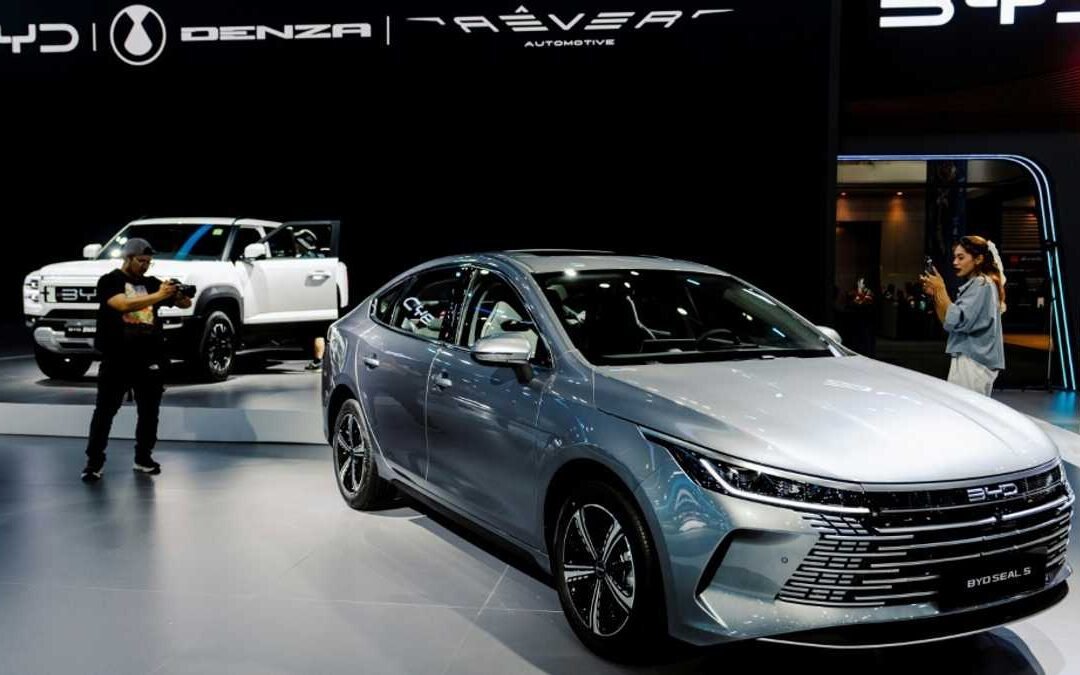
Last year, Chinese automaker BYD experienced a significant increase in revenue, crossing the $100 billion threshold and outperforming competitor Tesla as the electric vehicle leader pushes forward with its international growth strategy.
In recent years, the company based in Shenzhen has become the undisputed frontrunner in China’s fiercely contested electric vehicle sector, which boasts the biggest market globally.
The company is also actively pursuing new expansion opportunities overseas, pledging to dominate the European market with a sleek new electric vehicle and ultra-rapid charging technology to compete with major European manufacturers.
Tesla faces a difficult period as China’s major advancement into Europe coincides with a decline in the company’s sales across the continent, which has been exacerbated by CEO Elon Musk’s backing of extreme right-wing political organizations in the region.
The statement released late Monday at the Shenzhen Stock Exchange revealed that BYD generated 777.1 billion yuan ($107.2 billion) in revenue for 2024.
That amount surpassed the $97.7 billion in revenue reported earlier by Tesla for last year.
This marked a 29 percent rise compared to the prior year and surpassed a Bloomberg prediction of 766 billion yuan.
In contrast, BYD’s net profit for last year reached 40.3 billion yuan, marking a 34 percent increase from 2023 and setting a new all-time high.
BYD — whose motto is “Build Your Dreams” in English — has experienced an exhilarating period with rapidly increasing sales figures, numerous disclosures, and skyrocketing share prices.
In January, they reported selling almost 4.3 million vehicles in the past year, which represents an increase of over 40% compared to the prior year.
In February, monthly sales surged by 161 percent to reach 318,000 units, significantly surpassing the considerable drop experienced by Tesla during the same timeframe.
Charging ahead
This month, BYD’s stocks listed in Hong Kong reached an all-time peak following the company’s announcement of new battery tech that reportedly enables charging an electric vehicle as quickly as filling a gasoline-powered car.

The “Super e-Platform” battery and charging system claims to reach top speeds of 1,000 kilowatts and enables vehicles to cover up to 470 kilometers (292 miles) following a five-minute recharge, as stated by the firm.
In contrast, Tesla’s Superchargers presently provide charging rates of 500 kilowatts.
Last week, BYD Vice-President Stella Li stated that “registration figures will surge” in Europe for the months of March and April.
The organization has initiated significant advertising efforts through sponsorships such as supporting last year’s UEFA European Football Championship and by establishing several new showrooms throughout Europe.
Nevertheless, the strained relations and trade disputes between Beijing and western nations could potentially overshadow the firm’s international aspirations.
BYD stands out as one of the leading figures among China’s emerging automotive powerhouses, having thrived with significant backing from Beijing. The government has allocated substantial state resources toward this industry.
This strategy has provided local companies with a significant advantage in the competition to offer less expensive, more fuel-efficient electric vehicles compared to major American car manufacturers, who haven’t consistently benefited from similar government support.
The EU authorities are apparently looking into whether the Chinese government offered uneven subsidies for BYD’s initial plant in Europe, located in Hungary, with plans to begin electric vehicle manufacturing later this year.
Last week, Li informed AFP that the firm would maintain “extreme transparency” and expressed readiness to collaborate with any inquiry.
In the meantime, US President Donald Trump has recently introduced increased blanket tariffs on Chinese goods, exacerbating a previous measure enacted by his predecessor Joe Biden that essentially prohibits the utilization of Chinese technology in intelligent vehicles.
Following Tesla’s announcement of weaker-than-anticipated earnings for the fourth quarter of 2024 at the end of January, BYD released impressive financial figures.
The downturn marked a varied year for Tesla, where Trump supporter Musk’s significant investment in U.S. electoral politics faced challenges from profitability issues. This was compounded by the cessation of the company’s run of consecutive yearly increases in vehicle production.
oleh admin | Mar 22, 2025 | automotive industry, autos, car companies, car models, cars
It seems Alfa Romeo is set to join the ranks of manufacturers offering both electric and internal combustion variants of the same model.
-
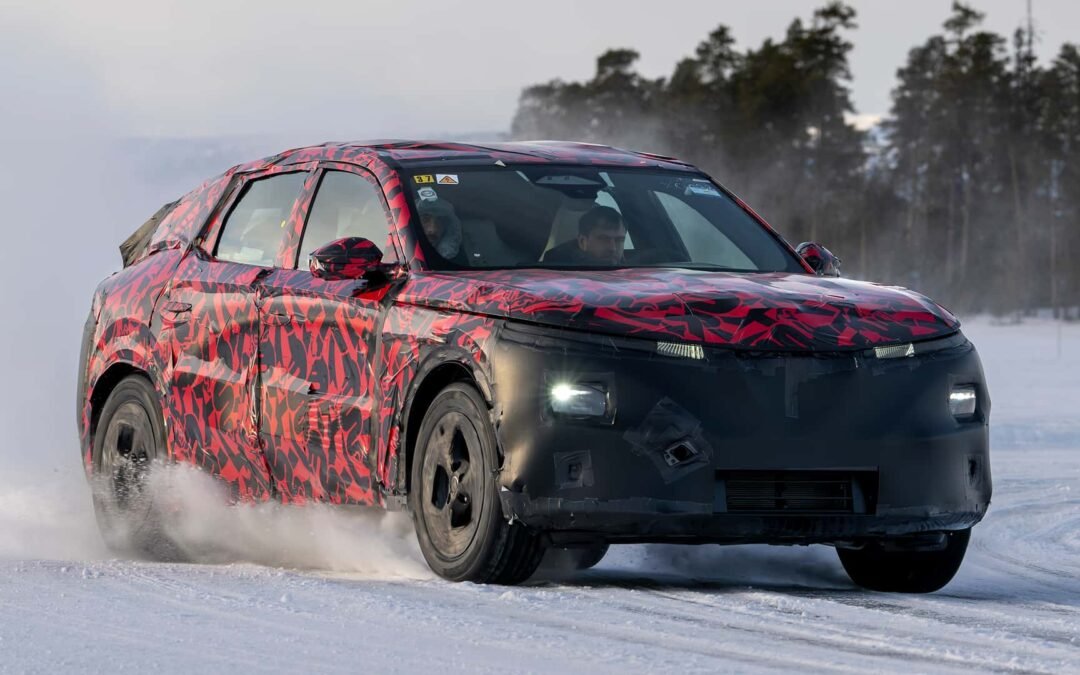
The upcoming Alfa Romeo Stelvio is being tested with camouflaged prototypes in Sweden.
-
The vehicle seems to lack exhaust pipes and has a completely sealed-off grille, indicating that it’s probably an all-electric car.
-
Alfa Romeo is discontinuing the $2 billion Giorgio platform and will be adopting the STLA Large for the Stelvio and Giulia models.
As the global electric vehicle market experiences inconsistent growth across different regions, numerous automobile manufacturers are adopting a fresh approach for their upcoming model lines:
You have the option to choose a hybrid or a completely electric vehicle.
, whichever one better meets your requirements. It seems that Italy’s Alfa Romeo will also be adopting a comparable approach with its upcoming SUV and sedan models.
Alfa Romeo is discontinuing the Giulia and Stelvio, which were exactly what enthusiasts desired from the marque. They will both be succeeded by entirely new models developed under their parent company.
Stellantis’ STLA Large
The platform supports both combustion engines and pure electric power.
Previously, we didn’t receive any official word about theEVoption, but Alfa Romeo appears to have hinted at it through teaser images for the upcoming Stelvio model.
Multiple images revealing a camouflaged Stelvio prototype out in snowy conditions have been shared online, and we’re fairly confident this model will be all-electric. Key indicators include the absence of noticeable exhaust pipes at the rear end and an orange high-voltage label positioned near the top edge of the front windscreen. Additionally, the rims seem to feature an aerodynamic layout; however, their appearance is somewhat hidden due to both the heavy disguise applied to the car and the spinning motion of the tires during tests.
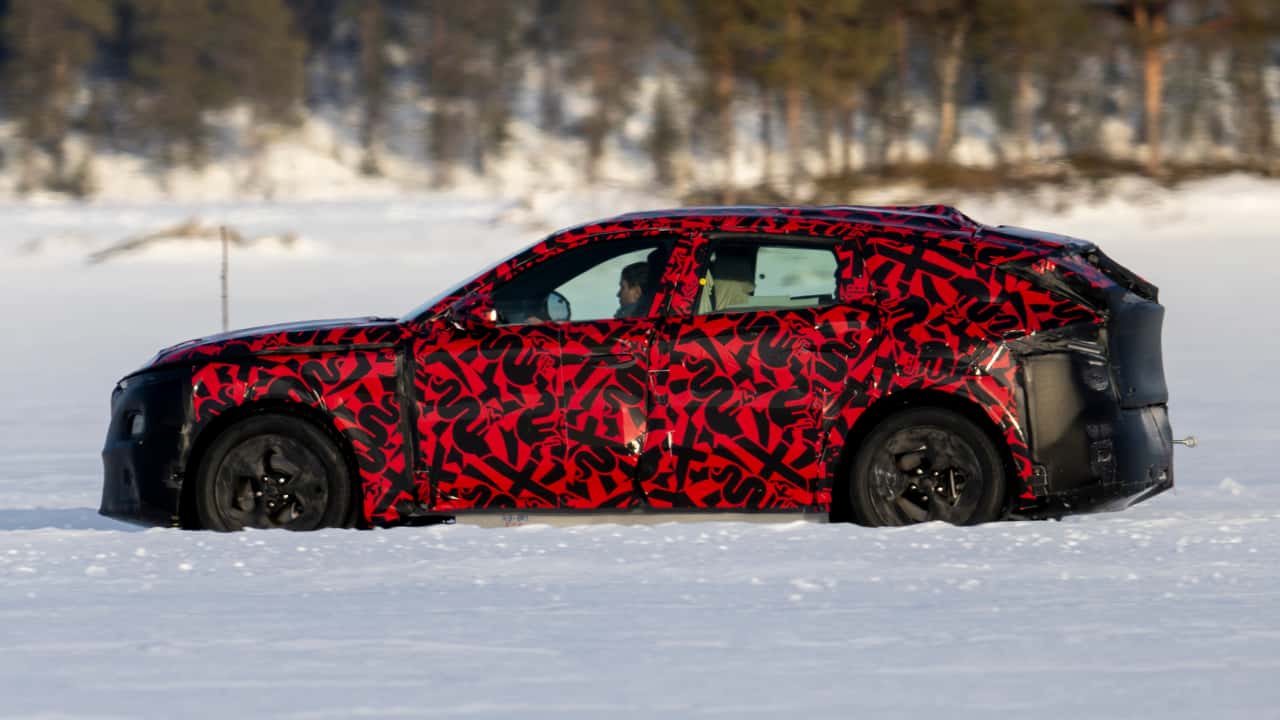
Photo by: Alfa Romeo
At the forefront of the prototype, nearly all areas are sealed off except for a tiny aperture located at the bottom section of the bumper allowing airflow passage. Additionally, the door handles seem to adopt a flush design, indicating that Alfa Romeo places significant emphasis on aerodynamic efficiency for this specific model. While this does not definitively prove the car’s electrification, it clearly demonstrates an aerodynamically focused approach being taken with this vehicle.
When you look at its frontal area, it sadly features a divided headlamp setup, where slim LED daytime running lights sit atop smaller headlights positioned further below. This particular styling approach has become quite prevalent in today’s automotive world; however, it often leads to divisive looks instead of universally appealing aesthetics.
If there’s an auto manufacturer capable of achieving this, it’s Alfa Romeo, and ideally, the Stelvio should have a more appealing design.
the Junior
This provides us with some insights into how the new, larger SUV might appear. Alfa Romeo offers a clear view of the car’s side silhouette, indicating it is more substantial compared to previous models. However, it retains the nearly sloping rear roof design reminiscent of the present Stelvio.
In two of the preview images, Alfa Romeo reveals the prototype drifting, suggesting that it will keep the present model’s rear-wheel-drive characteristic for the upcoming version. The final picture in the collection truly demonstrates just how much drift capability it has, which is necessary in today’s automotive landscape.
Hyundai Ioniq 5 N
s and the inevitable
quad-motor M-badged BMW
X3-equivalent electric SUV.
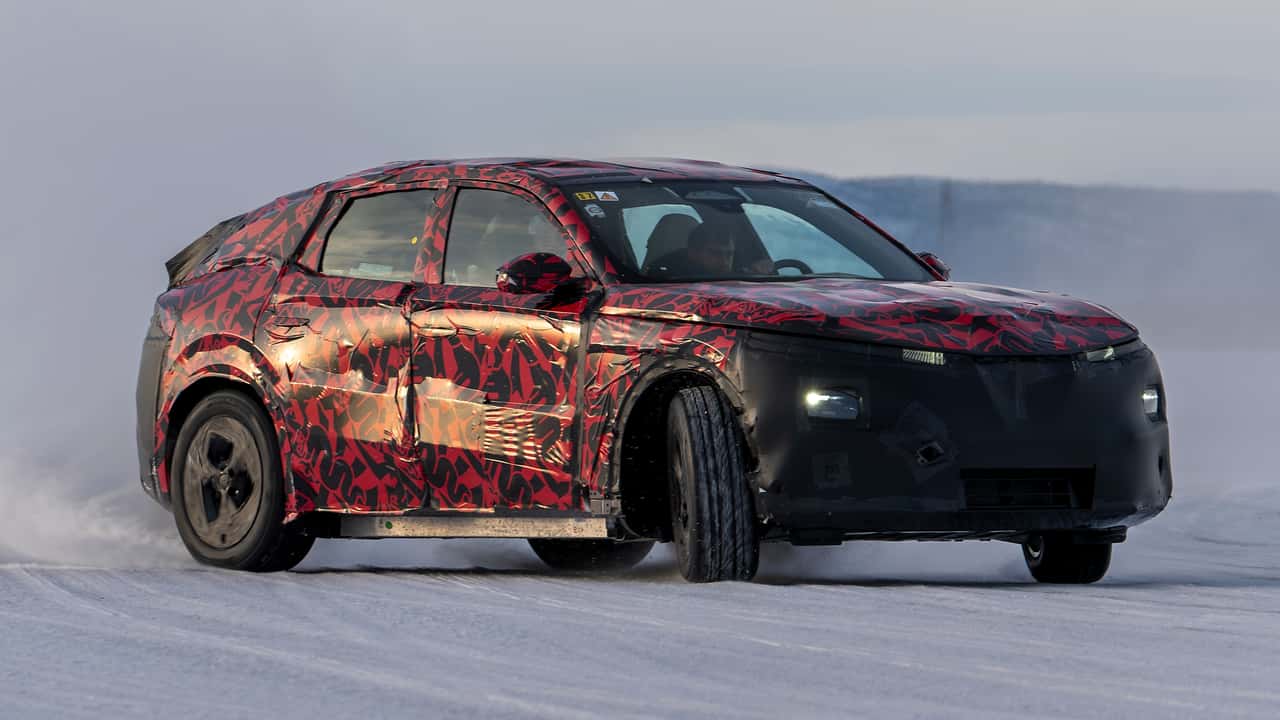
Photo by: Alfa Romeo
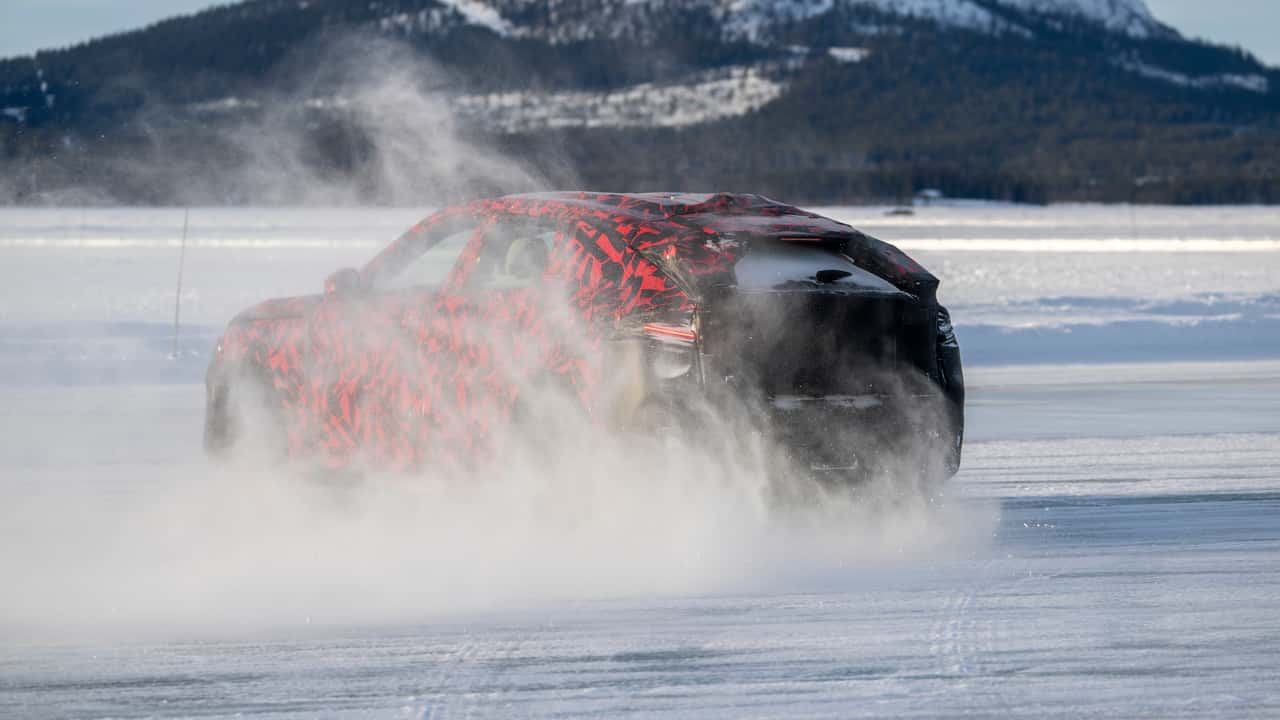
Photo by: Alfa Romeo
Riding on
the STLA Large platform
indicates that the new Stelvio (and Giulia) will share architecture with the
Jeep Wagoneer S
and the
Dodge Charger Daytona EV
The latter hasn’t been a car that garnered much warmth; a muscle car.
that can’t do burnouts
It’s quite a puzzle.
However, the platform can be adjusted and customized to offer a significantly different experience compared to Alfa Romeo vehicles, supporting both 400- and 800-volt systems. Additionally, Stellantis claims this setup can accommodate battery packs as large as 118 kilowatt-hours and achieve acceleration from zero to 62 mph (100 kph) within approximately two seconds. The system is designed to work with various drivetrains, such as plug-in hybrid configurations.
As Alfa Romeo has begun hinting at the upcoming Stelvio, its complete reveal isn’t distant. The vehicle is scheduled to make its debut sometime within this year prior to hitting the market in 2026, alongside the Giulia, as seems to be the case.
won’t be a typical saloon car
But something taller, such as a bigger Italian Polestar 2.
More On This
-
Alfa Romeo Giulia EV: All the Details We’ve Gotten So Far
-
Alfa Romeo Milano Rebranded as ‘Junior’ Due to Italian Law Shielding Cheese
-
The Alfa Romeo Milano is a compact crossover with an electric range of up to 254 miles according to WLTP standards.
-
Stellantis’ STLA Large Platform Offers ‘Greatest Flexibility In The Market’ for Dodge, Alfa Romeo, Jeep, Maserati
-
Alfa Romeo hints at an upcoming “sport urban” electric vehicle below theTonale, inviting you to christen it.
-
Stellantis Is Set to Unveil an All-New Luxury Electric SUV for 2025


