oleh admin | Apr 7, 2025 | government, military, national security, politics, security
In August 2024, Adeola Oluwatosin Ajayi, a prominent figure within Nigeria’s intelligence sector, was appointed as the new Director-General of the Department of State Security.
After six months of being here, Ajayi is advocating for fresh ideas regarding Nigeria that imply the breakdown of the government’s conventional security framework and its role in addressing the escalating instability.
As stated by the head of DSS, communities—as opposed to the nation’s security agencies—ought to be considered the primary defense against present challenges.
He made
the proposal
In mid-February in Abuja, several current and former security officials were present, including the National Security Adviser, Nuhu Ribadu, and the Chief of Defence Staff, Christopher Musa; neither raised objections to this dubious notion.
You shouldn’t anticipate that the Nigerian Army, police, and SSS will safeguard each individual citizen,” he stated. “That approach won’t be effective.
We anticipate that security agencies will carry out their duties. This aligns with the constitution, which states that “ensuring the safety and well-being of citizens should be the main objective of governance.” It emphasizes this as not just a secondary aim, but rather the principal one.
This indicates that ensuring the safety of citizens is the top priority for the national government of the federation, which holds authority over and manages the security organizations.
Ajayi provided instances of Nigerian communities that have successfully countered and thwarted assaults, suggesting these could serve as models for Nigeria to overcome its security challenges.
This is a feeble argument. Nigerian communities have consistently protected themselves, and continue to do so, even when faced with an uneven distribution of contemporary weaponry. They often confront assailants armed only with traditional weapons like sticks and machetes, while their adversaries wield more advanced firearms such as pistols and automatic rifles—tools frequently used by abductors, extremists, or sometimes law enforcement personnel against these groups.
The state holds the primary duty to safeguard its populace, an obligation that falls upon the government once they have taken their oath of office. However, in Nigeria, following the swearing-in of officials, the pursuit of opulence and a feeling of authority frequently overshadow this sense of commitment.
We should remember that the APC gained power in 2015 primarily due to the unrest in Nigeria, with Muhammadu Buhari promising to leverage his military expertise to tackle this issue.
This indicates that both he and his successor, President Bola Tinubu, have collectively held power for the APC party for 10 years, unfortunately resulting in an increased sense of insecurity across Nigeria.
Remember, Buhari spent considerable time in a London hospital as insecurity grew worse. Similarly, Tinubu has frequently traveled to France for various trips, seemingly mired in ineptitude or crafting excuses to shirk their duties. This lets citizens bear burdens that the law assigns to officially designated bodies and institutions.
“Our society emphasizes community,” Ajayi stated in his intricately crafted initial strategy for defense.
Why can’t we join forces against scoundrels and frauds?
I was unaware that powerful, violent, and well-organized terrorist organizations were referred to as “miscreants.”
The head of DSS continued, “It is essential for the elite class to engage with their respective communities, approach us for validation and advice, after which we can jointly curb these troublemakers… security begins at an individual level…”
What does ‘Join us… get some form of approval and guidance’ mean? Who exactly are these ‘us’? In what way do Nigerian communities ‘join us’?
What exactly does “some form of approval” mean? Is there anything in Nigerian law that allows the Department of State Services (DSS) to equip villages and communities with items like brooms and clubs to confront herders who are equipped with automatic firearms and GPS technology?
Through which routes will villagers journey from the various parts of Nigeria to reach the DSS Headquarters along the Lagos-Kano railway line?
The Ajayis within the Tinubu administration have overlooked another aspect beyond the constitution: the APC came to power through what many perceive as fraudulent means, having sworn to eradicate Nigeria’s security issues.
Sure, here’s the information retrieved from the website of the electoral commission:
the 2015 APC Manifesto
, where it grandiosely promoted “APC’s practical answers.”
In addition to other commitments, the party pledged to:
Hire at least an additional 100,000 police officers and create a well-trained and adequately equipped Federal Anti-Terrorism Multi-Agency Task Force aimed at dismantling Boko Haram and all forms of insurgency.
Implement an instant salary increase along with enhanced benefits for all five security teams.
Tackle the root causes of unemployment, poverty, and social inequality that sparked the uprising by implementing an all-encompassing economic development plan aimed at revitalizing the impacted regions and their populations.
The APC expressed concerns: “Sixty percent of Nigerians reside below the poverty line, merely three percent receive adequate healthcare, and only about half of our children progress from primary to secondary education. Additionally, our roadways and railway networks are severely deteriorated. Fewer than thirty-five percent of the population has reliable access to electricity, with many experiencing frequent outages and persistent power deficits…”
It stated, “The Nigerian population requires assistance; aid from mismanagement, respite from the severe poverty faced by so many of us; relief from a deteriorating nation. An APC administration would deliver this support.”
Relief? A decade later, the APC had merely exacerbated the issues, leading to stratification marked by opulence and laziness among the elite and their relatives.
This all happened as the economy crashed, the naira depreciated sharply, major corporations withdrew, the power supply became unstable, joblessness surged, and many Nigerians migrated to neighboring countries like Niger, Cameroon, and Ghana. Wealthy Nigerians often relocate their loved ones overseas.
Rather than achieving security, we have accumulated an
Air Force arsenal
as the terrorists gain strength, which targets civilians, while the National Security Adviser offers praise
phantom “Tinubu Gains
.”
In January 2024, the Nigerian armed forces
announced
that it had dispatched its special forces throughout the nation as part of an intensified effort against insurgency, kidnappings, and various security threats.
In January 2025, Air Force chief Hassan Abubakar also
announced
That the Air Force completed 15,915 flight hours over an 18-month period. Then why has Nigeria become more insecure?
The issue lies within the lack of sincerity among Nigeria’s leaders, which keeps the country stagnant. The fact that Tinubu took a private trip to France while the crisis in Uromi was unfolding and as new US trade barriers were approaching serves as a reminder that he does not perceive our situation with any sense of immediacy.
Thus, Nigeria seems to be operating on autopilot with issues like insecurity, inadequate infrastructure, and a shrinking economy becoming routine. This situation is perpetuated by a government that believes citizens who are struggling to make ends meet should manage on their own.
However, it is not typical citizens such as Ajayi who possess the legal power to operate across Nigeria’s 36 states and 774 local government areas. If the DSS under Ajayi fails to recognize and neutralize these terrorist groups—which lack airports, sea ports, or diplomatic facilities—but can still freely resupply with weapons, then they bear responsibility for this failure.
How can armed herders managed by the DSS move freely to remote villages and farms across the nation, carrying out unchecked violence?
Why, DSS, are the intelligence agencies reveling in all the authority, prestige, armaments, and funds, whereas it is the impoverished citizens who have to resort to taking up weapons?
In this era of remarkable technological advancements, why is DSS concealing itself in Abuja, offering security and domestic assistance to politicians as Nigeria faces turmoil?
Perhaps citizens ought to take their defense into their own hands, rendering the DSS an unnecessary extravagance. If this were to happen, then it should be dismantled first.
Provided by Syndigate Media Inc. (
Syndigate.info
).
oleh admin | Apr 3, 2025 | foreign policy, military, national security, politics, u.s. china relations
The visit of U.S. Defense Secretary Pete Hegseth to Asia has caused quite an uproar, with the blame falling squarely on the United States and its assertive approach. During his tour, he traveled to the Philippines and Japan—key U.S. allies that house many American military installations, likely positioning them as crucial players in any confrontation involving China. There, Hegseth seized the moment to heavily criticize Beijing and covertly bolster backing for Taiwan’s autonomy.
As a countermeasure, China carried out military exercises near Taiwan’s north, south, and east coast areas, serving as an explicit warning against secessionist tendencies. Additionally, Chinese authorities released a harsh critique labeling Taiwan’s leader as a ‘parasite.’ This action represents a significant intensification compared to earlier military practices, usually pre-announced and integrated into routine training schedules. In contrast, this recent move demonstrated Beijing’s immediate and unequivocal stance, indicating their readiness for prompt reprisals should provocative statements continue.
These events occur at a crucial time. U.S. President Donald Trump’s tariffs have estranged important partners such as Japan and South Korea, prompting them to seek increased economic collaboration with China in order to craft a coordinated strategy against Washington’s trade actions. The presumed solidarity within an anti-China coalition in Asia might prove weaker than what the United States expected, as local powers reconsider the hazards of aligning too tightly with America’s geostrategic objectives.
This is notably clear regarding Ukraine’s situation. Having once been a crucial Western partner, it has had its population and assets depleted, and has been utilized for its residual natural resources before being left behind. Aggressive moves by the United States will likely exacerbate divisions within the region and heighten the risk of unrest instead of solidifying the alliances they aim to preserve.
Provided by Syndigate Media Inc. (
Syndigate.info
).

oleh admin | Apr 1, 2025 | benjamin netanyahu, government of israel, international relations, national security, politics
Tel Aviv [
Israel
], April 1 (ANI/TPS):
Israel
Prime Minister
Benjamin Netanyahu
Met up once more last night with my ex.
Israel
Navy Commander, Vice-Admiral (Ret.)
Eli Sharvit
concerning the choice to revoke Sharvit’s position as the leader of the
Israel
Security Agency (ISA), referred to in Hebrew as the
Shin Bet
(
Israel
‘anti-terror National Security Service’).
Within less than 24 hours of announcing Sharvit’s selection, Netanyahu reversed his decision.
The Prime Minister expressed gratitude to Major General Sharvit for volunteering to serve again, yet notified him that following additional consideration, he planned to explore other options among potential candidates.
The Prime Minister requested me to assume the position of head of the service and keep serving the State.
Israel
During this challenging period—and that’s what I did,” stated Sharvit. “It was driven by complete faith in the General Security Service’s capability to address the intricate issues arising lately, coupled with a modest trust in my own capacity to guide it towards success.” (ANI/TPS)
Provided by SyndiGate Media Inc.
Syndigate.info
).
oleh admin | Mar 25, 2025 | military, national security, news, news media, politics
![]()
Leading US government figures such as Defence Secretary Pete Hegseth have faced accusations of a significant security lapse involving military intelligence. This followed an incident where a journalist inadvertently received confidential plans outlining potential U.S. attacks in Yemen.
On Monday, an article in the Atlantic by Jeffrey Goldberg, who serves as the magazine’s editor-in-chief, disclosed that he had been included in a group conversation on the Signal messaging platform earlier this month.
Consequently, he managed to access communications from high-ranking national security officers regarding impending assaults on the Iran-supported Houthis in Yemen. This included comprehensive details about the objectives and the specific armaments that would be employed in these operations.
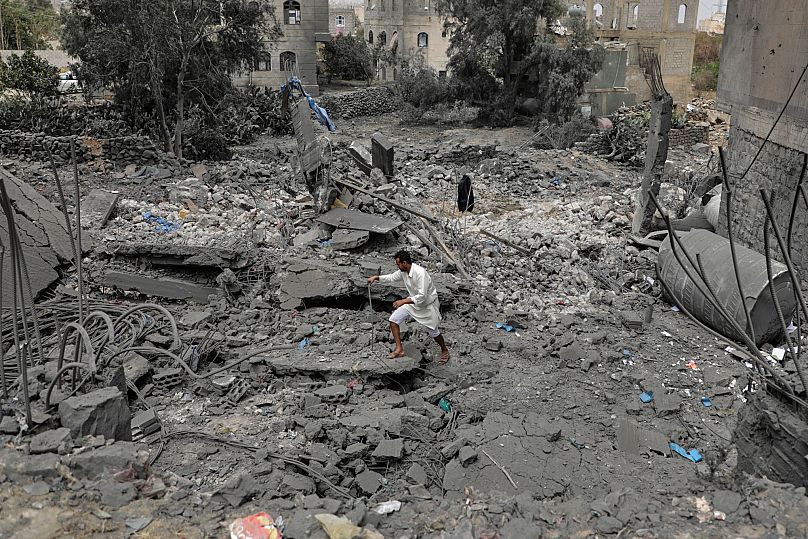
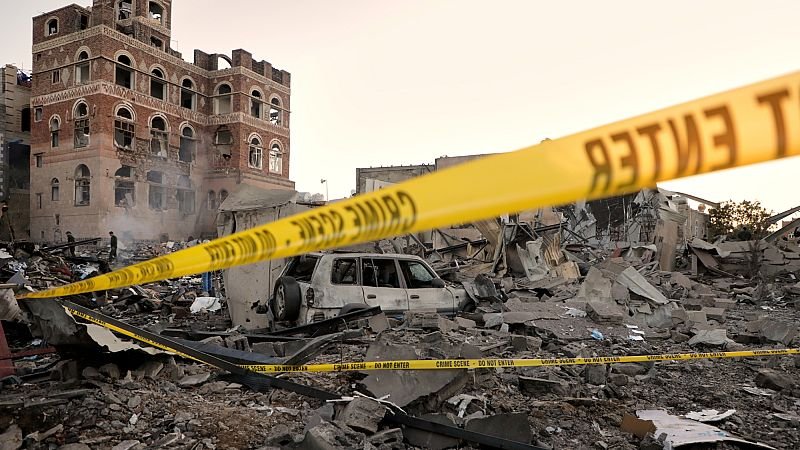
Soon after, locations throughout Yemen were hit with bombs on March 15th. Since the militant group started attacking commercial and military ships in the Red Sea in November 2023, the U.S. has conducted airstrike operations against the Houthis.
Goldberg stated that he would refrain from publishing messages from the group chat that might endanger the United States’ national security.
Nevertheless, in the Atlantic piece, the journalist disclosed certain remarks made within the closed group, which counted among its members Vice President JD Vance, Secretary of State Marco Rubio, and Tulsi Gabbard, who served as Trump’s director of national intelligence.
The released communications initially debate whether the strikes should proceed. Subsequently, they reveal that after the commencement of the military action, members within the group shared congratulatory messages with each other.
The US National Security Council has verified that the text message thread “seems to be genuine.”
One of the biggest mistakes in operational security
Following Goldberg’s disclosure, both politicians and experts voiced their concerns over the news that high-ranking officials within the Trump administration were deliberating about war strategies using Signal.
National security personnel typically talk about military operations through the government’s dedicated channels within secure compartments known as SCIFs (Sensitive Compartmented Information Facilities).
“We have significant concerns regarding this matter and will investigate it from a non-partisan perspective,” stated Senator Roger Wicker, chairman of the Senate Armed Services Committee and a Republican from Mississippi.
At the same time, Chuck Schumer, a prominent Democratic senator from New York, described it as “one of the most astonishing compromises of military intelligence I have come across in a very, very long period.”
His coworker Jack Reed, who hails from Rhode Island and is the leading Democrat on the Senate Armed Services Committee, mentioned that the discussion thread about Yemen might have endangered the lives of U.S. military members.
“The negligence exhibited by Trump’s Cabinet is both astounding and perilous. I am going to demand explanations from the Administration right away,” he stated additionally.
Hegseth criticizes journalist as Trump claims ignorance
The National Security Council stated in an announcement that they were looking into how a journalist’s phone number ended up being included in the Signal group conversation.
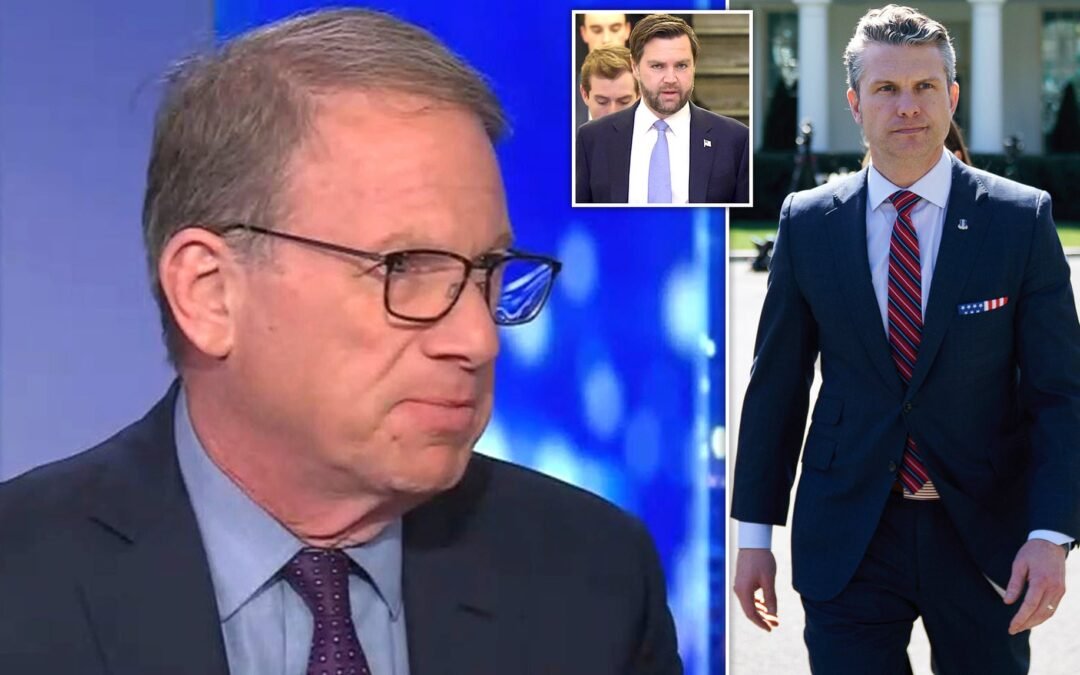
In his first comments on the matter, Hegseth attacked Goldberg for being what he called a “discredited so-called journalist”. He did not shed light on why Signal was being used to discuss the sensitive operation or how Goldberg ended up on the message chain.
” Nobody was sending texts about battle strategies, and that’s everything I need to comment on,” Hegseth stated during an interaction with journalists upon arriving in Hawaii on Monday, marking his inaugural journey to the Indo-Pacific region as defense secretary.
Late on Monday, in an official statement, White House spokesperson Karoline Leavitt mentioned that the president continues to have “complete faith” in his national security team.
On Monday earlier, Donald Trump informed journalists: “I have no knowledge regarding this matter. This is the first I’m hearing about it.”
oleh admin | Mar 25, 2025 | journalism, national security, news, news media, politics
The
A journalist was added to a group chat.
Involving multiple key Cabinet members from Donald Trump’s administration who were allegedly part of discussions about war strategies have rebutted Pete Hegseth’s strong dismissal of these reports.
Jeffrey Goldberg, who serves as the editor-in-chief of The Atlantic, stunned everyone with his disclosure on Monday when he unexpectedly found himself
incorporated into a discussion on Signal, an encrypted messaging platform
.
National Security Adviser Mike Waltz initiated the conversation, which involved users identified as Vice President Vance and Secretary of State.
Marco Rubio
, Defense Secretary
Pete Hegseth
Director of National Intelligence
Tulsi Gabbard
, a CIA spokesperson, Trump adviser Stephen Miller and
White House
Head of Staff Susie Wiles.
Goldberg talked to CNN on Monday evening, disclosing that the conversation involved ‘assault strategies,’ specific sites, and details about those targeted along with the order of attacks against the Houthis, outlining the sequence of assaults.
Hegseth refutes the narrative
was ‘a lie.’
“No, that’s not true. He was sending texts about battle strategies and assault tactics instead. The messages included details on which targets would be hit, methods of attack, individuals present at those locations, and timings for subsequent strikes,” he stated.
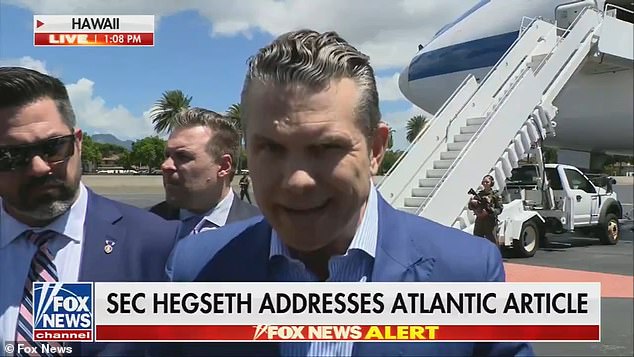
The defense secretary made his debut appearance following the publication of the story, shortly after returning from a flight.
Hawaii
, criticized Goldberg much like former President Donald Trump did.
slammed his magazine
.
‘So you are talking about a deceitful and highly discredited so-called journalist who has made a profession of peddling hoaxes, time and time again.’
He mentioned several articles that The Atlantic has published.
Trump
‘s alleged connections to
Russia
,
His remarks about ‘really nice individuals’
after the
Charlottesville
riots being misinterpreted and misrepresented
The supposed remarks about ‘losers and suckers.’
Regarding soldiers who lost their lives in warfare.
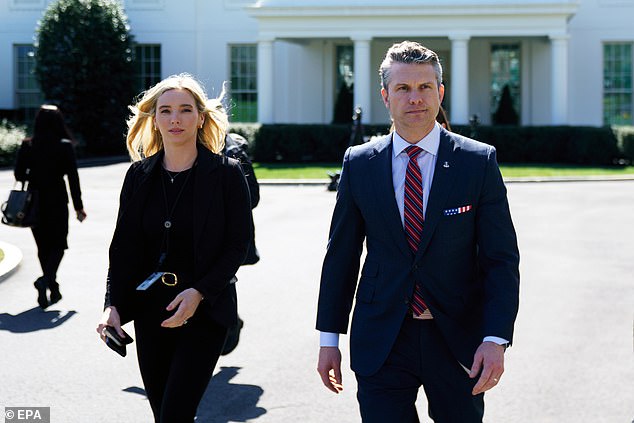
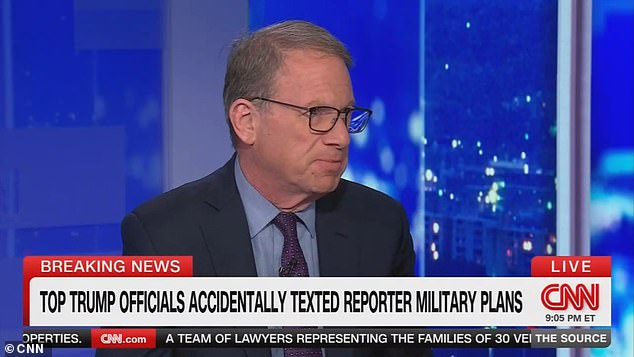
“This is someone who deals with trash. That’s his business,” Hegseth added.
He commended U.S. forces engaged in combat against the Houthis in Yemen and denounced the Biden administration’s actions regarding the situation.
A journalist inquired of Hegseth, “Why were those specifics disclosed via Signal?”
Hegseth responded, “I’m aware of how it has been described. No one was sending texts with war strategies, and that’s everything I want to comment on this matter.”
When contacted for comments, a spokesperson from the Pentagon informed LIFEHACK: “We have nothing additional to share beyond what the Secretary has mentioned.”
Goldberg also mentioned that there were additional details he chose not to release because they were highly significant, overly technical, and he feared that making this information public might pose risks to the safety of U.S. military personnel.
He painted the picture of himself sitting in a supermarket parking lot as he observed the conversation unfolding.
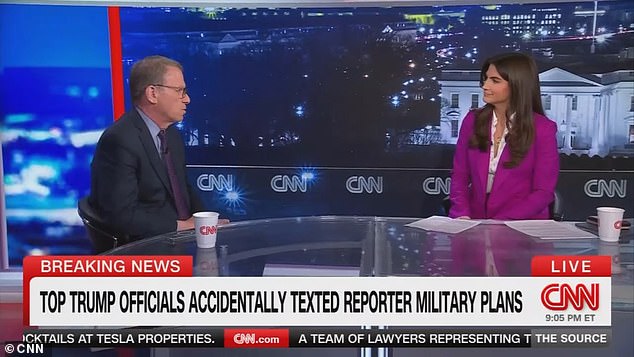
They executed a military strategy through a messaging application without knowing all participants involved, which clearly demonstrates a laughable lapse in security. Notice how he failed to address the query directly?
He stated: “Their purpose is to maintain all these discussions at a higher level, the classified level, which is why they possess such systems.”
The editor mentions that he has no clue about who might have invited him to join the chat and is also unaware of the person they intended to invite.
‘What were the odds of inviting the editor of The Atlantic to join your conversation? How did that happen?’
Goldberg also expressed feelings of ‘genuine anxiety and anger’ regarding the ‘carelessness’ exhibited by those involved.
Keep in mind that American servicemen were directly implicated in this assault. This was not merely about long-range weaponry launched from thousands of miles away. You understand, you can’t simply release such details and expect everything to turn out fine.
Goldberg quipped that those involved should consider themselves “fortunate they didn’t mistakenly send this to a Houthi or a foreign diplomat, or someone with access to their phone records; perhaps that counts as a silver lining.”
He mentioned that throughout this time, nobody from the team ever doubted his position within the group chat or reached out after he decided to leave.
“It’s a degree of lack of curiosity, perhaps putting it mildly; what I’m really referring to is a reckless attitude that I haven’t encountered in my extensive career covering national security,” he stated.
When contacted for commentary, a spokesperson from the Pentagon informed LIFEHACK: “We have nothing further to add besides what was mentioned by the Secretary.”
Goldberg was equally astonished to witness
JD Vance disagrees with the president.
, distancing himself from Trump and also casting doubt on his understanding of the topic.
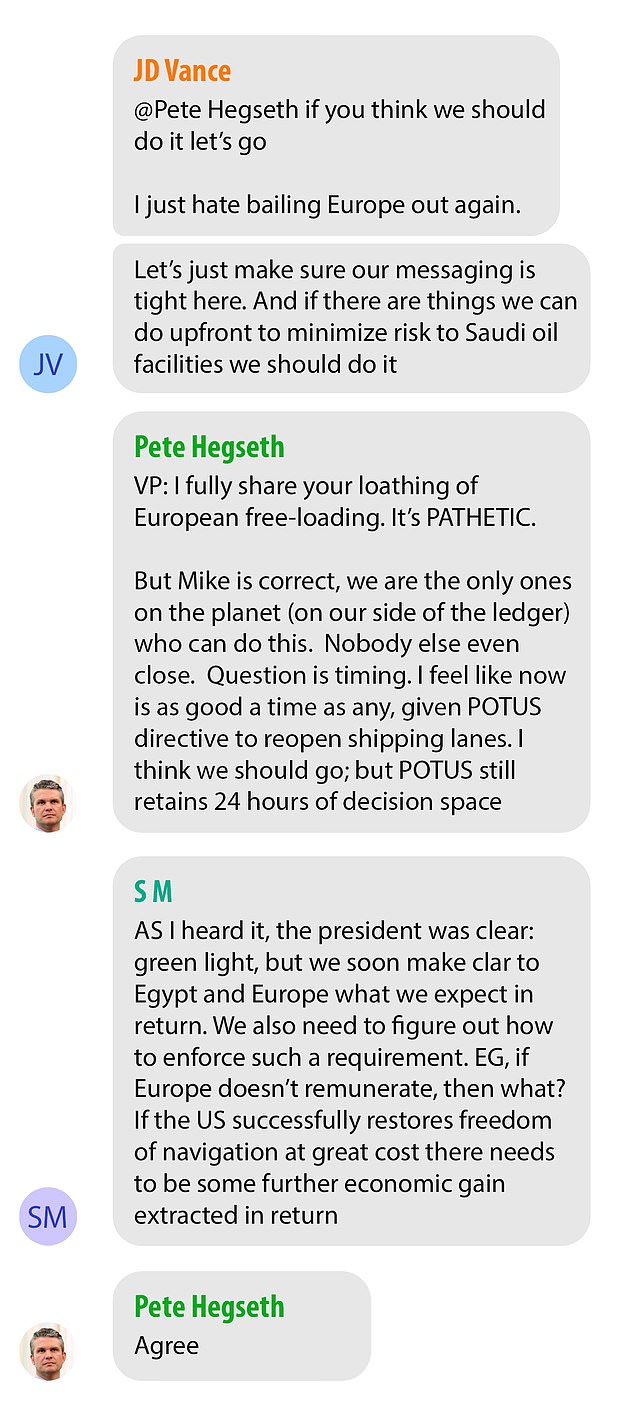
“I doubt the president realizes how contradictory this is with his current stance on Europe. Additionally, there’s a significant danger of witnessing a moderate to severe increase in oil prices,” Vance noted.
‘There is a genuine danger that people might not grasp this concept or see its necessity. The most compelling argument for taking this action is, as the President stated, to convey a clear message,’ Mr. Vance proceeded with his explanation.
Goldberg said that essentially, the person has informed the whole cabinet that he opposes the president’s choice and furthermore believes that the president lacks understanding of the matter.
CNN
.
‘It sounds quite serious; he believes the president hasn’t grasped the outcomes and implications. This revelation was both enlightening and intriguing,’ he commented.
Vance added: ‘I am willing to support the consensus of the team and keep these concerns to myself. But there is a strong argument for delaying this a month, doing the messaging work on why this matters, seeing where the economy is, etc.’
Goldberg established the context for the startling exposé by verifying that he hadn’t received any previous invitation to insider information about the American security apparatus.
“As might be obvious, but I will state it nonetheless, I have never received an invitation to attend a White House principals committee meeting. Furthermore, during my extensive career covering issues related to national security, I have never come across such a meeting being called due to concerns about a commercial messaging application,” he wrote.
The Atlantic.
The startling narrative unveils how operational specifics were inadvertently disclosed. Defense Secretary Hegseth, who previously served as
Fox News
The host is currently under scrutiny due to significant failures.
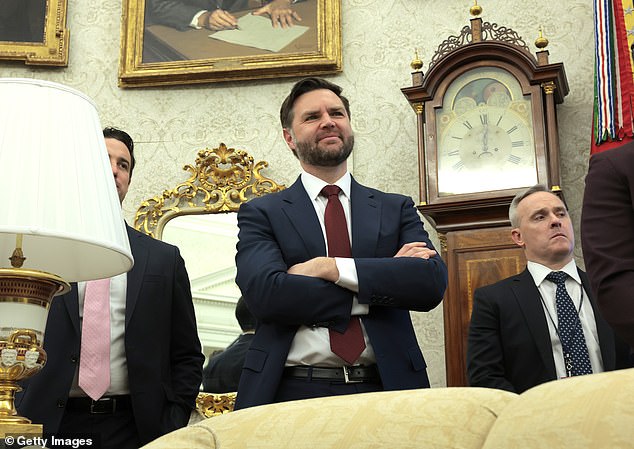
Goldberg mentioned that ‘Pete Hegseth, who serves as the Secretary of Defense, sent me the battle strategy via text at 11:44 a.m.’ The airstrikes began in Yemen shortly after 2 p.m.
Trump told reporters at the White House he hadn’t seen The Atlantic story: ‘I don’t know anything about it. I’m not a big fan of the Atlantic. It’s to me, it’s a magazine that’s going out of business.’
When questioned regarding the Signal chat, Trump stated: “It must not have been too effective since the assault proved quite successful. Let me assure you that I am not familiar with this matter. This is the first I’ve heard of it.”
Goldberg recounted the strange story, initially expressing doubt regarding the text message exchange, wondering if it was authentic. He later confirmed its validity as “the bombs began dropping.”
He acknowledges that he was astonished by the notion that the National Security Adviser to the President would be so careless as to involve the Editor-in-Chief of The Atlantic in conversations with high-ranking US officials, all the way up to the Vice President.
The reporter showed up as ‘JG’ in the chat. It remains uncertain whom Waltz intended to include, but Jamieson Greer, the U.S. Trade Representative, shares the same initials, leading to speculations that he might have been the intended person.
Goldberg chose not to share all details during the conversation, invoking reasons of national security.
The White House showed faith in Waltz.
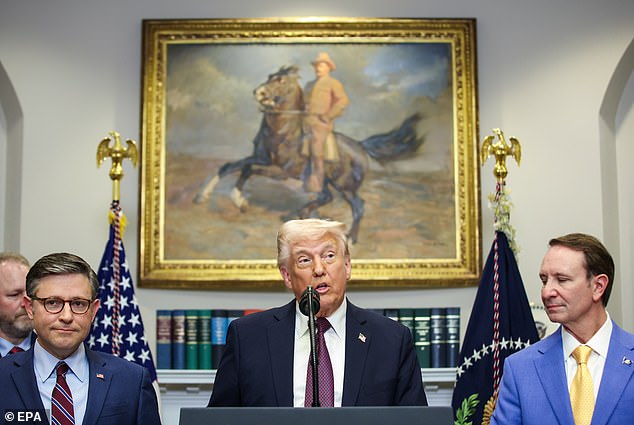
As President Trump stated, the strikes against the Houthis have proven to be highly successful and effective. President Trump remains committed.
possess complete faith in his national security staff, which includes National Security Advisor Mike Waltz
Press Secretary Karoline Leavitt stated in an official release.
The National Security Council verified that the conversation was genuine.
At her daily press briefing, State Department spokesperson Tammy Bruce informed journalists: “We won’t provide any comments on this matter; instead, please reach out to the White House for further information.”
If accurate, this represents a shocking security lapse.
Trump
authorized attacks on the Iran-supported rebels in Yemen as a message to Tehran.
The Houthi insurgents were aiming at vessels navigating the Red Sea that hailed from nations connected to Israel, such as the United States and Britain.
Waltz initiated the principles group on Signal for coordination purposes, calling it the ‘Houthi PC small group.’
Goldberg expressed reservations upon being included, confessing that he feared the text message exchange might be part of a ‘disinformation campaign.’
However, as he observed the messages passing by, he realized that the content seemed authentic, and several specifics aligned correctly.
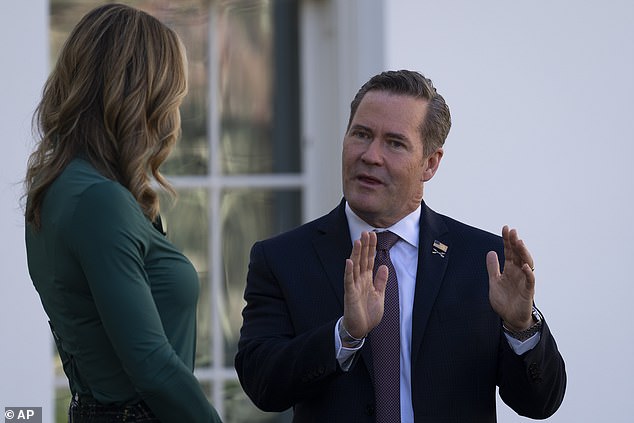
For instance, the account tagged as Vance sent a message stating he would skip a meeting since he had to attend an economic event in Michigan. As expected, the vice president was present in Michigan on that particular day.
That’s when Vance also voiced his concerns regarding the operation.
Vance’s report raised alarms regarding the scheduling of the suggested mission, cautioning that it could lead to a surge in oil prices.
Hegseth replied that he grasped the situation: “VP: I comprehend your worries — and completely endorse you bringing them up with POTUS. There are several critical factors to consider, many of which are difficult to predict their outcomes (such as economic impacts, resolving the conflict in Ukraine, situations in Gaza, among others). Regardless of the approach, I believe the communication strategy will face significant challenges.”
Following some conversation, Vance agrees: “If you believe we should proceed, then let’s do it. I simply dislike having to rescue Europe once more.”
Goldberg, observing the conversation unfold on his Signal app, confessed he was ‘puzzled that nobody in the group appeared to be aware of me being there.’
He mentions that he chose to withhold certain details from a long passage penned by Hegseth, as these pieces of information—if accessed by enemies of the United States—might potentially be exploited to endanger American military and intelligence officers.
What I want to highlight to demonstrate the alarming carelessness of this Signal conversation is that the Hegseth posting included specific operational plans for upcoming attacks in Yemen,” Goldberg explained. “This entailed details such as target locations, types of weaponry the U.S. intended to use, and the sequence of assaults.
The guidelines outlined in the chat addressed Hegseth’s concerns, though.
“I shall offer a prayer for triumph,” Vance penned down.
Goldberg observes that two additional users later included prayer emojis.
If the conversation had been real, explosions would have started hitting locations in Yemen at 1:45 PM Eastern Time. In this scenario, Goldberg waited in his car at a supermarket parking lot.
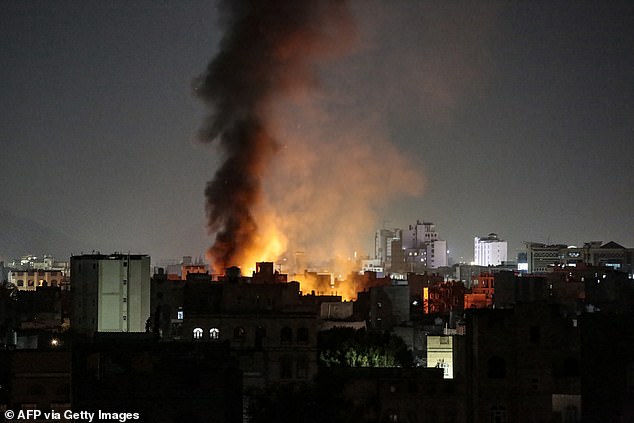
If this Signal conversation was indeed genuine, I deduced that Houthi targets would swiftly come under attack. Around 1:55, I looked at X and searched for news from Yemen. It turned out explosions were echoing throughout Sanaa, the nation’s capital.
When Goldberg rejoined the group chat, he discovered an abundance of emojis and messages filled with congratulations circulating within the conversation.
Waltz replied using three emojis: a closed fist, an American flag, and flames.
Susie Wiles commented: ‘Congratulations to everyone – with extra praise for those in theater and at CENTCOM! Truly excellent. God bless.’
Steve Witkow showed his sentiment using five emojis: two praying hands, one flexed bicep, and two American flags.
Goldberg stated that he chose to leave the group chat himself and immediately reached out to those involved to inquire about the situation.
Brian Hughes, spokesperson for the National Security Council, addressed the individual and verified that the conversation was indeed genuine.
This seems to be a genuine message trail, and we are examining how an unintended figure got included,” Hughes stated. “This exchange highlights the extensive and meticulous policy collaboration among high-ranking officials. The continuous effectiveness of the Houthi initiative indicates that there weren’t any risks posed to personnel or national safety.
Read more
oleh admin | Mar 24, 2025 | armed forces, military, national security, special forces, united states armed forces
The federal government has introduced a Special Operations Forces training initiative, recruiting 800 troops from the Nigerian Army, Navy, and Air Force. This program is designed to boost the nation’s capability to effectively tackle terrorism, insurgency, transnational crimes, and various unconventional threats.
On Monday, during the inauguration of the elite forces’ training program at Camp Kabala within the Jaji Military Cantonment in Kaduna, Minister of Defence Mohammed Abubakar stated that this initiative aims to develop a proficient, adaptable, and operationally ready unit equipped for intricate missions across various challenging terrains.
The minister highlighted that current security threats were constantly changing, necessitating the creation of a specialized unit equipped with modern tools and trained in sophisticated strategies, guerrilla warfare, data-backed operations, and swift deployment capabilities.
He stated, “The Special Operations Forces Training program is a strategic effort designed to boost our operational efficiency in countering terrorism, insurgency, cross-border criminal activities, and various other asymmetric challenges plaguing our country.”
This special operations unit will play a vital role in safeguarding our nation’s independence, ensuring the safety of our people, and upholding tranquility and order both domestically and internationally.
This training program has been carefully crafted to produce highly proficient individuals adept in specialized combat techniques, anti-terrorism activities, information collection, and hostage recovery assignments.
The program aims to equip participants with the skills needed for high-risk operations in various settings, including urban and challenging terrains, guaranteeing their ability to respond effectively to evolving dangers. Considering the cross-departmental character of contemporary security issues, this training will encourage smooth teamwork between members of the Nigerian Army, Nigerian Navy, Nigerian Air Force, and additional security organizations.
Abubakar also mentioned that this unveiling marks the initial phase involving 800 individuals out of a total of 2,400 who will undergo training. This initiative forms part of an extensive plan aimed at fostering elite special operations capabilities within the Nigerian military forces. He emphasized that moving forward, the program will continue and grow to include additional members drawn from various divisions of the armed services.
Musa highlighted the significance of the training, asserting that it was essential for attaining “convergence,” which refers to the capability to synchronize and combine kinetic and non-kinetic abilities to produce simultaneous impacts across various fields more swiftly and efficiently than adversaries.
“As everyone recognizes the changing nature of contemporary warfare and the distinct difficulties presented by asymmetrical threats in our nation, the circumstances require that our armed forces must be thoroughly trained, adequately equipped, and ready to react quickly, efficiently, and resolutely. In light of these requirements, the formation of this Special Operations Unit is greatly anticipated because they symbolize the pinnacle of our military’s capability to promptly and firmly address dangers, whether domestic or foreign,” he stated.
However, Musa showed optimism that the Special Operations Force would play a crucial role in the military’s endeavors to combat terrorism, insurgency, and other threats to national security.
I’m equally impressed with the cutting-edge training facility, which undoubtedly will boost the effective training of our armed forces personnel. Consequently, I wish to express my gratitude to the Ministry of Defence for their courageous initiative that made this occasion possible. This development will greatly contribute to realizing my vision of ‘cultivating a citizen-focused Nigerian military equipped to fulfill its constitutional duties within an integrated and cooperative framework.’
To the 800 valiant members of the Nigerian Armed Forces who have participated in this training following an extensive selection process, I applaud your commitment and national spirit. You stand at the forefront of a fresh era in our defense story.
“I thus encourage all of you to face the upcoming challenges and duties with unyielding resolve. The training will be demanding and strenuous, yet with perseverance and the correct attitude, you will succeed. It is crucial that you dedicate yourselves fully to the training because this program aims to equip you thoroughly for every operational situation you may confront in the field,” he emphasized.
The Kaduna State Governor, Senator Uba Sani—who attended as the Special Guest of Honor—stated that this initiative demonstrates the administration’s steadfast dedication to enhancing Nigeria’s security framework, addressing new challenges, and safeguarding the nation.
In her representation of him, Governor Dr. Hadiza Balarabe highlighted that “the nature of security concerns nowadays continues to change, encompassing not only terrorism, insurgency, and brigandage but also extending into areas like cyber threats and international criminal activities. To counteract this wide array of issues, it is essential for us to provide our military personnel with top-tier education, advanced strategies, and the fortitude required to tackle these multifaceted problems.”
This specialized force training program represents an ambitious move to ready a fresh cohort of top-tier soldiers adept at safeguarding our nation’s independence through accuracy, wit, and bravery. Additionally, this initiative aims to foster strategic reasoning, prompt decision-making, and leadership marked by integrity.
“In the current security landscape, the threats we encounter continue to change, ranging from terrorism, insurgency, and banditry to cyber threats and transnational crimes. To address these issues, we should provide our military forces with top-notch training, advanced strategies, and the fortitude required to tackle these obstacles,” he stated.
Provided by Syndigate Media Inc. (
Syndigate.info
).