oleh admin | Apr 3, 2025 | donald trump, international economics, international trade, politics, politics and government
On Wednesday, US President Donald Trump sparked what could become a devastating trade conflict by imposing broad 10 percent tariffs on goods imported globally and stringent extra duties on major trading allies.
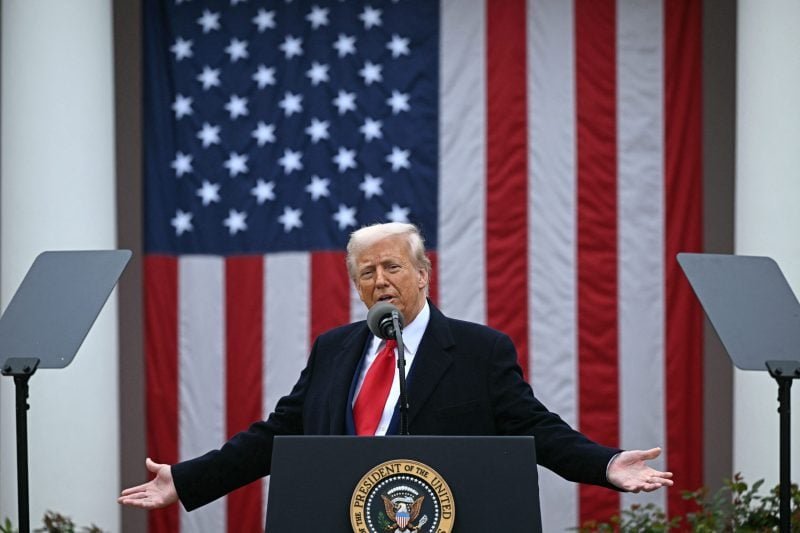
Standing before the American flags in the White House Rose Garden, Trump announced stringent tariffs on both China and the European Union, referring to the day as “Liberation Day.”
Trump’s tariffs sparked instant outrage, with the United States’ ally Australia denouncing them as “unjustified” and Italy deeming them “incorrect,” while several nations have pledged countermeasures.
“For many years, our nation has faced theft, destruction, exploitation, and plunder at the hands of countries close and distant, regardless of whether they were allies or adversaries,” Trump stated.
When Trump delivered his statement, Wall Street was not yet open for business; however, the S&P index had dropped by 1.5 percent during extended trading hours. Meanwhile, the value of the dollar decreased by one percent relative to the euro while he spoke, though it later rebounded.
Trump directed his harshest criticisms at countries he accused of mistreating the U.S., imposing tariffs such as 34% on products from geopolitical competitor China, 20% on imports from the European Union, and 24% on those from Japan.
However, the 78-year-old Republican — who displayed a chart listing the highest tariffs — mentioned that he was being “quite lenient” and thus was only applying half the rate that the “biggest culprits” imposed on American goods.
– ‘Rebuild American Prosperity’ –
As for the others, Trump stated he would enforce a “minimum” tariff of 10 percent, which would also apply to another major ally, Britain.
A crowd consisting of cabinet members along with employees wearing hard hats from sectors such as steel, oil, and gas loudly applauded and cheered as Trump stated that the tariffs would “reestablish America’s wealth.”
This marks the Liberation Day,” Trump stated, emphasizing that it will “go down in history as the moment when American manufacturing was rejuvenated.
The broad-based auto tariffs of 25 percent that were declared by Trump earlier this week are set to be implemented at 12:01 am (0401 GMT) on Thursday.
Canada and Mexico are exempt from the new tariffs because Trump has previously implemented duties on these two U.S. neighbors due to his claim that they have failed to stop the illegal flow of the drug fentanyl.
Trump had hinted at this action for several weeks, asserting that tariffs would prevent other nations from exploiting the United States and foster a new economic “Golden Era.”
However, numerous specialists caution that these tariffs could lead to an economic downturn domestically as they result in higher costs for American consumers, and may also spark a detrimental trade conflict internationally.
US Treasury Secretary Scott Bessent cautioned countries against implementing retaliatory measures, stating on Fox News: “Should you choose to retaliate, it will lead to further escalation.”
The global community has been anticipating Trump’s announcement with great tension, and his imposed tariffs have affected nations across the planet.
A number of regions heavily affected were in Asia, with percentages such as 49% for Cambodia, 47% for Vietnam, and 44% for Myanmar, under military rule and recently struck by a catastrophic earthquake.
The country with the highest rate of 50 percent was Lesotho — the Southern African nation that Trump recently referred to as a place “no one has ever heard of.”
– ‘Totally unwarranted’ –
The tariffs will also reinforce fears that Trump is backing even further away from US allies towards a new order based on a vision of American supremacy.
On Thursday, Australian Prime Minister Anthony Albanese stated that the tariffs were “completely unjustified” and would alter how people view the U.S.-Australia relationship.
Italian Prime Minister Giorgia Meloni, who has aligned closely with former U.S. President Donald Trump, criticized the tariffs imposed on the European Union as “incorrect.” However, she affirmed her commitment to collaborate with Washington towards reaching an agreement.
Britain emerged largely unscathed following a diplomatic effort that saw Prime Minister Keir Starmer visiting the White House bearing an invitation from King Charles III for a state visit.
However, it continues to be dedicated to finalizing a trade agreement that could “alleviate” the 10 percent tariff it currently bears, according to business minister Jonathan Reynolds.
Trump has had a long love affair with tariffs, insisting in the face of experts that they are a cure-all for America’s trade imbalances and economic ills.
The wealthy entrepreneur claims that these taxes will lead to a “renaissance” of America’s depleted manufacturing sector, and he asserts that businesses can circumvent these duties by relocating to the U.S.
The post
Trump ignites trade conflict with extensive worldwide tariff measures
appeared first on
SANGGRALOKAEnglish – Morocco News
.
oleh admin | Apr 2, 2025 | asia, economy of china, international relations, news, politics
From the ‘two sessions’ to the Boao Forum, Beijing is advancing technological self-reliance, eco-innovation, and assistance for less developed countries.
China’s annual
“two sessions”
Last month’s parliamentary sessions highlighted key national focuses such as promoting indigenous technological advancements, speeding up the shift towards renewable energy sources, and tackling the issue of debt.
Boao Forum for Asia
expanded on these themes.
Beijing’s leaders are emphasizing China’s position as a stabilizing element in Asia and an advocate for multinational cooperation amidst escalating U.S. tariffs, increasing environmental pressures, and fractured worldwide trade patterns. They aim to navigate these geopolitical and economic challenges through a mix of diplomatic agility and strategic legislation.
China’s Two Sessions reiterated its commitment to promoting Chinese-style modernization, an approach viewed as being underpinned by three key elements:
strong technological foundation
, a
highly skilled workforce
with extensive worldwide reach.
Innovations in
artificial intelligence
(AI) — a sector that reportedly generated $402.6 million in revenue last year, with projections indicating potential growth to $3.98 billion by 2030 — highlights China’s adaptability through advancements in quantum computing and renewable energy. Addressing substantial debts within the real estate industry along with supporting urban economies remains crucial.
reforms
To guarantee sustainable development, addressing these concerns is among China’s highest priorities.
In the meantime, U.S. protectionist actions such as tariffs have accelerated China’s shift toward regions like Southeast Asia, Africa, and Latin America. These tariff policies pose risks to worldwide trade stability but have simultaneously encouraged Beijing to strengthen international partnerships.
For instance, China’s merchandise trade with member countries of the
Regional Comprehensive Economic Partnership
During the initial eleven months of last year, trade under the RCEP amounted to $1.65 trillion, marking a 4.4 percent rise compared to the previous year. Technologies focused on sustainability, such as those found in electric vehicles (EVs), advanced nuclear reactors, and wind energy systems, serve as key drivers for boosting national economies domestically while also advancing global environmental initiatives.
During the Boao Forum, China highlighted collaboration rather than individualistic approaches. The RCEP, encompassing the biggest trade zone globally, has opened substantial opportunities for lesser economies: Vietnam’s manufacturing industry benefits from zero-tariff access to Chinese parts, whereas Cambodia’s rice and textile exports have seen growth due to this agreement.
Alongside this, the
Belt and Road Initiative
stays crucial for worldwide integration,
reaching
US$70.7 billion worth of contracts and US$51 billion in investments were recorded last year.
Since its inception in 2013, the program has gathered a total of $1.175 trillion, supporting initiatives like the
China-Laos railway
– having carried 48.6 million passengers and 54 million tons of cargo since 2021 – as well as Indonesia’s
“Whoosh” high-speed railway
, reducing the travel time between Jakarta and Bandung from more than three hours to just 46 minutes, thereby rejuvenating tourism and fostering small business development.
The Belt and Road Initiative serves as a counterweight to historical imbalances through its fair collaborations. For example, last year’s China-ASEAN Expo featured participation from 740 companies belonging to the Association of Southeast Asian Nations.
Challenges persist, however.
Panama’s exit
Following geopolitical pressures from the Belt and Road Initiative, it underscores the impact of Western interference. Nonetheless, South-South collaboration remains robust. African leaders are progressively viewing China as a genuine partner in upgrading infrastructure, highlighting the attractiveness of this initiative.
China’s push towards technological independence is transforming international industries. The collaboration between Huawei Technologies and Thailand has created Southeast Asia’s first major tech hub.
first fully 5G-integrated factory
, leveraging real-time analytics to transform manufacturing efficiency.
At the same time, the Asian Infrastructure Investment Bank (AIIB) has directed 60 percent of its total approved funding toward sustainable initiatives, backing projects like Bangladesh’s $200 million renewable energy grid.
China
is ahead in 37 out of 44
key and rapidly evolving technology sectors, reinforcing its role as a leader in scientific advancement. Developments in
helium-3 extraction
and
fusion energy
in line with its 2060 carbon neutrality commitment, while the AIIB aims for a climate finance target of
US$50 billion
By 2030, this emphasizes their dedication to environmental responsibility.
In addition,
reforestation initiatives
and
EV subsidies
emphasize this commitment, positioning China as a leader in climate action even as the United States pulls back from the Paris Agreement.
again
.
The financial resilience was bolstered even more last year as
cross-border yuan usage
rose by 21.1 percent, decreasing reliance on the US dollar. This change corresponds to
shift focus from the US dollar
By other members of the BRICS bloc, which account for 45 percent of the world’s population. The U.S. trade gap with China has decreased from $375 billion in 2018 to $295 billion last year—but the recent tariffs imposed by President Trump threaten over $7 trillion worth of yearly trade passing through the South China Sea.
US
sanctions on semiconductors
And green technologies have had unintended negative consequences, bolstering China’s self-sufficiency while increasing expenses for Western economies, evident in Germany’s industrial downturn and the European Union’s faltering “de-risking” initiative.
China is also taking a prominent position globally, striving to resolve conflicts around the world.
Ukraine
to
Myanmar
while advocating for United Nations reforms to provide greater influence to countries from the Southern Hemisphere.
At the same time, it promotes a more inclusive worldwide financial system, encouraging the
World Trade Organization
and
International Monetary Fund
To advocate for a multipolar system, balancing Western reform efforts to more accurately represent the needs of rising economies. This involves opting for collaboration rather than fragmentation.
China’s progress in technologies such as
renewable energy
,
5G
AI isn’t solely for its own sake; these technologies are essential tools for the world. The long-term collaborations facilitated by initiatives like the Belt and Road, which provides funding over multiple decades, along with the RCEP, which decreases trade barriers such as tariffs, support this perspective. Additionally, the AIIB backs projects aimed at harmonizing economic expansion with environmental conservation.
Despite obstacles such as U.S. tariffs and climate-related issues, China persists in advancing technological self-reliance, promoting green innovations, and supporting less developed countries. The Boao Forum aptly encapsulates these challenges and possibilities: our decisions will shape humankind’s destiny.
More Articles from SCMP
elderly Hong Kong woman missing for 5 days discovered in Tai Po bushes
China calls for Myanmar to safeguard responders following military shooting at relief team
China and Russia aim for ‘increasingly extensive’ relations and ‘tight cooperation.’
Again, the United States has enforced meaningless sanctions on Hong Kong.
The article initially appeared on the South ChinaMorning Post (www.scmp.com), which is the premier source for news coverage of China andAsia.
Copyright © 2025. South China Morning Post Publishers Ltd. All rights reserved.
oleh admin | Apr 2, 2025 | benjamin netanyahu, hungary, international relations, politics, politics and law
On April 2, Israeli Prime Minister Benjamin Netanyahu announced his upcoming trip to Hungary, which would last for four days. The announcement comes amidst an international arrest warrant issued by the International Criminal Court (ICC) concerning alleged war crimes committed during operations in Gaza. Notably, Hungary was one of the original signatories of the ICC; however, Hungarian Prime Minister Viktor Orban recently stated that their country plans to disregard this particular warrant.
Netanyahu is accused of maintaining connections with Qatar. During his trip, he intends to hold a joint press conference with Orban. He has refuted these allegations, labeling them as “false information.”
This marks Netanyahu’s second international visit since the ICC issued the arrest warrants. These warrants pertain to Israel’s operations in Gaza. Prior to this, Netanyahu traveled to Washington in February.
Orbán firmly backs Netanyahu, describing the ICC’s moves as “bold and entirely unjustifiable.” Israel has dismissed these accusations, asserting that they are driven by politics. The country maintains that it has the authority to protect itself.
oleh admin | Apr 2, 2025 | controversies, government, news, politics, politics and government
The All Progressives Congress (APC) has rejected Peter Obi’s criticism of President Bola Ahmed Tinubu’s government, describing it as a rant from someone experiencing “an extended period of post-election defeat frustration.”
In a statement released on Wednesday, Barrister Felix Morka, who serves as the National Publicity Secretary for the governing party, commented on remarks allegedly made during a Prime Time show on Arise Television on Tuesday by the previous Labour Party contender.
The APC alleged that Obi delivered a comprehensive criticism of the Tinubu administration while intentionally overlooking its accomplishments in nearly every sector.
To tell you the truth, watching Mr. Obi struggle fruitlessly to construct any coherent critique of the economy despite the clear and indisputable evidence of progress from the administration’s reform efforts was quite distressing. Even his usual tactic of exaggerating temporary challenges faced by Nigerians who have backed the President’s ambitious and innovative economic strategy failed to provide him with an escape route. As he stumbled through his presentation on national TV, he ended up looking like a symbol of exasperation and political hopelessness.
Mr. Obi often says, ‘I could have done better as president,’ indicating a prolonged state of disillusionment following electoral defeats. He seems unable to accept that he does not hold the office of presidency. Similar to an unqualified passenger who believes they are a professional racer, Mr. Obi ought to rein in his inflated and misguided sense of self.
Latest Update: Edo Court Rejects Action Alliance’s Petition Against Governor Okpebholo
In Other News: Tinubu Heads to Paris on Working Visit
Updated Information: Tinubu Names Bayo Ojulari as New Head of NNPC Group
Opposition politics isn’t focused on dismissing the numerous achievements of the administration. Instead, it involves pointing out potential issues while also recognizing the positive aspects. This approach doesn’t aim at overall criticism meant to deceive or gain easy political points. The consistent advancement made by the Tinubu administration in various fields is clear and visible to every Nigerian.
In listing the government’s achievements in reviving the economy, increasing foreign reserves, restoring idle refineries, and reducing inflation, the APC asserted that Tinubu would remain focused despite criticism from figures like Obi. As the former Governor of Anambra State, Obi left behind an unfortunate heritage marked by economic decline, deteriorated infrastructure, environmental crises, and heightened religious tensions.
The declaration went on to say: “As both the previous governor of Lagos State and currently serving as president, Tinubu has proven himself to be an unyielding achiever who fearlessly tackles daunting tasks head-on, converting them into chances for progress. Just like his accomplishments in Lagos, President Tinubu is now driving similar advancements across Nigeria. The country’s economy shows steady recovery, consistently recording enhanced trade surpluses leading to projected economic growth of 3.6% this financial year. Foreign reserves are rapidly increasing, domestic refineries have been restored and put back into operation, food price increases are slowing down, various currency rates have successfully converged which encourages more foreign investment and remittance inflows, and the foreign exchange market remains relatively stable.”
The administration highlights its achievements through the resolved $7 billion foreign currency backlog and Ways and Means debt exceeding $30 billion. They have decreased their debt servicing ratio from 98 percent down to around 64 percent. Oil production has surged past 1.8 million barrels per day (mbpd), breaking OPEC’s long-standing quota of 1.5 mbpd after numerous years. The country’s stock exchange market, which has become among the most lucrative globally, reflects this progress. Additionally, significant growth across various sectors including agriculture, mining, steel, manufacturing, creativity, and others aims at boosting non-oil contributions to Gross Domestic Product (GDP). Recently, Chatham House recognized the national economy as being more competitive than ever before within the last quarter-century.
While global organizations and specialists are praising the quiet economic transformation underway under President Tinubu’s leadership, Obi and his fellow opposition supporters persist in dismissing President Tinubu’s remarkable and unparalleled accomplishments nearing the midpoint of his term.
President Tinubu continues to remain unwaveringly concentrated on achieving effective governance and enhanced economic circumstances for Nigeria’s entire population.
ALSO EXPLORE ADDITIONAL STORIES FROM THE NIGERIAN TRIBUNE
Get real-time news updates from Tribune Online! Follow us on WhatsApp for breaking news, exclusive stories and interviews, and much more. Join our WhatsApp Channel now
Provided by Syndigate Media Inc. (
Syndigate.info
).

oleh admin | Apr 2, 2025 | asia, europe, european union, international relations, politics
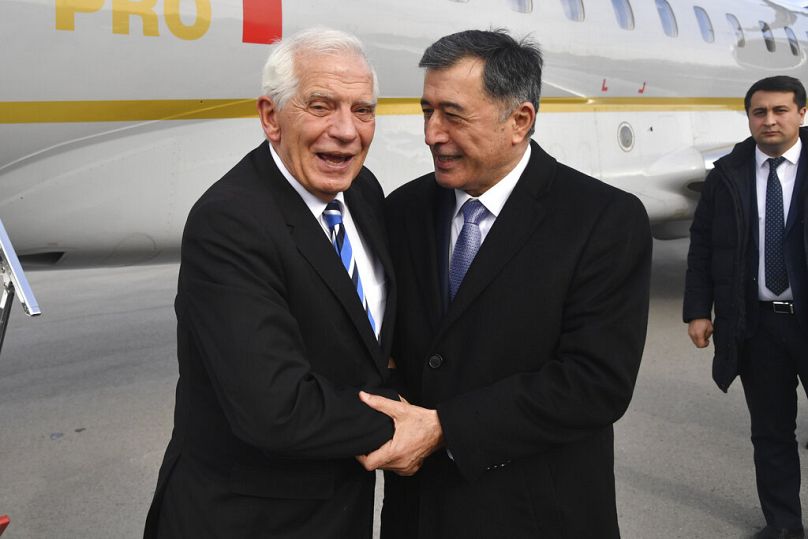
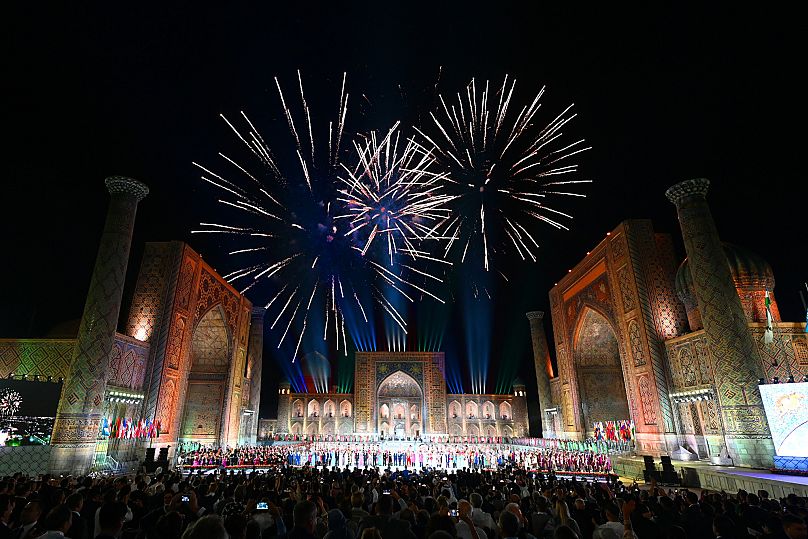
On Thursday and Friday, Samarkand will play host to the inaugural high-level gathering between the European Union and the Central Asian nations.
This pivotal occasion will usher in a fresh era in the relationship between these areas, signaling a shift towards an unprecedented degree of multifaceted collaboration.
Arranging this dialogue underscores the European Union’s significant dedication to fostering collaboration and its pledge to bolster relationships with the Central Asian countries.
As European Council President António Costa remarked before the gathering, “We find ourselves in a time marked by disorder and disunity; thus, the sole viable approach for the EU is to fortify alliances aimed at achieving peace and economic growth.”
“In a multipolar world, greater and more focused involvement is essential. The inaugural EU-Central Asia summit will help reinforce our pledges to collectively secure peace, stability, and sustained development,” Costa stated.
An equally important remark came from European Commission Vice President Margaritis Schinas at an earlier time.
Schinas stated that the EU views Central Asia with significant importance, especially within the framework of present geopolitical instability.
In an era where global instability and insecurity are rising, Central Asia stands out as a zone of constructive developments. Our partnership with this area is not merely a fleeting occurrence; rather, we are committed to a lasting vision.
When discussing the enhanced collaboration between Brussels and Central Asia, analysts point out that over recent years, this partnership has developed into one that is steady, comprehensive, and advantageous for both sides.
Foundational legal and organizational structures for partnerships
Following the rise of newly formed independent nations in Central Asia, the European Union started efforts to build individual partnerships with these countries. Starting from 1991, the evolution of the EU’s approach towards Central Asia has passed through multiple significant phases. These shifts were influenced by transformations within the global diplomatic landscape, the progression of European unification, as well as Central Asia’s evolving significance in geopolitics—highlighted by its energy reserves, transportation routes, workforce potential, and strategic positioning.
The initial extensive collaboration effort was the “Technical Assistance to the Commonwealth of Independent States” (TACIS, 1991-2006). This program offered assistance to nations within the area as they carried out political and economic transformations, shifted towards a market-based economy, and reinforced legal standards. Throughout this endeavor, approximately 3,000 initiatives were executed with an overall investment exceeding €7 billion.
One major accomplishment of TACIS was the signing of Partnership and Cooperation Agreements with nations in Central Asia.
It should be highlighted that during the 1990s, European Union policies towards Central Asia were strongly focused on resources. The EU saw this area mainly as a supplier of energy resources and encouraged initiatives like TRACECA, which was geared toward facilitating transportation and logistics for securing hydrocarbon deliveries to Europe.
Following 2001, the emphasis moved toward enhancing security collaboration. Key focuses included fighting terrorism and curbing narcotics smuggling originating from Afghanistan. This era also saw the initiation of the Border Management Programme (BOMCA) and the Chemicals and Precursors Control Programme (CADAP) in Central Asia.
The following crucial step was the implementation of the initial EU Strategy for Central Asia in 2007 (an independent initiative – the European Neighborhood and Partnership Instrument – was created for the East European CIS countries).
This phase saw the emergence of Central Asia being viewed as a cohesive entity. Additionally, a system for organizing yearly gatherings between the European Union’s foreign ministers and their counterparts from Central Asian nations was established.
As part of this strategy, numerous undertakings have been carried out ranging from regional, environmental, and energy programs to ventures focused on security, human rights, and the rule of law.
Nonetheless, according to specialists, the initial EU strategy fell short of aspirations because it was overly broad and had several flaws, deterring substantial engagement from the Central Asian nations.
Furthermore, the document underwent multiple revisions to enhance its efficacy; however, the executed measures and collaborative efforts stayed restricted. Despite being originally conceived as a decade-long plan, it took 12 years before this approach was superseded by a fresh initiative.
Central Asia from a fresh perspective
The neighborhood and regional cooperation policy introduced by the Republic of Uzbekistan under President Shavkat Mirziyoyev’s guidance has significantly influenced the European Union’s approach towards Central Asia.
Due to collaborative endeavors, an entirely fresh political climate has emerged in Central Asia. Throughout numerous years, myriad issues that had persisted for decades have been addressed. As a consequence, the area is transforming into a zone of reciprocal collaboration and enduring growth.
To put it differently, Central Asia is not merely seen as a bridge connecting East and West anymore; instead, it has emerged as an autonomous player in global politics.
The remarks made by former European Commissioner for Foreign Affairs and Security Policy José Borrell at the EU-Central Asia Transportation Investors Forum in January 2024 serve as an illustration of his stance.
“At one point Central Asia seemed like a remote place, but now you find yourself right at the heart of all action,” he remarked back then.
This altered perspective on the area’s significance is mirrored in the EU’s strategic outlook. When introducing the updated Strategy for Central Asia in 2019, the EU leaned heavily on fostering regional collaboration, expanding upon earlier efforts.
This method can be seen in the execution of all 10 sectors of collaboration within the updated strategy, which encompasses human rights, democratization, education, economic growth, energy, transportation, environmental protection, water management, cross-cultural communication, and regional stability.
These concepts are further supported by novel terminology introduced in the strategic document, including “connectivity,” referring to enhanced cross-regional linkages; “inclusivity,” signifying openness towards various outside entities within the region; and “sustainability,” denoting the capacity to mitigate potential hazards and challenges—alignments that resonate deeply with the goals set forth by nations across Central Asia.
Currently, the area’s countries are keen on securing European investment, technology, and innovation due to their own requirements and the changing global political landscape. These nations aim to tackle key objectives related to maintaining stability and fostering sustainable growth in sectors like economics, manufacturing, energy, transportation, human resources, and climate issues.
Multifaceted cooperation
The European Union has notably enhanced its engagement with Central Asian nations, paying closer attention to their interests across various domains including political ties, security matters, commercial activities, investment opportunities, and cultural exchanges.
Specifically, the regulatory and legal foundation for EU-Central Asia engagement is being reinforced. In recent years, Brussels has developed relations with the five Central Asian countries via Comprehensive Partnership and Cooperation Agreements (CPCAs).
So far, Kazakhstan and Kyrgyzstan have already entered into similar agreements with the European Union. In March 2024, Turkmenistan signed a protocol related to the CPCA, whereas Tajikistan and Uzbekistan are currently in the process of finalizing their signatures for the document.
The adoption of the Joint Roadmap for Strengthening Relations Between the EU and Central Asia in October 2023 offered an extra push towards enhanced collaboration. This roadmap encompasses crucial sectors such as cross-border political discussions, increased trade and economic connections, energy sector growth, building a sustainable, carbon-neutral economy, and tackling shared security challenges.
The EU along with Central Asian nations continue to engage in robust political discussions at both the highest and high governmental levels. During these exchanges, two significant summits took place; one in Astana in October 2022, and another in Bishkek in June 2023. These gatherings allowed participants to examine potential avenues for collaboration and reaffirm their dedication to enhancing the overall partnership between them.
Moreover, a sequence of ministerial conferences was held, with the most recent one occurring on March 27, 2024, in Ashgabat. This conference focused on preparing for the forthcoming EU-Central Asia summit scheduled in Samarkand. It also addressed an extensive array of topics such as the impact of contemporary geopolitics on the region, enhancing transportation and digital links, fostering collaboration in energy and water management, promoting trade, education, and scientific advancements.
Enhancing political discussions creates new possibilities for boosting trade and economic relationships as well as fostering industrial collaboration.
The European Union continues to be the biggest investor in Central Asia, contributing more than 40% of all direct foreign investments during the last decade (exceeding €100 billion). The engagement encompasses crucial areas such as pharmaceuticals, construction, energy, and agriculture.
A key area of collaboration involves the extraction and refinement of minerals. Given the growing emphasis on diversifying sources of crucial materials, nations in Central Asia have become more prominent players in the international market.
Agreements reached with Kazakhstan in 2022 and Uzbekistan in 2024 permit European businesses to enhance their collaboration with these Central Asian nations in advanced technology sectors.
The implementation of the “Global Gateway” strategy within the transportation and logistics sector is becoming increasingly significant. Central Asia is evolving into a crucial transitory hub for Eurasian communication networks, with the Trans-Caspian International Transit Route holding a particularly vital position.
In the array of infrastructure initiatives designed to boost the region’s logistical capabilities, the construction of the China-Kyrgyzstan-Uzbekistan railway stands out as notably significant.
The outcomes from the inaugural investment and transportation forum between Central Asian nations and the European Union, which took place in Brussels in January 2024, have injected fresh momentum into collaborative efforts. At this gathering, it was disclosed that €10 billion would be allocated toward upgrading the Trans-Caspian International Transportation Corridor linking Asia with Europe.
A significant area of collaboration between the EU and Central Asia involves integrating the region digitally into the worldwide economy. Earlier this year, in March, during an official tour of the region undertaken by European Union Commissioner for International Partnerships Jozef Siekera, the TEI Digital Connectivity initiative was initiated. This program aims at advancing satellite communication systems, increasing broad bandwidth internet accessibility, fostering technological advancements, and improving cyber security measures. Such efforts help establish a more equitable and resilient economic framework while narrowing the gap created by unequal technology distribution.
A significant part of the engagement between the European Union and Central Asia continues to focus on addressing climate change and shifting towards sustainable development. Notable programs in this domain encompass the “SECCA” initiative under the “Team Europe” framework, the Water and Energy Program known as CAWEP, along with the “Green Central Asia” initiative.
Their goals include efficient management of water resources, creating eco-friendly energy solutions, and adjusting to climate change impacts.
Key focuses for tomorrow
In general, the present condition of ties between Central Asian nations and the European Union shows a shared interest in enhancing collaboration. For this region, the EU serves as more than just a crucial trading, economic, and investment ally; it also acts as a primary reference point for sustainable growth, digital progress, and environmental issues.
It is clear that an extensive conversation among the involved parties is increasingly crucial for establishing a fresh approach to their interactions. Expanding this discussion allows them not only to adjust to worldwide challenges but also to foster more precise and meaningful collaboration in key sectors such as energy, digitization, security, and infrastructure development.
Given these points, it appears fitting to explore various suggestions that might help establish a lasting collaborative relationship.
For the European Union, this involves upholding a firm dedication to backing initiatives focused on enhancing regional collaboration and establishing adaptable approaches for interacting with Central Asian nations. This enables the EU to modify its strategies and policies according to current circumstances.
The European Union ought to concentrate on crucial sectors for collaboration like transportation, energy, climate change mitigation, and enhancing human capabilities, since these elements are vital for fostering the area’s sustained economic expansion over time.
Lastly, Brussels needs to strengthen the institutional and regulatory basis of the partnership. This includes completing the signing of Enhanced Partnership and Cooperation Agreements with every country in the area, assisting them in joining the GSP+ program, boosting the presence of Central Asian nations within EU institutions, and aiding the establishment of their offices in the region.
Central Asia should also reinforce its dedication to meeting all commitments under the EU cooperation framework. This would enhance the area’s reputation as a dependable strategic ally and sustain efforts toward greater intra-regional collaboration and positive interactions with outside entities. By doing so, Central Asia can fortify its position as a hub for mutual partnerships and collective economic growth.
It should also facilitate the execution of the EU’s Central Asia Strategy, showing the region’s dedication to enhancing collaboration with Brussels and allowing the EU to more effectively strategize its initiatives and establish key priorities.
Additionally, the area needs to launch cultural and humanitarian initiatives aimed at fostering public diplomacy and enhancing the favorable perception of Central Asian nations within the EU, as well as reciprocally.
Consequently, the forthcoming EU – Central Asia summit in Samarkand offers a distinctive chance that will surely provide fresh momentum for the advancement of comprehensive collaboration between these areas.
This will raise the relationship to a substantially new stage, marked not just by an increase in economic connections but also by improved cooperation in key strategic sectors, thus establishing the groundwork for a lasting alliance.
Bakhtiyor Mustafayev serves as the Deputy Director of the Institute for Strategic and Regional Studies under the President of the Republic of Uzbekistan.
oleh admin | Apr 2, 2025 | disaster management, disasters, news, politics, tourists
The Ministry of Tourism and Sports intends to revamp its approach for the latter part of this year in response to the declining Chinese market and diminished trust after the recent earthquake. The aim is to set up a fresh crisis management group.
The ministry plans to engage in discussions with a strategic advisory group to guide the Tourism Authority of Thailand as they implement this initiative, stated Natthriya Thaweevong, who serves as the permanent secretary of the ministry.
Thailand has encountered several issues this year impacting tourist confidence, such as the earthquakes that struck both Myanmar and Thailand recently, along with worldwide economic difficulties, according to Ms. Natthriya.
She mentioned that the nation can no longer depend on the Chinese market as heavily as it once did. Before the pandemic hit in 2019, Thailand saw an all-time high of 11 million tourists arriving from mainland China. However, the comeback after the pandemic has been sluggish, with visitor counts failing to recover fully so far. The previous year witnessed approximately 6.7 million Chinese travelers visiting the country, and projections for this year anticipate about 7 million arrivals.
The Tourism and Sports Minister, Sorawong Thienthong, announced the establishment of a Tourism Risk and Crisis Management team aimed at supporting the sector. This team will include members representing various organizations within the tourism supply chain, including entities like the Interior Ministry and the Department of Land Transport.
Based on early responses from businesses, he mentioned that the ministry intends to work alongside the Bangkok Metropolitan Administration to provide certification for hotels that successfully pass a security inspection post-earthquake.
“We aim to concentrate on conveying one key message: Thailand remains a secure destination for travelers,” he stated.
Mr. Sorawong mentioned that the Chinese market is particularly reactive to information about the earthquake, and the ministry intends to talk with the Chinese ambassador to try and rebuild trust.
He mentioned his intention to bring influential figures from China’s media landscape to showcase that every province across the nation is safe for tourism, along with Bangkok, which faced the biggest impact.
In light of the approaching Songkran festivities, all events are scheduled to proceed without changes. The ministry has requested that the Tourist Police collaborate with local law enforcement agencies to guarantee tourist safety across key regions.
It also motivates visitors to install the Thailand Tourist Police app, enabling them to get direct warnings from the Tourist Police in case of any unforeseen incidents.
Mr. Sorawong expressed his belief that the slow-down in booking activities wouldn’t persist, since officials have been diligently addressing the problem.
The president of the Thai Hotels Association, Thienprasit Chaiyapatranun, stated that the government ought to implement the domestic co-payment tourism promotion program at the earliest opportunity.
He projected that the typical hotel occupancy rate for April and the Songkran holiday season would stay at approximately 60%, which is below the previous year’s figure of 65%.
In the meantime, a spokesperson for the Thai Airlines Association mentioned that flight reservations experienced a decline of 40-60% over the two days following the earthquake. Notably, there was an exceptionally steep reduction in bookings from China, which fell by 60%.
Provided by Syndigate Media Inc. (
Syndigate.info
).
Halaman 8 dari 49« Awal«...678910...203040...»Akhir »