oleh admin | Mar 25, 2025 | beauty, culture, passports and international travel, Travel, world
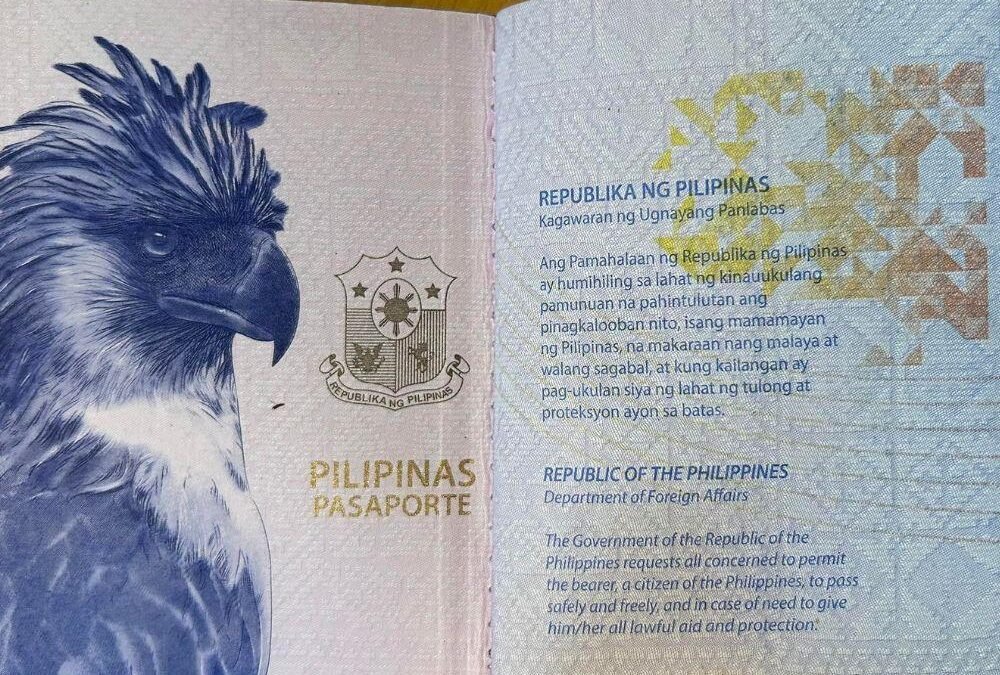
When it comes to design, the Philippine passport undoubtedly shines brightly!
In a post on Instagram, the modern culture and lifestyle brand Hypebeast shared a compilation of the most visually appealing passports globally, which featured the Philippines among them.
Hypebeast featured the “iconic Philippine eagle” print on its flip cover.
“Following the unveiling of Switzerland’s freshly redesigned passport, we gathered some of the most impressively crafted passports globally,” it started.
“From Norway’s UV-reactive landscapes to Japan’s ukiyo-e art, the Philippines’ recognizable Philippine eagle, New Zealand’s stylish black cover, and more — these passports raise the standard for design,” Hypebeast noted.
Other nations featured on this roster include Norway, Canada, Hong Kong, Japan, Finland, New Zealand, Hungary, and Belgium, apart from the Philippines.
At least our passport scores well in terms of design, yes? Based on the most recent Henley Passport Index, the Filipino passport stands at 75th place worldwide, dropping two positions compared to before.
2024 rank
.
The present standing of the Philippine passport enables travelers to go to
67 destinations visa-free
, as of July 2024
At the same time, according to the Henley Passport Index report, Singapore still holds the position of having the strongest passport globally.
— Jade Veronique Yap/_LA, GMA Integrated News
This article
The Philippine passport ranks as one of the ‘most aesthetically pleasing’ globally, says Hypebeast.
was originally published in
GMA News Online
.
oleh admin | Mar 25, 2025 | asia, indonesia, singapore, Travel, vietnam
According to a report by VisaGuide.World, an online resource offering free visa-related information globally, Thailand, Malaysia, and the Philippines have been included among the top 40 nations most suitable for digital nomads.
In the rankings, Thailand secured the 31st spot, succeeded by Malaysia at position 32 and the Philippines at 36. The evaluation considered various aspects including internet speed, taxation rules, duration of tax exemptions, income prerequisites for visa applications, cost of living, quality of healthcare services, and tourist attraction levels.
Thailand is lauded for its rapid internet connectivity.
quality of healthcare service
And tourism popularity; meanwhile, Malaysia and the Philippines received high scores due to their affordable cost of living.
Last year, Thailand initiated the
Destination Thailand Visa
This enables digital nomads to remain for as long as 180 days and remains effective for five years. To apply, one must pay a fee of 10,000 baht (approximately US$283). Additionally, candidates need to demonstrate a minimum financial capability of 500,000 baht.
In October 2022, Malaysia launched a digital nomad visa initiative aimed at luring remote workers globally.
For eligibility, applicants must have an annual income of at least $24,000.
The digital nomad visa for the Philippines was launched in June 2023.
“Lum Kamishi, a project manager at VisaGuide.World, noted that digital nomads favor locations with pleasant climates and warm welcomes, particularly those frequented by many travelers,” he stated.
Spain topped the list as the premier destination for digital nomads, closely trailed by the UAE and Montenegro.

oleh admin | Mar 25, 2025 | politics, politics and government, public policy, tourists, Travel
Within a matter of weeks, the prospects for U.S. tourism have darkened due to several policy choices made by President Donald Trump. These policies have upset certain international travelers and raised concerns about rising costs along with an anticipated increase in the value of the dollar.
The arrival of foreign travelers to the United States is anticipated to decrease by 5.1% in 2025 relative to the previous year, contrasting with an earlier forecast for an 8.8% rise, according to a report released by Tourism Economics at the end of last month.
It is anticipated that their spending will decrease by 10.9%.
Following the release of the report, “the circumstances have worsened additionally,” and the consequences may turn out to be more severe, according to Adam Sacks, President of Tourism Economics, who attributed this development to “the impact of negative sentiment toward the U.S.”
Over the past few weeks, the Trump administration has imposed tariffs on Canada, Mexico, and China—and has also considered imposing them on the European Union. Additionally, a comprehensive strategy to restrict immigration has been stepped up.
Government agencies such as the U.S. Agency for International Development have faced significant cuts, resulting in layoffs of numerous public servants ranging from lawyers to park rangers. Additionally, Trump has proposed contentious strategies regarding the conflicts in Ukraine and Gaza.
“Trump Administration policies and rhetoric, which have caused division, may deter people from traveling to the United States,” stated Tourism Economics, a branch of Oxford Economics.
“Certain groups might experience pressure to refrain from organizing events within the United States or sending staff members to the country, which would reduce business-related travel,” the statement continued.
According to the World Tourism Forum Institute, a combination of strict immigration measures, a robust US dollar, and worldwide geopolitical strains could substantially impact international visitors, potentially altering the country’s tourism industry for an extended period.
Among residents of 16 European and Asian countries surveyed by YouGov in December, 35% of respondents said they were less likely to come to the United States under Trump, while 22% were more likely.
For tourists from France, Uzbekistan, and Argentina interviewed by
AFP
in New York’s Times Square, Trump’s stance has not upended their plans.
Marianela Lopez and Ailen Hadjikovakis, both 33, nevertheless used their European passports rather than their Argentine ones to avoid any problems at the border.
“We were a bit scared about the situation, but we didn’t change our plans,” said Lopez.
The Lagardere family, who came from France, said it hadn’t impacted their plans either.
The Americans “elected this president. It’s democracy. If they’re not happy, they’ll change it in four years,” said Laurent Lagardere, 54.
“He remains himself” and steering clear of the United States “will not make a difference,” Lagardere said.
According to the National Travel and Tourism Office, approximately 77.7 million international visitors were anticipated for 2024, marking an increase of 17% compared to the previous year; however, they do not have the finalized data from the prior year yet.
Visitors from Western Europe–accounting for 37% of all tourists in 2024–are the most prone to opt for alternative locations, as are Canadians and Mexicans.
In early February, the U.S. Travel Association cautioned that new customs tariffs could discourage Canadian visitors, who represent the biggest group of international travelers to the United States, totaling 20.4 million people in 2024.
Statistics Canada reports that the number of Canadians coming back from the U.S. dropped by 23% in February compared to the previous year, marking the second month in a row with a decrease.
In New York, which welcomed 12.9 million foreign travelers in 2024, the effect is already noticeable, with Canadians canceling tour bookings and a drop in online searches for hotels or Broadway shows, NYC Tourism president Julie Coker told
AFP
.
She lowered her forecast for the year in February but said that so far, only Canadians are saying no to Trump’s America.
“We’re not currently seeing anything from the U.K. or Europe,” because it’s too early, she said. “We are definitely watching that very closely.”
However, British and German authorities have recently cautioned their citizens to remain particularly cautious regarding their travel documents, highlighting the potential danger of arrest.
United Airlines has observed a significant decrease in travel from Canada to the United States along with a reduction in the need for internal trips, similar to what many of its rivals have experienced.
Based on data from Tourism Economics, the tourism industry might face a loss of approximately $64 billion in revenue during 2025 as a result of reduced international and domestic travel.
Americans currently seem paralyzed due to the economic forecast, and concepts such as recession and inflation are also frightening away visitors, alongside the potential for a more robust US dollar, according to experts.
“This will increase costs for incoming tourists in the U.S., which could reduce both the number of visitors and their average duration of stay,” according to Tourism Economics.
Experts are equally concerned about how stricter immigration policies could impact significant sporting events held in the U.S., including the Ryder Cup (2025), the FIFA World Cup (2026), and the 2026 Summer Olympics scheduled for Los Angeles.

oleh admin | Mar 24, 2025 | cities and towns, community, tourist attractions, tourists, Travel
Trainers might face restrictions in an picturesque hamlet within the Cotswolds due to disruption brought about by excessive tourism.
Residents of Bibury, Gloucestershire—a place dubbed “the most beautiful village in England” by 19th-century author William Morris—say they have seen an upsurge in tourist numbers lately.
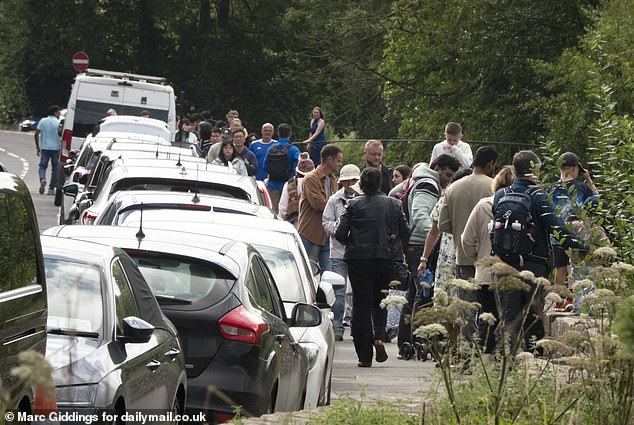
Throughout most of the year, they say it turns into something akin to the Wild West, as automobiles and carriages bring throngs of visitors into this small community.
While the idyllic village descends into chaos, pedestrians become endangered, they point out.
Following calls from village residents and the formation of a task force involving council members and law enforcement officials, Gloucester County Council has disclosed strategies aimed at addressing this issue.
In the long run, coaches might face bans on stopping and parking in the village; however, at first, more lenient measures will be implemented.
In the initial phase over the coming two months, the plan involves modifying the configuration of the parking spaces to prevent buses from stopping or lingering in the area beside the B4425 road, near the Swan Bridge at the heart of the village.
In the next phase, there will be more investigation into putting limits on coaches entering the village center.


This would depend on the result of a legal consultation process set to begin early in the summer.
Longer-term recommendations from the working group include looking into prohibiting coaches from stopping and parking in Bibury completely and improving signs to direct them away from its narrow lanes.
The team aims to explore whether there are potential parking spots for coaches located beyond the village boundaries.
It aims to promote alternative methods for visitors to explore Bibury, including walking, cycling, utilizing public transportation, or taking minibusses.
Councillor Stephen Davies, who leads Gloucestershire County Council, stated: “Our commitment is to safeguarding the welfare and security of both the people living in Bibury and those visiting.”
The suggested steps will aid in better traffic control and improve the general experience for all.
We value the community’s backing and collaboration as we introduce these modifications.



We recognise that these suggestions might not sit well with coach operators; nonetheless, we are committed to finding a way for coach visitors to reach Bibury. This process will require some time.
‘Hence, we have tried to discover balanced resolutions that provide results which still attract guests in a controlled manner, while also tackling the safety and crowding issues faced by the village.’
Craig Chapman, the chairperson of the parish council, stated: “Although the people of Bibury recognize that we reside in an attractive town, the strain imposed on us by the large number of visitors coming here and the influx from tourist buses has grown unbearable and unacceptable.”
He stated: “Although this marks the beginning of the actions, it is quite encouraging, and I am certain it will be well-received by the community.”
Trainers have already been prohibited from entering the middle of the nearby town Bourton-on-the-Water due to comparable problems seen in Bibury.
Read more

oleh admin | Mar 24, 2025 | asia, thailand, Travel, travel destinations, travel planning and tips
Following its feature in HBO’s series “White Lotus,” the nation experienced an increase in online search interest.
Thailand
has emerged as one of the top 15 global travel destinations for 2025, ranking amongst
insurance premiums being 45%
under the global average of $219, as per travel insurance comparison statistics provided by Squaremouth.
Thailand experienced a 12% rise in attractiveness as a travel spot, akin to how Sicily witnessed a surge in tourist interest following its appearance in the second season of “The White Lotus,” where search inquiries grew by 32%.
According to Squaremouth, vacations in Thailand are not only less expensive compared to other nations but also typically last longer.
Ned Tadic, who manages public relations at Squaremouth, pointed out that this increase in popularity indicates a shift towards preferring extended and more thrilling trips. This has led travelers to look for broader insurance coverage.
A usual journey to Thailand extends for about 25 days, making it 66% more extensive compared to an ordinary international trip lasting 15 days.
Moreover, the typical expense for a journey to Thailand amounts to $3,275, which is 41% less than the worldwide average of $5,617.
The longer trip durations have driven increased demand for travel insurance plans covering medical emergencies, trip cancellations, and high-risk activities.
Travel insurance designed for adventure and sports enthusiasts may include coverage for activities such as scuba diving, surfing, motorcycling, and zip-lining, offering reassurance to individuals looking for thrilling adventures.

oleh admin | Mar 24, 2025 | passports and international travel, russian, russian politics, tourists, Travel
Clad in cozy overcoats and fuzzy caps, many individuals have ventured out into Moscow’s crisp early-spring climate, standing patiently in line. However, their motivation isn’t to catch sight of a star or visit a special showcase; rather, what draws them is the opportunity for Japanese visas.
As many European countries have prohibited direct flights with Russia, and Japan has introduced visa benefits, Russian travelers are seeking out novel vacation spots. They’re taking advantage of their currency’s strength and an increase in real wages due to the country’s economic upturn following substantial wartime expenditures made by Moscow in the conflict in Ukraine.
In the 2024 edition of Condé Nast Traveler’s annual Readers’ Choice Awards, Japan was voted as the globe’s top travel destination by its readers. This year, the country recorded over 36.8 million visitors, surpassing the pre-pandemic high of approximately 32 million set back in 2019, as per data provided by the Japan National Tourism Organization.
Japanese carriers no longer operate direct routes to Russia, yet the Japanese embassy in Moscow reported that the number of Russian visitors was rising alongside the growing availability of connecting flights.
Dmitry Gorin, the vice president of the Russian Union of Tourism Industry, stated that the number of Russians vacationing in Japan is expected to double this year, reaching approximately 200,000 from about 100,000 in 2024.
Reuters
.
Gorin noted that queues at the embassy are expected because Japan’s renowned cherry blossoms in spring attract many visitors.
He emphasized that the crucial factors were simple visa procedures and budget-friendly flights.
In November, Japan eliminated the requirement for Russian visitors to submit paperwork beforehand to prove they had reserved accommodation for their stay. Round-trip tickets, frequently involving layovers in China, begin at approximately 40,000 rubles ($477.64), according to Gorin.
Elizaveta, who
Reuters
As she waited in line for her appointment at the Japanese embassy in Moscow, she mentioned that the more straightforward visa procedure had motivated her to purchase tickets.
She mentioned, ‘We have been wanting to visit for quite some time now.’ However, traveling to Europe has become increasingly challenging recently. Given that obtaining a visa for Japan only requires around four to five days, they opted to make their trip there instead.’
Prior to Russia initiating the dispute in Ukraine in February 2022, countless Russians visited Europe annually. These journeys, which now require detours due to most European airspace being off-limits to Russian airlines, have grown costlier.
The current yearly visitor count of approximately 300,000 individuals is roughly 90% lower than the figures from 2019, as stated by Gorin.
Russia’s economy experienced a temporary downturn due to sanctions, but it quickly recovered. Soaring consumer demand, particularly for air travel, has pushed the economy towards overheat. However, the ruble’s significant strengthening this year—driven by optimism about improved relations between Washington and Moscow potentially leading to a resolution of the conflict in Ukraine—has primarily benefited Russian travelers going to Japan and other destinations.
Most international travelers have shifted their focus to destinations that haven’t enforced sanctions against Moscow.
“The appreciation of the ruble has a direct impact on tour costs and consumer enthusiasm for overseas vacations,” stated Lyubov Voronina, who leads international initiatives at travel comparison website sletat.ru.
Voronina stated that depending on their travel plans, tourists can presently save anywhere from 10% to 30%.
This timing is ideal for many who now benefit from increased spending money alongside reduced costs.
“I’ve had this dream for a very long time, even back when I was a child,” stated Nikita at the embassy.
I now have the funds available and have made my decision to proceed. Additionally, the costs have decreased.
The main hurdle for Russians is the lengthy line, but when Anton was questioned about whether he feared not having enough time to file his application that day, he merely responded with, “I’ll just come back tomorrow instead.”
Halaman 13 dari 25« Awal«...1112131415...20...»Akhir »


