


Individuals with diabetes ought to restrict their consumption of brown rice to about 100 grams per meal, pairing it with items rich in fiber and protein.
For individuals with diabetes, brown rice is preferable over white rice because of its lower Glycemic Index (GI). This characteristic aids in avoiding sharp increases in blood glucose. Nonetheless, it’s crucial to eat it in limited quantities, accompanied by dishes high in fiber and protein, and participate in some gentle exercise post-meals to keep your blood sugar stable.
Dr. Tran Thi Tra Phuong from the Department of Dietary Management at Tam Anh General Hospital in Hanoi explains that brown rice has a lower glycemic index (under 55 versus 76 for white rice). This means it gets digested more slowly, aiding in stable blood glucose levels. Additionally, brown rice includes bran and germ, rich sources of fiber, vitamins, minerals, antioxidants, and proteins essential for decreasing inflammation, enhancing insulin response, and promoting general well-being.
Adding brown rice to your meals can enhance feelings of fullness, aid in managing body weight, improve cholesterol profiles, and lower the chances of developing heart disease and certain cancers. Furthermore, the B vitamins found in brown rice assist in generating red blood cells and boosting metabolic processes for energy.
|
|
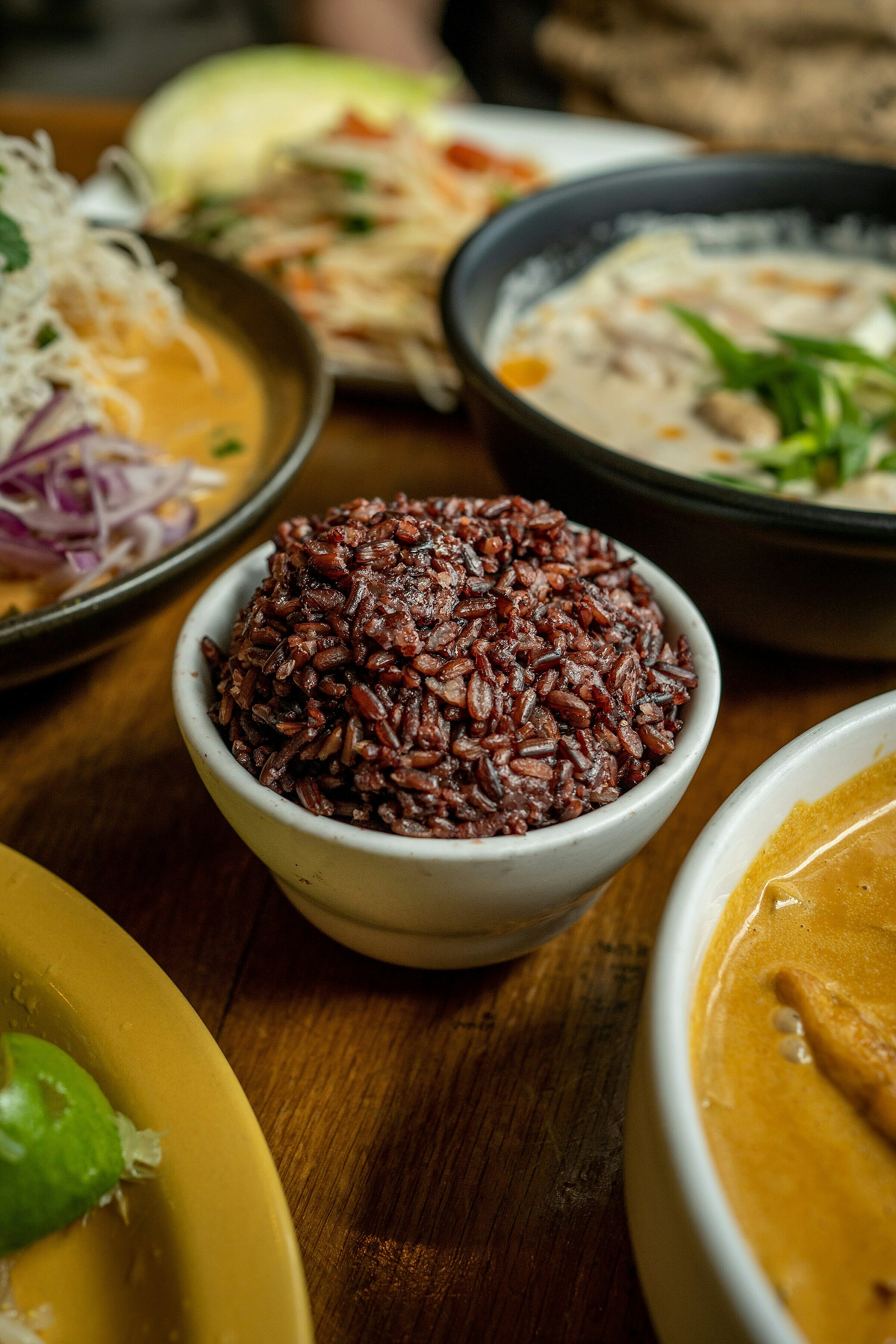
A serving of brown rice accompanied by various side dishes. Stock image courtesy of Unsplash. |
Advice from Dr. Phuong regarding brown rice intake for individuals with diabetes:
1. Opt for unpolished brown rice over white varieties.
2. Monitor portion sizes carefully as even healthy grains can affect blood sugar levels.
3. Incorporate into meals balanced with vegetables and lean proteins.
4. Cook properly to enhance digestibility without compromising nutritional value.
5. Consume mindfully considering individual responses and glycemic index sensitivity.
1. Select low glycemic index rice
There are several varieties of brown rice, including those with
lower GI
Choose brown rice with its bran layer intact for increased fiber and vitamin content, since refined varieties offer fewer nutrients.
2. Control the amount
Although brown rice is beneficial for individuals with diabetes due to its nutritional profile, it remains a type of carbohydrate that can elevate blood glucose levels when consumed excessively. Diabetic patients ought to restrict their daily carbohydrate consumption to approximately 55% of their total caloric intake.
The acceptable quantity of brown rice can differ depending on one’s activity levels, bodyweight, and personal tolerance for carbs; therefore, it’s crucial to seek advice from a healthcare provider or dietitian.
3. Blend with other healthy food options
Steer clear of serving brown rice with sugary or refined starch dishes. Opt instead for combining it with veggies.
fresh fruits
Include legumes and lean proteins to aid in balancing nutrition and slowing down sugar absorption.
The American Diabetes Association suggests using a proportional approach for meals: fill 25% of your plate with foods like brown rice or other carbohydrates, allocate 50% for non-starchy vegetables, and dedicate another 25% to lean proteins.
4. Proper preparation
The glycemic index of brown rice is influenced by different cooking techniques. High-heat exposure causes the starch within brown rice to break down into a gelled state, which may elevate its glycemic index. To maintain a lower glycemic index, steaming is recommended as the optimal method; however, boiling or using either a pressure cooker or a rice cooker still aids in keeping the GI relatively low.
Stay away from frying or stir-frying brown rice since doing so adds extra oils and sugars, making it less healthy.
5. Avoid frequent consumption
Brown rice includes phytic acid or phytates, potentially hindering the absorption of minerals such as calcium, iron, and zinc. Individuals managing diabetes ought to vary their intake of brown rice with alternatives like potatoes, oats, quinoa, or legumes to ensure a well-rounded diet.
6. Regularly check your blood glucose levels
Every person responds uniquely to brown rice, hence it’s crucial to keep an eye on
blood sugar levels
Following meals, if your blood glucose increases considerably, modify the serving sizes or alter how you prepare the food.
Dr. Phuong additionally points out that the substantial fiber content in brown rice could lead to gastrointestinal problems for individuals with preexisting digestive conditions, indigestion, or those recovering from recent digestive surgeries. Continual assessment and modification of dietary habits are essential for sustaining good health.