by admin | Apr 17, 2025 | colleges and universities, education, higher education, scholarships and fellowships, schools
Among the twenty student recipients chosen from Nigeria’s public higher education institutions, twelve scholarships were granted to students from the University of Ilorin.
At the third scholarship ceremony for students from public higher education institutions organized by the Mojirola Educational Foundation in Ilorin, the Vice-Chancellor of the University of Ilorin, Professor Wahab Egbewole (SAN), stated that over five decades, Unilorin and its pupils have garnered significant support due to their steadfast commitment to maintaining an exemplary record untarnished by scandals.
The Vice Chancellor, speaking via the Dean of Student Affairs, Dr. Alex Akanni, also expressed gratitude to the educational foundation for allocating more than half of the scholarship positions to Unilorin University.
He urged the recipients of the grants to view the funding as an initial investment, strive to achieve their goals, and later contribute back to the system so that future generations can also benefit.
Discussing the core purpose of the scholarship program, CEO of Mojirola Educational Foundation, Engineer Joseph Duntoye—a graduate of the University of Ilorin’s Faculty of Engineering—stated that the Project Director, Dr. Ruth Abiola Adimula, an Associate Professor at the Center for Peace and Strategic Studies (CPSS) at Unilorin, emphasized that the foundation aims primarily to support economically disadvantaged but academically talented students hailing from Kwara State.
An 18-year-old Nigerian-American has received acceptance letters from all six Ivy League universities. The governing council of FUOYE has approved a six-month leave for the vice chancellor, V.C., Fasina. JAMB has cautioned newly established tertiary institutions about avoiding unauthorized enrollments.
“This would assist in mitigating the impact of school fees and essential educational requirements,” she stated.
The leadership at Mojirola observed that the societal demand escalated due to rising tuition costs; hence, they expanded the number of recipients to 20 students, awarding each a scholarship worth N200,000.00 under the Mojirola Scholars program this year.
It is a co-ed scholarship open to both Christian and Muslim boys and girls. The recipients all come from public schools. This year, we received more than 200 applications, which underwent screening to verify strong academic records and family circumstances, as well as to evaluate their levels of need among other criteria.
Among the top 20 candidates who fulfilled all criteria, the distribution was as follows: 12 recipients are affiliated with the University of Ilorin; 3 come from Usman Dan Fodio University in Sokoto; one each hail from Abubakar Tafawa Balewa University in Bauchi, Ahmadu Bello University located in Zaria, Bayero University situated in Kano, University of Jos, and Federal University of Technology in Minna.
An educational charity urged other benevolent citizens of Nigeria to assist the government and community by leveraging their assets to bolster education within the nation.
The government alone cannot address all needs, particularly with many young people requiring assistance to complete their education and numerous others seeking job opportunities post-graduation. Thus, we urge individuals, corporations, and organizations to prioritize sponsoring educational pursuits and offering employment to our youth. Doing so would decrease the number of talented and exceptional young people migrating to more developed nations.
Regrettably, in recent years, we have been losing these young individuals not just to contribute to the growth of other countries but also to the harsh reality of premature death and insignificance due to their embarrassment at returning home.
As a representative for the group, Mr. Emmanuel Olalajulo, a 400-level Medical and Surgical student at Unilorin with a GPA of 4.94, expressed his gratitude on behalf of everyone else. He conveyed thanks to the Mojirola Educational Foundation and encouraged fellow beneficiaries to make full use of their scholarships.
EXPLORE FURTHER ARTICLES FROM: NIGERIAN TRIBUNE
Provided by SyndiGate Media Inc.
Syndigate.info
).
by admin | Apr 16, 2025 | colleges and universities, education, healthcare and medicine, higher education, news
IBADAN
The Vice Chancellor of Ladoke Akintola University of Technology (LAUTECH) Ogbomoso, Professor Razaq Olatunde Rom Kalilu, revealed on Tuesday that approximately 94 students from the institution will graduate with first-class honors during the university’s 17th convocation ceremony. This event coincides with the 35th Founder’s Day celebration.
During an interview with reporters at the University’s Senate Building, the Vice Chancellor mentioned that a remarkable 11,528 students are set to graduate. Out of these graduates, 94 have achieved first-class honors, 2,086 will be receiving second-class upper division degrees, 3,494 are graduating with second-class lower divisions, 756 are obtaining third-class distinctions, and 12 are passing with ordinary grades.
From the overall total of 11,528 graduates, 8,102 will receive their bachelor’s degrees. In Nursing Science, 7 students achieved a distinction, 1,741 earned an upper credit, and 145 received a lower credit. For Medicine and Surgery, there are 133 who passed, indicating a satisfactory performance in the field, whereas this does not apply similarly across non-medical fields.
The highlights of the 17th convocation ceremony as outlined by the Vice Chancellor encompass tree planting, a research fair and exhibition, along with performances including the convocation play and cultural acts planned for April 16. Additionally, the convocation lecture and alumni day are set for April 17, whereas Friday, April 18, will feature the Jumu’ah service, and Sunday, April 20, has been reserved for church services. The conferral of first degrees and awards is scheduled for Tuesday, April 22, while Wednesday, April 23, 2025, will see the presentation of postgraduate diplomas and advanced degrees.
Discussing the accomplishments, aspirations, and hurdles faced by the university, Professor Kalilu stated, “All our educational courses have received proper accreditation from both the National Universities Commission and pertinent professional organizations. Our six recently introduced standard academic programs—Theatre Arts, Psychology, Communications, Linguistics, Yoruba, and Political Science—have successfully passed the resource validation conducted by the national commission and are now fully functional.”
Likewise, the five recently added undergraduate programs within the realm of Open and Distance Learning—namely Cyber Security Science, Science Laboratory Technology, Transport Management, Crop Production and Soil Science, and Environmental Protection—are now fully functional.
The university is progressively expanding its global presence through research initiatives, faculty and student exchanges. It has formed partnerships with various educational bodies worldwide, including institutions like the University of Kentucky and the University of Utah in the United States, along with organizations such as the Alexander von Humboldt Foundation and the Bayer Foundation from Germany. These collaborations have led to the creation of entities like the Humboldt Research Hub, which focuses on centers dedicated to emerging and resurgent infectious diseases within the university’s framework.
It is worth mentioning that the university’s ratings have consistently improved since 2023. In 2025, according to the Times Higher Education’s World University Rankings, GT remains the top-ranked public university in Nigeria. Additionally, the same year, the Interdisciplinary Science Ranking (ISR) evaluated universities based on their involvement and impact in interdisciplinary sciences. This ranking placed LAUTECH at second place nationwide and positioned them between 251st and 300th globally.
“Our aim is to rank among the world’s top 100 universities, which is indeed an ambitious target, yet achievable. Considering this aspiration along with the continuously increasing number of enrolled students, it becomes crucial for us to enhance our facilities, integrate advanced technology into teaching and research processes, and diversify both faculty and student bodies—among several other critical and pressing measures needed. Therefore, we earnestly request all stakeholders to back the LAUTECH initiative,” stated Professor Kalilu.
Provided by Syndigate Media Inc. (
Syndigate.info
).

by admin | Apr 8, 2025 | children, children and families, education, Travel, vacations
-
In 2023, Chris and Tamira relocated with their three children: Olivia, who is 11; Scarlett, aged 9; and Bella, 5 years old.
-
EXPLORE FURTHER: I have journeyed across the globe with my family of six and managed to save £41,000 on lodging expenses throughout the years using a hidden vacation tip.
Many individuals long for a vacation, seeking a place that’s warm and bright merely to escape everything momentarily, with the understanding that this respite will be short-lived.
However, for certain courageous individuals, they choose to dive in and transform their lives entirely for fresh starts.
That’s precisely what the Hutchinson family did two years back, when they sold their home and left their careers to embark on global travels.
A five-member household from Corby, Northamptonshire, has departed the UK and adopted a contemporary nomadic lifestyle.
In 2023, Chris and Tamira moved away with their children — Olivia, who is 11, Scarlett, aged 9, and Bella, 5 years old.
Following that, they have made visits to
Thailand
,
China
and
Malaysia
, and are presently investigating
Dubai
– all while educating their three daughters at home.
In a video posted to their family channel
TikTok
account (
@thehutchinsons
In January 2023, Tamira disclosed that they put their house on the market and by May, they embarked on an around-the-world journey with their family.
She informed her audience: “Indeed, we sold our family residence where we resided for a decade. We listed it for sale in August of 2022, which turned out to be quite a challenging time as we were uncertain about finding a buyer. Finally, in January 2023, we received an offer, and everything was finalized by May.”

She stated that she harbors no remorse over the choice and proceeded to elaborate that she feels her kids will thrive more by venturing into the world.
“So yes, we sold our ancestral home, left our permanent positions, removed the children from their educational institutions, and we’ve been on the move continuously as a unit, and collectively, we certainly do not regret this decision,” she stated.
In an alternate clip, the mother of three shared her approach to educating her kids following her explanation that they do not attend conventional schools and she does not support the UK educational framework.
“No, our kids aren’t enrolled in school. We decided to remove them from the educational system as we believed it wasn’t providing what they truly required,” explained Tamira.
The nomad mentioned that she desired her children to receive greater attention, adding that exploring various cultures would be far more beneficial for them compared to being seated in a classroom in the UK.
‘I found myself trapped in a classroom daily with over 30 students, and this experience led me to observe how certain health issues affected my loved ones. This situation deeply concerned us and motivated us to want to provide our children with the finest opportunities possible. We aspired not only to expose them to the wider world but also to take charge of their education personally.’
She stated, “In the mornings, we homeschool them and during our travels, we engage in world schooling – exploring various countries, understanding diverse cultures, and discovering different cuisines.”
However, Tamira mentioned that she adheres to the UK national curriculum for her daughters’ education, ensuring they do not miss out on fundamental knowledge.

She mentioned, “We handle homeschooling, and I continue to adhere to the English curriculum.”
We document our experiences and continue to engage with them, so indeed, they do not go to any school. However, we ensure their education aligns with the National Curriculum of England.
But no, since attending school isn’t required, we can travel all the time.
In response to a question from one of her followers regarding her kids struggling with forming lasting friendships, Tamira stated that this notion was incorrect. She explained that in the UK, even though her oldest child’s group of friends would be separated as they move on to various secondary schools, everything was fine.
The TikToker further explained that Olivia’s friend circles were already disintegrating, noting that the educational system disrupts connections and merely relocates students to entirely different institutions.
‘Switching schools and losing that circle of friends can be a deeply distressing transition, particularly when the child has no say in the matter,’ she said additionally.
The couple have also
as mentioned in earlier videos, they had multiple reasons for deciding to pack up and depart from the UK
.
In an excerpt from one video, Chris the first cited the cost of living crisis in the UK as a reason, stating: “You must work all day long merely to cover basic needs and maintain shelter over your head. There’s simply no space left for leisure.”



Previously, on their TikTok page, Tamira shared details about how the family manages their budget during trips.
She mentioned that they allocate approximately £35 per night for lodging, and up to £40 for daily expenses such as food and beverages.
This differs from the family who spent approximately a month prior to leaving, taking care of their mortgage, utilities, food purchases, fuel, and various other costs.
The significant expense of daily life was another reason behind the family’s departure from Britain. The parents acknowledged that they were missing crucial moments of their daughters’ growth and hardly saw each other due to the long hours they worked just to make ends meet.
Chris went on to disclose that the second rationale behind his decision not to go back to the UK revolved around the ‘wokeness ideology’.
He stated: “You can’t even utter ‘boo’ to a goose these days. Everyone gets offended, everyone is shocked, which makes people feel uneasy and too frightened to speak up.”
The third point he raised was related to the weather.
Unfortunately, this is something that cannot be altered,” he stated.
If getting out of town for some sunshine becomes unaffordable even just once annually, it might lead to feelings of sadness.
We experience approximately nine months of the year shrouded in darkness and dreariness. When what we call ‘summer’ arrives, it often feels like it rains non-stop; however, occasionally, there can be that exceptional scorching day.
Read more

by admin | Apr 1, 2025 | children and families, culture, education, educational systems, school children
In Takasaki, Gunma Prefecture, despite the chilly and rainy weather in early October, the interior of the second-grade classroom at Takasaki Municipal Seibu Elementary School buzzes with warmth and enthusiasm. The lesson revolves around building vocabulary related to rivers and aquatic life; names of various water bodies decorate the chalkboard. Students enthusiastically raise their hands hoping to respond to the instructor’s queries. Among them sits 7-year-old Lulu Eiren Belle Masuda from the Philippines—a child who occasionally seeks assistance from her neighbor during these sessions. Beside her is 54-year-old Ayako Suga, serving as a language assistant.
“Eiren mentions that it’s challenging to converse with others since her main mode of communication is in English.” Although English is predominant at home, the dynamics shift in the classroom as she is the sole non-native Japanese speaker. She admits, “I sometimes require additional assistance,” particularly noting that speaking in front of the entire class makes her feel extremely uneasy.
Inherent difficulties encountered by students who are not native speakers at schools
Eiren’s experience mirrors an increasing trend in Japanese schools due to the rising number of foreign residents. By the close of 2024, this demographic saw a significant increase of 10.5%, reaching a total of 3.7 million individuals—the highest recorded figure so far. The government has set targets to attract approximately 820,000 additional overseas workers between 2024 and 2028 through various policies designed not only for labor but also facilitating easier pathways to permanent residency. This enables skilled workers to integrate their families into society seamlessly.
In Gunma Prefecture, where Eiren resides, the population of foreign inhabitants increased by 10.7% within a single year, totaling more than 72,000 individuals by December 2023. This growth necessitates that schools such as Seibu Elementary adapt to accommodate their increasingly varied student populations and find methods to assist students like Eiren, who do not have native proficiency in Japanese. Nonetheless, significant obstacles remain when trying to offer adequate help.
According to Professor Hiromi Saito from the Graduate School of Education at Tokyo Gakugei University, one of the core issues behind these problems is Japan’s lack of full recognition of immigrants. These children are effectively treated as immigrants, but the educational system does not acknowledge this fact. Consequently, schools—especially public ones—have failed to create a coherent structure to tackle the long-term, crucial challenge of educating these students systematically.
The insufficient acknowledgment is further exacerbated by minimal financial backing from the central government. As she highlights, although MEXT has developed materials such as textbooks and instructional videos, along with compiling locally generated resources available online, this constitutes nearly all their direct assistance beyond select locations like Yokohama. Additionally, they have set standards recommending one language tutor for every eighteen pupils requiring additional help with Japanese and encourage using technological aids for distance education. However, she notes that actual provision of linguistic tuition for kids with immigrant backgrounds typically amounts to around seventy to eighty hours annually—scarcely sufficient time to impart even rudimentary conversation abilities.
“Without financial support, local governments and municipalities cannot establish systems, employ staff members, or offer training,” says Saito. “While MEXT is suggesting various measures, the conditions necessary for their implementation—be it through established procedures, adequate staffing, or suitable facilities—are not present across the country. This issue affects every region.”
At the Takasaki Municipal Board of Education, the recurring response echoed similarly. In response to inquiries about what assistance they primarily required from the national government to cater to non-native speaking students, a high-ranking official succinctly answered “Funding.” Despite Takasaki’s efforts to address the linguistic needs of each student who requires additional support—deploying their 30 language aides wherever requested—they barely manage to satisfy all demands.
Moreover, the support for language assistants is generally limited to two years per child, according to guidelines. However, Eiren’s language assistant, Suga, cautions that this timeframe might prove insufficient if the count of children requiring assistance keeps increasing.
“I would appreciate it if measures were implemented to provide adequate support so that we can address the requirements of the children and achieve the academic standards set by the schools. It is my sincere wish that both the Takasaki Municipal Government and the Board of Education create a robust system for comprehensive assistance as the population of foreign students increases. Currently, there isn’t an ample supply of teaching aides; however, despite this limited availability, we manage with what little resources we have and make the current system function effectively. Nonetheless, situations may arise where some children do not receive the necessary help,” she states.
The endeavors of language aides
Language aides such as Suga and Mika Senzaki Novaes, who was also spoken to by Mainichi, play crucial roles in assisting children from multicultural backgrounds to understand the Japanese curriculum found in their lessons and textbooks. Nonetheless, these aids aren’t JSL educators, and their interaction with pupils usually caps at two sessions each lasting about two hours per week. Consequently, this often leaves an unbridgeable gap between the assistance provided and what the students truly require.
Senzaki Novaes, who assists an 8-year-old Brazilian student named Shizuka (a pseudonym) at Takasaki Municipal Sakurayama Elementary School, emphasizes, “It’s crucial to understand that mastering Japanese and understanding academic subjects are two distinct challenges. While I aim to support her with Japanese practice, my limited session time doesn’t allow me to delve into broader educational content.” Outside of her regular job duties, she dedicates numerous hours to developing custom teaching tools since suitable commercial options are hard to come by.
“I find many terms unfamiliar to these children. I put considerable effort into assisting them so they can adapt to their Japanese schooling and everyday routines, as well as manage the classroom activities effectively,” says Suga.
Even though these obstacles persist, the work of language assistants is proving impactful. According to Shigeko Yajima, who teaches Eiren’s homeroom class, “In regular conversations, Eiren speaks Japanese quite well; her vocabulary size is nearly identical to that of her peers.” Nonetheless, Yajima recognizes that Eiren requires assistance with academic content, highlighting the importance of Suga. As Yajima points out, “Whenever she struggles to comprehend certain topics, Suga steps in to provide support.”
Similarly, Shizuka has advanced thanks to Senzaki Novaes’ assistance. Despite finding kanji and kokugo challenging—classes designed for native Japanese speakers—she mentions, “I enjoy having her around; it makes learning more manageable.” When questioned about whether she believes her Japanese skills are getting better, she nods vigorously and breaks into a smile.
Senzaki Novaes, who runs the organization Vamos providing language help to children with foreign roots, notes that Shizuka understands about 70% of what’s being said in regular conversations at school but struggles with more complex exchanges and study materials. “She can do math calculations, but she doesn’t understand what’s being asked in word problems,” Senzaki Novaes explains. “In kokugo class, there are words she can enunciate or write but doesn’t know the meaning of, so she doesn’t understand the sentence. It’s the same for other subjects like social studies or science.”
The Takasaki School Board successfully addressed all language assistance requests for the academic year 2024, yet uncertainty looms ahead. While they have maintained their practice of limited school visit durations by these assistants, significant needs still persist—especially for students speaking less common languages such as Tagalog, Nepalese, and Uzbek, where adequately trained helpers are scarce. Often, interactions between assistants and pupils involve a mix of basic Japanese and occasionally another shared tongue whenever feasible.
Implications for the future
The difficulties encountered by children from abroad in Japan’s educational system are not individual cases but rather symptoms of broader social changes. Due to an increasing elderly populace and decreasing number of births, the nation has begun relying on foreign workers to address labor gaps and bolster economic growth. According to Professor Saito, under updated immigration policies facilitating family reunification for professional migrants, these kids “are expected to contribute to Japanese society down the line, and this understanding is slowly becoming more prevalent.”
The statistics highlight the challenges faced by these young individuals. The education ministry reports that high school students from foreign backgrounds needing Japanese lessons have a dropout rate of 6.7%, which is notably above the nationwide average of 1.0%. Of those who do manage to graduate, merely 51.8% proceed to further studies, whereas this figure stands at 73.4% for native-born students in Japan. Furthermore, among immigrant pupils entering employment, as many as 39.0% secure irregular or part-time positions, contrasted sharply with just 3.3% of overall high school leavers taking such roles.
Senzaki Novaes, Shizuka’s aide, cautions about the long-lasting effects of insufficient assistance. She states, “There might be an increase in individuals with international backgrounds who receive minimal Japanese education within Japan.” According to her, “Should these kids fail to acquire adequate proficiency in speaking Japanese for academic purposes, their career prospects will likely remain narrow. This situation can trap resident foreigners in lower societal positions.”
Tackling these inequalities necessitates an all-encompassing educational strategy, according to Saito. She states, “Education for immigrant children must not be confined solely to teaching them Japanese.” It ought to encompass assistance with cultural integration, personal growth, job placement, and professional advancement. In order for individuals to reside happily in Japan, view themselves as part of society, and perceive the nation as a place where they can construct their futures, Japan has to create an inclusive educational policy that nurtures feelings of inclusion and potential among immigrants.
(Robert Sakai-Irvine, staff writer for The Mainichi)
by admin | Apr 1, 2025 | education, education reform, educational systems, healthcare and medicine, politics
● Looks for education that frees the mind, rather than one that induces fear
At the weekend, Senator Opeyemi Bamidele, who leads the Senate, called upon federal, state, and local governments, along with corporations and philanthropists, to significantly increase their investment in education. He argued this would foster the creation of future global billionaires and renowned brands.
Bamidele, who represents Ekiti Central, pointed out how both established and developing countries across Asia, Europe, and North America utilized education as an effective means for socioeconomic change to achieve their respective goals.
Following the conferment of an honorary Doctor of Laws degree upon him during the 29th convocation ceremony of Ekiti State University, which took place over the weekend on the university’s main campus in Ado Ekiti, he proceeded to make those calls.
Yesterday, Bamidele was honored along with Chairman of the Federal Inland Revenue Service, Dr. Zacch Adedeji, and the Chairman of the Governing Board of the Bank of Industry, Dr. Mansur Muhtar. This brings the total number of honorary doctorates Bamidele has been awarded to three, spanning from January 2003 through March 2025.
During his speech at the convocation, Bamidele highlighted the importance of education in driving the socioeconomic progress of countries across the globe. He believes this educational advancement is crucial for achieving developmental objectives and overcoming severe challenges.
He particularly noted: “By quality education, I refer to an educational experience that frees the mind; one which significantly reshapes entire generations and provides access to countless opportunities in every field.”
In this light, education serves as an invaluable resource that both advanced and rising nations across the globe have utilized to reach their current position. We, as a society, also possess this same instrument in our quest for national ambitions.
Bamidele emphasized that achieving substantial socio-economic progress in every sector necessitates “not just fostering a conducive atmosphere, but also ensuring high competitiveness so our country can stand out on the global stage.”
It also requires intentional public investment in our youth, and we must take action immediately. Undoubtedly, this necessitates consistent and strategic backing from various private sectors that generate global brands and billionaires.
This is the proven framework that yielded successful individuals such as Elon Musk, who leads both SpaceX and Tesla; Jeff Bezos, founder of Amazon Inc.; Mark Zuckerberg, co-creator of Facebook and Instagram; Larry Page, CEO at Google; Warren Buffett, chairman of Berkshire Hathaway Inc., among numerous others.
It’s now time for us all to utilize the power of high-quality education to create our own global billionaires and brands. However, this can’t be achieved through mere luck or coincidence, but rather through meticulous planning and relentless execution of these strategies.
“We might fail to reach our goals unless we reassess our national priorities and significantly invest in human capital. Fundamentally, education that frees minds is the sole solution to achieving our aspirations. The sooner we begin investing more effectively in our citizens, the better off we will be as a union,” he stated.
Consequently, Bamidele urged both public and private entities to revisit their approaches; contemplate this message and reaffirm our commitment to invest more substantially in individuals. This sentiment ought to be a crucial aspect of the key lessons we draw from this historic assembly.
During his speech, University Vice-Chancellor Prof. Ayodele Joseph listed several initiatives spearheaded by Bamidele for the institution. These included building accommodations specifically for medical students—both male and female dormitories—as well as constructing a small sports stadium and an FM radio station.
Ayoadele also highlighted several significant contributions made by the university’s alumni over the past year via targeted connections and interventions, pointing out various initiatives that the senate leader helped facilitate for the benefit of the university community.
He expanded Bamidele’s contributions to encompass facilitating the building of separate hostels for male and female medical students, constructing a small sports complex within the campus grounds, and also organizing the donation of an FM radio station from Senator Bamidele.
The vice chancellor additionally pointed out that the institution’s success could be attributed to an increase in the monthly subsidy for the university, which was raised from ₦260 million to ₦410 million per month.
Provided by Syndigate Media Inc. (
Syndigate.info
).

by admin | Mar 30, 2025 | education, politics and government, public education, school children, schools
Campaigners claim that one out of every eight families with special educational needs (SEND) children attending private schools has had to relocate their homes because of what they describe as Labour’s tax assault.
Education Not Taxation (ENT), a parental organization, conducted a survey of 1,600 households that pay fees for their children with special educational needs and disabilities (SEND).
Among these participants, 12 percent indicated that they had relocated or reduced their living space to cover the costs associated with Labour’s 20 percent.
VAT
Regarding tuition costs for private schools, which were implemented in January.
In the meantime, 21 percent of those surveyed indicated that they refinanced their home to cope with increased expenses.
The findings showed that 57 percent limited their use of heating, 71 percent decreased their expenditure on food, and 72 percent curtailed their travel to manage the impact of the VAT.
As families gear up to contest the VAT policy in the High Court tomorrow [Tuesday], they argue that it disproportionately affects children with Special Educational Needs and Disabilities (SEND).
Approximately 100,000 students in private schools require special educational needs support, as numerous parents choose to withdraw from the public education system due to insufficient provisions for these needs.
Conditions range from autism,
ADHD
Along with dyspraxia, individuals may face severe hearing, vision, and mobility problems.

The ENT stated that the VAT is increasing family bills by approximately £300 per child each month on average.
Loveena Tandon, spokesperson for ENT, stated: “It is unfair to compel families to sell their homes or forego essential needs like heat and food just so they can shield their children from challenges and provide them with the best possible beginning in life.”
‘The only individuals turning a blind eye to what’s occurring are the ministers, thus they should be ashamed for causing hardship to young children.’
Last week, ENT carried out an online survey focused on fee-paying parents of SEND children through their campaign Facebook group, which has 25,000 members.
Out of those who participated, 98 percent felt that their child’s requirements cannot be adequately addressed within the public education system.
Nevertheless, 46 percent indicated they might still transfer their child to a state school due to the higher expenses.
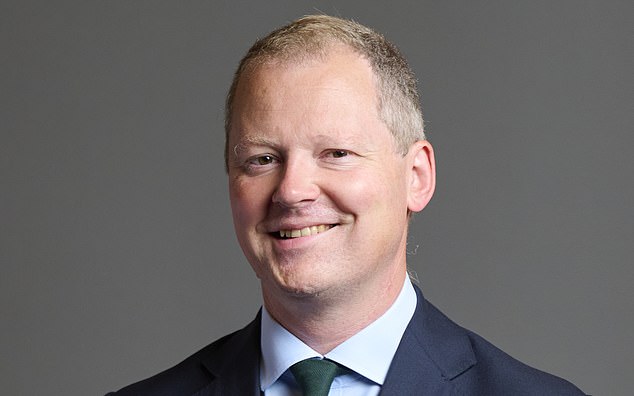
The Shadow Education Minister, Neil O’Brien, stated: “A tax on education proposed by Labour will have devastating consequences for parents, students, and educators.”
‘Tens of thousands of special education needs and disabilities (SEND) students face potential disruptions to their education. They might be compelled to leave the private sector and enter an overburdened public system that cannot accommodate them, forcing parents to make agonizing decisions.’
‘Labour seems more focused on following their flawed ideology rather than taking the correct course of action.’

Munira Wilson, the spokesperson for education from the Liberal Democrats, stated: “This policy is jeopardizing the educational opportunities for children with special needs.”
‘The educational tax amid the crisis of the state’s special needs system is adding further strain to an already faltering framework.’
A limited number of children with special educational needs and disabilities (SEND) manage to obtain an Education, Health and Care Plan (EHCP), which offers a more extensive form of government-supported assistance.
A government representative stated: “Less than 0.1 percent of students are anticipated to switch schools this year due to the removal of tax exemptions for private institutions, compared to more than a million available slots in educational facilities nationwide.”
Eliminating tax exemptions for private institutions could boost funding for public education, potentially generating an additional £1.8 billion annually by 2030.
‘In our Plan for Change, we are reconsidering how the SEND system should be structured to broaden opportunities, rebuild the trust of families nationwide, and provide the enhancements they desperately seek.’
Read more
Page 1 of 612345...»Last »


